
Sorry about the ‘iffy’ music – out of my control.
But a great result in the end !


Sorry about the ‘iffy’ music – out of my control.
But a great result in the end !


Dear Mark,
We’re gearing up for an amazing year ahead for animals, thanks to your incredible support.
A major area of focus is staff training and development. To this end, we have recently hired and begun training 10 new veterinary assistants to join our medical team. From dressing wounds, to giving medication, to helping with feeding, they will help make sure that animals get all the care they need to recover as quickly as possible.

We reach higher every year because the animals deserve it, and your support has made so many dreams come true.
Do you know someone passionate about animal protection who’s ready for a new life adventure?
Animal Aid is NOW HIRING!
Click here for detailed information about a variety of open positions for Indian Nationals and International applicants both, from Veterinarian to Volunteer Coordinator to Videographer!
With his jaw broken in two, this beautiful boy seemed to plead to his rescuers to help him. He couldn’t close or move his jaw, and his face showed utter bewilderment. But he shyly turned on his back in an act of pure submission, his tail wagging as if asking for help to stop the pain.
When we sedated him and saw the full extent of the fractures in his jaw, we were worried we might not be able to save him. But we tried our best. And to our delight, he responded extremely well to the sutures, and by his third day was ready to start slurping up his liquid diet.
From that moment, we knew the incredibly sweet Apollo was going to thrive!
To help someone who wants to live, please donate today.
But we came to his home to save him.
The family who feeds him hadn’t seen him for days and thought he was never coming home again. We can only imagine the difficulty he had making his journey home–perhaps from a great distance, and in excruciating pain and confusion. He must have used every ounce of his remaining strength just to make it home.
When we rescued him, he was too weak to resist, and he quietly endured the removal of maggots infesting his wound despite the pain he must have been in. But as he healed, his eyes and entire face transformed. He always had a few words for us during the weeks of wound dressings that followed, but this was a good sign. It meant he was strong enough to fight for his life. He was also strong enough to start demanding cuddles!
Heal a life-threatening wound for a life-loving sweetheart. Please donate today
From around the world, volunteers are bringing love to their beloved animals.

From Handicapped Heaven, to the Rehabilitation area, to Oldies and up to Peace Place and Sanctuary, everywhere we look we see animals basking in the love and attention showered on them from volunteers from around the world!
Over there brushing a calf we see Dharmada, who has volunteered many times and especially loves spending time with the cows; over here we see Robin at work with an elderly dog in her arms; and busily refilling water bowls, sweeping, and stopping frequently for a cuddle is Sarah.
In the Rehabilitation area we see Teresa massaging the shoulders of a road accident survivor; here too is Kitty whose multiple volunteering weeks have brought her loving hands to once again massage the hind limbs of paralysed dogs on a chilly morning.
And there are first-time-but-not-final-time volunteers Jane and Melanie, who “hit the ground running” with gentle grace and so much loving kindness for the animals.
Learn more about volunteering:
No matter where you are on your life journey, having an up-to-date estate plan is essential. You may think estate planning is complex and expensive, but FreeWill’s online tool is free to use and guides you through the process with ease.
Planning your estate is one thoughtful action that puts you one step closer to achieving your goals, taking care of yourself, and finding peace of mind.

If you choose, FreeWill can help you pay it forward to street animals by naming AAU in your estate plan
Note: FreeWill’s self-help estate planning solutions are valid for the disposition of property
located in the fifty states and DC. Will-makers residing outside of the United States should
consult with a local lawyer before using FreeWill’s tools.
Saving the life of a street animal looks good on you.
100% of the proceeds go to our street animal rescues
Go shopping here:
We thank you deeply for all you do, are, and inspire for animals

Founding family Erika, Claire and Jim, and the Animal Aid Unlimited team.
Regards Mark

Above – My Golda waits in the snow.

Crab and lobster welfare takes a step forward with first UK supermarket benchmark
27 January 2023
Crustacean Compassion

Following the inclusion of decapod crustaceans (such as crabs, lobsters and prawns) – in the UK Animal Welfare (Sentience) Act 2022, Crustacean Compassion have launched the first UK industry benchmark ‘The Snapshot’ to assess welfare standards for decapod crustaceans within the UK food supply chain.
30 UK companies – including all major supermarkets – were evaluated in the benchmark, revealing that only 50% of companies have developed formal policies on some aspect of decapod crustacean welfare, and only one is promoting decapod welfare to consumers.
On average, retailers are leading the way in areas of welfare policy, management and reporting.
The Snapshot report is the first assessment of leading seafood producers, processors, retailers and wholesalers in the UK on welfare standards for decapod crustaceans such as crabs, lobsters and prawns.
Commissioned by our member organisation, Crustacean Compassion, and facilitated by Chronos Sustainability, The Snapshot was released this week.
Each year, more than 420 million crabs, lobsters, langoustines and prawn/shrimp are caught in the UK with a further 5 billion prawns and other crustaceans being imported from overseas. The Snapshot looks at their welfare at all stages of the supply chain: capture and handling, holding and storage, transport, mutilations, stunning and slaughter.
The Snapshot assessed 30 UK seafood companies, including household name brands, all major supermarkets and more localised seafood specialists. The report reveals that 70% of companies consider the welfare of crustaceans to be a business issue, in part due to growing consumer concerns. Contrary to this, only 50% have developed formal welfare policies.
While retailers are leading the way across several key areas, including policy commitment, enforcing their policies and reporting of welfare standards, only one company assessed is promoting decapod crustacean welfare to their customers – and this is a producer, not a retailer.
The benchmark will be repeated later in 2023 and will show which companies are taking decapod welfare seriously and making improvements in this vital area. Whilst this initial report does not share company scores, subsequent reports will publish all company scores and a ranking table, allowing consumers to make informed choices for higher-welfare products that avoid inhumane practices such as eyestalk ablation and slaughter through drowning, asphyxiation and boiling alive.
The development of The Snapshot involved consultation with industry, and this continued engagement will ensure that decapods, companies and consumers will all benefit.
You can watch the webinar launch recording here.
Since animals like crabs and lobsters were legally recognised as sentient and able to feel pain, companies have rightly been under increased scrutiny about how their practices impact the welfare of the animals involved. The Snapshot will show how decapod welfare is currently being addressed across the industry right now and will drive welfare improvements across the sector. Customers expect to be able to buy seafood that has been produced to high standards of animal welfare and we have been asked which brands and companies have the most humane practices. The food industry has a responsibility to both meet those expectations and provide the necessary information to enable consumers to make informed choices.
Claire Howard, Director at Crustacean Compassion
Read more at source
Regards Mark

Animal rights group names Kansas City Zoo among worst for elephants. Zoo CEO disagrees
Kansas City has one of the worst zoos for elephants in the country, an animal rights group claimed this week.
But the zoo’s CEO called that assertion false, and disagreed with all accusations leveled against them.
In Defense of Animals, an international animal protection organization based out of California, published its latest “worst zoos for elephants” list Tuesday, ranking the Kansas City Zoo at No. 2.
Continue reading at:
Animal rights group names Kansas City Zoo among worst for elephants. Zoo CEO disagrees (aol.com)
Regards Mark


Hunting dogs in Spain are known as ‘Galgos’.
Check out some of our past Galgos posts by clicking here:
Search Results for “galgos” – World Animals Voice
It is estimated that between 50,000 to 100,000 Galgo hunting dogs are killed in Spain every year in what has come to be known as the “Holocaust of Greyhounds”, but it’s difficult to know for sure, because nobody knows exactly how many are bred every year.
Regards Mark

A bill designed to strengthen animal rights in Spain could outlaw hunting with dogs.
The proposal would reform the treatment of domestic and wild animals in captivity. It includes plans to ban the sale of pets in stores, turn zoos into wildlife recovery centres, and impose prison sentences for animal abusers.
However, Spain’s ruling Socialist party, which introduced the bill in 2022, was forced to backtrack last month following protests in rural areas. With elections looming later this year, the party is cautious of upsetting this key voter base.
Continue reading at:
Hunters and animal rights protestors clash over amendments to Spain’s pet protection laws (msn.com)

And …
Spain animal laws: Pet shops to close and dog owners to be trained under proposed changes
A law aimed at strengthening animal rights in Spain plans to ban the sale of pets in shops, convert zoos into wildlife recovery centres and make training compulsory for dog owners.
Continue reading at:
Spain animal laws: Pet shops to close and dog owners to be trained under proposed changes (msn.com)
Regards Mark

Scottish farmed salmon dying in droves before slaughter
23 January 2023
Animal Equality

Animal Equality UK are raising the alarm as salmon mortality rates on Scottish salmon farms are rocketing.
Every year in the UK, up to 77 million fish are farmed and slaughtered, but many more don’t even make it to slaughter.
According to a report from industry membership body Salmon Scotland, 2.8 million farmed salmon died on-farm in Scotland in September 2022 alone.
Fish Health Inspectorate (FHI) data shows that nearly 15 million salmon mortalities were reported by farms in Scotland from January to November 2022, compared with 8.58 million in 2021 and 5.81 million in 2020.
Farmed salmon suffer from overcrowding inside cages. Others are bitten by sea lice which eat their skin while they’re alive. Animal Equality reports that instead of fixing the root cause of the issue, fish farmers use chemical treatments and other rough treatments which cause the salmon even more suffering.
Drone footage collected by Animal Equality UK shows workers using a “mort sock” to dredge dead fish from the bottom of pens.
The data doesn’t lie. It’s undeniable that early fish mortality is a rapidly worsening issue. Over recent years deaths in fish pens have reached record levels for a number of reasons, including a sharp rise in infectious diseases among the fish who are packed into unnaturally overcrowded cages, as well as poor gill health and rough treatments to remove lice from the infested waters.
As the industry grows, so do these issues. We must take back the power and boycott farmed fish, it’s the only way that we can begin to curb this ever-worsening problem.
Abigail Penny, Executive Director of Animal Equality UK
Don Staniford, of the Scamon Scotland campaign said the FHI figures on salmon deaths were likely to be an underestimate because not all mortalities need to be recorded.
About 25% of the salmon in sea cages are dying, so that’s about one in four. If ramblers saw one in four cows or sheep dead in a field they’d be horrified, but because it’s underwater it’s out of sight, out of mind.
Don Staniford, Scamon Scotland campaign
Regards Mark

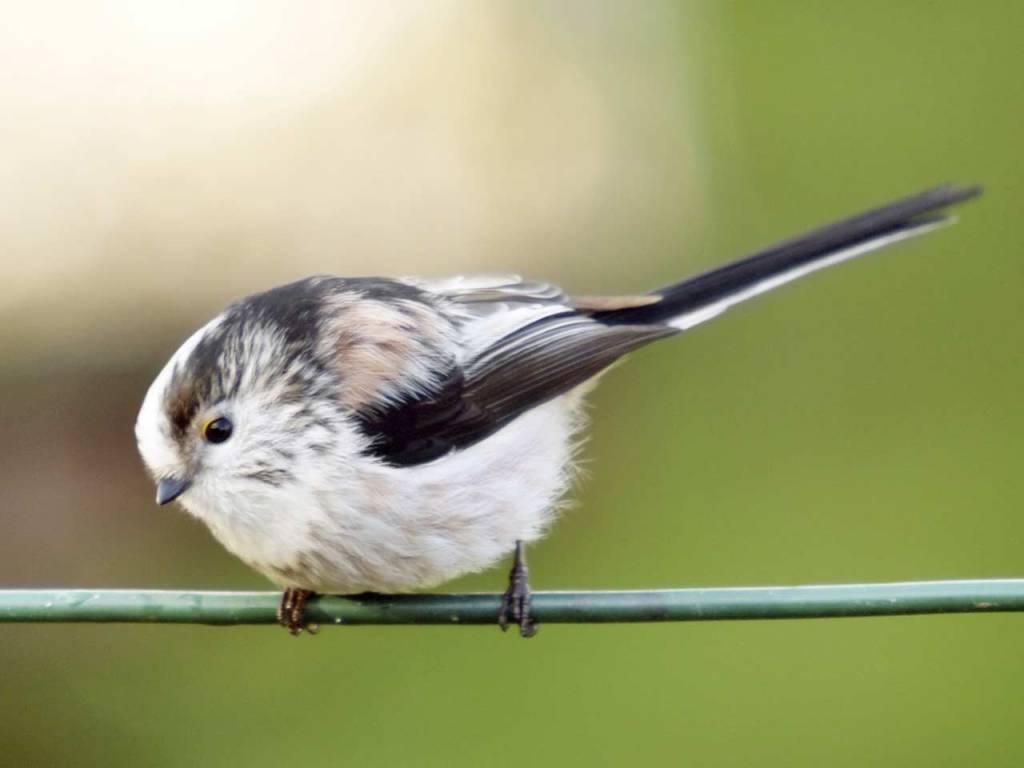

This weekend (27 to 29 /1/23) is the RSPB big garden birdwatch for 2023.
This is only open FOR UK RESIDENTS.
Give just 1 hour of your time this weekend to take part.
The Big Garden Birdwatch is free to anyone and everyone but the information sent in by people all over the UK helps the Royal Society for the Protection of Birds (RSPB) build up a very accurate register of how the national bird population is doing; what species are flourishing, what are in decline, stable etc.
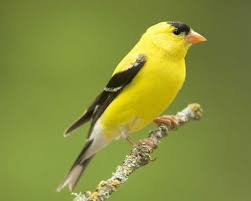
This birdwatch makes it an ideal family activity at the end of January. Best of all taking part is easy. All you need to do is sign up online to take part and get a free guide.

You don’t even need a garden. You can count birds from a balcony or even your local park.
Which common garden birds will you see?

Participants are asked to spend an hour counting the birds they see and then submit their results online. Also, it’s good idea is to add a bird feeder to your garden. Watch how a wide variety of different types of birds will pop in your garden for a snack!
As you know, we have many wild bird visitors to our garden; and thus have just signed up for this years watch. Looking forward to counting the visitors to the garden, submitting the data to the RSPB and helping to get a good overall view of the status of birds in the UK.
I hope you can sign up and take part also.
Regards Mark
Go here for more and to sign up:
Big Garden Birdwatch | The RSPB
https://worldanimalsvoice.com/?s=breakfast+buddy
Below – Breakfast Buddy.

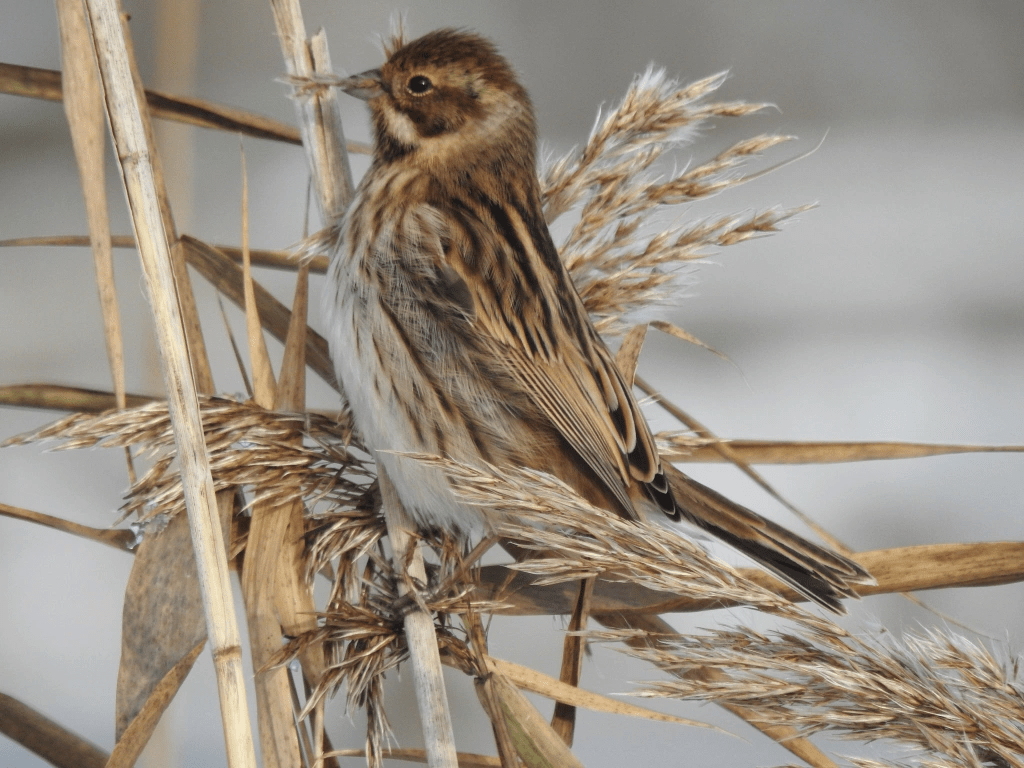
Below – Reed Bunting photo from Pauline.
Below – Starlings enjoy their morning bath in my garden.


Lidl’s chicken scandal: a glimpse of the state of animal welfare in the EU
Essere Animali
Press Release
NGOs are pressuring Lidl to sign the European Chicken Commitment, following the release of investigations that reveal shocking conditions for broilers on their supplier’s farms in Germany, Italy and Spain.



In a campaign led by Equalia and the Albert Schweitzer Foundation Germany, NGOs are telling Lidl that enough is enough, after footage was released showing broiler chickens being abused and neglected on their supplier’s farms.
‘Lidl’s chicken scandal’, as it’s being called, began when Equalia released footage revealing hideous circumstances for broiler chickens on a factory farm in Germany. Shoved together in the dark and with barely enough room to breathe, the video shows droves of malformed broilers suffering and dying in the worst of conditions.
While that was enough to spark outrage among animal protection organisations across Europe, the scale of the problem was revealed to be much worse shortly after.
Just a few weeks later, further footage published by Equalia highlighted similar abuses being extended to broilers connected to Lidl in Spain. Chickens are being thrown to the ground from high up, slammed against buckets, and made too miserable and exhausted to move, with many of them spending their days lying on the floor being trampled over.
Below – Click on ‘Watch on YouTube’.
Above – This is happening on farms supplying Lidl in Spain
Regards Mark


EU Parliament shows positive commitment toward systemic change to regulate the (exotic) pet trade
25 November 2022
AAP Press Release
Yesterday, the EP adopted a resolution on improving EU regulation through an EU positive list of (wild and exotic) pets. This was the direct result of a petition and subsequent debate at PETI Committee from Eurogroup for Animals and AAP and Dyrenes Beskyttelse.
Excitingly, it’s the second EP Resolution in as many months with encouraging language on an EU positive list. It’s a strong message to the Commission to expand upon their initial commitment for a feasibility study on the EU positive list in the revised Action Plan against Wildlife Trafficking.
This resolution is the icing on the cake of a very successful year in political calls for the EU positive list, such as the May AGRIFISH position paper supported by 19 Member States, and the October EP resolution on the Convention on the International Trade of Endangered Species (CITES), which provided the EP’s opinion on the position the Commission should take at CoP19. Incidentally, the exotic pet trade has been front and centre of the debates at this important meeting of the Parties to CITES.
Finally, the text cites the EP’s June 2021 resolution on the EU Biodiversity Strategy for 2030: bringing nature back into our lives, which includes reference to a white (positive) list.
An EU-wide positive list is a tool to more effectively and efficiently regulate the pet trade, by producing a list of animal species that are allowed to be traded as companion animals: any species not on the list is de facto illegal to keep.
The resolution stresses that the European trade policy needs to ensure that pet trade practices do not compromise the welfare of wild and exotic animals or contribute to biodiversity loss, and that the keeping of such animals as pets does not jeopardise the welfare of the animal and the owner.
Moreover, it expresses the Parliament’s concern that current regulations in Member States are fragmented and not consistent, often failing to encompass much of the animal kingdom.
Additionally, it notes that the EU legal framework is currently insufficient to tackle animal welfare, public health and safety, and invasiveness risks associated with the trade and keeping of wild and exotic animals as pets.
Of vital importance, the Commission recently released a revised Action Plan against Wildlife Trafficking, which had and action to “Explore the need for, added value of, and feasibility of revising existing measures or creating new tools to reduce unsustainable trade in wildlife (e.g. a ‘positive list’ of species whose specimens taken from the wild can be traded and kept as pets)”.
It’s our view that this action does not go nearly far enough, but that this resolution comes at the perfect moment to urge the Commission to expand on their initial commitment. The resolution calls “on the Commission to carry out an impact assessment of the added-value and feasibility of establishing such a list, using a science-based set of criteria to determine which species are suitable as pets, and to include a careful analysis of various criteria already used in national positive lists, in order to establish the most effective ones to be possibly adopted in an EU-wide positive list”.
It is vital that the European Commission hears the strong message of the Member States through the Council, and the continued calls from the Parliament, to ensure a timely and strict implementation of the Action Plan, especially its feasibility study on the EU Positive List. The Commission is now mandated to be flexible in its impact assessment approach, to seek out feasible ways that an EU Positive List can fit with, and add value to the current legislative framework. It should be conducted with a view to ease the establishment of the Positive List. If not, an important and viable tool to protect animals, humans and the environment could be missed out on. This cannot be allowed to happen.
Reineke Hameleers, CEO, Eurogroup for Animals
Regards Mark

Thousands protest in Lisbon for animal rights amid constitutional dispute
Read more:
Thousands protest in Lisbon for animal rights amid constitutional dispute | Euronews
Regards Mark

Thousands protest in Lisbon for animal rights amid constitutional dispute – Copyright Thomson Reuters 2023
 World Animals Voice