Category: Uncategorized

Canada: Animal Rights Advocate Pamela Anderson will now Host a Plant-Based Cooking Show.

REUTERS/Philippe Wojazer

Animal rights advocate Pamela Anderson will now host a plant-based cooking show

Pamela Anderson is set to return to the small screen in support of a cause that has long been close to her heart. The long-time advocate for animal rights has just landed a vegan cooking show on a Canadian TV network

While the “Baywatch” star reflects on the many events that marked her career in a recent Netflix documentary, Pamela Anderson is set to return to the small screen in support of a cause that has long been close to her heart. In fact, the long-time advocate for animal rights has just landed her own vegan cooking show on a Canadian TV network.

Read the full story at:

Animal Rights Advocate Pamela Anderson Will Now Host A Plant-based Cooking Show – Forbes India

Regards Mark

England: Remembering Vicki Moore –  British Animal Activist – Died 6/2/2000. “The fleece of the lamb could not hide the teeth of the wolf.”

By Danny Penman

VICKI MOORE was a leading light in the animal-rights movement and a tireless campaigner against bloodsports across the world. Even the most vociferous of bullfighters acknowledged her determination and bravery.

Moore first hit the headlines in 1987 when she saved Blackie the donkey. Blackie was destined to be crushed to death in Villa Nueva de la Vera, Spain, during the village’s annual fiesta. Every year, the villagers forced a donkey to carry the fattest man around the streets until the unfortunate creature was crushed and died of exhaustion.

After hearing of the donkey’s plight, Moore vowed to stop the festival. Sensing a fight, Britain’s tabloid newspapers all despatched reporters to the fiesta. Within hours of their arrival, rival newspapers started out-bidding each other to buy Blackie and fly him to a British donkey sanctuary.

Over the ensuing days, television crews and journalists from all over the world arrived in the tiny village. Drama soon descended into farce when Blackie was sold to both the Sun and the Star simultaneously. The resulting confusion led to a fist-fight between rival photographers and bitter exchanges between their editors. Moore settled their claims in characteristic style by declaring that “everyone had helped save Blackie”.

She was born Victoria Seel. Her mother was a club singer and gave birth to her daughter whilst touring Northamptonshire in 1956. Vicki followed in her mother’s footsteps and left home in London at the age of 18 and worked as a bunny-girl at the Kingsway club in Southport. It was here that she met Tony Moore, her future husband. The pair married when she was 20 and formed their own band. In the late Seventies, the couple became involved with the RSPCA and soon had a house full of rescued animals.

The publicity generated by Blackie’s rescue in 1987 turned the spotlight on Spain’s blood fiestas. Moore realised that nations could be humbled by exposing their cruel truth to the outside world. To do this she and Tony set up Fight Against Animal Cruelty in Europe in September 1987 in their Southport home. At great risk to herself, she exposed the scale of animal suffering in the blood fiestas using the simple power of the home video camera.

Her first video expose focused on the village of Manganeses de la Polvorosa in 1989. Every year, the villagers celebrated the feast of St Anthony by dropping a live goat off the church tower. Once captured on video, and shown to a horrified world, the festival was quickly outlawed by the Spanish government. Later she would pose as a tourist at fiestas across Spain, all the while gathering the evidence to shut them down. It was during one of her campaigns that she suffered the injuries which eventually led to her death.

In June 1995, in Coria, she was gored by a bull being chased through the village streets. Argentino inflicted massive injuries and no one expected her to survive. But her spirit refused to be cowed. Her first words after regaining consciousness were, “What happened to the bull?” When she discovered the bull’s name, she giggled: her favourite song was “Don’t Cry For Me, Argentina”. In subsequent years, when the pain of her injuries became too great, she would quietly call on the spirit of Argentino to help her.

Despite her ongoing suffering, requiring constant medication, Moore continued to fight for animal liberation. She was a determined campaigner against hunting, and never tired of reminding Labour politicians of their promise to ban blood sports. She also took the fight against bullfighting to Macao.

Vicki Moore’s life was, perhaps, best summed up by a Spanish newspaper after she was gored by Argentino: “The fleece of the lamb could not hide the teeth of the wolf.”

Victoria Lucille Seel, animal-rights campaigner: born Western Favel, Northamptonshire 24 December 1956; married 1977 Tony Moore; died Liverpool 6 February 2000.

Copyright 2000 Newspaper Publishing PLC

Regards Mark

Obituary: Vicki Moore (indexarticles.com)

Brazil: Sinks Warship in Atlantic Despite Maritime Pollution Concerns.

Brazil sinks warship in Atlantic despite maritime pollution concerns

Brazil on Friday sank a decommissioned aircraft carrier, the Navy announced, despite environmental groups claiming the formerly French ship was packed with toxic materials.

Though defense officials said they would sink the vessel in the “safest area,” environmentalists criticized the decision, saying the aircraft carrier contains tons of asbestos, heavy metals and other toxic materials that could leach into the water and pollute the marine food chain.

Read the full article at:

Brazil sinks warship in Atlantic despite maritime pollution concerns (msn.com)

Regards Mark

USA: Big Wins for Animals At Iditarod As More Sponsors Pull Out.

As the 2023 Iditarod dog-sled race approaches, we have some good news to share:

After hearing from PETA and over 40,000 of our supporters, Cue Health dropped its sponsorship of the deadly race! But that’s not all: Healthcare companies Capstone Clinic and Greenbrook TMS were also removed from the race’s sponsorship page after they heard from PETA supporters.

This is a huge victory for dogs used in the Iditarod, who are forced to pull heavy sleds for about 100 miles a day for nearly two weeks in subzero temperatures. More than 150 dogs have died in the race’s history, not counting all those who died during the off-season while chained outside in all weather conditions or those who were killed because they lacked the rare speed and stamina to make the grade.

Cue Health, Capstone Clinic, and Greenbrook TMS now join other companies—including Alaska Airlines, Chrysler, Coca-Cola, ExxonMobil, and Millennium Hotels and Resorts—that have already cut ties with the race, and the list will only grow.

Let’s end the Iditarod’s cruelty by urging the remaining sponsors to stop funding dog abuse.

Take action;

The Deadly Iditarod Race Should Be Terminated: Here’s Why (peta.org)

Thank you for speaking up for dogs suffering because of the Iditarod. Please help spread the word by forwarding this e-mail to everyone you know.

Sincerely;

Melanie Johnson
Manager
Animals in Entertainment Campaign
PETA

Regards Mark

EU: Winning the race to the top: ensuring (new) EU animal welfare rules apply to imported products.

31 January 2023

Written by Reineke Hameleers

For the first time in over a decade, on the legislative side things are moving forward for animals in Europe, as the European Commission is working on the much needed revision of its animal welfare legislation.

This is certainly something to celebrate. European citizens have been calling for new or better rules on animal protection for years as we witnessed scandal after scandal, particularly concerning farmed animals. Dozens of exposés by animal welfare organisations and damning reports by the Commission’s own services, demonstrated beyond any doubt that too many of our existing laws on farm animal welfare are anachronistic, blatantly disregarded or only partially enforced. This has caused, and is still causing as I write, unspeakable suffering to billions of sentient beings. 

Besides, as time went by, it became increasingly clear that our animal welfare legislation is based on outdated scientific evidence. The most recent opinions produced by the European Food Safety Authority (EFSA) on animal welfare on farm and during transport, which should inspire the revision of EU legislation, point towards the same conclusion: the science has evolved. It is time for legislation to follow suit. The intention is there, finally. 

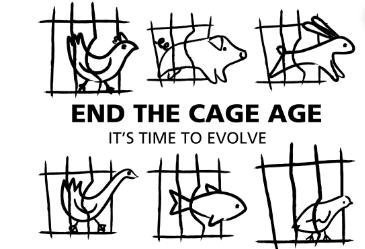
The European Citizens’ Initiative (ECI) “End the Cage Age” was an unprecedented success, which will possibly be mirrored by other ECIs and petitions on animal welfare that are gathering momentum. In its wake, the Commission committed to ending the use of cages in animal farming, which will require a profound rethinking of many existing intensive animal rearing systems (for laying hens, breeding sows, and rabbits, to name but a few). We are ready to use the best available science and defend best practices on animal welfare in the heated debates that certainly await us in the coming months and years. 

We cannot forget that the European Union, much as it is a major global exporter, still imports large amounts of animal products from other geographical regions. In many cases these products are the result of farming practices that would be illegal under EU animal welfare (as well as environmental and labour) legislation. If the EU continues importing animal products from countries with lower or poor animal welfare standards, arguably this poses a moral dilemma for European citizens who in the great majority do not want substandard animal welfare products in the EU market. 

This moral dilemma is only very marginally reflected in trade agreements. So far, only the Slaughter Regulation has been applicable to imported products. Things are not rosy: enforcing EU rules on the protection of animals at the time of killing has proven to be extremely problematic beyond the EU borders, as shown by several international audits and investigations. Certainly, much needs to be improved, yet this is the only way to go. 

Farmed animal welfare laws exist because the EU has acknowledged that animals are sentient beings deserving lives worth living. In light of this, the double standard that is currently in place for imports is untenable. 

It is often argued that WTO rules prohibit trade restrictions based on discriminatory standards as this could hamper equal chances for every nation to trade with each other on the global market. However, accepting imports from countries that do not comply with EU animal welfare rules arguably equates to violating the moral contract that the EU has established with its citizens. 

The successful precedents of the bans on EU imports of cat and dog fur and, more recently, certain seal products – which were declared compatible with WTO rules – clearly show that matters of animal welfare are primarily of moral concern for European citizens and as such they should be legally treated. If carefully constructed, trade restrictions aimed at protecting animal welfare can be compliant with WTO rules

Incidentally, it is often the case that products from countries with weaker rules for farmed animal welfare are cheaper. In the current scenario, where there is no obligation to label non-EU animal products, especially in processed food and in the hospitality industry, it is often impossible for consumers to determine the origin of what they are buying and eating. We are then faced with the paradox whereby citizens strongly demand even stricter rules for farmed animal welfare in the EU but as consumers they might be inadvertently supporting cruel farming practices elsewhere by buying low animal welfare products. 

One might wonder how big this moral issue can be. Looking at Eurostat data, we can only conclude that it is huge. Among the main exporters of animal products to the EU (beef, pig, poultry and lamb meats, eggs, fish from aquaculture) there are Brazil, Argentina, China, the United States, Ukraine, India, Vietnam and Australia. In these countries, farmed animal welfare standards are either vague, fragmentary, non-binding, or non-existent. And there’s more. 

Intensive animal agriculture is booming in many of these countries, a trend which, besides causing animal welfare problems, is environmentally unsustainable and a threat to public health. This should be all the more reason for the EU to impose its animal welfare rules on imports. Rather than seeing it as a barrier, the EU should approach this as a golden opportunity to promote higher-welfare and sustainable food production globally. Realistically, imposing requirements on imports will not force countries to change their entire animal welfare legislation straight away. However, as companies exporting to the EU are usually big corporations that are also pressured by NGOs to improve their animal welfare practices, their shift might eventually have a trickle down effect on federal and national legislations. 

In this way the EU will lead the race to the top on global farmed animal welfare standards, once again heeding the call from its citizens who clearly indicated they expect leadership on this. Nine out of 10 respondents to the 2016 special Eurobarometer said that they want imported products to comply with EU legislation. Additionally, citizens would like the EU to do more to promote its animal welfare standards worldwide.  

What does this mean in practice? Key aspects of the new and updated EU animal welfare legislation (on-farm rearing, transport, slaughter and labelling) should also be applied to imported products. This is the right thing to do, for so many reasons: it is what citizens want; it is a way to guarantee consumer rights; it will trigger positive changes worldwide; and it is compatible with WTO rules as it concerns the protection of public morals. Last, but not least, it will enable the EU to live up to its ambitions as global leader on animal welfare.

Regards Mark

New report explains urgent need to protect animals in disasters.

New report explains urgent need to protect animals in disasters

31 January 2023

Russia’s war in Ukraine in 2022 caused a myriad of challenges worldwide, but it also provided valuable lessons by highlighting what is missing for animals in the event of a disaster. Today, animals are not legally protected in disasters at EU level, although they play a vital role in people’s lives for economic and health reason

Animals in disasters: the need for protection and coordination across Europe

Browse the publication here:

Animals in disasters: the need for protection and coordination across Europe | Eurogroup for Animals

The imperative of protecting animals in disasters is underpinned by the human-animal bond, which influences human evacuation behaviour, the emotional support animals provide to people, the potential public health risks that disruption of health protocols can bring, and often the economic value of animals to humans. And as a result of the Ukrainian refugees crisis in 2022 by people’s willingness to save their animals in disasters. However, there is still little recognition among policymakers and humanitarian actors of the role that animals play in human life and in rebuilding communities after disaster.

Our new report suggests that the basis for the protection of animals in disasters is their legal inclusion in EU disaster law. It also outlines various actions that could be implemented by the EU and its Member States to better address the plight of animals in such circumstances. These include aligning efforts for people in disasters with those for animals, including animal welfare actors in a coordinated joint coordinated capacity during the disaster response phase, developing national disaster management plans involving animal experts, and establishing animal-friendly refugee camps in the EU, among many other initiatives. 

The experience of Ukrainian refugees bringing their companion animals with them has shown how much these animals are part of their families. Today, the Directorate-General for European Civil Protection and Humanitarian Aid Operations (DG ECHO) is responsible for humanitarian assistance and civil protection in the European Union. Its main instrument – Union Civil Protection Mechanism – recognises in its recitals the need to “reduce the vulnerability of animal welfare and wildlife” as part of disaster risk prevention and management, but there is no obligation to cover animals in terms of protection. Recognising the vital role these animals play in people’s lives could provide a legal basis for DG ECHO to extend its protection efforts to companion animals as family members. Other categories of animals should also benefit from legal protection in the event of a disaster, the legal grounds for which should be examined. 

While achieving protection for all species in disasters remains a long term goal, the immediate solution lies in the legal inclusion of animals into disaster law in the EU with the aim of involving animal welfare actors in the development of disaster management plans, and in a coordinated disaster response mechanism in the EU. There is great potential for the EU, Member States and NGOs to work together to be better prepared for disasters in the long term.

Regards Mark

1/2/23 – Remembering Jill:

India: Gearing Up For An Amazing Year For Animals In 2023 – Animal Aid Unlimited.

Dear Mark,     

We’re gearing up for an amazing year ahead for animals, thanks to your incredible support. 

A major area of focus is staff training and development. To this end, we have recently hired and begun training 10 new veterinary assistants to join our medical team. From dressing wounds, to giving medication, to helping with feeding, they will help make sure that animals get all the care they need to recover as quickly as possible. 

We reach higher every year because the animals deserve it, and your support has made so many dreams come true.

Do you know someone passionate about animal protection who’s ready for a new life adventure? 

Animal Aid is NOW HIRING!

Click here for detailed information about a variety of open positions for Indian Nationals and International applicants both, from Veterinarian to Volunteer Coordinator to Videographer!


Apollo’s jaw was broken, but not his spirit! 

With his jaw broken in two, this beautiful boy seemed to plead to his rescuers to help him. He couldn’t close or move his jaw, and his face showed utter bewilderment. But he shyly turned on his back in an act of pure submission, his tail wagging as if asking for help to stop the pain.

When we sedated him and saw the full extent of the fractures in his jaw, we were worried we might not be able to save him. But we tried our best. And to our delight, he responded extremely well to the sutures, and by his third day was ready to start slurping up his liquid diet.

From that moment, we knew the incredibly sweet Apollo was going to thrive!

To help someone who wants to live, please donate today.

Casper came home to die.

But we came to his home to save him.

The family who feeds him hadn’t seen him for days and thought he was never coming home again. We can only imagine the difficulty he had making his journey home–perhaps from a great distance, and in excruciating pain and confusion. He must have used every ounce of his remaining strength just to make it home.

When we rescued him, he was too weak to resist, and he quietly endured the removal of maggots infesting his wound despite the pain he must have been in. But as he healed, his eyes and entire face transformed. He always had a few words for us during the weeks of wound dressings that followed, but this was a good sign. It meant he was strong enough to fight for his life. He was also strong enough to start demanding cuddles!

Heal a life-threatening wound for a life-loving sweetheart. Please donate today

From around the world, volunteers are bringing love to their beloved animals.

From Handicapped Heaven, to the Rehabilitation area, to Oldies and up to Peace Place and Sanctuary, everywhere we look we see animals basking in the love and attention showered on them from volunteers from around the world! 

Over there brushing a calf we see Dharmada, who has volunteered many times and especially loves spending time with the cows; over here we see Robin at work with an elderly dog in her arms; and busily refilling water bowls, sweeping, and stopping frequently for a cuddle is Sarah. 

In the Rehabilitation area we see Teresa massaging the shoulders of a road accident survivor; here too is Kitty whose multiple volunteering weeks have brought her loving hands to once again massage the hind limbs of paralysed dogs on a chilly morning. 

And there are first-time-but-not-final-time volunteers Jane and Melanie, who “hit the ground running” with gentle grace and so much loving kindness for the animals.

Learn more about volunteering:

No matter where you are on your life journey, having an up-to-date estate plan is essential. You may think estate planning is complex and expensive, but FreeWill’s online tool is free to use and guides you through the process with ease.

Planning your estate is one thoughtful action that puts you one step closer to achieving your goals, taking care of yourself, and finding peace of mind.

If you choose, FreeWill can help you pay it forward to street animals by naming AAU in your estate plan

Note: FreeWill’s self-help estate planning solutions are valid for the disposition of property
located in the fifty states and DC. Will-makers residing outside of the United States should
consult with a local lawyer before using FreeWill’s tools.

Saving the life of a street animal looks good on you.

100% of the proceeds go to our street animal rescues

Go shopping here:

Animal Aid Unlimited Shop

We thank you deeply for all you do, are, and inspire for animals

Founding family Erika, Claire and Jim, and the Animal Aid Unlimited team.

Regards Mark

Above – My Golda waits in the snow.