
Category: Uncategorized
Today we move into July; and in accordance with Clustrmap, we start with a new map showing visitors. Hopefully the red dots will increase in number as visitor numbers increase.
Dear Friends,
this will be my final post here. I have decided to not continue, or we have, my involvement with WAV – much as I enjoyed being part of it.
However, before I leave, I would like to you to know a little bit more about me – Mark has, on several occasions, spoken about himself extensively.
Animal Welfare .. where to start. Or where did it start with me – if not strictly as animal welfare as such, because a young child naturally has no concept of that, but an interest and “love” for living things other than one (human) self – early. From the time standing wide-eyed in front of a butterfly to lovingly picking up dead creatures, of whatever kind, to give them a decent burial (often to my mum’s dismay). Out and about on a Sunday afternoon, I never walked on the path like everyone else, but through the undergrowth next to it … “finding” the odd pile of dog shit in so doing (also to my mum’s dismay).
The draw of Nature was always very strong, clearly.
So, it was not long before I, one of three children, had the first pet. A rabbit. Budgies later. Cat(s) (25 in all since 1994) . Lambs (2) and horses (10), snatched from a fate as Sunday Roast and Salami.
Hedgehogs on my doorstep every night; Strays (cat); a magpie chick brought me once as having fallen from its nest – whom I hand-raised, and called “Mona”. A busy household, ever since I returned form the UK – London – in 1992.
London … is one of those places you either hate or you love. There’s not much in between, I heard many times. With me, it is the latter. For all its faults, and no doubt there are many, as with any large city of this size, London was for me a dream come true, when in 1986, I first set foot on English soil. Shortly after my apprenticeship in Germany. After a bumpy start, I soon found my feet, and by the time I left in 1992 – my life’s greatest and most regrettable mistake – London was home to me. And is to this day, from afar.
I never again properly resettled in Germany after, also to this day. Nor, to be honest, do I wish to.
Over the years I tried to fit in, but made a great number of unfortunate experiences, sadly with AW folk here also – mainly with the horses at the time, where I allowed myself to be drawn into the “rescue carousel”, at my own cost. I do not regret having had the opportunity to save a number of innocent lives, but it cost me financially mainly a great deal (I am not an organisation or had backup from one), with animals who were ill or severely traumatised. If there was a three-legged, one-eyed, mentally handicapped equine (analogy) in a butcher’s stable, and no one else came forward for it, it was me who “rode to the rescue” usually.
It was rewarded, many times, with abuse, threats, coercion, slander (online), from AW “colleagues”, and stable owners locally. I was forced to let go of my last gelding, whom I’d raised for 6 years, 4 years ago, for half the price I paid when he was a foal. Too many times also I had to watch helplessly as self-proclaimed horse experts failed in the trust (of care) I put in them for mine – and so was only able to pick up the pieces and repair the harm done to them, if I could. In two cases I could not … and I lost them.
It was a most painful lesson, and the animals were not the only ones who came away with scars. Today I restrict myself to my cats, and the odd creature on my doorstep, also for financial reasons, as I still pay for the horses, their upkeep, medical bills, etc. – after years. Not a problem as long as I was fully employed in IT, but having been made redundant in 2020, after many years for the same company, then unemployed for age reasons (now 60), then with a (now incurable) cancer diagnosis in 2023, and now with a small pension .. life is very limited.
And even now, I need to work, part-time if I can – among other things, cleaning people’s toilets.
However, I keep being committed to the AW cause, and to the animals in my care especially. It is an uphill struggle here also – rurally – as I have become the target of local ire, in this small community, as is often the case in rural areas, where animal welfare is a sore issue. And an activist such as myself, alone, is a welcome target.
All of this taken together, is challenging on a daily basis, and very taxing – in a number of ways. I cannot fall back on any support network, privately, but, the health situation permitting, as long as possible, I intend to fight on.
My work with Mark, for WAV, and before, for “Serbian Animals Voice”, which some of you may remember, has been a source of pride for us both over the years. And I certainly hope it made a difference, in a positive way, to a number of different issues, like Live Export, and extremes like “Cat Torture” – of particular importance to myself.
I hope and expect, that Mark will continue this good work on WAV, and I have every confidence in his success.
All the very best to all of you.
Diana

There has already been some very positive news from the EU today – read it here https://worldanimalsvoice.wordpress.com/wp-admin/post.php?post=77241&action=edit
Today, the EU Commission has re-launched the call for evidence; which we hope will see the start of hopeful, progressive movement for all farm animals. This is a re-start of a bid to deliver a revised strategy for animal welfare. The new call for feedback is open until MID JULY.
The commitment includes the phasing out of the use of cages; a promise it had made back in 2023. Link:
There is a lot of welcoming for proposals, especially those which talk about the phasing out of Cages, and following the demands of 1.4 Million EU citizens who asked to ‘End the Cage Age’ – https://food.ec.europa.eu/animals/animal-welfare/eci/eci-end-cage-age_en

The Commission is indicating that it will present legislative proposals for the first sector in 2026, with decisions being made on which issues to prioritise after extensive consultations in 2025.
The Eurogroup, along with many other welfare NGO’s, also very much welcome the references to the phasing out of the systematic killing of day old chicks; a widespread practice which involves the slaughter over 300 MILLION chicks a year; who are simply treated as by-products of the food system, rather than 300 million individual Sentient Beings.
Also welcomed is the focus on import requirements; which should be imposed on both animals and animal products. This is to ensure that EU citizens do not succumb to lower farming standards from any produce raised outside of the EU. Good EU farming practices from good EU welfare friendly farmers is essential.
To ensure meaningful reform of animal farming in the EU, it is essential to meet the EU citizens demands by modernising animal welfare standards in addition to raising overall minimum standards.
Simply measuring animal welfare standards on paper is not enough; everything needs to be based on very reliable scientific evidence – as now demanded by EU citizens, this must set the forward path.
https://www.nowzad.com/our-work/working-animal-programme
Improving welfare
Working donkeys and horses are the life blood of the local communities in Afghanistan and Kabul is by no means an exception.
Where old meets new in the city; many families will have access to motor transportation (so much so that Kabul was recently compared to Delhi as the most polluted city on earth) whilst many more, particularly those who inhabit the surrounding mountains, do not.
The working donkey or horse is vital to carry supplies (water, food and building materials) to the steep hillside communities; which make up most of Kabul’s surrounding urban areas nestled precariously on the side of the unforgiving mountain terrain.
The brick kilns of Kabul are literally ‘hell-holes’ for working animals as they are more often than not, over-worked and completely neglected. The poor animals are worked to death.
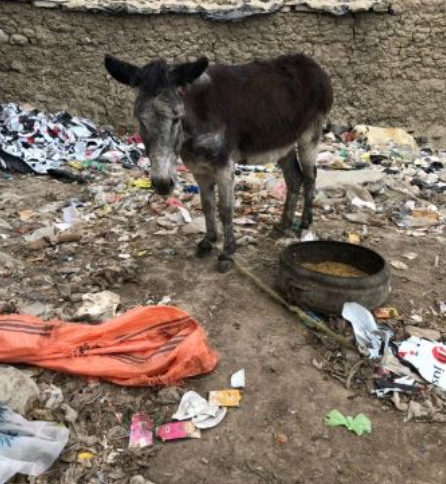

With little to no education, their owners have limited knowledge on the fundamental needs of their working animals which would lead to improving working conditions and improve their overall welfare.
Nowzad promotes healthy Afghan donkey ownership through an effective campaign targeting donkey and horse owners and muleteers (especially at the brick kilns of Kabul) explaining and teaching the importance of basic health checks for their animals along with feeding requirements and required vaccinations.
We employ a farrier to relieve animals of painful and uncomfortable hooves, a small gesture that makes a big difference to the working animals quality of life and where required hospitalise any donkey or horse as needed to allow them to recover from injury and illness. Importantly too, we employ a harness maker so that we can replace ill-fitting and injury causing harnesses.
We just cannot post some of the injuries we are sadly seeing. They are just too graphic. It breaks our heart but also makes us more determined with you by our side to be the difference for these working animals who have no choice but to be there.

All donkeys that we treat are recorded so that we can follow their progress. Our veterinarians are experienced in tending to any donkey or horse that is sick or injured and we often offer ‘roadside assistance’ or outpatient treatment to animals in distress.
In November 2023, Nowzad was thrilled to join the global Working Animal Alliance working group, working with other NGOs such as World Horse Welfare, academics, the private sector and international bodies across the sector to create a stronger voice for working animals, and recognise the role donkeys and horses have in achieving the global sustainable development goals.

In 2017 Nowzad opened the FIRST EVER donkey/horse sanctuary in Afghanistan, a refuge for former working donkeys and horses who have been discarded like rubbish onto the streets when they are no longer able to carry the heavy loads demanded of them by their owners.

Be the difference today!
Please help us to continue making a difference for the working animals of Afghanistan by clicking here. You can watch Pen take on the ‘Walk a mile in a donkey’s shoes’ challenge here where he explains our work direct from the streets of Kabul.
We cannot carry the loads for them but we are going to do what we can to make their lives somewhat easier. Be the difference today please!
https://www.nowzad.com/supportus

***************
https://www.animalaidabroad.org/news/2023/11/9/nowzad-donkey-sanctuary-annual-report-2023
****************
Please also read ..
Mon 16 Jun
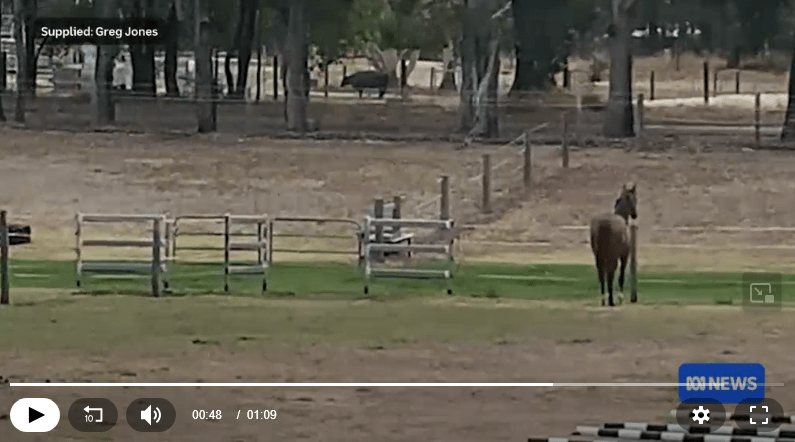
Greg Jones described the incident as “animal cruelty at its worst”. (Supplied)
<< Watch Video on Site >>
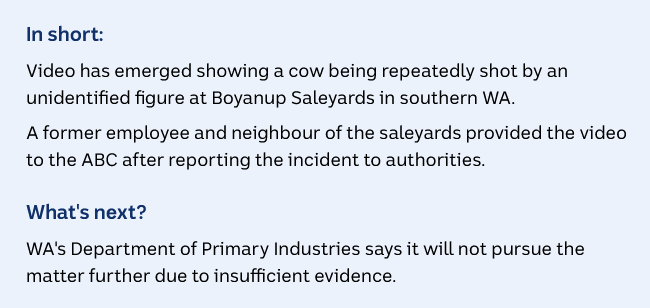
Video of a cow being shot multiple times has put further scrutiny on animal welfare standards at a controversial saleyard in Western Australia’s South West.
Filmed from about 100 metres away on a mobile phone near Boyanup, 185 kilometres south of Perth, the video shows a cow at the town’s saleyards lying on the ground being shot three times by an unidentified figure.
Appearing to be shaken and in distress, the cow gets to its feet before a further two gunshots can be heard, before the animal falls to the ground.
Greg Jones, who previously worked at the saleyards, was sitting in his kitchen in February when he heard the gunshots and filmed the incident.

The Boyanup saleyards are located on the outskirts of the regional town, about 180 kilometres south of Perth. (ABC South West WA: Kate Forrester)
The Boyanup saleyards have been subject of controversy and criticism for decades.
The livestock facility is run by the Western Australian Livestock Salesmen’s Association (WALSA), which recently missed a deadline for critical animal welfare upgrades at the site.
Some farmers have described the facilities as an “embarrassment” and the “worst saleyards” in Australia.
Veterinarian David Marshall, who has practised for more than 30 years, reviewed the video provided to the ABC.
Dr Marshall said it was difficult to get the full picture of the incident but conceded there were “concerning elements”.
“Even at face value, it probably doesn’t meet the community expectations,” he said.

Lack of shade at the saleyards has been raised as an issue in past years. (ABC South West WA: Kate Forrester)
Discussing improvements
Mr Jones reported the incident to the RSPCA and the Department of Primary Industries and Regional Development (DPIRD).
A DPIRD spokesperson said the matter was investigated, but there was not enough evidence to take it further.
“The matter was investigated by DPIRD livestock compliance inspectors, who found the evidence obtained was not sufficient to support a criminal prosecution,” the spokesperson said.


The Boyanup saleyards have long been mired in controversy and criticism. (ABC South West: Kate Forrester)
‘Most humane’ death
In response to this latest incident, WALSA said the cow was euthanised within welfare guidelines.
“The cow was euthanised using a destruction method to provide the most humane and quickest death possible for the animal and ensure the safety of those involved,” chair Mark McKay said.
“[WALSA] is required to comply with occupational health and safety laws and animal welfare standards and guidelines.
“These requirements were followed.”
Mr Jones said that was not good enough.
“If this is the quality of the people they have doing it. I think WALSA and yard management need to have a really good look at themselves,” he said.

Greg Jones says he has a clear view of what happens at the saleyards. (ABC South West: Kate Forrester)
Mr Jones has a bitter history with the operator, following the termination of his employment as a maintenance worker in 2023.
Mr Jones previously filed another complaint about the saleyard dumping effluent in nearby bushland.
“I was the one who originally dobbed them in,” he said.
Lessons to be learnt
In 2021, Dr Marshall sat on a public review panel of WA’s aging animal welfare laws.
He said the incident was a reminder of the need to improve WA’s animal welfare standards across the board.
“We need to be spending a lot more resources on improving animal welfare. We certainly did make recommendations around resourcing and education,” Dr Marshall said.
“Probably the thing that disappoints me as much as anything is that we still don’t have that groundswell to some extent of public feeling to put pressure on our politicians to do more.”
The state government is yet to modernise state laws in the wake of the review of the Animal Welfare Act, despite agreeing to in 2020.
The DPIRD spokesperson said it was “progressing” the bill to update the act and would continue to monitor animal welfare at the saleyard.
The state government said that while the Boyanup Saleyards was a private business, it was committed to taking animal welfare seriously.
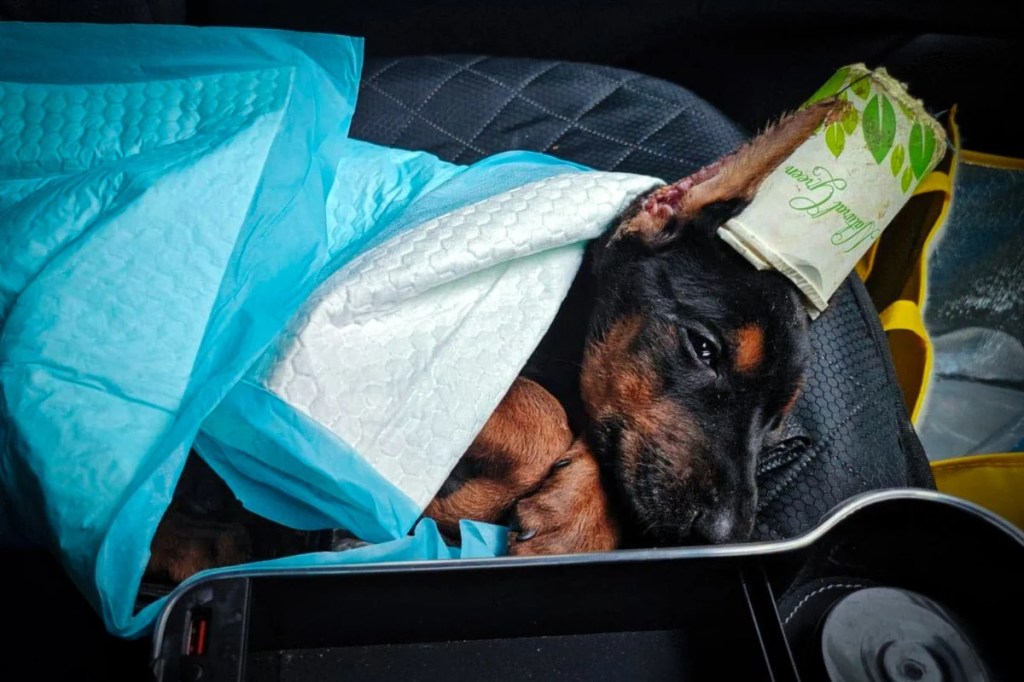
Two-month-old Doberman puppy was found abandoned in a park with infections caused by ear cropping
Updated: 11:51am, 17 Jun 2025

June 16, 2025 11:52 ET
TORONTO, June 16, 2025 (GLOBE NEWSWIRE) — National animal protection organization Animal Alliance of Canada is calling on the government of Manitoba to order an immediate suspension of the current black bear hunt in light of continuing active wildfires.
At least 21 fires, including eight deemed to be out of control and scattered throughout the three hunting zones, are currently burning in the province. A province-wide state of emergency was declared on May 28.
While 21,000 residents have been evacuated and travelers asked to reconsider non-essential travel to free up hotel rooms for these evacuees, the province continues to allow foreign hunters in. The fire hazard presented by these hunters’ guns and all-terrain vehicles present unnecessary additional risks for new fires.
Black bears are the only large mammal species allowed to be hunted in the spring while cubs are reliant on their mothers for food and protection. As bears hide their cubs in trees before foraging and because their fur is too thick to be able to see if they are lactating, even bear biologists cannot reliably identify the sex of a bear. As a result, every spring, female bears are killed, leaving orphaned cubs, most of whom perish by starvation, dehydration or predation.
A newly released report (see below) commissioned by the Animal Alliance of Canada Fund, which draws upon published studies as well as the Manitoba government’s own data from seasonal bear hunts, indicates that in 2023 (the most recent year for which data is available) as many as 224 cubs were left orphaned by the spring bear hunt.
In addition, black bears are the only mammal species allowed to be baited for hunting. During the spring hunt, hungry black bears newly awakened from hibernation and restricted by limited food sources are drawn into established bait stations loaded with meat and sugary foods, where hunters wait for them. These stations, which are permitted just beyond 200 metres of a dwelling or 500 metres from a cottage subdivision or campground, may cause bears to become acclimated to finding human foods in close proximity to people. The allowance of such bait stations contradicts government instruction and legislation discouraging members of the public from feeding bears.
This year, these issues are compounded by the devastating forest fires and resulting habitat loss, altered food availability, and increased potential encounters with humans as the bears are forced to move into new territories.
“We are urging the government to order an immediate suspension of the hunt,” said Lia Laskaris, Chief Executive Officer of the Animal Alliance of Canada. “We are further calling for a moratorium on the spring bear hunt until a full survey and assessment of the damage can be conducted,” added Laskaris.
**********
16 Jun 2025
MP proposes new legislation to licence rescue centres in a move supported by a major animal charity.

New legislation has been proposed which could lead to the introduction of a formal licensing regime for animal rescue centres in England and Wales.
The move has also been backed by a leading welfare group while tens of thousands of people have separately signed an online petition calling for licensing and regulation.
The Animal Shelters (Licensing) Bill was introduced to Parliament by the Conservative MP Richard Holden last week.
He said recent cases, including one in his own Essex constituency where dozens of dogs were found dead, had shocked the public and “exposed a dangerous gap in the law”.
Closing loophole
He added: “The Bill will bring rescue and rehoming centres under the same statutory framework that already applies to kennels and breeders, closing the loophole that leaves animals unprotected.
“Mandatory licensing will drive up welfare standards, weed out rogue operators and give the public confidence that every organisation caring for dogs is properly equipped and held to account.”
A 25-year-old man is currently in custody on animal welfare and fraud charges following the discovery of 37 dead dogs at premises in Billericay in May.
A second man remains on bail, while a 25-year-old woman was arrested earlier this month. The remains of four more animals were found following a new search of the site.
Mr Holden said he had worked with both Dogs Trust and the RSPCA in developing his Private Members’ Bill.
‘Proper oversight’
Dogs Trust chief executive Owen Sharp said: “Good intentions aren’t enough. We need laws in place to make sure all rescue dogs are safe, cared for, and treated with the respect they deserve.
“Without proper oversight, these organisations cannot guarantee that they are operating in the best interests of the animals in their care.”
More than 50,000 people have also signed an online petition, launched prior to the Essex case, which demands licensing and regulation of rescue centres.
In its response, Defra said it would outline more details of its “overarching approach” to animal welfare in due course, but stressed that rescue groups must meet existing legal requirements.
https://animallabourunion.org/



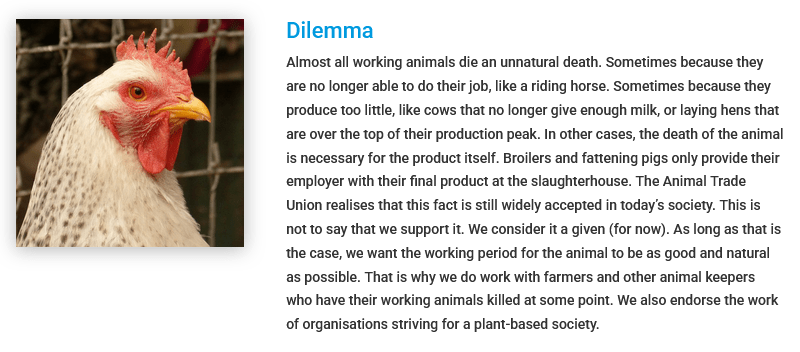

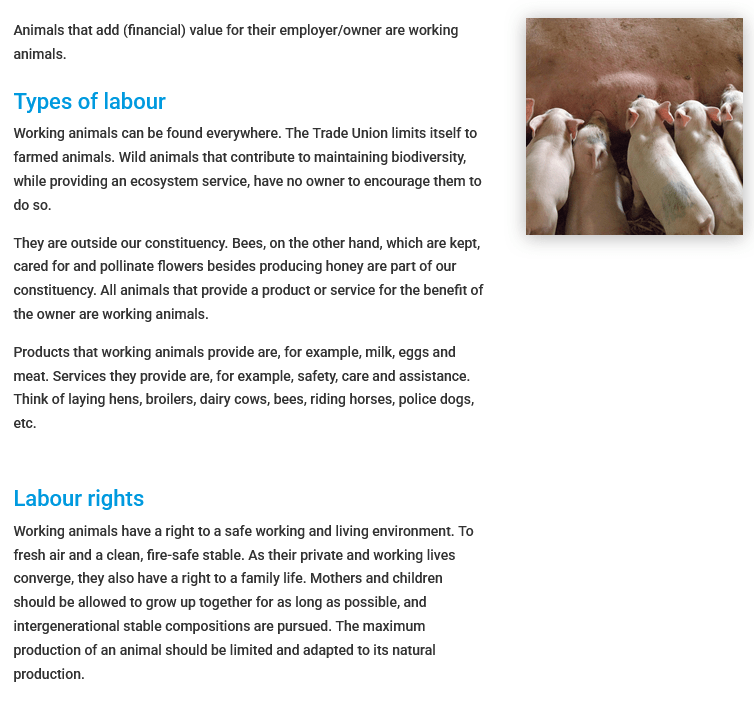

*************
What a wonderful site!
There’s more to explore!
Have a Look!!
 World Animals Voice