Category: Vivisection

USA: British Man with Muscular Dystrophy requested to see University dogs who have been bred to suffer from canine MD and are imprisoned in a laboratory there. He was Banned from the the Uni for 2 Years for peaceful his actions.

USA-Flagge


Johnathon Byrne—a British business owner who has muscular dystrophy (MD)—has filed a lawsuit against Texas A&M University for allegedly violating his civil rights.

During a visit to Texas A&M, Byrne—who must use a wheelchair at all times—peacefully requested to see the dogs who have been bred to suffer from canine MD and are imprisoned in a laboratory there.

Following that request, university police detained him, booted him from campus, and banned him from returning for two years.

Johnathon Byrne

The lawsuit alleges that the school flagrantly violated Byrne’s constitutional rights that guarantee free speech and protection against false arrest.

Help the dogs whose suffering in Texas A&M’s cruel and useless MD experiments Byrne cares so deeply about:

https://support.peta.org/page/1007/action/1?utm_source=PETA::E-Mail&utm_medium=Alert&utm_campaign=0619::viv::PETA::E-Mail::Man%20With%20Muscular%20Dystrophy%20Harassed%20at%20Texas%20AM::::aa%20em&ea.url.id=248780

At Texas A&M University (TAMU), experimenters led by Joe Kornegay breed golden retrievers to develop canine muscular dystrophy (MD). This disease ravages their bodies, causing progressive muscle wasting and weakness. Studies using these animals haven’t led to a cure or even a treatment to reverse disease symptoms.

Video footage shows that the appallingly thin dogs in Kornegay’s laboratory were caged, sometimes alone, in barren metal cells and struggled to swallow thin gruel—the only food that they could eat, given how easily they could choke. Long ropes of saliva hung from the mouths of those whose jaw muscles had weakened. Even balancing was difficult. Dogs with this condition are also at great risk for contracting pneumonia because they can easily inhale liquid into their lungs.

Dogs who didn’t have the disease but carried the MD gene were used for breeding. Deprived of loving homes, they frantically paced across the slatted floors and bit the bars of the small cages in frustration. They didn’t even have the comfort of a blanket.

To gauge just how much a dog’s muscles have deteriorated, Kornegay has invented a crude technique that could pass for medieval torture: He repeatedly stretches them with a motorized lever in order to cause muscle tears.

Kornegay has been at this for more than 35 years. Puppies in his laboratory who are born with MD are so weak at birth that they require extra nutrition. By 6 weeks of age, their hind limbs have shifted forward, making walking difficult, and some are unable to open their mouths or jaws.


Take Action – help the suffering dogs:

Director Richard Linklater, actor Lily Tomlin, political commentator Bill Maher, NFL player Ryan Tannehill, and, most recently, musician Nikki Sixx have all spoken out against TAMU’s MD experiments on dogs. Please join them by urging the university to close its dog laboratory, stop breeding dogs to have MD, release all dogs for adoption into good homes, and redirect its resources toward humane research methods.

https://support.peta.org/page/1007/action/1?utm_source=PETA::E-Mail&utm_medium=Alert&utm_campaign=0619::viv::PETA::E-Mail::Man%20With%20Muscular%20Dystrophy%20Harassed%20at%20Texas%20AM::::aa%20em&ea.url.id=248780

The new hope: personalized medicine


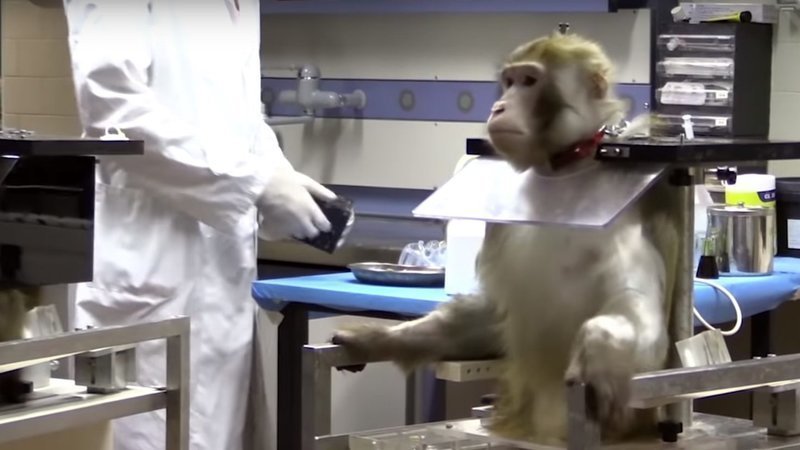
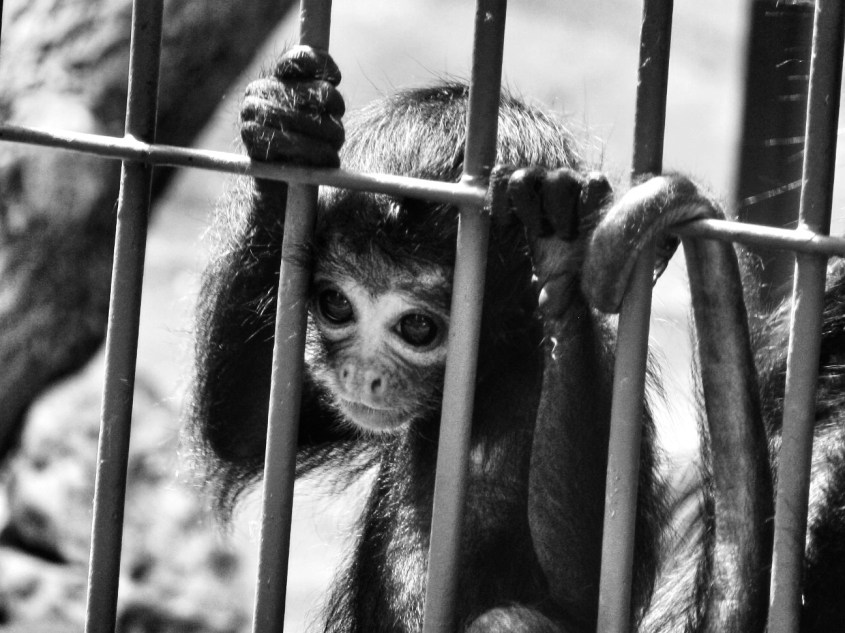
Rats, mice, fish, pigs, goats, birds, monkeys, cats, dogs, rabbits, guinea pigs. It can be said that there is no species that is not used in animal experiments.

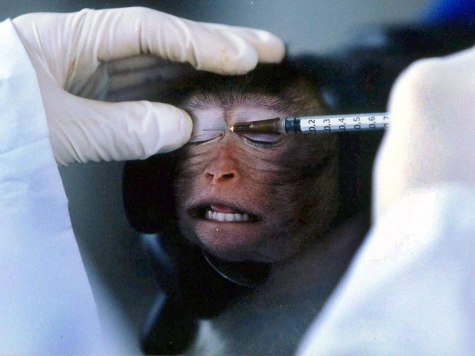
Makaken-Affe beim Tierversuch

Animal experiments are not only unethical and morally objectionable, but scientifically unreliable too. Humans and animals are fundamentally different in their physiologies such that data obtained from animal experiments cannot be applied to humans.

This film by the German NGODoctors Against Animal Experiments” shows some of the possibilities of innovative research methods based on cells of human origin that are scientifically sound and provide human-relevant data.

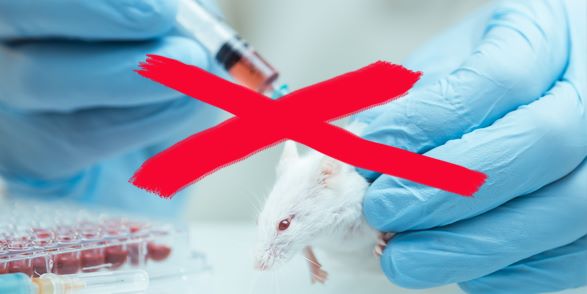
Mini-organs and multi-organ chips allow a research that not only brings reliable results for humans, but also works without animal experiments.

There is no complete man on a chip yet, but the developments are in full swing.
Single organ chips are already available: Heart, intestine, lung, kidney, liver and currently a mini brain was developed. Watch the video!

Here individual human organs are reproduced. The advantage is that they are based on human material, such as cardiac cells, which, for example, occur during surgery anyway. This will test drugs or other substances. Such organ chips can be connected with small tubes – almost to a mini human.

multiorgan-chip-100-Multi Organ Chip


Who is interested in leaving everything as it is during animal experiments?

There is a billionaire animal experiment lobby behind. Animal experiments can make huge sums of money. Whole industries thrive, from the laboratory equipment companies that sell all the equipment to the breeders of the animals.
Everyone can order animals for experiments as in the catalog.
And, of course, the researchers themselves, who are getting funds for doing animal experiments. The more they publish in professional journals, the more money they receive for new animal experiments.

This is the self-sustaining system of the laboratory mafia.

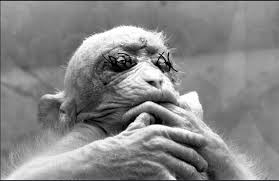
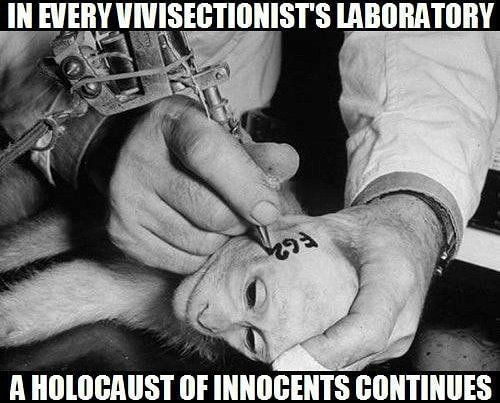
gegen-tierversuche-äffchenjpg

Apart from ethics, animal experiments are a very fatal aberration, if one believes that he wants to cure or understand human diseases. Although this is spread in the public, but does not correspond to the facts. And the vast majority of animal experiments, more than 40 percent,  serve from the outset the purportedly purposeless basic research.

Of the few drugs that make it to the market, up to 50 percent are withdrawn because they show side effects, sometimes even with death, show, which could not be detected in animal studies before. This is further proof that the animal experiment is not suitable for creating security for us consumers.

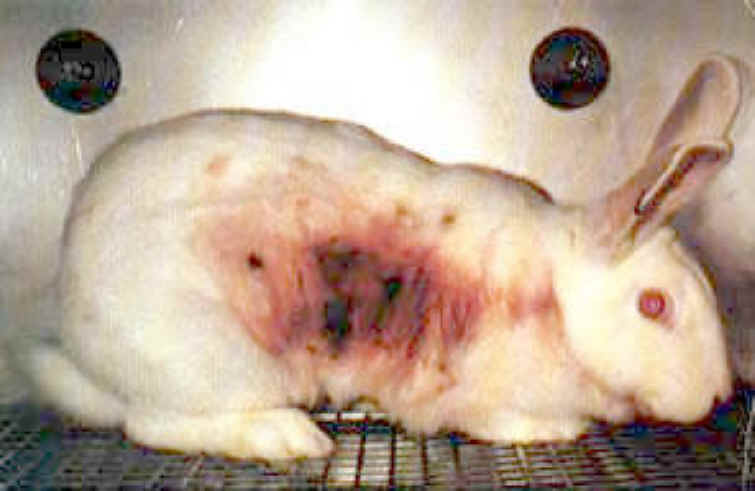
kanninchen festgenageltg

Scientific studies prove again and again that animal experiments do more harm than good. Accordingly, announced medical breakthroughs, such as cancer, are missing.

It is a consumer security faked, which is not given in reality. Rather, animal testing is a tool to legally protect companies, such as the chemical industry, in the case someone is harmed or killed.

An end to animal testing does not mean an end to medical research. On the contrary: Without animal experiments, medicine would be much further, because animal experiments only stop medical progress.

https://www1.wdr.de/wissen/mensch/aerzte-gegen-tierversuche-100.html

My comment: Cancer is a typical example of the chronic failure of animal experimental medicine.
It may be that with some types of cancer certain treatment successes are to be observed.
But given the billions of investments in chemos, radiation, medicines etc … and the millions of cruelly tortured animal victims, the overall balance is sobering to catastrophic.

 
“The history of cancer research is the story of how to cure cancer in mice. For decades, we have been curing cancer in mice, but it has not worked out in humans” (Dr. Richard Klausner, Director of the American National Cancer Institute).

My best regards, Venus

Experimenter: a job for psychopaths

USA-Flagge


It’s a basement torture chamber.

Documents obtained by PETA reveal that Johns Hopkins experimenter Shreesh Mysorecuts into the skulls of barn owls, inserts electrodes into their brains, forces them to look at screens for hours a day, and bombards them with noises and lights—and pretends that doing this will tell us something about attention-deficit disorder in humans

Funded by Johns Hopkins University with more than $1 million, Mysore intends to use 50 to 60 barn owls in just the current set of painful experiments. He’s also received more than $1.3 million from the National Institutes of Health to torment these owls and other animals.


button

Six owls are just for his students to practice surgery on and then kill.

What He Does to Owls
Mysore cuts into owls’ skulls to expose their brains. Then, he screws and glues metal devices onto their heads. The owls endure two to three invasive surgeries before Mysore uses them in experiments.

eulepgThis owl is one of many imprisoned in Shreesh Mysore’s basement laboratory, where he cuts into their skulls and screws metal devices onto their heads in curiosity-driven experiments that have no relevance for human health.


 

These birds—who are nocturnal hunters who would fly great distances in their natural habitat – are forced into plastic tubes so cramped that they can’t move their wings while Mysore bombards them with sounds and lights and measures their brain activity.

For some experiments, he restrains fully conscious owls for up to 12 hours.

During these experiments, he pokes electrodes around in the brains of the fully conscious birds, mutilating their brain tissue so severely that they become “unusable” to him – at which point he kills them.

Mysore admits that his experiments are painful for the owls,yet in his grant application for the experiments, he provides scant information on any pain medication that would be administered.

Eulejpg

All the owls are killed at the end of the experiments.

Mysore claims that his experiments could help humans, but owls have well-developed auditory and visual systems that are specialized in target selection (unlike humans).

Bombarding these animals with artificial stimulation while their brain activity is measured in a distressing and completely unnatural situation does nothing to further understanding of human attention-deficit disorder. 

In another published work, Mysore describes how he placed the owls in a retention tube so that they were vulnerable – an unnatural position for them – and then, screwing the bolts connected to their skulls into a “stereotactic device” moved their heads.

Each year, the National Institutes of Health (NIH) conducts more than $ 15 billion in tax credits for animal testing.

Johns Hopkins is at the head of the line to drive the government’s Gravy Train and secure hundreds of millions of dollars a year for experiments on animals.

 Tell Johns Hopkins University to end this torment now!

Putting your subject line and letter into your own words will help draw attention to your e-mail.

Please sign the petition: https://support.peta.org/page/7677/action/1


My comment: Those all are called Mengele, all these remind us of the brown times with the experiments on humans in German laboratories in the Nazi times .

Psychopaths, unscrupulous sadists, who build a rich carefree life and career on murder and torture of defenseless animals and have the audacity to state publicly that they are pursuing these cruel works for the good of the people`s health.

“There are only two reasons for animal testing: either one knows too little about it or earns too much of it”


My best regards, Venus


UK: Tell the Ministry of Defence to Stop the UK Military Travelling to Denmark for ‘Trauma Training’ (Using live animals).

UK Flagge.gif

Between 2010 and 2017, experimenters at a top-secret UK government laboratory killed almost 50,000 animals in horrific tests. They exposed monkeys to biological weapons, poisoned guinea pigs, and blasted pigs with explosives.

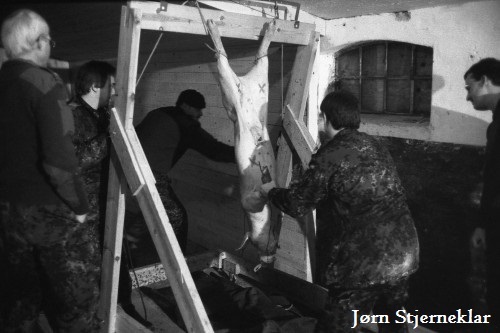
Twice a year, UK military personnel travel to Denmark to participate in deadly trauma training drills, in which they repeatedly shoot live animals such as pigs or subject them to severe blast wounds from explosions.

Non-animal training methods are already widely available, and new technology is under development, so there’s no justification for torturing and killing animals.

Please urge the Ministry of Defence (MOD) to stop shooting, stabbing, and dismembering pigs in cruel military training:


Regards Mark.


Related image

Penny
Mordaunt MP

Armed Forces Minister – 

TAKE ACTION:


Sign the campaign petition at:

https://secure.peta.org.uk/page/16881/action/1?utm_source=PETA%20UK::E-Mail&utm_medium=Alert&utm_campaign=0519::viv::PETA%20UK::E-Mail::traumatraining::::aa%20em  

Australia: great news!


Australia


From 1 July 2020, Australia will have a de facto ban on new animal testing for chemicals solely used in cosmetics.


Tierversuche stoppenn

Whilst the ban does not actually apply to animal testing as such, it targets the use of data from animal testing to prove that chemicals manufactured in or imported to Australia are safe to humans and the environment and is therefore, for all intents and purposes, a ban. Under the new legislation, industrial chemicals for sole use in cosmetics can be imported or manufactured only if they provide safety data that do not rely on new animal testing. This provides a disincentive for companies to conduct toxicity (safety) testing on animals, because such data will not be acceptable under the new legislation.

Kanninchen im labor1397913417

The new legislation

The Industrial Chemicals Act 2019 became legislation on 12 March 2019. It is part of a package of Acts and establishes a legislative framework for the Australian Industrial Chemicals Introduction Scheme (AICIS). It replaces the previous scheme, the Australian Government’s National Industrial Chemicals Notification and Assessment Scheme (NICNAS).

From 1 July 2020, AICIS will regulate the introduction (importation and manufacture) of industrial chemicals. This will ensure that chemicals used in consumer products are safe for consumers and the environment.

stoppt-tierversuche-in-oesterreich_1401567011

Under the new Act, industrial chemicals do not include chemicals used for agricultural, veterinary or therapeutic purposes, or in food or feed. These are regulated by other legislation. Cosmetic products are considered industrial chemicals, and they will be regulated under AICIS.

The new legislation does not apply to historical animal test data. The restrictions only apply to data obtained by a test on animals conducted after 1 July 2020.

kosmetik-ohne-tierversuche

Ministerial Rules

The Act gives power to the Minister to make rules that guide the implementation of the Act. The Act provides an overarching framework, and Ministerial Rules will add much of the detail of how the scheme will operate. This is where Minister McKenzie’s 11 commitments made to Humane Society International (HSI) and the #BeCrueltyFree Australia Campaign will come into play.

The Minister’s commitments

Despite the fact that most ingredients for cosmetics have multiple end uses, we are encouraged that the Government has promised to look at the possibility of extending the ban to include multi-use cosmetics ingredients.

This promise is one of Minister McKenzie’s 11 commitments to HSI, which had lobbied for additional measures to strengthen the ban.

The 11 commitments, if adopted as Ministerial Rules, will reduce animal testing of cosmetics ingredients further, and will perhaps signpost the way towards a broader ban on animal testing of chemicals and drugs.

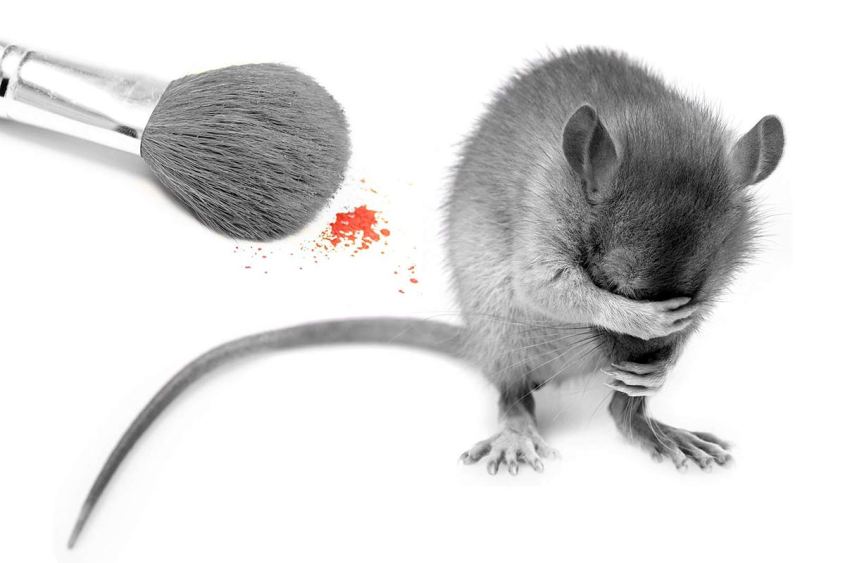
Tierversuche-Kosmetik-Maus-Pinsel

Animal testing can and must be banned when better, cruelty-free methods are available. Such  human-relevant, non-animal test methods are already available and are being used in other countries, for example in the European Union. But we need more of these methods, and government support is essential for further progress in this area.

So it is reassuring that Minister McKenzie has made a commitment to explore whether it is possible to make a portion of existing funding available to support the development and uptake of new animal-free testing methods that will be acceptable under the new legislation.

Other Ministerial commitments refer to encouraging the cosmetics industry not to use animal test data even if the legislation allows them to do so, to publish statistics on the use of animal test data, and generally consult with all stakeholders. For example, she committed to “Include representatives from HSI and other relevant stakeholders, in a governance arrangement to guide the implementation of its policy to ban cosmetic testing on animals”.

tierversuch-ratte-d-27459718

The new legislation is indeed good news. Although no animal testing of cosmetics has occurred in Australia for years, the new Act will ensure that we don’t slip backwards. The Minister has acknowledged the “general international trend away from reliance on the use of animals to determine the hazards and risks associated with the use of industrial chemicals”. Together with the Minister’s  11 commitments, this gives us hope for further progress on the slow road towards phasing out all animal research and testing, which will be replaced with better methods that are relevant to humans.

Our colleagues at HSI have worked tirelessly to negotiate and achieve commitments in addition to the Act, and we commend them on their hard work.

http://www.humaneresearch.org.au/interview/a-breakdown-of-the-cosmetics-legislation

My comment: There was every reason to celebrate in 2013 : A ban on animal testing for cosmetics entered into force in the EU.

However, under certain circumstances, the authorities still require that cosmetic ingredients be tested on animals – under the guise of the REACH Regulation.

REACH is a regulation for Registration  Evaluation, Authorization and Restriction and  of Chemicals. That this continues to require animal testing is a clear violation of REACH itself and of the EU Cosmetics Regulation.

An EU court ruled that only tests without human animals should be used to meet the requirements for the safety assessment of cosmetic ingredients.

This means, that animal testing in the cosmetics industry with the aim of still testing ingredients that are allegedly harmful are insignificant.

Nevertheless! Even today, animals suffer and die in such experiments in EU countries.

We hope that Australia will act more consistently and honestly than the EU with the ban on animal testing.

PETA has an official list for animal-free cosmetics, it is unfortunately in German. If anyone is interested, I can post it.
I find cosmetics very important in our everyday lives.
And we all can not imagine living without soap, shampoo or toothpaste.
But just today we have NO excuse to use cosmetics that has been tested on animals.

tierfreie _kosmetik-tierschutz_cf6e31d1

We have information, knowledge, alternatives.
We just have to use it consistently.

My best regards, Venus


South Korea: Dismiss Veterinary Professor – Dog Abuser.

South Kores


South Korea: Dismiss Veterinary Professor – Dog Abuser.


Actions – English version of May 10th now available

by clicking on the following:

Once there, please click on ‘HERE’ to take further actions and to see the videos.

http://koreandogs.org/newsletter-may-10-2019/?utm_source=sendinblue&utm_campaign=PETITION_Dismiss_veterinary_professor_Lee_ByeongChun_from_SNU!_English_Translation_Available_Now&utm_medium=email


Dismiss SNU’s Prof Lee Byeong-Chun for cruel experiments on retired cloned detection dogs

College of Veterinary Medicine professor Lee Byeong-Chun at the Seoul National University, who hides behind his researcher’s mask, must immediately be removed from his position, and the government agency who granted Lee Byeong-Chun with government funds and the authority to do research on companion animals  needs to take responsibility! The business of cloning dogs must be stopped.


You can sign the petition directly at:

https://www.change.org/p/seoul-national-university-dismiss-snu-s-prof-lee-byeong-cheon-for-cruel-experiments-on-retired-cloned-detection-dog?utm_source=sendinblue&utm_campaign=PETITION_Dismiss_veterinary_professor_Lee_ByeongChun_from_SNU!_English_Translation_Available_Now&utm_medium=email


This Week Is ‘Lab Animal Week’ – See NON Animal Research Being Undertaken.

MPI Affe 3

This week it is Laboratory Animal Week.

Across the world; animals in labs are suffering in the most terrible ways. One of the aims of Lab Animal Week is to expose the suffering which goes on behind closed doors; and most importantly, to show that the are often NON ANIMAL research initiatives in existence which promote medical research without the use of animal models.

Here we are going to provide you with an insight into the UK organisation ‘Animal Free research’; and expose the many current research programs that they are working on which do not involve the use of animals at all.


Animal Free Research UK began as the Dr Hadwen Trust for Humane Research in 1970.

Walter Robert Hadwen was born in Woolwich on 3rd August 1854. He left school at thirteen, having passed his preliminary examination for entrance into the Pharmaceutical Society.

In 1872, at the age of eighteen, he moved to London where he had obtained a post at a pharmacy in Bedford Square.

It was also when he was about 21 that he became a vegetarian – originally betting a fellow-student that he could not live six months without meat. He not only proved that he could, but that he was in much better health.

He had already been upset at the suffering of animals killed for meat, and now he was convinced that the slaughter was both unnecessary and wrong. At the age of 22 he wrote: “For my part I am quite satisfied with my trial of Vegetarianism, and it would take more than mortal power to persuade me once again to make my stomach a graveyard for the purpose of burying dead bodies in!”

Read more – https://www.animalfreeresearchuk.org/who-was-dr-hadwen/ 


https://www.animalfreeresearchuk.org/?gclid=EAIaIQobChMI9dnnzerq4QIVBrTtCh05nAOZEAAYASAAEgL2tPD_BwE

https://www.animalfreeresearchuk.org/

It is based in Hertfordshire which is a county in England, UK.

Animal Free Research UK began in 1970 when the British Union for the Abolition of Vivisection (BUAV), now called Cruelty Free International, set up the Dr Hadwen Trust for Humane Research in honour of its former president, Dr Walter Hadwen.

We are a grant-giving trust, set up to award grants to scientists to help replace the use of animals in medical research. We split from the BUAV in 1980 and became a charity in our own right.

We became an incorporated charity in 2013 and in April 2017, we adopted the working name Animal Free Research UK.

Click on the following link to get more information on medical research which is currently being undertaken WITHOUT the use of any animal testing – also the further options to select other medical research projects


https://www.animalfreeresearchuk.org/active-projects/


Including:

Brain Tumour Research

https://www.animalfreeresearchuk.org/brain/blood-brain-barrier/

Diabetes Research

https://www.animalfreeresearchuk.org/diabetes/research/

Breast Cancer Research

https://www.animalfreeresearchuk.org/project/breast-cancer-research/

Chronic Pain Research

https://www.animalfreeresearchuk.org/project/chronic-pain-mas-related-gene-receptors-as-novel-molecules-for-pain-relief/

Using Thiel embalmed human cadavers to train doctors and test heart disease and stroke treatments

https://www.animalfreeresearchuk.org/project/medical-devices-testing-thiel-embalmed-human-cadavers/

Human in vitro Brain Tumour methods to replace animal research.

https://www.animalfreeresearchuk.org/project/human-vitro-brain-tumour-replace-research/

The Animal Replacement Centre of Excellence (ARC).

https://www.animalfreeresearchuk.org/project/the-arc/

Catch up with the latest NON ANIMAL research blog news – Well worth looking at !:

https://www.animalfreeresearchuk.org/latest-news/


lab3

Lab Animal Week

Laboratory Animal Week: 24 – 30 April

Each year during Laboratory Animal Week, many volunteers proudly don red sashes and take to the streets, shaking a can on behalf of laboratory animals everywhere. These activities make a huge difference by raising much needed funds and increasing public awareness about our work.

Lab Animal Week 2006

The horrific story of the six (UK) human volunteers in the disastrous TGN1412 drug trial has forced some scientists to concede that the kind of non-animal alternative that we have been pushing should have been used.

TGN1412 had been extensively tested on animals. The dose that was given to the volunteers was 500 times lower than that which had caused no ill effects in monkeys.

It is accepted that animal models are poor predictors of the effects in humans, with around a third of all new drugs failing in human clinical trials. The Medicines and Healthcare products Regulatory Agency (MHRA), the Government health watchdog, says that doses in clinical trials should be 100 times lower than doses that are safe in animals.

When the story broke, we were able to give the media details of species difference and of non-animal alternatives such as microdosing. Other commentators had to agree. Microdosing is a system that would replace many animal tests, as it involves administering ultra-low doses of a drug to human volunteers and analysing the results. It avoids species differences, it saves animals, and it is safer for the human volunteers

http://www.navs.org.uk/take_action/39/0/408/


Maus-im-labor-peg

lab tat

England: Rabbits given cholera and fatal injections in ‘painful’ university experiments.

England

lab5

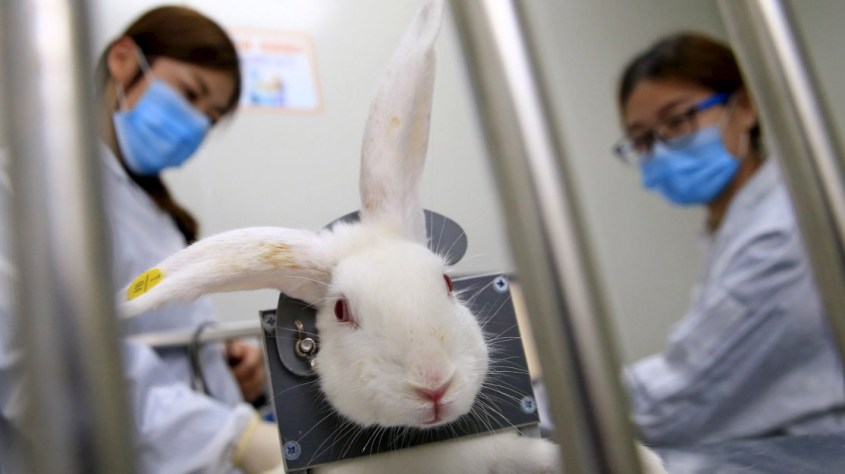
Rabbits given cholera and fatal injections in ‘painful’ university experiments

Hundreds of rabbits were allegedly subjected to to painful experiments in British universities last year, a campaign group has said.

Some of the creatures were infected with cholera, others given fatal injections, while some had their eyes sewn shut.

Scientists are becoming increasingly secretive about the tests, and the number prepared to release figures almost halved this year, researchers found.

Oxford University, which in 2017 carried out 236,429 tests on animals, refused for first time in four years to reveal how many rabbits it used last year.

Edinburgh, Cambridge, University College London and 15 others also declined to give details, according to anti-vivisection group Animal Justice Project (AJP)

The campaign group, which uncovered details of some experiments from research papers, called for more transparency on “out-of-date and futile” tests on “Easter bunnies”.

It believes around 26 experiments are conducted every day on rabbits in the UK, many in academic institutions.

AJP alleged that last year:

  • Sixty baby rabbits were infected with cholera at Nottingham University, causing diarrhoea, vomiting and dehydration. They were believed to have suffered extreme thirst, low blood pressure and irregular heartbeat causing death if “humane termination” was not carried out.
  • At Liverpool University 18 rabbits had bacteria injected into their spines every other day for 10 days to induce fungal disease. Some died prematurely.
  • At University College London researchers carried out “traumatic” eye surgery, injecting drugs into rabbits’ eyes and sewing them shut. Six rabbits were operated on for eye implants and left for a month before being killed.
  • Sheffield University led on a study in India in which synthetic membranes were glued to one eye of 14 rabbits and the eye sewn shut. Ten animals were left with ocular lesions and eye congestion. “These rabbits would like have felt severe pain and burning to their eyes while confined to their barren metal cage or worse, restraining stocks,” AJP reported
  • At Leicester University at least 64 rabbits were killed in an experiment funded by the British Heart Foundation. In multiple experiments by Kings College London rabbits’ heart arteries were injured before they were fed high-fat diets so researchers could investigate plaque build-up


Durham University used 264 rabbits, Leicester used 68, Sheffield 59 and Nottingham 40, according to AJP, which also claimed that Liverpool University refused to answer a freedom of information (FOI) request but told a member of the public it used 122 rabbits.

Latest government figures show that 9,498 rabbits were used in labs in 2017, and AJP said more than half of all animal experiments take place at universities.

The group, which asks them all each year through FOI laws about animals used in research, said this year numbers of institutions being open almost halved, from 46-57 usually to 29 out of 70.

The number refusing almost quadrupled, from 5 to 19, many promising to put details online.

AJP said a replacement test for rabbits had been accepted by regulators since 2010 but its use was not compulsory by law.

Claire Palmer, group founder, said: “Animal experiments like those we have uncovered will be unpalatable to many. Rabbits are a much-loved animal who some share their home with. Disturbingly, universities just won’t tell us what is happening to them.

“They refuse to make information public when asked, but get round it by saying they will put figures online.”

Campaigners staged a “die-in” at Nottingham University, with members dressed as the White Rabbit from Alice In Wonderland. A similar protest is planned at the University of Liverpool on Good Friday.

Speaking on behalf of the universities, Wendy Jarrett, chief executive of Understanding Animal Research, denied they were being secretive.

She said: “Since the publication of the Concordat on Openness on Animal Research in the UK in 2014, organisations that carry out, fund or support research using animals have been increasingly transparent about their animal research. UK universities in particular are very open about the research they carry out using animals, with most providing facts, figures, case studies and photos on their websites.

“The AJP’s own figures show that of the 62 universities they contacted this year, 29 provided the information requested and 31 said that they would publish the information on their websites. It is hard to see how AJP can say these universities are being secretive. A few UK universities use rabbits in research, but rabbits overall make up 0.3 per cent of the animal research in this country, and only a quarter of that takes place in universities.

“If alternatives to animal research are available and have been validated by regulators, it is illegal to use an animal and the research will not receive a licence from the Home Office. So rabbits are only used for safety testing, for instance to check that a vaccine will not cause fever in babies and children, when there is no non-animal alternative available.”

University tests on all animals in 2017

University of Edinburgh: 225,366

University College London: 214,570

University of Cambridge: 157,975

King’s College London: 139,679

University of Manchester: 104,863

Imperial College London: 97,787

University of Sheffield: 83,299

University of Newcastle: 53,158

University of Cardiff: 46,728

University of Glasgow: 46,045

University of Birmingham: 45,361

Queen Mary University London: 40,421

University of Dundee: 33,110

University of Exeter: 27,237

University of Nottingham: 25,248

University of Leeds: 22,725

University of Aberdeen: 15,268

Royal Veterinary College: 11,181

University of East Anglia: 11,082

University of Stirling: 9,209

University of Liverpool: 8,396

A Nottingham University spokesman said: “Animal studies are still important where animal-free models cannot mimic the sheer complexity of the body.  “The cholera study was undertaken for the World Health Organization and government of India to develop treatments for antibiotic-resistant infections. Demonstrating it worked successfully in rabbits was a vital step towards a new cure for a disease which affects millions of the poorest people worldwide.

“We proactively publish all details of our animal testing programme on our public webpages and respond to all Freedom of Information requests.”

An Oxford University spokeswoman said they refuse Freedom of Information requests only on data already due for release.

“The university also releases all animal testing data, by species and severity, every single year. This is usually in the autumn,” she added.

A Liverpool spokeswoman said its work had led to new drugs being approved, adding: “The university uses rabbits in research to help develop new antimicrobial agents for babies, children and adults for diseases that currently have few, if any, treatment options. Rabbit models are used to identify safe and effective dosages of new drugs that can then be studied in clinical trials.”

A Sheffield spokesperson said its research contributed to groundbreaking developments in treating major diseases, and it was committed to replacing animals.”However, we are not yet at the point where these techniques can entirely replace the need for animals in research.”

A spokeswoman for UCL said it was very open on the animal research it does and its commitment to use alternative techniques where possible. “Practically all the drugs available today have been discovered or developed due to animal research, and we would not have vaccines, cancer drugs, blood pressure medication, insulin, or inhalers without this work. Research using animals continues to be necessary,” she said.

The Independent has also contacted Leicester and Kings College London for comment.

Source:

https://www.independent.co.uk/news/uk/home-news/animal-testing-universities-rabbits-chlorea-injections-a8876936.html?fbclid=IwAR1D2QqnRe9Wp6jN1DRJRGPMGt5PEr8XVg4TJk1tlDRzRFWqfxknuL8Rjww


WAV Comment: If this is happening in ‘my’ country, England; which has pretty good standards for animal welfare, then what is going on behind closed doors in other nations also ?

Regards Mark.


AIDS research: The senseless suffering of the monkeys


“Among people”: A film by Christian Rost and Claus Strigel


Affe _n

Existence in six-square-meter boxes with no natural light and no contact with conspecifics: For years, forty chimpanzees from Sierra Leone have been illegally used as experimental animals for the development of AIDS and hepatitis vaccines. When the Austrian pharmaceutical company Immuno discontinues the experiments after 15 years without result, a rehabilitation project is launched.

At the far end of Austria near the czech boarder one of the most special places on earth can be found. At this focal point the moral challenges of our civilisation collide: guilt, responsibility and compensation. In an abandoned safari park, hermetically sealed off from the rest of the world live these fourty chimpanzees formerly used in pharmaceutical experiments. Infected with HIV and hepatitis viruses. Traumatized, deranged and highly aggressive.

They hate humans and have every reason to. Their guards are the same ones they already looked after in the lab. They have become emotionally close to them and become fellow prisoners. Now they accompany the primates in their first steps into a new life.

Today they manage the unique rehabilitation project, aiming to get the chimps out of their lifelong isolation into species appropriate groups.

The shocking fate of the chimpanzees is representative of that of all animals, which are tormented in the laboratories for a questionable benefit.

The “doctors against animal experiments” mean: “In AIDS, the first step does not work. Because there is virtually no species that develops the human form of immunodeficiency. After years of unsuccessful attempts, experiments with chimpanzees that are genetically very close to humans have largely been abandoned because they are immune to the pathogen.

The same applies to rhesus monkeys and other macaques, but one can infect these animals with SIV, the monkey AIDS pathogen.

However, monkey AIDS has virtually nothing to do with this human immunodeficiency disease.

Thus, it is attempted to find a therapy or vaccine for humans by infecting other animals with another virus that causes another disease. Nobody is surprised that AIDS is still not curable in such an approach.

Once infected with HIV or SIV, the monkeys are kept isolated, spending the rest of their lives in single cages, which are usually only slightly larger than themselves. For the active and social animals, this alone is an ordeal.

unter-menschen-sw

SIV infection often causes severe disease in macaques. The animals suffer from cancer or diseases of the stomach, intestine and lymph nodes. Many of them die from it. In other monkeys show no symptoms at all. They often have to live their lives for years under the torturous conditions….”

unter menschen 2 Affen_02

Items: AIDS research on the wrong track:
www.aerzte-gegen-tierversuche.de/infos/humanmedizin/105

Film: # Under people # against animal experiments #Aids #Aidsforschung

My comment: The fight against AIDS is a billion dollar market. The development of “new” agents at the expense of the animals does not help the patient. For biotech and pharmaceutical companies, the business is highly profitable. Investors earn money.

“These are “highly profitable products,” says Michael Fischer, head of the consulting firm Medical Strategy in Munich.

The more people are receiving medical treatment, the better for the pharmaceutical companies. According to a study by the US bank JP Morgan, global sales of AIDS drugs now amount to around five billion euros a year!!

Every war has its winners and its victims. The war against the HIV virus not only has humans as victims, but also animals. The winner is the Pharma mafia, as always.

“In the end it’s all about money, we have to see that very clearly.”

My best regards to all, Venus

We start the day with two good news!!


USA-Flagge


It is encouraging if we can start our day with good news. Today there are even two and both come from the USA!!

Great news: The pharmaceutical giant Johnson & Johnson has given a life-saving commitment following talks with PETA USA. In the future, the company will neither conduct the cruel forced swim test itself, nor will it finance appropriate animal testing.
In the forced swimming test, mice or other small animals are placed in a water tank and must swim to despair if they do not want to drown. On March 5, 2019, we reported about it (https://worldanimalsvoice.com/2019/03/05/hopelessness-from-the-lab/).

Schwimmtest-Ratte-

Both Johnson & Johnson and its subsidiary Janssen have published in recent years documents about the implementation of this completely pointless animal cruelty. The announcement made now signals the end of animal suffering in these nonsensical tests.

Johnson & Johnson made the right decision with the end of the forced swim test, because the experiment is not only scientifically useless, but also incredibly cruel.

In December 2018, AbbVie was the first pharmaceutical company publicly against the attempt. After PETA USA had asked the company to do so, they agreed not to carry out or finance the test in the future. On the company’s website it can be read that the Forced Swim Test is currently not carried out, an implementation is not planned in the future and corresponding attempts are not financed.

Maus_schwarz_in_Haenden-jpg

https://www.peta.de/Johnson-und-Johnson-Forced-Swim-Test

My comment: is nothing else but boundless joy!!


And now the second good news, also from USA!


USA-Flagge

In a resounding victory for animals, PETA has learned that the notorious Garden Bros. Circus will be allowed to carry out its scheduled performances in Washington, D.C., this weekend with willing human participants only—no animals can be forced to perform. DC Health denied the circus an Exotic Animal Permit. Garden Bros. has an “F” rating from the Better Business Bureau, and its workers have been caught striking an elephant in the face with a bullhook, whipping a llama onstage, forcing lame elephants to give rides and perform tricks, denying veterinary care to wounded and injured animals, and more.


The owners of the circus are having a rocky start to the tour season:

  • After learning that Garden Bros. was headed to the Greenville Convention Center in South Carolina, PETA worked with the venue which committed to banning Garden Bros. and all other circuses from performing there with animals in the future.
  • The Antelope Valley Fair & Event Center in Lancaster, California, decided to skip Garden Bros. performances scheduled there.
  • The Board of Selectmen in Walpole, Massachusetts, denied Garden Bros. a permit to put on a show there after learning about the circus from caring local advocates and the Massachusetts SPCA, which used information supplied by PETA.
  • With “Nosey’s Law” newly in effect in New Jersey, Garden Bros. won’t be able to force elephants and camels to perform in the Garden State. Authorities notified Garden Bros. that its advertising in the state depicts prohibited animals and rides and appears to violate the law. The letter goes on to tell the circus to update its materials immediately and inform consumers who have already bought tickets that the show will not have wild and exotic animals.

We’re glad the venues and localities above have joined the long list of ones that have already canceled Garden Bros. shows, barred it from performing with animals, or banned all animal acts. Now, more than 650 retail venues prohibit or restrict circuses with animals, and that number will continue to grow.


https://www.peta.org/blog/washington-dc-garden-bros-circus-perform-without-animals/

My comment: In Europe, there are 22 countries that have introduced wildlife prohibition or even general prohibition of animals in the circus. Germany is NOT included.

roncali cirkuspg

There are 17 countries worldwide, which also have wildlife prohibition in the circus.
Bolivia, for example, has general animal prohibition in circus!
But not Germany.
And Bolivia is a poor country. Bolivia is not Europe. And Bolivia has never said it has one of the best animal welfare laws in the world.
We can not name it other than that corrupt politicians has made Germany a circus number worldwide.

My best regards to all, Venus