And once again, .. what we already knew. An interesting read nonetheless.
Category: Wildlife
Battle to stop Africa’s waters being ravaged by China’s dark fishing fleets
Sunday 8 June 2025
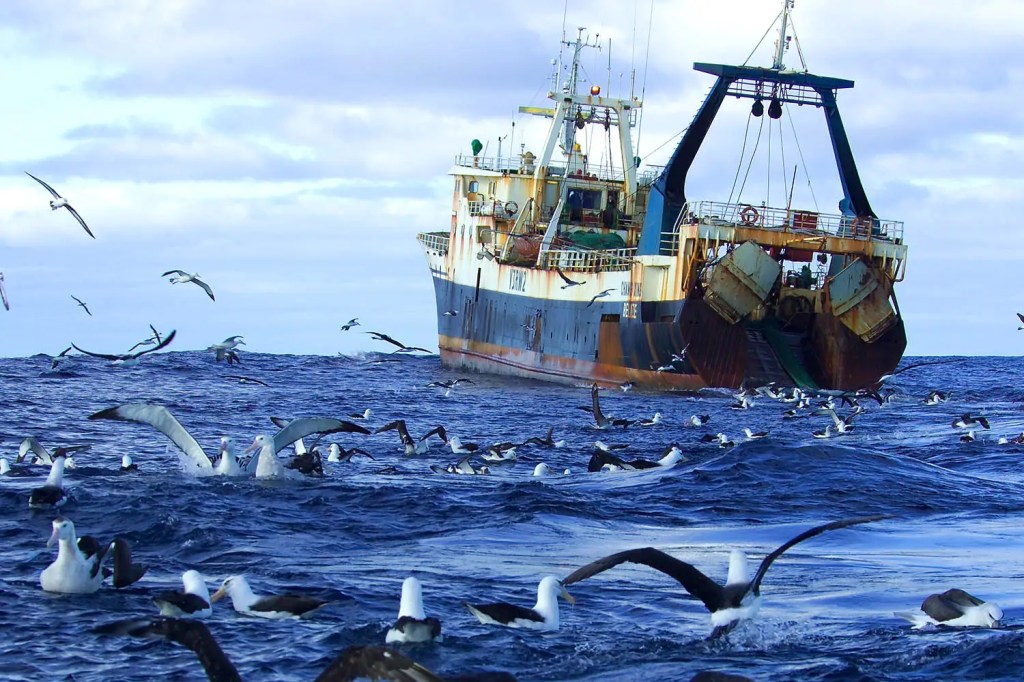
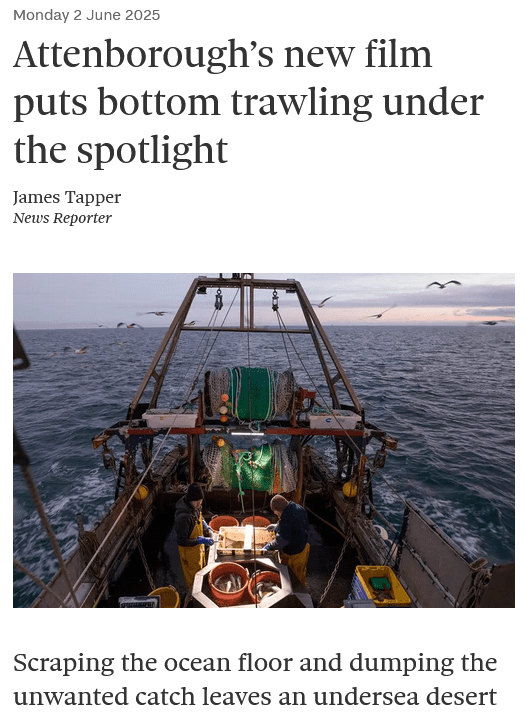
As David Attenborough warns of the damage being wreaked on the oceans by seabed trawling, the role of an army of mystery boats is in the spotlight.
The Ghanaian flag that droops from the mast of the Meng Xin 10 is one of the few African things about the fishing boat.
The deckhands are Ghanaian, and officially it is owned by a company in Accra. But the officers are Chinese, all the instruments and telemetry are in Mandarin, and the people who call the shots are based in the northeastern Chinese port city of Dalian.
For 10 years the blue-hulled vessel, one of at least 30 that investigators have linked to Dalian Mengxin Ocean Fishery, has meandered along Ghana’s coastline, dragging a heavy beam along the ocean floor about 200m below, bottom trawling for squid and cuttlefish.
Continue reading …
**************

**************
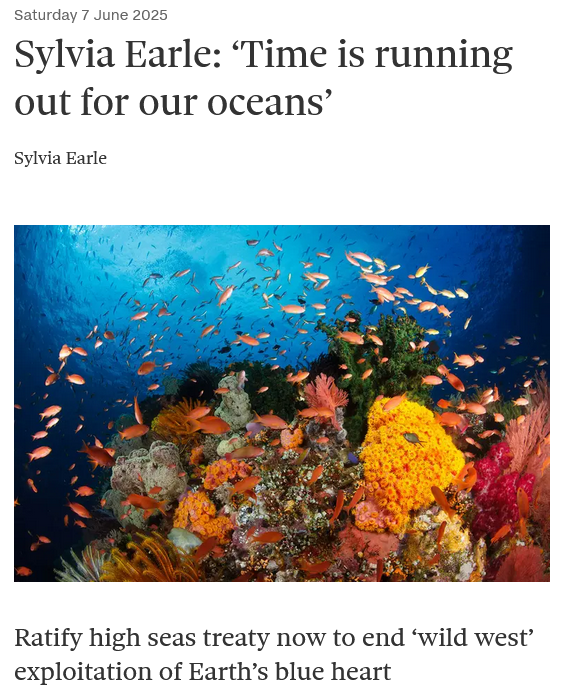
https://observer.co.uk/news/our-planet/article/time-is-running-out-for-our-oceans
**************
**************
**************
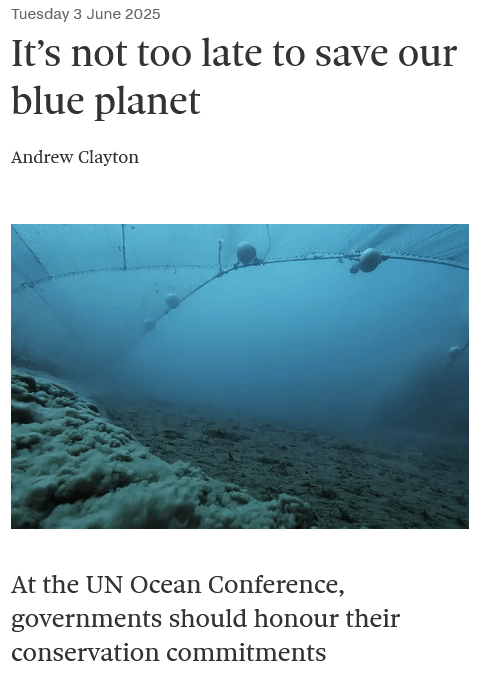
https://observer.co.uk/news/oceans/article/its-not-too-late-to-save-our-blue-planet
**************
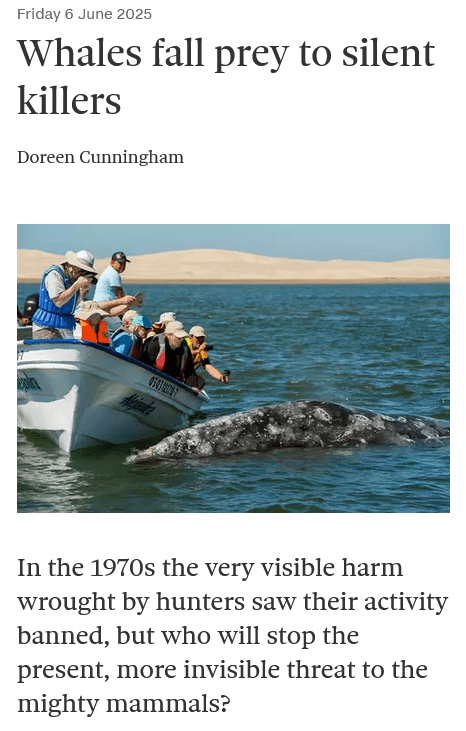
https://observer.co.uk/news/oceans/article/whales-fall-prey-to-silent-killers
This course provides an introduction to the problem of wild animal suffering. It covers the situation of animals in the wild as individuals, including the many harms they suffer, and ways of improving their situation, including some of the ways this is already being done.
This is the opening video for the course. It gives an overview of the topics that will be addressed in the videos of the course.
Wild animal suffering: an overview of the course
Concern about the suffering of wild animals and the ways we can help them has increased a lot in the past decade. A growing number of people are now aware that the lives of animals in the wild are not idyllic, and that they face threats that dramatically impair their wellbeing. There is more awareness now that this affects not just a few animals, but large numbers of them. While in the past, concern for wild animals was mostly focused on their ecological roles or their conservation status, many people now are concerned about what happens to them as individuals, as sentient beings.
Some people may think that it is unfortunate that wild animal suffering occurs, but be unsure about how widespread or how serious it is. Others may think this is an important issue, but not know how tractable it is, or what we can do to address it.
This course sheds some light on these questions and helps give a more clear understanding of the reality of wild animal suffering and, what is more important, of what can be done about it. It is intended to provide an introduction to this question for anyone interested in it, and to be especially useful to those involved in animal advocacy who want to know what can be done to help wild animals. The course will also benefit people working in natural sciences with an interest in learning how their work can help animals.
The course will include three parts.
Part I has been completely published already. It explains the ways that wild animals suffer and how we can help them. Part II details the arguments about the moral consideration of animals, and Part III explores the scientific study of the situation of animals from the point of view of their wellbeing. This new field of study has been called welfare biology.
Each part will consist of a set of videos, around 10 minutes each, focused on some specific problems. The entire course contains 28 videos including this one, which you’ll see listed in the course table of contents.
The first part begins with a general presentation summarizing the question of wild animal suffering. Following this, we will clarify in more detail what the concept of “wild animal suffering” entails. The following videos will then explain the different ways in which animals suffer in the wild. We will see the impacts of harmful weather conditions, natural disasters, diseases, parasitism, hunger, psychological stress, conflicts between animals, and accidents. We will also see how the prevalent reproductive strategies significantly increase the proportion of suffering among wild animals. Then, we will see some of the ways to provide help to these animals, including rescues and vaccination programs. Finally, we will see the kinds of things that each of us can do to make a difference for wild animals.
Some people think that we shouldn’t worry about wild animals because we shouldn’t be concerned about what happens to animals at all. We will believe this if we think, for instance, that only humans matter. In order to asess this concern, and to understand better how we can argue for the moral consideration of animals, the second part of the course presents an overview of contemporary debates about ethics and animals. The part will begin by explaining the concepts of speciesism, as well as related concepts like moral consideration. We will next examine the main defenses of the idea that human interests matter more than equally strong interests of other animals. We will then see the main arguments against this view. After that, we’ll cover how the moral consideration of animals relates to different ethical theories. We will then examine the differences between the views defending the moral consideration of animals and those defending other criteria, such as the ones held by some positions in environmental ethics. In the last part of this part, we will see what sentience is, and consider some indicators of its presence in different animals, especially invertebrates.
Finally, the third part of the course will examine the ways to promote research in academia about how to best help wild animals. In the videos of this part, we will examine the concepts of wellbeing, animal welfare, and wild animal welfare. We will also discuss welfare biology, the study of the situation of animals with regard to their wellbeing. We will see how it is different from other fields that currently exist. We will then see reasons to promote academic research in welfare biology, and what some promising lines of research for this field are. We will see how welfare biology can benefit from work in other cross-disciplinary fields. In light of the work welfare biology could carry out, we will see responses to objections to helping wild animals.. Finally, we will share some ideas concerning the advance of this new field of research, and its importance, especially in the long term.
We hope this course will be interesting to you. Our intention is to help you become familiar with the issues discussed in it, and to share some tools that enable you to do further research on them. We provide information about how to take action in defense of wild animals and to help you make informed decisions about which efforts to support or promote.
If you want to learn more, you can visit our website, where you’ll find much more detailed information about many of the issues addressed in the course.


https://www.theguardian.com/environment/2025/jun/08/manta-ray-last-dive-film
Sun 8 Jun 2025

A Pacific manta being photographed by tourists. Photograph: Johnny Friday
The Last Dive tells how a relationship with a giant Pacific manta ray turned a big game fish hunter into a conservationist
Located about 500km off the southern coast of Baja California lies a group of ancient volcanic islands known as the Revillagigedo Archipelago. Home to large pelagic species including whale sharks and scalloped hammerheads, the rugged volcanic peaks were also once the site of an unlikely friendship.
It began in December 1988 when Terry Kennedy, a now 83-year-old American sailor with a storied past, met a six-meter-wide giant Pacific manta ray off San Benedicto island’s rugged shore. He would go on to name him Willy.
Continue reading …
*********


https://www.thepetitionsite.com/163/887/397/?z00m=33472029
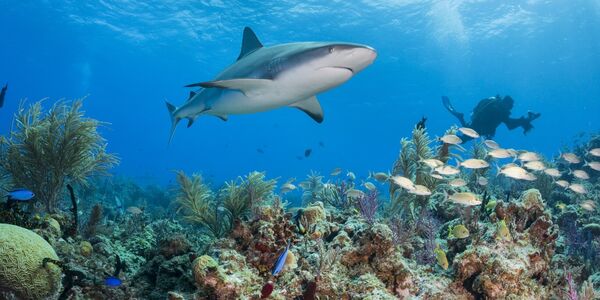

The smash-hit movie Jaws was filmed 50 years ago off the coast of New England, on the island of Martha’s Vineyard. It stirred up human fear of sharks, contributing to a popular misconception that sharks were supposedly villains and reckless human-eating monsters.
But of course, that is not true about sharks. In fact, humans are the real threat here. Every single day, we kill an average of 274,000 sharks. That amounts to approximately 100 million sharks each year. Today, many species – like the great white, sand tiger, great hammerhead, and others – are endangered or vulnerable to extinction.
That’s why famed athlete, 55-year-old swimmer Lewis Pugh, just completed a grueling 12-day swim around the island to help raise awareness about the importance of sharks.
Sign the petition to urge the U.S. government to protect sharks by expanding and creating more marine sanctuary areas!
The United Nations named Pugh a “patron of the oceans” due to his use of swimming as a way to raise awareness about marine wildlife and ocean conservation. He’s swum near volcanoes, near glaciers, and alongside polar bears, hippos, and crocodiles. He’s the first person ever recorded to have finished a long-distance swim in each one of the world’s 5 oceans, and to swim across the north pole itself.
And he’s worried about the future of sharks – just like we all should be.
Sharks help maintain a precious balance in marine ecosystems. Without them, the entire natural structure begins to deteriorate. They promote biodiversity and keep other species in check before they spiral out of control, and even keep the oceans healthy by scavenging injured, sick, or dead animals.
But today, humans target them for overfishing. They’re suffering from habitat loss and climate change. And, of course, being maligned by humans has only made their survival more difficult.
We must respect sharks – and we must demand more protections to keep sharks safe, alive, and healthy! One way to do that would be for the U.S. Congress to create and expand more shark sanctuaries. These are special areas or zones that would sharply curtail overfishing and destruction of habitats. Sign the petition to demand the U.S. protect sharks!
***********
‘A horror movie’: sharks and octopuses among 200 species killed by toxic algae off South Australia
Karenia mikimotoi algae can suffocate fish, cause haemorrhaging and act as a neurotoxin, one expert says

More than 200 marine species, including deepwater sharks, leafy sea dragons and octopuses, have been killed by a toxic algal bloom that has been affecting South Australia’s coastline since March.
Nearly half (47%) of the dead species were ray-finned fish and a quarter (26%) were sharks and rays, according to OzFish analysis of 1,400 citizen scientist reports.
Cephalopods – such as squid, cuttlefish and octopuses – accounted for 7%, while decapods – crabs, lobsters and prawns – made up 6% of species reported dead or washed up on beaches.
Continue reading …

The first war-related environmental crime against a natural reserve has been formally brought before a court by Ukrainian Prosecutors. Kherson prosecutors have filed an indictment against the Russia-appointed head of the Askania-Nova Biosphere Reserve for the illegal transfer of rare and specially protected animals to Russia. A total of seven reserve-protected animals were removed from the Ukrainian territory as a result of the illegal transfer. This case sets a global precedent, demonstrating that crimes committed against the environment during war will not go unpunished.
The Specialised Environmental Prosecutor’s Unit of the Prosecutor General’s Office and Kherson Regional Prosecutor’s Office, with the support of Global Rights Compliance’s Environmental Mobile Justice Team, began conducting an investigation into the case. Following the Russian occupation of Askania-Nova, a UNESCO-protected biosphere reserve, the reserve was unlawfully re-registered under Russian law and the legitimate Ukrainian administration was replaced. On 1 December 2023, the new administration illegally transferred rare and endangered animals (which remain Ukrainian property despite the illegal re-registration) to Russian-controlled zoos without Ukraine’s consent. Among the animals at issue were Chapman’s zebras, American bison, Przewalski’s horses, and one David’s deer, the last of which died during the transfer.
Under international humanitarian law, Russia, as an occupying power, must respect Ukrainian legislation, including Askania-Nova’s protected status. Article 55 of the 1907 Hague Regulations allows an occupier to act only as a temporary administrator of property, not an owner. Additionally, Article 56 prohibits the destruction or seizure of institutions dedicated to the arts and sciences, granting Askania-Nova special protection.
“The war crime of pillage is not just about looting artefacts or property belonging to civilians—it extends to Ukraine’s natural treasures as well. The unlawful transfer of these protected animals is a direct violation of international humanitarian law and must be prosecuted,” said Nataliia Pavlovych, Legal Adviser and Deputy Team Lead of the Environment MJT at Global Rights Compliance.
The suspect in this case is Dmytro Mesheryakov, the Russia-appointed head of Askania-Nova, who is responsible for organising the transfer of protected animals in violation of international law.
While war crimes such as pillage and destruction of cultural heritage have been prosecuted before national courts and international tribunals, this is the first time criminal charges stemming solely from war-related environmental damage to a natural reserve have been brought to court. Ukraine’s legal action, supported by GRC’s legal team, sends a strong signal that environmental destruction will be treated with the same gravity as other war crimes.
“By initiating these proceedings, prosecutors are both beginning to fill this void and sending the message that harm committed to the environment during wartime will no longer go unpunished. They are at the forefront of developing precedent in this area of the law,” added Donna Cline, Lead of the Environment MJT, at Global Rights Compliance.
GRC’s Mobile Justice Team is a part of the Atrocity Crimes Advisory (ACA) Group for Ukraine. The ACA is a multilateral initiative established by the United States, the European Union, and the United Kingdom to support and assist Ukrainian law enforcement and prosecutors in investigating and prosecuting international crimes committed during the full-scale war.

28 May 2025
The opposition stems from serious welfare and environmental concerns: the extreme cruelty of confining intelligent, solitary animals like octopuses in farming conditions, the lack of humane slaughter methods, and the damaging impact such farms would have on fragile marine ecosystems.
The Spanish association of law professionals, INTERCIDS, has presented a legislative proposal to national politicians that aims to establish a proactive ban on octopus farming across the country. The proposal responds to the growing chorus of scientists, animal and environmental protection organisations, and citizens who have spoken out against octopus farming.
Although no industrial octopus farms currently exist in Spain or elsewhere, seafood multinational Nueva Pescanova announced plans to establish the world’s first industrial-scale octopus farming in the Canary Islands.
Submitted to the Parliamentary Association for the Defence of Animal Rights (APDDA), the proposal seeks to amend Spain’s national Law 23/1984 on marine farming/aquaculture in order to prohibit the farming of octopuses for food and any other productive purpose. It would also ban the commercialisation of octopus products derived from such activities.
Octopuses consumed as food are currently caught in the wild, primarily by small-scale fisheries. There are no existing legal frameworks regulating octopus aquaculture in Spain. Therefore, INTERCIDS’ proposal aims to close that gap preemptively by enshrining a ban into law that addresses the grave risks associated with the farming of captive octopuses.

The next steps for the proposal will depend on national politicians, who must decide whether they will move forward with submitting it as a formal legislative proposal to be approved by the Parliament in the coming months.
Monday 19th May 2025

Small Tortoiseshell (Aglais urticae) © Charlotte Rankin
- 28 environmental charities have served a spoof planning notice to MPs, warning that the Planning & Infrastructure Bill is an application to demolish wildlife
- The coalition is calling on Government to urgently fix the Bill with amendments to uphold wildlife protections and help nature recover at the same time as supporting sustainable development—to make the planning system ‘Wilder By Design’.
- Writing to charities a year ago, the Deputy Prime Minister said the Government “will not legislate” to amend key nature laws if it would weaken them. In the opinion of the Government’s own nature watchdog, the current bill breaks that promise.
- Nature loss in the constituencies of Ministers proposing the reforms is also highlighted today.
MPs have today been served spoof planning notices warning that the Government’s proposed Planning and Infrastructure Bill will ‘bulldoze environmental protections and demolish nature and local greenspaces’ unless crucial changes are made. Conservationists are also highlighting examples of nature loss in the constituencies of key ministers, drawing attention to the wildlife losses that could be worsened by the Bill.
Charities met the Secretary of State, Steve Reed, last week (Thurs 15 May) where they warned that the Bill as it stands would break Government nature commitments. Following this, 28 charities, including the RSPB, the National Trust, The Wildlife Trusts, the Mammal Society, People’s Trust for Endangered Species, and Wildlife and Countryside Link have mailed the spoof notices to all English MPs and Ministers, including the Prime Minister and Secretaries of State, Steve Reed, and Angela Rayner. Environmentalists are calling for MPs to support amendments that will deliver a planning system which works for nature, communities and sustainable development for generations to come.
In July 2024, the Deputy Prime Minister wrote to nature charities to say that the Government would not legislate to amend nature protections in a way that would weaken environmental law. According to the Office for Environmental Protection, environmental lawyers, and nature experts, the Government is now breaking that promise with the current version of the Bill and it must be amended.
England is currently facing a nature crisis, with 1 in 6 British species at risk of extinction, a 32% decrease in wildlife populations since 1970 and the UK among the worst 10% globally for nature loss, alongside 40% less greenspace in new developments compared to older housing. That crisis is being played out across the country. From Steve Reed’s Streatham and Croydon constituency seeing notable losses of butterflies and common birds like the blue tit, to Angela Rayner’s constituency in Greater Manchester seeing a 90% decline in recorded insect species, charities warn that the Bill risks speeding up the loss of nature and disappearance of community greenspaces.
- In Chancellor Rachel Reeves’ Leeds West and Pudsey constituency just 1 out of 7 SSSIs in the area is in favourable condition. 1 in 5 species across Yorkshire have declined by more than 25% in the last 30 years: including swifts declining by 50% and red squirrels by 69%.
- In Secretary of State Steve Reed’s constituency of Streatham and Croydon North, has seen records of Small Tortoiseshell Butterflies (Aglais urticae) drop to just 10 a year, compared to over 200 a year during the 1990s, and common bird species like Blue Tits (Cyanistes caeruleus) are down more than 10% in the last 20 years. Water voles have largely disappeared from this area and other London constituencies, with just a handful of river sites where they can be found.
- In the Ashton-under-Lyne constituency of Angela Rayner, Secretary of State for Housing, Communities and Local Government: records of Great Spotted Woodpeckers (Dendrocopos major) have decreased by 68% since 2007 and Song Thrush (Turdus philomelos) by 68% since 2008. The last inspection of the Hollinwood Branch Canal SSSI protected nature sites found they were in a declining condition. The Huddersfield Narrow Canal SSSI was also found to be in an unfavourable condition.
Richard Benwell, CEO of Wildlife & Countryside Link, said: “As it stands, the Planning Bill is set to demolish legal protection for nature and pave the way for destruction of wildlife. So far, the proposals are a mile away from the Government’s aim for a win-win for nature and development. Even the Government’s nature watchdog agrees that it would damage environmental protection.
“It’s disappointing that Government rejected constructive amendments that could put the Bill back on firm foundations for nature protection and greener development. But we heard Ministers acknowledge the case for change and now we urge them to follow up with quick and decisive fixes for the Bill’s serious flaws. Without major improvements, Parliament should reject these damaging proposals.”
Beccy Speight, RSPB chief executive, said: “This should have been a once in a generation opportunity to create a planning system that helps restore nature at scale while delivering for communities and the economy. Instead, promises from the UK Government have been kicked into the long grass and we’ve been left with a Bill that as currently drafted risks species extinction, irreversible habitat loss and threatens legally binding Environment Act targets. Handing developers a license to destroy precious habitats and species for a fee is not what was promised, and certainly not what our natural world and the people of this country need and deserve. If the UK Government is to maintain a shred of credibility on the environment we must see substantial amends to part three of this Bill without delay.”
Hilary McGrady, Director-General of the National Trust, said: “With the right planning laws in place, we can restore our dwindling wildlife, increase the green spaces near where people live and build much-needed new homes surrounded by great nature. But as it currently stands, the Bill risks doing the very reverse, as the Government’s own nature watchdog has pointed out.
“The question for the Chancellor and the Prime Minister is do they want to be remembered as the Government that brought nature back into millions of people’s lives? Or do they want to further deprive current and future generations of this essential, universal need?”
James Cooper, Head of External Affairs at Woodland Trust, said: “The Government’s Planning and Infrastructure Bill risks taking an axe to our natural environment. In its current form, it could fatally undermine decades-old protections, including those of ancient trees and woods, which are already in need of better protection.
“Public outrage over the felling of treasured trees like the Sycamore Gap and Whitewebbs Oak shows just how important green spaces are to people. Nature is a necessity – not a blocker to be dealt with. The Government urgently needs to rethink its bill and put woods, trees and wildlife at the heart of its reforms, delivering the win-win it promised. This means embedding nature in planning so that everyone can benefit from it – regardless of where they live.”
Craig Macadam, Buglife Director of Conservation, said, “The current Planning Bill could be disastrous for invertebrates and accelerate their already precipitous decline. For years we have seen important invertebrate sites lost to ill-thought-out developments and these proposals would only exacerbate the situation. It is more important than ever that we take crucial steps to help nature recover and deliver our existing commitments to protect and restore vital habitats. A Bill that sacrifices hard fought for environmental protections simply won’t deliver for wildlife or people.”
The warning comes as the Planning Bill moves to Report Stage, a final opportunity for MPs to amend the bill before it progresses to the House of Lords. The coalition fears that the Bill in its current form would severely weaken existing environmental protections and lead to the decline or destruction of UK wildlife, wild places and green spaces in communities, with no guarantee of local environmental improvements in return for new development.
In their notice, the coalition reiterated their warning that the Government’s proposals would leave essential protection for wildlife and local neighbourhoods without the scientific safeguards, the delivery guarantees, or the positive plans for nature recovery that could justify such serious risks. Essential safeguards like the Habitats Regulations could be critically weakened. The Government’s own advisors, the Office for Environmental Protection recently concluded that the Bill constitutes regression on environmental legal protections.
In April, the coalition wrote to Secretary of State Steve Reed and Minister Mathew Pennycook warning of the urgent changes needed to the Government’s Planning and Infrastructure Bill to avoid complete extinction of species and destruction of the natural spaces that millions of people depend on for their health and wellbeing.
The organisations want to see the government commit to supporting amendments which will ensure that the Bill does not leave nature. This includes a commitment to:
- Guarantee results: The current law demands a high level of legal and scientific certainty for environmental outcomes. However the Bill only requires outcomes to be “likely”. Government must ensure benefits are delivered and clearly outweigh harm.
- Avoid harm: Existing rules require developers to avoid damage to protected wildlife. The Bill drops this in favour of a “pay to pollute” model. Future planning rules must ensure that harm must be avoided wherever possible.
- Follow the science: Environmental Delivery Plans should only apply to new protected features where there’s solid scientific evidence they work.
- Make planning Wilder By Design: We need a legal duty for Councils to help meet climate and nature targets, strong national and marine plans, and low-cost, nature-friendly design like bee and bird bricks in new developments.
With ever more natural disasters occurring thought ought to be given to other Animals, and how to protect and rescue them – when often, sadly, only Human lives seem to matter. This is, in our view, an impossible situation, and all of us are tasked to change it, with our own behaviour, going forward towards a world where equal consideration is given to all.
*************
Firefighters bring cat back to life in dramatic rescue video
************
A book worth reading on the Issue:
https://www.amazon.com/Filling-Ark-Welfare-Disasters-Animals/dp/B09N9YTTMF

When disasters strike, people are not the only victims. Hurricane Katrina raised public attention about how disasters affect dogs, cats, and other animals considered members of the human family. In this short but powerful book, now available in paperback, noted sociologist Leslie Irvine goes beyond Katrina to examine how oil spills, fires, and other calamities affect various animal populations―on factory farms, in research facilities, and in the wild.
In a new preface, Irvine surveys the state of animal welfare in disasters since the first edition. Filling the Ark argues that humans cause most of the risks faced by animals and urges for better decisions about the treatment of animals in disasters. Furthermore, it makes a broad appeal for the ethical necessity of better planning to keep animals out of jeopardy. Irvine not only offers policy recommendations and practical advice for evacuating animals, she also makes a strong case for rethinking our use of animals, suggesting ways to create more secure conditions.

