Mexico: Bullfighting Returns To Mexico City After Ruling (Ban) Overturned.

MEXICO CITY (AP) — In the center of a desolate and cold Plaza Mexico stadium, a young matador raises a red cape and leaps to the right as he gets charged — not by a bull, but by a bull’s head on a cart.

A bellowing colleague is pushing the wheeled contraption to breathe a bit of realism into training in anticipation of bullfighting’s return to Mexico City.

The traditional spectacle took a critical blow when a judge banned it in the city in June 2022. Now that the country’s Supreme Court of Justice has overturned the ban, the capital that is home to what is billed as the world’s largest bullfighting ring plans to host “fiesta brava” events once more.

Continue reading at:

https://uk.news.yahoo.com/return-bullfighting-mexicos-capital-excites-050826305.html

Regards Mark

South Korea: Clamps Down on Controversial Animal Cafes.

Caged behind glass, a plump raccoon runs for a few seconds on an exercise wheel before flopping back down on the floor. In the next enclosure, a pair of prairie dogs perch on logs under the glaring artificial light of an overhead lamp.

A woman takes a selfie with a sheep at a cafe in Seoul, South Korea on February 17, 2015. – Ed Jones/AFP/Getty Images© Provided by CNN

On the other side of the partition, delighted customers sip lattes and snap selfies with the animals in a scene that is playing out across South Korea.

Animal cafes have exploded in popularity in the country over the past decade – first with cats and dogs, then to increasingly unusual wildlife species in the age of online virality.

In this cafe alone, in Seoul’s trendy university district Hongdae, there are more than 40 species – including porcupines, snakes, foxes and ferrets – according to a sign on the door advertising it as a unique date spot.

But the cafes have also stoked controversy, with animal welfare advocates long pushing for tighter restrictions or even an outright ban on such businesses.

The growing pushback prompted the South Korean government to clamp down with a set of new laws that went into effect in December, effectively prohibiting cafes from displaying live wild animals unless they are registered as zoos or aquariums.

Continue reading at:

Raccoons, foxes, meerkats: South Korea clamps down on controversial animal cafes (msn.com)

Regards Mark

UK / England: UK RESIDENTS ONLY – Can You Help By Taking Part In The Big Garden Birdwatch ? One Weekend, 1 Hour No Record All Birds In Your Area. Join 300,000+ Others To Date.

Photo – Pauline

When – 1 Hour Between 26 and 28 January

What is Big Garden Birdwatch?

I (Mark WAV) have tried to attract Goldfinches – See Picture below; into my garden. It worked after a few months of trying; now I get up to 6 on the feeders at the same time. They are beautiful birds as you can see – a host of colour !

Big Garden Birdwatch is the world’s largest garden wildlife survey. Every year, hundreds of thousands of nature lovers like you take part, helping to build a picture of how garden birds are faring.

It’s easy to be part of Big Garden Birdwatch. Simply choose an hour between 26 and 28 January and count the birds you see in your garden, from your balcony, or in your local park. Only count birds that land. Then tell us what you saw. Even if you saw nothing, it still counts.

Big Garden Birdwatch FAQs (rspb.org.uk)

Telling us what you saw

When do I need to send you my results?

Please tell us what you saw at www.rspb.org.uk/birdwatch before 18 February. By giving us your results online, you’re helping us to spend more on saving nature as it reduces our costs. However, if you prefer to post us your results, you can print and complete the form found in the guide, and send it back to reach us by 13 February. Please take a look at the guide before printing, as it may be that you don’t need to print it all. Every piece of paper saved is better for nature!

Free Guide and ID chart

You can take part in the Birdwatch by simply counting the birds for one hour then going online to tell us what and how many you saw. However, we know some people prefer to use a guide. You can download this year’s free guide below.

big-garden-bird-watch-how-to-english.pdf

Birds of conservation concern

The UK Red list for Birds keeps track of population trends in 245 species, with birds listed as ‘Red’ deemed most at risk. In 2021,Greenfinches moved onto the Red List for the first time. 

Photos – Pauline

Back in 1979, when Big Garden Birdwatch began, Greenfinches first came in at number seven, but in 2023 they were down to 18. This demonstrates the devastating population declines seen in these charming little finches, caused by a disease called trichomonosis. We now know that Chaffinches are affected too. 

You can help stop the spread of this disease by removing old food and cleaning your bird tables, bird baths and feeders weekly. Check here for guidance on cleaning feeders to keep you and your garden birds safe.

Big Garden Birdwatch | Register (rspb.org.uk)

Regards Mark

Who knows what else you might see ?

Photo – Pauline

EU: End the Cage Age: Ombudsman opens inquiry on European Commission’s failure to act.

8 January 2024

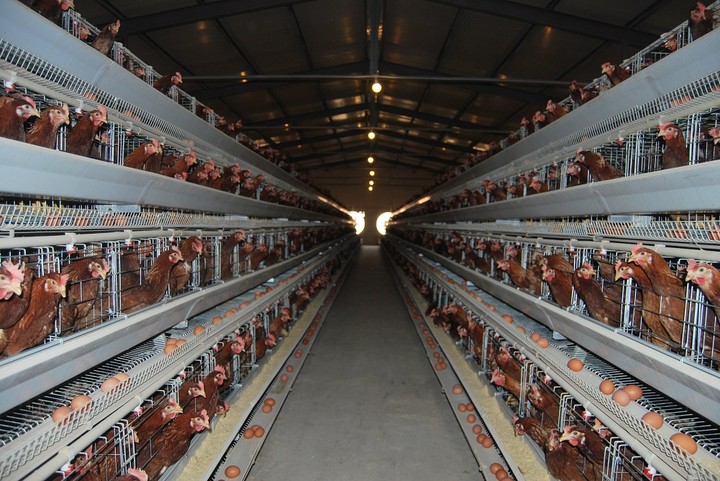
The European Ombudsman has opened an inquiry into the European Commission’s (EC) failure to publish a legislative proposal to phase-out and ultimately ban cages for farm animals, in line with its official answer to the End the Cage Age European Citizens’ Initiative (ECI).

Eurogroup for Animals and numerous other animal protection organisations wrote to the European Commission in October after it unexpectedly backtracked on the commitment to bring forward legislation banning cages in 2023, and did not provide any clarity on when it would be published.

In June 2021, the EC promised that by the end of 2023, it would put forward a legislative proposal to phase out and finally prohibit the use of cages, a commitment which it re-stated and reinforced on numerous occasions. The EC had generated considerable legitimate expectation among citizens that legislation would be forthcoming, creating a case of maladministration. 

After not receiving a response from the EC, in November 2023, Eurogroup for Animals and several of its members made an official maladministration complaint to the European Ombudsman against the EC for failure to uphold its commitment to an ECI in which 1.4 million citizens asked for a ban on cages and failure to appropriately communicate its u-turn on this promise.

The complaint raises the issue of the EC undermining the rules that govern ECIs and the very credibility of the democratic participatory process they represent. In the run up to the European elections in June of this year, this is a particularly poor signal to send to citizens.

The European Ombudsman has now asked the EC to send an official reply to Eurogroup for Animals and all the other complainants by the end of January. 

The opening of the inquiry of the European Ombudsman sends a clear signal that the democratic tool of the ECI should not be undermined. Citizens are using the tools at their disposal to make their voice heard on issues that matter. We expect the European Commission to follow through on its commitment, and we continue asking for a timeline indicating when the promised proposals will be published.

Reineke Hameleers, CEO, Eurogroup for Animals

Regards Mark

Belgium: Live animal transport proposal not a priority for Belgian presidency.

10 January 2024

The Belgian Presidency does not plan to address the proposal for animal transport in its term according to the programme of legislative files that will be worked on. The presidency of the Council is responsible for setting the agenda and facilitating dialogue between the Council and other EU institutions. It is now Belgium’s turn to take on the role until June of this year.

In December the European Commission published a proposal for the transport of live animals, but the proposed text failed to recommend actions that can make significant improvements for animal welfare, ignoring several EFSA opinions. Most strikingly, it still allows for animals to be transported live to non-EU countries, despite the ever growing concerns on the consequences of such journeys.

It was hoped that the Council could work on the topic and strengthen the proposal. However, with the Belgian Presidency deciding to kick the can down the road, the EU will not be in a position to adopt new welfare standards for the transport of live animals any time soon. The programme only mentions the drafting of a progress report on animal transport, and will only be worked on “if there is time”, which according to news reports, is highly unlikely.

At the beginning of its term in 2019, this Commission under President Ursula von der Leyen committed to improving the lives of farmed animals by coming forward with a number of proposals, of which transport is just one. 

It was expected that this whole package could come into force and start improving the lives of millions of animals across the EU as soon as 2027. So far the Commission has only brought forward the proposal on transport, which could now be further delayed, and a proposed regulation on cats and dogs which the Council is expected to adopt a general approach on.

Regards Mark

EU: Illegal pet trade: findings of the EU enforcement action plan.

12 January 2024

The breeding and trade of cats and dogs within the EU is a profitable economic sector; valued at over 1.3 billion € annually, it’s riddled with fraudulent activities that jeopardise the health and welfare of animals, compromise public health, undermine consumer protection and distort the internal market.

These risks have been given the attention they deserve at EU level through a coordinated Action Plan involving relevant stakeholders, among which are Directorate Generals of the European Commission, EU non-governmental organisations and Europol.

The sale of dogs and cats is increasingly growing through online platforms and social media, with an estimate of around 60% of dog and cat owners purchasing their pet through the Internet, representing 4,8 million dogs and 1,2 million cats. We expect the new Proposal for a Regulation on the welfare of dogs and cats and their traceability to address fraudulent operations via mandatory identification and registration of dogs and cats circulating on the internal market.

Lack of enforcement is a major issue due to lack of prioritisation of the illegal pet trade, in spite of it bearing all the hallmarks of organised crime. There is a compelling need for a deeper collective and structured cooperation at EU level between law enforcement, custom tax authorities, magistrates, European institutions and agencies and, where relevant, third countries, international organisations and the private sector.

The Action Plan has also discovered ineffective, disproportionate and non dissuasive penalties for fraudulent practices that underestimate the large amounts of money moving through the illegal pet trade.

Companion animals moved for commercial purposes from non-EU countries to the EU must be declared to customs authorities to prevent tax evasion. Commercial movement has been found to be largely disguised as private travel, hence undeclared for custom purposes, making the origin of the animals unverifiable.

Other disturbing findings pointed towards illegal trafficking of dogs through shelters, for example in Romania, without the necessary permits and incorrect data in health certificates of passports. This highlights the need to include animal shelters in the scope of the new Regulation.

The primary suppliers of illegally traded animals within the EU were Romania and Hungary, and from outside the EU were Turkey, Serbia, Ukraine, Russia and Belarus with 45% of the Action Plan cases originating from non-EU countries. 

The insights from this EU Action Plan should be used to implement more targeted and effective controls, stronger penalties, effective law enforcement and the need for unified regulations in Member States. Special attention should be granted to the online side of the illegal pet trade, which would benefit from an enhanced collaboration between all relevant national authorities (veterinary, customs, police and judicial), as well as a larger focus on public awareness campaigns to empower consumers to make informed choices.

Regards Mark

UK: Live Exports – Remaining Stages In House of Commons Mon. 15th January. Take Action and Ask Your MP To Attend (UK Residents Only).

Photo – Mark (WAV) – A Dutch Horse Transporter heads out of Dover UK.

The Animal Welfare (Livestock Exports) Bill will have its Committee of the Whole House and Remaining Stages in the House of Commons on Monday 15th January.

This means if the Bill passes (WAV Comment – Sure it will as it has full Cross Party Support) it will be ready to enter the House of Lords to complete its passage.

This important Bill will ban the export of cattle, sheep, goats, pigs and horses for slaughter and fattening from Great Britain, stopping unnecessary stress, exhaustion and injury caused by exporting live animals. In doing so, it will deliver a key Conservative Manifesto commitment and part of Defra’s Action Plan for Animal Welfare.

You can read more about the Bill here <https://conservativeanimalwelfarefoundation.us12.list-manage.com/track/click?u=39260baecf6044e1f26ef4f9d&id=a42797764a&e=57f5095601> .

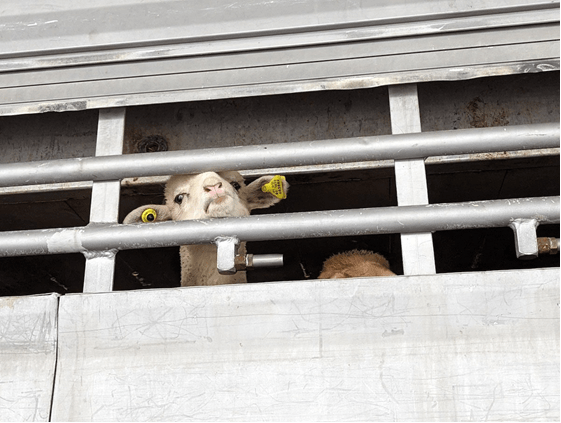
During live export animals may end up in countries with far poorer welfare standards than our own, enduring practices which are illegal in the UK such as veal crates. Calves placed into the Dutch white veal pen systems, where they are unable to perform natural behaviour, are barely able to turn around.

UK ACTION – We are asking our supporters to contact their local MP and ask them to attend these important final stages of the Bill in the House of Commons. To make this easier for you, we have drafted a template below which you can copy and paste.

We hope you will join us in the mission to end live exports for fattening and slaughter.

With warmest wishes,

Email to: your MP

Dear (name of MP),

I am contacting you to ask you to support the Animal Welfare (Livestock Exports) Bill which will enter its final stages in the House of Commons on Monday 15th January. Ending live exports for fattening and slaughter was included in the Conservative Manifesto and Defra’s Action Plan for Animal Welfare.

With a General Election this year, I am keen to ensure this important Bill becomes law as soon as possible. I therefore ask you to attend and vote in favour of the Bill during its final stages on Monday, to prevent the cruelty of live exports from continuing in the future.

Historically the UK has exported thousands of sheep and calves abroad to France and as far afield as Spain. Overcrowding means that some cannot lie down at all, while those who do may be injured or trampled to death. They can be in transit for days, suffering extremes of temperature and often without sufficient food, water or rest. Please help to end live exports for fattening and slaughter for good.

I look forward to hearing from you.

Best wishes,

Your name

Your Address.

———————————————————–

Regards Mark

UK: Celebrity Stephen Fry Gives His Full Support To Welfare Campaigners Who Call For Bearskin Hats To Be replaced With Fake Fur.

We say – Leave the fur on the Bears; not on Guards hats !

Photo – Getty Images.

Our recent post on this issue:

UK: Leave the Fur On The Bears; Not On Guards Hats !! – Ministry of Defence (MoD) Still Refuses To Stop Killing Despite Faux Fur Now Available That Meets MoD Standards. – World Animals Voice

It is excellent that Stephen wants to now support the campaign to stop guards using real bear fur in their hats.

For non UK residents; Stephen Fry is primarily a television actor and celebrity; but also a broadcaster and writer, as well as being an incredibly intelligent man who has hosted a television show called ‘QI’ which has run for years and asks celebrities about different issues – take a look as he (quizmaster in middle with yellow tie) attempts to keep the rest of the celebrity rabble in order; and seriously fails !!

And now Stephen Fry wants King’s Guard to ditch bear fur in support of the bears and animal welfare campaigners who have campaigned about this for years.

Stephen Fry has called for an end to the use of real fur in the bearskin caps worn by the King’s Guard on duties such as guarding Buckingham Palace.

The actor has backed an animal welfare campaign calling for fake fur to be used rather than real bear fur.

Quite a big story from the BBC; read it in full here:

As campaigners we very much welcome the support given by Stephen – now this issue for many years may move on more with celebrity backing.

We say – Disgusting that beautiful bears are still being killed for soldiers hats. Ministry of Defence (MoD) you have a real fight on with us all now !

Regards Mark

See him on television:

Thanks to Diana for supplying the BBC link.

South Korea: Fantastic News For Campaigners Who Have Battled For Years – South Korea Passes Law BANNING Dog Meat Trade.

Above – HSI have been working for a long time to rescue many dogs from many farms,

WAV Comment:  This is a momentous Victory for the movement and is to be celebrated greatly.

See all our past posts on the dog farming at  Search Results for “south korea dog farming” – World Animals Voice

Our respect and congratulations go out to ‘Korean Dogs’ and to ‘Korean Animal Rights’ (KARA) and also ‘HSI’ for their tenacity in fighting this issue.  As we know with live exports (UK); it can take a long time to achieve victory – rewards don’t get delivered on a plate; they have to be fought for sometimes over many years. But as here, good wins over evil !

I can hear some people saying ”yes, but a 3 year phase out period ?” – 3 years too long as far as I am personally concerned; but now we have a completion date, something which has eluded campaigners for so long.  Also, as in the BBC report, ne dog farmer, Joo Yeong-bong, told the BBC the industry was in despair.  Great ! – personally I think and hope that very quickly the industry will realise it is now heading towards history books and will quickly take the government money on offer, stop the dog farming, and move to basic traditional farming or something else.  I personally think this is the most wonderful news for all the South Korean (and other international) campaigners who have battled for so many years.  Thanks also must go to the current South Korean President Yoon Suk Yeol and First Lady Kim Keon Hee who are both are known animal lovers, having 6 dogs themselves. First Lady Kim has called for the practice of eating dogs to end.  Now we are witnessing it happen !

Once again, congratulation to ‘Korean Dogs’, ‘KARA’ and ‘HSI’; EVERYONE ! for all their long work and providing the evidence of suffering.

Regards Mark

The ‘Korean Dogs’ action header and photos provided by KARA of dog meat farms suffering:

Full story link from BBC:

South Korea passes law banning dog meat trade – BBC News

South Korea passes law banning dog meat trade

The slaughter and sale of dogs for their meat is to become illegal in South Korea after MPs backed a new law.

The legislation, set to come into force by 2027, aims to end the centuries-old practice of humans eating dog meat.

Dog meat stew, called “boshintang”, is considered a delicacy among some older South Koreans, but the meat has fallen out of favour with diners and is no longer popular with young people.

Farmers and restaurant owners have three years to find alternative sources of employment and income before the legislation comes into force.

According to government statistics, South Korea had around 1,600 dog meat restaurants and 1,150 dog farms in 2023, all of which will now have to submit a plan to phase out their businesses to their local authorities.

Animal rights groups, which have long been pushing for the ban, praised the outcome of Tuesday’s vote.

Jung Ah Chae, the executive director of the Humane Society in Korea, said she was surprised to see the ban in her lifetime. “While my heart breaks for all the millions of dogs for whom this change has come too late, I am overjoyed that South Korea can now close this miserable chapter in our history and embrace a dog friendly future,” she said.

One dog farmer, Joo Yeong-bong, told the BBC the industry was in despair.