
EU / NZ: EU ratifies its first trade agreement with an animal welfare condition.

22 November 2023

Press Release

Today, the European Parliament overwhelmingly approved the EU-New Zealand Free Trade Agreement. The deal sets a precedent in trade policy as it’s the first time the EU ratifies a trade agreement which conditions market access on the respect of animal welfare-related standards.

Under negotiation for five years, the deal liberalises trade in most animal based products, and should hence further stimulate animal agriculture in the EU and New Zealand. It does, however, include an unprecedented condition: the beef quota is reserved for grass-fed animals, explicitly excluding feedlots. And this condition is  motivated by both animal welfare and sustainability reasons.

This is only the second time the EU has negotiated an animal welfare condition in a Free Trade Agreement (FTA) since the controversial EU-Mercosur FTA introduced the first one in relation to shelled eggs. Yet, while the volume of shelled eggs imported by the EU from Mercosur countries is quite low, in the case of New Zealand the EU managed to obtain an animal welfare condition for one of the most traded animal products between the partners. 

Eurogroup for Animals welcomes this animal welfare condition as feedlots, in addition to being a major source of soil, air and water pollution, are highly detrimental to animals: they can provoke respiratory and digestive diseases, the main causes of cattle death under such rearing conditions.

This animal welfare condition shows that with the right political willingness, the EU can take into account animal welfare concerns in its trade policy. As the latest Eurobarometer showed, this is well supported by EU citizens. This FTA should give the right impetus to repeat animal welfare conditions in other trade agreements, especially where a beef quota is negotiated. Why would a feedlot in Mercosur countries be sustainable, but not in New Zealand? Omitting such a condition when renegotiating the EU-Mercosur FTA would certainly be incoherent.

Reineke Hameleers, CEO, Eurogroup for Animals

The EU-New Zealand FTA is also the first EU trade deal integrating sanctions in its Trade and Sustainable Development (TSD) chapter. While this is welcome, the language is non-committal, specifically for provisions related to wild and aquatic animals, with words that focus on “acknowledgement” or “support”. This means that even in case of failure to comply with these provisions, no violation can be found.  

Apart from the animal welfare condition, the FTA also includes a chapter on animal welfare cooperation. Regrettably, the language in this chapter remains weak and also non-committal. This is unfortunate as the EU and New Zealand, two like-minded partners, could work together on issues such as banning live transport which is under discussion as highlighted by the European Parliament’s resolution. For these reasons, Eurogroup for Animals supports the European Parliament’s stand to “quickly establish the domestic advisory groups”, and remains ready to work in this fora to foster effective cooperation as soon as possible. 

Regards Mark

Czech Republic: Live Transport News and Links.

WAV Comment – have had this through today (22/11) from our campaigner friends at the Society for Animals in the Czech Republic, EU.  stoptransport.cz – For a Better World for Animals and Stopping Cruel Transports

I have made no changes to the text, or added any further additions; the translation is via the system, so this is directly as supplied.   With the above web link, there is an ability to translate if you wish.

Regards Mark

——————————————————

Dear friends,

the institutions of the European Union are also busy because of the animal inhabitants of the member states.

At the beginning of October, we informed you that the European Commission is forgetting about the promises of changes to the regulations to improve the conditions of kept and transported animals.

Following our joint European action, the Commission said it would submit amendments to the Regulation on the Protection of Animals during Transport later this year – petitions

Later this week, we expect an important breakthrough regarding other missed regulations. Whether it will be good or bad for the animals, we will write to you.

Specifically, these are proposals for regulations on the labelling of animal foodstuffs according to the methods of animal husbandry, changes on the slaughter of animals and on the methods of animal husbandry (so-called farm animals). The last one reflects on the successful European citizens’ initiatives End the Cage Age and Fur Free Europe.

On behalf of the Society for Animals

Judit Laura, Adéla, Michala

EU: Horrifying Truth of EU Fur Farming Revealed By Undercover Teams Visiting and Recording On Dozens of Farms.

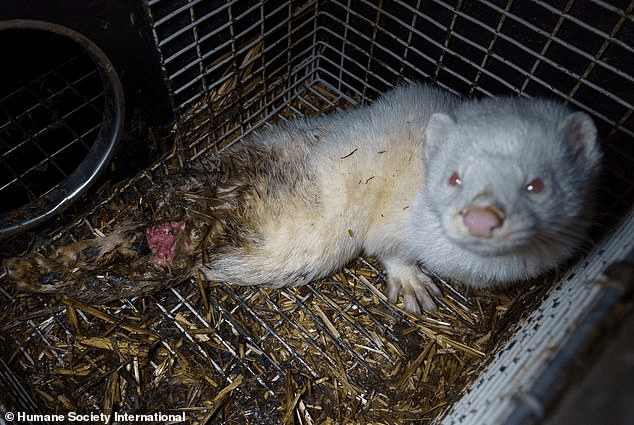
An injured white mink. The chilling exposé titled ‘This is Fur Farming in the EU’ lays bare the grim reality of fur factory farming across six EU nations

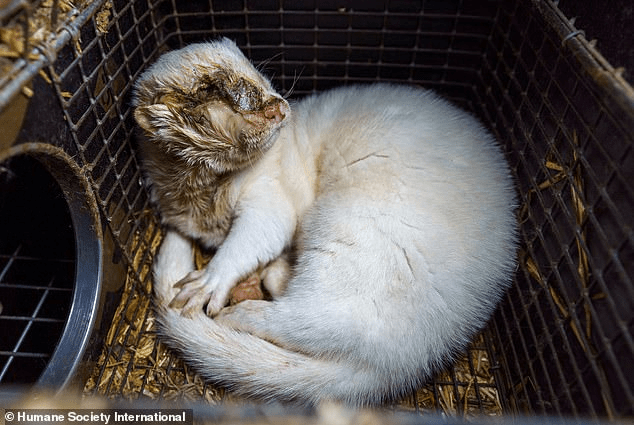
A white mink with part of its face missing

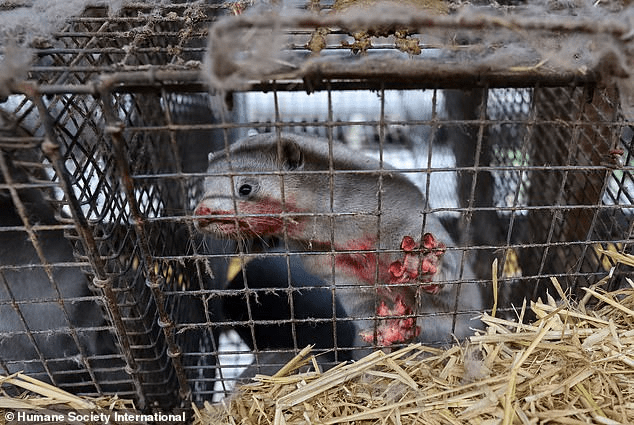
All pictures – HSI.

Link:

Horrifying truth of fur industry revealed in footage from largest ever undercover investigation involving dozens of farms where animals engaged in cannibalism, had limbs gnawed off and were left with maggot-infested wounds | Daily Mail Online

Horrifying truth of fur industry revealed in footage from largest ever undercover investigation involving dozens of farms where animals engaged in cannibalism, had limbs gnawed off and were left with maggot-infested wounds

Wounded animals can be seen battling to survive in cages. The harrowing material was captured by independent animal rights investigators in more than 100 farm visits

The horrifying truth of the fur industry has been revealed in footage from the largest ever undercover investigation on European fur farms.

The chilling exposé titled ‘This is Fur Farming in the EU’ lays bare the grim reality of fur factory farming across six EU nations.

The harrowing material, captured by independent animal rights investigators in more than 100 farm visits, shows animals including mink, foxes and raccoon dogs in disturbing conditions.

Read the full article and see video footage by clicking on the link above.

Regards Mark

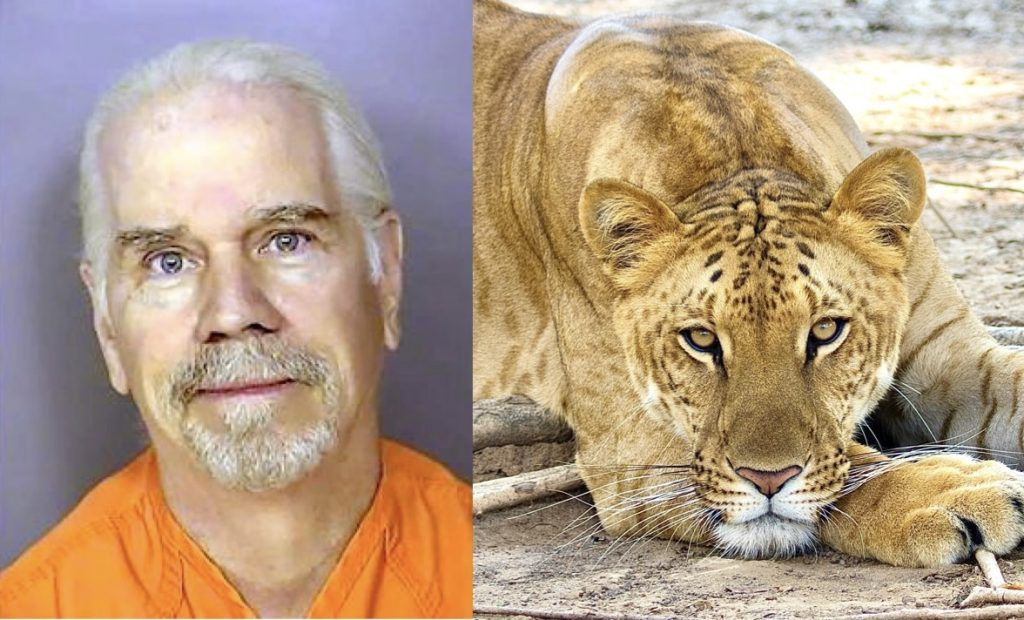
USA: Tiger King’s Doc Antle, Owner Of Myrtle Beach Safari, Pleads Guilty To Federal Wildlife Trafficking Charges.

Tiger King’s Doc Antle, Owner Of Myrtle Beach Safari, Pleads Guilty To Federal Wildlife Trafficking Charges

Bhagavan “Doc” Antle, featured in the Netflix series Tiger King, pleaded guilty yesterday to conspiracy to violate the Lacey Act and conspiracy to launder money.

Antle is the owner and operator of The Institute for Greatly Endangered and Rare Species (T.I.G.E.R.S.), also known as Myrtle Beach Safari. The safari is on a 50-acre wildlife preserve that offers tours and private encounters with exotic wildlife. Antle is also the Director of the Rare Species Fund, a nonprofit organization registered in South Carolina.

Continue reading at:

Tiger King’s Doc Antle, Owner Of Myrtle Beach Safari, Pleads Guilty To Federal Wildlife Trafficking Charges – World Animal News

Regards Mark

Spain: Lots of (What Should Be Public) Info Being Held Back By Authorities? – NGOs Gather in Gran Canaria to Celebrate Octopuses and Protest Planned Farm.

20 November 2023

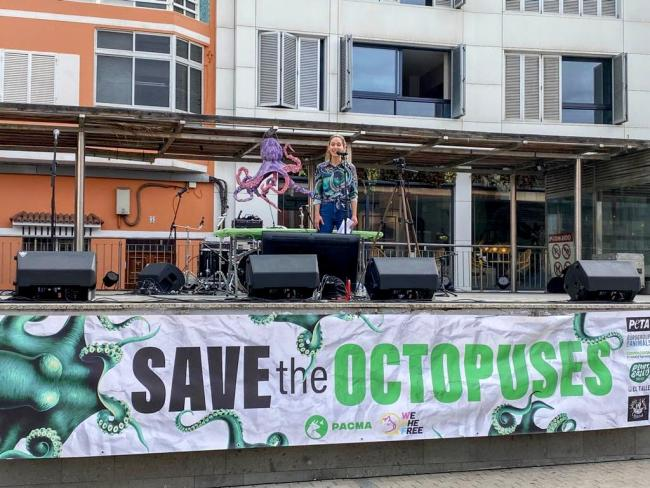
Animal welfare and environmental organisations came together on 4 November to spread awareness about the sentience of octopuses, and inhumane plans for the world’s first octopus farm.

Organised by PACMA and We The Free, the first annual International Save the Octopuses Fest was held in Las Palmas de Gran Canaria. The event took place close to the planned site of Nueva Pescanova’s octopus factory farm. 

Scientific experts and activists took to the stage to speak about magnificent, intelligent, and complex octopuses. Among these experts were Dr. Elena Lara from Compassion in World Farming and Keri Tietge from Eurogroup for Animals. This was in stark contrast to the repeated mentions of unethical farming practices, industrial-level suffering, and environmental destruction.

As summarised in our case study released earlier this year, there are numerous concerns around Nueva Pescanova’s farm. Notably, there is currently no effective method for reducing the amount of pain these animals will feel when they are killed for human consumption.

During a panel discussion with the experts, there was a lot of frustration related to one issue; why is there a lack of transparency with the local community?

The Canary Islands government has not updated the public regarding the status of Nueva Pescanova’s octopus farm

Before construction of an industrial aquaculture facility begins, there are several permit processes that must be adhered to. These processes relate to both EU and national legislation and, in theory, allow for public participation at several different stages.

In the case of Nueva Pescanova’s farm, everything has been kept quiet.

In September 2023, it was revealed that Nueva Pescanova’s simplified environmental impact assessment was denied. This means the autonomous body in charge of conducting the environmental evaluations concluded that there could be significant threats to the environment. Nueva Pescanova now must undergo the more exhaustive environmental impact assessment process.

Scientists and campaigners around the globe have already warned about the significant environmental damages that could come from this farm, but what is alarming is the lack of publicly available information about this process. The Canary Islands government is legally obligated to share notifications about such developments, which has still not happened. 

This lack of transparency may be related to the suspected usage of EU public funding for the farm,  which has not been disclosed by national authorities in Spain.

The EU parliamentary elections are just around the corner. It is critical for citizens to participate in order to bring voice to aquatic animals, including octopuses.

We know that farming octopuses simply cannot be done in a humane manner.

It is also clear that this new industry goes against the EU’s Strategic Aquaculture Guidelines and would exacerbate a wide range of sustainability issues. Now is the opportune time to ensure that the EU acknowledges the overwhelming scientific evidence and protects these fascinating and unique animals. 

—————————————————————————

Sounds as if they are doing all they can to stop NGO and the public from obtaining the truth – now the info is known we will have to see what happens next.

Regards Mark

Bad: Italy bans cultivated meat and meat-related labelling for plant-based food.

17 November 2023

In a move that flies in the face of evidence that we must reduce industrial farming and increase plant-based diets, Italy has announced a ban on the production, sale or import of cultivated meat as well as the use of meat-related wording on labels to describe plant-based foods.

The Italian parliament passed the bill with 159 votes in favour to 53 votes against. MEPs in favour of the bill claimed it would help to protect national traditions and prevent “synthetic” foods from entering the market.

Whilst no cultivated meat is currently commercially available in the European Union, the ban is aimed at preventing novel foods from developing in the country. Breaching the law would result in a fine of up to €60,000.

As the European Commission continues to evaluate novel foods such as cultivated meat, the ban could later be challenged at EU level.

The bill also prohibits the use of meat-related wording on labels to describe plant-based foods. This will hinder producers of plant-based products with expensive re-labelling, and will prevent consumers associating the relevant language with plant-based products. 

The measure is a deliberate attack on progress, preventing Italy from evolving despite the direction more and more European and non-European states are taking instead, with a significant push towards food transition. We are in front of the legalisation of an anti-scientific stance, which allows the livestock lobby to continue to exploit, violate and kill millions of animals, moreover, harming the health of all people, opposing transformation in every way.

Domiziana Illengo, LAV

The passing of this bill is a clear sign of resistance against the critically needed move towards better food systems for people, animals and the planet. 

Sad -you would hope they have learned by now;

Regards Mark

South Africa: New Study Shows That Tourists Are Willing To Pay For A Total Ban On Trophy Hunting To Protect Wildlife In South Africa.

A joint team of UK and South African researchers carried out a survey on public opinion toward trophy hunting. The survey involved 1,000 people from countries that most frequently visit South Africa, both from within the African continent and overseas. It indicated universally strong opposition to the killing of South Africa’s lions for sport and revealed a desire to finance the protection of the nation’s iconic wildlife through paying a ‘lion protection fee.’

The key findings of the research revealed that 84.2% of those surveyed stated that being asked to pay an inbound tourist ‘lion protection fee’ was a ‘good’ or ‘great’ idea. The highest support was from overseas with the UK, U.S., and many European Countries in favor at 92.3%. Those who live in Mozambique were in favour at 88.9%.

Continue reading at:

New Study Shows That Tourists Are Willing To Pay For A Total Ban On Trophy Hunting To Protect Wildlife In South Africa – World Animal News

Regards Mark

Cool Cat !

England: Viva ! – Dairy; Corporate Cruelty – New Investigation.

Dear Mark,

Viva! Campaigns has investigated another large dairy farm in Wales and sadly documented some of the worst cases of physical violence against animals we have ever seen. At the time of filming, the farm, Tafarn Y Bugail, supplied one of the largest dairy cooperatives in the UK.


The first time we entered the farm, at the dead of night, the sight of a rotting cow and four calves hit us. Their bodies had been left outside, uncovered and accessible to wild birds and animals. As we crept closer, we could see that they had been eaten down to the bone – a clear indication that these animals had been abandoned and dead for some time.  

On another visit, I saw the pathetic sight of baby calves isolated in hutches. Some were less than 12 hours old. These babies had been ripped from their mothers and were confined and shivering in the bitterly cold night. They had no love, warmth, comfort or stimulation and nowhere to go. It was the middle of winter!

Inside the maternity pens, conditions were chaotic, noisy and disgusting. We were shocked to find a colony of feral cats sleeping in the straw beds. They were devouring afterbirth; it was like a scene from a horror film. The fetid stench was horrendous.

Desperate for their mothers  One of the most distressing things we filmed were newborn female calves isolated from their mothers, crying out and desperately sucking our fingers for comfort.
Calf Pulling We filmed a cow having difficulty giving birth. The worker’s solution was to tie a rope to the calf’s protruding feet and forcibly haul him out, causing agony for the mother. Afterwards, the worker kicked the cow in the spine with his heel to force her to stand. Such cruelty is incomprehensible.
Repeatedly Beaten Cows were repeatedly and mercilessly beaten. We recorded one poor animal being hit harder and harder – a sickening 55 times. Other cows were subjected to being kicked in the udder and suffering blows to their legs, backs and faces.

Shocking footage shows ‘half-eaten dead cows’ at UK dairy farm

Shocking footage shows ‘half-eaten dead cows’ at UK dairy farm | UK News | Metro News

The gentle mother, who simply didn’t know what was wanted of her, was pushed around and her tail twisted. The worker became angry very quickly, hitting the cow with increasing force to make her stand in position for milking. The cow had nowhere to escape, and it was absolutely harrowing to witness her pain.

A second cow was kicked in her already swollen udder – in a final act of indignity. The violence delivered to these poor animals was the worst I have seen, with blows landing on their legs, backs and to the sides of their faces.
In another instance, one of the farm workers used a knife to burst a huge abscess on a cow’s rump during milking. A stream of pus oozed onto the milking parlour floor for over three minutes. 

We saw 17 cows in the parlour wearing hobbles on their back legs. These chains are to stop cows ‘doing the splits’ when they have suffered damage from birthing or falling, usually on dirty, wet floors. These sad and ill animals could barely walk. But they were still being milked. 

Please donate to our campaign and you’ll be helping fund justice for these animals!

Your donations are crucial and help fund:

DAIRY FARMING EXPOSED   Donate Now »

We’ll never give up the fight for animals and I’m hoping you’ll join us on our next Day of Action on Saturday 27 January 2024. 

We’re organising the biggest Day of Action Against Dairy in history where we will air our hard-hitting undercover investigations that expose the truth about dairy farming. We’ll be calling on the general public to stand up against animal cruelty and choose vegan.

Help us cover every single city, town and village across the country by organising an event on your local high street. The animals need you to speak up for them! Together we can make this the biggest protest against dairy the industry has ever faced.

Mark, thank you for being a part of Viva!

Please, give what you can so we can continue to expose the vile practice of UK dairy farming and get the message out there. Any money you can donate – no matter how little – will help us in our fight against this appalling abuse of mothers and their babies. 

With your help we can fight dairy consumption and its inherent cruelty. 

We can’t do it without you!  
Yours for the animals,


Juliet Gellatley
Founder and Director  

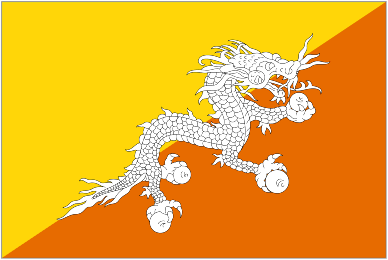
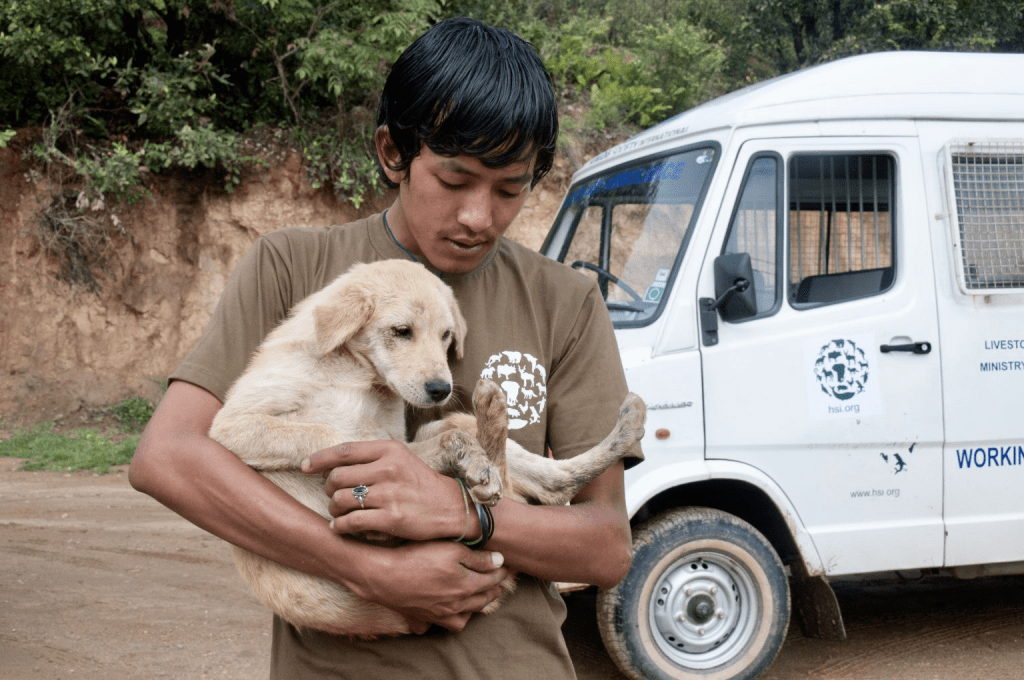
The Kingdom Of Bhutan Becomes The First Country In The World To Achieve 100% Dog Sterilization & Vaccination – Fantastic !!

Now that is an achievement !

Superb !

The Kingdom Of Bhutan Becomes The First Country In The World To Achieve 100% Dog Sterilization & Vaccination

The Kingdom of Bhutan has become the first country in the world to declare that its entire street dog population is fully sterilized and vaccinated following years of investment in a humane dog management program with global animal charity Humane Society International (HSI).

At the formal closing ceremony of the National Dog Population Management and Rabies Control Project in the capital Thimphu, presided over by Bhutan’s Prime Minister, Dr. Lotay Tshering, the Royal Government of Bhutan announced this historic achievement for animal welfare and human health.

At the ceremony, Prime Minister Tshering presented HSI with a plaque in recognition of what he called HSI’s ‘consistent and unwavering support’ towards Bhutan’s street dog welfare success from the beginning in 2009 until its closure – thereby honoring a decade and a half of intensive, targeted spay/neuter work and community engagement initiatives carried out by Bhutan in partnership with HSI.

Since its inception, the project has successfully sterilized and vaccinated more than 150,000 street dogs and micro-chipped 32,000 pet dogs.

Continue reading the full story at:

The Kingdom Of Bhutan Becomes The First Country In The World To Achieve 100% Dog Sterilization & Vaccination – World Animal News

Back in 2005 I worked with Slavica (Serbian) to set up ‘Serbian Animals Voice’ in order to be a voice, and campaign for much better treatment of stray dogs and cats in Serbia.  From the start it was difficult as we were up against a government which viewed endless killing as the only way to ‘control’ stray numbers.

This is an utterly wrong way to view stray animal management and instead we fought to have the government / regional authority ‘killing money’ redirected into covering costs for stray sterilisations, vaccinations and genera health check ups.  Anyone with anything between their ears will agree that sterilised animals cannot produce more young; and that was the basis on which we fought.  Their ‘final solution’ of just continually killing and doing nothing else does not reduce numbers as new animal young are being born on the streets all the time.  A catch, neuter and re release scheme after vaccinations and a good health check is the only way forward to reduce stray numbers.

Sadly the Serbian government just ignored our proposals and continued with their policy of simply killing anything on the streets that they could.  Killing simply creates a void in different areas into which strays will wander; looking for food and probably more dogs to reproduce with.  If they are sick and have illness or disease, then they always have the chance by moving to a new area of taking ‘that’ illness into an area in which stray dogs may not have suffered from before.

Health checks, sterilisations and vaccinations against disease is the all round solution to stray dog / cat management.  Killing is simply a short term ‘fix’ which may show a reduction in numbers for a few weeks; but with un-sterilised strays reproducing all the time we soon see a situation where ‘local mass killing’ returns stray numbers to what they were before, or even higher.

Serbia needs to learn stray dog management from Bhutan.

Thus to see this superb news from Bhutan is amazing – mega big well done to them for seeking and taking the right advice and way forward with stray animal management.

You can see all of our Serbian work by visiting the old site at 

serbiananimalsvoice.com   

Well done Bhutan; Serbia dragging years behind as always.

Regards Mark