ANIMAL rights campaigners welcomed a total ban on snares and glue traps in Wales, which came into force yesterday.
Rural Affairs Minister Lesley Griffiths called it a “historic day” for animal welfare and said she is proud Wales is the first of the UK nations to introduce the move.
RSPCA Cymru’s Billie-Jade Thomas said: “We very much welcome the ban on snares and glue traps coming into force today.
This Animal-Rights Group Wants Adidas to Hire New President Opposed to Kangaroo Cleats
A week after Adidas announced North America president Rupert Campbell will leave the company at the end of the month, the Center for a Humane Economy called on the company to replace the outgoing executive with someone opposed to using kangaroo hides on soccer cleats.
“Adidas has long been the biggest apologist and end-user of kangaroo skins for soccer cleats in the world,” said Wayne Pacelle, president of the Washington, D.C.-area animal welfare group and Animal Wellness Action. “It now stands alone among the biggest athletic shoe brands in financing the slaughter of kangaroos, including the mass orphaning of joeys.”
Malaysia’s Wildlife Department has defended its use of puppies as live bait to capture black panthers spotted at a Malaysian village. An animal rights groups protested the method and appealed to the government to use other means.
The department resorted to using puppies after earlier attempts to lure the panthers with a goat failed. It is “standard procedure” to use live animals, Wildlife Department Director General Abdul Kadir Abu Hashim said in remarks published on Tuesday, noting that the puppies were not physically harmed in the process.
A new barometer on animal welfare shows an overwhelming majority of European citizens who demand better EU legislation that truly protects animals, with over nine in ten Europeans stating that it is important to protect the welfare of farmed animals, and an absolute majority deeming it very important. More than eight in ten Europeans believe that farmed animals in their countries should be better protected than they are now. These results should prompt the European Commission to follow through on its commitment to deliver all the proposals to revise the EU animal welfare legislation as promised.
The much awaited special Eurobarometer on Attitudes of Europeans towards Animal Welfare has finally been published today. The poll surveyed 26,376 citizens across all member states between 2 and 26 March 2023, and acts as an official tool that is used to advise the EU institutions when drafting reports and legislations.
The results confirmed the strong support from EU citizens towards animal welfare, confirming the previous survey from 2016, which had also sent a very strong message for the EU to better protect animals.
Highlights from the survey:
Over 90% of Europeans consider that farming and breeding practices should meet basic ethical requirements, while two-thirds of respondents said that they would like to have more information on the conditions in which farmed animals are raised.
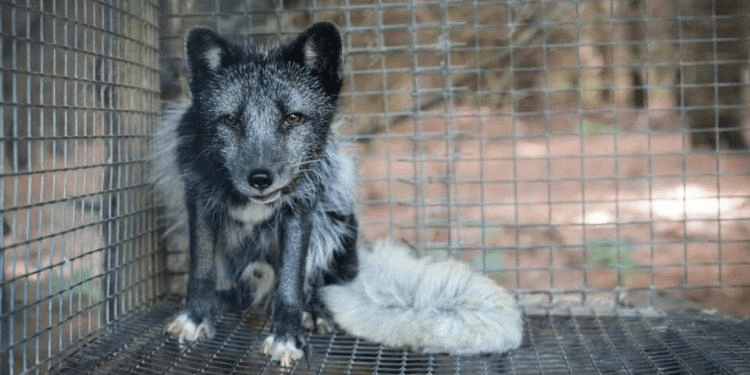
Nearly six in ten Europeans (57%) said that fur farms should be banned in Europe, in line with the 1.5 million citizens who made this call in the successful Fur Free Europe ECI
Over nine in ten Europeans believe that farmed animals should have enough space to be able to move around, lie down and stand up, with 89% saying that animals should not be kept in individual cages, supporting the call by 1.4 million citizens who asked for a ban on cages. Currently in the EU, over 300 million farmed animals spend their lives confined in cages, which cause them immense suffering.
Nearly nine in ten Europeans (88%) said that it is important to improve the welfare of animals in slaughterhouses.
89% of Europeans favoured a ban on mutilations, a practice that is still very common in the EU, despite the pain it causes.
Three quarters of respondents found the practice of killing male chicks after birth to be unacceptable. In addition, eight in ten Europeans believe that ensuring sufficient skills and training in people handling animals is important.
On the issue of live animal transport, which the EC is expected to propose a revision on, 83% of respondents think that the travel time for the transport (for ‘commercial purposes’) of live animals within or from the EU should be limited.
When it comes to food imports from non-EU countries, over eight in ten Europeans (84%) believe that the current animal welfare situation should change, either by imposing import requirements or a very strict labelling system.
60% of the respondents indicated that they would be willing to pay more for products sourced from animal welfare-friendly farming systems, despite the survey being carried out during high inflation periods.
74% believe that the welfare of companion animals should be better protected, and over eight in ten respondents said that good welfare conditions for horses, cats and dogs bred for commercial purposes is important.
The support of EU citizens for better animal welfare is enormous, with this Eurobarometer once again they made a clear call for better protection for animals on all fronts. We urge the European Commission to listen to this loud and clear message and come forward with a solid commitment and timeline for the Kept Animals and Slaughter Regulations
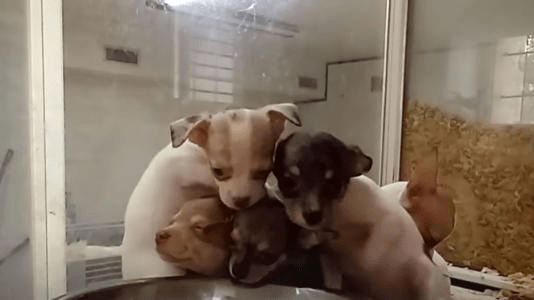
More than 400 pets have been rescued from an illegal animal trade network in Spain.
Hundreds of animals, mostly dogs and cats, were recovered as part of an operation conducted by four police forces across Spain that first began in 2020.
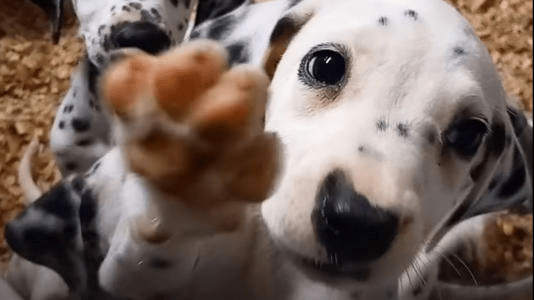
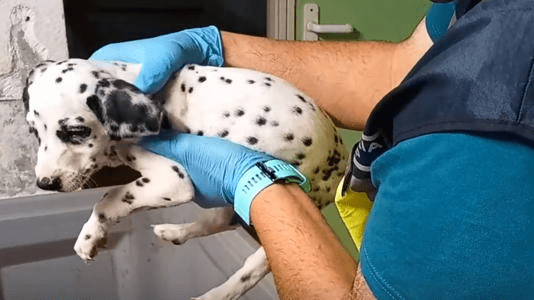
In a video released by police in Catalonia, puppies of various “highly valued” breeds could be seen jumping around in crates as they were sent to undergo health inspections at the vets.
Clear call from MEPs in plenary: Fur Free Europe now
19 October 2023
Photo – Jo Anne McArthur – We Animals.
MEPs from all political groups called for a full ban on fur farms and on the placement of farmed fur products on the European market at today’s European Parliament Plenary in Strasbourg.
A large number of MEPs from across the political spectrum called on the European Commission (EC) to respect European citizens’ demands from the Fur Free Europe European Citizens’ Initiative (ECI) and end this unnecessary, unethical and obsolete practice.
An official reply to the ECI is expected from the EC by the end of the year.
More than 1.5 million EU Citizens have asked for a ban on fur farms and on the placement of farmed fur products on the EU market, in one of the most successful ECIs on animal welfare. 20 Member States have already totally or partially banned fur farming on grounds of animal welfare and public health.
23 MEPs directly called for the ban on fur farms, stressing the immense suffering to animals: 37 million animals are killed in Europe each year for the sole purpose of fur production, which they called ‘unnecessary’.
An overwhelming majority of MEPs stressed that the EC simply cannot ignore the democratic call of the citizens, arguing that the time to end this practice is now and that the EU cannot remain silent and continue to ignore the cruelty of fur farms.
Numerous MEPs also brought up the severe threat that fur farms pose to public health, making reference to recent Covid-19 and avian influenza outbreaks, while they highlighted the serious consequences that fur farming has on biodiversity.
Fur farming is unethical, a useless impractical practice that causes lifelong suffering in small cages. We hope the EC brings up a ban on production and imports. Tomorrow should be better than today.
Sirpa Pietikainen, MEP (EPP)
If it matters to Europeans, it matters to Europe. But what does this mean if the EC does not honour its own pledge, and act on the call of millions of Europeans. We need to ban the import of fur to prevent suffering elsewhere. How can we in Europe remain silent? Animals don’t deserve this. Citizens don’t want this. Will the Commission finally take the lead and show that it takes citizens’ initiatives seriously?
Anja Hazekamp, MEP (The Left)
We can no longer ignore the cruelty of the fur farming sector and the risks for public health. The pollution is immense, while it poses a risk to ecosystems. We say yes to a future with a fur free world.
Leszek Miller, MEP (S&D)
60 minks to be slaughtered for a single coat… 200 chinchillas… This is perverse and despicable that so many animals have to be killed for the sake of fashion.
Maria Noichl, MEP (S&D)
The time has come to end the infliction of suffering on these animals. This type of rearing of animals is in direct contradiction to animal welfare. It is unethical, unsafe and unsustainable.
Laura Ferrara, MEP (non-attached)
We cannot allow this to continue anymore. Breeding animals for their fur is unacceptable. What is the added value? How does this contribute to the wellbeing of society? This practice belongs in the past. We have to end this madness in which animals are being treated as objects.
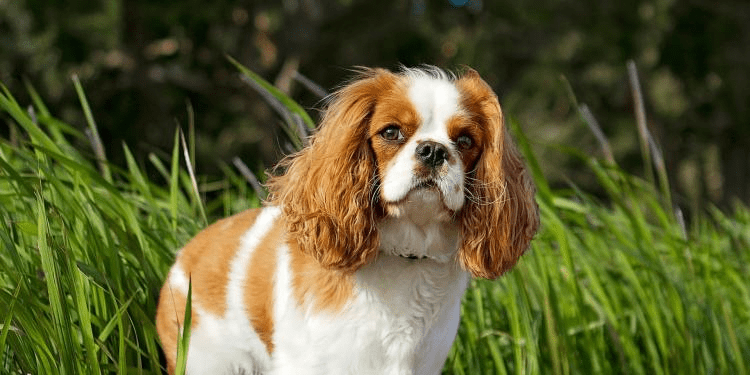
Norway’s Supreme Court handed down a final verdict that the Cavalier King Charles Spaniel dog breed is too sick and inbred for breeding to continue. They also ruled that the breeding of English bulldogs must fit with new frameworks, with breeding falling outside such frameworks to be illegal.
Extreme breeding has become a major animal welfare concern, especially with the surge in popularity of brachycephalic (flat-faced) dogs and other companion animals showing extreme features.
Selecting for specific physical traits (e.g. flat nose, round skull, skin folds, droopy eyes) and unrestrained inbreeding has led to hereditary disorders impacting both the physical and mental health of the animals.
In Norway, Section 25 of the Animal Welfare Act (2009) clearly states that “breeding shall encourage characteristics resulting in robust animals that function well and avail of good health”. It goes on to specify that breeding cannot happen if offspring will likely have natural behaviour affected or if it could lead to ethical issues.
The Norwegian Society for the Protection of Animals sued the Kennel Club of Norway, the Cavalier King Charles Spaniel Club and the English Bulldog Club, along with six individual breeders, claiming that the breeding of these specific breeds contravenes Section 25.
The case was first brought to the Oslo District Court, then to the Oslo Court of Appeal and finally to the Supreme Court who concluded in an indisputable way that further breeding of the Cavalier King Charles Spaniel with the current genetic material is in violation of the Animal Welfare Act.
Extreme breeding is a cause of unnecessary and widespread physical and mental suffering in dogs and many other animals. Norway’s verdict on unethical breeding will have major ripple effects in Europe. Eurogroup for Animals will continue working for EU-wide legislation stating that unethical breeding causing discomfort, pain and/or disease is illegal.
Some were recorded kicking, striking, and stamping on chickens too (Animal Justice Project / SWNS)
Catcher gangs are used at chicken farms across the UK as part of a depopulation process when chickens come to the end of their natural egg-laying life at around 76 to 80 weeks old. Release date October 16, 2023. See SWNS story SWMRchickens. Shocking footage shows RSPCA-approved workers kicking and stamping on hens. The secret footage of workers known as ‘catcher gangs’ was taken at Kettleby Farm in Leicestershire which supplies some supermarket chains. RSPCA Assured have since suspended the company, Norfolk-based abattoir AD Harvey, whilst they investigate the alleged abuse. AD Harvey say that staff in the footage are no longer employed and their remaining staff are undergoing retraining. Catcher gangs are used at chicken farms across the UK as part of a depopulation process when chickens come to the end of their natural egg-laying life at around 76 to 80 weeks old. The birds are then usually used for cheap meat, soups, stock, or stews as a ‘by-product’ of the egg industry. The video was released by animal rights group The Animal Justice Project, who claim that in one ‘shocking’ incident, around 30,000 hens at the end of their egg-laying life were caught in one night at the farm.
Undercover footage appearing to show workers from an RSPCA-approved company kicking and stamping on hens has seen it suspended from the charity’s farm animal welfare scheme – and reported to government investigators.
The footage has been released by animal rights group The Animal Justice Project, and shows workers known as “catcher gangs” from Norfolk-based abattoir AD Harvey working at four farms, including Kettleby Farm in Leicestershire. Catcher gangs round up hens who have come to the end of their natural egg-laying life for transport to abattoirs, with the birds typically used for cheap meat, soups, and stock.
The video shows workers kicking and throwing hens from their perches by their tailfeathers, even striking them with objects as they made their way through the facility, leaving birds lying injured or dead in their wake.
Workers were caught breaching RSPCA guidelines by carrying large amounts of hens to crates by just one legs, before shoving them in and slamming the crates closed – sometimes on their wings and heads. Catchers filmed by the group also appeared to be aware of their inappropriate methods, with one catcher saying: “It only takes one idiot to just come in here and film what we do… and all the animal rights lot will be down here. They all think chickens walk around in fields, think 20 chickens in a field will feed the nation.”
The Animal Justice Project were now calling on the RSPCA to cut all ties with AD Harvey. Spokesperson Claire Palmer said the “appalling” footage showed “indisputable violence” against hens. “The RSPCA must take decisive action – beginning with the permanent severing of ties with AD Harvey and the launch of criminal proceedings against potential law violators.”
RSPCA Assured has since suspended AD Harvey while they investigated the alleged abuse. An AD Harvey spokesperson told SWNS that the staff in the footage were no longer employed and their remaining staff were being retrained.
“It is totally unacceptable for any animal to be treated in this way and we have reported this incident to the Animal and Plant Health Agency – an official government body that is fully equipped and resourced to investigate and take action,” an RSPCA Assured spokesperson said. “The behaviour in this footage goes against everything RSPCA Assured stands for and falls significantly below the high standards we demand of our members.
“We have suspended the membership of the catching company involved, pending investigation,” they added. “This means that the workers in the footage, as well as all other employees of the catching company, cannot work with any animals being raised under the RSPCA Assured scheme.”
Of the four farming sites featured in this footage, only one, Kettleby Farm, was RSPCA Assured certified. “We are urgently investigating this farm, as well as the associated transport company and abattoir, and are unable to comment further whilst our enquiries are ongoing,” the spokesperson added.
“We take complaints of poor animal welfare about any of our RSPCA Assured members very seriously and would always urge anyone with any concerns to contact us straight away, without delay. This is so that we can immediately investigate, visit the premises and address any welfare issues as a priority.”
In a statement issued by AD Harvey, the company told SWNS that the behaviour of their staff had fallen below standards. “AD Harvey have been made aware of a film which was produced, covertly, by an activist working on behalf of an animal rights organisation.
“The edited footage seeks to compare RSPCA Assured standards with what the activist actually witnessed whilst ‘working’ as part of our team at a poultry farm,” a spokesperson wrote. “As a result, RSPCA Assured have suspended AD Harvey Catching teams from their scheme.”
They said they had viewed the footage, and it “clearly shows some members of the AD Harvey bird catching team acting in a manner which was completely at odds with the standards of animal welfare to which we require our staff to work to… Those staff members are no longer employed by AD Harvey, and all other members of our bird catching staff are being retrained in the correct procedures.”
AD Harvey said its partners “totally condemn any breaches of animal welfare legislation” and their teams were trained to deliver a service which ensured that birds are treated with respect and care. “We will work closely with both RSPCA Assured and all of our customers to ensure that our teams act in a professional and caring manner at all times.”
Investigation reveals intense suffering on rabbit farms in Spain
17 October 2023
AnimaNaturalis
Despite a marked decrease in rabbit meat consumption, Spain continues to be the leader in production and consumption in Europe, followed by Italy and France. Rabbits are currently the second most raised and slaughtered animal for human consumption in the EU, with 180 million rabbits killed every year.
In a new undercover investigation, AnimaNaturalis accessed 10 farms in Castilla y León, Catalonia, Aragón, and Castilla-La Mancha; some of the regions with the highest concentration of rabbit farms in the country. They discovered deplorable conditions and failure to adhere to animal welfare regulations. The images and footage obtained show animal suffering throughout the whole production cycle, from mothering and breeding to fattening.
Click ‘Watch on YouTube’ to view.
Our research offers undeniable evidence that the rabbit sector is based on a cruel system, far removed from any minimally acceptable standard of welfare. The use of cages in itself prevents rabbits from developing any of their natural behaviours, which causes them a high level of physical and psychological suffering throughout their lives.
In 2020, The European Food Safety Authority reported that Spanish farms use the worst possible production system in terms of animal welfare and that 20% of rabbits die before reaching the slaughterhouses.
The European Citizens’ Initiative End the Cage Age, which received over 1.2 million signatures of support, made it clear citizens want to see the end of cruel farming practices that keep animals caged for the majority of their lives.
Rabbits are particularly vulnerable since they do not have specific regulations that protect them. But their situation could soon change if the European Commission keeps its promise to review animal welfare laws in the coming months as planned.
Following the investigation, AnimaNaturalis is denouncing the mistreatment suffered by millions of rabbits in Spain and urges the authorities to immediately develop regulations that protect them and guarantee minimum conditions of well-being.
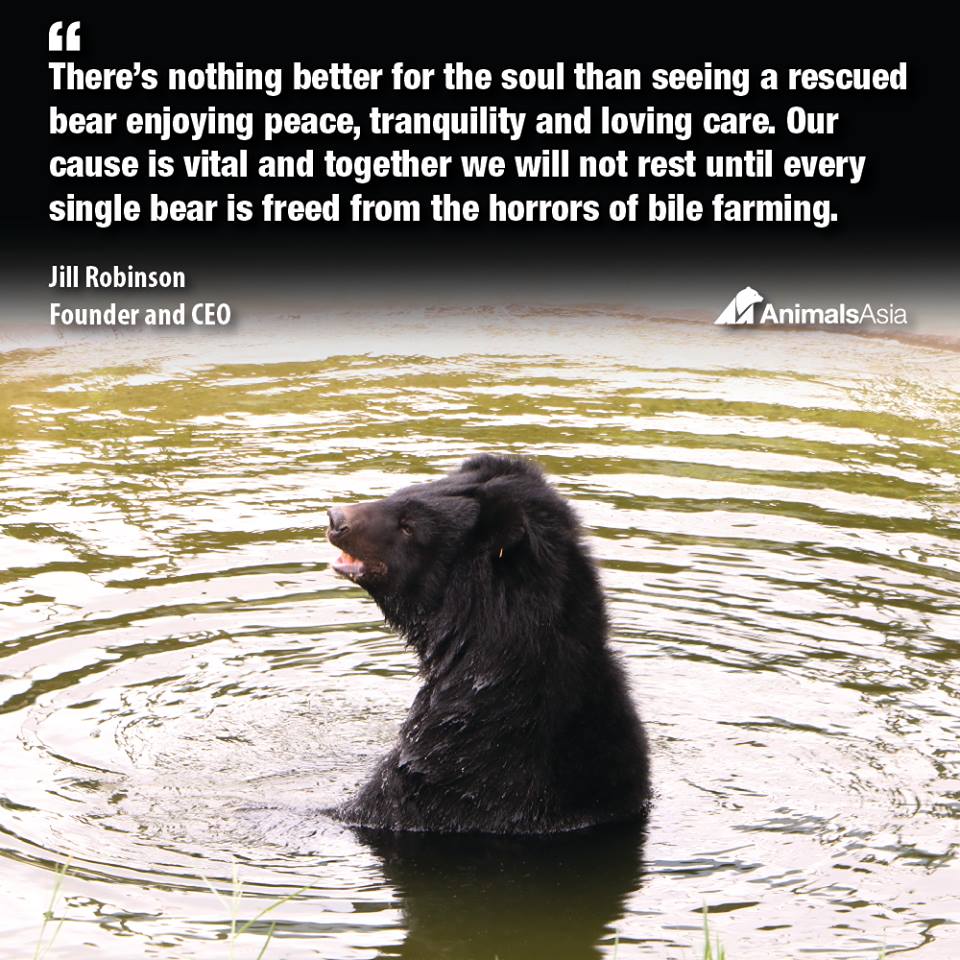
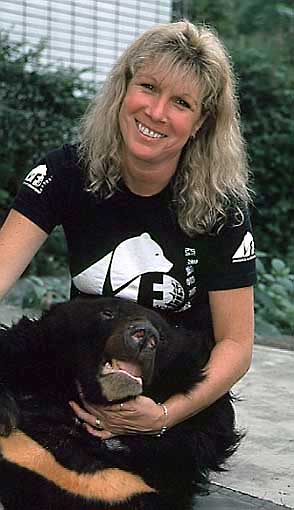
Jill, the founder and CEO of Animals Asia, has been in touch today.
The latest and most exciting news relates to the AA new bear sanctuary in Vietnam.
The new sanctuary, complete with rescue teams are READY TO GO !
Vet and bear care teams are equipped and prepared to put the first of 300 remaining desperate bears on the long path to recovery.
Phase 1 of the new sanctuary in Bach Ma National Park is now complete and operational. This includes a new quarantine area, two big double bear houses, and a bear hospital.
Thuy Hoang is the new sanctuary manager, and we wish her every success with this new venture.
On 2 October 2023, Animals Asia made “one giant leap for moonkind” by rescuing the first bears to our new sanctuary in Bach Ma, Vietnam.
The new sanctuary signals the end of bear bile farming in Vietnam. It will be home to the last remaining few hundred bears that still live on bile farms across the country.
I will finish with this wonderful news and leave you to explore and donate via the ‘Home’ first link above;