India: Intoxicating a Donkey Video, and, Cheetah Reintroduction Raises Concerns. Click Links to Read.

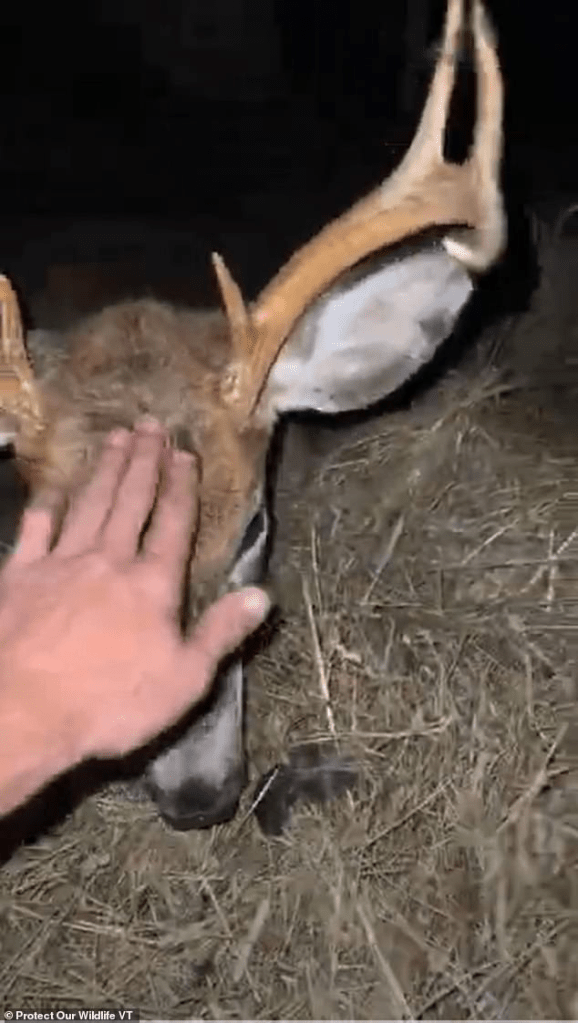
Video of intoxicating a donkey goes viral; Rudraprayag police responds – Times of India (indiatimes.com)

India – Cheetah reintroduction raises concerns.

Cheetah: The world’s fastest cat is returning to India – BBC News

Seventh cheetah dies in India, raising concerns over reintroduction efforts | CNN

Regards Mark

RIP Phil: the Devil he may take ya !

CIWF England: Industrial animal farming can continue polluting as the European Parliament waters down emissions directive.

Industrial animal farming can continue polluting as the European Parliament waters down emissions directive

12 July 2023

CIWF

The European Parliament has voted to exclude emissions from industrial cattle farms from the Industrial Emissions Directive. The Parliament also voted for scrapping the Commission’s proposal for updated thresholds for pig and poultry farms. Thereby the proposal from the European Commission, that could reduce emissions from the largest polluters that keep animals in cramped conditions, is substantially weakened and puts the EU off track on its climate commitments.

The Industrial Emissions Directive controls emissions from the largest industrial installations in the EU, including a small number of the largest pig and poultry farms. Any installation controlled by the IED is forced to reduce emissions into air, water and soil and needs a permit to operate. With the European Commission proposal, the Directive would increase the coverage from 18% to 60% of emissions of ammonia from cattle, pigs and poultry, and extend the coverage from 3% to 43% of methane emissions. 

The Parliament voted for going back to the current insufficient thresholds of 750 Livestock Units that only cover farms with 40,000 poultry, 2,000 pigs and 750 sows or more, with cattle farms entirely excluded. This stands in stark contrast to the Commission’s proposal of 150 Livestock Units which would cover all large farms, including cattle as it is the main emitter. In numbers this would mean that farms with example 500 pigs, or 150 dairy cows, or 10,700 laying hens or 21,400 broiler chickens would be included while the Directive would not affect small and medium sized farms.

In addition, the result of the Parliament’s vote shows a declining ambition even below the current Industrial Emissions Directive by further reducing the obligations for the industrial poultry and pigs farms with 750 Livestock Units and that will be covered by the Directive.

Animal farming is responsible for 67% of EU ammonia emissions and more than 50% of EU methane emissions. Cattle farming is by far the biggest source of methane emissions from agriculture. Failure to reduce these emissions puts the EU on track to break its commitment under the Global Methane Pledge (pledging to reduce methane emissions by 30% by 2030) as well as failing on its Zero Pollution Action Plan. In order to reduce emissions it will be necessary to address more of the large livestock farms. In addition to the negative impact the intensification of animal farming has had on animals, a strong Industrial Emissions Directive would bring significant health and environmental benefits for citizens.

Overall, the Parliament’s vote points to an even lower climate ambition than the agreed position by the Council. Earlier in spring, the Environmental Ministers agreed to include cattle in the scope but increase the thresholds as compared to the Commission’s proposal. The revision of the Industrial Emissions Directive will now go to interinstitutional negotiations (trilogues) between the Council, Parliament and the Commission. The results of the negotiations can potentially mean that the IED will continue to exempt the majority of the largest polluters.

The debate around the Industrial Emissions Directive has pinpointed how EU animal farms have intensified during the last years, with detrimental impact on animal welfare and with the EU potentially failing to address their emissions if this is not rectified in trilogues. 

For more information, please see the briefing by Eurogroup for Animals’ members Compassion in World Farming and FOUR PAWS.

Regards Mark

UK (Scotland): Unbound the Greyhound: One Kind launches campaign to end dog racing in Scotland.

Unbound the Greyhound: One Kind launches campaign to end dog racing in Scotland

11 July 2023

OneKind

Greyhound racing in Scotland is on its last legs, with just one unlicensed track remaining. The dog racing industry is rife with welfare issues such as deaths, injuries and doping, and OneKind believe it has no place in a modern Scotland.

Together with 8 other animal protection organisations based across Scotland, England and Wales, OneKind is calling for an end to the cruel greyhound racing industry. This outdated form of entertainment causes a range of welfare issues for dogs:

Inadequate kennel conditions

Many greyhounds used by the racing industry are kept in kennels, in conditions which do not allow the dogs to thrive. In the worst instances, dogs can live in dank, dirty kennels, suffer from untreated wounds and injuries, receive inadequate veterinary care, and be shouted at or roughly treated. The dogs may also be constantly muzzled.

Doping

Greyhound Board of Great Britain’s records show that dogs in the racing industry have been doped with performance-enhancing drugs, including class A substances such as cocaine. Research has shown that the adverse effects of cocaine in dogs include neurological and muscular abnormalities, increased heart rate, convulsions/seizures, weakness, vomiting and lethargy.

Overbreeding

Thousands of puppies are bred to supply a racing pool across the UK. However, not all of these dogs will make the racing grade and thus some will be superfluous to the needs of the industry. Not all greyhounds will be passed to rehoming centres. Sadly, some may be killed instead.

It is also clear that the Scottish public do not support this cruel industry. One poll revealed that the majority of Scots (60%) want to see the Scottish Government take action to put an end to greyhound racing.

Action

Learn more about the campaign and sign the open letter 

to add your support (you do not need to be based in Scotland to sign).

Regards Mark

EU / NZ: The EU-New Zealand trade deal includes animal welfare conditionality.

The EU-New Zealand trade deal includes animal welfare conditionality

9 July 2023

Press Release

On Sunday 9 July, the EU and New Zealand officially signed their Free Trade Agreement (FTA) after five years of negotiation. While the FTA liberalises trade for all animal-based products, thereby further stimulating animal agriculture in the EU and New Zealand,Eurogroup for Animals still welcomes that the beef quota is reserved for grass-fed animals.

This is only the second time the EU negotiates an animal welfare condition in a trade agreement. The controversial EU-Mercosur FTA introduced the first one in relation to shelled eggs. Yet, the volume of shelled eggs imported by the EU from the Mercosur countries is quite low. In the case of New Zealand, the EU managed to obtain an animal welfare condition for one of the animal products most traded between the partners. While New Zealand only had one feedlot built for exports to Japan, recently there has been a push to establish new ones, and this condition in the FTA will ensure EU consumption is not responsible for that. 

We welcome the explicit exclusion of meat derived from commercial feedlots from the list of products benefitting from preferential access thanks to the FTA, also based on sustainability reasons. In addition to being a significant source of pollution, feedlots are detrimental to animals as they suffer from respiratory and digestive diseases, which are the main causes for cattle death under such rearing conditions. So far, EU trade policy has been blind to the unsustainable methods of production it can stimulate abroad, including the development of feedlots.  

This trade agreement shows that the EU can condition relevant trade flows to higher animal welfare standards. The EU should apply this approach to all animal products in FTAs, and negotiate ambitious animal welfare conditions with all trading partners, including Mercosur countries. Why would it be sustainable to include meat derived from commercial feedlots in the quota granted in the EU-Mercosur agreement, when it’s not sustainable to do so with New Zealand? Especially as feedlots are a much more common method of production in Mercosur countries.

Reineke Hameleers, CEO, Eurogroup for Animals

Apart from this condition on preferential market access for beef, the FTA, like many others, includes a chapter on animal welfare cooperation. Yet, the language used in this chapter remains aspirational and the impact of such wording will only depend on the political willingness of the EU and New Zealand to work on this together. Surprisingly, the language on animal welfare has been separated from the chapter on Sustainable Food Systems (SFS), contrary to most recent EU FTAs. This means that in that chapter, no mention is made to animal welfare or to the close connections between animal welfare and public and environmental wellbeing. This creates silos that can be harmful and create detrimental trade-offs for animals. 

The EU-New Zealand FTA has also been praised for being the first EU trade deal integrating sanctions in its Trade and Sustainable Development (TSD) chapter. While this is welcome, it does not change the intrinsic issue that if the language used in such a chapter is often non-committal, which is the case for provisions related to wild and aquatic animals, no violation can be found.

Introducing animal welfare-based conditions in FTAs, as the EU did with New Zealand, is one option to avoid that the EU further externalises its animal welfare concerns. However, as negotiations of trade agreements can be long and difficult, Eurogroup for Animals calls on the European Commission to seize the unique opportunity offered by the revision of the EU’s animal welfare legislation to propose the inclusion of all animal products placed on the EU market, regardless of their origin, within its scope.

Regards Mark

EU: European Parliament to vote on two major climate and nature laws this July.

European Parliament to vote on two major climate and nature laws this July

9 July 2023

Two plenary votes are coming up at the European Parliament that could have a huge impact on the planet; one on the Industrial Emissions Directive and the other on the Nature Restoration Law. It’s critical that policymakers vote in favour of nature, as well as for an ambitious threshold for animal agriculture, so that we can get to work on the urgent task of mitigating our impact on the climate and natural landscapes.

Find out below why these laws are so important, what impact these two plenary votes could have and what we, along with some of our members, have to say about them. 

What is the Industrial Emissions Directive?

The Industrial Emissions Directive (IED) has been designed to stop and/or control industrial emissions. 

Adopted in 2010, it’s currently the main policy in Europe to regulate pollutant emissions from industry, including from air pollution and wastewater discharge. 

In 2022, the Commission adopted proposals to make the IED stronger by including emissions from large cattle farms within its scope, in addition to the large pig and poultry farms that were already covered.

Any installation controlled by the IED is forced to reduce emissions, and needs a permit to operate. The original Commission proposal suggested including more industrial-size animal farms, with a threshold of 150 or more livestock units (LSU). 150 LSU corresponds to, as examples, a large farm with 500 pigs, 150 dairy cows, 10,700 laying hens or 21,400 broiler chickens. 

The goal of this revision was to bring the Directive more closely in-line with the goals set out in the European Green Deal, and other relevant policies. The debate around it has also put the intensification of EU animal farming in the spotlight

On July 10, the European Parliament will vote on the Commission’s proposal. If they vote in favour of it, amazing steps could be taken to reduce our industrial emissions – especially from agriculture.

If they vote against it, however, these systems will continue to cause great damage to nature and the climate – which they’re already doing at an alarming rate.

What is the Nature Restoration Law?

Last year, the European Commission adopted a proposal for a Nature Restoration Law, which focuses on how we can recover and protect our ecosystems. Among its targets, the proposal aims to restore at least 20% of the EU’s land and sea areas by 2030 and all ecosystems in need by 2050. 

There are plenty of positive examples of where nature restoration strategies have been successful. Deploying these kinds of strategies at EU level, then, would have sweeping impacts on biodiversity, land and marine ecosystems, the health of our soils (which is critical for food security) and more. As with the Industrial Emissions Directive, it’s extremely important that policymakers acknowledge the necessity of this move and vote in its favour.

What are the stakes?

The 2020 State of Nature in the EU report states that only 14% of habitats and only 27% of non-bird species currently have good conservation status. Moreover, the 2021 assessment for the EU Red List of Birds showed that 1 out of 3 bird species declined over the last few decades. These numbers demonstrate that, beyond species’ populations, wild animal individuals in the EU are suffering from a decline in the quality of their habitats. Habitat loss is a major source of stress for wild animals, restraining their movements and threatening their access to food, water and shelter.

These issues clearly can’t be allowed to develop any further. Only action at EU level will help us to mitigate our impacts on the climate and environment in a meaningful way. That’s why we’re working with our members to call on the European Parliament to address these plenary votes with the seriousness they deserve. 

It’s time for our policies to meet our planet’s needs!

We’re looking to the European Parliament to redefine ‘climate change’ -by changing the course of the climate crisis, instead of letting it continue – and using their power for the planet’s good. 

Farming should look far different by 2050. 

Regards Mark

EU: European scientists continue to support an EU roadmap to accelerate the transition to non-animal science.

European scientists continue to support an EU roadmap to accelerate the transition to non-animal science

10 July 2023

In the space of a week, 80 European scientists from 14 EU countries have signed an open letter calling on the European Commission and Member States to commit to establishing an EU roadmap to accelerate the transition to non-animal science.

The transition to non-animal science can offer more effective and accurate humane solutions for biomedical research and regulatory testing, and has been acknowledged by the European CommissionEU agencies, the cosmeticschemicalpharmaceutical and healthcare industries, the consumer goods sector, and academia as an important step in tackling the health and environmental issues that threaten society today. This transition is overwhelmingly supported by Members of the European Parliament and EU citizens, and is in line with the European Union’s objective to fully replace the use of animals in science.

To achieve improved human health and environmental protection, it is essential to coordinate EU efforts and policies that facilitate and prioritise the transition to non-animal science in all EU research, innovation and education initiatives. Clear short-, medium-, and long-term actions are needed to guide and accelerate the adoption of innovative non-animal approaches while phasing-out animal-based methods. In addition, a coordinated European Research Area (ERA) initiative can revolutionise the scientific landscape by supporting innovation, research infrastructure, and knowledge sharing to train and inspire scientists, educators, students and regulators in the use of non-animal approaches.

The undersigned call on the European Commission and the Member States to establish an EU roadmap and launch an ERA action. This initiative should include concrete milestones, cross-sector support, open science principles, dedicated funding and harmonised education and training initiatives to accelerate the transition to non-animal research, regulatory testing and education.

If you are an EU academic or scientist and wish to sign this open letter, please follow this link.

List of signatories: 

Name:Position:Affiliation:Country:Suggestions:
Martin PaparellaSenior ResearcherMedical University InnsbruckAustria 
Bernard GODELLEUniversity professorUniversity of MontpellierFrance 
Penny NymarkAssistant ProfessorKarolinska InstitutetSwedenIn parallel with development of non-animal methods, known as New Approach Methodologies (NAMs) within chemical risk assessment, it is also paramount that all generated data in science is made Findable, Accessible, Interoperable and Reusable (FAIR)! Besides being a non-animal method in itself, reuse of data is the only way we can move into an era of machine-driven and AI-supported predictive chemical risk assessment without the reliance on animal testing.
Pranjul ShahHead of the IncubatorUniversity of LuxembourgLuxembourg 
Mario RothbauerGroup LeaderMedical University of Vienna – Dpt. Ortho Trauma SurgeryAustria 
Dania MoviaAssistant ProfessorTrinity College DublinRepublic of Ireland 
Prof. Dr. Stefan DübelHead, Dept. of BiotechnologyTechnische Universität BraunschweigGermany 
Ashwani SharmaCo-founderInsight BiosolutionsFranceHello, I agree that we need alternative methods than animal testing as using like human in vitro models can give better results than animal testing.
Janneke Hogervorst, PhDPostdoctoral researcherHasselt UniversityBelgiumFor many areas of research, animal testing is known to have very limited validity. We don’t need to first develop non-animal methods there; we should just end animal experiments there right now and spend our limited resources on other research. We need more systematic reviews into the validity of animal experiments, rather than treat animal experiments as the gold standard that we need to find replacements for. Ending what doesn’t work is innovation too.
Love HansellPhD ResearcherRadboud UniversitySweden 
Bas van BalkomAsst ProfessorUMC UtrechtThe Netherlands 
Margherita ScarpaEngeneerInstitut Jacques MonodFrance 
Federica EmilianiLecturerInHolland University of Applied SciencesThe NetherlandsInvesting even more in in vitro/silico modelling
Birgit GoversenPostdoctoral researcherAmsterdam UMCThe Netherlands– More funds for the improvement of current NAMs
– A focus on understanding, supporting and convincing stakeholders; not on forcing them to use NAMs
Merel Ritskes-HoitingaProf. in Evidence-Based Transition to Animal-Free InnovationsUtrecht UniversityThe NetherlandsSetting goals is key, just like we do for the economy. The science and technology ARE here to move to non-animal science. By teaming up with social sciences and key stakeholders we can accelerate and strive towards ending animal testing by 2035.
Rosalinde MasereeuwFull professorUtrecht UniversityThe NetherlandsMake sure everybody is on-board, we can only make the transition together.
Mathieu VinkenONTOX coordinator/university professorVrije Universiteit BrusselBelgium 
Koen KramerResearcher animal ethicsWageningen University & ResearchThe Netherlands 
AC van VeenPostdocRadboud UniversityThe Netherlands 
Tuula HeinonenProfessorTampere UniversityFinlandRegulators give acceptance criteria for approving non-animal methods to predict safety (all chemicals) for all end points and efficacy (drugs)
Julia D ZajacProject managerVrije Universiteit BrusselBelgium 
Sonja von AulockEditor in chief, CEOALTEX – Alternatives to Animal ExperimentationGermany 
Tobias TheskaPhD StudentMax Planck Institute for Biology TübingenGermany 
Ingeborg Eva ReihsDoctoral candidateMedical University of ViennaAustriaMore specific funding for absolute animal-free and clean science, method establishment. Awards for absolute animal-free approaches and more critical thinking about so-called animal-free research.
Alicia PainiSenior ToxicologistesqLABS GmbHItaly 
Eliska Kuchovskapostdoctoral researcherIUF – Leibniz Research Institute for Environmental MedicineGermany 
Marina Garcia de LomanaResearch ScientistBayer AGGermany 
Job BerkhoutPhD StudentUU, RIVMThe Netherlands 
Domenico GadaletaScientific ConsultantIstituto di Ricerche Farmacologiche Mario Negri – IRCCSItaly 
Katharina KochPostdoctoral ResearcherIUF – Leibniz-Research Institute for Environmental MedicineGermanyMore interaction between researchers, the regulatory bodies and the industry. ECHA for example! More case studies supported by the regulatory bodies and indurtry. More guidance on the use of PBTK in POD estimation.
Erwin L RoggenCEO and WP6 leader of the ONTOX project3Rs Management and Consulting ApSDenmarkWillingness to change and courage to embrace innovation in practice, not only words.
Ellen FritscheProfessorDNTOX GmbHGermanyEstablish case studies involving different stakeholders and compare classical risk assessment to NAM-based risk assessment.
Helena KandarovaESTIV President, Director of UEFT CEM SASESTIV and Slovak Academy of ScienceSlovakiaPlease try to harmonize legistlation accorst various sectors so that animal testing is not requested in areas, where replacements are availabe (e.g. medical devices, pesticides, pharmaceuticals)
Alessio GambaPostdoc researcherVPH institute and University of LiegeBelgium 
Jeffrey BajramovicDirector 3Rs Centre UtrechtUtrecht UniversityThe Netherlands 
PD Dr.-Ing. Joachim WiestAdjunct professorTechnical University of MunichGermany 
Nicolas BayerMaster StudentRPTU KaiserslauternGermanyethically based funding!!!
Christiane SpruckPhD studentIUFGermany 
Florian CaimentAssociate ProfessorMaastricht UniversityThe Netherlands 
Andreas SchiwyPostDoc, TeamleaderGoethe UniversityGermanyThe advancement of chemical defined media for culture of cells, replacement of animal derived products like fetal bovine serum as well as rat liver S9 with biotechnological alternatives. The development of physiological media to sustain cell lines that show similar reaction compared to the human body.
Liliana Moreira TeixeiraAssistant professorUniversity of TwenteThe Netherlands 
busuqetceoaltertoxBelgium 
John GrinFull professor in the governance of transitionsUniversity of AmsterdamThe Netherlands 
Huub SchellekensEmeritus ProfessorUtrecht UniversityThe Netherlands 
Esther WenzelCOOAbcalis GmbHGermany 
Tamara VanhaeckeProfessorVrije Universiteit Brussel, Faculty of Medicine & PharmacyBelgium 
Maria TsamouChief Scientific OfficerToxGenSolutionsThe Netherlands 
Emilio BenfenatiHead of DepartmentIstituto di Ricerche Farmacologiche Mario NegriItaly 
Wouter DhertProfessor and Scientific Director Innovation in Life SciencesUtrecht UniversityThe Netherlands 
Daniela SalvatoriProfesssor Anatomy and Physiology, Chairperson Animal-free Innovation Utrecht UniversityUtrecht UniversityThe NetherlandsEducation (interprofessioanl education) and creation of a community able to go through the necessary changes
Hanna DuszaPostdoctoral researcherUtrecht UniversityThe Netherlands 
Annalisa GastaldelloProject OfficerEuropean CommissionItaly 
KonstantinaPhD studentVU AmsterdamThe NetherlandsAllocating funds to research aimed at developing in vitro methods modeling animal testing.
Jakob (Jaap) HeringaProfessor BioinformaticsVrije Universiteit AmsterdamThe NetherlandsFAIR data infrastructure; Digital twin
Jos JooreCEOMimetasThe Netherlands 
Victoria MarinchevaAssist. Prof.University of Forestry SofiaBulgaria 
Iliyan ManevAssos. Prof. in ImmunologyFaculty of Veterinary medicine, University of ForestryBulgaria 
Eckhard von KeutzConsultantIndependentGermanyA concrete working plan which contains the deliverables and the associated timelines. Leadership and commitment are needed to execute on the roadmap.
Jiayi YangPhD candidateUtrecht UniversityThe Netherlands 
Silvia ScaglioneChief Scientist, President of React4lifeReact4lifeItaly 
Kamile JovaisaiteScientific Sales RepresentativeSTEMCELL TechnologiesThe Netherlands 
Madalena CiprianoSenior ScientistUniversity of TübingenGermany 
Benoît MaisonneuveCSONETRIFrance4 steps are necessary IMO: 1 – funding to develop and validate NAMs with clinical data, 2 – access to the clinical data (usually confidential), 3 – a regulatory framework to develop NAMs, and of course 4 – a legislative evolution of the European regulation (concerning drug developement etc) similar to what has been done in the USA and in India.
Luiz LadeiraPostdoctoral researcherLiège UniversitéBelgium 
Erwin L RoggenCEOToxGenSolutions BVThe NetherlandsWiilingness and confidence based on scientific data in stead of believe.
Eva Bernet Kemperspostdoctoral researcherUniversity of AntwerpBelgium 
Line MathiesenAssociate ProfessorUniversity of CopenhagenDenmark 
Ellen FritscheProf.IUFGermany 
Costanza RovidaScientific OfficerCAAT-EuropeGermany 
Christian MaassPrincipal Scientist, Lead Digital Organ-on-Chip PlatformesqLABSGermanyCoordination with roadmap on standardization from CEN/CENELEC
Timea GandekPhd studentUniversity of GroningenThe Netherlands 
Ramiro JoverProfessorUniversity of ValenciaEspaña 
Kathrin HerrmannSenior AssociateJohns Hopkins University Center for Alternatives to Animal Testing (CAAT)Germany 
Rafael GozalbesCEOProtoQSAR SLSPAIN 
Arno GutlebManaging DirectorINVITROLIZE sarlLuxembourg 
Hubert DirvenDepartment Director Chemical toxicologyNorwegian Institute of Public HealthNorwayLegislation for chemicals need to be revised
Dr Brett A. LidburyAssociate ProfessorNCEPH – The Australian National UniversityAustraliaWe need a centre like ECVAAM to support non-animal innovation for biomedical research.
Thomas LuechtefeldCEOToxTrack IncUnited States 
James RathmanProfessorOhio State UniversityUSA 
Yanitza TroselResearcherSunnybrook Research InstituteCanadaStart using mimic organ environments to test more basic system, then start increasing the complexity.
Pandora PoundResearch DirectorSafer Medicines TrustUK 
Brigitte Franke-BrayIndependent Consultant Pharmaceutical MedicineFreelanceSwitzerland 
Pelin CandarlioguIndependent Consultant on the use of NAMS3D and 3RsUKStandardisation guidelines followed with a qualification framework for specific context of use and independent test centres that will evaluate and qualify different NAMs for regulatory acceptance
Dr Lilas CourtotScience ManagerAnimal Free Research UKUnited-Kingdom 
Francesca PistollatoSenior Strategist – Biomedical scienceHSI EuropeItalyThe transition towards human-relevant non-animal methods and models will help increase societal impact of funded research, in order to make scientific results really useful and translatable to human diseases and physiology.
Manuela CassottaBiologist Medical writerOSA (Oltre la Sperimentazione Animale)Italy 
Dr. Christiane HohenseeSubject specialist for Animal-free Research MethodsFederal Association ip People for Animal RightsGermany                         

Regards Mark

EU: PR – AGRIFISH: Member States call for a Fur Free Europe.

AGRIFISH: Member States call for a Fur Free Europe

26 June 2023

Press Release

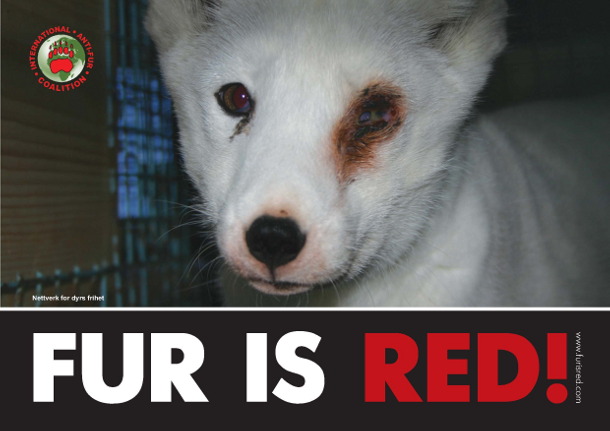
A majority of Member States called today for a ban on fur farming and asked the European Commission (EC) to examine the possibility of a ban on the placement of farmed fur products on the European market, supporting the recently submitted Fur Free Europe ECI.

During today’s Agriculture and Fisheries Council (AGRIFISH), the Austrian, German and Netherlands delegations submitted an information note, supported by the Belgian, Cyprus, Czech, Estonian, Lithuanian, Luxembourg and Slovak delegations, calling for a ban on fur farming and to examine the possibility of introducing a ban on the sale and marketing of farmed fur products. The paper then received the support of seven other Member States during the meeting.

It’s the second time that the Council expressed its favour for an end to fur farming. Indeed back in 2021, the signatories of another information note called on the EC to take action to permanently end fur farming in the EU based on animal welfare, ethics as well as health risks for humans and animals. 

The new call comes just after the formal submission of the successful Fur Free Europe ECI which collected more than 1.5 million validated signatures in less than 10 months. 

19 Member States have already totally or partially banned or strictly regulated fur farming, sometimes with phasing-out periods. However, the lack of harmonisation in the EU undermines those very measures: fur farming can be “outsourced” with farms moving to other Member States, as a result, distorting the internal market. Moreover, it’s important not only to ban fur farming but the placement of farmed fur products on the European market, in order to ensure that fur produced under similarly cruel conditions in third countries is not sold within the EU.

The Member States called on the EC to uphold its commitment to pay “full regard to the welfare of animals” in line with Article 13 of the Treaty on the Functioning of the European Union (TFEU). The note also refers to the EC’s commitment to end caged farming systems for other animals and how maintaining these systems for fur farms would be incongruous. They emphasised that under no conditions can the welfare of wild animals on fur farms be protected.

A number of scientists have also called on the European Commission to end such practices saying that the significant danger for humans and terrible suffering for animals requires urgent and proportionate action.

The support for a Fur Free Europe is yet again across the board: citizens, scientists and Member States spoke up against this cruel and unnecessary practice. With the constant decline in fur production since the last decade, followed by a sharp decrease due to the COVID-19 pandemic, the fur industry has had a low impact in the EU economy, and therefore an economic argument holds no ground. There is no way the EC can ignore such clear calls, now it’s the time to turn them into action and include the bans in the new Kept Animals Regulation.

Reineke Hameleers, CEO, Eurogroup for Animals

Regards Mark

EU: Import and production of horsemeat under cruel conditions must stop.

Import and production of horsemeat under cruel conditions must stop

AWF

Investigation

The latest investigations by the Animal Welfare Foundation (AWF), Animals’ Angels USA and Tierschutzbund Zürich (TSB) reveal the mistreatment of horses slaughtered in Canada and Uruguay for European consumption. Thanks to these investigations, and in collaboration with a coalition of animal protection organisations, we are calling for an end to the import and production of horsemeat derived from cruel treatment.

Horsemeat from Canada

Half of the horses slaughtered in Canada come from the United States. EU meat export rules require American horses to be kept in feedlots for six months before slaughter to gain weight. This results in numerous health problems (painful hooves, metabolic diseases, ect.). 

“In the course of our on-site investigations we found on several occasions that horses were limping, suffering from laminitis and had died as a result of their illnesses or injuries,” explains Sabrina Gurtner, project manager at AWF. Mares and stallions are mixed. They also take in pregnant animals. “The chances of foals surviving in the feedlots are slim. We have found foals that were sick in summer and froze to death at birth in winter,” recalls Sabrina Gurtner.

Horsemeat from Uruguay

In a recent two-year investigation by AWF and TSB, conducted in parallel with a pre-announced EU inspection, all three EU-certified slaughterhouses in the country were subject to overt and covert observations before, during and after the EU visit. “Our research shows that the EU audits are manipulated through extensive preparations,” reports Sabrina Gurtner. 

What is particularly striking is that only a fraction of the horses are in the slaughterhouse pastures during the audits. “They’re placed in green pastures, sheltered from the weather. But that’s not the reality before and after the inspection visits. Once the inspectors have left, the horses are sent back to dusty, dirty fields, often without roughage and sometimes even without water.” Workers were also observed, beating the horses when the audit was over.

Problem: traceability and food safety

Together with AWF and the other members of the coalition, we condemn the inadequate traceability of horses in meat production abroad. There is no identification system for horses. The last owner, usually the horse dealer, provides information on the medication and origin of the horses he sells to slaughterhouses. “People rely on the honesty of the sellers. This paves the way for systematic fraud and puts EU consumers at risk,” criticises Sabrina Gurtner. 

These investigations clearly demonstrate that animal welfare and traceability issues remain unresolved for the import of horsemeat from Uruguay and Canada. We therefore call on the European Commission to stop imports of horsemeat from these countries, as well as from all countries that do not comply with EU requirements.

Sign the petition – Demand an import suspension of cruelly produced horsemeat from overseas!

From stable to fork: EU Horse Meat Imports (updated version)

BROWSE TO THIS PUBLICATION

Regards Mark