USA: Arizona – Twenty wild horses found killed and more than 30 missing as $25,000 reward offered.

At least 20 wild horses have been killed in Arizona, activists and the US Forestry Service said (Picture: Getty)

Twenty wild horses found killed and more than 30 missing as $25,000 reward offered (msn.com)

Wildlife advocates are offering a $25,000 reward for any information about the killings more than a dozen wild horses in the American southwest.

The US Forest Service is investigating an incident where 15 horses were shot and left for dead near the northern Arizona town of Alpine.

The horses in the Apache-Sitgreaves National Forest were found with bullet wounds in their faces, necks, abdomens, and between their eyes, according to wildlife activists.

‘This hateful massacre is incomprehensible and the killer or killers must be brought to full justice,’ said Simone Netherlands, President of the Salt River Wild Horse Management Group.

On Tuesday, the group posted another update, confirming that a total of 20 horses have now been found killed, and more than 30 were missing. ‘This is not a person or a vindictive act,’ Netherlands’ group wrote. ‘This is a professional operation. It was a planned mission to kill all of the Alpine wild horses.’

Netherlands and two other wild horse organizations, the American Wild Horse Campaign and Animal Wellness Action, have pooled resources to offer a $25,000 reward for information leading to the arrest of a suspect in the shootings.

‘Someone knows something,’ Amelia Perrin of the Wild Horse Campaign told the Arizona Republic. ‘There’s not just a mass killing of animals at this level without someone knowing something.’

GoFundMe and a local tip line were set up to add more incentive for information about the horse deaths.

The Alpine and Springerville Ranger Districts of the US Forest Service announced they were investigating the horse killings on October 7, but local activists are still concerned about the future of the wild herd.

Wild horses are protected by the Wild Horses and Burro Act of 1971. However, the horses found in the Apache-Sitgreaves National Forest are legally considered feral horses, meaning they are not protected under federal and state law.

‘It’s sickening that someone can just come here and kill them,’ said Netherlands. Her group, which manages the wild horse herd in Salt River, has been trying to get federal recognition for the herd in Alpine.

A judge upheld the Alpine herd’s status as ‘unclaimed livestock,’ allowing the Forest Service to capture and sell the horses.

‘The Forest Service is currently in the highly controversial process of capturing and removing the Alpine wild horses from the Apache Forest and selling them at auction without limitation on slaughter,’ the group stated.

Regards Mark

EU: EUSAAT congress: Shaping the future for humane science.

10 October 2022

Animalfree Research

This year’s EUSAAT congress gathered a large multi-sectoral community that is critically thinking about how the EU and the world will succeed in accelerating the transition to non-animal science.

EUSAAT is the European Society for Alternatives to Animal Testing. This society’s congress brought together representatives from the European Commission, animal protection organisations, research institutions and industry. Together, we discussed how the rising ethical and scientific concerns with animal experiments, scientific developments and legislative frameworks can play a role in facilitating a shift towards humane research, testing and education.

Several members and other participants brought to this forum worrying issues deserving immediate action. Animalfree Research is shedding light on the continued harmful use of animals in high school biology classes, while non-harmful teaching media has been around for many decades. Building on this issue, InterNICHE takes a critical look at the ‘media’ that are used for education and training in secondary, higher and professional levels, and how teaching objectives can be better met with fully humane and innovative tools and approaches. PETA draws our attention to the difficulties in getting rid of studies on animals that have been proven to be ineffective, denouncing the continuous approval of projects that use the forced swim test.

Others presented positive developments in areas where non-animal approaches can become the new normal. Doctors Against Animal Experiments explored the use of non-animal technologies in COVID-19 research and in the production of antibodies. Deutscher Tierschutzbund was part of a session and panel discussion on alternatives to the use of animal-derived materials in ‘non-animal’ models. At Charité, in Berlin, PhD students are working with patients and patients’ tissues, but they are still striving for an adequate infrastructure to carry out their work effectively. Although these practices should become the gold standard when studying human biology and pathology, the current structures continue to favour animal experiments, leaving human-based research and researchers in great disadvantage.

Eurogroup for Animals was also present at this congress to strengthen the dialogue and the community that will shape the transition to non-animal science. We presented key elements for any strategy aiming at accelerating this transition, and the role of legislation and policies to normalise non-animal science.

The Chair of the Environmental Governance and Politics group at Radboud University led us through how a transformative governance approach can help accelerate the transition to animal-free innovation. In a keynote lecture, the new professor of Evidence-Based Transition to Animal-free Innovations at Utrecht University explained how science-based evidence should guide the transition to animal-free innovations.

Besides academia and NGOs, members from the European Commission, EFSA, 3Rs centres, and many other institutions have contributed with their views on how this transition will be shaped.

Regards Mark

Sweden: Fantastic ! – Djurens Rätt Celebrates 140 Years. Big Congratulations To Them.

7 October 2022

Djurens Rätt

Since October 7, 1882, Djurens Rätt has worked persistently for the animals that suffer the most. During these 140 years of hard fighting, they and their now 50,000 members have done a lot for the animals. Here are some of the successes they have achieved together over the years.

In 1882, Djurens Rätt was formed at Stockholm Palace under the name Nordic Society to combat cruelty against animals used in science. 

In 1944, Sweden got its first animal welfare law, granting animals rights for the first time.

In 1979, a new law regarding animal experiments was introduced. Privately owned or homeless pets were no longer permitted be sold for animal testing.

In 1988, animals were given the right to their natural behaviours. The Animal Welfare Act was updated and cows were given the right to go out to graze during the summer.

In 1993, the import of wild-caught monkeys for animal experiments in Sweden was banned. As of 1998, all animal experiments must be approved by an animal experiment ethics committee. 

In 2001, fox farming was phased out in Sweden. The next step is to put an end to mink farming through the Fur Free Europe initiative . 

In 2013, the EU banned animal-tested cosmetics after 30 years of work by Djurens Rätt and other organisations. 

In 2016, elephants are no longer permitted in Swedish circuses. Djurens Rätt submitted 155,000 signatures to the government for a ban.

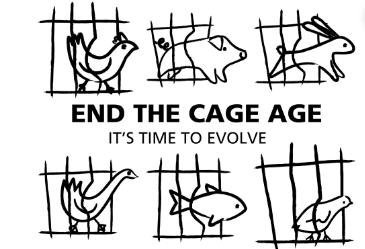
In 2021, all food chains will be cage egg-free. The End the Cage Age campaign reached its goal and the EU decides to phase out all cages in the EU.

In 2022, crimes against animals will be taken more seriously. The crime of aggravated animal cruelty is introduced into the criminal code and camera surveillance at slaughterhouses is investigated.

Read more at source

Djurens Rätt

Big congratulations to our animal campaigner friends !

Regards Mark

EU: World Octopus Day: NGOs unite to call for EU ban on cruel octopus factory farming.

8 October 2022

NGOs from all over the world have joined forces this World Octopus Day (8 October 2022) to call on the EU to ban the cruel and environmentally damaging practice of octopus farming.

Eurogroup for Animals and 36 other NGOs have written a joint letter to the European Commission warning that octopuses are ‘profoundly unsuited to farming and there are serious sustainability and animal welfare problems associated with the development of such an industry’. It also points out that allowing this practice would be in conflict with the EU’s own strategy on sustainable food production and calls for a ban on the importation of farmed octopus products.

The move follows announcements by company Nueva Pescanova that it plans to open the world’s first commercial octopus farm in Las Palmas de Gran Canaria. These plans sparked worldwide outrage when they were revealed last year.

A powerful report, Octopus Farming – A Recipe for Disaster, released by Compassion in World Farming, shows how octopuses are highly intelligent and sentient wild animals who would suffer greatly in unnatural factory farm conditions. Solitary in nature, these fascinating animals generally live and hunt on their own. Confining them to underwater tanks would also lead to high levels of stress which could lead to aggression or even cannibalism.

In addition, the cost of farming octopus to the environment would be high and unsustainable. Octopuses are carnivorous animals that would need to be fed huge amounts of human edible fish products just to be kept alive before their slaughter. In fact, to produce one kilo of octopus meat, three kilos of marine life would be needed as feed, leading to more over-fishing and pressure on other marine environments.

Earlier this week, the European Parliament adopted MEP Clara Aguilera’s report on “Striving for a sustainable and competitive EU aquaculture: the way forward”. This vote was a missed opportunity to call for a ban on introducing new carnivorous species, such as octopus, into industrial farming systems.

This World Octopus Day, we should be celebrating these incredible wild animals rather than allowing them to be confined in an underwater factory farm. It’s time to end factory farming – not expand it. Octopuses are highly intelligent, sentient beings that feel pain and distress. They should never be forced together in factory farms while other sea life is decimated in order to rear them. The EU must ban the farming of octopuses and other cephalopods to ensure this cruel practice cannot be developed.

Elena Lara, Research Manager at Compassion in World Farming

To mark World Octopus Day, Eurogroup for Animals is co-hosting an online event with In Defense of Animals, Animal Save Movement and Plant Based Treaty, including a virtual book talk with author of The Soul of an Octopus, Sy Montgomery on Saturday, October 8 at 18:00 CEST.

Regards Mark

EU: European Parliament: a First Conversation on “Fur Free Europe”.

6 October 2022

Press Release

A clear message of support from MEPs calling for a future without fur, while the ECI “Fur Free Europe” reaches more than 400,000 signatures in less than five months. The Intergroup on the Welfare and Conservation of Animals held a dedicated meeting in Strasbourg on “The case for a Fur Free Europe”: scientific experts, MEPs, Member States and civil society make their case for a new Europe without fur.

 FOR IMMEDIATE RELEASE: Strasbourg, 6 October 2022

In May 2022, Eurogroup for Animals, together with 80 NGOs, launched the European Citizens’ Initiative (ECI) Fur Free Europe which has already collected more than 400,000 signatures. The ECI calls on the EU to ban fur farming and the placement on the European market of farmed fur products, since fur is unethical, unsafe and unsustainable. 

The role of the European Parliament and its elected representatives is key to turning this massive public call into reality. That’s why the Intergroup on the Welfare and Conservation of Animals held a dedicated meeting in Strasbourg on “The case for a Fur Free Europe”. 

After an introduction from the President of the Intergroup Tilly Metz MEP (LU, Greens/EFA), Reineke Hameleers presented the campaign on behalf of Fur Free Europe, and introduced the new report on the reasons why we need to ban fur farming and the placement of farmed fur products on the European market from public health, legal, environmental and ethical perspectives.

More than 400,000 citizens have already made it clear that fur no longer has a place in Europe. Member States are ready to back their request. Today’s exchange with experts, MEPs and the horrific but important images from the documentary complement the request. Society as a whole is ready to transition away from cruelty, Europe is ready for this move and, in order to succeed, we need the EP to be strong in its demands toward the EC. I am positive we can count on the elected representatives. 2023 can be the year we make history for the animals and for the EU.

Reineke Hameleers, CEO, Eurogroup for Animals

The presentation was followed by a partial screening of the documentary SLAY from the makers of the award-winning films Cowspiracy and What The Health. SLAY follows filmmaker Rebecca Cappelli’s journey around the world to uncover the dark side of the fashion industry: a harrowing story of greenwashing, mislabeling, and animal cruelty. SLAY provides an in-depth and eye-opening look into the realities of today’s fashion industry while pointing the way towards viable and sustainable alternatives. 

The suffering of animals in the fashion industry is greenwashed into oblivion while those skin industries are destroying the planet and harming people. SLAY aims to challenge the notion that animal skins are a fabric, and open people’s eyes to the dark realities behind some of the most sought after skins in fashion.

Rebecca Cappelli, Director and Producer, SLAY

Bo Algers, Professor emeritus at the Swedish University of Agricultural Sciences, gave a presentation on the “Behavioural needs of Mink and Foxes in the fur industry”.

Johannes Rauch, Austrian Federal Minister of Social Affairs, Health, Care and Consumer Protection intervened with a video message: “In my role as Minister of Health, I strongly push towards the realisation of the „One Health“ approach. That means we have to look at human health, animal health and environmental health as interlinked issues that strongly impact one another. I am convinced that we will have to fundamentally change this system of animal exploitation to avoid future pandemics. This is why I wholeheartedly support the European Citizens’ Initiative for a Fur Free Europe and I want to ask you to support it as well. The EU must use its power and also close the EU market to farmed fur products from outside the EU. Just like we have done with products from certain trapping methods, seal products or cat and dog fur. In order to make progress and live up to our moral standards and the responsible treatment of animals as sentient beings, I strongly urge all of you to support this common cause, support the Citizens‘ initiative and make this step possible towards the goal of a fur free Europe”.

The message echoed the information note tabled by Austria and the Netherlands during a meeting of the Council of the European Union (Agriculture and Fisheries), supported by Belgium, Germany Luxembourg and Slovakia, calling on the European Commission to  investigate the possibility for a ban on fur farming. The call to end fur farming in the EU on the grounds of animal welfare, public health and ethical considerations, was backed by a total of twelve Member States during the deliberations on this paper.

Notes

The ECI Fur Free Europe  

The report Fur Free Europe 

SLAY digital booklet

Watch the SLAY documentary

The 2021 request to end fur farming in the EU from Twelve Member States 

 Regards Mark

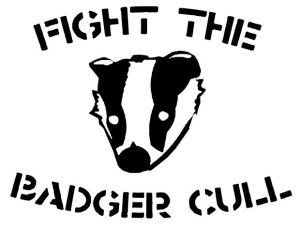
England: Fighting the Badger Cull.

The badger Cull

Over 176,000 badgers have been killed since the current badger cull began in England in 2013. Badgers are killed in their thousands from Cornwall to Cumbria under misguided and fundamentally flawed attempts to control bovine Tuberculosis (bTB), an infectious respiratory disease which affects cattle.

Badgers are not the problem – Politicians Are !

Bovine TB is always present in the environment and can affect or be carried harmlessly by many species – livestock and wildlife alike. Yet the government has focused on badgers, even though 94% of cattle infections are from cow to cow. Many in the farming community wrongly believe that badgers are a significant vector in the spread of the disease. For many years, independent scientists, vets, researchers, as well as Badger Trust, have rightly challenged this claim. 

Continue reading and watch several videos at the Badger Trust:

Can the Cull – stop badger culling | Badger Trust

Some interesting information – The Badger Cull – Wikipedia:

Badger culling in the United Kingdom – Wikipedia

Setts, Drugs and Rock n Roll:

England: Setts, Drugs and Rock n Roll. Dr Brian May Speaks In Defence of Badgers at Oxford University. – World Animals Voice

Regards Mark – fight the cull !

Save Me !

My wonderful badgers below who visit my own garden:

Photo – Mark WAV

Photo – Mark
Photo – Mark

Polar Bears Lose Up To 2kg A DAY As Climate Crises Bites.

WAV Archive

Polar bears lose up to 2kg per day as climate crisis bites (msn.com)

We’ve all seen the pictures of starving polar bears, struggling to survive climate change. But as global temperatures continue to rise, experts say bears today are spending up to a month longer than their parents waiting for the ice to return after summer.

Every year, starting in late June when the bay ice disappears, polar bears in the northern Canadian province of Manitoba move onto shore to begin a period of forced fasting.

Without the sea ice they are unable to hunt for seals, their main source of food.

“While these bears sit on shore, they’re losing a kilo or two every day. That can go on for about 180 days before they really start to have a problem,” says Geoff York, senior director of conservation at Polar Bears International (PBI).

WAV Archive

Polar bears could starve to extinction due to global warming

Once on solid ground, the bears “typically have very few options for food,” explains York.

York spends several weeks each year in Churchill, a small town on the edge of the Arctic in Manitoba. There he follows the fortunes of the endangered polar bears.

Climate warming is affecting the Arctic three times as fast as other parts of the world – even four times, according to some recent studies. So sea ice, the habitat of the polar bear, is gradually disappearing.

End of the road for ice truckers? Safe ice roads could decline by 90% by end of century

“The fate of the polar bear should alarm everyone” because the Arctic is a good “barometer” of the planet’s health, says Flavio Lehner, a climate scientist at Cornell University who was part of the expedition.

Since the 1980s, the ice pack in Hudson bay has decreased by nearly 50 per cent in summer, according to the US National Snow and Ice Data Centre.

If a bear is lucky enough to find a beluga whale carcass or if a seal dares to swim too close to shore, the large carnivore may be able to eat during the summer. But for most of those months they are fasting, or eating very small snacks of any fish they’re able to catch.

WAV Archive

A report published two years ago in the journal Nature Climate Change suggested that this trend could lead to the near-extinction of these majestic animals: 1,200 of them were counted on the western shores of Hudson Bay in the 1980s. Today the best estimate is 800.

Kenya is ‘praying for rain’ as worst drought in decades kills endangered wildlife

British Columbia at the epicentre of climate change-fuelled weather extremes

What happens when a polar bear is starving?

The polar bear, technically known as the Ursus maritimus, is a meticulous carnivore that feeds principally on the white fat that envelops and insulates a seal’s body.

But these days this superpredator of the Arctic sometimes has to feed on seaweed, as a mother and her baby were seen doing not far from the port of Churchill, the self-declared ‘Polar Bear Capital’.

If female bears go more than 117 days without adequate food, they struggle to nurse their young, says Steve Amstrup, PBI’s lead scientist.

As a result, births have declined, and it has become much rarer for a female to give birth to three cubs, once a common occurrence.

As a polar bear’s physical condition declines, York says, their tolerance for risk rises, and “that might bring them into interaction with people, which can lead to conflict instead of co-existence.”


Biodiversity loss is as big of a threat as climate change – but 90% of Brits don’t see it

Rising temperatures are reducing the number of male sea turtles born in the US

Hunger draws polar bears into dangerous proximity of towns

In desperation, bears began frequenting the local dump in Churchill, Manitoba – a source of easy, but potentially harmful, food for them. They could be seen ripping open rubbish bags, eating plastic or getting their snouts trapped in food tins amid piles of burning waste.

Since then, the town has taken precautions: The dump is now guarded by cameras, fences and patrols.

A conservation officer, Ian Van Nest, patrols the town’s limits to keep its 800 inhabitants safe. Every morning he checks the areas around schools to ensure the children will be safe upon arrival.

All across the town, people leave cars and houses unlocked in case someone needs to find urgent shelter during an unpleasant encounter with this large land-based carnivore.

Posted on walls around town are the emergency phone numbers to reach Van Nest or his colleagues.

When they get an urgent call, they hop in their pickup truck armed with a rifle and a spray can of repellent, wearing protective flak jackets. He emphasises that they do not shoot at the bears, but fire warning shots to scare them off.

Sometimes the animals have to be sedated, then winched up by a helicopter to be transported to the north, or kept in a cage until winter, when they can again feed on the bay.

Churchill’s only ‘prison’ is inhabited entirely by bears, a hangar whose 28 cells can fill up in the autumn as the creatures maraud in mass around town while waiting for the ice to re-form in November.

Regards Mark

WAV Archive
WAV Archive

USA: Animal rights whistleblowers stand trial as supporters rally outside Utah courthouse.

Animal rights whistleblowers stand trial as supporters rally outside Utah courthouse

Two Direct Action Everywhere activists face felony charges and imprisonment for rescuing factory farm piglets from “nightmarish cruelty.”

More than 70 animal rights activists stood outside a courtroom in St. George, Utah on Tuesday holding up a giant image of Utah Attorney Gen. Sean Reyes. A word bubble hovered above his head saying “I cover up animal cruelty.”

The group had gathered in support of whistleblowers Wayne Hsiung and Paul Darwin Picklesimer of Direct Action Everywhere, or DxE, a global network of activists working to achieve revolutionary social and political change for animals in one generation. Both currently face felony burglary and theft charges that could amount to over 10 years in prison. 

In March 2017 Hsiung, Picklesimer and three other DxE investigators infiltrated Smithfield-owned Circle Four Farms in Utah to document the conditions of its pregnant pigs. They were greeted with “nightmarish cruelty,” which included piles of dead piglets covered in feces and pregnant pigs crammed inside cages barely larger than their bodies. 

Despite Smithfield announcing that it had shifted from confining pregnant pigs in gestation crates in January of that year, DxE investigators documented sows in confinement. The footage, dubbed Operation Deathstar, was used in 2021 as evidence by the Humane Society of the United States in its misrepresentation lawsuit against Smithfield. 

During the Circle Four Farms investigation, the activists rescued two sick piglets, which were named Lily and Lizzie and brought to animal sanctuaries. Their rescue triggered a multistate search by federal law enforcement and led to FBI raids at the animal sanctuaries that took in the piglets. A year after the investigation, the DxE investigators were hit with felony charges

Four of the defendants accepted plea deals, which required that they consent to three years of probation and sign a gag order that required “no social media, website or other online criticism or derision of Smithfield on personal or otherwise” be posted by the defendants. Hsiung and Picklesimer did not accept the prosecutor’s offer and their trial began Oct. 3. 

Activists have flocked to Utah to support them during the trial, which began this week. Supporters have marched through St. George to raise awareness, and two DxE members even disrupted an NFL Monday Night Football game, running across the field with a smoke flair. They were arrested and have since been released from police custody. 

The judge in this criminal trial, Jeffrey Wilcox, has only allowed a handful of DxE supporters in the courtroom at one time, so activists have been gathering outside the court holding signs like “stop covering up animal cruelty” and “right to rescue.” Some activists were even told by county sheriffs that they could not be on the same side of the street as the courthouse and were ordered to move. 

Journalists covering the trial, such as Marina Bolotnikova, have voiced their concern over the court’s lack of transparency regarding the trial. Bolotnikova, who gained the court’s permission to record the trial remotely via video conferencing, had her permission revoked a few days before the trial. The court has also allegedly removed the ability to register for remote web access to the trial, while simultaneously revoking access to those who already signed up. 

Journalists and activists have also raised transparency issues over the withholding of evidence. Despite DxE having video of the rescue, depicting the condition of the piglets, the prosecution requested that the footage not be shown. The judge agreed and has withheld the footage, claiming that it could elicit an emotional response from the jury. 

“The most direct and extensive evidence of the alleged crimes has been barred from trial because it would be too disturbing to jurors,” Bolotnikova said. “This certainly says a lot about how far removed the laws being tried here are from a regular person’s common-sense view of right and wrong.”

According to science writer and ecologist Spencer Roberts, the withholding of evidence is “blatant corruption.” Roberts further argued that “there’s simply no way to justify censoring video of the act that jurors are supposed to evaluate whether to call a crime. What evidence could be more relevant to the case than a video of the alleged crime?”

Meanwhile, activists have also raised the issue of a potential of conflict of interest in the case, alleging that there is evidence of collusion between the prosecution and Smithfield. Public records uncovered by The Intercept show that the prosecutors involved in the case have fiscal connections with Smithfield and have received funding from the company and even represented them previously. 

Specifically, Bolotnikova contends that these public records show that there are “potential financial ties, including Smithfield’s donations to the Republican Attorneys General Association and a small donation directly to Sean Reyes.” Additionally, she explained that one of the case’s prosecutors, Janise Macanas, currently works for Reyes in the Utah AG’s office. 

Lead DxE organizer Almira Tanner has commented on this alleged corruption, contending that “Utah Attorney Gen. Sean Reyes has received campaign contributions from Smithfield Foods … It’s also absurd to think that Smithfield Foods has the power to mobilize the FBI across state lines searching for two missing piglets, which the company valued at under $100.”

The irony, which activists are quick to highlight, is that while the piglets themselves were relatively valueless to the company, they are now being weaponized to target activists who challenge industrial agriculture. 

Utah State Veterinarian Dean Taylor testified that each piglet rescued was valued at only $42.20 by the U.S. Department of Agriculture. Another witness, Richard Topham, a worker at the Circle Four Farms, stated that he did not realize that the piglets were gone until months later, when he saw the DxE investigation video on Facebook

Hsiung, representing himself, argued in court that sick piglets are often discarded by the industry, with more than 15 percent not making it to adolescence. In short, according to Hsiung, the company is alleging theft of a product they would have otherwise considered worthless. 

Nevertheless, the felony theft statute in Utah specifies that theft becomes a felony — no matter its commercial value — if the property taken are animals raised for commercial purposes. Additionally, defendants are subject to an enhanced penalty if the offense is intended to impede, obstruct or interfere with the operation of a factory farm.  Hsiung continues to stand behind his actions and has found strength in the outpouring of support he has received while facing potential conviction and imprisonment. Right before the trial began, he tweeted: “I received some great advice this week, on how to handle hardship, that I want to share with all of you: Remember love.”

Animal rights whistleblowers stand trial as supporters rally outside Utah courthouse – Waging Nonviolence | Waging Nonviolence

Regards Mark

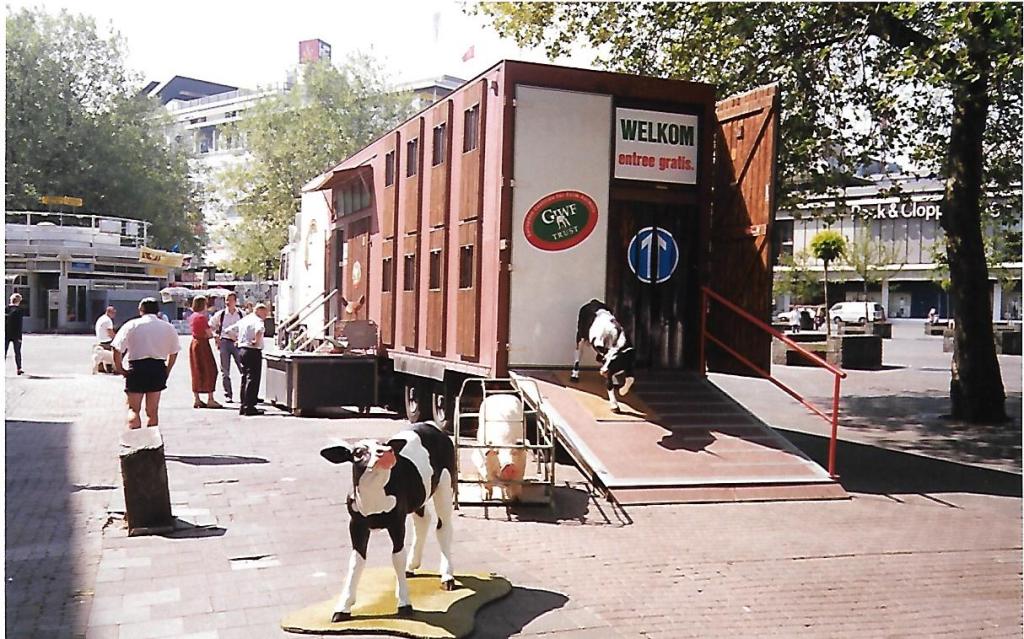
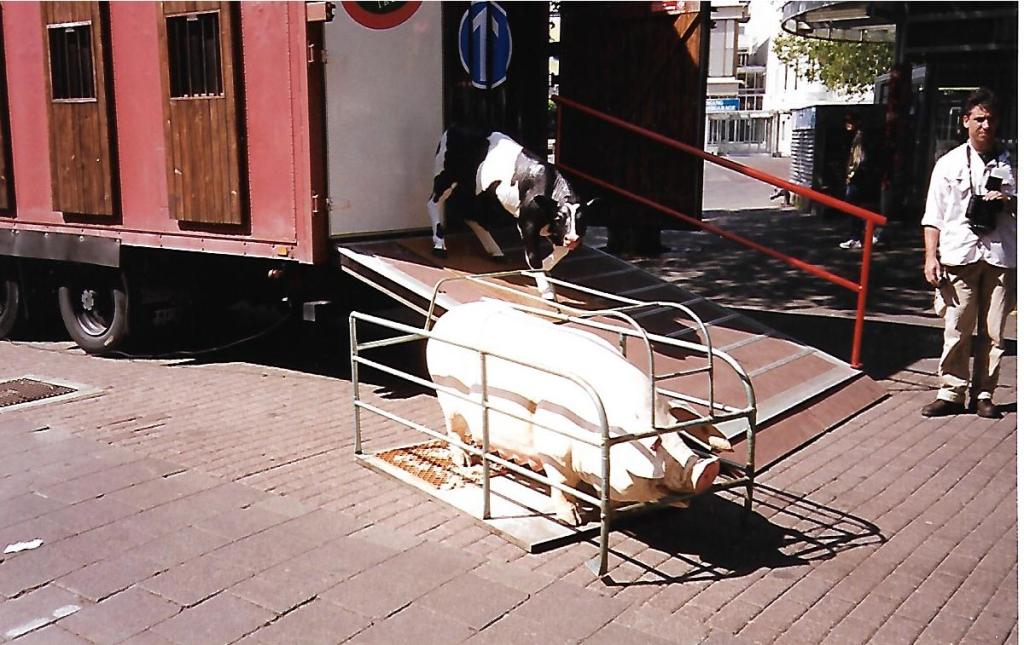
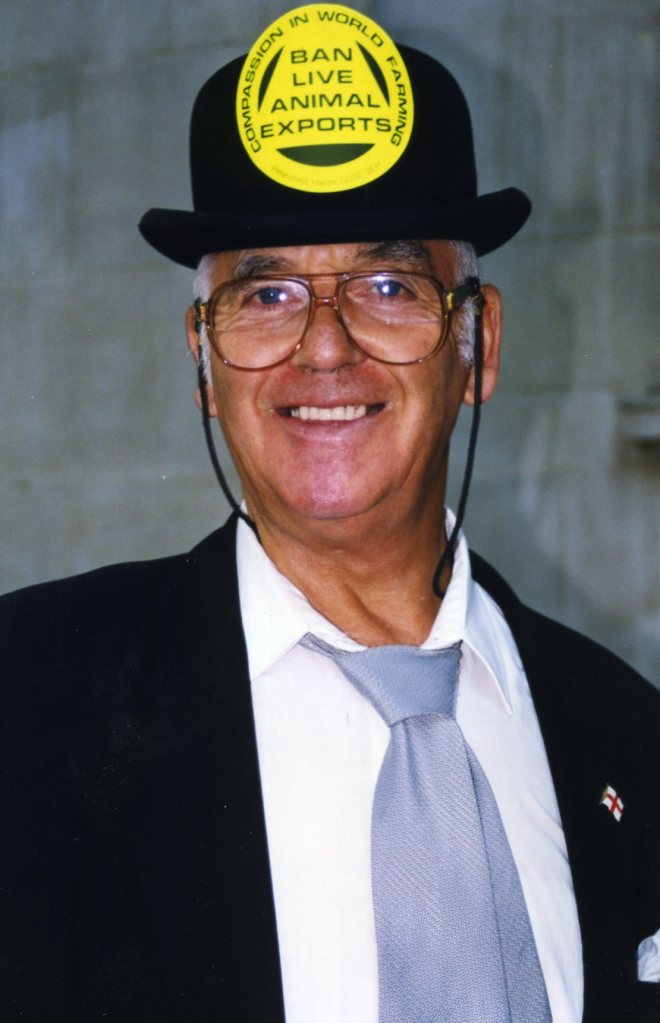
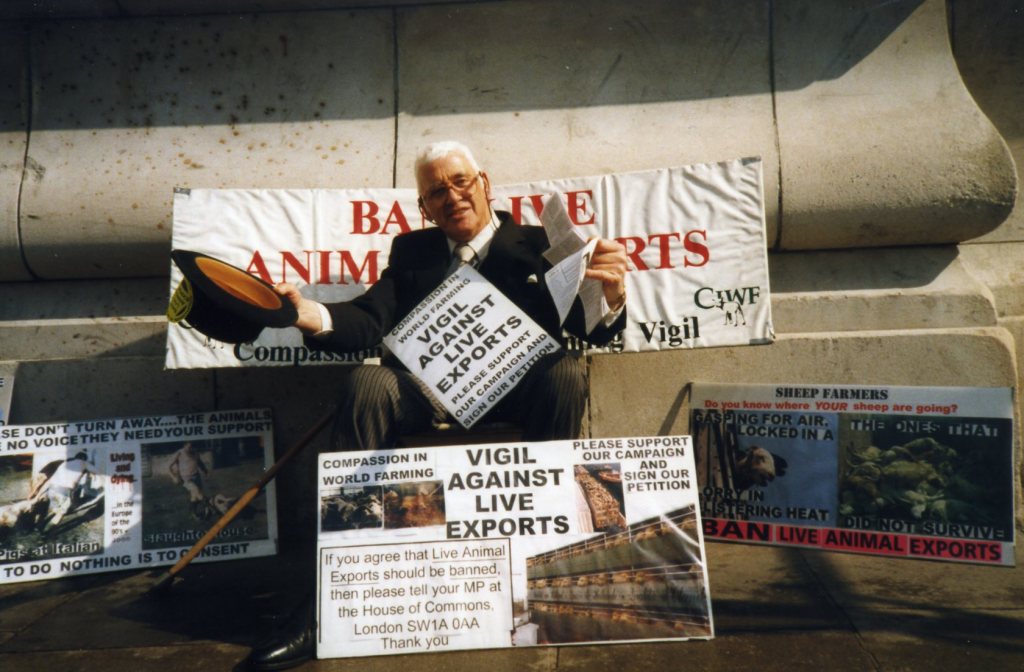
England: Keeping Up The Pressure – Preparing The Next Bit.

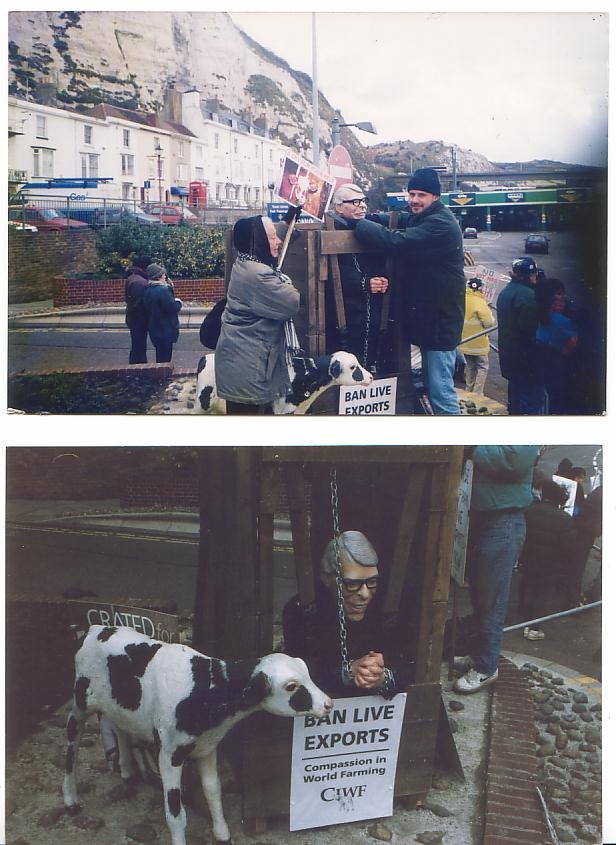
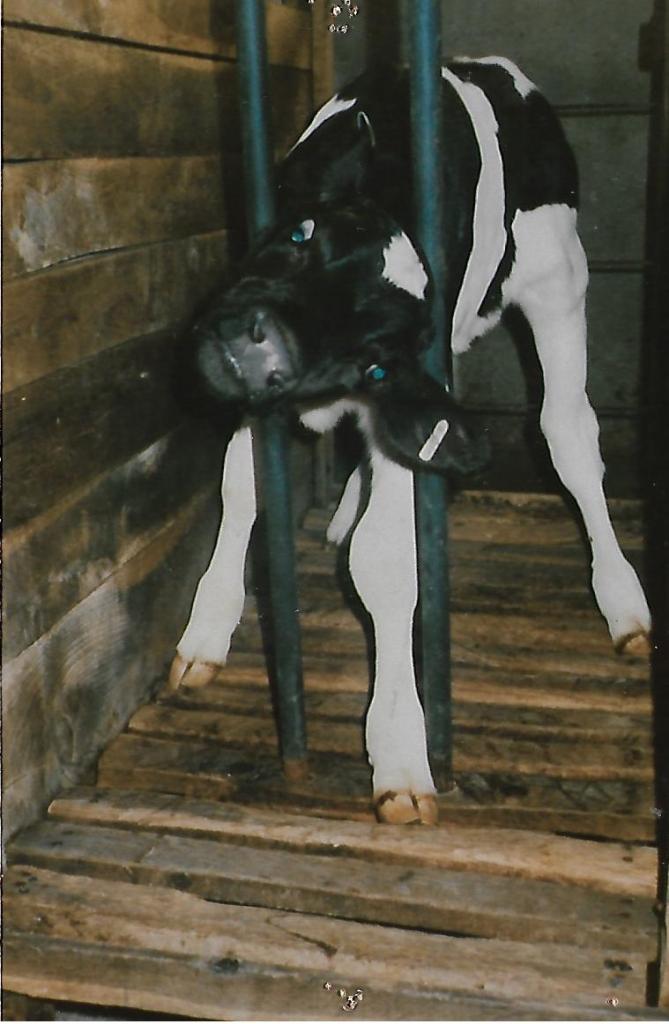
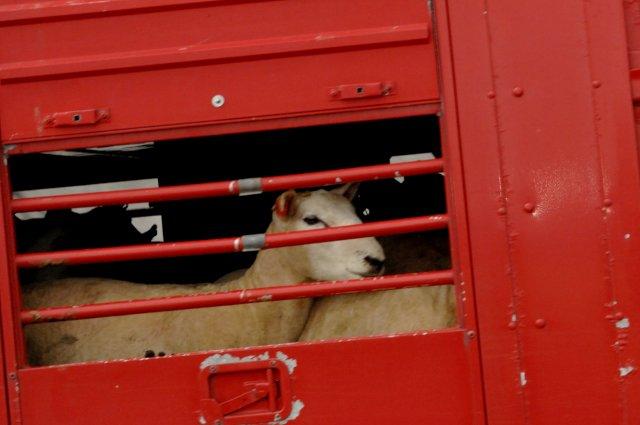
As many of you know, live animal transport is my No 1 hate; I am currently waiting for a response from the DIT when we ask who is right, who is wrong ? – no response yet; do they know the answer themselves or are they confused ?

Read more:

Gearing up for a continued campaign; currently preparing documentation to ask why suddenly a ban on live exports is to trashed by Liz Truss, despite a huge consultation earlier this year which showed massive support for a ban by the British public and welfare organisations !

Regards Mark.

Mark (WAV)

Read more about my export work at:

Regards Mark.

Ukraine: Friendly Squirrel Plays With Ukranian Soldiers.

WAV Comment:

Squirrels dont judge nationalities or borders; squirrels dont carry guns to harm and kill others; squirrels dont threaten with Nukes; suirrels dont torture and kill to gain land. Who is the headcase ?

Ukraine – Friendly squirrel follows and plays with soldiers:

This one without doubt.

Regards Mark