EU: Summary of the 10th meeting of the Platform on Animal Welfare.

PMAF

Summary of the 10th meeting of the Platform on Animal Welfare

15 November 2021

Green REV

The Platform on Animal Welfare met on the 10th of November to discuss a number of important issues from the sustainable food system framework to the recent citizens initiative to end the cage age, to the ongoing fitness check of the revision of the EU animal welfare legislation.

The aim of the platform is to promote dialogue among competent authorities, business, civil society organisations and scientists on animal welfare issues that are relevant for the Union. The dialogue intends to build mutual understanding, foster trust and encourage voluntary commitments between platform members to achieve concrete results in improving the welfare of animals. Eurogroup for Animals is a member of the platform along with our member organisations World Animal Protection, Green REV Institute, Welfarm, Compassion in World Farming, Four Paws and our Equine Working Group Chair Joe Collins. It was a lively meeting, however it left many people with more questions than answers, particularly concerning the balance between business and NGO stakeholders in the platform.   

The meeting kicked off with a video message from Commissioner Kyriakides, who couldn’t be in attendance, but gave her strong commitment to continue to improve the welfare of animals at European Union level. The platform received a presentation on the Sustainability Food Systems Framework, the public consultation on the sustainability food systems initiative will open in early 2022. The recent roadmap received a lot of feedback, with NGOs particularly stressing the need for policy option 4 as the only option with the capacity to deliver the change needed. 

Mark – WAV

The Commission then presented the Inception Impact Assessment on the revision of Animal Welfare Legislation with follow up presentations from the Vught Alliance Member States (NL, SE, DK, DE and BE), Eurogroup for Animals, and Copa Cogeca, representing the position of the farming industry, each outlining their vision for the new legislation. Eurogroup for Animals presented the No Animal Left Behind white paper which is calling for a new Kept Animals Regulation, that would provide protection for all animals kept for commercial purposes. This regulation would ensure all animals are afforded proper protection relevant to their species specific needs.

In the afternoon the platform discussed the creation of new subgroups and ongoing and new voluntary initiatives. The Commission proposed the creation of six new subgroups, which will contribute to the analysis of the different options developed in the context of the preparation of the revision of the animal welfare legislation. These subgroups are pigs, poultry, calves/dairy cows, transport, animal welfare labelling, slaughter/killing. There was a strong call to link these subgroups with voluntary initiatives to maximise the usage of expertise in these specific areas. The voluntary initiatives are currently on the responsible ownership and care of equidea, on the health and welfare of pets (dogs) in trade, on the welfare of fish and on the welfare of pullets. Members of the platform are invited to apply for different subgroups – Eurogroup for Animals will collaborate with our member organisations on the platform to ensure we are represented across all subgroups. 

Mark – WAV

The final presentation of the day was by PPILOW, who presented a Multiactor approach for improving animal welfare in poultry and pig low-input outdoor and organic production systems. Andrea Gavinelli, DG SANTE closed the meeting. The next Platform on Animal Welfare meeting will be held in June next year.

Powerpoint presentations from the meeting are available here.


Summary of the 10th meeting of the Platform on Animal Welfare | Eurogroup for Animals

Regards Mark

PMAF
Mark – WAV

France: Historic Animal Protection Bill Passed in France.

WAV Comment: Congratulations to all of our French animal campaigner friends in achieving such fantastic new legislation !

Historic animal protection bill passed in France

19 November 2021

LFDA

News

On November 18, the French Senate definitively adopted a new animal protection bill “aimed at combating animal abuse and strengthening the link between animals and humans”. This success follows an agreement on the measures by a joint commission (composed of deputies and senators) on October 21, and an almost unanimous adoption at the National Assembly on November 16.

Highlights of the bill include: 

Immediate ban on the breeding of mink and other animals raised specifically for their fur

End of wild animals in circuses within 7 years

Ban on keeping cetaceans in dolphinaria in 5 years

Increase in fines and recommended sentence times for those convicted of animal cruelty

Ban on the sale of dogs and cats in pet stores from 2024

Better regulation of the sale of animals online

The end of bear and wolf riders, pony rides or the exhibition of animals in nightclubs or parties by 2023

Awareness of respect for pets in the curriculum of primary education, colleges and high schools 

This victory marks a legislative turning point in France, a step forward that will lead to others, it is also the message that we want to send to the candidates of the 2022 elections.

Christophe Marie, Fondation Brigitte Bardot

It is a great victory long awaited by animal rights activists and a majority of French people, and a major breakthrough for the condition of animals in France.

La Fondation Droit Animal, Éthique et Sciences

This is a significant step forward for animal protection in France. Eurogroup for Animals congratulates our French member organisations for their tireless efforts that contributed to this victory.

Read more from our members:

UNE LOI HISTORIQUE POUR FAIRE PROGRESSER LA CONDITION ANIMALE EN FRANCE ! – Fondation Brigitte Bardot

La proposition de loi sur la maltraitance animale définitivement adoptée! – La Fondation Droit Animal, Éthique et Sciences

HISTORIQUE ! LA FRANCE INTERDIT LA CAPTIVITÉ DES CÉTACÉS EN DELPHINARIUM – C’est Assez

Regards Mark

EU: A European Commissioner for Animal Welfare? 70% of Europeans want it.

WAV Comment: Lets see the EU now put its money where its mouth is; and act !

A European Commissioner for Animal Welfare? 70% of Europeans want it

15 November 2021

GAIA – Belgium

Press Release

The numbers are clear: 70% of EU Citizens want to appoint a European Commissioner for animal welfare, as shown in an international survey conducted in June 2021. Now, Members of the European Parliament have started the process to support the proposal with the signatures collection for an oral question.

Back in June 2021 IPSOS asked 3,500 European adults between 18 and 65 years old whether they think there should be a European Commissioner for Animal Welfare. The study was conducted in the ten largest EU countries, covering 81% of the EU population: France, Germany, Poland, Spain, Italy, Belgium, Netherlands, Romania, Hungary and Sweden. In all these countries 7 out of 10 citizens think there should be a European Commissioner for Animal Welfare. 

Currently there is no European Commissioner for Animal Welfare and the responsibility is attributed to the Commissioner for Health and Food Safety. However, some countries, like Belgium, appointed a minister explicitly in charge of this domain. 

This decision triggered important effects: a clear responsibility in the government for all legislation related to animal welfare, more transparency, and the allocation of adequate human and financial resources to provide concrete responses on this important topic.

In March 2021, Eurogroup for Animals member GAIA, based in Belgium, launched the campaign #EUforAnimals with the support of over forty other animal rights and welfare organisations across Europe, asking the European institutions to finally give animal welfare the attention it deserves, by integrating it explicitly in the job title of the relevant EU Commissioner. 

The #EUforAnimals campaign has already received the support of over 130,000 citizens and 133 Members of the European Parliament (MEPs).  

Twelve MEPs have also launched the signature collection to table a cross-party oral question supporting the demand. The process was initiated by the Niels Fuglsang MEP (S&D, Denmark) and is co-promoted by Sylwia Spurek (Greens/EFA, Poland), Petras Auštrevičius (Renew, Lithuania), Manuel Bompard (GUE/NGL, France), Michal Wiezik (EPP, Slovak Republic), Emmanouíl Fragkos (ECR, Greece), Anja Hazekamp (GUE/NGL, the Netherlands), Johan Van Overtveldt (ECR, Belgium), Emma Wiesner (Renew, Sweden), Sirpa Pietikäinen (EPP, Finland), Maria Noichl (S&D, Denmark) and Francisco Guerreiro (Greens/EFA, Portugal). 

Members of the European Parliament have often well represented the EU citizens’ will to improve the way animals are treated in Europe. It is my hope and the hope of the other MEPs who are co-promoting this oral question, that many colleagues will join us and that the European Commission will respond positively to our proposal, to see as soon as possible Ms Kyriakides’ title changed into EU Commissioner for “Health, Food Safety and Animal Welfare”
 

Niels Fuglsang MEP

The survey clearly shows that the campaign’s demand is supported by a great majority of EU citizens. The EU Commission should not delay giving a positive answer to a proposal that can bring great and lasting benefits to animal welfare both at the continental level and beyond. We hope that Commissioner Kyriakides will decide to support #EUforAnimals and become the first EU Commissioner for Animal Welfare.

Ann De Greef, Director, GAIA

Notes

The full survey results can be found here 

For more information on the initiative visit the #EUforAnimals campaign website

Regards Mark

Spain: Animal Equality calls for the elimination of exemptions allowing the slaughter of animals without stunning in Spain.

Animal Equality calls for the elimination of exemptions allowing the slaughter of animals without stunning in Spain

12 November 2021

Animal Equality

An increasing number of Spanish slaughterhouses, currently 28%, are licensed to slaughter animals according to religious rites and without stunning. Many consumers are buying meat from animals slaughtered according to these rites without knowing it.

In 2020, the Court of Justice of the European Union certified that Member States are entitled to ban the slaughter of animals without stunning and thus not to allow any exceptions. As part of a big campaign, Eurogroup for Animals’ member Animal Equality Spain has already collected more than 14,000 signatures calling on the government to put an end to these exceptions.

In the European Union, the Slaughter Regulation requires animals to be stunned (i.e made unconscious) before bleeding to prevent unnecessary suffering. However, the law includes religious exceptions (halal rite and kosher rite) that allow for the slaughtering of animals while fully conscious.

Currently, in Spain, animals are slaughtered without stunning in 198 (28%) of the 700 existing slaughterhouses: 51 in Catalonia, 35 in Castilla y León, 24 in Andalusia, 16 in Castilla La Mancha, 15 in Valencia, 11 in Aragon, 11 in Galicia, 7 in Madrid, 7 in Murcia, 5 in La Rioja, 4 in the Basque Country, 4 in the Canary Islands, 3 in Extremadura, 3 in Navarre, 1 in Melilla and 1 in Asturias (1). The number of slaughterhouses licensed to slaughter without stunning has been growing steadily in recent years.

Eurogroup for Animals’ member Animal Equality Spain has documented the terrible suffering that animals slaughtered in the context of religious rites without stunning. As part of their campaign MATADEROS, Animal Equality has released these harsh images.

In December 2020, the Court of Justice of the European Union ruled that Member States are entitled to ban slaughter of animals without stunning, regardless of the slaughter context. The Court rules that reversible stunning methods allow for the protection of religious freedom and improve animal welfare.

A number of countries, including Slovenia, Finland, Denmark, Sweden and two regions of Belgium (Flanders and Wallonia), have already adopted rules without exceptions to the mandatory stunning of animals before slaughter. The latest country to join this list is Greece whose Council of State has declared the decree allowing slaughter without stunning unconstitutional, null and void.

The lack of stunning causes unnecessary and extreme suffering to animals. Reversible stunning makes freedom of belief compatible with improving the welfare of animals in their last minutes of life. It is time for Spain to move forwards and join other Member States that have already banned this cruel practice. We call on the Spanish Government to prohibit slaughter without stunning.

Javier Moreno, Co-founder of Igualdad Animal

For more than fifteen years, Animal Equality has documented and denounced the abuses suffered by animals in slaughterhouses. To reduce the extreme suffering that animals endure during their last moments of life in these facilities, the organisation is calling on the government to implement various measures, including: 

The elimination of the exceptions that allow the slaughter of animals without stunning.

The elimination of the electrified bath as a measure to stun birds

The abolition of the stunning of pigs with carbon dioxide because of the suffering it causes them

The installation of chambers in slaughterhouses with independent supervision 

The drawing up of rules making it compulsory to stun fish. 

In the last month, more than 14,000 people have signed up to demand that the government implement these measures.

Read more at source

Animal Equality

Regards Mark


San Francisco: the “No More Factory Farms” campaign gets support

Report-Direct Action Everywhere – DxE

Yesterday, the San Francisco Board of Supervisors unanimously passed a resolution urging the California state government to pass a moratorium on the construction and expansion of factory farms and slaughterhouses!
This is a big win for our “No More Factory Farms” campaign (https://www.nomorefactoryfarms.com/), as it’s no longer just organizations and individuals calling for a statewide moratorium.

We have the city and county of San Francisco behind us!

The resolution also expressed support for the federal Farm Systems Reform Act and includes this language: “The Board of Supervisors hereby declare that animal agriculture is a leading cause of environmental destruction, poses grave risks to public health, abuses and kills nonhuman animals, and often creates dangerous and exploitative conditions for workers.”

https://www.facebook.com/directactioneverywhere/

And I mean…The campaign demand was:
“We are calling on Governor Newsom to issue an executive order enacting an immediate moratorium on the expansion of or construction of new factory farms and slaughterhouses in the state, as a first step to phasing out these destructive facilities entirely”.

And the San Francisco Board of Supervisors has responded very positively.

Given the legislative powers of this body, there is great hope that the California state government has no choice but to approve the moratorium and thereby improve the living conditions of factory farming animals

Let’s hope so, and we think it is a very important step.
But we must not rely on this first step! we have to make sure that the government of California acts accordingly.

My best regards to all, Venus
Vegan Chef Derek Sarno Delivers TED Talk: Animals Have Families Like Us.

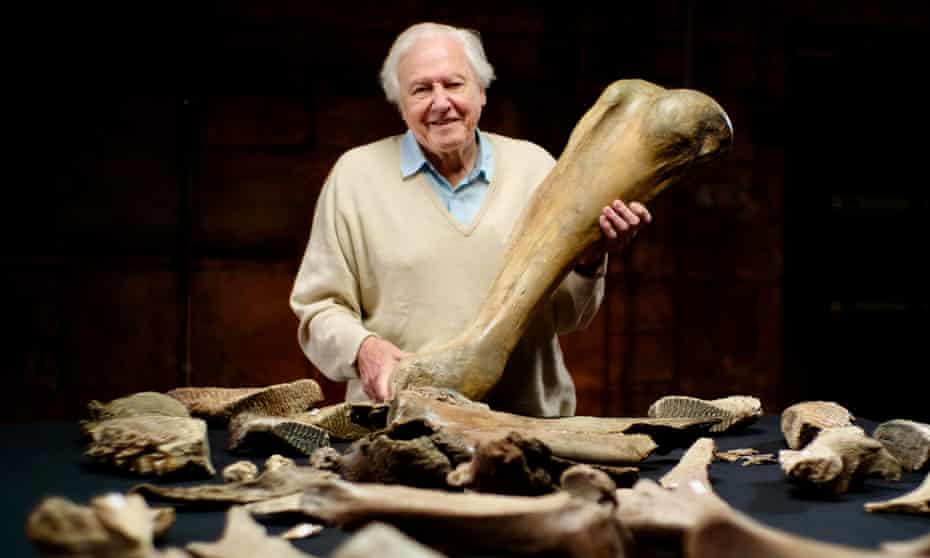
Derek Sarno presenting a TED Talk

Derek Sarno’s recent TED presentation dove into the benefits of plant-based eating.

Vegan Chef Derek Sarno Delivers TED Talk: Animals Have Families Like Us

The entrepreneur and chef spoke about animal suffering, personal grief, and his journey to veganism

Vegan chef Derek Sarno, best known for co-founding Wicked Kitchen, has presented at an official TED conference. The entrepreneur’s talk – which was featured on the TED homepage – touted the benefits of plant-based food, and revealed the paths that led him to it.

In the presentation, Sarno explained he is on a “mission to unleash the mighty powers of plants.” The chef uses plant-based ingredients, especially mushrooms, to create realistic vegan meat and other foods. 

He aims to mirror the flavor and textures of meat and dairy, but without the implications of animal-based food production.

During the TED Countdown Summit, Sarno highlighted the undeniable link between meat consumption and climate breakdown. For instance, animal farming is to blame for a significant amount of greenhouse gas emissions, deforestation, and pollution. 

Further, research suggests omitting meat from one’s diet helps to sidestep the risk of diseases like cancer and diabetes

Grief and the journey to plant-based

But health and sustainability are just some of the reasons Sarno became a vegan chef. 

“My other reason has to do with grief, and dealing with the unexpected death of my partner,” he said in the talk. “The suffering and grief I felt was suffocating. I had two choices: to go down a road of self-destruction, or accept what had happened and find a way through it.”

Before his partner Amada passed, Sarno’s life was “based on ego and attachment,” he said.

“Being the best. Cooking anything and everything without a second thought as to the consequences of my actions. As long as the food tasted great, and I was paid well for it, I didn’t care where it came from.”And so, Sarno laid his “old self to rest,” sold off his food business, and moved to a Buddhist monastery where he lived for three years and “studied compassion.”

“What I discovered was a connection to food and heart that I had ignored. Animals suffer just as we do,” he continued, later reiterating that animals have emotions and families.

“From then on, it became my mission to find alternative ways of preparing food that not only benefited people, but avoided animal suffering as well,” Sarno explained.

“That time reflecting and learning helped me reorientate my own moral compass and opened up a whole new world of creative cooking. It also helped me become much less of a jerk.”

There are many reasons to eat plant-based, Sarno said, and encouraged viewers to find one they identify with. He added that opting for a vegan meal even once a day “makes a huge difference.”

The presentation is Sarno’s latest but not first collaboration with TED. Last month, the media giant held its first in-person climate conference. Sarno was in charge of the event’s menu, which was fully vegan.

Click here to watch the video:

Vegan Chef Derek Sarno Delivers TED Talk: Animals Have Families Like Us – Plant Based News

Regards Mark


Domino’s Pledges To Improve Animal Welfare, KFC ‘Refuses’ To Follow Suit.

chickens raised for food in a farm
Domino’s says it will improve the living conditions of chickens raised for meat. Credit: We Animals Media

Domino’s Pledges To Improve Animal Welfare, KFC ‘Refuses’ To Follow Suit

Domino’s Pizza has signed up to the Better Chicken Commitment (BCC) in Australia and New Zealand (Aotearoa). It’s in an effort to improve animal welfare within the Domino’s supply chain. Now, campaigners are calling on KFC to follow suit.

The BCC’s animal welfare criteria includes providing chickens with perches, natural light, and more space. Further, slow-growing breeds must be used in lieu of the chickens raised for food now, who are bred to grow as quickly as possible at the expense of their health and wellbeing.

According to animal rights group Animals Aotearoa, these fast-growing breeds can live for just six weeks. In their final weeks of life, they gain more than 50 grams a day. 

This leaves chickens collapsing under their own weight, and developing a myriad of health conditions such as wooden breast, whereby muscle cells die off. Further, fast-growing chickens are twice as likely to die prematurely. 

‘The right thing to do’

David Burness, CEO of Domino’s Australia and New Zealand (ANZ), said the company is “proud” to be the first fast food restaurant chain in either country to sign up. 

In a statement, he said: “At Domino’s we do the right thing because it’s the right thing to do, and we recognize that doing the right thing includes taking care of our environment, and the food we source from our suppliers and serve to our customers.”

The improved animal welfare commitments will be in place at more than 850 Domino’s locations across ANZ by 2026.

‘Wake-up call’

Animals Aotearoa executive director Marianne Macdonald hopes Domino’s decision will act as a “wake-up call” to its competitors. 

“It is fantastic that Domino’s has listened to customer concerns about animal welfare and responsibly acted on the demand for change. Now their competitors must also do right by their customers and follow Domino’s responsible lead,” she said to RNZ.

But according to the publication, KFC has “refused to say if it will sign up” too. Instead, the fried chicken chain has maintained that its suppliers stick to industry welfare codes. 

Regards Mark

England: Verity Bowditch To Expand Vegan Restaurant Amid £1.4M Investment.

WAV Comment – for our overseas visitors, ‘Made In Chelsea’ is a television programme.

Verity Bowditch of Made In Chelsea is eyeing the expansion of her vegan restaurant Clean Kitchen

Clean Kitchen was built to promote sustainable eating Credit: Instagram

Made In Chelsea’s Verity Bowditch To Expand Vegan Restaurant Amid £1.4M Investment

It’s hoping to become the ‘biggest’ plant-based food brand in the country…

Made In Chelsea star Verity Bowditch is eyeing an expansion of her newly opened vegan restaurant following a successful seed investment. Clean Kitchen, situated in London’s Camden secured £1.4 million in its first seed round.

Lead investors include ex-chairman of Quorn, Clive Sharpe, and the fitness influencer and businesswoman Grace Beverley.

Verity Bowditch’s vegan restaurant

Bowditch founded the business with former YouTuber Mikey Pearce less than a year ago, and the site opened its doors to the public over summer.

The vegan outlet offers fast food and built on the premise of maximizing sustainability and “clean living.”

Now, it’s hoping to open 40 new sites across the country. The move comes as the outlet celebrates thousands of daily orders and a 30 percent growth rate month to month.

And, in its first year, 2020, Clean Kitchen says it sold a staggering 50,000 burgers. The business is now valued at £7.5 million.

Clean Kitchen investment

In a statement sent to PBN, Verity Bowditch said: “There’s a clear demand for delicious, sustainable protein alternatives.

People are waking up to the impact that meat production is having on the environment and need a clear solution – one that also fits easily into their lifestyle. We provide exactly that.”

Moreover, Clean Kitchen “isn’t just for vegans,” rather for anyone who cares about the environment. The aim is to “disrupt the industry,” the Made In Chelsea star added.

Mikey Pearce adds that the pair have “big ambitions to be the biggest plant-based food brand in the UK.”

Regards Mark

Time for some music I think – ‘The Cure’ (England) – one of my fav bands !

Visitors to The Netherlands – The Cure performs A Forest live at the Pinkpop Festival in Landgraaf, The Netherlands; 2019.

Canada: Organic Dairy Farm Could Face Criminal Charges Following Violent Animal Abuse.

Organic Dairy Farm Could Face Criminal Charges Following Violent Animal Abuse
The organic dairy farm could face criminal charges over its treatment of animals. Credit: We Animals Media

Organic Dairy Farm Could Face Criminal Charges Following Violent Animal Abuse

The BC SPCA is examining more than 300 video clips of alleged animal abuse at the facility

An organic dairy farm in British Columbia, Canada, is being urged to close down following reports of animal cruelty.

Cedar Valley Farms became the center of an investigation after covertly filmed footage of the facility was sent to the BC SPCA – the British Columbia Society for the Prevention of Cruelty to Animals. 

The videos, taken from May this year until a few weeks ago, captured workers kicking cows in the face and violently beating them with wrenches and pitchforks. 

Cows were sprayed in the face with high-pressure hoses, dragged by heavy machinery, and were filmed limping and collapsing. 

In other clips, newborn calves are pulled away from their mothers and thrown into wheelbarrows. Mother cows could be seen bellowing and chasing after their babies. On at least one occasion, a worker kicked a cow in the face to prevent her from reaching her calf.

Other footage showed workers illegally shooting the animals in the head, leaving them to die slowly for several minutes.

It’s a far cry from Cedar Valley’s animal welfare claims, and has resulted in its license being suspended. 

Criminal charges

Marcie Moriarty is the BC SPCA’s chief prevention and enforcement officer. She says the footage indicates that Cedar Valley has violated the Prevention of Cruelty to Animals Act and the Criminal Code of Canada.

“… We received video footage that appears to be depicting very serious instances of animal abuse on this farm,” Moriarty commented. “We immediately attended the farm on an unannounced visit and are reviewing more than 300 video clips as we prepare our case to present to Crown counsel.

“This is a high-priority investigation and we are building a very strong case to present to Crown counsel with a recommendation for charges.”

Craig Daniell, BC SPCA chief executive officer, took a thinly veiled swipe at the government’s inaction on the matter, naming it “absolutely unacceptable.”

“The BC SPCA is extremely concerned about the lack of accountability on commercial farms and has reached out repeatedly to the provincial government and industry for more than a year about the need for a third-party auditing system on farms to ensure that proper animal welfare practices are being upheld,” Daniell said.

“This would include video monitoring on farms with a third-party system of reviewing footage. Despite repeated calls for action, there has been none and animals are continuing to suffer.”

BC SPCA leads nearly 9,000 investigations into animal cruelty and neglect across the province every year. But if the government and industry remain immobile, the abuse will continue, Daniells said.

Calls for closure

People for the Ethical Treatment of Animals (PETA) is campaigning for the closure of the facility. 

Last week, the animal rights charity penned a letter to Lana Popham, the British Columbia Minister of Agriculture, and Marie-Claude Bibeau, the Federal Minister of Agriculture. 

In it, PETA pressed the ministers to shut down the farm for good. 

“Workers showed little regard for the animals, many of whom were emaciated and had mobility issues … The gentle giants, who can feel pain and suffer just as dogs, cats, and other animals, were traumatized,” the letter reads.

The industry as a whole “treats cows as mere milk machines instead of the complex, feeling beings they are,” it adds.

Organic Dairy Farm Could Face Criminal Charges Following Violent Animal Abuse – Plant Based News

Hope this video link works ok:

They need to prosecute every animal abusing shit that works there;

Regards Mark

Portugal / UK: Luxury Fashion Brand Farfetch Pledges To Stop Selling ‘Barbaric’ Angora Wool.

Luxury Fashion Brand Farfetch Pledges To Stop Selling ‘Barbaric’ Angora Wool
Many rabbits in the Angora industry die prematurely due to stress, PETA says. Credit: Adobe. Do not use without permission.

Luxury Fashion Brand Farfetch Pledges To Stop Selling ‘Barbaric’ Angora Wool

Farfetch joins brands like Gucci and Calvin Klein in ditching the animal product

Luxury fashion retailer Farfetch has confirmed it will stop selling Angora wool from April 2022. Animal rights activists have applauded the move, and urged shoppers to opt for animal-free alternatives instead. 

The ban follows pressure from People for the Ethical Treatment of Animals (PETA), purported to be the largest animal rights organization in the world.

This included disruptions of shareholder meetings and more than 100,000 appeals from supporters. Last year, actor Sadie Frost joined forces with PETA, and called on Farfetch to ban Angora for good.

What is Angora wool?

Angora wool is a fabric made from the soft, thick hair of Angora rabbits. It’s long been considered a luxury fiber, however, Angora wool is increasingly falling out of favor.

PETA says the Angora wool industry is rife with animal cruelty, naming it “barbaric.”

A PETA Asia undercover investigator inspected nearly a dozen rabbit farms in China, which produces 90 percent of the world’s Angora, the charity says. 

There, the investigator found rabbits living in cramped, dirty cages. 

When the animals were sheared or plucked, they were suspended in the air or held across boards with their feet bound. Rabbits were “screaming in pain and terror,” PETA says. 

Animals in the Angora industry are first sheared or plucked at around 8 weeks old. Then, they experience the process every few months. After two to five years, the surviving animals are hung upside down where they get their throats slit, and are sold off for meat, PETA reports. 

However, a farmer told the investigator that most (60 percent) of the rabbits die prematurely, after a year or two. 

Animal-free fashion

PETA Director of Corporate Projects Yvonne Taylor commended Farfetch’s decision. 

“From high end to the high street, today’s retailers embrace fashion that leaves gentle rabbits in peace,” Taylor said in a statement. “PETA is celebrating this progressive decision by Farfetch, which will spare countless animals abuse.”

Farfetch – which has previously banned fur sales – joins an ever-growing list of brands taking a stance against the Angora trade. Gucci, Diane von Furstenberg, Calvin Klein, Roland Mouret, Tommy Hilfiger, and Stella McCartney have all committed to not selling Angora items.

Regards Mark