England: Ghandi – “The more helpless a creature, the more entitled it is to protection by man from the cruelty of man” – A Personal View – Mark (WAV).

I thought that I would write this post now as at the current time, with worldwide Covid killing millions; and the very high view that the disease was originally created by zoonosis transmission form animals held under stress in wet markets, to human beings; do we really want to delve further into ‘chimera’ research, involving more than one animal species ? – has nothing been learned from Covid ?

A zoonosis (plural zoonoses, or zoonotic diseases) is an infectious disease caused by a pathogen (an infectious agent, such as a bacterium, virus, parasite or prion) that has jumped from an animal (usually a vertebrate) to a human.  Wet markets, in which animals are held under immense stress, are an ideal source of zoonotic disease transmission.  It is strongly believed that Covid was a virus that jumped from animals to humans.

So now, is it really time to further investigative work on the ‘Chimera’ ?

What is chimera ?:

A chimera is essentially a single organism that’s made up of cells from two or more “individuals”—that is, it contains two sets of DNA, with the code to make two separate organisms. One way that chimeras can happen naturally in humans is that a fetus can absorb its twin.

It (chimera) is an issue that has been kicking around in animal rights for many years; it is not new; certainly not here in the UK; but with the current Covid situation we really need to look more at this.

Scientists claim to have made an ‘extraordinary medical advance’ by creating an embryo that is part human and part monkey.  The creation of this human – monkey chimera as detailed as being described a ‘medical breakthrough’ by some; others describe it as a ‘Pandoras Box’ with serious ethical questions.  I personally am in this ‘ethical questions’ camp.

In a series of experiments; researchers from the Salk Institute in California (USA) have injected human stem cells into early stage macaque monkey embryos.  This procedure resulted in a number of chimeric embryos that survived for a period of around 19 days before they were destroyed.  Despite the vast ethical concerns; researchers say that the chimera embryos can lead to a ‘much better understanding’ of early human development, biology and disease.

The Chimera, according to Greek mythology, was a monstrous fire-breathing hybrid creature of Lycia in Asia Minor, composed of the parts of more than one animal. It is usually depicted as a lion, with the head of a goat protruding from its back, and a tail that might end with a snake’s head.

Chimera | Mythical creatures, Chimera mythology, Mythical monsters

Chimeras are organisms whose cells originate from two or more different organisms.  Professor Juan Belmonte of the Salk Institute (USA) describes the research as being very useful for advancing biomedical research not only at the early stages of life, but also at the latest stage of life.  He further declared that chimeric embryos could allow for the study of early human development and hold great potential in regenerative medicine as well as for producing human tissues and organs for transplant.

Professor Belmonte’s team worked with researchers in China; the original source of Covid and the particular zoonotic associated disease, as much of the research work  was undertaken there to ‘avoid legal issues’.  Chimeric embryos could thus allow scientists to conduct experiments that they are not currently permitted to do on human embryos because of the tight regulations.  Experimenting on embryos containing some human cells could potentially lead to new treatments for diseases that are present at, or before birth, such as heart defects, down syndrome and spina bifida.

They also claim that Type 1 diabetes could be targeted by treatments emerging from chimera research.  Using the human – monkey embryo research; scientists hope to ‘provide valuable insights’ by using animals that are closely related to humans.  Or, in other words, they say that organs which originate in animals, such as pigs, could later be transplanted into human beings.  ‘Interspecies chimeras’ are not new; and have been produced since the 1970’s, but so far, attempts involving human cells have been met with ‘very limited success’.

Professor Belmonte in the USA has worked with researchers from the Kumming University of Science and Technology at Yunnan (China) in a study.  Six days after the monkey embryos were created; each was then injected with 25 human cells.  The cells are known as ‘extended pluripotent stem cells’, which have the ability to develop into many different cell types and tissues both inside and OUTSIDE the embryo. 

After one day, human cells were detected in 132 embryos, and after 10 days 103 of the chimeric embryos were still developing.  But then, by day 19, only 3 chimeras were still alive.

Personal view – the creation of an embryo which is part human and part monkey (primate) raises significant ethical and philosophical concerns as to what it means to be ‘human’.  With this research, are we as the human species once again attempting to dominate the natural systems of the world ? – plants, animals, species; the ‘who we are’ image.

Scientists behind this latest chimera research state that these chimeric embryos ‘offer new opportunities’, because we are unable to conduct certain types of experiments in humans.  So, I thus see this as a ‘well it is ok to conduct the experiments on animals’; type thing then; who cares about the rights ? – we are the dominant species and can thus do as we wish.
Mahatma Gandhi Quote: “The greatness of a nation and its moral progress can  be judged by

Mahatma Gandhi, (1869–1948) once stated:

“To my mind, the life of a lamb is no less precious than that of a human being.

I should be unwilling to take the life of a lamb for the sake of the human body.

I hold that, the more helpless a creature, the more entitled it is to protection by man from the cruelty of man“.


With this chimera research are we not opening up the can of worms to the future ?

Real questions will start to arise when techniques have improved to the point where embryo survival times are greatly improved, and we can ‘grow’ human spare parts in animals; only for them to be cut out and transplanted into our own bodies as we wish.  This is the ultimate goal of this research; to make the human species even more dominant than they currently are; to make big bucks for the developers and organisations involved; whilst largely ignoring the rights of the primates and pigs who would be used as simple living ‘tools’ for the advancement of humankind; what a terrible thought; are there not enough of us ‘planet destroyers’ today, right now, 19/4/21, as it is, without the need for more ?


The most difficult issues lie in the future; and the question of potential animal viruses and disease being passed over to humans; or the opposite; as a result of future successful development.  That is ‘life’, that is what makes us (currently) different to the primates; the whales. The dolphins and the wolves.  We have all developed our own ways of survival and existence without interference from others.

Before any experiments are currently performed on chimeras; the key ethical question of their moral status has to be reviewed.  Before they are even currently injected, experimented on, or their organs extracted; it is essential that their mental capacities and lives are properly assessed; and who does this ? – the ‘human’ no doubt !

We need new ways to understand the things we call ‘animals’; their mental lives and their relationships before we ever attempt to ‘use them’.  We should never ‘use them’.  I think a pig or battery hen in an intensive factory farm environment must be pretty ‘pissed off’ with the way is kept – it has an existence; not a life; for the benefit of whom ? – oh yes, us the human being.  It is our own responsibility now  to enact the Ghandi saying – that, “the more helpless a creature, the more entitled it is to protection by man from the cruelty of man“.


Maybe more should be done regarding research into the operation of the human brain; and why we, the destroyer of all; regards ourselves as superior to the simple but peaceful other creatures we share this planet with.  Man has to look at man, and ask the questions of where and why he went so wrong in history. 


We are not ‘dominant’; in fact we are ‘assholes’.


Regards Mark

The True Source of Chimeras - Matt Cole

Sweden: The Swedish breeding program for farm cats has been withdrawn. Positive News.

The Swedish breeding program for farm cats has been withdrawn

15 April 2021

Svenska Djurskyddsföreningen

News

At the end of 2020, the Swedish Board of Agriculture approved a breeding program for farm cats, which has been criticized in a letter from Svenska Djurskyddsföreningen.

The Swedish Board of Agriculture has come under fire after approving a farm cat breeding program in December, primarily because the program recommends that cats that are allowed to roam freely outside to be fertile, which would increase reproduction and result in an increase in unwanted, abandoned, and feral cats. 

On March 23, Svenska Djurskyddsföreningen wrote to the Swedish Board of Agriculture, asking them to reconsider the approval, in part because it violates animal welfare rules that require cats that go outside to be neutered or prevented from reproducing uncontrollably.

Following the outpouring of criticism, the authority decided to re-examine the case and announced that they are withdrawing the approval.

“We understand the criticism and regret that the case has not been sufficiently examined from an animal welfare point of view. We share the view that the breeding program does not live up to the animal welfare rules in all respects and therefore withdraw our approval”, said the Swedish Board of Agriculture’s head of animal welfare, Helena Elofsson.

swedish cat – Google Search

Sweden Cat by IvanBrussia on DeviantArt

Read more at source

Svenska Djurskyddsföreningen – Godkännande av avelsprogram dras tillbaka

English – https://www.djurskydd.org/who-we-are-and-what-we-do/

Further reading on this issue:

https://www.eurogroupforanimals.org/news/free-roaming-cats-sweden-should-now-be-neutered

Regards Mark

Enjoy: Amy was an English singer / songwriter – taken from us at 28 years of age. What a powerful voice.

There is no justice in this world.

Germany: Stop the murder of foxes

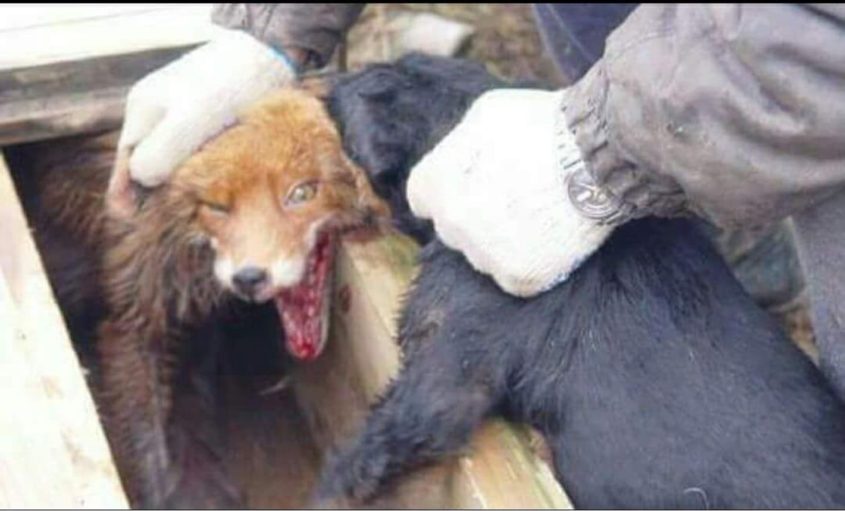
As a leisure activity, hunters across Germany kill up to half a million foxes in the cruelest way every year – many of the animals are “only” shot or downright crushed and mutilated in traps.
Foxes are a living target for hunters; there is no reason for the massive hunting of predators, neither from a wildlife biological nor from a health point of view.

Politics must finally act and put an end to the senseless killing of useful animals.

Petition for a nationwide ban on fox hunting – sign it now!

(Text of online petition): Finally, recognize wildlife studies: forbid fox hunting

Dear ministers,

I was dismayed to learn that up to half a million foxes are killed nationwide every year, even though there is no understandable reason for the massive, widespread hunting of predators from a wildlife-biological point of view.
On the contrary, the facts speak for a ban on fox hunting.

I note with concern that hunters deliberately attach a bad image to foxes in order to be able to pursue their bloody hobby.
Foxes, however, are an important link in the cycle of nature. They also ensure the survival of their prey species by preying on weak and sick animals and thus immediately eliminating foci of disease.

Nevertheless, foxes are tracked nationwide and nationwide. Up to 500,000 of these animals are killed by hunters every year. Many of them are only shot at or downright crushed and mutilated in traps.

The reason for the hunt is usually given by hunting associations as the alleged endangerment of the populations of ground-breeding species such as partridge, lapwing, and skylark as well as young hares and common hamsters.

However, experts agree that the drastic decline in the population of affected species such as partridges or brown hares in recent decades can be attributed to industrialized agriculture and the associated loss of habitat.

In addition, hunters in Germany themselves kill more than 180,000 brown hares every year.
Foxes feed primarily on mice; per fox, there should be 3,000 to 5,000 mice per year. In agriculture as well as in cities, mice and rats are fought with large amounts of poisonous substances that can pose a significant risk to all wild animals, but also to dogs and cats.
This is also catastrophic from an ecological point of view.

The fact that the hunt for foxes is unnecessary and rather counterproductive has long been shown in extensive scientific literature.
English scientists come to the conclusion that hunting foxes have no noticeable effect; rather, fox populations regulate themselves based on food availability and social structure.

According to Section 17 of the Animal Welfare Act, it is forbidden to kill or harm an animal without good cause. But this is exactly what happens when hunting foxes.

Against the background that animal protection has been anchored in the German Basic Law as a state protection goal since 2002 and is, therefore, to be regarded as a binding asset with constitutional status, I would like to ask you to ban fox hunting.

Foxes have not been killed in the Bavarian Forest National Park for many years. Fox hunting has also been banned in Luxembourg since 2015. The bottom line: no problems.

Please remove foxes from the list of huntable species or at least establish a year-round closed season.

(With best regards)

Please sign and share the petition: https://www.peta.de/kampagnen/fuchsjagd-stoppen/ 

And I mean…First of all, the German Hunting Act is an enabling act in the sense of 1933.
It empowers hunters to attack someone else’s property.

Reich’s hunter Göring founded an institute for hunting studies “in order to follow the instinctual inclinations of the unbreakable German man.”
(Original quote from the founding decree of 1936)

In most driven hunts, everything that comes before the rifle is already shot today.
The amendment to the Hunting Act now even enables hunting during the night, using night targeting technology and headlights.

According to the Veterinary Association for Animal Welfare, up to 70 percent of wild animals do not die immediately, especially during driven hunts, but suffer excruciating jaw, stomach, and barrel shots.

In nature, it is intended that every living being becomes food so that every species can survive. Those who have a lot of “predators” produce a lot of offspring in order to preserve their own species.
That is normal.

If this were not the case, an imbalance would arise. However, this balance is severely disturbed by hunting.
This means: the more foxes die as a result of hunting or accidents, the more their birth rate rises.

Conversely, falling mortality through social regulation mechanisms within fox populations leads to fewer offspring.

Via the training plants– torture chambers for foxes: offered legally and in excess on the Internet, including instructions for use.
The so-called burrow dogs are made sharp on the living foxes, whose task it will be to drive the foxes out of the burrow.

For the fox, after excruciating stress, fear of death, and serious injuries, the end result is always fatal.
Once earlier, once later.

The German animal protection law states:

§3. Section 7: It is forbidden to train or test an animal on another living animal.

Paragraph 8: It is forbidden to set an animal on another animal unless this is required by the principles of grazing-friendly hunting.

Usually, however, it is claimed by hunters that it is not practiced, after all, it is forbidden.
In Germany, murder, rape, speeding, and tax evasion are also prohibited.
But that doesn’t seem to be a reason that it doesn’t happen.

In order to understand that we are dealing with animal cruelty inherent in the system and that the NOT documented suffering during hunting is much, much worse, one really only has to add one and one.

The hunt is and remains murder.
Hunting does not belong to a civilized society and must be abolished.
We keep fighting

My best regards to all, Venus

France / UK: Non; Foie Gras Production Is Nothing But Cruelty In A Jar, and The UK Does Not Want It. We Will Ban It In the UK Very Soon; Promise.

‘We love foie gras’: French outrage at UK plan to ban imports of ‘cruel’ delicacy

UK officials are exploring restrictions on product after minister described it as ‘unbearably barbaric’

The head of France’s foie gras producers’ association has said she is “shocked and outraged” that the British government is considering banning imports of the product.

And she has invited MPs to visit French farms producing foie gras to see the force feeding of ducks and geese and judge for themselves whether it is “cruel and torturous”, as animal rights campaigners claim.

Marie-Pierre Pé, director of the Comité Interprofessionnel des Palmipèdes à Foie Gras (CIFOG), which represents about 3,500 foie gras producers, said: “I am shocked and I deplore the fact that the freedom to sell a perfectly healthy product defined under international conventions is threatened.

“For a country that promotes freedom of trade, it is not only paradoxical but shows a lack of understanding of our production as well as the problem of judgments based on anthropomorphic perceptions that the animal used in the production is suffering.

“Clearly, they don’t know how we do our job. Before taking this decision I invite them to visit a foie gras producer so they can make a rational decision. We have nothing to hide and we operate with complete transparency.”

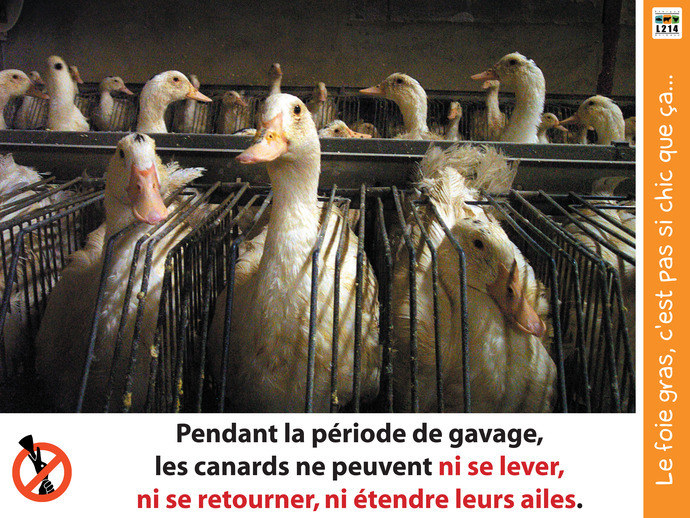
Asked about the gavage, the most controversial aspect of foie gras production, where long tubes are pushed down the birds throat to pump food into the digestive system, causing the liver to swell to several times its natural size, Pé said campaigners were anthropomorphising – attributing human characteristics to animals – by claiming this harmed or hurt the ducks and geese.

“People have to stop imaging a tube being inserted in their own throat, because a duck and goose’s throat is nothing like yours. For a start, the duck’s throat is elastic and at the base there is a pocket that allows them to stock food – called gésiers, which is like our stomach,” she said.

“It does no harm to them. Of course, you have to know how to insert the tube, but if done properly the animal does not suffer and scientific studies have been made into the possible effects of the gavage, so we know.”

“The gavage is done twice a day respecting the digestive rhythm of the animal. We cannot force the digestive cycle because if we did it would then get blocked and you wouldn’t get the foie gras.

“We cannot say there are no accidents from time to time, but it is exceptional. A farmer has no interest in harming his own animals because that would kill them – and his production.”

A cross-party group of British MPs has written to ministers urging them to ban sales of foie gras in the UK. The letter to the environment secretary, George Eustice, and the animal welfare minister, Lord Goldsmith, was coordinated by the campaign group Animal Equality.

“Over the coming months, thousands more ducks and geese will endure torturous treatment for this cruel product,” the letter states.

The (UK) Department for the Environment, Food and Rural Affairs said it was “exploring further restrictions” to the delicacy following reports that Goldsmith was determined to ban sales in the UK, having described it earlier this year as “unbearably barbaric”.

Abigail Penny, executive director of Animal Equality UK, said: “Foie gras is the definition of animal cruelty and people are clearly united in their hatred for this wicked product. We simply cannot tolerate this any longer. A ban can’t come soon enough.”

However, opponents of a ban disagree. Richard Corrigan, who runs several Mayfair restaurants, has said that a ban would take the UK into “nanny-state territory”, while George Pell, the co-owner of L’Escargot, said there was a “paradox between people happily eating industrially farmed food products and advocating the ban”.

Pé said the legality of foie gras production had been examined “several times” and had been found to conform with European food regulations.

“Yes, there have been videos with shocking images from farms but they are exceptions and those farms do not reflect our sector and our profession,” she said. “Our farms are controlled by the authorities and the producers pledge to guarantee the welfare of the animal.”

She added: “I can understand if people don’t like foie gras, or they don’t want to eat animals or animal products, but there is respect for the animals in our production. I have no problem stating this because I know it is true.

“I am outraged and sad,” Pé said. “Surely the British government will not pass a law based on one-sided arguments. I personally invite them to come and see for themselves.”

Pé said foie gras had been singled out for a ban, “because foie gras is a gastronomic symbol of France. I think we are an easy target.

“It’s a recurrent theme and strategy by the animal rights groups. They produce sensational images to influence economics. We should ask ourselves, ‘are we being manipulated?’”

France is the world’s largest producer, consumer and exporter of foie gras. CIFOG says French farmers produced 15,000 tonnes of foie gras last year – down on the 18,800 tonnes produced in 2019 – mostly in and around the Périgord region, in south-west France. Up to 5,000 tonnes are exported annually, with up to 200 tonnes a year coming to Britain.

Pé said that despite Covid restrictions that shut winter markets and hit sales before the Christmas holidays – a period when foie gras is traditionally eaten – producers reported 1.2 million new French buyers in 2020. The sector has since been hit by outbreaks of avian flu.

“There is no problem in terms of support for our products in France,” she said. “The French love foie gras, there is extraordinary support for it,” she added.


Cruelty in a Jar – Foie Gras

Regards Mark – from ‘The Guardian’ London; Brilliant article as always;

‘We love foie gras’: French outrage at UK plan to ban imports of ‘cruel’ delicacy | Animal welfare | The Guardian

Germany’s animal shelters almost empty: animals against Corona loneliness!!

Corona loneliness, boredom, or just time to finally fulfill the long-cherished wish of having a pet? The Henstedt-Ulzburg animal shelter (in the state of Schleswig-Holstein- Germany) has never had so many inquiries as it does now.

When she opens the door to the cat station in the morning, the animal shelter carer Philine Bestehorn is greeted by a meow – but by a much quieter one than she is used to.
Because normally around 40 cats are waiting for a new home at the Henstedt-Ulzburg animal shelter.

At the moment the cat Rufus lives here all by himself. And there are already interested parties for him too.

The cat “Rufus” – he will also be picked up in a few days.

“We really never had that here before, normally all rooms are always occupied,” explains Philine Bestehornthe, the animal carer. Hardly anyone is currently giving up their animal. And the demand has never been as great as in Corona times.

Endless animal inquiries

“The phone doesn’t stand still all day,” said Philine Bestehorn, commenting on the ringing while she was cleaning Rufus’ litter box.
Then the dogs get their food.
The animal caretaker strokes the little mongrel male Kayro.
“He’ll be picked up today,” she says.

And there are already applicants for almost all of the other seven dogs here.

The animal shelter employees are critical of the great interest in animals:

“We are a little bit scared of the big wave of sales after the lockdown,” says animal shelter manager Katja Vogel. Because when it’s over, people suddenly don’t have that much time. And the animals may not know how to be alone. Then it can be that dogs start barking or whining or cats pee in the apartment in protest. And the animals end up with us again, “she fears.

Continue reading “Germany’s animal shelters almost empty: animals against Corona loneliness!!” →

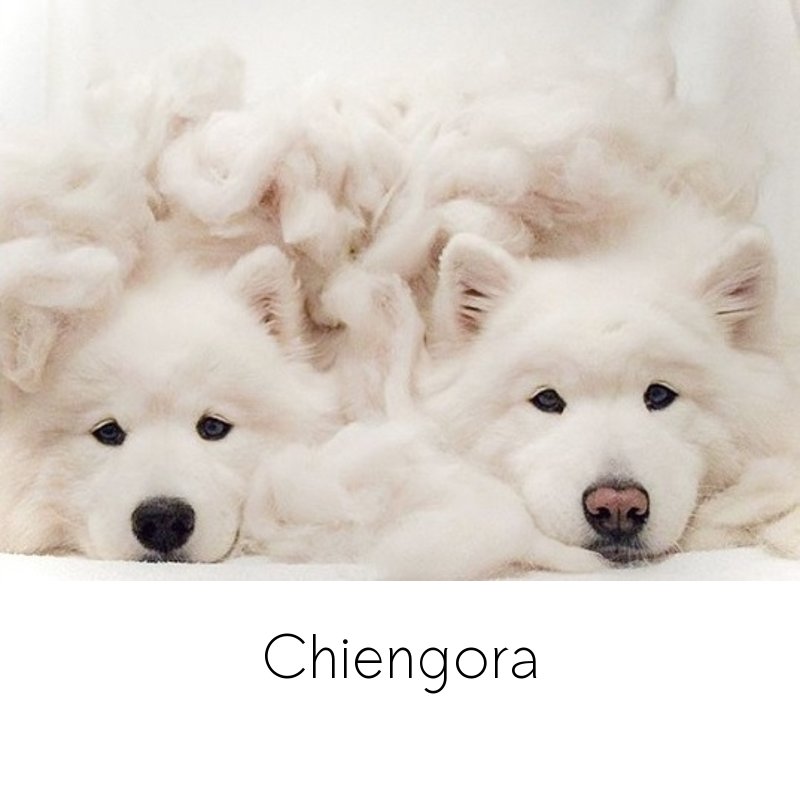
how animal-friendly is Chiengora really?

More and more often you come across clothes, accessories, and blankets made of dog wool, also known as chiengora, on the Internet. The yarn from the combed-out undercoat of dogs should be sustainable and, above all, be produced without animal suffering.

Where does dog wool come from?

Manufacturers of products from Chiengora state that they receive combed dog wool from private individuals, breeders, animal shelters, and dog barbers for a fee. This is to ensure that the wool only comes from dogs raised in a species-appropriate manner.

However, the keeping of the animals is not controlled.
Many animals are also badly treated in private households and by breeders.

In addition, the fibers for products from Chiengora are currently mixed with the fur of agriculturally exploited merino sheep and alpacas in order to improve the quality.

With dog wool, as with any other product of animal origin, the following applies: sooner or later animal suffering is almost inevitable.

Danger: Animal suffering through mass breeding and production?

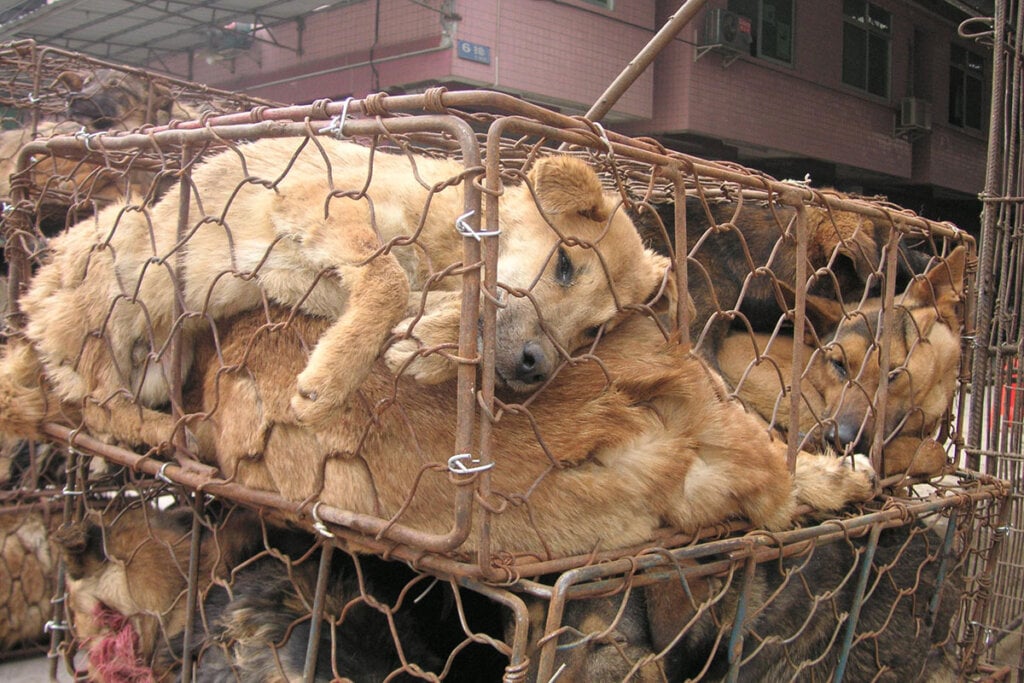
When clothing from Chiengora becomes a trend, many more people will want to get into the business model and breed dogs for wool production. As in many areas of the fashion industry, animals will then suffer for profit. In Asian countries, millions of dogs are already tortured and killed for leather and fur production.

Trading in dog wool could make the situation even worse.

The excruciating abuse to which animals are exposed in the wool industry around the world clearly shows that as soon as one can make money with animals, they will suffer.
Animals are not resources and are not there to be attracted by us.

Continue reading “how animal-friendly is Chiengora really?” →

Taiwan does small advance against animal experiments

Update: April 15, 2021

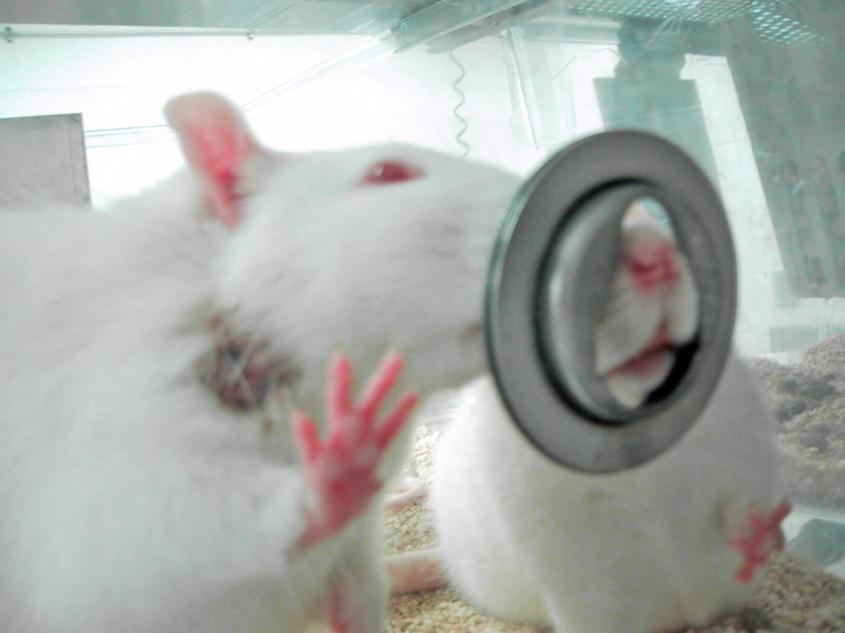
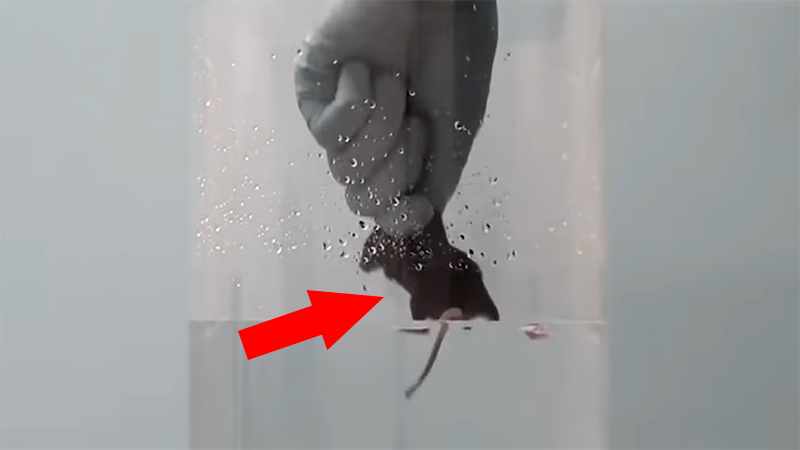
Following years of pressure from PETA, the Taiwan Food and Drug Administration (TFDA) has announced a groundbreaking decision to delete all animal tests—including drowning mice and rats and making them run to exhaustion on an electrified treadmill—from its draft regulation for marketing foods and beverages using dubious anti-fatigue health claims.

After receiving PETA’s detailed scientific critique and more than 73,000 e-mails from PETA supporters during a public comment period for the agency’s draft anti-fatigue health claim regulation, the Taiwan Food and Drug Administration (TFDA) has finalized the regulation and removed animal testing as an option for companies to pursue.

Now, only safe and effective human tests are required and allowed.

We need your help now to push for an end to animal testing for a different TFDA draft regulation—this one concerning joint-protection health claims for marketing foods and beverages to consumers.

The agency has proposed allowing gruesome, misleading experiments that would chemically or surgically induce painful arthritis in sensitive rats before they’re killed and dissected. Pain relief would be intentionally withheld so as not to interfere with the results.

Prior to the FDA’s announcement of its decision to remove the animal tests from its draft regulation, the agency had endorsed these horrific experiments, which are irrelevant to human health, and PETA sent the TFDA a detailed scientific critique of these tests at the agency’s request.

If the final draft regulation is approved as is, only safe and effective human tests would be required and allowed for companies that want to make anti-fatigue health claims for marketing food and beverage products.

Continue reading “Taiwan does small advance against animal experiments” →

Sea Shepherd in Calapagos Archipelago

About 960 kilometers from the coast of Ecuador is the Galapagos Archipelago, world-famous for its unique flora and fauna.

Sea Shepherd has always considered the Galapagos Islands to be one of the last remaining untouched wilderness areas on earth. But even in this remote part of the world, human intervention is taking a heavy toll on this fragile ecosystem.

In this short film, which was produced in 2011, we introduce you to the work we have done so far to protect the Galapagos Marine Reserve and the life it contains.

This is the first time the film has been released online and we hope that the incredible work Sea Shepherd is doing is appreciated by all of our supporters.

Because this work is only possible thanks to your generous and ongoing support.

In South America, Sea Shepherd uses a variety of tactics to combat illegal fishing and poaching within the Galapagos National Park.
When the National Park Service first invited us in 1999 to help protect the Galapagos Marine Reserve, our presence had a powerful impact.

Among other things, we have helped arrest poachers, provided the local authorities with important equipment to improve their work, helped convict poachers and smugglers and set up the first specially trained dog squadron to discover illegal animal traffickers in Latin America.
Our work is an everlasting fight against the ever-changing techniques used by poachers and smugglers in the Galapagos Marine Reserve, where the aim is always to stay one step ahead of the criminals.

In Video you can see our work on site.

We thank the warriors of the seas and support them as we can

regards and good night, Venus

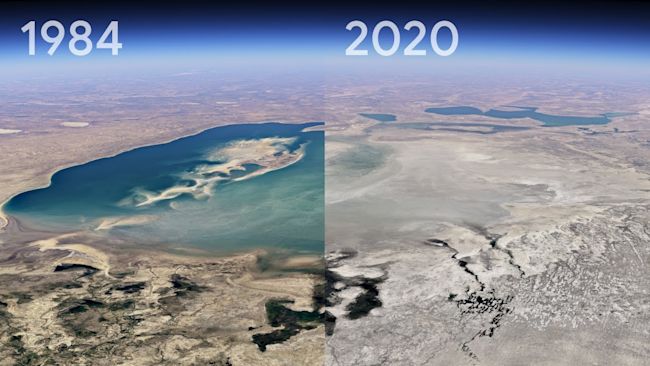
Google Earth time-lapse video shows the impact of humans and four decades of climate change on the planet.

Google Earth time-lapse video shows the impact of humans and four decades of climate change on the planet

A time-lapse video feature launched by Google Earth has drawn on nearly four decades of satellite imagery to vividly illustrate how the impact of humans and climate change have affected the planet.

The tool, unveiled on Thursday, shows how humans’ impact on the planet has changed glaciers, beaches and forests around the world.

Google says it undertook the complex project in partnership with several government agencies, including NASA and its European counterpart, in hopes that it will help a mass audience grasp the sometimes abstract concept of climate change in more tangible terms through its free Earth app.

The features, enabled by 24 million satellite photos compiled into a 4D experience, is the biggest update to Google Earth in five years.

Cornell University climate scientist Natalie Mahowald described the tool as “amazing” after watching a preview video of the feature.

“Trying to get people to understand the scope of the climate change and the land use problem is so difficult because of the long time and spatial scales,” she told the Associated Press.

“I would not be surprised if this one bit of software changes many people’s minds about the scale of the impact of humans on the environment.”

Most scientists agree that climate change is being driven by pollution primarily produced by humans.

But earlier images have mostly focused on melting glaciers and haven’t been widely available on an already popular app like Google Earth, which can be downloaded on most of the more than three billion smartphones now in use around the world

Google is promising that people will be able to see a time lapse presentation of just about anywhere they want to search.

The feature also includes a storytelling mode highlighting 800 different places on the planet in both 2D and 3D formats.

Those videos also will be available on Google’s YouTube video site, a service more widely used than the Earth app.

Google plans to update the time lapse imagery at least once a year.

Google Earth images of Dubai in 1985 (left) and 2020 (right).Credit: Google Earth

Aral Sea in Kazakhstan in 1984 and 2020.

Aral Sea in Kazakhstan in 1984 and 2020.Credit: Google Earth

Worrying !

Regards Mark

EU: The Intergroup on the Welfare and Conservation of Animals is calling to replace live export with a trade in meat, carcasses and genetic material.

The Intergroup on the Welfare and Conservation of Animals is calling to replace live export with a trade in meat, carcasses and genetic material

16 April 2021

In view of the announced revision of the Council Regulation (EC) No 1/2005 (Transport Regulation), Members of the European Parliament (MEPs) joined forces and set up the Animal Transport Working Group within the Intergroup on the Welfare and Conservation of Animals.

The working group has been very active recently, with its members joining NGOs missions in the field and taking steps when confronted with the two animal welfare crises involving the livestock vessels Karim Allah and Elbeik. 

There is a growing concern around the sustainability of live transport from animal health and welfare, environmental, societal and economic perspectives.

Taking stock of all the violations to the current animal transport legal framework, as well as the evidence about the unfitness of such a system, MEPs decided to publish a Manifesto to outline the main changes that should be translated into law. 

Among others, the MEPs are calling for:

  • Trading meat, carcasses and genetic material instead of live animals, with non-EU countries Setting up species specific journey times for the intra-EU trade, within a maximum journey time of 8 hours for adult mammals
  • Introducing species-specific requirements for the commercial movements of fish and invertebrates, laboratory animals, equidae, cats and dogs
  • Effective monitoring and enforcing mechanism to foster legal compliance

The Manifesto follows up on the recommendations made by Eurogroup for Animals in its White Paper on the revision of the Transport Regulation, published in January 2021.

Read the Manifesto here.

https://www.eurogroupforanimals.org/news/intergroup-welfare-and-conservation-animals-calling-replace-live-export-trade-meat-carcasses

Regards Mark

Animal news from around the world.