EU: Breaking News – Petition Closed – Over 1.5 million EU Citizens want to see the end of cages for farmed animals

EU- Flagge


WAV Comment – this is a massive win, with huge numbers of EU citizens speaking out against the current systems.  The question is – will the EU listen to its own citizens, or will it continue to bow to the meat mafia lobby ? – this is a deciding point for the EU and its Commissioners to now show their true hand.  Citizens or lobbyists ! – a failure by the EU to take note of what EU citizens have requested will be catastrophic for them in the future – they must act now.


EU: Over 1.5 million people want to see the end of cages for farmed animals.
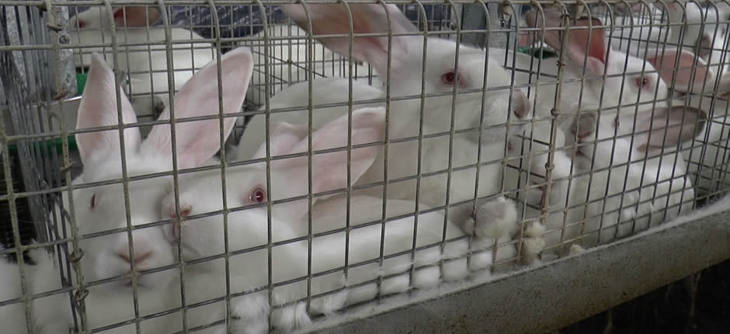
 

Image result for intensive caged animals eu

The End the Cage Age European Citizens’ Initiative (ECI) has closed with over 1.5 million signatures asking the EU to put an end to the confinement of farmed animals.

With the largest European petition ever for farm animal welfare ending at 23:59 last night, today is one of the most significant days for farm animals that the world has ever seen. At the time of writing, more than 1,500,000 people have signed, with the final total still being counted as paper petitions continue to pour in from the public. 

Over 300 million pigs, hens, rabbits, ducks, quails and calves across the EU are still reared in cage systems that are designed to cram in the highest number of animals possible for the sake of maximising production. But such systems deny sentient creatures the most basic of freedoms, such as the space to move; and science and even practice have shown that cages are outdated and obsolete.  
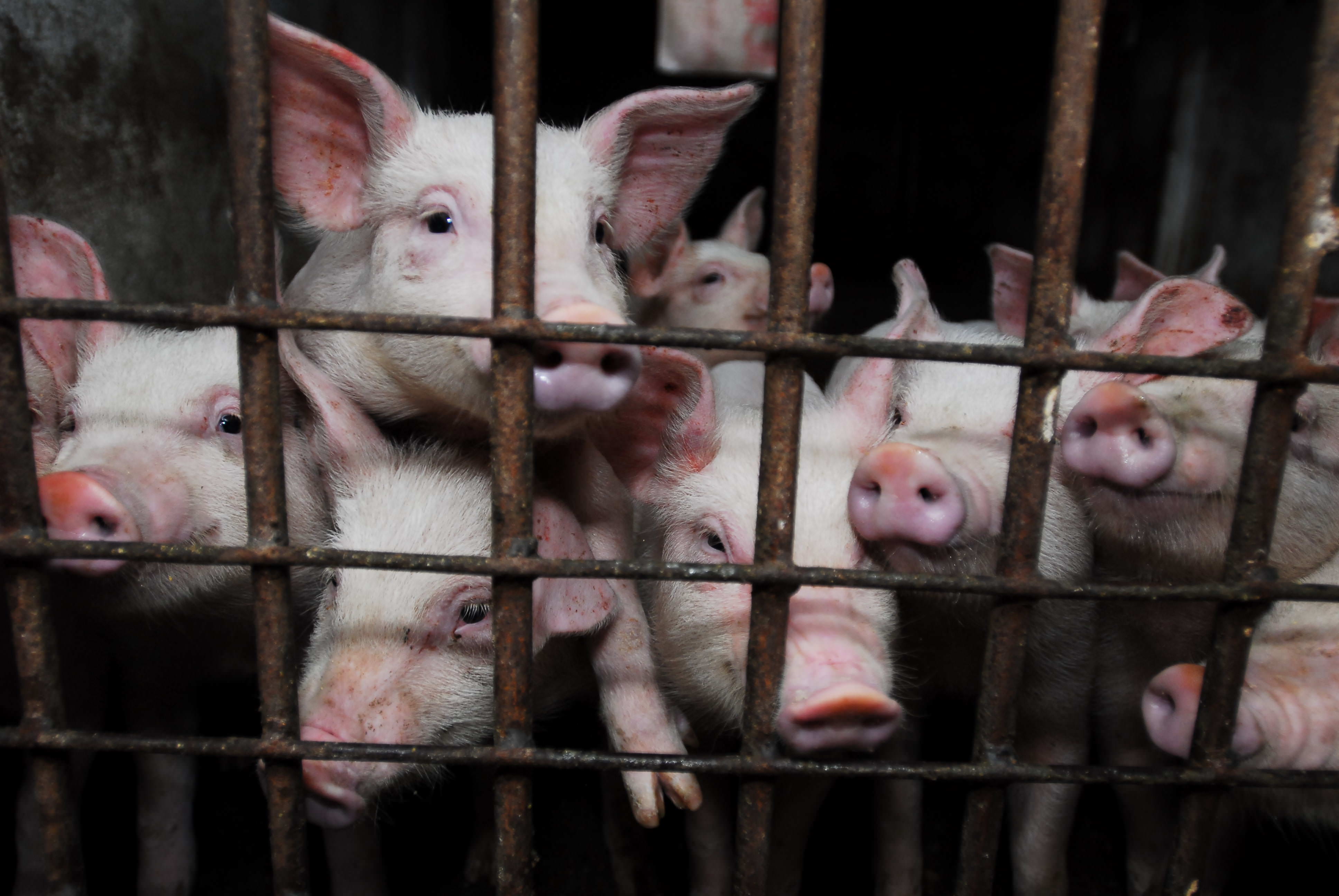
Image result for intensive caged animals eu

The End The Cage Age European Citizens’ Initiative was launched in September 2018 by Compassion in World Farming in partnership with Eurogroup for Animals and over 170 other animal welfare and environmental organisations across the EU – the largest ever coalition in the name of farm animal welfare. 

To hit the 1 million signature target – the official number needed for a successful ECI – the campaign held events throughout the EU, collaborated with influential MEPs and celebrities, launched undercover investigations into the caged farming of calves, rabbits and sows and unveiled a new digital campaigning platform that allowed the public to build their own signature collection pages. These actions and activities helped to unite a continent against cruel cages. 

“Of all the terrible ways we control animals, the cage is one of the most primitive and barbaric,” says Reineke Hameleers, Director at Eurogroup for Animals. “With this tremendous backing, the key decision makers EU Commission and Council have to understand just how important this matter is to EU citizens, and start the ball rolling towards this seismic shift in our food and farming systems.”

Image result for intensive caged animals eu

Few ECIs ever reach the required one million signatures, so today’s count represents a monumental step on the path towards sparing animals the enormous suffering they experience now in barren, overcrowded cages, and even towards ending factory farming. Within three months of receiving the signatures today, EU Commission representatives must meet the organisers, adopt a formal response spelling out what action it will propose in response to the citizens’ initiative, if any, and the reasons for doing so – or not doing so. 

Image result for intensive caged animals eu


Because this is an official EU initiative, each signature goes through a verification process – which can make or break the ECI. A total count of signatures may include up to 20% of invalid data, such as duplicates, incorrect ID numbers or dates of birth, the wrong resident status or even illegible handwriting, so a buffer of at least 300,000 signatures was needed. 

With more than 1.5 million signatures so far, End the Cage Age’s success should be more than enough to persuade the European Commission to start the legislative procedure to end the use of cages for farm animals across the continent.

Image result for intensive caged animals eu

“Today we have crossed the finish line in the biggest political push in farm animal welfare history. But the fight to get animals out of cages isn’t over yet,” says Reineke Hameleers. “Now it’s time for the Commission to make the changes that the citizens demand and bring us closer to the day when cages are relegated to the history books.”

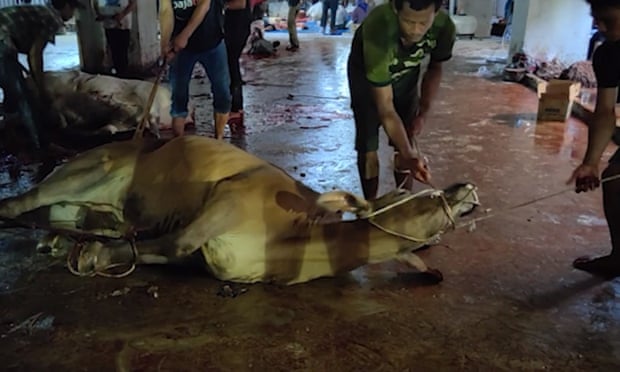
Australia: Live Exports – News From Lyn, Animals Australia.

australia

WAV Comment – see our other recent post on this issue:

https://worldanimalsvoice.com/2019/09/11/australia-live-export-footage-shows-australian-cattle-dragged-by-ropes-before-slaughter-in-Indonesia/ 


Dear Mark,

It’s been weeks since our Investigators returned home from their deployment for the Festival of Sacrifice, and I just wanted to drop you a quick line to once again convey how grateful I am to you.

I am now able to speak to you about what we found in Indonesia as this investigation was made public through the media this week.

Because of your support, we have again been able to document and expose the brutal treatment and slaughter of Australian cattle in Indonesia, and lodge a legal complaint with the Department of Agriculture.

A still from live export footage of cattle slaughtered in Indonesia

I won’t go into detail within this email, because I know that many of you prefer to be spared. But if you would like to read about what our Investigations Unit documented, you can do so in this media article, published yesterday.

It’s been eight years since I stood in a slaughterhouse in Indonesia and watched, with abject horror, the treatment that Australia’s live export industry had knowingly been supplying Australian animals to. I know for many of you, the images of one terrified animal who stood trembling as he watched his friends butchered around him, remain with you to this day.

We will never forget 'Tommy'.
‘Tommy’, the gentle Australian steer who we saw trembling in an Indonesian slaughterhouse in Indonesia, 2011.

What ‘Tommy’ endured — along with so many others — epitomised in the most tragic of ways, the callousness of Australia’s live export trade. The willingness of exporters to supply animals to brutal treatment was starkly exposed through that investigation, resulting in the then Gillard government implementing a new system of live export regulation.

The fact that Animals Australia has since had to police this ‘regulatory system’ in importing countries, is something that a charity should never have had to do. But I am proud that we have not shied from embracing the risks and challenges to be there for our animals, and call exporters to account. We’ve only ever been able to do this because of your support.

Once again, the critical nature of our investigative work is revealed through our recent evidence documented in Indonesia. Had we not been there, no-one would know that Australian cattle had been subjected to terrible ‘roping slaughter’ in the basement of a construction site.

Had we not been there, the exporter responsible, International Livestock Exports — recognised in the industry as the ‘cattle arm’ of the disgraced Emanuel Exports — would not now be under investigation and facing serious sanctions.

Had we not been there, the industry could have continued to operate, business as usual, as a law unto themselves.

So this is why I felt compelled to write to you today. Because had it not been for your caring and your generous support of our Investigations Unit, our team could not have been in Indonesia.

That such cruelty continues reveals exactly why live export, in its entirety, should end. Every piece of evidence we gather, whether in Indonesia, Kuwait, Vietnam or Egypt, continues to build that case.

There’s a reason why nearly a decade later, we still think about Tommy. For many people, coming face to face with him was the first insight they’d ever had into the fear and distress of animals raised and killed for food — the first time they were able to witness their desire not to be harmed.

Thank you for entrusting us with your faith and support and allowing us to dedicate every single moment to them. Thank you so much for your kind and generous heart.

Because of you, we can dedicate every day to Tommy and friends, and creating the kinder world that they so need and deserve.

In gratitude,

Lyn White AM
Animals Australia


https://secure.animalsaustralia.org/take_action/live-export-shipboard-cruelty/?gclid=EAIaIQobChMI-r3uheXN5AIVibTtCh1mGgLHEAAYASAAEgJZKPD_BwE 

England: Memories – a personal experience. By Mark.

England


Memories – a personal experience.

everybody[1]

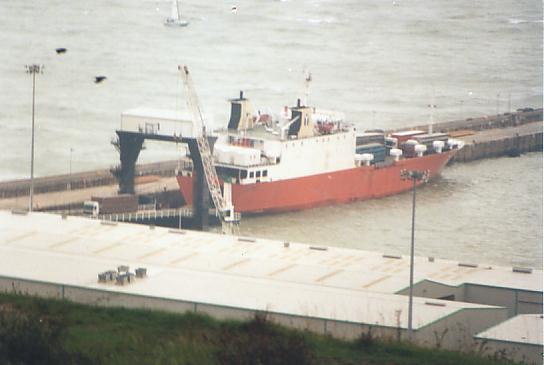
Many years back; 20 or more; the live animal export trade from the UK via English ports such as Dover, was at its peak. I used to travel down to Dover and other ports several times a week and do (undercover) monitoring of the (live animal export) trade. There were several of us at Dover and we all got together to wait for the livestock truck carrying ship(s) to arrive at the harbour late in the evening. They were special ships which had to be chartered because we had made some massive wins in getting the normal ferry companies to stop taking live animals to the continent. Animal transporters were banned from normal passenger ferries – people did not want to share their holiday crossing experience with animals going to their deaths; so those same people spoke out and the ferry companies buckled. That was a big win; but the trade did not stop entirely. The industry was forced to charter its own ships to take the trucks; along with the financial overheads that came with it.

The special (livestock transporter) boats usually arrived late in the evening; like 11pm or midnight. From our vantage points on the cliffs, we watched them arrive a few miles off the harbour at a section of the English Channel which is known as ‘The Downs’. From there they had to get a pilot to bring their ship into the harbour; that was fine with us – ship charter; paying for a pilot etc; all extra costs to the industry involved with live animals.

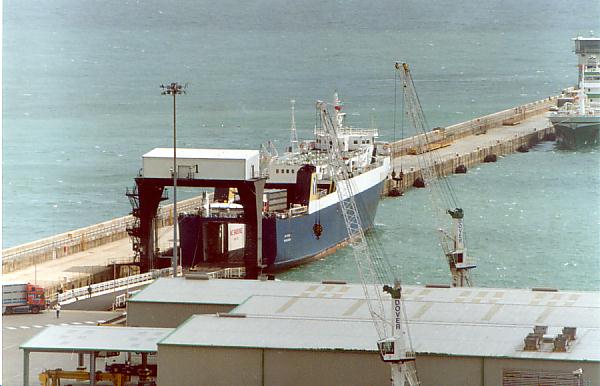
I took these following photos many years ago – some time on the odd occasion when the livestock ships had no choice but to dock during the daytime.  In both you can clearly see the livestock transporters.  This operation was normally undertaken under the cover of darkness in the middle of the night – away from the eyes of the public.

D45

D46

So late at night we (campaigners) congregated in a region up on the famous Dover White Cliffs which overlooked the harbour; at a place known as ‘Langdon’. We watched the ship come into the harbour under pilot control until it berthed at the far end (left pier) of the harbour. You can see the kind of view we had from the cliffs in this video:

On the left hand side of this video you can see the Eastern arm at which the ship photos above were taken.

At night, with all the lights in the harbour, it was impressive to say the least. A sort of ‘Close Encounters’ situation. Once the ship had docked on its usual left hand pier; we then had to hang around and wait for the rear doors on the ship to open and the ramp be lowered. Then was the first real signs of the nights trade for us – how many empty livestock trucks were going to discharge from the ship and make their way up to the local lairages to collect the animals; which had been specially brought down to these farms ready for export. Usually, most nights, we counted somewhere between 6 and 9; sometimes more, sometimes less.

One of the local farms (or ‘lairages’) where the animals were kept ready for export was also operating a business on the side as a caravan park. So, what do you do in such situations ? – you buy a caravan and place it in the farm caravan park; right next to the old pathway which the trucks used to get down to the animals sheds. With people there having a great nights caravanning !; and the use of mobile phones and a kettle for a cup of tea ; we could keep each other informed exactly of the trucks, their registration numbers; haulier, and type of animals they were carrying. Observers literally within a few feet of the transporters as they arrived empty, and left loaded with animals. It was a well organised arrangement; livestock trucks monitored from the minute they arrived at the harbour on the ship; all the way up to collect the animals at the lairage; and then still monitored at all times on the to their return to the harbour; where they were always greeted by a ‘reception group’ even at 2 or 3 in the early hours of the morning; who had been informed who exactly was on their way down. We never let up; they were monitored and tracked from the moment they arrived until the moment they left. Our system was good; very good.

Eventually, and to get a good view of the loading of the trucks onto the ship, we returned from our reception duties at the docks to Langdon up on the cliffs. Up there it was wild, dark and bleak; with the forever Dover cold wind blowing in off the English Channel. We kicked around; talked, drank hot tea and waited for all the trucks to load back onto the ship ready to head over to France and god knows where else. Sometimes the odd ‘lady of the night’ would appear and offer her services to some of the blokes. They were never taken up as we were decent folk and there was much more important things to do !

The whole exercise from unloading the empties off the ship, to driving up to the lairages, loading, and then getting back to the harbour to load the full animal transporters that had come back from the lairage usually took about 3-4 hours. It was always in the darkest of dark times of the night; the trade did not want to be seen by the general public – but they were; we watched their every move; and we always followed up with reports and publicity on what was happening in those ‘dark hours’.

Once all the full livestock trucks had loaded back onto the same ship that they arrived on; we sat and watched as the rear ramp and doors closed up; the signal that the ship was ready to leave the harbour once again with all the innocents on their final trip to god knows where.

Watching the loaded ship sail out of the harbour destined for France with what, 6, 8, 10 animal transporters loaded was always a difficult time for me personally. We had done everything we wanted to do each night; gathered the information and let the industry know that even at that time we were around; but for me also, we had failed the animals by allowing them to sail away to their deaths. Saving and stopping all the trucks was impossible; we knew it; but witnessing the situation always made you feel like you had let the animals down by not saving them. I was quite a big ‘U2’ fan at the time; and I always sat in my car up on the cliffs and played ‘Exit’ from the ‘Joshua Tree’ album – the haunting Bass and a time of real despair; as I watched the ship sail out of the harbour with its cargo of death. The music; the experience yet again; everything seemed to come together at that moment in time.

‘Exit’


Music has a real power – often to be the right track at the right time to hold memories –‘Exit’ was right for the betrayal of animals that I witnessed so regularly at those cold, dark; upsetting nights at the docks. Even now; 20+ years later, that track (Exit) always takes me back to those cold and windy nights up on the cliffs watching the livestock carrier departing for France. That track always brings back that situation to me of being there and witnessing the suffering for a few pennies more. Sometimes I would stay on longer and watch – from high on the cliffs you could watch the ship sail across most of the Channel almost until it had arrived in Calais; what, some 23 miles away. Sad times, bad times, but in the end we stopped it completely at Dover. It felt good to be of the crew that did that !

Regards Mark


In the UK people have always detested the live animal export trade.  Part of our national way towards being an animal welfare nation I guess.  Here are a few scenes from around Dover in the past of what good, decent folk will do to stop animal abuse with the animal exports:


For Jill – never forgotten:

JILL


US: In 2035 it is over with toxicity test to animals


usa-flaggen-bleistift-jpg


The Netherlands is making the case, now the US is slowing down: by 2035, toxicity testing on mammals should be completely replaced by reliable animal-free methods. US Environmental Protection Agency (EPA) Chairman Andrew R. Wheeler has now released a new policy that the nationwide association Doctors Against Animal Experiments e.V.

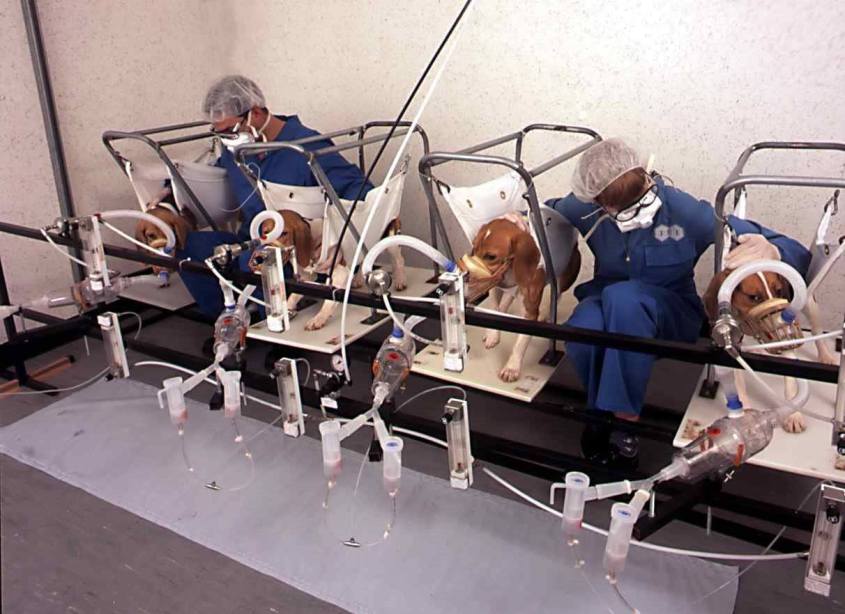
Hunde. test bankjpeg

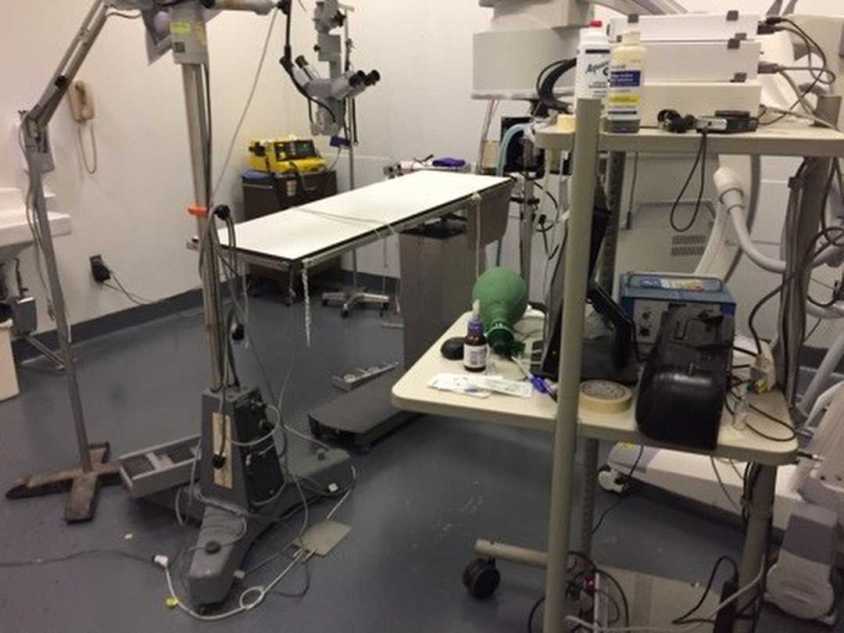
Already in recent years, the US has been working increasingly on new and animal-free methods. This is now to be expanded strategically: a working group consisting of experts in the field of innovative, animal-free methods should develop a comprehensive plan within the next 6 months as to how this goal can be achieved.

From 01.01.2035, toxicity tests on animals should be prohibited and only possible in exceptional cases.

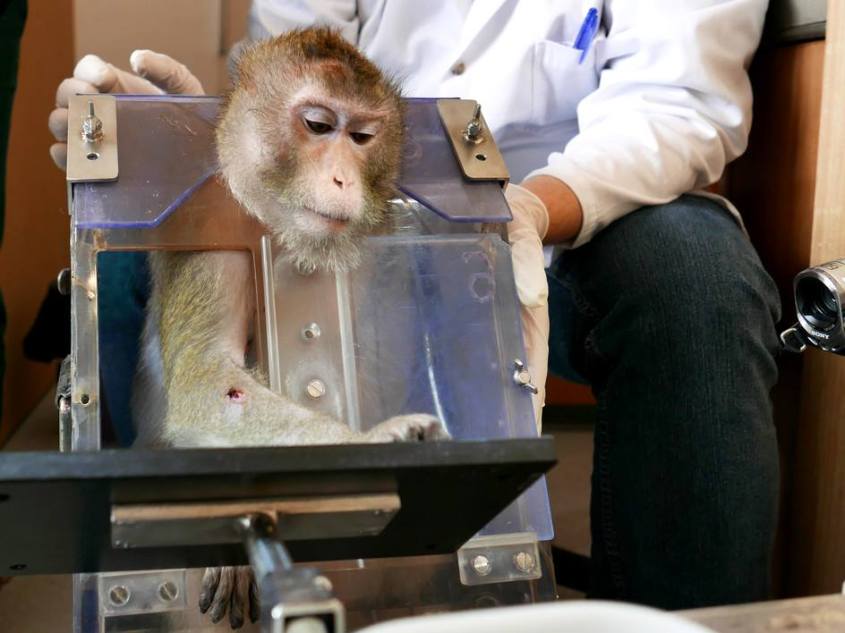
Affen angehängt Labor_n

Both the existing and the new methods can “lead to the same or better biological prediction in a shorter time frame with fewer resources than the currently used animal models”, the directive states. Of course, this takes place in compliance with all necessary safety levels for people and the environment. The EPA promotes the research of animal-free methods while reducing the funding of animal experiments from taxpayers by 2025 by 30% or complete deletion from 2035.

Afe im Laborstuhl n

As early as 2016, the Netherlands came up with a comprehensive plan to complete the replacement of regulatory safety tests for chemicals, food additives, pesticides, animal and human health products by 2025.

The fact that the US is developing a concrete exit plan is another great pleasure for Dipl.-Biologist Julia Radzwill of Doctors Against Animal Experiments: “If a country like the US, which has so many scientific innovations, develops an exit plan, this is an important signal and measures the animal-free methods finally the meaning they deserve – scientific and ethical. “

“Although studies show that results from animal testing on humans are not transferable and that human-based methods are not only reliable but also more cost-effective and deliver more results in less time, in Germany more than 99% of the funding is still in the ‘animal experimentation’ system. Invested incorrectly, ” explains biologist Radzwill.

Even if 16 years to complete implementation according to the medical association is a much too long period, in the US, in contrast to Germany, at least a specific date is envisaged and shortly a scientifically sound implementation plan is available.

Labortesthunde für Zigaretten.o

Doctors against animal testing calls for a rethinking of the Federal Government in Germany, so that Germany does not miss the turn from a long-obsolete system to a future-oriented and human-based research.

https://www.aerzte-gegen-tierversuche.de/de/neuigkeiten/3003-ausstiegsplan-aus-dem-tierversuch

My comment: The pharmaceutical industry predominantly carries out animal experiments. Today we know that there is a mafia behind the laboratory experiments.
Organized crime accounts for about $ 2 trillion a year. More than a trillion dollars is spent on drugs worldwide.
The 30 largest pharmaceutical companies in the world generate a turnover of 600 billion dollars! All are in cooperation with the World Health Organization (WHO)
The best thing that can happen to big pharmaceutical companies is the millions of paid collaboration with WHO: a dangerous network, and a lucrative friendship!
“The richest man is always the one who has the most powerful friends”.

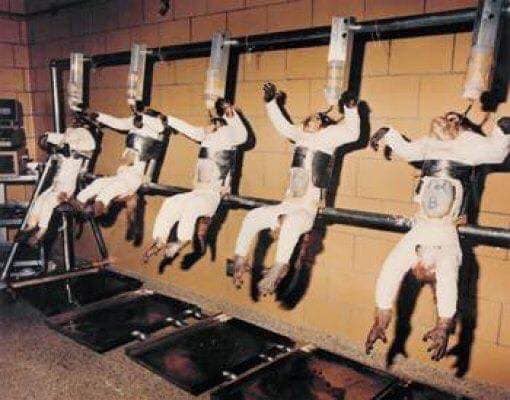
The number of animal experiments is steadily increasing in Germany. They suffer from pharmaceutical industry institutes, universities and, last but not least, contract laboratories that poison thousands of primates, dogs and all sorts of animals a year for profit.

There is not only, but especially in Germany a popular combination of capital, state and lobbyists working with any industry that benefits from animal suffering. Recognizable how EU laws etc. are ignored and even broken. Recognizable also due to the poor implementation of the EU animal welfare law.
The catastrophe continues to grow with the help of politicians who make corporations more powerful and people more stupid.

Therefore, if animal experiments are abolished even in poorer countries, Germany will become the last country.


PICT1115.JPG


My best regards to all, Venus

Havasupai Trail: systemic horse and mule suffering


usa-flaggen-bleistift-jpg


For years, eyewitnesses have reported the neglect and deaths of horses used for packing tourist gear along the Havasupai trail in the Grand Canyon. The latest complaint describes a dead horse simply discarded in the middle of the trail in August 2019.

Most tourists headed to the Havasupai Falls in the Grand Canyon go there to hike, explore, and take in the beauty of the area. But for years, they have been reporting the beating and suffering of horses and mules used for packing along the trail—some even collapsing and dying, including two just this summer.

maulesel havasupaipg

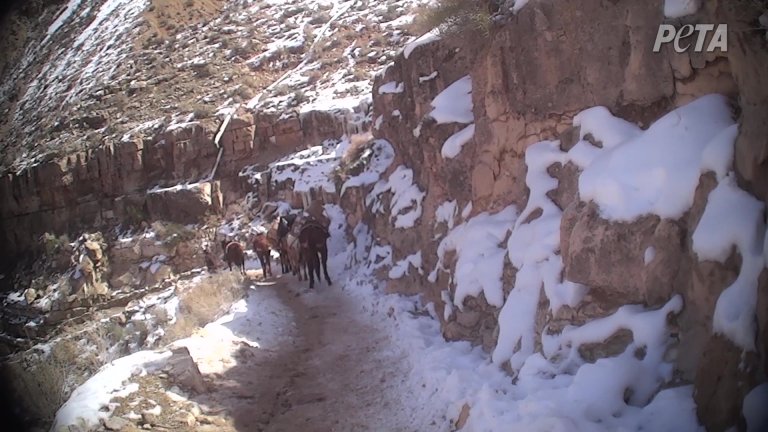
New PETA eyewitness footage shows that this is systemic abuse. Animals were seen being forced to carry heavy loads up and down steep trails—at as much as a 19-degree incline—in all weather extremes, sometimes slipping and even reportedly falling over the edge.

slipping-on-ice-4-horsejpg

PETA eyewitnesses saw horses whipped and mules slipping on the icy, muddy trail, and many animals were left sweating and panting from the arduous journey.


Suffering and Neglect off the Trail

PETA eyewitnesses found horses and mules with sores and scars, while others limped or had overgrown hooves. Some were obviously underweight, including a young horse whose ribs were visible.

Many were confined to pens littered with trash, while others were tethered without any shelter. One horse on a 4-foot-long tether was apparently left without water on three consecutive days.

A Grueling, Sometimes Fatal Trek

Wranglers forced the animals to carry heavy loads of tourist gear up and down a grueling 2,450-foot climb at an incline of up to 19 degrees. Sometimes loud music was played for the amusement of the wranglers, causing the animals even more distress.

Horse-with-skin-issue

The Animal Suffering Is Systemic

Along with recent reports of animal suffering on the trail, PETA’s footage shows that this is a systemic issue in need of immediate attention.

In May, an eyewitness reported seeing a young horse collapse and die after being forced to carry an oversized load while apparently suffering from heat exhaustion. Just weeks later, another hiker reported that a horse collapsed but was forced to continue the grueling trek anyway. Others were reported having scars and looking exhausted.

In August, a dead horse was simply discarded in the middle of the trail. We may never know what happened, what suffering she endured, and why her body was unceremoniously abandoned.

https://www.peta.org/blog/havasupai-trail-animal-suffering
https://havasupaihorses.org/

And I mean...If you are looking for adventure and want to explore nature, you have to move your ass yourself and carry your own baggage.
That will be some fat nature lovers do well anyway, because only so can burn some calories. Enjoy nature on suffering and blood of other beings is not a nature adventure, it is bloody sport! That means a sports variety for brain-sick and mentally weak proletarians.

My best regards to all, Venus


India: Brilliant ! – Mother Dog Helps Animal Aid Unlimited Rescuers Save Her Puppies.

India

animal aid unlimited india


This frantic mother dog’s love of her puppies has her digging with paws, biting at stones and tearing at the rubble to free her buried babies who are trapped after a house collapsed in the rain.

When Animal Aid’s rescuers arrived, they feared the puppies might not be alive, but their Mama must have been able to hear them or sense that they were still alive and she was determined to tell us so.

Every minute was precious and she seemed to realize that they could suffocate at any moment. You’ll never forget this incredible portrait of a blissful rescue and a mother’s unstoppable love.

For a mother, nothing is more important than the safety of her children.

Please donate: http://www.animalaidunlimited.org/don…


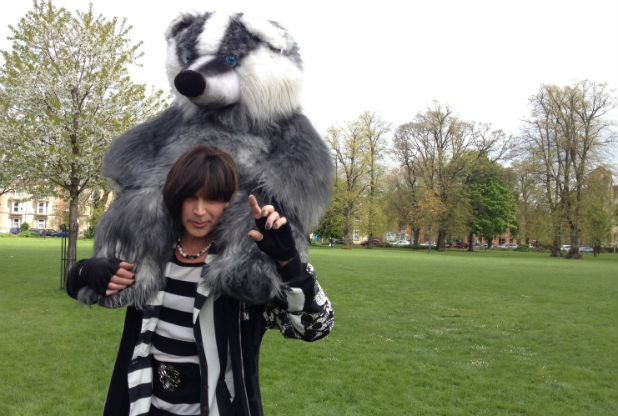
England: Bovine TB Up By 130% – Higher Than When Badger Culls Began. Badgers Being Killed To Pacify Farmers; While They Take No Responsibility for Biosecurity.

England

badgers north west hunt sabs


Bovine tuberculosis rates in one of England’s main badger cull areas shot up by 130 per cent last year and are higher than when culls began, it has been revealed – just hours before the government is due to announce an expansion of the cull.

Experts including vets and former government advisers called for the planned cull widening to be cancelled, warning that announcing it while Parliament was prorogued could be illegal.

badger artwork

Last year’s increase in TB rates demonstrated a “disastrous failure” of the policy of shooting badgers dead in an effort to tackle the disease in cattle, they said.

And in an urgent eleventh-hour plea, they also wrote to the government’s chief veterinary officer, Christine Middlemiss, saying she has “a responsibility” to intervene.

Plans to expand the badger cull were based on outdated information – from 2017 – but the new, 2018 statistics should be taken into account, said Iain McGill, a former government agriculture scientist.

badger artwork

Opponents of the cull claim up to 50,000 badgers could be killed this year if the expansion goes ahead – nearly double the number last year.

Official data obtained under Freedom of Information laws showed confirmed incidents of bovine TB in the Gloucestershire culling zone went up by 130 per cent over 2017, from 10 to 23.

Since pilots of culling began in Gloucestershire in 2013, the badger population in the area has dropped sharply, so the increased TB outbreaks suggest the government is focusing on the wrong issue, Dr McGill told The Independent. He believes culling should be replaced by changes to cattle testing, and cattle vaccination and treatment.

The experts wrote to Tony Juniper, the head of Natural England, which issues licences, that up to a quarter – 9,000 – of badgers shot are likely to have suffered “immense pain”.

Dr McGill, the lead signatory of the letter to Natural England, said: “After all this brutality, TB in cattle is actually worse. Badger culling has been a disastrous failure.

“The public will be flabbergasted by these figures because the vast majority don’t support culling in view of the extremely strong scientific evidence that it hasn’t worked.

badger artwork


“I think what’s going on is a scientific fraud.”

When he later asked for figures on TB prevalence – a more powerful indicator – officials at the Department of Environment, Food and Rural Affairs (Defra) refused to give it, citing public interest, Dr McGill said.

“They are trying to force through this badger cull before a full analysis of available data precisely because they know how bad the science looks for this cataclysmic policy.

“There is a huge sense of urgency here – Mr Juniper and Christine Middlemiss need to come before Parliament and the nation to make a statement on this policy before Parliament is prorogued.

badger artwork

“For the cull to be announced this year with no parliamentary scrutiny would be unconstitutional and possibly illegal.”

Dominic Dyer, chief executive of the Badger Trust, has also called for the “largest destruction of a protected species” to be cancelled while Parliament is not sitting.

“By the time it returns most of the badgers will have been killed,” he said.

Prof Ranald Munro, the former chairman of an independent expert group appointed by the government to assess the trials, has warned the policy is causing “huge suffering”.

A Defra spokesperson said: “Bovine TB remains one of the greatest animal health threats to the UK, causing devastation for hard-working farmers and rural communities.

badger artwork

“There is no single measure that will provide an easy answer to beating the disease. That is why we are pursuing a range of interventions to eradicate the disease by 2038, including tighter cattle movement controls, regular testing and vaccinations.”

The government says it is considering a report of a TB strategy review led by Sir Charles Godfray, which includes badger vaccination, and will publish its response later this year.

https://www.independent.co.uk/news/uk/home-news/tb-cows-cattle-badger-cull-gloucestershire-prorogue-vets-a9098366.html

badger demo chick

badger girls 2

badgers north west hunt sabs


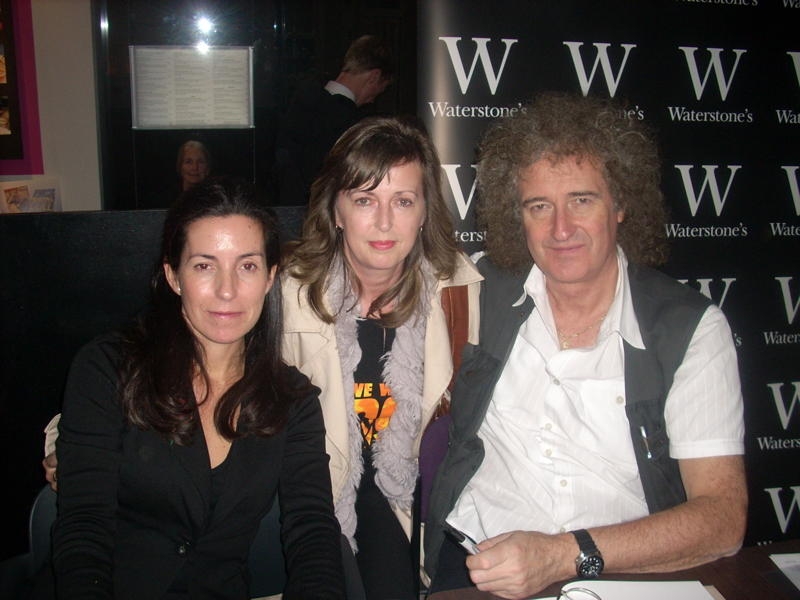
Hero Brian May:


… and here is my live exports campaigner friend Trudi (centre) pictured with Brian May ……………..


Trudi with Brian

BM save me 2

save me header

https://www.save-me.org.uk/about/press-release/277-brian-may-founder-of-the-save-me-trust-calls-on-the-government-to-halt-the-badger-cull-and-confirms-legal-action 

Indonesia: Urgent Appeal – Fire In Forests of Orangutan Foundation Facilities. Can You Donate to Help ?

Indonesia


orangutan baby


WAV Comment – Every time we do a food shop, some of our costs are donated to BOSF – it is an organisation that is part of us.  Please help if you can to save these magnificent animals and their habitat from the fires of the forests.  Thanks – Mark


Fires have once again ravaged Central Kalimantan’s peat forests, including the working area of the BOS Foundation’s Mawas Conservation Program in Kapuas District. Recent forest fires have scorched the Mawas area in the vicinity of Tuanan and Sei Mantangai – near Danau Teloh area.

Fire first struck the Daha River Basin, near the Tuanan Research Station, on 2 September 2019. The Mawas team received vital information about the fire from the team at Tuanan and the firefighting team from Mangkutub village. It is speculated that the fire started in a local villager-owned field and spread from there to the Tuanan Research Camp area, specifically to the southern area of the Daha River, about 250 meters from the South Transect.

Significant measures were previously put in place to help prevent fires and expedite rapid response to forest fire outbreaks in this area. However, the challenges forest fires present are often overwhelming, and the minimal infrastructure and limited access to the hotspots makes fighting them incredibly difficult. Unfortunately, a long dry season and insufficient water sources have led to extensive areas of forest being lost to fire.

The team on location has already reported the situation to the relevant authorities, including the Government Fire Brigade, the Protection Forest Management Unit (KPHL), the police, and the military. But, due to the widespread occurrence of forest fires across Indonesia at present, support has yet to come from these agencies, as their personnel are currently mobilized in other areas.

Over the last four days, the Mawas firefighters and the Tuanan camp research team have been fighting fires by isolating the burned areas and drilling new wells to help douse the surrounding grounds. Our Mawas team and the firefighting team from Mangkutub village worked hand-in-hand to drill the ground and successfully completed digging six new wells in the area. The team then used water siphoned from the wells to stop the flames from spreading.

https://orangutan.or.id/mawas-under-threat-again/ 


Forest fires are raging near the Tuanan Research Camp, putting orangutans, other wildlife, and humans in imminent danger!

The centre of this recent fire outbreak is located in the Mawas Conservation Area in Central Kalimantan, home to thousands of plant and animal species, including around 2,550 wild orangutans.
The Mawas firefighting and research teams are working tirelessly to contain the fire, by isolating scorched areas and drilling new wells to help douse the surrounding grounds.

Read more about the current threat of fires in this area.

We are heartbroken by what is happening right now – and you might feel powerless, Mark. But, there is way you can help!

Donate to support our teams that are right now battling these fires, and help us build the technical capacity to protect these forests in the future.


Donate Now

Your help is urgently needed – please support our emergency forest fire appeal today.

Thank you so much for your support during this emergency!


Dr. Jamartin Sihite 
CEO of BOS Foundation

https://orangutan.or.id/