Bullfighting: the medieval shame of Spain


How primitive and anti-social can people be in the middle of Europe?


spain-


Bullfighting is a lucrative business. The arguments “tradition” and “culture” are only an invention of the bull mafia to get appropriate EU subsidies for this murderous spectacle.

The animal cruelty committed before the fight is kept secret from the public. Animals are tormented with devilish ingenuity.

Animal welfare organizations continue to fight with education campaigns against the martyrdom of the bulls. Unfortunately, Spain is overwhelmed with its social system and invests in this “tradition” of the primitive, millions instead of investing in the education system.

Furthermore, in the high season and with thunderous applause from the spectators, around 30,000 animals die each year in the arenas.
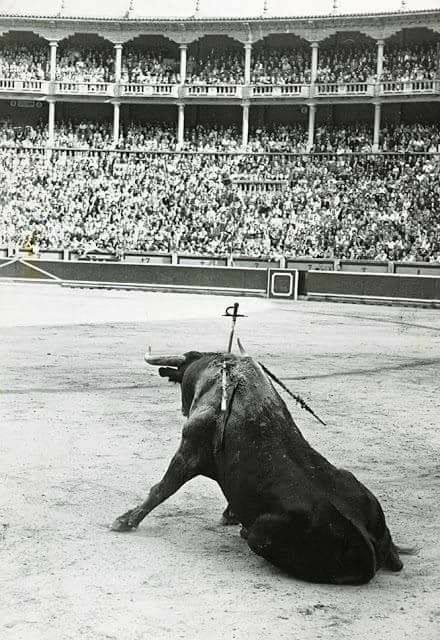
Stier in Arenan

Almost none of the few brain-sick Europeans who regard this form of sadism as a “culture” and pay to see how a defenseless animal is massacred knows what really happens before the fight.

We will tell them that!

It starts with the days of transporting the bulls to the arena. In narrow containers they are brought on trucks in burning sunshine. Some lose up to 30 kilos and are so weakened that they collapse as soon as they are driven out of the stalls with iron forks.

Then the horns are counted. The animals are clamped in a headgear to saw off the horns, and then they are filed in a natural looking pointed shape.
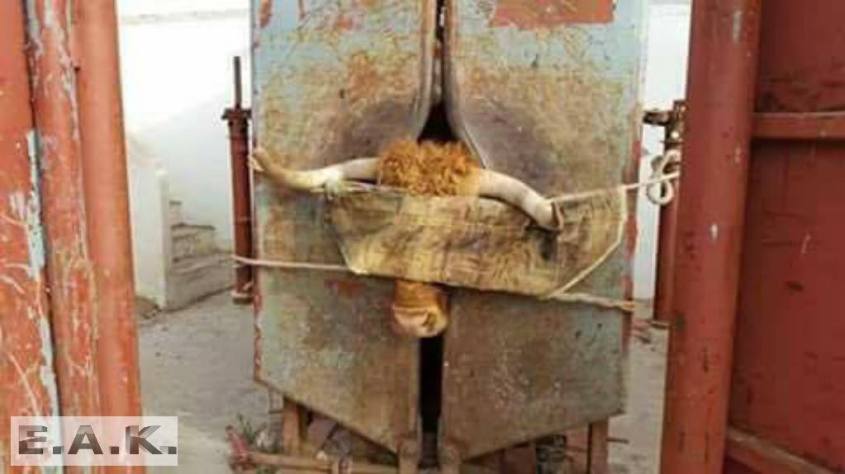
Stier aud Gillotine fixiert_o

This is for two reasons: first, to weaken the animal by the long-lasting, unbearable pain – inside the horns are as sensitive nerves, as in a tooth – and second, the bull loses the sense of the distance by the reduction and therefore always pushes into the void.

At the same time, the horns are also drilled in several places to the nerve and planted in the holes wood splinters, so that any defensive maneuvers for the bull to hell’s torment.

So that he can not shout of pain, the vocal cord is severed in some battle sites.

Drugs and tranquilizers are given to animals before drinking in water to alter and destabilize their natural behavior. Mostly, the back of a fighting bull is also dirty or bloody due to severe diarrhea. With Spanish pepper suppositories the intestines of the animals are made to bleed.

Stier allein sterbend

The night before the gruesome spectacle, the bulls are either placed on their backs in cramped boxes, or they push long nails through the genitals to prevent them from lying down and further weaken them through this incredible torture during the long night.

During the morning heavy bullets sacks the bull’s neck to unbalance them and make any head movement – which might surprise the bullfighter – extremely painful.

Despite the scorching heat, the animals will no longer be given water. Her eyes are smeared thick with Vaseline, so they can hardly recognize the torero, and the nostrils are stuffed with cotton wool so that it hangs down to the throat to make breathing difficult.

Then the legs are rubbed with turpentine. The pain, burning sensation, and itching make the bulls restless, and so the spectators believe they are aggressive and dangerous when they gallop around madly because of the burning pain as they bump out of the darkness of the cages into the blazing sun of the arena.

The bull’s gallop into the arena is not the expression of “rage” or “wildness”, it is a panic reaction of the animal desperately seeking the path to freedom!

How it goes on..

http://www.tierlobby.de/stierkampf/ebenauer_07.htm

Stier mit Matador jpg

Unfortunately, Spain is a country that has and spends very little money on education. This is also noticeable at every point and also when dealing with animals. The bullfighting is televised and promoted in schools as a cultural heritage to the children.

Education and the future of Spanish children is not worth a penny in and for Spain.

Kinder beobachten aufgehängten Stier_n

 Spain is at the top of animal cruelty as an EU country.
With bullfighting, Spain holds a “tradition” that has been proven to originate from Gitanos and was invented during the darkest period of our earth, the same in the time of the Inquisition.

Stier blutend und gefesseltn

As the Pisa study shows, Spain is at the very back end of education in Europe, as evidenced by the fact that traditions from the Middle Ages are perceived with enthusiasm that only scare and disgust every educated person.

Bull fight and bull festivals violate every ethic of modern civilized countries and societies. The ridiculous pseudo-arguments of the Taurinos about the “culture” and “tradition” of the bloody spectacle are so stupid, in fact false and hypocritical that they can not convince a single person with intellect and education.

toter Stier 2gThe Spanish Animal Protection Party PACMA is making every effort to abolish this shameful barbarity. So far without much success.

It is still these mentally weak proletarians, these dwarves of morality, the Taurinos, those who pull the land into the dirt all over Europe and lead us to a paraphrase of the well-known saying  of “Isaac Bashevis Singer:

“When it comes to bullfighting, everyone becomes a Franco.”

My best regards to all, Venus

 

England: London – Interview With Founder of Save the Asian Elephants – Duncan McNair.

England


Watch the Interview with Save the Asian Elephants Founder Duncan McNair

Asian elephants are kidnapped as babies in the wild and tortured in unimaginable ways just to entertain tourists for human profit. That’s why prominent attorney and hero for the elephants Duncan McNair founded Save the Asian Elephants, an organization working to stop the cruelty.

Watch him discuss the plight of Asian elephants in the latest episode of LFT’s Activists in Action video series.

https://stae.org/


USA: Man Shoots Police Officer and Horse With Semi Automatic. Sign for Justice.

UNST0001


Justice for Horse Shot with Semiautomatic Rifle

Posted by Carly Day

SIGN: Justice for Horse Shot with Semiautomatic Rifle

PETITION TARGET: Lisa Smittcamp, Fresno County DA

A horse in Fresno County, California was shot multiple times by a man using a semiautomatic rifle in a heated dispute over property lines.

Photos of the injured horse show blood pouring from at least three wounds on the side of the body, with more blood visible pouring down one hind leg.

It’s likely the injured horse suffered in agony for hours before authorities discovered the animal; the incident was reported at 11 am on the 2nd of July, and the situation wasn’t resolved until after 3 pm that afternoon.

Detectives took the horse to a local veterinarian for treatment. While the animal is still alive, prognosis for recovery remains unclear.

Police arrested 57-year-old Michael James Congdon at the property after he shot and injured Fresno Sheriff’s Deputy John Erickson, the officer called to the scene after the initial gunfire was reported.

The Fresno County District Attorney charged Congdon with attempted murder and other offenses — including animal cruelty — and set bail at just over 1.9 million dollars.

Congdon is clearly unstable and highly dangerous to people and animals. While he will likely be strongly prosecuted for injuring an officer — and rightly so — we must speak out to remind prosecutors that the suffering of this innocent horse is a serious matter, as well.

Sign this petition urging Fresno County DA Lisa Smittcamp to prosecute this man to the fullest extent of the law, ensuring he can never harm a living being again.


petition keyboard

Sign the petition and leave comments at:

https://ladyfreethinker.org/petition-justice-for-horse-shot-with-semiautomatic-rifle/?utm_source=Newsletter&utm_medium=Email

States across the U.S. are taking bold steps toward protecting animals.

UNST0001

States across U.S. are taking bold steps toward protecting animals

In state firsts, fur may be banned in California, and New York has moved to ban cat declawing.

In a wave of groundbreaking animal welfare legislation, U.S. states have approved or are considering moves to ban the sale of fur, discourage cosmetics testing on animals, and end cat declawing, among other animal-friendly efforts.

In California yesterday, state senators considered a bill that would make it the first state in the country to ban the import and sale of fur products such as mink shawls, coyote fur-trimmed parkas, and pom-pom keychains made of rabbit fur.

“We’ve seen California voters more than once saying that any product involving animals should be humanely sourced,” says assembly member Laura Friedman, who introduced the statewide bill in her chamber, where it passed in May. Yesterday, it unanimously passed its sixth hearing, during which dozens of California residents spoke up in support of the bill. It faces two more votes in the California senate, as well as the governor’s approval, in order to pass.

It’s just the latest animal protection that’s been put in motion at the state and local level over the past year in the United States. This series of state-level firsts reflects Americans’ growing concern for the wellbeing of animals, says Kim Kelly, director of legislative affairs at the Animal Legal Defense Fund, which spearheads legal fights for animal protection.

“There has been a trend where municipalities are taking on issues,” Kelly says. “Everyday advocates are making change happen within communities.” In turn, she says, it’s “creating more momentum for statewide legislation.”

Banning the sale of fur

Ending the use of fur, especially in high fashion, is one of the animal welfare movement’s longest running efforts. And yet, fur seems to be making a comeback, at least among some customers.

But Americans’ attitudes are shifting. Gallup polling on the issue found that in May 2018, 37 percent of Americans said that they consider buying and wearing fur to be morally wrong. In May 2019, that number had risen to 45 percent, a new historical high. (Learn more about animal welfare concerns in the fur industry.)

Los Angeles and San Francisco both banned the sale of fur in the last year. “Our two largest population centers had made this move,” says Friedman, who says she watched the tremendous amount of support around the L.A. bill and felt that the temperature was right to take the ban statewide. “You really need to look at the values of your community and state.”

Opponents of the ban include fur industry groups in California and the International Fur Association, an industry trade group, which argue that a ban would harm commerce and censors the ability of consumers to make their own choices. Plus, they argue, real fur is more environmentally friendly than faux fur, which cannot break down.

California boasts the world’s fifth-largest economy, larger than that of the U.K. Supporters hope that a fur ban in the state would strike a blow to the demand for fur, set a precedent for future states to follow suit, and, ultimately, lead to fewer animals being raised, trapped, and killed for their fur. The bulk of fur products sold in California, Friedman says, come from overseas.

A series of firsts

On its face, the wave of new animal protections might seem like a California thing. Last November, the state enacted perhaps the most comprehensive farmed animal protection legislation in the country. In January, California became the first state to ban the sale of dogs, cats, and rabbits in pet stores, unless they come from a shelter.

And last September, California became the first state to ban the sale of cosmetics that have been tested on animals. Similar to the potential fur ban, the law stipulates that any cosmetic product that’s been tested on animals after January 1, 2020, can’t be sold in the state (although products tested on animals that are sold in countries like China, which legally require animal testing, can still be sold). The law coincides with a growing global cruelty-free cosmetics movement: Market research estimates that the global vegan cosmetics industry, which includes cult-favorite makeup brands like Kat Von D and Milk Makeup, will be worth more than $20 billion by 2025. Even in China, where animal testing is required for any foreign-made cosmetics, there is momentum to explore animal-free testing methods.

After California passed the law, Nevada followed suit. Then Illinois, where the bill awaits Governor J.B. Pritzner’s signature.

These state-level measures could usher in more sweeping action to come, says Sara Amundson, president of the Humane Society Legislative Fund, which works to pass animal protection laws. The cosmetics testing laws in California and Nevada are “giving us the momentum at the federal level to revisit the issue,” she says. (A federal bill that would ban cosmetic testing on animals in the U.S. was last introduced to congress in 2017. Although it gained 186 bipartisan cosponsors, it did not advance to a hearing.)

It’s a trend seen around the world: Australia earlier this year passed a ban on animal-tested cosmetics, following similar laws in the European Union, India, Switzerland, Turkey, Guatemala, and more.


Declawing

It’s not just California spearheading action. A bill that would make New York the first state to ban cat declawing is awaiting Governor Andrew Cuomo’s signature after passing the legislature last month. It follows declawing bans in the cities of Denver, Los Angeles, San Francisco, and a handful of other cities and countries.

Cat declawing is a highly controversial practice. It’s not like a fingernail trim: in order to remove a cat’s claws, the last bone of each toe is amputated, according to the American Veterinary Medical Association. The veterinary community is divided on declawing. Some vehemently oppose declawing, arguing that it is rarely medically necessary and is a highly painful procedure that inhibits a cat’s natural scratching behavior and cause other long-term problems. Others, including the New York State Veterinary Medical Society, which opposed the bill, argue that it is sometimes necessary to preserve the human-animal bond, if a cat might otherwise be abandoned or euthanized, or if the owner has a skin condition that makes scratching dangerous.

The New York state bill, if signed into law, could ostensibly set a precedent for other states to follow suit.

Gaining momentum

“I think you’re going to witness remarkable progress this decade, driven in part by activation at the state level,” says U.S. Congressman Earl Blumenauer of Oregon, who champions animal welfare as co-chair of the bipartisan Congressional Animal Protection Caucus.

Circuses are one area where local and state efforts may lead to nationwide action. Dozens of cities and towns in 39 states have already imposed restrictions on traveling acts that feature exotic animals, and according to a 2015 Gallup poll, 69 percent of Americans are concerned about how animals are treated in circuses.

In December, New Jersey became the first state to ban traveling acts featuring exotic animals like elephants, with “Nosey’s Law,” named for a 36-year-old African elephant who spent 30 years in traveling shows before she was seized by authorities in Alabama in 2017 and sent to a sanctuary. A federal bill, the Traveling Exotic Animal and Public Safety Act, has been introduced in several past congresses, but it has not yet gained traction. (Read more about efforts to end wild animal performances at circuses.)

“This is one of the most animal-friendly congresses in history, if not the most,” says Blumenauer. And what the states are doing is “extraordinarily helpful,” he says. “It sends a clear and unequivocal signal as to where the public is.”

From https://www.nationalgeographic.com/animals/2019/07/first-time-animal-welfare-laws-in-us-states/

Holland: Bus stop as bee houses!


bienen dacht Utrechtpg

In the Dutch city of Utrecht, 316 bus stops have now become an oasis for bees and other pollinators. These bus stops not only look good and help prevent bee mortality, but also provide better air quality in Utrecht.

The fact that something has to be done to tackle pollution in the cities has already arrived in many countries.
Not yet in Germany !!

netherlands-flag -2

The bus stops are now covered in sedum plants – succulents that can purify the air – and these attract bees whose populations have declined, as well as butterflies. The roofs also absorb fine dust and store rainwater.

Utrecht-Bienen pg

Bee mortality is increasing alarmingly worldwide – and also in the Netherlands.

In the Netherlands, a Bee Foundation has been set up, which has been working for bees since 2010, protecting them from extinction.

massensterben von Bienenjpg

The best known pollinators are the honey bee and the bumblebee, which together make up between 80 and 90% of the total pollination in agriculture.

Many are of the opinion that the bumblebees are not affected by species extinction. After all, they see bumblebees flying through their garden. However, of the 29 different species of Dutch bumblebee, 21 have already shrunk. Many of them are rare today and six species have already completely disappeared from the Netherlands.

-hummel-jpeg

If bee mortality does not end soon, it could have serious consequences for food supplies worldwide, because not only in Europe, but also in other parts of the world there is a mass extinction of bees.

Bees not only produce honey, they pollinate more than 90 vegetables and fruits. Apples, nuts, avocados, soybeans, asparagus, broccoli, celery, pumpkins and cucumbers are likely to be rare without bees. Sweet things like citrus fruits, peaches, kiwis, cherries, blueberries and strawberries and a variety of melon varieties depend on the fertilization of the flying workers.

bienejpg

The bus stops are now covered with sedum plants that can also purify the air. They attract bees and butterflies. The roofs of the bus stops are cared for by urban workers driving around in electric vehicles.

As part of its plan to become more environmentally friendly, Utrecht is also planning to introduce 55 new electric buses powered by wind energy.

Busse.hollandjpg.jpg

Sedum plants are robust and winter resistant. This plant is a subspecies of succulents. Like the succulents, sedum plants can live everywhere due to the very robust construction of the leaves and thus also on roofs.

Honeybees are the world’s most important pollinator, but they and many other bee species are declining worldwide due to human activity. Utrecht hopes to be able to further increase the bee population with its new bus roofs.

The citizens of Utrecht are also invited to turn their own roofs into “green roofs” and they can apply for special subsidies. The city suggests residents replace their worn-out roofs with green roofs instead of having them traditionally renovated.

https://netzfrauen.org/2019/07/13/bees-


My comment: A great idea that every city and every country should implement!

Everyone talks about the climate, nobody does anything.
The last media manipulation with the “climate Greta” is known, and except for the tremendous media attention this campaign received, something else did not work.
The Dutch have started to protect the climate in practical areas, and that is effective and useful.
People do not learn from lectures, people learn from examples that come from governments in the form of organized solutions.

We can hope to report from here soon about the green roofs of private houses in Holland.

My best regards to all, Venus

Thank`s Lacoste!


_Lacoste-1


We are excited to partner with Lacoste and announce its commitment to a fur-free policy. The brand’s Global CSR manager said: “Lacoste has decided to ban fur long ago. However, we felt it was important to add our name to the list of fur-free companies to show our support for the cause around the globe.”
#LacosteFurFree

And we mean: For all who say that there is no hope for the abolition of the Fur Farms – we disagree!!!

We will continue to fight for it, and we will fight harder than ever. After all, the animals only have us. Together, we will push the fur industry and its deadly machinery even further offside!

Best regards to all, Venus

“A child who dies of hunger today is being murdered. “


we feed the world 2pg


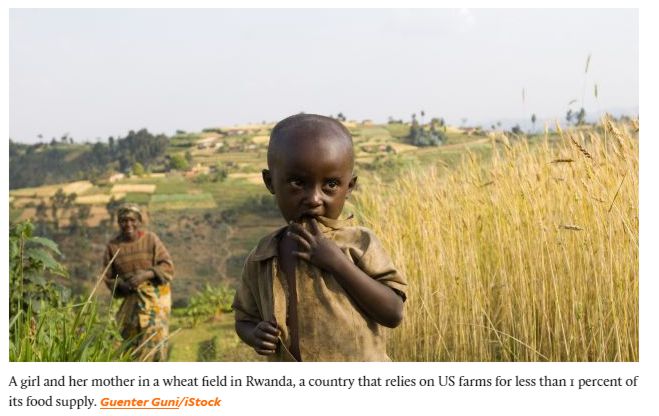
No! multi corporations do not feed the world. They feed the rich countries.

Why do not food exports go to the poor of the world? When it comes to world hunger, corporations like the GMO Seed and Pesticide Giants are called Monsanto and DuPont. These corporations advertise with the slogan “We feed the world” .

But the opposite is the case, economic interests dominate world politics, and in poor countries the greed for profit only comes down to capturing their raw materials or growing soybean, corn, palm oil, cotton or even bananas on their precious arable land.

Landgrabbing.j Afrika we feed the worldpg

That`s modern colonialism in Africa – the new way of enslavement in the 21st Century with the EU, US, UK, World Bank and Bill & Melinda Gates Foundation – Industrial farms claim to end hunger in the poor countries of the world – but most of the food is exported to rich countries!

Hunger33 Afrika

Equally absurd is the idea that about 35% of the world’s grain harvest is fed to livestock or landed in biogas plants, while hunger is still the leading cause of death worldwide.

The subsidized injustice and the increasing industrialization of agriculture are due to the ever-increasing globalization in food production.

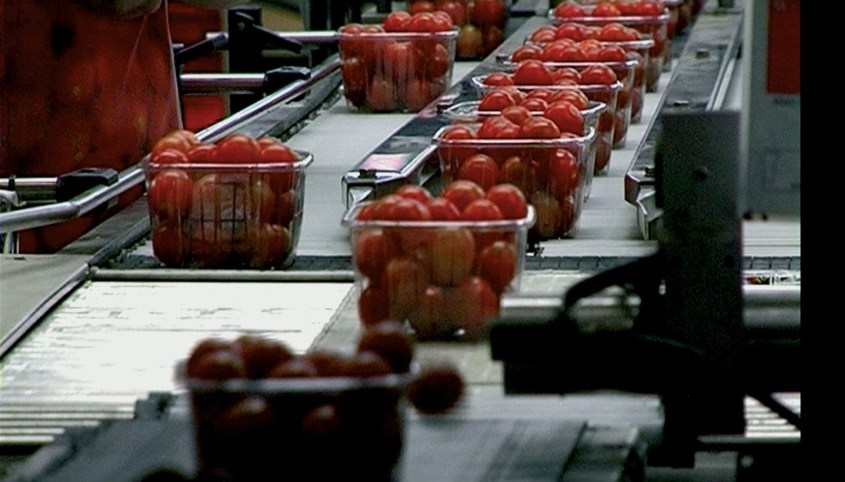
The result was the world’s largest greenhouse landscape in Almería, southern Spain, which will supply Europe with fresh tomatoes.

There is now a large landing plain, which is only a single plastic sea. 2.8 million tonnes of fruit and vegetables are produced each year in 32,000 greenhouses. Large quantities of pesticides and fertilizers are used. The region is slowly running out of water.

Tons of toxic pesticides, plant fertilizers, plant substrates, rock wool, plastic wrap and the exploitation of African migrants allow us to enjoy fresh tomatoes from Spain in our salad.

WE-FEED-THE-WORLD_01

The European Union is making a lot of money to produce very large quantities of fruit and vegetables in Almeria and elsewhere. So much so that some of it even comes to market in Africa, because it should not be thrown away. The EU vegetables are sold in Africa at bargain prices.

Local farmers have to charge three times as much for their home-grown vegetables to avoid starvation. But because the higher prices in poor countries do not want to pay anyone, the EU is driving African farmers to ruin their cheap vegetables.

So should the hunger in Africa be overcome?

For decades, corporate multinationals have been dominating and stealing their smallholders’ land and thus their livelihoods. And despite abundance of natural resources, these countries remain poor – who profits from hunger?

Afri.ka Monsantojpg

After all, even a corporation like Monsanto will become a world savior instead of an annihilator!!

Example Ethiopia:

In Ethiopia, millions of people have relied on food aid for decades. While the population is starving, the government offers foreign investors the conditions that could hardly be cheaper. This benefits not only Turkey, but also Saudi Arabia.

While people are starving in Ethiopia, Saudi Arabia gets its food from Ethiopia, so the people do not starve, though Ethiopia is still one of the poorest countries in the world!!

Example Tanzania:

Tanzania has changed the laws to get development aid. which allows commercial investors to get faster and better access to agricultural land. It also strengthened the protection of intellectual property in the seed sector.

The Tanzanian peasants are now awaiting a prison sentence of at least 12 years or a fine of more than € 205,300 or both if they sell seed that has not been certified. The beneficiaries of these laws are Bayer / Monsanto, Syngenta and BASF.

tansania monsantojpg

Example Brazil:

Brazil is one of the largest producers of genetically modified soybeans.

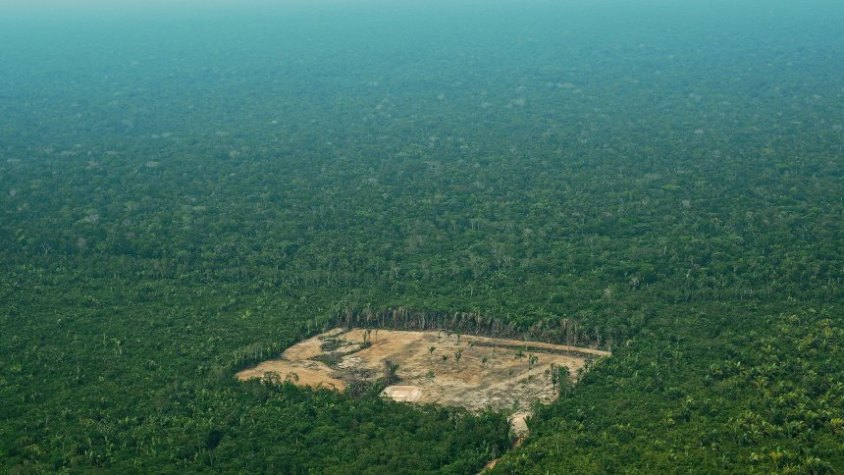
Brazil is the fifth largest country in the world, where a lot of soy is grown. Soy is one of the most important forage plants in our factory farms. Rainforest is cleared for the soya plantations. The soils of the rainforest are actually not suitable for soy cultivation, because they lack the appropriate nutrients. They are therefore supplied chemically.

burnt-tree-and-tractor. brasilienjpg

After a few years nothing will grow on the former primeval forest floor. The big farmers then cut down the next trees and thus continue to destroy the green lung of our earth.

Is the price we pay for our cheap meat in the discounter at the end more expensive?

DOUNIAMAG-FILES-BRAZIL-ENVIRONMENT-ENERGY-CLIMATE-CONSUMERS-POLL

In November 2016, the Federal Ministry of Economics in Germany wrote:
“Tanzania has one of the biggest economic potentials in East Africa. It is an important transit country and has huge fertile lands that can be used for agriculture. Enormous natural gas reserves can help build a chemical industry.

Mega-infrastructure projects and a construction boom offer further extensive business opportunities. The big question, however, is about the timing: politics and bureaucracy easily reach their limits. ”

In 2015, Germany delivered agricultural machinery, including farm tractors, to Tanzania for € 290,000 (EGW846).

In February 2015, during a visit to the EU in Brussels, Bill Gates and Melinda Gates pointed to innovations in agriculture in Africa to get rid of food dependence and malnutrition.

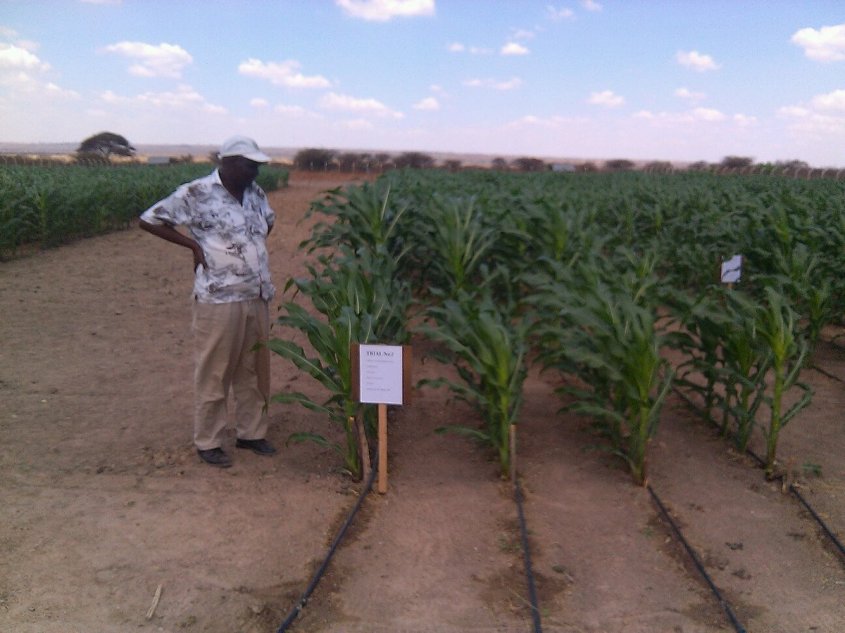
“With a drought resistant corn variety genetically modified, an African farmer, male or female, could get 20 to 30 percent more from the farm. We think it’s up to Kenya and Tanzania and South Africa to decide if that’s right for the economy, ” said Melinda Gates, co-chair of the Bill and Melinda Gates Foundation.

In Germany, too, corn is referred to by the genetic engineering industry as “a corn for Africa: good yields even in drought”.

In the meantime, DTMA seed has been distributed to about three million small farmers in 13 African countries – Ethiopia, Angola, Benin, Ghana, Kenya, Malawi, Mali, Mozambique, Nigeria, Tanzania, Uganda, Zambia and Zimbabwe – covering an area of ​​two million hectares – six percent of the corn in the region – cultivate.

In Europe, wheat farming pays off for farmers only because they receive subsidies from the EU. Rich Switzerland has already bought 80 percent of its wheat in India. Above all, the bread rolls of the major bakeries we eat every day are made almost exclusively from Indian wheat. The bad thing is that in India, eight out of ten people do not have enough to eat.

So… why are not our food exports going to the poor countries of the world? The answer is that about half of the exports to the top 20 countries are meat and dairy or animal feed. 

hühner we feed the worldjpgAnd meat is a luxury product. And the reason, why millions of people die of hunger in Africa and other poor countries.

Much remains to be done to actually alleviate hunger in the world as the world’s population grows, and with the effects of agriculture on agriculture, which are increasingly devastating, and that are being devastated by climate change.

However, this can not be achieved by the large-scale cultivation of soybeans in Brazil or the eradication of the Indonesian forests for palm oil.


https://netzfrauen.org/2018/01/28/africa/


My comment: In an interview with UN Special Rapporteur on the Human Right to Food, Jean Ziegler, he put it very aptly: “World agriculture could easily feed 12 billion people, but only half as many people live on Earth. That is, a child who dies of hunger today is being murdered. “

Yes! that’s right!
By whom murdered? Of all those who are involved in this system, that is to say exactly of the consumers who support this criminal system through the consumption of meat.

In 122 Third World countries 43,000 children die from hunger every day. The statistics are a bit old, today the number is even higher. All who participate in this daily mass murder are the second-hand killers of these children.

Kinder_armut_Hungerjpg

My best regards to all, Venus


Footage of Huge Manta Ray Asking Diver To Remove Fish Hooks From It.

Click on the following to see the video footage:

https://www.telegraph.co.uk/news/2019/07/12/extraordinary-footage-shows-manta-ray-appealing-diver-help/


Extraordinary footage shows manta ray appealing to diver for help

Image result for manta ray


A giant manta ray has been filmed in Western Australia appearing to appeal a diver to help unlodge dangerous fish hooks that have become embedded in her right eye.

The extraordinary footage of the moving encounter between the injured sea creature and human divers was taken by Monty Halls, a British marine biologist who was part of a freediving group exploring Ningaloo Reef off Australia’s north west coast. Mr Halls called it “one of the best things I’ve ever seen underwater.”

The three-metre-wide manta, which is known affectionately to locals as Freckles, is seen swimming up to Jake Wilton, a snorkeling guide, and flipping over in the water, in what seems to be an attempt to show him her plight.

“You could see she trusted us because she was unrolling and showing us the hooks,” said Mr Wilton in the video. “I went down for a few dives to see how she’d react to us being close to her.”

The footage was released on Thursday by Ningaloo Marine Interactions, the tour company Mr Wilton works for.

He told the Independent: “I’m often guiding snorkellers in the area and it’s as if she recognised me and was trusting me to help her,” he said.

“She got closer and closer and then started unfurling to present the eye to me. I knew we had to get the hooks out or she would have been in big trouble.”

The footage seems to show the manta ray resting perfectly still to allow Mr Wilton to gently remove the painful spikes.

Mr Wilton described the interaction as “incredible behaviour” and believes the manta understood that he was trying to help her. “I went [back] down to say goodbye and she stopped and waited there,” he said.


Picture: 4Media Group/ Tourism Western Australia Moment wounded manta ray approaches humans for help

“Animals are no other type of slaves than human slaves”


Human rights and dignity apply only to human animals and are internationally strictly protected property.  All other nonhuman animals suffer from lawlessness.

Kamelen_n

Domestication of animals is nothing but the other word of systematic confinement, tethering, branding, dangling tails, breeding, exploiting and brutally killing.

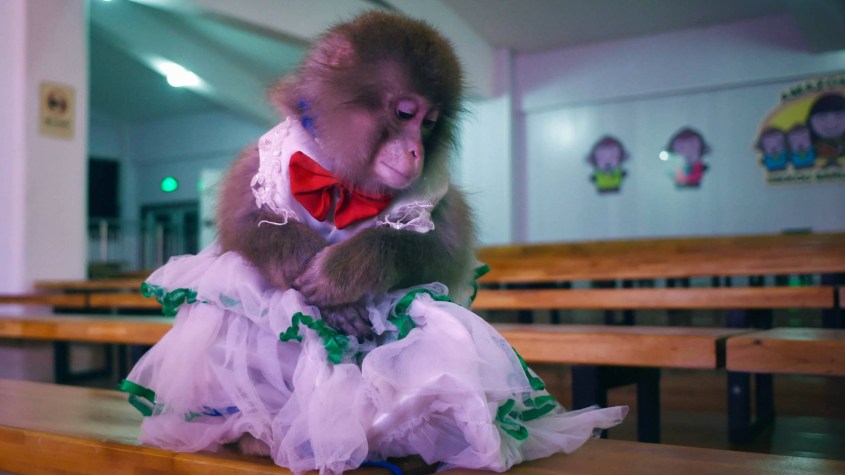
affen als clownpg

We, the human animals do not know what it feels like to live in chains.
Animals live in chains for the meat and milk industry, for the entertainment industry, for the laboratory industry, for the human species, which has a strong self-interest (and benefits) to assume the role of ruler, the oppressor.

σψηςειν ιν Καστεν 3jpg

The deliberate transformation of a living being into a bundle of suffering and dumb despair is a crime – what else should be a crime?

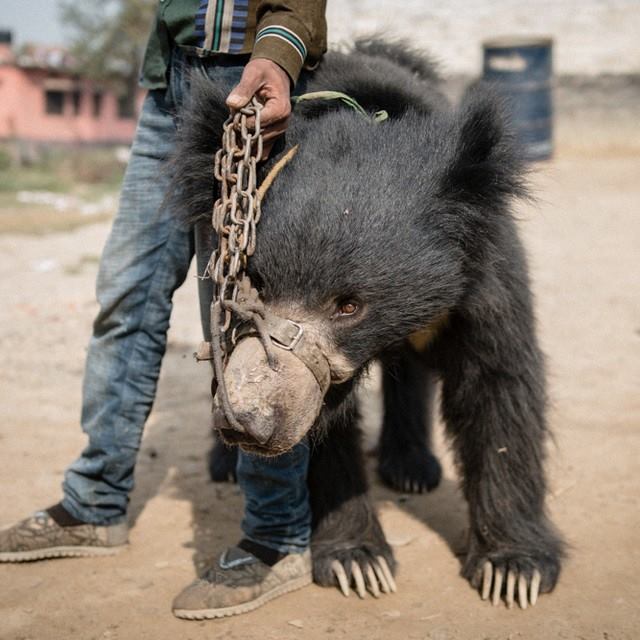
Bär angekettet und versklavt_n

The human being does not evolve.
Obviously, a moral change in the consciousness of the human species is not subject to an evolutionary autopilot.
In other words, what we did not understand centuries ago can not be understood today.

That animals are not our slaves, not our food, not our torture objects.

We no longer burn witches, because only the term is abolished.
We don`t gass Jews, because we have banished criminal racism. We do not dispose of disabled children, as in Sparta, because children have rights.
And yet: one still lives on the tree in terms of morality towards animals.
Underdeveloped, smug assholes, that’s us.

Regards, Venus


UK: KFC first UK fast food chain to commit to new chicken welfare standards – We Shall See !

UNKG0001


WAV Comment

We feel it necessary to provide this info on the site; but we are always in no doubt that a meat free diet is the way to go – better for humans and animals.  Although full of Yuckspeak words such as ‘environmental standards’, ‘animal welfare’ and ‘enrichment’; we know the reality is that nothing will really be done to make the lives of these poor birds any better.  Like all of this industry, glossy sales and promotions will ensure that the consumer is led to believe the best; even if it does not happen.

We say – Go Vegan !

sexy vegan 1

KFC first UK fast food chain to commit to new chicken welfare standards

Move expected to put pressure on rivals McDonald’s, Burger King and large supermarkets such as Tesco and Sainsbury’s

https://www.theguardian.com/environment/2019/jul/12/kfc-first-uk-fast-food-chain-to-commit-to-new-chicken-welfare-standards

Image result for KFC horror

KFC is to become the first UK fast food chain to sign up to new European welfare standards for farmed chickens, in an attempt to tackle growing concerns about inhumane conditions in the intensive and large-scale production of meat.

The move by the America-owned chain – 18 months after the blueprint was unveiled – will put pressure on rivals McDonald’s and Burger King, as well as large supermarkets such as Tesco and Sainsbury’s to follow suit.

Supermarkets, restaurant chains and hotel groups have all been urged to commit to the so-called European Chicken Commitment, which represents the first time a single set of requirements has been agreed on across the continent by a large coalition of European animal protection groups, including the RSPCA.

KFC’s UK and Ireland business said it will work closely with suppliers and NGOs to raise the minimum level of welfare standards across the industry by 2026. Its move will cover its sourcing of chicken in the UK and Europe, which make up the vast majority of its supplies, though it also buys a small amount of chicken from Thailand and Brazil.

The new requirements include stricter auditing processes, reducing stocking density to give birds more space in barns, and investing in environmental “enrichment” which includes providing perches, pecking objects such as straw and vegetables, and natural daylight.

In arguably the biggest step to help curb some of the cruellest aspects of the business which sees fast-grown, over-bred birds collapsing under their own weight, the new standard stipulates a pledge to purchase slower-growing breeds.


Image result for KFC horror

KFC and Tidy Planet join forces for waste-to-energy venture

Read more

In the UK sales of red meat have fallen in recent years, but chicken – seen as a “healthy” meat – has seen sales rise.

KFC’s Imposter Burger – a vegan patty made from Quorn and intended to replicate chicken – sold out last month in the limited number of outlets stocking it.

Although KFC is the largest fast food chicken chain in the UK – using an estimated 60 million chickens every year in its 900-plus outlets – its UK and Ireland sales account for only 4% of total chicken sales in the UK, with the lion’s share through supermarkets.

Paula MacKenzie, general manager of KFC UK & Ireland, said: “Our customers care about improving the lives of the chicken we buy. That’s why we’re adding our voice to the campaign and encouraging others to do the same – because to inspire real change and provoke meaningful action, we need the industry to move with us.”

The Humane League has been lobbying for McDonald’s – which uses large volumes of chicken in its nuggets and burgers – to sign up to the commitment too. Its managing director Vicky Bond said: “We welcome KFC’s move, but it highlights just what a laggard McDonald’s is. This will benefit the lives of millions of chickens every year throughout their supply chain. We implore the rest of this sector and other food companies to follow in their footsteps.”

A McDonald’s spokesperson said it had its own scheme to improve the welfare and health of chickens in its supply chain, and had set up a council of experts to advise them on the matter.