When we worry about cruelty to animals, we’re often thinking not only of their suffering but also of the potential dangers to human society posed by animal abusers. As A. W. H. Bates, a coroner’s pathologist and scholar of animal ethics, writes, this was particularly true in nineteenth-century England, when some people were horrified at the notion that the doctors who cared for their families might also torture dogs.
Bates writes that efforts to address animal cruelty in British Parliament began in the first years of the nineteenth century. The growing London elite found the treatment of livestock disturbing. They also viewed the poor condition of these animals as signs of unfeelingness or active cruelty among the working class. Lawmakers debated whether viciousness toward animals led to violence against humans. But, at first, these concerns were directed only against the poor.
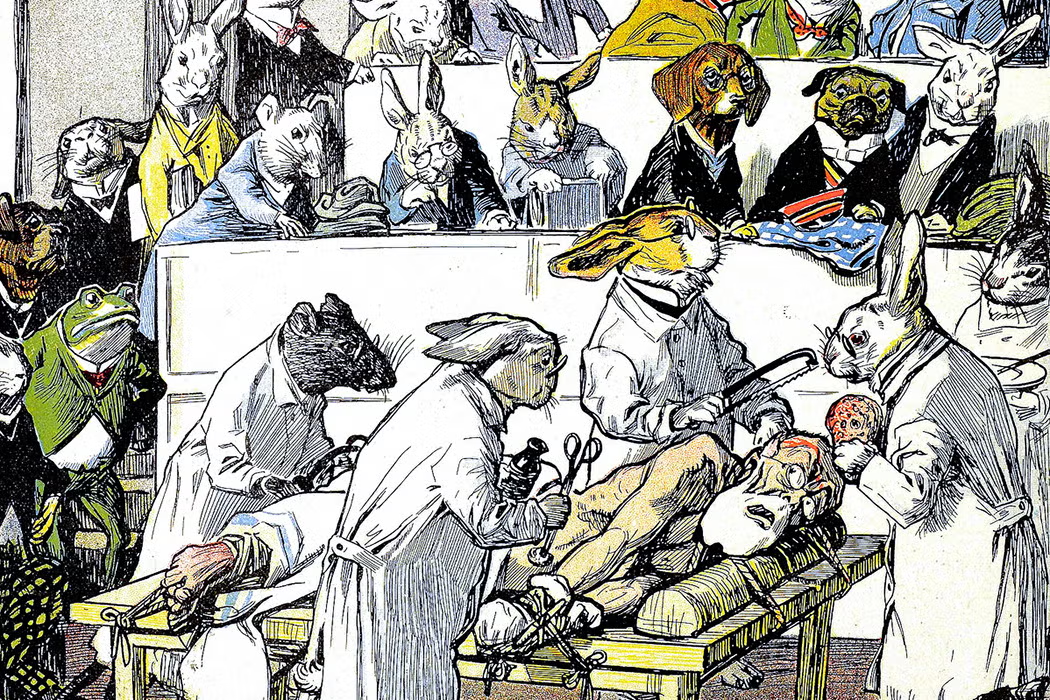
In 1824, scientific vivisection became the subject of similar scrutiny. That year, French physiologist François Magendie gave a public demonstration of cutting apart a live greyhound, which he allegedly nailed to a table, at an anatomy school in London. While British doctors also performed vivisections at that time, they were more popular among continental Europeans. Magendie’s actions stirred up an outcry based partly on anti-French sentiments.
British doctors generally decried Magendie’s demonstration as unnecessary and therefore cruel—and also as a damaging stain on their profession. But they still defended vivisection as acceptable if the experiments yielded valuable results.
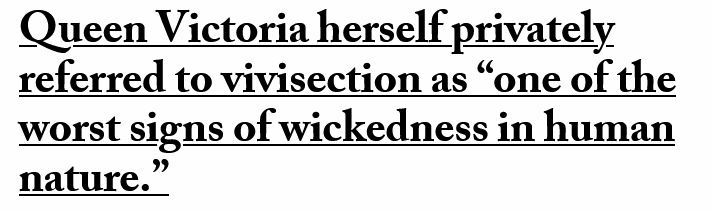
Bates writes that concerns about vivisection grew over the decades. Opponents warned that the practice could make researchers and physicians callous toward all living creatures. In 1844, the Protestant Magazine printed a “caution to parents” to avoid any doctor who practiced it. And Queen Victoria herself privately referred to vivisection as “one of the worst signs of wickedness in human nature.”
The National Anti-Vivisection Society (NAVS), formed in 1875, blamed vivisection for an apparently increasing interest among scientists in experimenting on human beings, including condemned criminals and paupers.
Bates argues that the debate over vivisection reflected a continuing interest within the world of medicine in Aristotelian virtue ethics. While British society at this time was generally more attuned to utilitarian or deontological ethics, which focus on whether an action is right or wrong, the medical field concerned itself with the moral character of individual practitioners. This meant balancing qualities such as tenderness and resolution, for the purpose of carrying out difficult but necessary procedures without becoming inured to suffering.
Following this logic, some physiologists presented their work as an act of sacrifice, in one case writing that the process sometimes “so shatters them, that it requires all their power of will to carry the process through to the accomplishment of the aim.”
Ultimately, the battle over vivisection faded from public awareness largely because of shifting professional norms. Toward the end of the nineteenth century, animal experimentation increasingly became a specialization of dedicated physiologists rather than practicing doctors, freeing patients and parents from worries about their own physicians’ moral bearings.
Animal farming rips apart the sacred bond between mother and baby; there’s nothing “humane” about it. Mother hens, cows, goats, turkeys, pigs, and sheep all care for their young and are fiercely protective of them, each in their own way. In animal farming, the mother’s desire and ability to protect and nurture her babies is robbed from her.
Mother birds exploited in the food industry—whether hens, turkeys, ducks, or geese—along with their babies, are all killed. In the wild, they stay in the nest to incubate their eggs, keeping them warm, and rarely leaving. Once hatched, the mother guides her chicks to food, alerts them of threats, and shields them from harm with her wings.
Whether in “free-range” or “cage-free” warehouses—marketing lies to keep consumers buying—or in cages, male chicks in the egg industry are killed because they don’t produce eggs, often by maceration. Their mothers are slaughtered too, while still young. Sexual violation, forcible impregnation, and the stealing of babies are done to virtually all female farmed animals, including birds, pigs, cows, goats, and sheep.
In nature, before giving birth, mother pigs also build nests to create a safe environment for their piglets and will often defend them aggressively. Yet pregnant mother pigs in animal farming are confined to tiny metal cages—called gestation or farrowing crates—barely larger than their bodies, often forcing them to lie in their own waste. After months of this torture, her piglets are taken from her shortly after birth. Then she’s forcibly impregnated again.
Cows, just like human mothers, carry their babies for nine months. When they give birth, they will lick and nuzzle their calves clean, stimulating circulation and bonding. The calves receive essential colostrum from their mother’s milk which helps strengthen their fragile immune systems.
But in the dairy industry, baby cows, goats, and sheep are taken from their mothers within a day or two so that humans can steal, consume, and profit from their milk. From the searing pain of branding and disbudding (burning off tender horns without painkillers) to the heartbreak of mother-baby separation, mothers are left physically wounded, exhausted, and grief-stricken.
Female calves are kept alone in tiny hutches for months, often in extreme weather, only to be forced into the same cycle—sometimes before they’re a year old. Male calves, deemed worthless because they don’t produce milk, are slaughtered.
It’s common to see mothers chasing after their stolen babies, left bellowing in desperation and anguish, often for days. This cruelty repeats until she collapses or stops producing enough milk for the ranchers. Then she’s frequently beaten or shocked to force her onto a truck to the slaughterhouse. Many animals are slaughtered, even skinned alive, while still conscious.
All this torment and killing repeats endlessly for unnecessary products we’re better off without. Better treatment or painless death doesn’t make exploitation ethical. We have no right to their bodies. Using and killing mothers, babies, or any animal for culture, taste, profit, or convenience is the opposite of compassion; no animal farming is “humane.”
We must speak up for all mothers and their babies—including those who are the most ignored, oppressed, and killed on the planet. Every one of them was once someone’s baby, and every mother loved them. Neither these babies nor their mothers deserved what was done to them.
In the dairy and egg industries, all male babies and their mothers are killed. Many people don’t realize that most animals slaughtered for food products are infants. Yet, Congress and the United States Department of Agriculture continue funneling billions in taxpayer dollars to support animal agribusiness. Demand that the U.S. government redirect subsidies away from this industry of cruelty and mass slaughter of mothers and their babies.
In the United States alone, over 2 million sheep are slaughtered annually, with the vast majority being lambs—babies. This number spikes during Easter, and the average age at slaughter is 6-8 month
Male calves in the dairy industry have little to no value to dairy farmers, as they don’t produce milk, and so they are killed. They’re either shot shortly after birth or sold to veal “farms,” where they’re confined alone in tiny crates for up to 16 weeks—essentially tortured—to prevent muscle development and keep their flesh tender. Some are used for “breeding” or eventually slaughtered to be turned into meat products.
Male baby goats, called “kids,”, and male lambs are also slaughtered in the goat and sheep milk industries. So are all their mothers. Male baby chicks in the egg industry are killed immediately after hatching, most often either tossed like garbage into giant blenders, shredded alive, or suffocated.
Though animal farming uses sanitized terms like “artificial insemination” and “breeding,” the young females are tightly restrained, and in dairy, the device used on female cows is often referred to as a “rape rack.” Forcible impregnation is done manually with a catheter, pipette, or, in the dairy industry, an entire arm—an extremely stressful and often painful experience. Farmers collect sperm from bulls, male goats, and male sheep through manual stimulation or using an electroejaculator.
Pregnant mother pigs are caged in “farrowing crates,” often so small they can’t turn around for months on end. After her newborn piglets are taken away, the mother is forcibly impregnated again, trapped in an unrelenting cycle of solitary confinement and suffering. Though pigs can live up to 20 years, they are killed at just six months old. Like all farmed animals, they’re trucked without food or water for several days—often in extreme cold or heat—to the slaughterhouse, where they suffer even more in a terrifying death.
Animal agribusiness claims that “stunning” makes animals insensible to pain, but its actual purpose is to immobilize them so they can’t fight back. The most common method to “stun” pigs is in CO₂ gas chambers, where they feel everything, often screaming in agony and desperately fighting to escape. The industry calls this “controlled atmosphere stunning” and deems it “humane.” Many animals are still conscious while being slaughtered.
When mother cows can no longer produce enough milk to be profitable, they are slaughtered at around five years old. Their natural lifespan is up to 25 years.
Mother hens in the egg industry and mother turkeys in the poultry industry are killed at 1-2 years old. Their natural lifespans are up to ten years. Regardless, even if they were allowed longer lives before being forced into slaughterhouses, using and killing animals for unnecessary products—for tradition, taste, habit, or profit—is the epitome of unjust, cruel, and violent.
Despite evidence linking animal products to increased risks of heart disease, cancer, diabetes, and Alzheimer’s, the United States Department of Agriculture (USDA) continues to promote them in its dietary guidelines, while research shows that eliminating animal products can reduce these disease risks. Yet, in March 2025, the USDA allocated an additional $10 billion to bolster animal agribusiness. Where is government cost-cutting when it’s truly needed?
It’s time to end speciesism and for those in charge of our food system to stop the monstrous torment and killing of sensitive, feeling, defenseless animals. Call on Congress and the USDA to stop funding the horrors of animal agribusiness and redirect subsidies to support a slaughter-free, plant-based food system.
A difficult subject, one keeps hearing, that requires objective discussion. Does it? Like here, the German “Volkswagen Stiftung“, of all people, feeling the “topic deserved more visibility” (how very nicely put) .. whatever that means.
… An open and honest discussion about the use of animals in research and, for example, a comparison with animal use in food production is only possible if everyone involved knows what an animal experiment entails, how much or how little the animals suffer in the process, and how the decision to undertake an animal experiment is reached. ..
Now, we have seen, here on this site, and elsewhere, what “animal USE” looks like – in all areas of such USE. And have come, collectively, to the conclusion that using animals, who are not able to lobby their own cause and interests in Human society, is wrong.
Time and again people think they must argue that objective discourse is necessary to decide how far one may go “using” beings for Human interests, who would never willingly submit to such use in the first place, if asked (o.k., with the advances in AI, man may in not too far a future be able to do exactly that: ask).
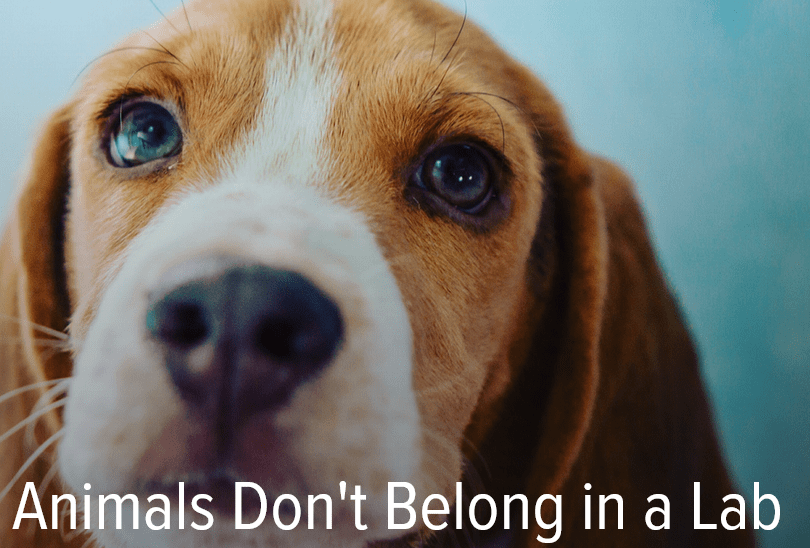
Personally, I am sick and tired of the rampant ABuse we see each day, seen by far too many as a “necesssary evil” visited upon the utterly helpless. There can NEVER be a justification of that – ever.
There can be no “objective discussion” of something that, by its very nature, is a “subjective issue”. An animal is not an object, but a subject – like a Human. How can personal feelings, and emotions not matter relating to the suffering of sentient beings?
No one would demand to discuss child abuse as an objective issue ..
(and again from the above publication)
And what does this debate currently look like? The discourse is strongly characterised by emotions,’ says Roman Stilling, speaker at the platform ‘Understanding animal experiments‘. The emotions raised around the debate arise primarily because people believe animal testing always means potentially inflicting pain, suffering and harm on an animal. ‘That’s the legal definition – otherwise it wouldn’t formally be animal testing.’ We shouldn’t forget, he adds, why experiments are carried out on animals: ‘It’s because we can’t do it on humans.’
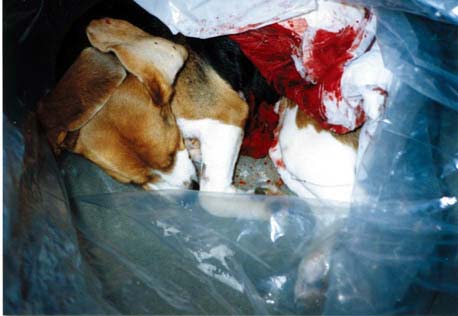
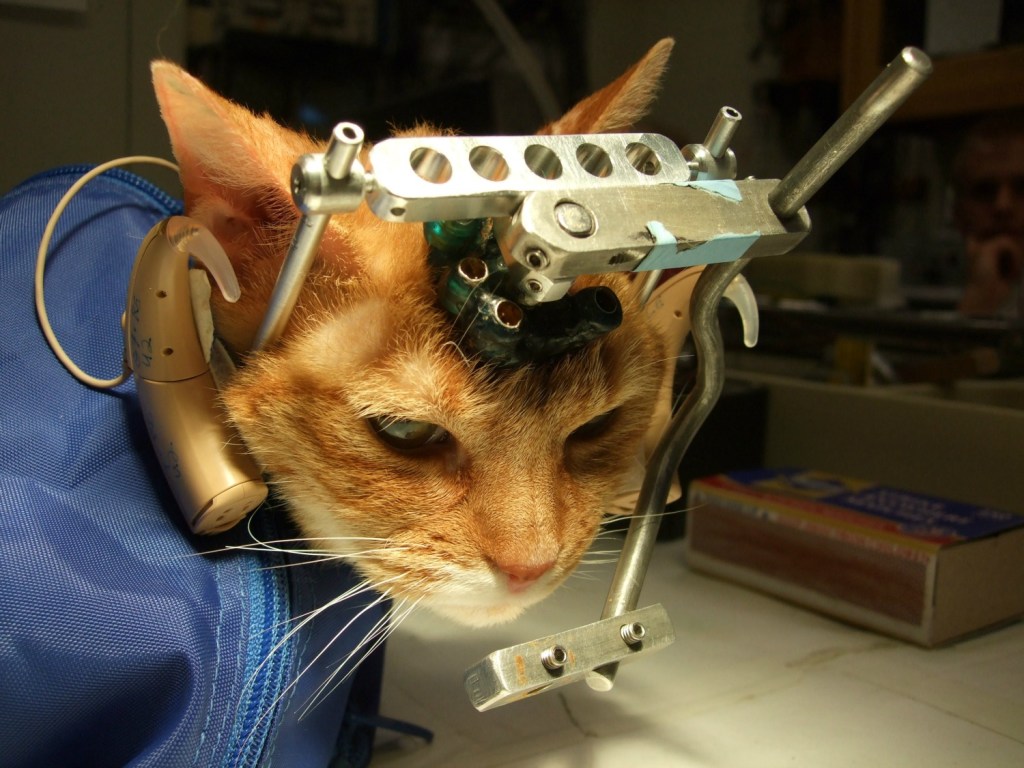
Quite, “because we can’t do it on Humans“. So off we go and find some poor non-Human sod who cannot stop us subjecting him/her to invasive, painful and ultimately fatal procedures.
I own a book on the subject, titled “Slaughter of the Innocent”, by the Author Hans Ruesch. With 1978, not a recent publication, and hard to get these days, but as important and relevant today as it was then ..
(from GOOGLE books)
“SLAUGHTER” is the first book ever written which directly discusses the scientific arguments regarding the needless use of animals, as a part of medical progress. Mr. Ruesch spent countless years compiling this gut wrenching masterpiece. He successfully lifts the veil of secrecy which has always been an important part of research establishments & the medical community as well, giving the reader a peek at what REALLY goes on, after the laboratory doors are closed. His words reveal some of the worst atrocities anyone could possibly imagine. Without ignoring the ethical questions – “it’s just one of life’s necessary evils, isn’t it?” – The author gets right to the point advising the reader, “Somebody up there is lying to you.” With his creative style & excellent documentation, Mr. Ruesch washes away the excuses of doctor apologists for animal experimentation, with facts showing not only that animals aren’t needed for Medicine/Health to move forward, but the use of which often leads to detrimental & misleading findings, & catastrophic results. This wonderful yet disturbing volume is a must read for any person entering the field of medicine or the people already there.
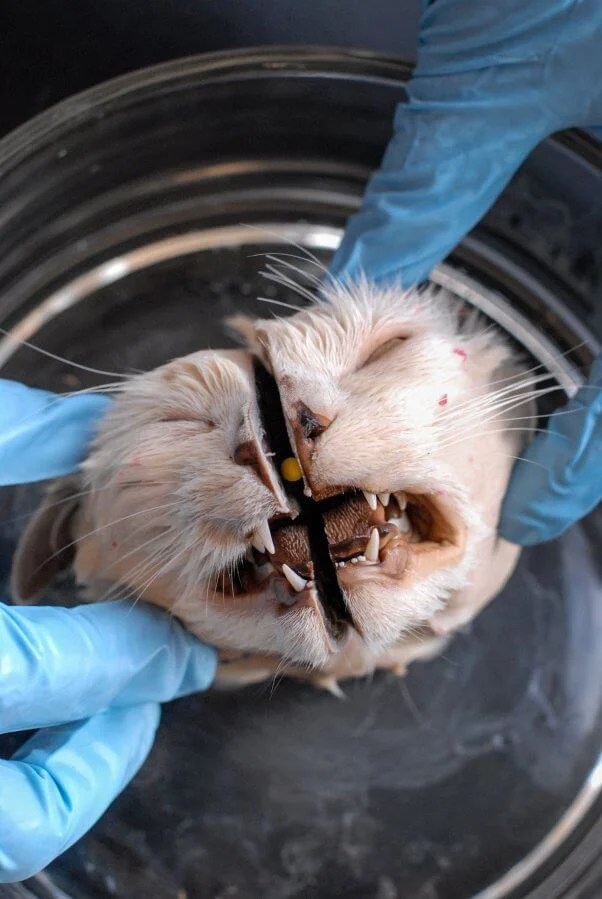
There CAN NEVER BE a justification for Vivisection, in whatever form, for whatever reason, wherever.
Mahatma Gandhi quotes: “Vivisection is the blackest of all the black crimes”. “I hold that the more helpless a creature, the more entitled it is to protection by man from the cruelty of man,’ and I abhor vivisection with my whole soul. All the scientific discoveries stained with innocent blood I count as of no consequence.”





 World Animals Voice