The debate will take place after a petition won widespread support from the public.
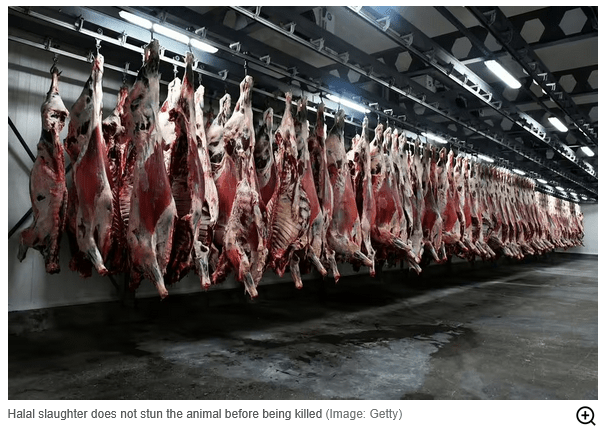
Ps will hold a major debate today on banning halal and kosher slaughter of animals, after thousands of Britons signed a petition demanding better animal welfare. The debate will be held in Westminster Hall at 4.30pm, meaning that while there won’t be a vote it will be the first debate of the religious practice in parliament for years.
The showdown was forced as a result of a public petition on the parliamentary website, entitled: “Ban non-stun slaughter in the UK”, which garnered 109,018 signatures. It read: “In modern society, we believe more consideration needs to be given to animal welfare and how livestock is treated and culled. We believe non-stun slaughter is barbaric and doesn’t fit in with our culture and modern-day values and should be banned, as some EU nations have done.”
In a landmark case, the European Court of Human Rights has ruled that a ban on the ritual slaughter of animals without prior stunning does not violate the ECHR.
“The Court considered that the protection of public morals, to which Article 9 of the Convention referred was not indifferent to the living environment of individuals covered by its protection and including animals.”
A Government response on January 10 defended the practice, arguing that while it would “prefer all animals to be stunned before slaughter… we respect the rights of Jews and Muslims to eat meat prepared in accordance with their religious beliefs.”
Ahead of today’s debate, Rupert Lowe MP said: “Big debate in Parliament today on non-stun/halal slaughter.”
“I’ll be speaking in favour of a full ban.”
Three days ago Mr Lowe tabled an Early Day Motion in Parliament also calling for a ban on nun-stun slaughter, arguing that there is a “substantial body of veterinary evidence indicating that pre-stunning significantly reduces animal suffering at the point of slaughter”.
He called on the government to “urgently review the legislative framework around non-stun slaughter, consider restricting or banning the practice, and introduce mandatory, clear labelling of meat products by method of slaughter so that consumers can make informed choices.”
It was also signed by Conservative MPs Thomas Bradley and Andrew Rosindell.
A 2019 poll suggested 83% of British adults believe the law should be changed to ensure animals killed for food production are stunned before being killed.
In addition 86% want all meat sold in the UK to be clearly labelled so they know how the animal died.
Around 114 million animals are killed using the halal method each year in Britain, and a further 2.1 million using the kosher method.
The RSPC backs a ban on non-stun killing, with head of public affairs David Bowles saying: “Non-stun slaughter can cause considerable suffering and as a result the organisation believes this practice should be banned once and for all.”
“While we believe religious beliefs and practices should be respected, we also feel strongly animals must be slaughtered under the most humane conditions possible.”
Animal rights group, Humane World for Animals, says it fears a revision of Europe’s regulations for chemical testing in Europe could lead to more animal testing.
Jun 13, 2025
A revision of the EU’s REACH regulation covering the ‘Registration, Evaluation, Authorisation and Restriction of Chemicals’ must clean up the chemicals risk assessment and the chemicals market, falling in line with the Clean Industrial Deal, argue animal rights advocates.
With decarbonisation and boosting competitiveness priorities for the EU, within the chemical testing industries, it should create a ‘simplified legislative framework to reduce the administrative burden for the industry, while still maintaining the safety of human health and the environment’.
While a revision of REACH is welcomed by animal advocacy groups, particularly the opportunity to introduce more non-animal testing methods, the proposals to date have not been met with glee.
CEFIC, the forum of chemical companies across Europe, has produced a 10-point action plan to simplify REACH. One pressing point for Humane World for Animals is its call for the last resort requirement to be put under a microscope and refined in greater detail.
“We really need to see a much better leveraging of the last resort requirement, which is already built within REACH, where, in theory, animal testing should only be done as a last resort. But we, along with a number of our collaborators, published a paper last year which indicated that this wasn’t really happening,” says Jay Ingram, Managing Director, Chemicals, R&T, Humane World for Animals.
“This really needs to be strengthened, there needs to be a lot more specificity around what “last resort” actually means and how it is demonstrated, both by registrants (industry), who are going to be proposing tests, but also by the regulatory bodies themselves, who will be requesting additional data.”
“It needs to be much stronger in terms of how we actually determine whether this last resort threshold has been reached – we really need to see strengthening on the enforcement of that last resort requirement,” he says.
Testing in complex areas
Ingram has also expressed his concerns that the revision of REACH could lead to an increase in testing on animals in some complex areas.
“We are also insisting that this revision of REACH doesn’t bring in new or expanded animal testing. There’s been a revision to the CLP regulation last year, which brought in new classification categories for endocrine disruption, amongst other things,” says Ingram.
“The issue is endocrine disruption is an extremely complex topic from a toxicological perspective, and we fear that this change to CLP will have a knock-on change to REACH, where they will be asking for a huge amount more animal testing to be done to determine the endocrine disruption potential of chemicals,” he explains.
“And not just new chemicals, but also ones that have already gone through the REACH process, and that all of this new data will be generated without a clear idea of how or whether it can be used to make safer decisions about chemicals.”
“There are non-animal methods for endocrine disruption that are available and are of good quality,” says Ingram as he explains how complex the topic of endocrine testing is and that we must better understand the use of the data from such testing before there is a call for an increase on animal testing – technology can play a role as a safe alternative here.
New approach methods
One of CEFIC’s action plans to simplify REACH includes the introduction of a new safety assessment scheme that supports an increased uptake of reliable animal-free safety assessment methods – New Approach Methodologies, or ‘NAMs’.
CEFIC’s suggestion is to ‘reduce the hazard focus of REACH, allowing more flexibility in achieving a high degree of safety’ and to remove ‘default requirements for animal testing wherever possible.’
It wants regulators to give greater justification on ‘why concerns cannot be addressed using exposure-based approaches or NAMs, such as when rejecting proposals for read-across, grouping, or NAMs to avoid animal tests.’ It also seeks to ‘adapt data requirements to utilise NAMs together with exposure considerations: a chemical can only cause harm if it can reach a target and interact with it.’
Could we see a rise in the use of NAMs in chemical testing with the correct revisions to REACH?
“On a positive side, the Commission is also working on the roadmap for phasing out animal testing, which is the result of Save Cruelty Free Cosmetics/End Animal Testing European Citizens’ Initiative (ECI),” says Antigoni Effraimidou, a senior strategist at Humane World for Animals.
She added: “We can see there’s already movement, which we feel is very positive to see, because it marks a landmark opening for the advanced chemical safety assessment, and it can also bring this cultural change in the scientific world that we are looking for, and hopefully also regulatory transformation.”
“There are some complex endpoints which the Commission feels that there will be a need also to develop new non-animal methods, but we do see this attitude from the policy makers, the willingness to go through that,” she said.
Animal farming rips apart the sacred bond between mother and baby; there’s nothing “humane” about it. Mother hens, cows, goats, turkeys, pigs, and sheep all care for their young and are fiercely protective of them, each in their own way. In animal farming, the mother’s desire and ability to protect and nurture her babies is robbed from her.
Mother birds exploited in the food industry—whether hens, turkeys, ducks, or geese—along with their babies, are all killed. In the wild, they stay in the nest to incubate their eggs, keeping them warm, and rarely leaving. Once hatched, the mother guides her chicks to food, alerts them of threats, and shields them from harm with her wings.
Whether in “free-range” or “cage-free” warehouses—marketing lies to keep consumers buying—or in cages, male chicks in the egg industry are killed because they don’t produce eggs, often by maceration. Their mothers are slaughtered too, while still young. Sexual violation, forcible impregnation, and the stealing of babies are done to virtually all female farmed animals, including birds, pigs, cows, goats, and sheep.
In nature, before giving birth, mother pigs also build nests to create a safe environment for their piglets and will often defend them aggressively. Yet pregnant mother pigs in animal farming are confined to tiny metal cages—called gestation or farrowing crates—barely larger than their bodies, often forcing them to lie in their own waste. After months of this torture, her piglets are taken from her shortly after birth. Then she’s forcibly impregnated again.
Cows, just like human mothers, carry their babies for nine months. When they give birth, they will lick and nuzzle their calves clean, stimulating circulation and bonding. The calves receive essential colostrum from their mother’s milk which helps strengthen their fragile immune systems.
But in the dairy industry, baby cows, goats, and sheep are taken from their mothers within a day or two so that humans can steal, consume, and profit from their milk. From the searing pain of branding and disbudding (burning off tender horns without painkillers) to the heartbreak of mother-baby separation, mothers are left physically wounded, exhausted, and grief-stricken.
Female calves are kept alone in tiny hutches for months, often in extreme weather, only to be forced into the same cycle—sometimes before they’re a year old. Male calves, deemed worthless because they don’t produce milk, are slaughtered.
It’s common to see mothers chasing after their stolen babies, left bellowing in desperation and anguish, often for days. This cruelty repeats until she collapses or stops producing enough milk for the ranchers. Then she’s frequently beaten or shocked to force her onto a truck to the slaughterhouse. Many animals are slaughtered, even skinned alive, while still conscious.
All this torment and killing repeats endlessly for unnecessary products we’re better off without. Better treatment or painless death doesn’t make exploitation ethical. We have no right to their bodies. Using and killing mothers, babies, or any animal for culture, taste, profit, or convenience is the opposite of compassion; no animal farming is “humane.”
We must speak up for all mothers and their babies—including those who are the most ignored, oppressed, and killed on the planet. Every one of them was once someone’s baby, and every mother loved them. Neither these babies nor their mothers deserved what was done to them.
In the dairy and egg industries, all male babies and their mothers are killed. Many people don’t realize that most animals slaughtered for food products are infants. Yet, Congress and the United States Department of Agriculture continue funneling billions in taxpayer dollars to support animal agribusiness. Demand that the U.S. government redirect subsidies away from this industry of cruelty and mass slaughter of mothers and their babies.
In the United States alone, over 2 million sheep are slaughtered annually, with the vast majority being lambs—babies. This number spikes during Easter, and the average age at slaughter is 6-8 month
Male calves in the dairy industry have little to no value to dairy farmers, as they don’t produce milk, and so they are killed. They’re either shot shortly after birth or sold to veal “farms,” where they’re confined alone in tiny crates for up to 16 weeks—essentially tortured—to prevent muscle development and keep their flesh tender. Some are used for “breeding” or eventually slaughtered to be turned into meat products.
Male baby goats, called “kids,”, and male lambs are also slaughtered in the goat and sheep milk industries. So are all their mothers. Male baby chicks in the egg industry are killed immediately after hatching, most often either tossed like garbage into giant blenders, shredded alive, or suffocated.
Though animal farming uses sanitized terms like “artificial insemination” and “breeding,” the young females are tightly restrained, and in dairy, the device used on female cows is often referred to as a “rape rack.” Forcible impregnation is done manually with a catheter, pipette, or, in the dairy industry, an entire arm—an extremely stressful and often painful experience. Farmers collect sperm from bulls, male goats, and male sheep through manual stimulation or using an electroejaculator.
Pregnant mother pigs are caged in “farrowing crates,” often so small they can’t turn around for months on end. After her newborn piglets are taken away, the mother is forcibly impregnated again, trapped in an unrelenting cycle of solitary confinement and suffering. Though pigs can live up to 20 years, they are killed at just six months old. Like all farmed animals, they’re trucked without food or water for several days—often in extreme cold or heat—to the slaughterhouse, where they suffer even more in a terrifying death.
Animal agribusiness claims that “stunning” makes animals insensible to pain, but its actual purpose is to immobilize them so they can’t fight back. The most common method to “stun” pigs is in CO₂ gas chambers, where they feel everything, often screaming in agony and desperately fighting to escape. The industry calls this “controlled atmosphere stunning” and deems it “humane.” Many animals are still conscious while being slaughtered.
When mother cows can no longer produce enough milk to be profitable, they are slaughtered at around five years old. Their natural lifespan is up to 25 years.
Mother hens in the egg industry and mother turkeys in the poultry industry are killed at 1-2 years old. Their natural lifespans are up to ten years. Regardless, even if they were allowed longer lives before being forced into slaughterhouses, using and killing animals for unnecessary products—for tradition, taste, habit, or profit—is the epitome of unjust, cruel, and violent.
Despite evidence linking animal products to increased risks of heart disease, cancer, diabetes, and Alzheimer’s, the United States Department of Agriculture (USDA) continues to promote them in its dietary guidelines, while research shows that eliminating animal products can reduce these disease risks. Yet, in March 2025, the USDA allocated an additional $10 billion to bolster animal agribusiness. Where is government cost-cutting when it’s truly needed?
It’s time to end speciesism and for those in charge of our food system to stop the monstrous torment and killing of sensitive, feeling, defenseless animals. Call on Congress and the USDA to stop funding the horrors of animal agribusiness and redirect subsidies to support a slaughter-free, plant-based food system.
It sounds like something out of a dystopian nightmare, but it’s real: pregnant horses are restrained and drained of massive amounts of blood, leaving them weak and traumatized —all so the pharmaceutical industry can extract PMSG, a hormone used to fuel factory farms.
And Iceland is at the center of this horror. As the only producer of PMSG in Europe, its blood farms keep industrial animal agriculture running across the continent. Without Iceland’s supply, the entire industry takes a major hit. But right now, we have a rare chance to shut these farms down for good.
Iceland’s government has already admitted that blood farms violate EU animal welfare laws. Under pressure, they’ve pledged to reconsider the future of PMSG production *this year*—to either ban it permanently or allow this cruelty to continue. Meanwhile, Ísteka—the pharmaceutical company profiting from this torture—is lobbying hard to keep blood farms open, pressuring Iceland’s government to protect its bottom line.
This is our moment. If we raise a massive global outcry now, we can drown out Big Pharma’s lobbyists and push Iceland to finally ban PMSG for good.
Tell Iceland: ban PMSG
Thanks to numerous investigations by the Animal Welfare Foundation, the reality of PMSG production in Iceland has been exposed. Their latest undercover investigation in 2023 revealed the true extent of the cruelty behind PMSG extraction, bringing this hidden industry to light.
PMSG is the ultimate symbol of factory farming’s brutality—a hormone extracted from the blood of pregnant horses to fuel mass production of meat. In industrial pig farms across Europe, mother sows are injected with PMSG to hijack their bodies, forcing synchronized pregnancies so factory farms can churn out piglets on a rigid schedule.
Iceland had a chance to stop it. But in 2023, under pressure from Ístekathe government caved. Instead of banning blood farms, they put forward weak regulations and delayed real action until this year. Now, with the future of PMSG on the line, Big Pharma’s lobbyists are back, fighting to keep the cruelty going. This time, we can’t let them win—Iceland’s leaders need to see that people everywhere are demanding they ban PMSG for good. If we act now, we can make this year the turning point.
The Ekō community has taken on this fight before—and won. We pressured two major German pharmaceutical companies to cut ties with blood farms in South America, dealing a big blow to this cruel industry. Now, Iceland is the last major stronghold—and together, we can shut it down.
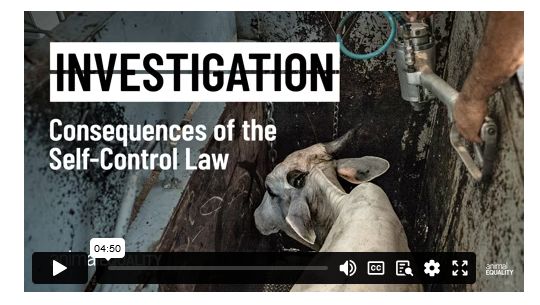
In 2024, Animal Equality found major violations in São Paulo slaughterhouses, where cows and chickens were mistreated under Brazil’s Self-Control Law.
In 2022, an earlier investigation revealed cruelty at pig and cow slaughterhouses in Minas Gerais and Pará, warning about the dangers of the Self-Control Bill.
Workers were seen twisting animals’ tails, kicking them, and using electric shocks on sensitive areas like the head and genitals.
Some animals were skinned and dismembered while still alive.
These findings point to a global problem as U.S. slaughterhouses speed up production lines, increasing risks for animal cruelty.
Animal Equality’s investigation reveals the impact of Brazil’s 2022 Self-Control Law, which reduced government oversight of slaughterhouses. The findings uncover rampant cruelty and violations, with profits prioritized over animals, public health, and transparency.
The latest investigation, featuring never-before-seen footage, uncovers significant failures in cow and chicken slaughterhouses in rural São Paulo.
These facilities were already following a state-level version of the Self-Control Law before it was implemented across the country. Investigators found widespread violations of handling and slaughter rules set by Brazil’s Ministry of Agriculture and Livestock.
2022 investigation: Early warnings ignored
In 2022, Animal Equality issued an urgent warning about the risks of the Self-Control Bill. Investigating pig and cow slaughterhouses in the states of Minas Gerais and Pará, the team uncovered a critical shortage of government inspectors.
Without proper oversight, workers were left to enforce safety and animal protection rules on their own, resulting in widespread violations. Despite these findings, the bill became law.
Between the 2022 and 2024 investigations, Animal Equality documented:
Intentional cruelty:
Tail twisting and kicking animals in the face.
Use of high-frequency electric shocks on prohibited areas, including the head, tail, genitals, and anus.
Stunning failures:
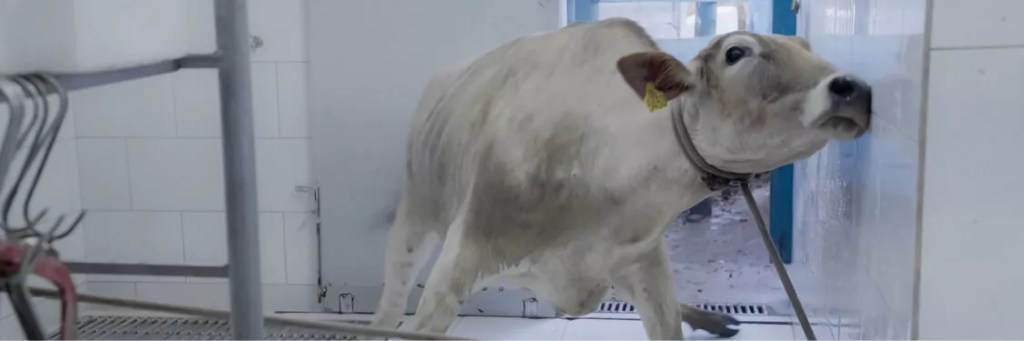
Animals were tied with ropes instead of being secured in proper stunning boxes, making effective stunning nearly impossible.
Captive bolt pistols were used incorrectly, leading to failed attempts to stun animals.
Broken stunning tools were not fixed, forcing some animals to endure up to seven failed stunning attempts.
No staff were assigned to ensure stunning was effective. When animals showed signs of consciousness–such as eye movement or lifting their heads–workers often did not repeat the stunning unless the animal became too agitated to manage.
Delayed slaughter:
Stunned animals were left for over two minutes before slaughter, exceeding legal limits meant to prevent them from regaining consciousness:
Non-penetrating captive bolt pistols deliver a blunt impact to the head, causing a concussion without breaking the skull. Animals must be slaughtered within 30 seconds, as this method loses effectiveness quickly.
Penetrating captive bolt pistols use a bolt to penetrate the skull, causing deeper and longer-lasting unconsciousness. This method allows up to 60 seconds before slaughter must take place.
Delays beyond these limits caused animals to regain consciousness, leading to extreme suffering.
Mutilations while conscious:
Workers did not wait the required three minutes after slaughter to ensure animals were dead before mutilating them. This resulted in animals being skinned and dismembered while alive.
Poor facility conditions:
Overcrowded pens with more animals than recommended.
Animals left in extreme heat without shade or water.




 World Animals Voice