When we worry about cruelty to animals, we’re often thinking not only of their suffering but also of the potential dangers to human society posed by animal abusers. As A. W. H. Bates, a coroner’s pathologist and scholar of animal ethics, writes, this was particularly true in nineteenth-century England, when some people were horrified at the notion that the doctors who cared for their families might also torture dogs.
Bates writes that efforts to address animal cruelty in British Parliament began in the first years of the nineteenth century. The growing London elite found the treatment of livestock disturbing. They also viewed the poor condition of these animals as signs of unfeelingness or active cruelty among the working class. Lawmakers debated whether viciousness toward animals led to violence against humans. But, at first, these concerns were directed only against the poor.
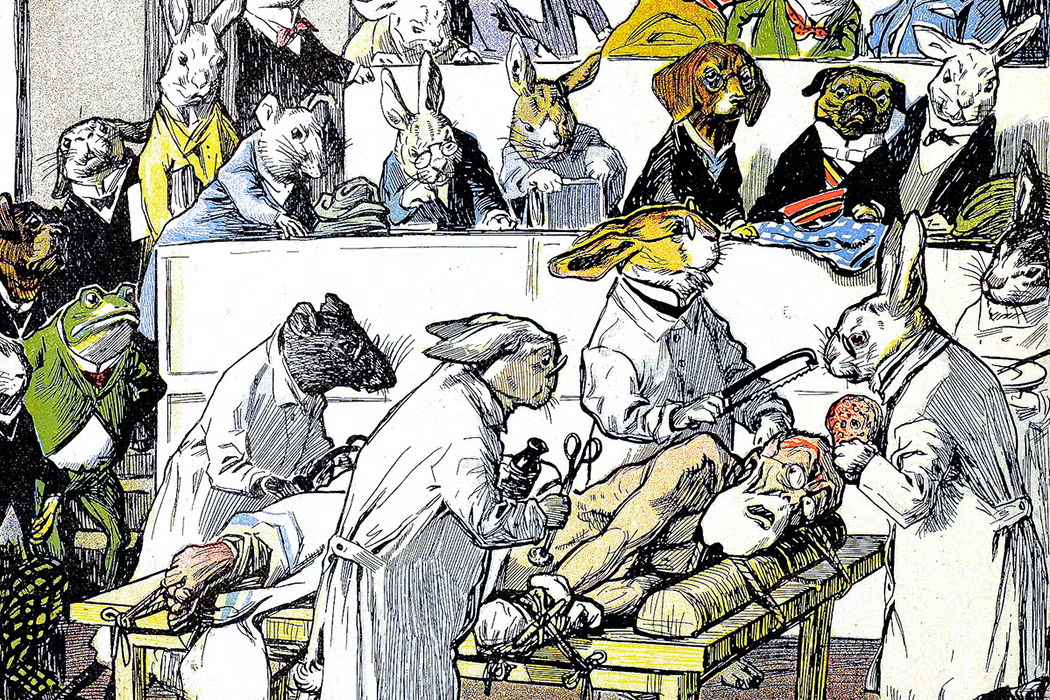
In 1824, scientific vivisection became the subject of similar scrutiny. That year, French physiologist François Magendie gave a public demonstration of cutting apart a live greyhound, which he allegedly nailed to a table, at an anatomy school in London. While British doctors also performed vivisections at that time, they were more popular among continental Europeans. Magendie’s actions stirred up an outcry based partly on anti-French sentiments.
British doctors generally decried Magendie’s demonstration as unnecessary and therefore cruel—and also as a damaging stain on their profession. But they still defended vivisection as acceptable if the experiments yielded valuable results.
Bates writes that concerns about vivisection grew over the decades. Opponents warned that the practice could make researchers and physicians callous toward all living creatures. In 1844, the Protestant Magazine printed a “caution to parents” to avoid any doctor who practiced it. And Queen Victoria herself privately referred to vivisection as “one of the worst signs of wickedness in human nature.”
The National Anti-Vivisection Society (NAVS), formed in 1875, blamed vivisection for an apparently increasing interest among scientists in experimenting on human beings, including condemned criminals and paupers.
Bates argues that the debate over vivisection reflected a continuing interest within the world of medicine in Aristotelian virtue ethics. While British society at this time was generally more attuned to utilitarian or deontological ethics, which focus on whether an action is right or wrong, the medical field concerned itself with the moral character of individual practitioners. This meant balancing qualities such as tenderness and resolution, for the purpose of carrying out difficult but necessary procedures without becoming inured to suffering.
Following this logic, some physiologists presented their work as an act of sacrifice, in one case writing that the process sometimes “so shatters them, that it requires all their power of will to carry the process through to the accomplishment of the aim.”
Ultimately, the battle over vivisection faded from public awareness largely because of shifting professional norms. Toward the end of the nineteenth century, animal experimentation increasingly became a specialization of dedicated physiologists rather than practicing doctors, freeing patients and parents from worries about their own physicians’ moral bearings.
We live in a world where we share our homes with some species, eat others, and exploit still more in myriad ways, depending on what we’ve been taught about how we should see and treat different species, and whether we should consider ourselves superior to them. Unfortunately, the misguided belief that some species are worth our moral consideration and protection and others aren’t is known as speciesism, and it’s causing immeasurable harm.
What is Speciesism?
Speciesism is a form of discrimination that considers one species superior to others. This mindset is based on the belief that humans have the right to dominate, use, and kill non-human animals for their own benefit.
The term “speciesism” was coined in the 1970s by British psychologist and animal rights activist Richard Ryder, who introduced it in a pamphlet distributed as part of a campaign against animal experimentation in Oxford, England.
Why Is Speciesism a Form of Discrimination?
Like racism, sexism, homophobia, and all forms of discrimination against certain groups, speciesism devalues individuals based on arbitrary characteristics — and in the case of animals, their level of intelligence, their appearance, and if they have fur, feathers, and fins, or whether they walk on four legs instead of two.
This perspective perpetuates the idea that we have the right to use, exploit, and kill other animals simply because they’re different from us.
What Does Speciesism Look Like?
Speciesism is often the first form of discrimination we’re taught, and it manifests in two ways. The first is the belief in the supremacy of the human species over all other species. The second is viewing only certain species — such as animal companions and some wild animals — as worthy of care and protection, with some even considered part of our families. In contrast, most other animals are disregarded, and many are enslaved, tortured, and treated as commodities for food, entertainment, fashion, research, transportation, and much more.
Farmed animals are often depicted in marketing for food products as trivial, cartoonish characters, which strips them of their dignity and status as feeling individuals with their own personalities and preferences. Small family farms tend to be romanticized as wholesome places where animals live happy lives and are cared for by farmers. In reality, the basis of all animal farming is the exploitation and killing of sentient beings. Still, humans have compartmentalized their ethical views, allowing us to rationalize the cruelty and violence inflicted on animals we might otherwise be fascinated by and care about, all for our pleasure, convenience, advancement, habits, traditions, and tastes. Although it has been scientifically proven that humans can survive and thrive on a plant-based diet, most continue to consume the flesh, milk, and eggs of animals because we’ve been conditioned to believe that it’s “normal, natural, and necessary.”
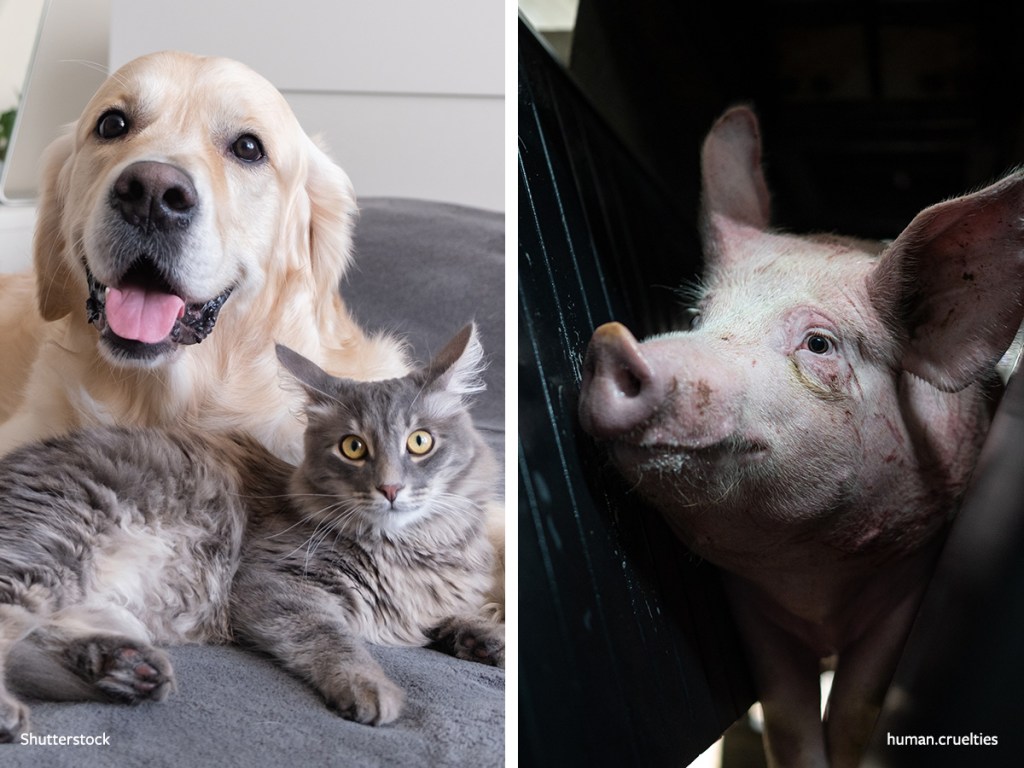
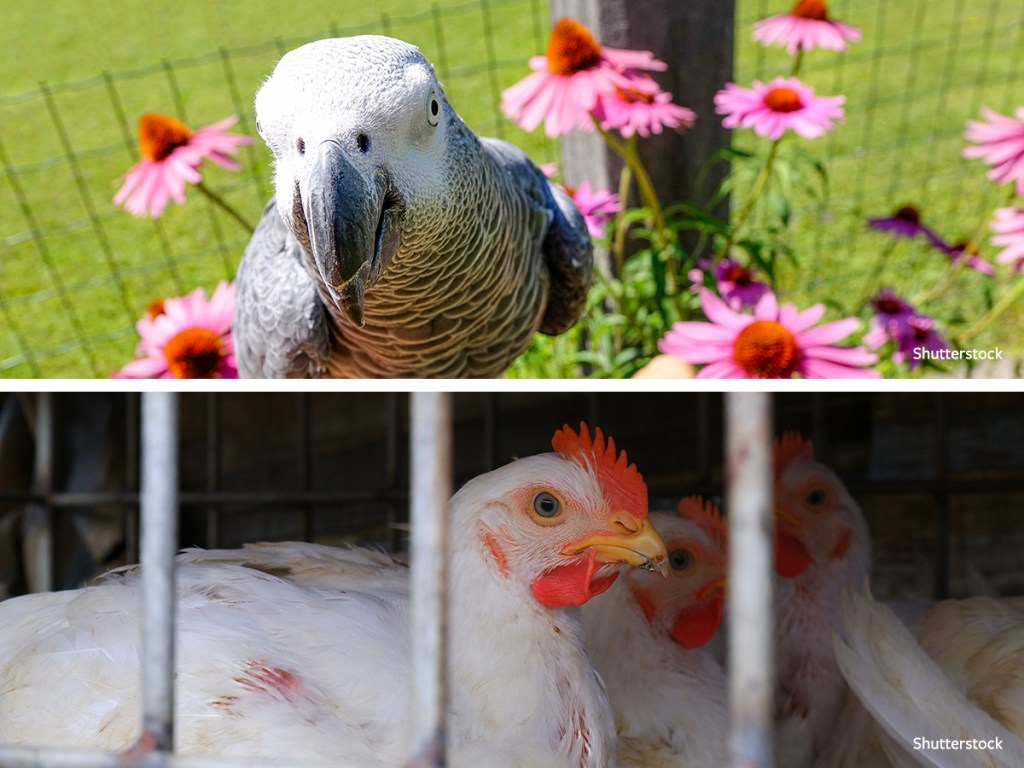
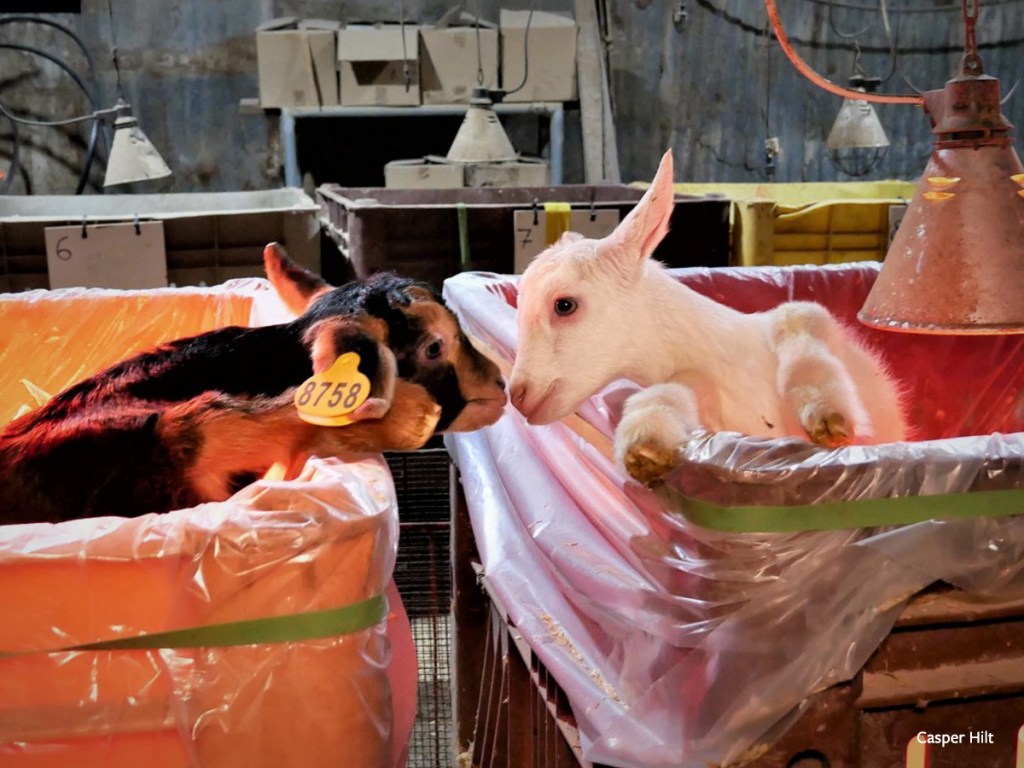
Animal companions and certain wild species are granted some legal protections, while all other animals are not. Cruel practices and mutilations without anesthesia, such as castration, tail docking, burning off horns, and extreme confinement, are inflicted on farmed animals like pigs, cows, chickens, goats, sheep, and turkeys, yet would be considered horrific abuse by most in Western culture if done to dogs or cats.
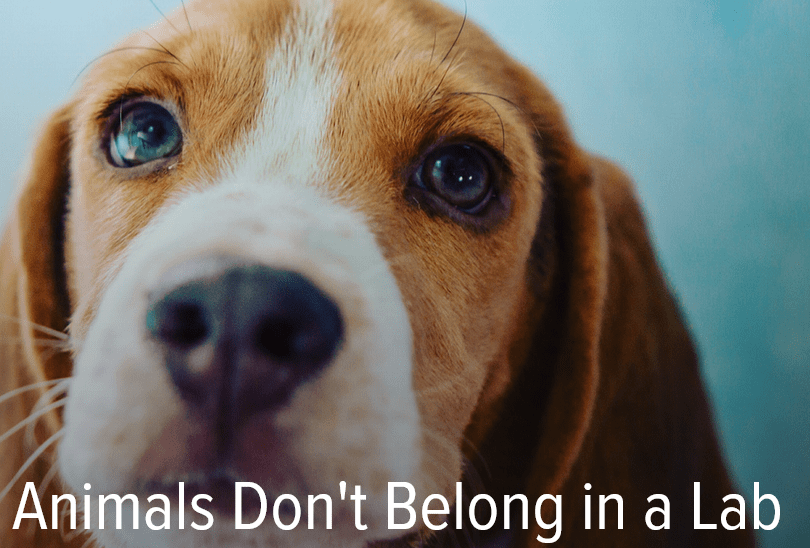
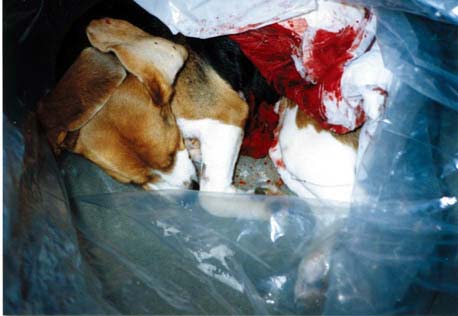
If we would never subject a dog or cat to these practices, nor send them to a slaughterhouse to end their life, we must recognize that no animal deserves to be used or enslaved by us, nor to have such pain and terror inflicted upon them. Even the desire to keep some animals as companions has led to their exploitation through breeding and selling, prioritizing profit over their well-being, which inevitably results in neglect, abuse, and often death. Beagle dogs and rabbits, usually seen as ‘pets,’ are also tormented and killed in research labs.
How is Speciesism Justified?
Humans often try to justify their oppression of animals by saying that humans are the most intelligent species. Yet many animal species possess sensory and physical abilities that humans do not have.
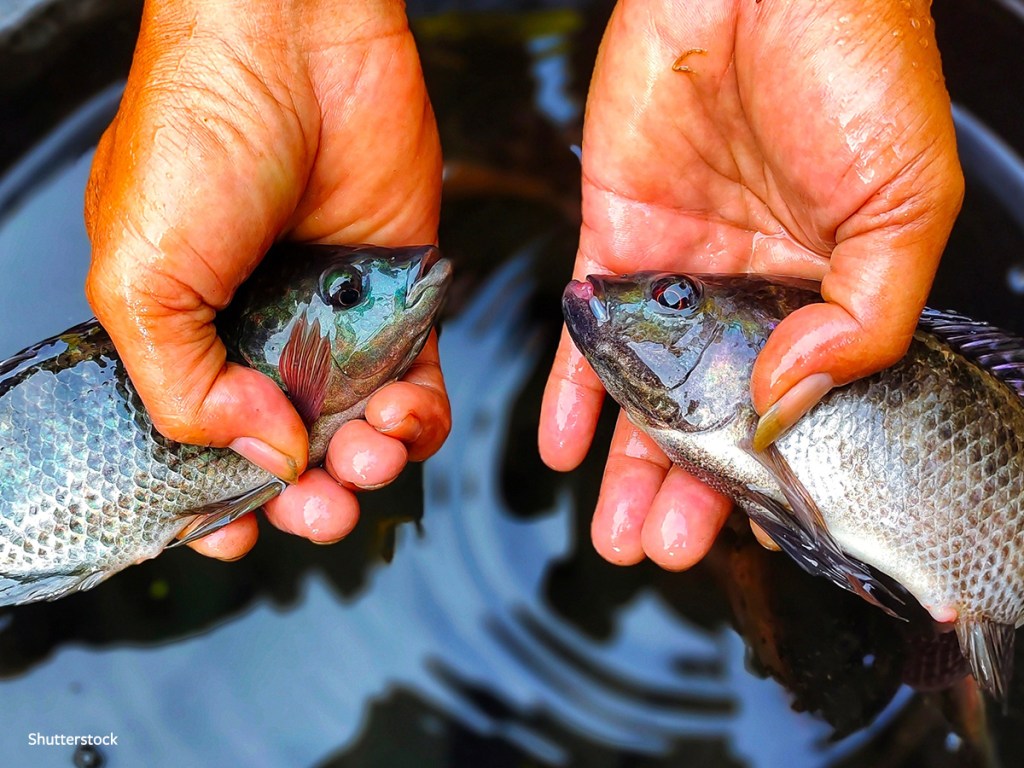
For example, bats use echolocation — the ability to use sound waves to navigate and find objects — to navigate in complete darkness. Tiny wrasse fish can recognize themselves and others in a mirror, joining chimpanzees and dolphins in this rare skill. Octopuses excel at problem-solving and camouflage, altering the texture and color of their skin to blend into their surroundings. Birds like the Arctic tern navigate thousands of miles using environmental cues, including the stars and the Earth’s magnetic field.
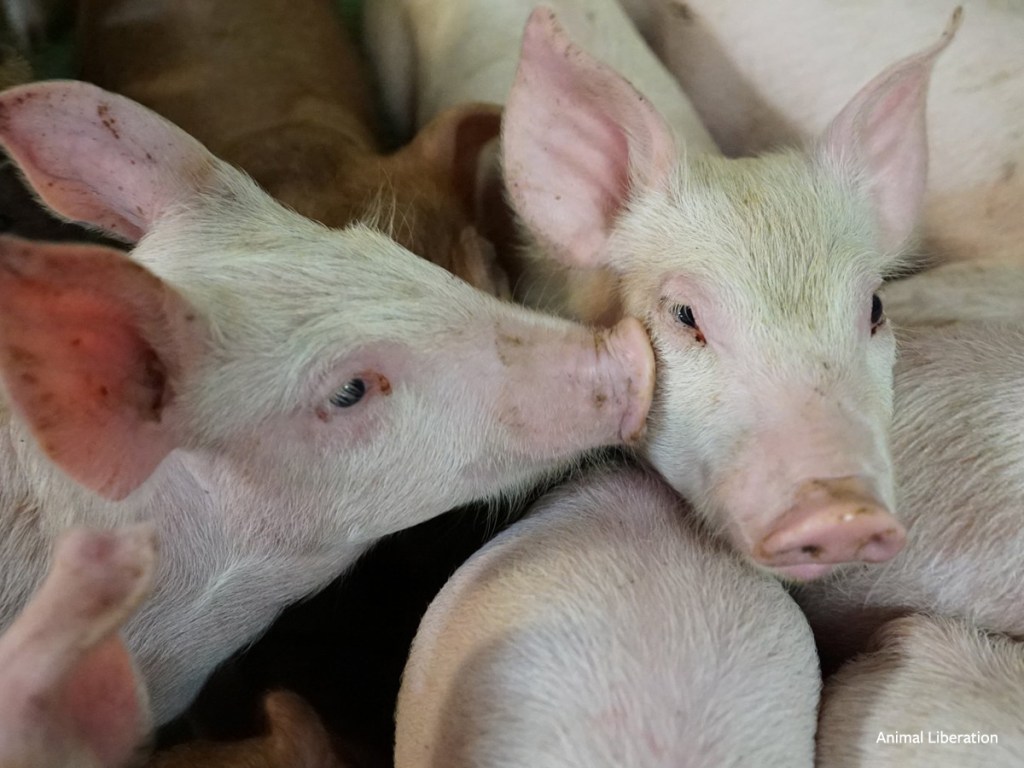
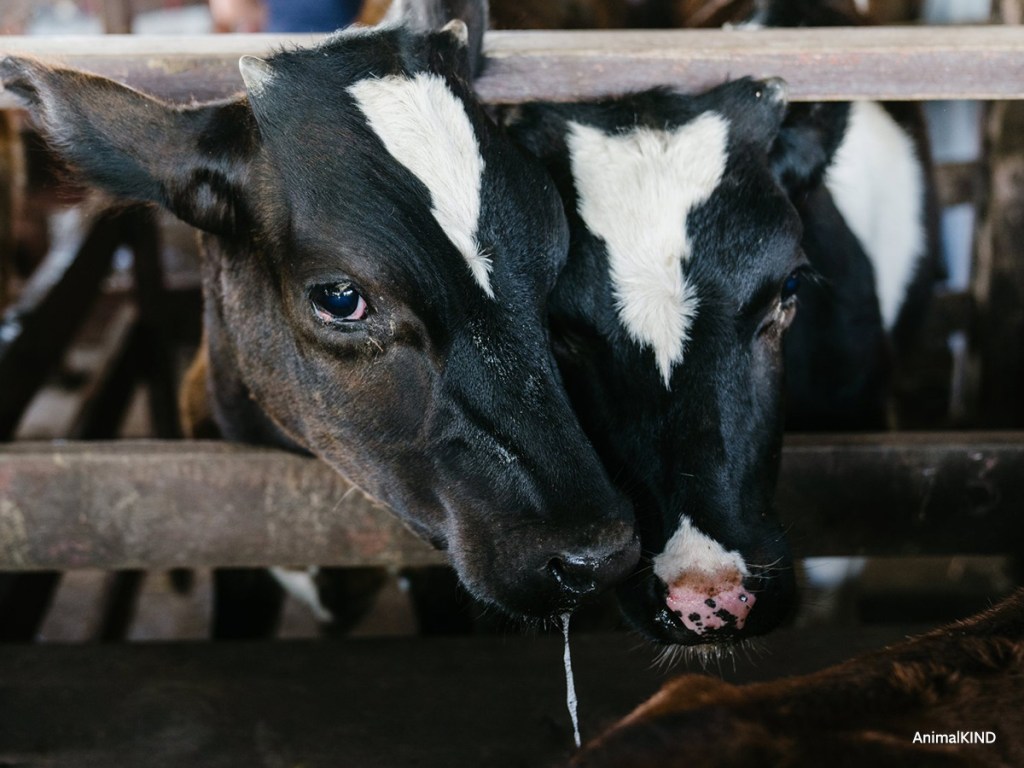
Chickens can recognize faces, form social bonds, and have memory and problem-solving skills on par with many other birds and mammals. Cows demonstrate empathy and many other complex emotions and can also solve puzzles. Pigs can navigate mazes and exhibit emotions and intelligence equivalent to a 3-year-old child.
Regardless, is intelligence truly the measure of whether someone deserves to be protected from harm by others? Some cognitively impaired humans are less intelligent than many animals. Does that mean we can also use and kill them? Of course not. No individual should be required to justify their right to safety and protection from human harm based on their cognitive or physical abilities.
How Can You Be Anti-Speciesist?
Whether human or non-human, each individual thinks and feels and has their own subjective experience of life, deserving the right to share this planet with us without being dominated by us. Unlike all forms of discrimination that focus on our differences, we must focus on what all species have in common — our will and desire to live and be free, and our capacity for pain, suffering, and joy.
If we would not tolerate discrimination and harm based on race, gender, or other differences, we must apply the same reasoning to speciesism and view it as equally unjust.
To embrace liberation, justice, and compassion for all Earthlings, live vegan—the principle that calls on humans to live without exploiting any other animals.
***********
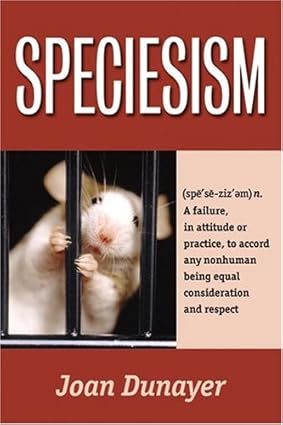
Excellent book on the subject, for more in-depth study:
Defining speciesism as “a failure, in attitude or practice, to accord any nonhuman being equal consideration and respect,” this brilliant work critiques speciesism both outside and within the animal rights movement. The author demonstrates that much of the moral philosophy, legal theory, and animal advocacy aimed at advancing nonhuman emancipation actually perpetuate speciesism. Speciesism examines philosophy, law, and activism in terms of three categories: “old speciesism,” “new speciesism,” and species equality.Old-speciesists limit rights to humans. Speciesism refutes their standard arguments against nonhuman rights. Current law is old-speciesist — legally, nonhumans have no rights. Dunayer shows that “animal laws” such as the Humane Slaughter Act afford nonhumans no meaningful protection. She also explains why welfarist campaigns are old-speciesist.
Instead of opposing the abuse or killing of nonhuman beings, such campaigns seek only to make abuse or killing less cruel; they propose alternative ways of violating nonhumans’ moral rights. Many organizations that consider themselves animal rights advocates engage in old-speciesist campaigns, which reinforce the property status of nonhumans rather than promoting their emancipation.New-speciesists espouse rights for only some nonhumans, those whose minds seem most like those of humans. In addition to devaluing most animals, new-speciesists give greater moral consideration and stronger basic rights to humans than they do to any nonhumans. They see animalkind as a hierarchy, with humans at the top.
Dunayer explains why she categorizes such theorists as Peter Singer, Tom Regan, and Steven Wise as new-speciesists.Nonspeciesists advocaterights for every sentient being. Speciesism makes the case that every creature with a nervous system should be regarded as sentient. The book provides compelling evidence of consciousness in animals often dismissed as insentient — such as fishes, insects, spiders, and snails. Dunayer argues that every sentient being should possess basic legal rights, including rights to life and liberty. Radically egalitarian, Speciesism envisions nonspeciesist thought, law, and action.
Editor’s note: This post is part of the EJIL:Talk! Symposium on ‘Expanding Human Rights Protection to Non-Human Subjects? African, Inter-American and European Perspectives.’
The idea of expanding the normative framework of human rights to nonhuman entities is not quite new, but ever-so topical in the age of AI, corporate human rights, and the rise of the global Rights of Nature movement. Although animals may be paradigmatic (non)human rights aspirants, animal rights proper have not yet been adjudicated, let alone recognized, by the ‘sister regional human rights courts’ or international human rights bodies.
In recent years, however, animal rights have increasingly become an issue before domestic courts, even highest courts, such as the Supreme Court of India, the Constitutional Court of Ecuador, the Islamabad High Court, or a lower court in Mendoza (Argentina). It is interesting to note that the judicial recognition of animal rights is so far more or less exclusively driven not by European or North American courts, but by courts from the Global South, which seems to refute the charge of “cultural imperialism” or Eurocentrism that is sometimes attached to the idea of universal animal rights. Given these contemporary developments in domestic animal rights law, and following a “bottom-up” approach to the future formation of a global animal rights law, the question seems not if, but when animal rights will advance to the world stage and eventually enter the halls of international (non)human rights courts.
Emerging animal rights and their pluralistic drivers
Since its inception, the idea of animal rights has had a mostly theoretical existence. In the absence of any legally institutionalized rights, the concept of animal rights typically relates to potential fundamental rights that (nonhuman) animals should have and that ought to be recognized and respected by human laws. Only recently, but with accelerating pace, have courts around the world started to deliberate and recognize actual legal rights of animals (see here for an overview of global animal rights jurisprudence).
One noteworthy difference between the ideal animal rights conceived by theorists and the real animal rights recognized in legal practice is the justificatory pluralism driving the emergence of the latter (as opposed to the justificatory monism – mostly of the naturalistic variant – that tends to ground the former). That is, while animal rights in theory are typically justified with reference to some morally relevant rights-generative natural quality of animals, animal rights in practice seem to be grounded in a broader and more heterogenous mix of divergent yet mutually complementing rationales.
Elsewhere, I have argued that there are both principled and prudential reasons that warrant institutional recognition of animal rights. In short, the principled argument for animal rights is of an ethical nature (a matter of justice or morality) and operates with intrinsic criteria, such as animals’ sentience, dignity, vulnerability, exploitability, or experiences of injustice. By contrast, the prudential argument for animal rights is of an instrumental nature (animal rights as a means of promoting other ends, e.g. the protection of humans or the environment) and relies on extrinsic considerations, such as social and environmental benefits that may result from cultivating animal rights-respecting practices.
Here, I will chart a slightly adapted, tripartite typology, based on the anthropocentric, zoocentric, and ecocentric justifications underpinning the recognition of animal rights in practice.
Anthropocentric underpinnings of animal rights
From an anthropocentric point of view, animal rights are justified instrumentally with their utility or benefits for human individuals or societies. Here, the recognition of animal rights is primarily motivated by and derivative of human interests, and functions as an indirect way of protecting or promoting certain human goods, such as human rights or health. Commonly invoked anthropocentric reasons for recognizing animal rights relate to:
The linkages between human and animal (in)justice: a growing body of research (see here for an overview) suggests a correlation between discriminatory (e.g. sexist, racist, speciesist) and rights-affirming social attitudes as well as empathy towards human outgroups and animals. Similarly, important links seem to exist between violence against humans and animals, both on the level of interpersonal (e.g. domestic or sadistic) and collective violence (e.g. animalistic dehumanization). Recognizing – and respecting – animal rights may thus concomitantly contribute to the protection of (vulnerable and marginalized) humans.
Animal exploitation as a major driver of environmental human rights and public health threats: the need to establish animal rights as a bulwark against extractive exploitation is also increasingly debated in the context of protecting humans against existential environmental risks. This is because animal exploitation (notably industrial animal farming and wildlife trade) is a major driver of global health threats (such as the emergence of zoonotic diseases and antimicrobial resistance) and of ecological human rights threats (such as climate change and biodiversity loss).
Cultural and religious reasons: certain (beloved or revered) animals are more equal than others, and are afforded special legal protections for cultural or religious reasons. For example, some courts, notably in Latin America, have recognized rights of companion animals (such as a dog in Colombia) as part of the protection of multispecies families and the affective bonds that humans have with their nonhuman family members. Another relevant example is the 2024 He Whakaputanga Moana Treaty (Declaration for the Ocean) – an Indigenous treaty that recognizes whales as legal persons, inter alia, because whales are considered ancestral beings and an integral part of a healthy ecosystem.
Zoocentric constructions of animal rights
Within a zoocentric frame of reference, animal rights are justified with intrinsic qualities of animals, such as their dignity or inherent value, sentience, personhood or subjecthood, or vulnerability. Here, the recognition of animal rights is primarily motivated by and centred on a legal concern for animals and their interests per se, irrespective of any instrumental or utilitarian considerations. In the words of the Constitutional Court of Ecuador, “animals should not be protected only from an ecosystemic perspective or with a view to the needs of human beings, but mainly from a perspective that focuses on their individuality and intrinsic value”. Courts typically arrive at zoocentric animal rights through two different legal avenues:
Subjectification of animal welfare laws: some courts have derived animal rights from existing animal welfare laws, by extracting therefrom subjective animal rights as implicit correlatives of explicit human duties. For example, in a landmark judgment from 2014 (which has since been somewhat relativized and reversed), the Supreme Court of India recognized a range of animal rights, such as the right to life and security, protection against pain, suffering, and torture, to food and shelter, based on the Prevention of Cruelty to Animals Act. It further elevated these statutory rights to the status of fundamental rights by reading them alongside the constitutional provision on animal protection and compassion (the “magna carta of animal rights”).
Animalization of fundamental (human) rights: other courts, notably in the Americas, have probed the possibility of extending certain human rights to animals, such as the prohibition of slavery, or the procedural right of habeas corpus and the underlying substantive right to freedom. In the USA, courts have thus far declined to enlarge the protective scope of fundamental rights to animals other than humans (of course, corporations are a different story). By contrast, courts in Latin America (e.g. in Argentina and Colombia) have recognized animal rights based on a dynamic and extensive reading of constitutional rights (notably the right to habeas corpus).
Ecocentric foundations of animal rights
From an ecocentric perspective, animal rights are recognized in an eco-constitutional legal context (e.g. a “sociobiocentric” constitution) and as part of a holistic approach to environmental protection and rights. Against the backdrop of exacerbating ecological pressures in the Anthropocene, the environmental dimension of animal rights (as well as, conversely, the animal dimension of environmental rights) has become increasingly important in recent years. Courts, too, have been responsive to the human-animal-environment nexus, by converging or integrating the rights of humans, animals, and nature.
(Wild) animal rights as part of rights of nature: one form of ecocentric animal rights is the recognition of (wild) animal rights as an integral (individual) dimension of the rights of nature. The integration of animal rights into the rights of nature framework has been elaborated at length by the Constitutional Court of Ecuador. In this context, some commentators observe a convergence between (animalized) rights of nature and (naturalized) animal rights, drawing on the obvious overlap and synergies between the two species of rights.
Ecological interdependence of human and animal rights: lastly – and this might be the clearest example of the confluence of anthropocentric, zoocentric, and ecocentric motives that are conjoined in the configuration of emerging animal rights – animal rights can be justified on the grounds of their ecologically mediated interrelation with human rights. For example, the Islamabad High Court has noted the “interdependence of living beings” and recognized animal rights alongside, and as an integral part of, the human right to life and environmental protection.
A win-win-win for humans, animals, and the environment
As this overview has shown, the recognition of animal rights in practice is only partially motivated by (intrinsic, ethical) concern for animals, and concurrently catalysed by instrumental concern for a variety of human interests and environmental considerations. It is this interplay of anthropocentric, zoocentric, and ecocentric rationales that is driving the emergence of animal rights alongside human rights and environmental rights. Some commentators contend that the anthropocentric and ecocentric reasonings that co-constitute real animal rights provide for a merely “weak grounding for animal rights”. Others dispute that these ulterior motives work to constitute “genuine animal rights” altogether. I would however argue, on the contrary, that this justificatory pluralism makes for a more diverse and democratic, resilient, rhetorically powerful, and thus ultimately stronger legal footing for animal rights in the real world. The pluralistic foundations of emerging animal rights indicate that they can be plausibly and palatably framed as a win-win-win situation. Simply put, animal rights are good for humans, animals, and the precious – and precarious – planet we all share.
A difficult subject, one keeps hearing, that requires objective discussion. Does it? Like here, the German “Volkswagen Stiftung“, of all people, feeling the “topic deserved more visibility” (how very nicely put) .. whatever that means.
… An open and honest discussion about the use of animals in research and, for example, a comparison with animal use in food production is only possible if everyone involved knows what an animal experiment entails, how much or how little the animals suffer in the process, and how the decision to undertake an animal experiment is reached. ..
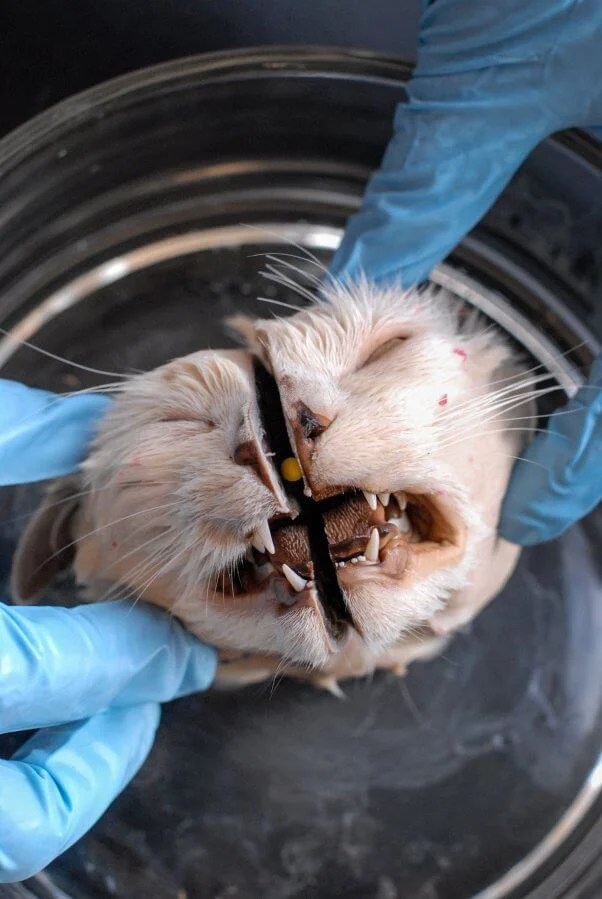
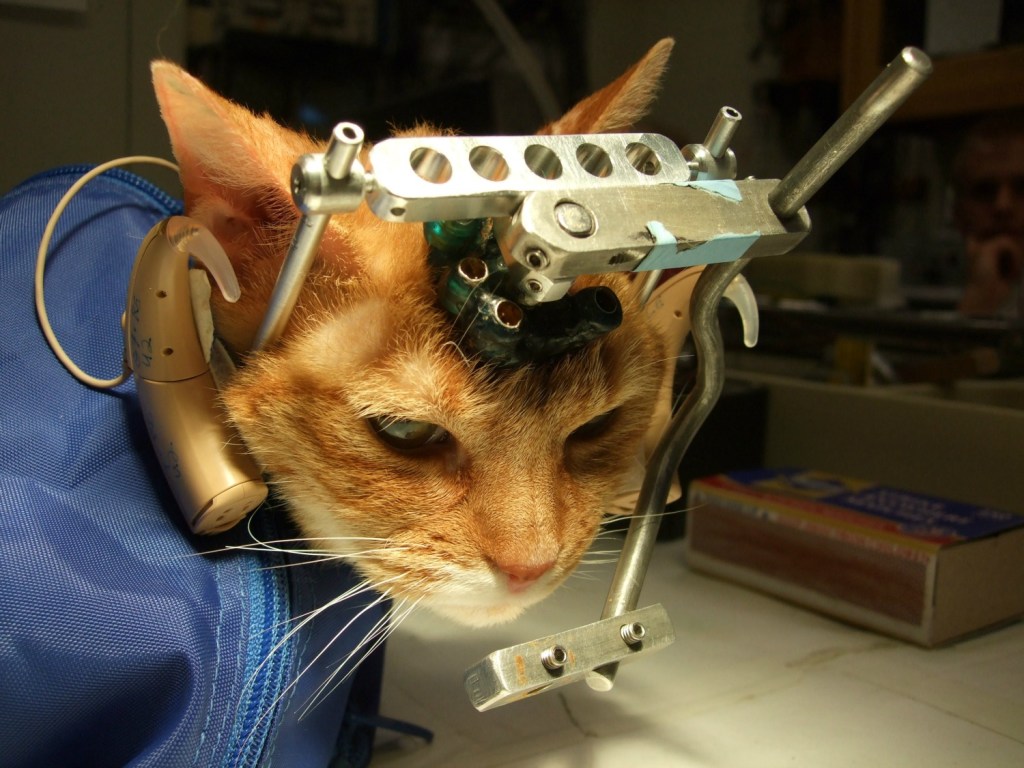
Now, we have seen, here on this site, and elsewhere, what “animal USE” looks like – in all areas of such USE. And have come, collectively, to the conclusion that using animals, who are not able to lobby their own cause and interests in Human society, is wrong.
Time and again people think they must argue that objective discourse is necessary to decide how far one may go “using” beings for Human interests, who would never willingly submit to such use in the first place, if asked (o.k., with the advances in AI, man may in not too far a future be able to do exactly that: ask).
Personally, I am sick and tired of the rampant ABuse we see each day, seen by far too many as a “necesssary evil” visited upon the utterly helpless. There can NEVER be a justification of that – ever.
There can be no “objective discussion” of something that, by its very nature, is a “subjective issue”. An animal is not an object, but a subject – like a Human. How can personal feelings, and emotions not matter relating to the suffering of sentient beings?
No one would demand to discuss child abuse as an objective issue ..
(and again from the above publication)
And what does this debate currently look like? The discourse is strongly characterised by emotions,’ says Roman Stilling, speaker at the platform ‘Understanding animal experiments‘. The emotions raised around the debate arise primarily because people believe animal testing always means potentially inflicting pain, suffering and harm on an animal. ‘That’s the legal definition – otherwise it wouldn’t formally be animal testing.’ We shouldn’t forget, he adds, why experiments are carried out on animals: ‘It’s because we can’t do it on humans.’
Quite, “because we can’t do it on Humans“. So off we go and find some poor non-Human sod who cannot stop us subjecting him/her to invasive, painful and ultimately fatal procedures.
I own a book on the subject, titled “Slaughter of the Innocent”, by the Author Hans Ruesch. With 1978, not a recent publication, and hard to get these days, but as important and relevant today as it was then ..
(from GOOGLE books)
“SLAUGHTER” is the first book ever written which directly discusses the scientific arguments regarding the needless use of animals, as a part of medical progress. Mr. Ruesch spent countless years compiling this gut wrenching masterpiece. He successfully lifts the veil of secrecy which has always been an important part of research establishments & the medical community as well, giving the reader a peek at what REALLY goes on, after the laboratory doors are closed. His words reveal some of the worst atrocities anyone could possibly imagine. Without ignoring the ethical questions – “it’s just one of life’s necessary evils, isn’t it?” – The author gets right to the point advising the reader, “Somebody up there is lying to you.” With his creative style & excellent documentation, Mr. Ruesch washes away the excuses of doctor apologists for animal experimentation, with facts showing not only that animals aren’t needed for Medicine/Health to move forward, but the use of which often leads to detrimental & misleading findings, & catastrophic results. This wonderful yet disturbing volume is a must read for any person entering the field of medicine or the people already there.
There CAN NEVER BE a justification for Vivisection, in whatever form, for whatever reason, wherever.
Mahatma Gandhi quotes: “Vivisection is the blackest of all the black crimes”. “I hold that the more helpless a creature, the more entitled it is to protection by man from the cruelty of man,’ and I abhor vivisection with my whole soul. All the scientific discoveries stained with innocent blood I count as of no consequence.”





 World Animals Voice