Month: April 2022

Nigeria: Vet doctors, global petition decry animal cruelty amid Nigeria’s thriving dog meat market.

WAV Comment – we have added images to this article.

This is a 6 page article.

VICTORIA ADENEKAN writes about the Nigerian dog meat market which veterinary doctors and dog lovers want activities halted to preserve companion animals

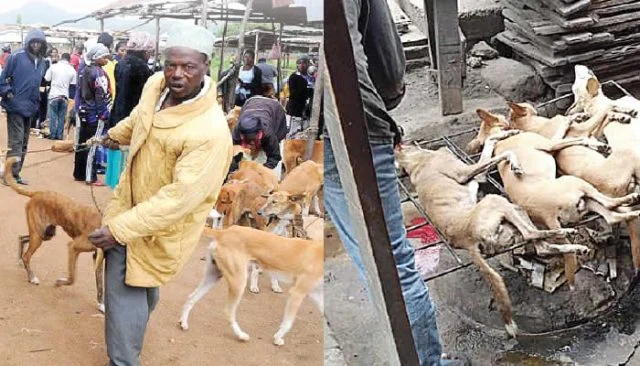
The nation’s dog meat market thrives largely in many states, particularly in some states in the South-West and South-South. It features prominently dog sellers and buyers with the latter mostly specialists who prepare dog meat for sale. There are even spots in some areas around Lagos and in some states where dogs are killed, dressed, and prepared for consumption.

One of the joints is in Ijesa in Surulere, Lagos. Sunday evenings and on public holidays are when sales are the highest for a dog meat seller, who gave his name only as Michael and his boss identified only as “Alapata (someone who butchers animals).”

Michael told our correspondent that the boom in the business had been keeping them in business for over 20 years.

The brutal killing

It was gathered that the dogs are kept in a cage and served only water to await death. The killing process is gruesome and dog lovers will hate to witness it.

A noose, an iron rod with a long twine attached to it is used to drag the identified dog out of the cage. Once the rope catches the dog’s neck, the length of the twine is shortened and holds the dog’s neck in a choking way. The dog’s mouth opens with intermittent cries of helplessness as it is dragged out of the cage. The remaining dogs in the cage join their departing dog in the cries but they remain helpless.

Michael said, “Once the dog is brought out of the cage, the noose remains on its neck to prevent it from attacking the person holding it. The iron rod is then used to smash the dog’s head twice, to weaken it. After that, the neck is slit and the blood is collected or made to flow. Once the blood flow stops, the carcasses are placed on the wired mesh with a hearth or fireplace and doused with kerosene. Fire is kindled to burn the hair to make it easy to remove. Then it is washed with soap to scrape excess hair.’’

All parts of the dog are edible except what Michael referred to as “bile duct. It’s attached to the liver and also present in chicken.

For dogs with a lot of fat, the oil is extracted and can be used as a regular vegetable or soya oil.

Asked if there were other ways of killing the dogs, Alapata said, “They are wild dogs. They are not a chicken, ram or goat that one can tie their limbs and kill. The dogs will bite someone if they are not held that way.”

An apprentice with Alapata identified only as Daniel said the dogs also called 404 had a unique taste different from beef, chicken or pork.

The Akwa-Ibom indigene stated, “I eat dog meat and it is good. The taste and the method of preparation are different from that of other animals whose meat is eaten. We cook it with a lot of pepper and scented leaves.”

Speaking on how they sell and buy the dogs, Daniel said they usually sell dog meat at N100 per piece.

Daniel added, “On Sundays, we used to kill like eight or nine dogs, and we always sold everything. The meat is now costly, it’s not like before, a dog costs about N20,000. We buy from sellers who come from the North and South.

“We don’t raise them, we buy different sizes on a weekly basis. Every week they bring like 20 or 50. They bring them on Saturdays. The business is really booming. If one doesn’t have skills and techniques, one can’t kill dogs. Also, if one doesn’t know how to prepare it, people will not enjoy it.’’

Daniel, who called their joint, Hotdog Centre, said that their customers were of different ages, sexes and from parts of the country.

Continued on next page

England: Animal rights activists PETA tell Aintree pub they should show hobby horse racing instead of the Grand National.

UPDATE 2000Hrs GMT – 3 horses died this year:

WAV Comment – 9/4/22 was the day in the UK of the annual ‘Grand National’ horse race.  A race which always results in the death of some horses due to the conditions of the race – high jumps, a long course etc. 

Check it out :  Grand National – Wikipedia

The Grand National is a National Hunt horse race held annually at Aintree Racecourse in Liverpool, England. First run in 1839, it is a handicap steeplechase over an official distance of about 4 miles and 2½ furlongs (4 miles 514 yards (6.907 km)), with horses jumping 30 fences over two laps. It is the most valuable jump race in Europe, with a prize fund of £1 million in 2017.

In 173 races since, a total of 84 horses have lost their lives during the world famous steeplechase, either by being killed outright or by being humanely euthanised after sustaining injury during the race.

I did not watch it yesterday; I don’t want to; as far as I am concerned it is putting beautiful horses lives at risk for the enjoyment of humans who want to make money.

Regards Mark

Vegan activists told The Queens Arms not to show Grand National horse racing

Rights group PETA suggested popular Aintree pub show hobby horses instead

Since 2010, 29 horses have died from race-related causes at the Aintree Festival

Vegan activists have urged a pub not to show the Grand National – and instead put on some hobby horse racing.

Animal rights group PETA urged The Queens Arms near the famous Aintree racecourse to televise the barmy stick-based sport instead of the iconic horse race to be held on Saturday.

People for the Ethical Treatment of Animals have branded the major horseracing event ‘cruel and antiquated’.

The Queens is popular with racegoers before the showpiece race every year.

An employee of the popular boozer told MailOnline they were ‘blindsided’ by the request but did not wish to comment further. 

PETA Director Elisa Allen said: ‘You can make a compassionate statement by betting on willing, enthusiastic, human racers instead.

‘Pub-goers can still enjoy a drink and socialise with friends, knowing that their day of fun did not cause suffering or death for any other sentient beings.

‘No one would be raising a glass if cats or dogs were the ones being whipped and forced to jump dangerous obstacles.

Since 2010, 29 horses have died from race-related causes at the Aintree meeting that includes the Grand National 

‘Shattering their ankles, snapping their necks, and being shot in the head right on the track.

‘Horses deserve no less sympathy.’

Hobby horse racing – which sees enthusiasts act out horse racing, riding wooden sticks stuffed with toy horses – is immensely popular in parts of Europe, with a huge following in online communities.

In 2019, some 2,500 spectators flocked to Finland for the Finnish Hobbyhorse Championships, in which participants show-jumped, barrel-raced, and pranced in a dressage competition.

PETA tell Aintree pub to show hobby horse racing instead of Grand National  | Daily Mail Online

Regards Mark

UK: UK (Animal) Sentience Bill Passes Final Stages to Recognise Decapod and Cephalopod Sentience by Law – Great Progress !

8 April 2022

Crustacean Compassion

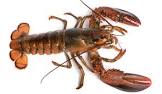
In a monumental step for animal welfare, the UK’s Animal Welfare (Sentience) Bill passed through the final stages in parliament yesterday (7 April 2022) to become law . The passing of this Bill is a historic moment for animal welfare as it marks the first time animals like lobsters, crabs, shrimp, octopus, cuttlefish and squid are protected this way in law.

The Sentience Bill was drafted in 2021 to replace EU animal welfare legislation post-Brexit. The Bill plays a crucial role in recognising that animals are capable of feeling pain and need protection in law and makes provision for an Animal Sentience Committee to scrutinise how government policy impacts animal welfare. 

While the Bill initially only covered vertebrates, it was amended in November to include decapods and cephalopods. This was following a government commissioned review of over 300 scientific studies assessing the sentience of these animals. Carried out by an expert team at the London School of Economics (LSE) and led by Dr Jonathan Birch, the peer-reviewed, independent report concluded that there is strong scientific evidence of sentience in decapod crustaceans and cephalopod molluscs, and that they should be included in animal protection legislation. 

Our member organisation, Crustacean Compassion, highlighted the widespread support for inclusion of these invertebrates in the form of a petition signed by almost 60,000 people, and an open letter signed by scientists, veterinary organisations and public figures, including the British Veterinary Association, RSCPA and notable wildlife broadcasters. 

The Bill will now be sent to the Queen to receive Royal Assent, after which the new law will be known as the Animal Welfare (Sentience) Act 2022.

The Sentience Bill passing into law is wonderful news for decapod crustaceans like crabs and lobsters. The scientific and legal recognition that they are sentient and can feel pain means it is without question that decapods should now also be protected in the real world.  Everyday crabs, lobsters and other decapods are treated in ways that would simply be unthinkable for other animals including being boiled alive. Crustacean Compassion look forward to continuing to work with governments and industry to translate the important words within this bill into actions that protect these animals from suffering

Claire Howard, Executive Director, Crustacean Compassion

Please check out the other link on this same issue – lots of info:

UK: 7/4/22 Your Victory – A Massive Day For UK Animals and Their Welfare; After Losing Their Protection Post Brexit, The Updated Animal Welfare (Sentience) Bill Has Been Voted Through In Parliament Today; Which Means That Animals are Legally Recognised as ‘Sentient Beings’ Once Again. – World Animals Voice

Regards Mark

EU: European Commission criticised for biased survey on EU chemicals regulation REACH.

7 April 2022

H2020 scientific consortia have criticised the European Commission for conducting a “biased” survey on the REACH regulation (Registration, Evaluation, Authorisation and Restriction of Chemicals), where non animal methods are undermined.

The European Commission is currently holding a public consultation on the revision of the REACH Regulation, as part of ambitions to achieve a “toxic-free environment” by 2050.

The survey implies that reducing and replacing traditional animal testing with non-animal testing methods, or NAMs, will weaken protection from chemical hazards. 

In a statement, the consortia suggests that the questionnaire can potentially damage confidence needed to further support the development and uptake of NAMs by the private sector. This could impact Europe’s leading position worldwide in creating a safer chemical market for industry and citizens.

The language of the survey is misleading because it contradicts the tremendous scientific progress in a wide range of fields developing and using NAMs for precision medicine and safety sciences.

The ASPIS Cluster

There are a number of non-animal approaches that ensure the safety of chemical products, including computer-based modelling, stem cell technology and organ-on-a-chip. The use of animals as models in chemical testing is out of line with Europe’s aim to move towards humane, innovative and animal-free science. 

Stakeholders and citizens have until 15 April 2022 to

 provide their inputs 

on how to better protect human health and the environment from harmful substances while reducing and ultimately replacing animal testing.

Regards Mark

UK: 7/4/22 Your Victory – A Massive Day For UK Animals and Their Welfare; After Losing Their Protection Post Brexit, The Updated Animal Welfare (Sentience) Bill Has Been Voted Through In Parliament Today; Which Means That Animals are Legally Recognised as ‘Sentient Beings’ Once Again.

WAV Comment:  Often in animal welfare, there are not immediate solutions to concerning animal welfare problems.  Tenacity (the quality or fact of being very determined; determination.) has to be something; and is something, which all of us in the rights / welfare movement need to have and show.  To put it simply, if you give up, you lose.

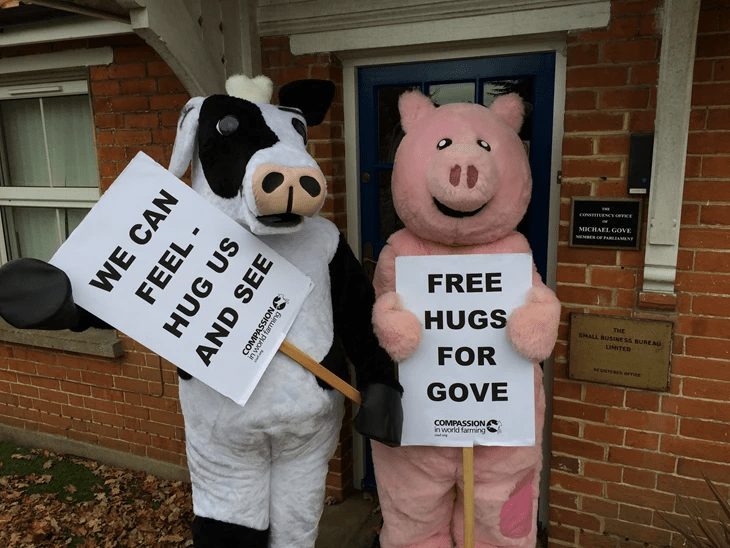
Myself campaigning with CIWF in the Netherlands against animal factory farming.

UK animal people did not give up; in fact, their resolve strengthened.  Why:

Despite the huge success in getting animal sentience recognised in EU law, the recognition of animal sentience in the UK took a big step backwards following the Brexit referendum in 2016.

The following year, Compassion in World Farming discovered that the UK Government’s European Union (Withdrawal) Bill, which formally enacted Brexit, would not carry across provisions from EU Treaties – including Article 13 of the Treaty on the Functioning of the EU.

This meant that reference to animal sentience would disappear from UK law when the UK formally left the EU on 31st December 2020. Both the recognition of animals as having the capacity to have feelings, including pain and joy, and the requirement for governments to pay “full regard” to their welfare when formulating and implementing policy, would be lost from UK law. Read more about what Brexit meant for Animal Sentience in this news article.

Campaigning on animal sentience in the UK starts again
We (CIWF) had to start campaigning immediately to ensure that this cornerstone of animal welfare law was not lost when the UK left the EU. We mobilised supporters to lobby the Government, contacted Members of Parliament, and liaised with other NGOs to alert them to the threat to animal welfare. Unfortunately, it faced strong Government opposition and was narrowly defeated when it was put to the vote in Parliament.

And finally, on the 12th of December 2017, following the media furore over the vote in Parliament – and under pressure from a 155,000-strong Compassion petition, the UK Government announced a new Bill would be introduced. This was a momentous moment as the Bill would permanently incorporate the legal recognition of animal sentience into UK law post-Brexit.

2018: Campaign setback as Government delays sentience legislation
Despite the positive announcement from the Government at the end of 2017, the campaign to recognise that animals are sentient beings faced even more setbacks in the following years.

Firstly, Parliament’s Environment, Food and Rural Affairs Select Committee published a report which suggested the Bill should be redrafted. The Committee raised concerns that, as the Bill was worded, paying regard to animal sentience would lead to the slowing down or freezing of policymaking and result in widespread Judicial Reviews. Following that report, the UK Government announced in September 2018 that the legislation relating to animal sentience would be delayed.

2019: Over 100,000 calls for animal sentience recognition

In September 2019, our Senior Policy Manager, James West, handed in a 103,000-signature petition to Downing Street, alongside other members of the #BetterDealForAnimals coalition. The petition called on the UK Government to introduce legislation recognising animal sentience and require that full regard be given to animal welfare in UK Government policies.

2020: MPs debate animal sentience

As a result of the 2019 petition reaching over 100,000 signatures, MPs debated the issue in March 2020. Watch the highlights of the debate.

Then, following continued inaction from the Government, in September 2020 dedicated Compassion campaigners took action again.

Thousands of people urged their MPs to call on Ministers to introduce animal sentience legislation before 1st January 2021. This was the day after the UK would formally leave the EU, at which point EU laws recognising animal sentience at the time were due to run out.

2021: UK Government introduces Animal Welfare (Sentience) Bill
As the clock struck 11pm on 31st December 2020, despite persistent campaigning, animals in the UK were, for the first time in almost a quarter-century, no longer recognised as sentient beings under the law.
Then, on 13th May, the efforts of compassionate people around the country finally worked in British animals’ favour. The UK Government announced it would introduce the Animal Welfare (Sentience) Bill as part of its ‘Action Plan for Animal Welfare’.

During the summer and autumn of 2021, the Bill progressed through the House of Lords, completing all its stages by December 2021.

Today – 7/4/22.

On Thursday 7th April, we achieved a momentous victory for animals. 

The updated Animal Welfare (Sentience) Bill was voted through by the House of Lords which means that animals are legally recognised as sentient beings once again.

Thank you to everyone who emailed politicians or signed petitions, donated in response to this campaign, shared posts on social media, and asked friends and family to take action.

It’s official. UK law will now recognise that animals can feel joy, pain, and fear once again.. 

Read about the highs and lows of sentience over several decades:

Animal Sentience: the highs and lows | Compassion in World Farming (ciwf.org.uk)

In the end, positive results always come to those who have the tenacity to fight and continue fighting.  Never ever give up the fight(s) for your issues;

Regards Mark

Sentient Beings – Protected In the UK Once Again.

Ukraine: Kharkiv zoo prepares to kill lions and tigers in case Russian shelling lets them loose in city.

Please also see – https://worldanimalsvoice.com/2022/04/06/ukraine-ukraine-zoo-boss-says-all-their-animals-will-be-put-down-after-russian-shelling/

The owner of a zoo in the war-torn Ukrainian city of Kharkiv has taken a heartbreaking decision to put down all the large animals including tigers and lions.

Although several animals at the Feldman Ecopark survived the incessant bombing by the Russian forces for over five weeks, the facility was devastated leading to risks of the predators venturing in the city.

He says the animals who survived can escape at any time, and must be put down, though he holds out hope some adolescent big cats may be saved and transported elsewhere.

“Feldman Ecopark doesn’t exist anymore. The enclosures have been destroyed, the entire infrastructure has been destroyed,” the zoo’s owner Alexander Feldman said in a video, which was posted on Facebook.

He warned that the enclosures were badly damaged which could lead to animals, including big cats, entering the streets. Mr Feldman said it was a “miracle” that the tigers and lions were still alive despite their cages being destroyed.

“By tonight we will decide whether to put them all down or transport them somewhere else… Maybe we will save baby jaguars, baby panthers, but all adult animals will probably be euthanised,” he said.

The zoo’s team was working in the Chutovo region to find a way to save the animals, the owner said. “Failing that, the only option left to us is to put the predators to sleep. It is unimaginably painful to talk about this, but the main priority now is the lives of people,” the caption of the video read.

Three members of the staff were reportedly killed and dozens more were wounded while trying to feed the animals.

The staff were able to visit the chimpanzees and orangutans on 4 March for the first since the war began. According to reports, the monkeys had been sheltered by the Kharkov Zoo.

Earlier on Tuesday, a man rescued Ukraine‘s only family of tapirs and eight kangaroos from the Felman Ecopark, which was on fire because of Russian shelling.

Meanwhile, more than a month after Russia’s unprovoked invasion, the United States and its allies are preparing to impose new sanctions on Moscow over civilian killings in Bucha.

Regards Mark

USA: Wind energy company kills 150 eagles in US, pleads guilty.

A wind energy company was sentenced to probation and ordered to pay more than $8 million in fines and restitution after at least 150 eagles were killed over the past decade at its wind farms in eight states, federal prosecutors said Wednesday.

© Copyright 2020 The Associated Press. All rights reserved Eagles Killed Wind Turbines – Copyright 2020 The Associated Press. All rights reserved

NextEra Energy subsidiary ESI Energy pleaded guilty to three counts of violating the Migratory Bird Treaty Act during a Tuesday court appearance in Cheyenne, Wyoming. It was charged in the deaths of eagles at three of its wind farms in Wyoming and New Mexico.

In addition to those deaths, golden and bald eagles were killed at wind farms affiliated with ESI and NextEra since 2012 in eight states, prosecutors said: Wyoming, California, New Mexico, North Dakota, Colorado, Michigan, Arizona and Illinois. The birds are killed when they fly into the blades of wind turbines. Some ESI turbines killed multiple eagles, prosecutors said.

It’s illegal to kill or harm eagles under federal law.

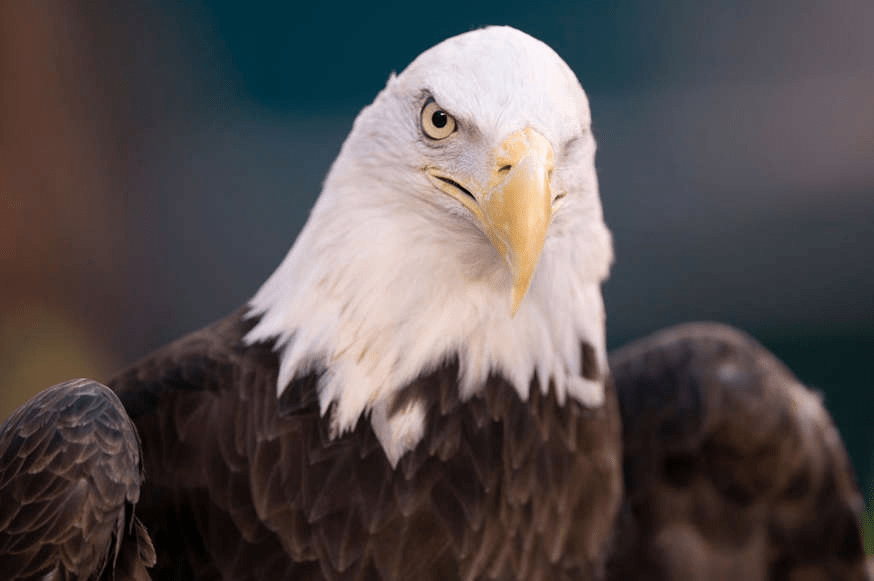
The bald eagle — the U.S. national symbol — was removed from protection under the Endangered Species Act in 2007, following a dramatic recovery from its widespread decimation due to harmful pesticides and other problems. Golden eagles have not fared as well, with populations considered stable but under pressure including from wind farms, collisions with vehicles, illegal shootings and poisoning from lead ammunition.

The case comes amid a push by President Joe Biden for more renewable energy from wind, solar and other sources to help reduce climate changing emissions. It also follows a renewed commitment by federal wildlife officials under Biden to enforce protections for eagles and other birds under the Migratory Bird Treaty Act, after criminal prosecutions were halted under former President Donald Trump.

Companies historically have been able to avoid prosecution if they take steps to avoid bird deaths and seek permits for those that occur. ESI did not seek such a permit, authorities said.

The company was warned prior to building the wind farms in New Mexico and Wyoming that they would kill birds, but it proceeded anyway and at times ignored advice from federal wildlife officials about how to minimize the deaths, according to court documents.

“For more than a decade, ESI has violated (wildlife) laws, taking eagles without obtaining or even seeking the necessary permit,” said Assistant Attorney General Todd Kim of the Justice Department’s Environment and Natural Resources Division in a statement.

ESI agreed under a plea agreement to spend up to $27 million during its five-year probationary period on measures to prevent future eagle deaths. That includes shutting down turbines at times when eagles are more likely to be present.

Despite those measures, wildlife officials anticipate that some eagles still could die. When that happens, the company will pay $29,623 per dead eagle, under the agreement.

NextEra President Rebecca Kujawa said collisions of birds with wind turbines are unavoidable accidents that should not be criminalized. She said the company is committed to reducing damage to wildlife from its projects.

“We disagree with the government’s underlying enforcement activity,” Kujawa said in a statement. “Building any structure, driving any vehicle, or flying any airplane carries with it a possibility that accidental eagle and other bird collisions may occur.”

Wind energy company kills 150 eagles in US, pleads guilty (msn.com)

Regards Mark

Ukraine: Ukraine zoo boss says ALL their animals will be put down after Russian shelling.

Mass killer – of both Humans and animals.

Ukrainian zoo which has almost been completely destroyed by Russian shelling is to put all the animals to sleep.

The founder of the wildlife eco-park in Kharkiv revealed there is no way of rescuing the large animals at the attraction, which is believed to be the oldest zoo in Ukraine.

The website for the animal centre claims it keeps more than 6,000 animals. However, the Ukrainian MP, Oleksandr Feldman, who founded the zoo says Russian shelling has left them with no option but to put the animals to sleep because there is no possibility to evacuate or transport them.

Feldman posted a video on social media addressing the future of the animals and the zoo as he broke the devastating news about the centre and the grim reality about the future of the wildlife, according to Mirror Online.

© Getty Images/iStockphoto The zoo animals are facing a death sentence because of the Russian shelling

He said “There is no more Ecopark. After yesterday’s shelling, I can say that the park has been almost completely destroyed.

“Animal cages have been destroyed, all the infrastructure has been destroyed, but tigers and lions have miraculously survived. Their cages have been badly damaged, and they can go outside at any moment.”

He said the enclosure where the bears are based is in a dreadful condition and they would be forced to “kill them, put them to sleep or move them.”

“The building where the bears live is in terrible condition. Today we will have to make a decision. We have until the evening to decide either to kill each one, put them to sleep, or to move them,” he said.

The zoo boss said there was nowhere where they could take the creatures and hoped to save some of them, with younger big cats possible.

But he added that all adult animals “are likely to be put down” as they could not be rescued or re-homed.

The attraction’s website says Kharkviv Zoo is the oldest in Ukraine.

It was opened in 1895 for visitors in 1903 and is based in the heart of the city next to the Park Shevchenko.

The Zoo which covers 22 hectares and is home to 6810 animals

It considers 103 species to be rare and are under protection and led to new animals being bred at attraction.

© Getty Images/iStockphoto Some of the big cats may be saved but Russian shelling means animals are likely to be put to sleep

In a video by news channel Nexta on Twitter, the Ukrainian MP said: “ #Russian troops have almost completely destroyed the ecopark in #Kharkiv

“Today by the end of the day a decision will be made to put the tigers and lions down, because their enclosures have been destroyed.”

Regards Mark

Ukraine zoo boss says ALL their animals will be put down after Russian shelling (msn.com)

Ireland: Excellent News – Ireland to BAN Fur Farming – Official.

5 April 2022

RFA

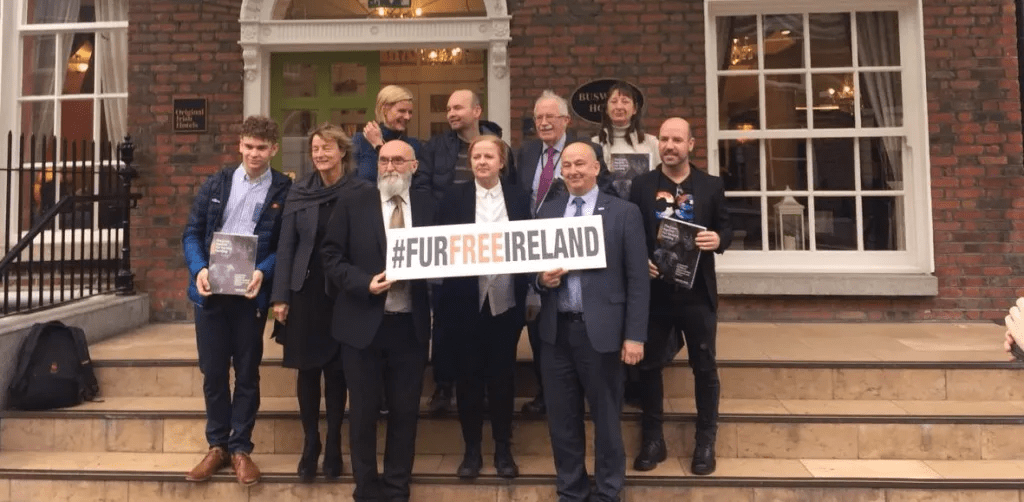
On 29 March, a bill to ban fur farming successfully reached the final stages of the parliamentary process in the Republic of Ireland.

The Animal Health and Welfare and Forestry (Miscellaneous Provisions) Bill 2021 passed its final stage in the Seanad, despite some objections from a minority of senators about compensation for fur farm workers. It received support from across the political spectrum in both houses of the Oireachtas.

The legislation will now go to the President, who will sign it into law.

There are currently 3 operational fur farms in the country, which are expected to be closed during the course of 2022 after the success of the bill.

Respect for Animals conducted a poll regarding public opinions of fur farming amongst people of Ireland in 2018. 80% of respondents agreed that the farming and killing of animals for their fur should be banned.

In 2021, several other European countries took steps to implement national bans on fur farming, including Italy, Estonia and France. 

Ireland finally takes a historical step and joins the increasing number of European countries that say no to fur farming, a practice that has no place in a society that genuinely cares for animal welfare.

Bethania Malmberg – Programme Officer Fur Animals, Eurogroup for Animals

This is a historic day for animal welfare in the Republic of Ireland and another nail in the coffin of the cruel and callous global fur industry. A critical report by Veterinary Ireland considered, in depth, the scientific evidence regarding mink farming and concluded that, on animal welfare grounds ‘there should be an immediate ban on the farming of mink, and similar wild animals, for the production of fur’. It is essential that legislators around the world – including at EU-level – take urgent action to end the cruelty of fur factory farming once and for all.

Mark Glover – Director, Respect for Animals

VICTORY: Republic of Ireland passes law to ban fur farming | Respect for Animals

Regards Mark