Month: October 2022

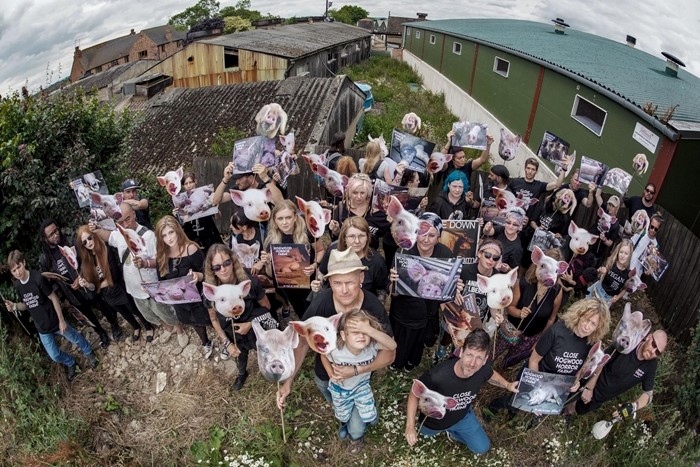
England: ‘Hogwood’ Is Now On Netflix – Watch The Trailer Here Plus More Info On This Campaign To Read.

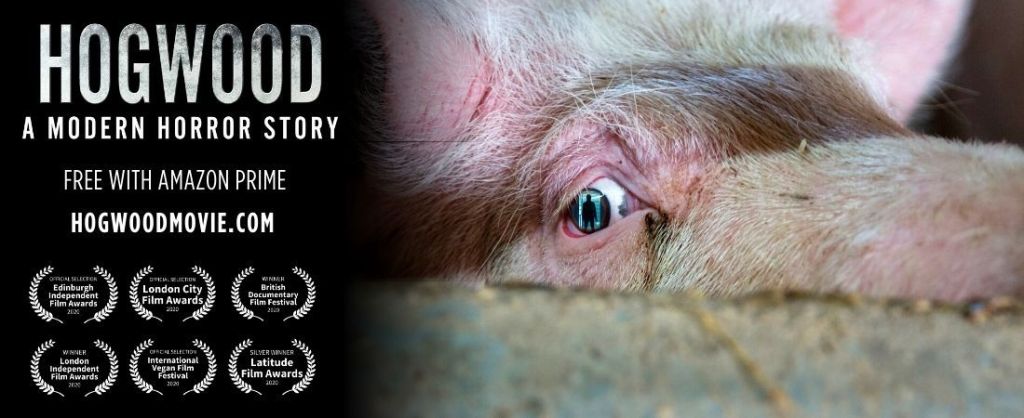
Hogwood is now on Netflix!

Dear Mark,

Since Hogwood: a modern horror story launched in 2020, we’ve been working hard behind the scenes to bring this incredibly important film to an even wider audience.  

We can now confirm that Hogwood is live on Netflix, having premiered on Saturday 15th October 2022!🎉 

Joining the world’s largest streaming service will allow Hogwood to reach millions more people and show that we need to End Factory Farming Before It Ends Us.

From the bottom of our hearts, we want to thank you for your ongoing support and for helping us to share Hogwood with the world.  

Presented by Jerome Flynn

Jerome originally shot to fame as one half of pop duo Robson & Jerome and is now best known for his role as Bronn in the HBO series Game of Thrones. Other roles include Bennet Drake in Ripper Street and Paddy Garvey of the King’s Fusiliers in the ITV series Soldier Soldier.

“It is an honour to be presenting this very important film. After seeing the horrendous conditions and animal abuse that is happening behind Hogwood’s walls I had to do something. The pigs of Hogwood aren’t just meat products, they are sensitive, emotionally aware beings just like us and they deserve better than this.”

Running at just over 30 minutes, HOGWOOD explores the reasons behind factory farming and exposes the negligence and inaction by government bodies and corporations alike. It highlights how meat pollutes our planet and puts us at risk from disease outbreak. It explores why factory farming is supported and follows the brave fight to expose the truth and change the world.

The documentary centres around a seemingly idyllic pig farm, named Hogwood. Jerome Flynn opens the documentary against the picturesque backdrop of rural England, just minutes away from Hogwood Farm. He tells the captivating tale of HOGWOOD and how it came to be one of the most infamous pig farms in the UK. His narrative is intertwined with undercover footage and interviews with investigators and activists representing the animal welfare group Viva! — who spearheaded the campaign. The film goes onto feature interviews with a livestock vet speaking out about her horrific on-the-job experiences for the first time. It concludes with expert comment from GP and public health expert, Dr Josh Cullimore and Oxford University researcher Joseph Poore.

Directed by Tony Wardle 

“I have been producing investigative documentaries for many years and no film has been more harrowing than HOGWOOD. The name ‘a modern horror story’ could not be more apt; there are modern horror stories taking place each day in the British countryside. Not only are these horrors hidden from sight, but they are endorsed by huge corporations and the Government. That is why this film had to be made — because the public has a right to see what takes place beyond the factory farm walls.”

Viva! investigated Hogwood pig farm four times from 2017 to 2019. Year after year, we recorded a catalogue of cruelty including extreme overcrowding, routine mutilation, sick and dying pigs abandoned in gangways, painful lacerations and live cannibalism. This was one of our biggest campaigns to date and with your overwhelming support, Red Tractor and Tesco finally dropped Hogwood. Like many of our supporters, we couldn’t help but think about the pigs trapped inside Hogwood. We know that Hogwood is a typical pig farm; these conditions are enforced and supported by huge corporations and government bodies alike. We realised that Hogwood is part of a bigger story, one that aims to end factory farming for good — and so we created HOGWOOD: a modern horror story. Now we need your help to get this film seen by the masses.

Viva! has investigated Hogwood pig farm four times from 2017 to 2019. Hogwood  was a Red Tractor approved farm, supplying supermarket giant Tesco, and major food producer Cranswick plc, supposedly representing the best of British farming.

In 2019, Hogwood farm was dropped by Tesco, Cranswick plc and Red Tractor. Despite this landslide victory, it remains the most disturbing and harrowing investigation of them all.

Each person who has seen the investigation footage had a powerful reaction and so Viva! crowdfunded to produce the documentary, smashing their target and raising over £10,000 in the first 24 hours alone.

HOGWOOD has already sent ripples throughout the animal agriculture industry. It sparked a nationwide Day of Action where thousands of people came together to protest outside 150 Tesco stores. Over 70,000 people signed a petition urging Tesco to drop Hogwood. It became one of Viva!’s most far-reaching campaigns to date.

Running at just over 30 minutes long, HOGWOOD takes you beyond the factory farm walls. It is the culmination of months of investigative work by the Viva! team who worked tirelessly to expose the kind of unspeakable cruelty to animals many mistakenly think we have consigned to the history books.

HOGWOOD is narrated by Jerome Flynn, the Game of Thrones star who shot to fame as one half of Robson and Jerome. He tells the captivating tale of Hogwood, intertwined with interviews with the intrepid Viva! investigators and with expert comment from GP and public health expert Dr Josh Cullimore, pig vet Dr Alice Brough and Oxford University environmental researcher Joseph Poore.

HOGWOOD is set to launch on March 26 at the Houses of Commons. The launch will be followed by a Q&A with Jerome Flynn, Labour MP Christina Rees, Conservative MP Sir Roger Gale, and the producers of the film.

Juliet
Founder and Director

Regards Mark

New Zealand: Brilliant News – Live Exports to Finally Stop On 30th April 2023. Now Australia Must Do The Same.

Hi Mark,

Great news! The Animal Welfare Amendment Bill to ban live export recently passed its third and final reading in Parliament in Aotearoa (New Zealand)!

Exporting cows, sheep, and other animals from New Zealand by sea will finally stop on 30 April 2023.

Australian cows and sheep are transported thousands of kilometres in filthy and dangerous conditions. They’re forced to endure the journey in all weather extremes, standing in their own waste, causing distress, injuries, and disease.

Now New Zealand has taken a stand against this cruelty, all eyes are on Australia to follow suit.

Mark, thank you for previously urging officials to end this trade in Australia using our action alert. Will you take action again to urge recently appointed federal Minister for Agriculture, Fisheries and Forestry Murray Watt to implement a ban immediately?

Thanks for all you do for cows, pigs, sheep, and other animals.

Sincerely,

Laura WJ
PETA

TAKE ACTION:

Demand an End to ALL Live Export – NOW! | PETA Australia

Regards Mark

USA: Arizona – Twenty wild horses found killed and more than 30 missing as $25,000 reward offered.

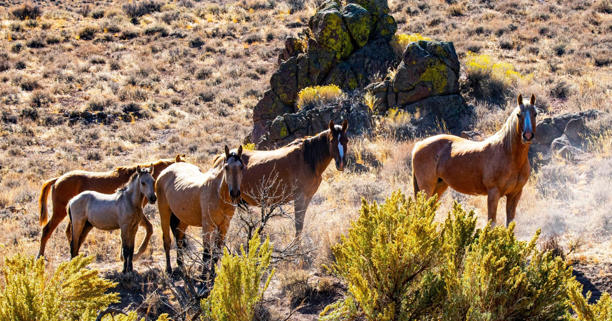
At least 20 wild horses have been killed in Arizona, activists and the US Forestry Service said (Picture: Getty)

Twenty wild horses found killed and more than 30 missing as $25,000 reward offered (msn.com)

Wildlife advocates are offering a $25,000 reward for any information about the killings more than a dozen wild horses in the American southwest.

The US Forest Service is investigating an incident where 15 horses were shot and left for dead near the northern Arizona town of Alpine.

The horses in the Apache-Sitgreaves National Forest were found with bullet wounds in their faces, necks, abdomens, and between their eyes, according to wildlife activists.

‘This hateful massacre is incomprehensible and the killer or killers must be brought to full justice,’ said Simone Netherlands, President of the Salt River Wild Horse Management Group.

On Tuesday, the group posted another update, confirming that a total of 20 horses have now been found killed, and more than 30 were missing. ‘This is not a person or a vindictive act,’ Netherlands’ group wrote. ‘This is a professional operation. It was a planned mission to kill all of the Alpine wild horses.’

Netherlands and two other wild horse organizations, the American Wild Horse Campaign and Animal Wellness Action, have pooled resources to offer a $25,000 reward for information leading to the arrest of a suspect in the shootings.

‘Someone knows something,’ Amelia Perrin of the Wild Horse Campaign told the Arizona Republic. ‘There’s not just a mass killing of animals at this level without someone knowing something.’

GoFundMe and a local tip line were set up to add more incentive for information about the horse deaths.

The Alpine and Springerville Ranger Districts of the US Forest Service announced they were investigating the horse killings on October 7, but local activists are still concerned about the future of the wild herd.

Wild horses are protected by the Wild Horses and Burro Act of 1971. However, the horses found in the Apache-Sitgreaves National Forest are legally considered feral horses, meaning they are not protected under federal and state law.

‘It’s sickening that someone can just come here and kill them,’ said Netherlands. Her group, which manages the wild horse herd in Salt River, has been trying to get federal recognition for the herd in Alpine.

A judge upheld the Alpine herd’s status as ‘unclaimed livestock,’ allowing the Forest Service to capture and sell the horses.

‘The Forest Service is currently in the highly controversial process of capturing and removing the Alpine wild horses from the Apache Forest and selling them at auction without limitation on slaughter,’ the group stated.

Regards Mark

EU: EUSAAT congress: Shaping the future for humane science.

10 October 2022

Animalfree Research

This year’s EUSAAT congress gathered a large multi-sectoral community that is critically thinking about how the EU and the world will succeed in accelerating the transition to non-animal science.

EUSAAT is the European Society for Alternatives to Animal Testing. This society’s congress brought together representatives from the European Commission, animal protection organisations, research institutions and industry. Together, we discussed how the rising ethical and scientific concerns with animal experiments, scientific developments and legislative frameworks can play a role in facilitating a shift towards humane research, testing and education.

Several members and other participants brought to this forum worrying issues deserving immediate action. Animalfree Research is shedding light on the continued harmful use of animals in high school biology classes, while non-harmful teaching media has been around for many decades. Building on this issue, InterNICHE takes a critical look at the ‘media’ that are used for education and training in secondary, higher and professional levels, and how teaching objectives can be better met with fully humane and innovative tools and approaches. PETA draws our attention to the difficulties in getting rid of studies on animals that have been proven to be ineffective, denouncing the continuous approval of projects that use the forced swim test.

Others presented positive developments in areas where non-animal approaches can become the new normal. Doctors Against Animal Experiments explored the use of non-animal technologies in COVID-19 research and in the production of antibodies. Deutscher Tierschutzbund was part of a session and panel discussion on alternatives to the use of animal-derived materials in ‘non-animal’ models. At Charité, in Berlin, PhD students are working with patients and patients’ tissues, but they are still striving for an adequate infrastructure to carry out their work effectively. Although these practices should become the gold standard when studying human biology and pathology, the current structures continue to favour animal experiments, leaving human-based research and researchers in great disadvantage.

Eurogroup for Animals was also present at this congress to strengthen the dialogue and the community that will shape the transition to non-animal science. We presented key elements for any strategy aiming at accelerating this transition, and the role of legislation and policies to normalise non-animal science.

The Chair of the Environmental Governance and Politics group at Radboud University led us through how a transformative governance approach can help accelerate the transition to animal-free innovation. In a keynote lecture, the new professor of Evidence-Based Transition to Animal-free Innovations at Utrecht University explained how science-based evidence should guide the transition to animal-free innovations.

Besides academia and NGOs, members from the European Commission, EFSA, 3Rs centres, and many other institutions have contributed with their views on how this transition will be shaped.

Regards Mark

Sweden: Fantastic ! – Djurens Rätt Celebrates 140 Years. Big Congratulations To Them.

7 October 2022

Djurens Rätt

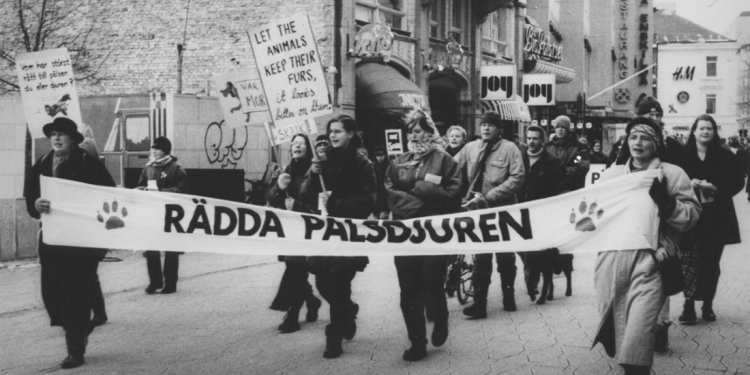
Since October 7, 1882, Djurens Rätt has worked persistently for the animals that suffer the most. During these 140 years of hard fighting, they and their now 50,000 members have done a lot for the animals. Here are some of the successes they have achieved together over the years.

In 1882, Djurens Rätt was formed at Stockholm Palace under the name Nordic Society to combat cruelty against animals used in science. 

In 1944, Sweden got its first animal welfare law, granting animals rights for the first time.

In 1979, a new law regarding animal experiments was introduced. Privately owned or homeless pets were no longer permitted be sold for animal testing.

In 1988, animals were given the right to their natural behaviours. The Animal Welfare Act was updated and cows were given the right to go out to graze during the summer.

In 1993, the import of wild-caught monkeys for animal experiments in Sweden was banned. As of 1998, all animal experiments must be approved by an animal experiment ethics committee. 

In 2001, fox farming was phased out in Sweden. The next step is to put an end to mink farming through the Fur Free Europe initiative . 

In 2013, the EU banned animal-tested cosmetics after 30 years of work by Djurens Rätt and other organisations. 

In 2016, elephants are no longer permitted in Swedish circuses. Djurens Rätt submitted 155,000 signatures to the government for a ban.

In 2021, all food chains will be cage egg-free. The End the Cage Age campaign reached its goal and the EU decides to phase out all cages in the EU.

In 2022, crimes against animals will be taken more seriously. The crime of aggravated animal cruelty is introduced into the criminal code and camera surveillance at slaughterhouses is investigated.

Read more at source

Djurens Rätt

Big congratulations to our animal campaigner friends !

Regards Mark

EU: World Octopus Day: NGOs unite to call for EU ban on cruel octopus factory farming.

8 October 2022

NGOs from all over the world have joined forces this World Octopus Day (8 October 2022) to call on the EU to ban the cruel and environmentally damaging practice of octopus farming.

Eurogroup for Animals and 36 other NGOs have written a joint letter to the European Commission warning that octopuses are ‘profoundly unsuited to farming and there are serious sustainability and animal welfare problems associated with the development of such an industry’. It also points out that allowing this practice would be in conflict with the EU’s own strategy on sustainable food production and calls for a ban on the importation of farmed octopus products.

The move follows announcements by company Nueva Pescanova that it plans to open the world’s first commercial octopus farm in Las Palmas de Gran Canaria. These plans sparked worldwide outrage when they were revealed last year.

A powerful report, Octopus Farming – A Recipe for Disaster, released by Compassion in World Farming, shows how octopuses are highly intelligent and sentient wild animals who would suffer greatly in unnatural factory farm conditions. Solitary in nature, these fascinating animals generally live and hunt on their own. Confining them to underwater tanks would also lead to high levels of stress which could lead to aggression or even cannibalism.

In addition, the cost of farming octopus to the environment would be high and unsustainable. Octopuses are carnivorous animals that would need to be fed huge amounts of human edible fish products just to be kept alive before their slaughter. In fact, to produce one kilo of octopus meat, three kilos of marine life would be needed as feed, leading to more over-fishing and pressure on other marine environments.

Earlier this week, the European Parliament adopted MEP Clara Aguilera’s report on “Striving for a sustainable and competitive EU aquaculture: the way forward”. This vote was a missed opportunity to call for a ban on introducing new carnivorous species, such as octopus, into industrial farming systems.

This World Octopus Day, we should be celebrating these incredible wild animals rather than allowing them to be confined in an underwater factory farm. It’s time to end factory farming – not expand it. Octopuses are highly intelligent, sentient beings that feel pain and distress. They should never be forced together in factory farms while other sea life is decimated in order to rear them. The EU must ban the farming of octopuses and other cephalopods to ensure this cruel practice cannot be developed.

Elena Lara, Research Manager at Compassion in World Farming

To mark World Octopus Day, Eurogroup for Animals is co-hosting an online event with In Defense of Animals, Animal Save Movement and Plant Based Treaty, including a virtual book talk with author of The Soul of an Octopus, Sy Montgomery on Saturday, October 8 at 18:00 CEST.

Regards Mark

EU: European Parliament: a First Conversation on “Fur Free Europe”.

6 October 2022

Press Release

A clear message of support from MEPs calling for a future without fur, while the ECI “Fur Free Europe” reaches more than 400,000 signatures in less than five months. The Intergroup on the Welfare and Conservation of Animals held a dedicated meeting in Strasbourg on “The case for a Fur Free Europe”: scientific experts, MEPs, Member States and civil society make their case for a new Europe without fur.

 FOR IMMEDIATE RELEASE: Strasbourg, 6 October 2022

In May 2022, Eurogroup for Animals, together with 80 NGOs, launched the European Citizens’ Initiative (ECI) Fur Free Europe which has already collected more than 400,000 signatures. The ECI calls on the EU to ban fur farming and the placement on the European market of farmed fur products, since fur is unethical, unsafe and unsustainable. 

The role of the European Parliament and its elected representatives is key to turning this massive public call into reality. That’s why the Intergroup on the Welfare and Conservation of Animals held a dedicated meeting in Strasbourg on “The case for a Fur Free Europe”. 

After an introduction from the President of the Intergroup Tilly Metz MEP (LU, Greens/EFA), Reineke Hameleers presented the campaign on behalf of Fur Free Europe, and introduced the new report on the reasons why we need to ban fur farming and the placement of farmed fur products on the European market from public health, legal, environmental and ethical perspectives.

More than 400,000 citizens have already made it clear that fur no longer has a place in Europe. Member States are ready to back their request. Today’s exchange with experts, MEPs and the horrific but important images from the documentary complement the request. Society as a whole is ready to transition away from cruelty, Europe is ready for this move and, in order to succeed, we need the EP to be strong in its demands toward the EC. I am positive we can count on the elected representatives. 2023 can be the year we make history for the animals and for the EU.

Reineke Hameleers, CEO, Eurogroup for Animals

The presentation was followed by a partial screening of the documentary SLAY from the makers of the award-winning films Cowspiracy and What The Health. SLAY follows filmmaker Rebecca Cappelli’s journey around the world to uncover the dark side of the fashion industry: a harrowing story of greenwashing, mislabeling, and animal cruelty. SLAY provides an in-depth and eye-opening look into the realities of today’s fashion industry while pointing the way towards viable and sustainable alternatives. 

The suffering of animals in the fashion industry is greenwashed into oblivion while those skin industries are destroying the planet and harming people. SLAY aims to challenge the notion that animal skins are a fabric, and open people’s eyes to the dark realities behind some of the most sought after skins in fashion.

Rebecca Cappelli, Director and Producer, SLAY

Bo Algers, Professor emeritus at the Swedish University of Agricultural Sciences, gave a presentation on the “Behavioural needs of Mink and Foxes in the fur industry”.

Johannes Rauch, Austrian Federal Minister of Social Affairs, Health, Care and Consumer Protection intervened with a video message: “In my role as Minister of Health, I strongly push towards the realisation of the „One Health“ approach. That means we have to look at human health, animal health and environmental health as interlinked issues that strongly impact one another. I am convinced that we will have to fundamentally change this system of animal exploitation to avoid future pandemics. This is why I wholeheartedly support the European Citizens’ Initiative for a Fur Free Europe and I want to ask you to support it as well. The EU must use its power and also close the EU market to farmed fur products from outside the EU. Just like we have done with products from certain trapping methods, seal products or cat and dog fur. In order to make progress and live up to our moral standards and the responsible treatment of animals as sentient beings, I strongly urge all of you to support this common cause, support the Citizens‘ initiative and make this step possible towards the goal of a fur free Europe”.

The message echoed the information note tabled by Austria and the Netherlands during a meeting of the Council of the European Union (Agriculture and Fisheries), supported by Belgium, Germany Luxembourg and Slovakia, calling on the European Commission to  investigate the possibility for a ban on fur farming. The call to end fur farming in the EU on the grounds of animal welfare, public health and ethical considerations, was backed by a total of twelve Member States during the deliberations on this paper.

Notes

The ECI Fur Free Europe  

The report Fur Free Europe 

SLAY digital booklet

Watch the SLAY documentary

The 2021 request to end fur farming in the EU from Twelve Member States 

 Regards Mark

England: Fighting the Badger Cull.

The badger Cull

Over 176,000 badgers have been killed since the current badger cull began in England in 2013. Badgers are killed in their thousands from Cornwall to Cumbria under misguided and fundamentally flawed attempts to control bovine Tuberculosis (bTB), an infectious respiratory disease which affects cattle.

Badgers are not the problem – Politicians Are !

Bovine TB is always present in the environment and can affect or be carried harmlessly by many species – livestock and wildlife alike. Yet the government has focused on badgers, even though 94% of cattle infections are from cow to cow. Many in the farming community wrongly believe that badgers are a significant vector in the spread of the disease. For many years, independent scientists, vets, researchers, as well as Badger Trust, have rightly challenged this claim. 

Continue reading and watch several videos at the Badger Trust:

Can the Cull – stop badger culling | Badger Trust

Some interesting information – The Badger Cull – Wikipedia:

Badger culling in the United Kingdom – Wikipedia

Setts, Drugs and Rock n Roll:

England: Setts, Drugs and Rock n Roll. Dr Brian May Speaks In Defence of Badgers at Oxford University. – World Animals Voice

Regards Mark – fight the cull !

Save Me !

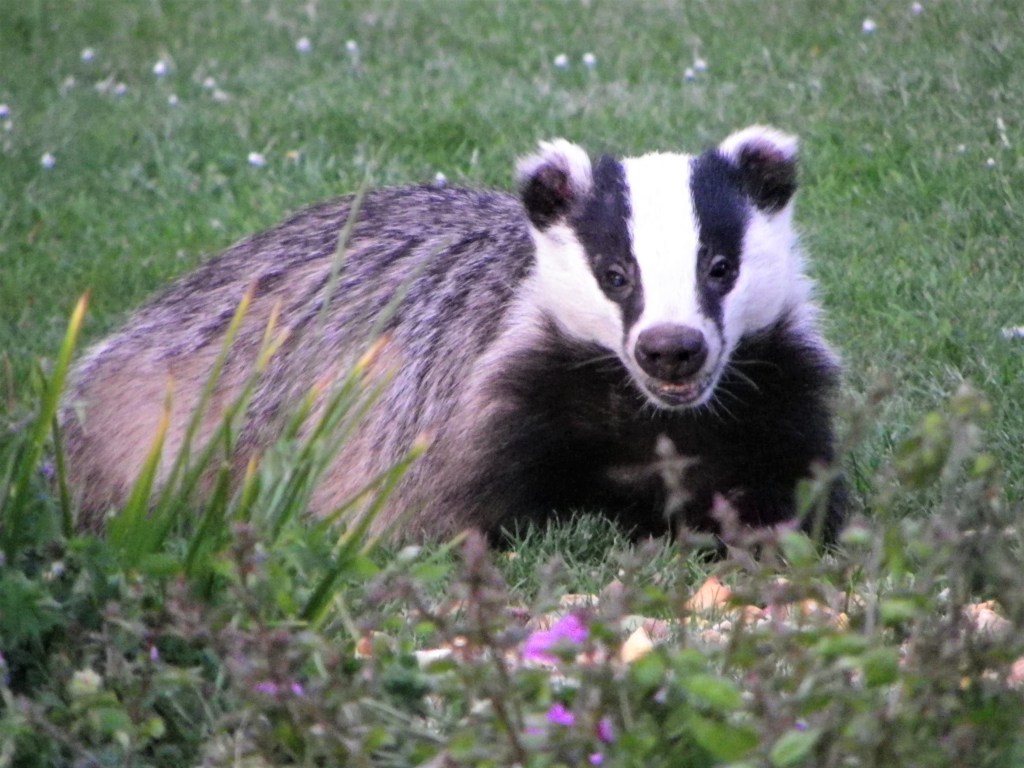
My wonderful badgers below who visit my own garden:

Photo – Mark WAV

Photo – Mark
Photo – Mark