Month: January 2023

EU: Male Chick and Female Duckling Culling to be Banned? – Recent Euro Parliament Event Wins Interest From EU Policymakers.

18 January 2023

Eurogroup News

On January 10 2023, an event at the European Parliament was held by the European Institute for Animal Law & Policy and L214 to discuss the future of male chick and female duckling culling. Positive feedback from the policymakers in attendance – as well as general support for and interest in alternatives to the practice – suggest an EU-wide ban could be within our grasp.

The fate of male chicks and female ducklings in Europe is, generally speaking, a very dark one. As they are deemed ‘useless’ by the industry for their inability to produce eggs or big livers, a huge number of them are routinely culled at just one day old by gassing or maceration.

It’s a senseless practice that must be stopped. That’s why we at Eurogroup for Animals, along with several NGOs including L214 – the creators of the ‘Stop Grinding and Gassing’ campaign – have been battling to get the issue recognised and banned at EU level.

Nationally, there have been a lot of victories so far for male chicks in particular. Germany, France and Austria already banned their systematic killing last year – in some instances, following the tireless work of our members and several other NGOs to put the issue in the political spotlight. However, millions of male chicks and female ducklings across Europe are still vulnerable, and EU-wide legislation is therefore required to end the cruelty of this type of culling once and for all.

To explore the potential of a ban further, L214 together with the European Institute for Animal Law & Policy organised an EP event to discuss alternatives to male chick and female duckling culling, and what steps we could take to phase it out across Europe over the coming years.

Envisioning the end of male chick and female duckling culling

Over 100 people attended the EP event both in-person and online, including representatives from COPA COGECA, researchers, and MEPs like Tilly Metz, Caroline Roose and Sirpa Pietikäinen.

Our own Farm Animals Programme Leader, Inês Grenho Ajuda, delivered a talk to highlight the NGO’s asks, as well as the unique opportunity presented by the upcoming revision of the EU’s animal welfare legislation to obtain an EU-wide ban on male chick and female duckling culling. Alternatives to the practice were also discussed like in-ovo sexing: a type of technology that can determine the sex of eggs before they hatch (thus eliminating the ‘need’ for culling). Further alternatives such as the use of dual-purpose breeds and sourcing more plant-based egg options, along with ample evidence to show a ban could be successfully carried out in the EU, has additionally been explored in a brilliant report by Animal Society published recently.

Feedback on the event and the topics discussed was positive. Pietikäinen, who represented the conservative European People’s Party, said she would like to see whether the European Parliament would support a ban on chick culling in the coming months. Independent Portuguese MEP Francisco Guerreiro emphasised that animal welfare will be important in next year’s elections, too, suggesting a ban would be timely.

While she was not present, European Commissioner Stella Kyriakides has implied she is on a similar wavelength, having already expressed being in favour of a ban on male chick culling at an AGRIFISH meeting last year.

With the animal welfare legislation to be revised in the coming years and the elections around the corner, now is a critical opportunity to end this horrible process, and implement new and innovative solutions that are devoid of needless pain and suffering. 

After an excellent event and promising words from policymakers and the other parties in attendance, we at Eurogroup for Animals are now working on making that happen. Stay posted for updates. 

Regards Mark
Scotland (UK): Scottish Farmed Salmon Dying in Droves Before Slaughter.

Scottish farmed salmon dying in droves before slaughter

23 January 2023

Animal Equality

Animal Equality UK are raising the alarm as salmon mortality rates on Scottish salmon farms are rocketing.

Every year in the UK, up to 77 million fish are farmed and slaughtered, but many more don’t even make it to slaughter.

According to a report from industry membership body Salmon Scotland, 2.8 million farmed salmon died on-farm in Scotland in September 2022 alone. 

Fish Health Inspectorate (FHI) data shows that nearly 15 million salmon mortalities were reported by farms in Scotland from January to November 2022, compared with 8.58 million in 2021 and 5.81 million in 2020.

Farmed salmon suffer from overcrowding inside cages. Others are bitten by sea lice which eat their skin while they’re alive. Animal Equality reports that instead of fixing the root cause of the issue, fish farmers use chemical treatments and other rough treatments which cause the salmon even more suffering.

Drone footage collected by Animal Equality UK shows workers using a “mort sock” to dredge dead fish from the bottom of pens.

The data doesn’t lie. It’s undeniable that early fish mortality is a rapidly worsening issue. Over recent years deaths in fish pens have reached record levels for a number of reasons, including a sharp rise in infectious diseases among the fish who are packed into unnaturally overcrowded cages, as well as poor gill health and rough treatments to remove lice from the infested waters.

As the industry grows, so do these issues. We must take back the power and boycott farmed fish, it’s the only way that we can begin to curb this ever-worsening problem.

Abigail Penny, Executive Director of Animal Equality UK

Don Staniford, of the Scamon Scotland campaign said the FHI figures on salmon deaths were likely to be an underestimate because not all mortalities need to be recorded.

About 25% of the salmon in sea cages are dying, so that’s about one in four. If ramblers saw one in four cows or sheep dead in a field they’d be horrified, but because it’s underwater it’s out of sight, out of mind.

Don Staniford, Scamon Scotland campaign

Regards Mark

UK: UK RESIDENTS ONLY – This weekend (27 to 29 /1/23) is the RSPB Big Garden Birdwatch for 2023.

This weekend (27 to 29 /1/23) is the RSPB big garden birdwatch for 2023.

This is only open FOR UK RESIDENTS.

Give just 1 hour of your time this weekend to take part.

The Big Garden Birdwatch is free to anyone and everyone but the information sent in by people all over the UK helps the Royal Society for the Protection of Birds (RSPB) build up a very accurate register of how the national bird population is doing; what species are flourishing, what are in decline, stable etc.

This birdwatch makes it an ideal family activity at the end of January.  Best of all taking part is easy. All you need to do is sign up online to take part and get a free guide.

You don’t even need a garden. You can count birds from a balcony or even your local park.

Which common garden birds will you see?

Participants are asked to spend an hour counting the birds they see and then submit their results online. Also, it’s good idea is to add a bird feeder to your garden. Watch how a wide variety of different types of birds will pop in your garden for a snack!

As you know, we have many wild bird visitors to our garden; and thus have just signed up for this years watch.  Looking forward to counting the visitors to the garden, submitting the data to the RSPB and helping to get a good overall view of the status of birds in the UK.

I hope you can sign up and take part also.

Regards Mark

Go here for more and to sign up:

Big Garden Birdwatch | The RSPB

https://worldanimalsvoice.com/?s=breakfast+buddy

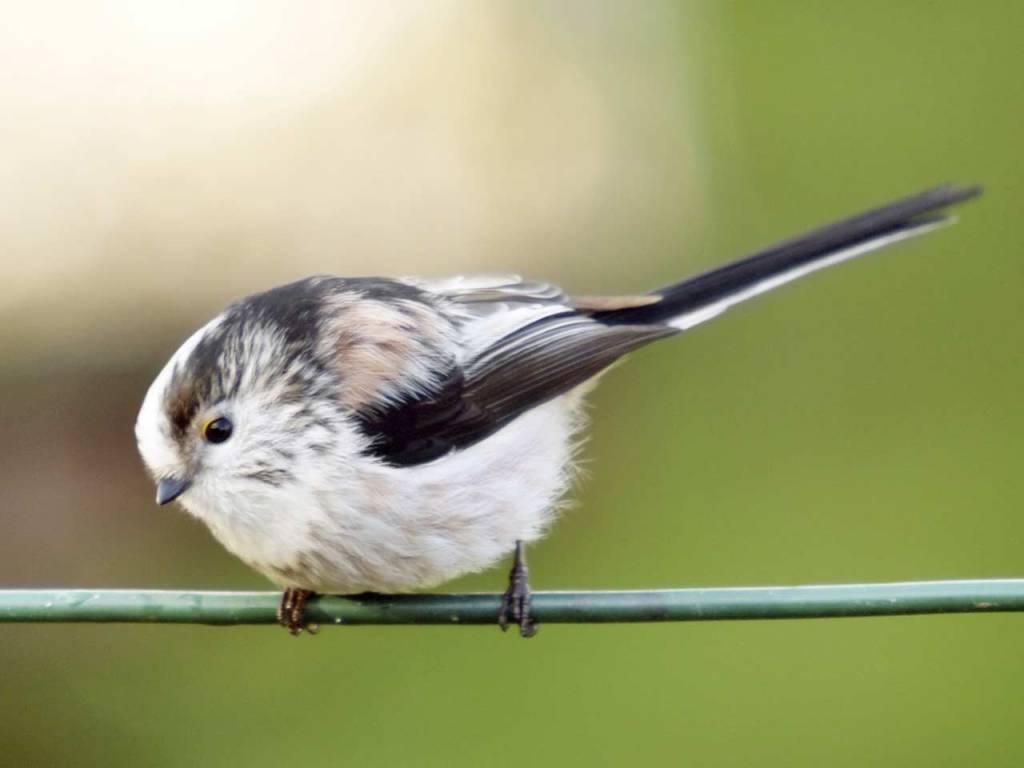
Below – Breakfast Buddy.

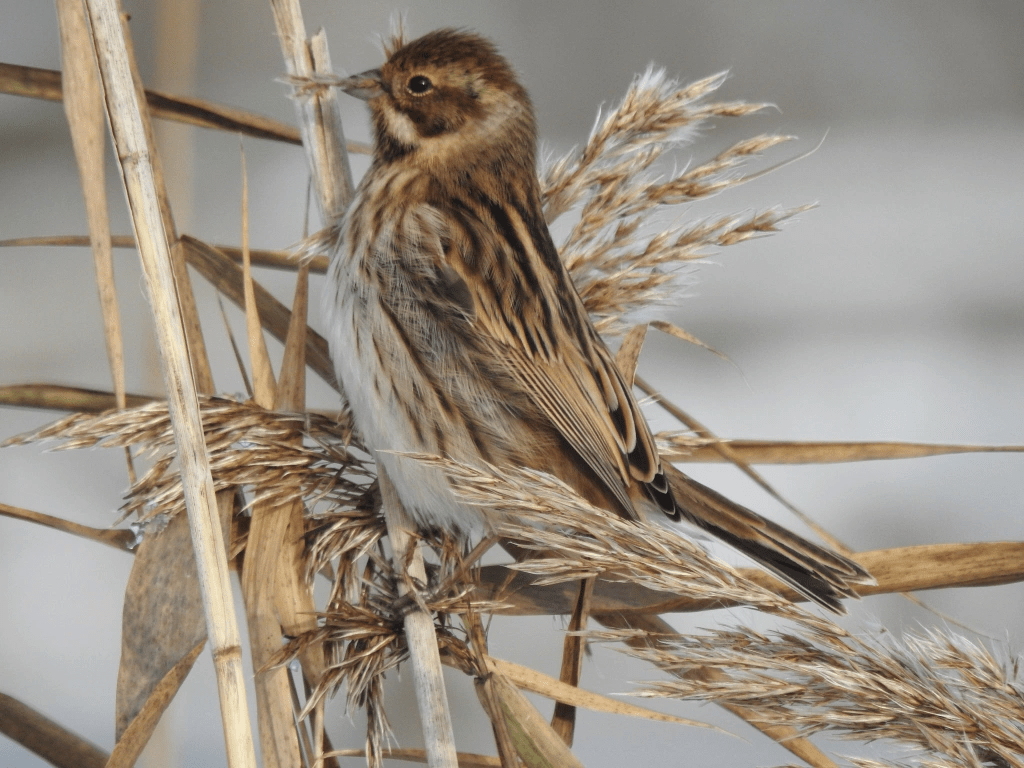
Below – Reed Bunting photo from Pauline.

BelowStarlings enjoy their morning bath in my garden.

Norway: Brilliant News – Fur Farming Ends in Norway as Remaining Farms Close Doors Two Years In Advance of the Legal Ban ! – Victory !

20 January 2023

Dyrevernalliansen

The last two fur farms in Norway will be closing permanently by the end of January 2023 according to the country’s Fur Farmers Association, bringing the industry to a close two years before a legal ban comes into force in 2025.

On 13 June 2019, the Norwegian Parliament (Stortinget) passed a law banning fur farming. The ban was initiated by the Norwegian Liberal Party. In the years before this, fur farming had been fiercely debated by many parties, including the Norwegian Labour Party and the Norwegian Conservative Party.

Dyrevernalliansen report that in 2001, there were more than 1,000 fur farms operating in Norway, declining to only 80 by early 2021. The organisation has lobbied since 2001 for a ban on fur farming.

Together we won in the end, and it is wonderful to know that no new fox pups or mink kits will be born in cages in Norway. Dyrevernalliansen will continue our work for the animals who need it the most. Our next goal is a ban on the import of fur products into Norway. Fur farming is animal cruelty no matter where in the world it takes place. Now that production has been discontinued in Norway, it is deeply unethical that we continue to import products from fur farms in other countries.

Anton Krag – CEO, Dyrevernalliansen

The European Citizens Initiative Fur Free Europe is calling for a ban on fur farming and the sale of farmed fur products across the European Union.

Do you support this ban? Add your name now

Regards Mark

EU: Working Group for the ECI Fur Free Europe Successfully Launched at the European Parliament – 25 January 2023.

Working group for the ECI Fur Free Europe successfully launched at the European Parliament

25 January 2023

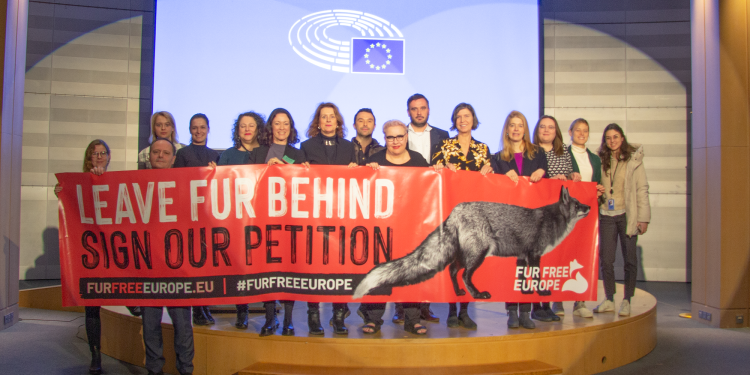
Today, a kick-off meeting was held at the European Parliament to launch a working group dedicated to the European Citizens’ Initiative Fur Free Europe. With over 1.3 million signatures collected in 8 months, the ECI Fur Free Europe clearly reflects the wishes of a majority of European citizens for a Europe without exploitation of animals for fashion.

The working group, announced last year during a meeting of the Intergroup on animal welfare and conservation, will be coordinated by Eurogroup for Animals in close collaboration with the Fur Free Alliance. 

The working group hosts representatives from the main political groups, and will work to support the Fur Free Europe initiative by coordinating amongst those groups and collaborating with civil society organisations involved in the ECI. The goal is to ensure the Parliamentary process which follows every ECI, and to adopt a resolution for a ban on fur farming and the sale of farmed fur products in Europe.

In addition, the working group, in conjunction with members of the Intergroup for the Welfare and Conservation of Animals, will aim to foster discussion and raise awareness in the European Parliament about the serious cross-cutting issues related to fur farming and the fur trade. The group will also participate in public campaign activities to apply further pressure and draw attention to the issue.

This is not the first time that the European Parliament has addressed problems connected with fur production. In May 2020, it adopted the Report on the EU Biodiversity Strategy for 2030, which acknowledged that fur production significantly compromises animal welfare and increases the susceptibility to infectious diseases, including zoonoses, as it has occurred with COVID-19 specially in mink:

Above – Brilliant Anja !!

[…] fur production, which involves the confinement of thousands of undomesticated animals of a similar genotype in close proximity to one another under chronically stressful conditions, significantly compromises animal welfare and increases their susceptibility to infectious diseases including zoonoses […]. The coming years will be crucial to end the enormous suffering of animals in the EU. In light of the Commissions’ strong commitment to revise the EU Animal Welfare legislation, this working group represents a crucial and timely initiative. We will work together to secure strong support from the European Parliament on the European Citizens’ Initiative Fur Free Europe. The only possible outcome, as demanded by European citizens, is a ban on fur farming and a ban on the sale of farmed fur products on the European market.

Anja Hazekamp, chairwoman of the Fur Free Europe working group

Fur free Europe – browse the publication:

Fur Free Europe | Eurogroup for Animals

Regards Mark

Lidl’s Chicken Scandal: a Glimpse of the State of Animal Welfare in the EU.

Lidl’s chicken scandal: a glimpse of the state of animal welfare in the EU

Essere Animali

Press Release

NGOs are pressuring Lidl to sign the European Chicken Commitment, following the release of investigations that reveal shocking conditions for broilers on their supplier’s farms in Germany, Italy and Spain.

In a campaign led by Equalia and the Albert Schweitzer Foundation Germany, NGOs are telling Lidl that enough is enough, after footage was released showing broiler chickens being abused and neglected on their supplier’s farms. 

‘Lidl’s chicken scandal’, as it’s being called, began when Equalia released footage revealing hideous circumstances for broiler chickens on a factory farm in Germany. Shoved together in the dark and with barely enough room to breathe, the video shows droves of malformed broilers suffering and dying in the worst of conditions. 

While that was enough to spark outrage among animal protection organisations across Europe, the scale of the problem was revealed to be much worse shortly after.

Just a few weeks later, further footage published by Equalia highlighted similar abuses being extended to broilers connected to Lidl in Spain. Chickens are being thrown to the ground from high up, slammed against buckets, and made too miserable and exhausted to move, with many of them spending their days lying on the floor being trampled over.

Below – Click on ‘Watch on YouTube’.

Above – This is happening on farms supplying Lidl in Spain

Regards Mark

EU Parliament Shows Positive Commitment Toward Systemic Change to Regulate the (Exotic) Pet Trade.

EU Parliament shows positive commitment toward systemic change to regulate the (exotic) pet trade

25 November 2022

AAP Press Release

Yesterday, the EP adopted a resolution on improving EU regulation through an EU positive list of (wild and exotic) pets. This was the direct result of a petition and subsequent debate at PETI Committee from Eurogroup for Animals and AAP and Dyrenes Beskyttelse.

Excitingly, it’s the second EP Resolution in as many months with encouraging language on an EU positive list. It’s a strong message to the Commission to expand upon their initial commitment for a feasibility study on the EU positive list in the revised Action Plan against Wildlife Trafficking.

This resolution is the icing on the cake of a very successful year in political calls for the EU positive list, such as the May AGRIFISH position paper supported by 19 Member States, and the October EP resolution on the Convention on the International Trade of Endangered Species (CITES), which provided the EP’s opinion on the position the Commission should take at CoP19. Incidentally, the exotic pet trade has been front and centre of the debates at this important meeting of the Parties to CITES. 

Finally, the text cites the EP’s June 2021 resolution on the EU Biodiversity Strategy for 2030: bringing nature back into our lives, which includes reference to a white (positive) list.

An EU-wide positive list is a tool to more effectively and efficiently regulate the pet trade, by producing a list of animal species that are allowed to be traded as companion animalsany species not on the list is de facto illegal to keep.

The resolution stresses that the European trade policy needs to ensure that pet trade practices do not compromise the welfare of wild and exotic animals or contribute to biodiversity loss, and that the keeping of such animals as pets does not jeopardise the welfare of the animal and the owner.

Moreover, it expresses the Parliament’s concern that current regulations in Member States are fragmented and not consistent, often failing to encompass much of the animal kingdom.

Additionally, it notes that the EU legal framework is currently insufficient to tackle animal welfare, public health and safety, and invasiveness risks associated with the trade and keeping of wild and exotic animals as pets.

Of vital importance, the Commission recently released a revised Action Plan against Wildlife Trafficking, which had and action to “Explore the need for, added value of, and feasibility of revising existing measures or creating new tools to reduce unsustainable trade in wildlife (e.g. a ‘positive list’ of species whose specimens taken from the wild can be traded and kept as pets)”.

It’s our view that this action does not go nearly far enough, but that this resolution comes at the perfect moment to urge the Commission to expand on their initial commitment. The resolution calls “on the Commission to carry out an impact assessment of the added-value and feasibility of establishing such a list, using a science-based set of criteria to determine which species are suitable as pets, and to include a careful analysis of various criteria already used in national positive lists, in order to establish the most effective ones to be possibly adopted in an EU-wide positive list”. 

It is vital that the European Commission hears the strong message of the Member States through the Council, and the continued calls from the Parliament, to ensure a timely and strict implementation of the Action Plan, especially its feasibility study on the EU Positive List. The Commission is now mandated to be flexible in its impact assessment approach, to seek out feasible ways that an EU Positive List can fit with, and add value to the current legislative framework. It should be conducted with a view to ease the establishment of the Positive List. If not, an important and viable tool to protect animals, humans and the environment could be missed out on. This cannot be allowed to happen.

Reineke Hameleers, CEO, Eurogroup for Animals

Regards Mark

Italy: Lambs Transported From Eastern Europe to Italy Face Gruelling Journeys This Winter.

Lambs transported from Eastern Europe to Italy face gruelling journeys this winter

December 2022

Essere Animali Investigation

Several roadside checks have been carried out by our member organisation Essere Animali in the Gorizia area, northeast Italy. Seven trucks from Eastern Europe were identified transporting animals in overcrowded conditions, without proper watering systems, or adequate partitions and heights for transport.

As the Christmas season approaches, the number of trucks importing lambs into Italy from Eastern Europe rises, with long, gruelling journeys for the animals.

Last year, in the days leading up to Christmas, more than 600,000 lambs were slaughtered in Italy (source: National Livestock Registry Database), which is about a quarter of those slaughtered per year, and of these, one in four is imported from abroad. 

The lambs range in age from not even 2 months to 3 months old, transported mainly from Romania and Hungary to slaughterhouses located mainly in Latium and Apulia, enduring journeys that could last from 24 to 30 hours.

In recent days, Essere Animali carried out an inspection of live animal transport trucks at the border between Italy and Slovenia, documenting the conditions of 7 four-floor trucks, with insufficient heights that did not allow the animals to stand upright, leading to several problems, including restricted movement. The lambs’ heads were touching the top floor of the compartment, a condition that can cause bumps, bruising and injury, as well as not allowing adequate ventilation. 

Activists from Essere Animali also found: 

Overcrowding: densities were too high, it is impossible for all the animals to reach the watering systems positioned only on one side, with the risk of them stepping on each other in case someone wants to sit down to rest; 

Dangerous gaps: lambs get stuck in gaps created between floor and wall or interior partitions and shelves;

Inadequate beverage systems: they were found to be inactive during transport, only activated during travel breaks, and some were not functional anyway. Moreover, even when functional, they were not suitable for lambs since due to their young age they are unable to use them. 

The inadequate and unsuitable watering system is a prime example of the current regulatory gaps, which, combined with the high transport densities, cause suffering and thirst in lambs, putting them at serious risk of dehydration. 

These are conditions also denounced by Essere Animali in Easter 2022 and for which the organisation had managed to get sanctions issued under the Legislative Decree No. 151 of July 25, 2007, which provides penalties for violating the provisions of European Regulation 1/2005 on the protection of animals during transport and related operations.

In 2021, only 3% of trucks carrying lambs from Romania were checked. The same fate also befell the one million cattle transported from France and the more than 800 thousand pigs that arrived from Denmark, with 4.6% of consignments checked. Of the more than 66 thousand live animal consignments that arrived in Italy, only 152 sanctions were imposed.

The control activities of Essere Animali also aim to document the conditions of transports that, while complying with current regulations, present critical aspects for animal welfare and highlight the need to implement European laws that better protect animals during the delicate phase of transport, which often causes animals additional stress and suffering. 

The European Commission is currently engaged in a comprehensive review of laws on animal husbandry, transport and slaughter, with the aim of aligning them with the latest available scientific data, expanding their scope and ensuring a higher level of animal welfare. The new legislative proposal is expected in 2023, and Member States can play an important role by supporting an ambitious proposal for the protection of farmed animals. 

We will inform the European Commission and the Minister of Health of the outcome of the inspections we carried out at the border again this year, providing images that document an alarming reality. The European Regulation, besides being frequently violated, is not able to protect animals concretely, and this is the most serious fact that shows how important the revision of the legislation is.

Today it is legal to transport lambs as young as two months old for journeys lasting up to 30 hours, subjecting them to conditions that generate them great stress and suffering. Together with other NGOs from across Europe, we are calling for greater protections, such as banning the transport of live animals over long distances, decreasing travel hours, and banning the transport of unweaned animals.

The European Commission has a chance to really improve conditions for animals. Do not betray the demands of your citizens!

Simone Montuschi, President of Essere Animali

Read more at source

Essere Animali

Regards Mark

EU: Great News – Fur Free Europe Reaches 1,000,000 Signatures, But More Needed to Ensure Validation Checks.

Fur Free Europe reaches 1,000,000 signatures

December 2022

The European Citizens’ Initiative Fur Free Europe has reached 1,000,000 signatures of support in little over 6 months. The initiative, which aims to ban fur farming and the sale of farmed fur products in the European Union, is well on its way to becoming a record breaking ECI for animals. But what happens now, and why will the campaign continue to gather signatures?

On 6 December, Fur Free Europe topped 1,000,000 signatures from citizens across the European Union. The campaign also confirmed successfully reaching the signature threshold in 14 Member States; Finland, Denmark, Sweden, Lithuania, the Netherlands, Germany, Slovakia, Bulgaria, Poland, Latvia, France, Belgium, Greece and Austria.

What happens now?

Every European Citizens’ Initiative requires one million validated signatures in order to succeed. 

Once the Fur Free Europe initiative closes, it will undergo a stringent verification procedure: governments from each Member State will check that signatures were gathered from real persons, that each person has added their support only once, and that their personal details such as name and ID number are registered and correct.

Due to this important verification procedure, it is possible that a large number of signatures could be invalidated and discounted, leaving the final figure below the required one million. 

For this reason, we will continue to collect signatures from citizens across Europe who share our belief that fur farming and the placement of fur products on the market are cruel, unnecessary and unethical. 

How many more signatures do we need?

Fur Free Europe will be pushing on at full force to gain as many signatures as possible, amplifying our call for a Europe without fur farming and ensuring there is no possibility our ECI can be invalidated. 

The most successful European Citizens’ Initiative for animals?

Fur Free Europe has collected one million names faster than any other European Citizens’ Initiative. This fantastic success is sure to increase the urgency for the European Commission to take action and finally bring the European fur industry to a close. 

Would you like to join over one million citizens to make this happen? 

Add your name to Fur Free Europe now, and follow the progress of our incredible movement.

Regards Mark

EU: Successful Shark Finning Citizens’ Initiative Presented to the Commission.

Successful shark finning Citizens’ Initiative presented to the Commission

11 January 2023

The ‘Stop Finning – Stop the Trade’ initiative has become the eighth successful European Citizens’ Initiative (ECI), reaching over 1.1 million statements of support from EU citizens.

The European Commission now has six months to decide on political actions to end the EU shark fin trade.

The initiative calls on the Commission to propose legal measures to end the trade of fins in the EU, including the import, export and transit of fins other than if naturally attached to the animal’s body.

The Commission will meet the ECI organisers to discuss the initiative in detail in the next weeks. A public hearing will then be organised by the European Parliament.

The Commission has until 11 July 2023 to present its official reply, outlining the actions it intends to take: whether to propose legislation, take other non-legislative actions or not act at all.

This initiative is the eighth ECI to have successfully passed the threshold of one million signatures from at least seven Member States, demonstrating that European citizens can help create European policies. 

Today the initiative officially entered the political process, and campaigners publicly delivered the 1.1 million statements of support from EU citizens to the EU institutions in front of the European Parliament in Brussels, Belgium.

The EU has to implement a trade ban immediately. Sharks are important to marine ecosystems and populations recover very slowly from industrial fishing. Hunting such important animals for their fins is the epitome of senselessness. We are counting on the European Commission to implement a strong trade regulation in addition to existing regulations to finally end the shark fin trade in the EU. 

Nils Kluger, spokesperson of “Stop Finning – Stop the Trade”

On Thursday 19th January, the Animal Welfare Intergroup will hold a hybrid meeting where Nils Kluger, Spokesperson and Coordinator of the ECI, will discuss the political process of the validated ECI and the demands to the European Parliament. 

Read more at source

Stop Finning EU

Regards Mark