Category: Environmental

Help stop neo-colonialist and capitalist expansion into the Kavango Conservation Area.

Nature, wildlife, and scarce water supplies in a unique corner of southern Africa are being endangered by a rush to drill for oil. A Canadian company is pushing to explore for oil in the Kavango Basin, an environmentally sensitive area.

Please support the fight against a fossil fuel project that will drive the climate crisis.

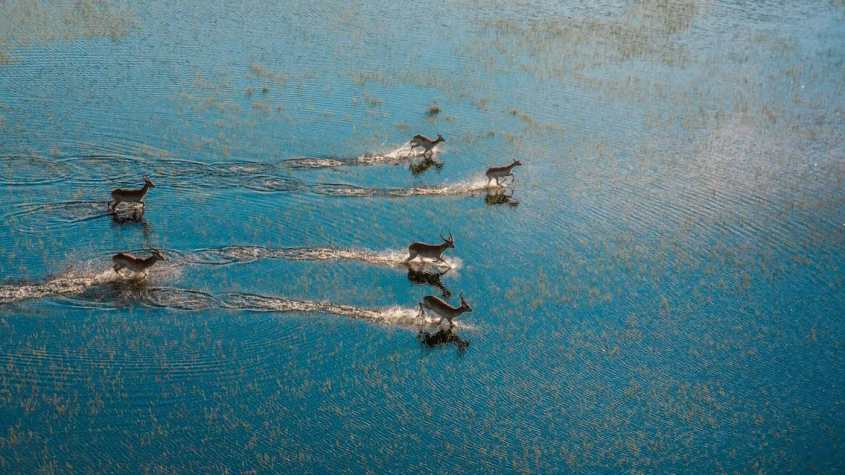
Aerial View of the Okavango Delta, Botswana

“The oil needs to stay in the ground”, says Ina Shikongo.

The Fridays for Future (FFF) activist in Namibia’s capital city Windhoek is fighting a project to exploit untapped oil and gas reserves in the northeast of the country.

“The exploitation would be a catastrophe – not only for the global climate but also for wildlife, water resources and the livelihoods of local people”.
The project Ina rejects so fiercely – together with further FFF activists and a citizens’ coalition – is run by ReconAfrica, a firm based in Canada.

The company claims to have discovered an immense deep sedimentary basin. It obtained a license for oil and gas exploration in the Kavango delta, bought a second-hand oil rig in the US, and shipped it across the Atlantic.

If the drilling of the first three test boreholes – slated for December 2020 – is successful, the company plans to extract two billion barrels of oil before drilling into deeper layers of rock.

Environmentalists fear the company will use fracking despite public statements to the contrary, as its marketing materials refer to “unconventional” methodsan industry euphemism for fracking.

The ecological impacts of the projects are likely to be devastating.

It would not only threaten bodies of water in the dry savannas of Namibia, but also Botswana’s UNESCO World Heritage Site, the Okavango Delta, with its unique biodiversity and huge populations of elephants, hippos, rhinos, and birds.

Tourism, an important source of income, is in danger while other livelihood strategies of indigenous San and local people also hang in the balance.

We need to stop ReconAfrica’s project for the sake of the climate, biodiversity, water, and the livelihoods of the local people.

Please support our demands with your signature.

https://www.rainforest-rescue.org/petitions/1231/keep-the-oil-industry-out-of-africas-natural-treasures

And I mean…the head of the farmers’ association Kavango-Ost, Adolf Muremi, says: “Recon Africa says they informed the people here – but we are not aware of anything about this. You can already expect malformations in babies and other diseases that this type of industry leads to agriculture will be just as affected as the groundwater, it will have negative consequences for life for everyone here “

The multinational sells the project as an “exciting future” – for whom?

1) Oil and gas extraction is a menace to wildlife. Loud noises, human movement, and vehicle traffic from drilling operations can disrupt avian species’ communication, breeding, and nesting.

2) The ecosystem will be destroyed by a criminal Canadian Company that harvests 90% of the profits. The state of Namibia is only entitled to ten percent – a hunger share.

3) The construction of roads, facilities, and drilling sites known as well pads requires the use of heavy equipment and can destroy big chunks of pristine wilderness.

4) The underground water will not only be polluted but also depleted. How can the inhabitants giving an overseas company unbridled access to their most precious resource?

There will only be damages to humans and animals, and this harm is irreversible.

Please sign the Petition: https://www.rainforest-rescue.org/petitions/1231/keep-the-oil-industry-out-of-africas-natural-treasures

My best regards to all, Venus

Climate change: 2020 set to be one of the three warmest years on record.

https://www.bbc.co.uk/news/science-environment-55150910

Climate change: 2020 set to be one of the three warmest years on record

The Earth continued to endure a period of significant heating in 2020 according to the World Meteorological Organization (WMO).

Its provisional assessment suggests this year will be one of the three hottest, just behind 2016 and 2019.

The warmest six years in global records dating back to 1850 have now all occurred since 2015.

The most notable warmth was in the Siberian Arctic, where temperatures were 5C above average.

How do we know the temperature for 2020 when the year isn’t over yet?

To work out the annual rise in temperatures for their State of the Climate report, the WMO uses information from five different global datasets.

They then compare modern readings to temperatures taken between 1850-1900. This baseline figure is sometimes referred to as pre-industrial levels.

With data available from January to October this year, the WMO says 2020 is set to be around 1.2C above the baseline, but with a margin of error of 0.1C.

All five datasets currently have 2020 as the second warmest, behind 2016 and ahead of 2019, based on comparisons with similar periods in previous years.

However the expectation from scientists is that the temperature data from November and December will likely see enough cooling to push 2020 into third spot.

That’s because a La Niña weather event has developed in the Pacific Ocean and this normally depresses temperatures.

Despite this, the WMO is certain that 2020 will remain one of the warmest three.

“Record warm years have usually coincided with a strong El Niño event, as was the case in 2016,” said Prof Petteri Taalas, WMO Secretary General.

“We are now experiencing a La Niña, which has a cooling effect on global temperatures, but has not been sufficient to put a brake on this year’s heat.”

Are these small temperature differences important?

These relatively similar global temperature figure recorded over the past few years hide considerable differences at local level.

In 2020, Siberia saw temperatures around 5C above average, which culminated in a reading of 38C at Verkhoyansk on the 20th June, which is provisionally the highest known temperature recorded anywhere north of the Arctic Circle.

January to October was also the warmest such period on record in Europe.

But some places were below average including parts of Canada, Brazil, India and Australia.

Overall though the 2020 figure reinforces the view that climate warming, driven by human activities is persisting. The decade from 2011 to 2020 is the warmest yet recorded.

Where 2020’s heat went

The majority of the excess heat generated from warming gases in the atmosphere ends up in the oceans.

This is putting added strain on the seas, with around 80% of global waters experiencing at least one marine heatwave this year. These events, similar to heatwaves on land, see prolonged exposure to high temperatures which can have devastating impacts on marine creatures and ecosystems.

A long-running heatwave off the coast of California, known as “the blob”, was said to have killed up to a million seabirds in 2015-16.

Researchers say that these events have become more than 20 times more frequent over the past 40 years.

“About 90% of the heat accumulating within the climate system from anthropogenic climate change is stored in the ocean,” said Prof John Church from the University of New South Wales in Sydney, Australia.

“This latest update from WMO clearly shows the oceans are continuing to warm, and at an accelerating rate, contributing to sea-level rise. This means climate change has significant momentum committing us to further change over the coming decades.”

Ongoing warming

The WMO says that warming continues to drive melting in many parts of the world, including Greenland where around 152 billion tonnes of ice was lost from the ice sheet in the year to August 2020.

There were 30 named storms during the North Atlantic hurricane season, breaking the record for the number of such events. As well as record numbers, new evidence suggested that hurricanes get stronger when they hit land because of rising temperatures.

Other impacts noted by the WMO this year included wildfires in Siberia, Australia and along the US West Coast and South America, which saw plumes of smoke circumnavigate the globe.

Floods in Africa and South East Asia displaced large numbers of people and undermined food security for millions.

What has been the reaction to this report?

The findings of the WMO report won’t come as a surprise to most observers.

“The state of the global climate? Parlous,” said Prof Dave Reay from University of Edinburgh, UK.

“These annual updates of deteriorating planetary health always make for bleak reading; this year’s is a full red alert. Surging heat, intensifying droughts and rampant wildfires all speak of the acute impacts of climate change in 2020. They also warn of the chronic undermining of global carbon sinks – the oceans, trees and soils around the world – that is underway.

“Throw yet more emissions and warming at them and they will rip the Paris climate goals from our grasp forever. The year ahead will be defined by our recovery from Covid-19, the centuries ahead will be defined by how green that recovery actually is.”

Environmental campaigners say the report adds urgency to calls for the recovery, post-Covid, to focus on climate change and the environment.

“Although the pandemic will have been the biggest concern to many people in the developed world in 2020, for millions in climate vulnerable places the climate emergency remains the biggest threat and sadly there is no simple vaccine to fix the climate. But keeping fossil fuels in the ground would be a good start,” said Dr Kat Kramer, from Christian Aid.

“These findings show just how important it is to ensure the government’s economic recovery measures don’t entrench the fossil fuel economy but act to accelerate the transition to a zero-carbon world.”

Impact on nature

According to a new report from the International Union for the Conservation of Nature (IUCN), climate change is now the biggest threat to the most important world heritage sites.

The IUCN says that 83 such sites are now threatened by rising temperatures, including the Great Barrier Reef where ocean warming, acidification and extreme weather have all contributed to a dramatic decline.

It has been rated as having a “critical” outlook for the first time.

UK: Farm animals antibiotics data raises post-Brexit trade fears – Use of antibiotics on farms in US and Canada about five times the UK level, says report.

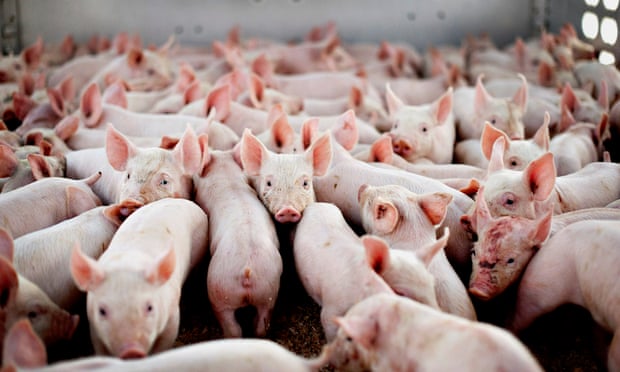
Farmed pigs

Photo – Getty Images.

https://www.theguardian.com/environment/2020/dec/01/farm-animals-antibiotics-data-raises-post-brexit-trade-fears

Farm animals antibiotics data raises post-Brexit trade fears

Use of antibiotics on farms in US and Canada about five times the UK level, says report

The overuse of antibiotics on farm animals is rife in some of the key countries with which the UK is hoping to strike a post-Brexit trade deal, a new report shows, raising fears that future deals will jeopardise public health and British farming.

The US, Australia, New Zealand and Canada all allow farmers to feed antibiotics routinely to livestock to make them grow faster, and in the US and Canada farm antibiotic use is about five times the level in the UK, data compiled by the Alliance to Save Our Antibiotics shows.

Meat produced in this way is cheaper, because the animals grow faster and can be kept in overcrowded conditions. But the meat is soon to be banned in the EU, for safety and public health reasons.

Antibiotic use in cattle in the US is about seven times that in the UK, and in pigs twice as high, according to the report. In Australia, the use of antibiotics in poultry is more than 16 times higher than in the UK, and use in pigs about three times higher.

Farm antibiotic use has risen in the US, Canada and New Zealand in recent years, and in Australia was rising in 2010, the latest year for which full data was available. Some of the drugs used are also problematic: the growth promoter bacitracin is used in the US, despite scientific evidence that it increases resistance to an antibiotic of last resort called colistin, used to treat life-threatening infections in people.

Cóilín Nunan, scientific adviser to the Alliance to Save Our Antibiotics, said: “Antibiotic resistance is a global problem, and we need to raise standards around the world to prevent it increasing. These free-trade agreements need to take that into account.”

Overusing antibiotics on farm animals gives rise to resistant forms of bacteria, known as superbugs, which can have devastating consequences for human health. Meat infected with resistant bacteria can directly cause infections in people, and can also contribute to a more general rise in people’s resistance to antibiotic treatments.

British farmers also face the prospect of being undercut by imports of cheaply produced antibiotic-treated meat, which could reduce welfare standards in the UK, as farmers will be forced to stock their animals more densely to cut costs and compete with floods of cheap imports.

“UK producers will be forced to compete by reducing costs, which means larger numbers of animals in worse conditions, which means an increase in the use of antibiotics,” said Nunan. “Any new trade deals must not undermine British standards and threaten public health by allowing cheap meat and dairy produced with antibiotic growth promoters into the UK.”

Medical experts are increasingly worried about the rapid rise of antibiotic resistance around the world, which could leave us defenceless against common diseases, and make routine operations such as caesarean sections or hip replacements potentially fatal. Antibiotics are used far more on animals than on people around the world, but moves to curb their use have been rejected by the powerful farming lobbies in many countries.

Antibiotic use is more tightly controlled in the EU than elsewhere, and the use of the drugs as a growth promoter has been banned since 2006. In the UK, the use of antibiotics in farming has been broadly falling in the last half decade, to about half the levels of 2014, though there was a slight uptick last year.

In just over a year’s time, from January 2022, stricter EU rules will ban the import of meat treated routinely with antibiotics as a growth promoter, and ban all preventive antibiotic mass medication of livestock. The UK is unlikely to sign up to this ban.

The government has repeatedly said that chlorinated chicken and hormone-treated beef would continue to be banned from the UK after Brexit, after widespread concern about food standards in future trade deals. However, food and farming experts have pointed out that this still leaves the door open to hundreds of other forms of food and agricultural products that are currently restricted under EU safety rules, and under current processes many of these could be quietly signed into legal acceptance without public scrutiny.

Nunan called the forthcoming EU regulations “a huge step forward” and called on ministers to adopt them in the UK. “The UK government should commit to implementing the same ban [on preventive mass medication], as relying on voluntary action is not a sustainable approach for the long term. It should also ensure that trade deals set high standards for imports to protect human health and avoid undercutting British standards.”

A government spokesperson said: “This government has been clear that we will not compromise on our world-leading environmental protections, animal welfare and food standards.

The UK already prohibits the use of artificial growth hormones in both domestic production and imported products – and this will continue after the transition period. We will also continue to operate robust controls on the medicines that can be used for all animals, including food-producing ones, to protect animal and human health and the environment.


Australia / China: Chinese Fishing Plant in Torres Strait Raises Alarm for Australian Industry and Islanders.

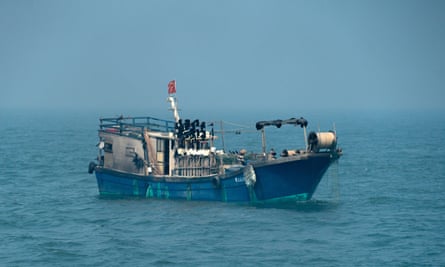
A Chinese-flagged fishing boat
A Chinese-flagged fishing boat. Australian MP Warren Entsch and fishing groups in the Torres Strait have raised concerns about the plan for a $200m fish processing plant on Daru Island in Papua New Guinea. Photograph: Artyom Ivanov/Tass

Chinese fishing plant in Torres Strait raises alarm for Australian industry and islanders

Processing plant on a Papua New Guinean island may bring more commercial pressure on fisheries in areas where regulation is uncertain

A $200m Chinese-built fishery plant planned for a Papua New Guinean island could allow Chinese-backed commercial vessels to fish legally in the Torres Strait, and has raised concerns about unregulated fishing in the same waters, potentially threatening the Australian industry and local PNG fishers.

China’s ministry of commerce this month announced a $527m kina (A$204m) deal to establish a “comprehensive multi-functional fishery industrial park” project on Daru Island, in PNG’s Western Province.

The memorandum of understanding, which offered little detail, was signed by the Fujian Zhonghong Fishery Company, PNG’s fisheries minister, Lino Tom, and the governor of Western Province, Taboi Yoto. The plant is expected to serve as a hub for fishing vessels coming into the region, and to process catches taken from the Torres Strait.

Under the Torres Strait Treaty, Australia and PNG are allowed to fish a shared area of the waters known as the protected zone, which straddles the fishing zones of the two countries.

Inside Australia’s zone, PNG boats may take 25% of the permitted tropical lobster catch and 40% of Spanish mackerel.

To date PNG has not had the capacity to commercially fish its share of these quotas, but the deal could attract Chinese funding for PNG-flagged vessels.

Warren Entsch, the MP for the north Queensland electorate of Leichhardt, said: “It’s certainly going to impact on our side of the fishery … but at the end of the day there is a treaty arrangement there.

“The biggest losers are going to be the treaty villages [of PNG’s Western Province]. They have no welfare system and bugger-all support from the PNG government. When they go out to fish to feed their families, there’s going to be nothing left.”

The Fuzhou-based Fujian Zhonghong Fishery Company, established in 2011, has a long involvement with PNG, mainly in fishing and seafood processing.

But Entsch said he held concerns over China’s track record in the region.

“You only have to look at what China has done in other places in the Pacific to ask the question of whose best interest it is in,” he said. “Is it in the best interest of the broader PNG community? I suspect not.”

Torres Strait community fisheries representative Kenny Bedford said: “There are significant implications for Australian Torres Strait fisheries.

“Under the current catch sharing arrangements, it is likely PNG will be moving in this partnership to access their full entitlement rights [under] the Torres Strait treaty,” Bedford said.

Aside from the catches allowed under the treaty, fish resources on the PNG side of the border were “seriously depleted, unmonitored and poorly managed”, Bedford said.

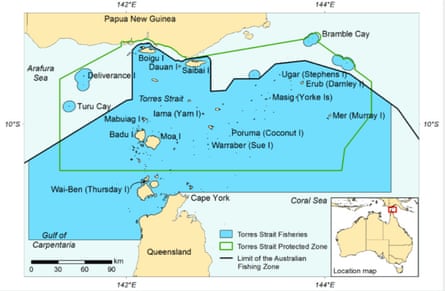
A map of the Torres Strait between Australia and Papua New Guinea
The Torres Strait between Australia and Papua New Guinea. The black line is the boundary between the two countries’ fishing zones. The green line marks the protected zone where fishing is shared. Daru is the smaller of the two islands north of the shared zone, between Saibai Island and Bramble Cay. Photograph: Australian Department of Agriculture and Water Resources

“The traditional owners of land and sea along the Western Province treaty villages have no say or control over what is being harvested or by whom.”

Tom said the plant was a “priority project” for PNG.

“Under the influence of China’s ‘One Belt, One Road’ policy, Zhonghong Fishery Company decided to invest in PNG. This large investment project will bring employment to the local area and promote the economic development of Western Province and PNG.”

China’s ambassador to PNG, Xue Bing, said the company’s investment “will definitely enhance PNG’s ability to comprehensively develop and utilise its own fishery resources”.

The Fujian Zhonghong Fishery Company did not respond to a request for comment.

Chinese fishing fleets have devastated local fish stocks in other parts of the world. In August, just off the Galapagos Islands, an armada of nearly 300 Chinese vessels logged 73,000 hours of fishing in a month, hauling in thousands of tonnes of squid and fish.

At their closest point, PNG and Australia are separated by less than 4km of water: the border communities are deeply intertwined, with free movement between islands (outside Covid restrictions) and close sharing of resources.

The Torres Strait Sea and Land Council Gur A Baradharaw Kod represents traditional inhabitants throughout the island communities. Its chair, Ned David, said the organisation was “extremely concerned” with the implications of the plan, including an increased risk of illegal, unreported and unregulated fishing.

“We have raised a number of concerns over the years with Afma [the Australian Fisheries Management Authority] that we have had very little policing of the fishery,” David said.

“We already have a number of Chinese operators in some of our communities and I’ve asked that this is looked at and that some sort of due diligence be conducted around what I would categorise as a rogue element in the business.

We’d like to see the level of monitoring and restrictions the commonwealth has taken on the border for Covid continued in terms of policing and presence to ensure that nobody is pillaging and plundering our resources, on our side of the border.”

Asked whether Afma had the capacity to monitor larger, professional fishing fleets in the strait, a spokesman said the existing legal framework would remain “the basis for continued successful management”.

An Australian Border Force spokesperson told the Guardian it worked closely with its PNG counterparts: “The ABF undertakes a range of enforcement action, including boarding vessels, to respond to any threat to civil maritime security.”

A north Queensland fishing industry source, who spoke on condition of anonymity, said many in the industry were concerned by the proposed park on Daru, but noted the project was so far no more than a memorandum of understanding.

“[But] this is definitely a warning shot across our bow. I think China will be watching closely how we will respond.”

Chinese fishing plant in Torres Strait raises alarm for Australian industry and islanders | Torres Strait Islands | The Guardian

EU to ban use of lead shot by wetland bird hunters; but they will still kill !

Photo – Magda2Geneve

EU to ban use of lead shot by wetland bird hunters

27 November 2020

Regulation will help prevent deaths of 1m waterbirds by lead poisoning every year

Lead shot is to be banned from all wetlands in the European Union, in a decision that is expected to pave the way for phasing out all toxic ammunition.

The European parliament voted against objections lodged by far-right parties, allowing the European commission to introduce the new regulations by the end of the year.

The ban will ensure that any wildfowl or waterbirds are shot with non-toxic steel ammunition after scientific studies found that 1 million waterbirds are killed by lead poisoning each year. Millions more wild birds, including raptors, are poisoned but do not die, with 40% of whooper swans found to have elevated blood lead levels.

If the regulations come into force before the end of the Brexit transition period, they will become UK law. This would compel some grouse shoots to use non-toxic ammunition because certain grouse moors are peatlands and are classified as wetlands according to the EU definition.

“It’s absolutely fantastic news,” said Prof Debbie Pain, an independent ecological toxicologist and honorary research fellow at the University of Cambridge who has studied the effects of lead shot for nearly 40 years. “Lead shot kills 1 million waterbirds each year, it contaminates the environment and it’s a cumulative poison, so the problem is getting worse and worse.

“This ban is going to make a huge difference to the health of wetlands and the health of waterbirds across the EU. It’s absolutely the right thing to do and non-toxic alternatives have been available for a long time.”

Although Denmark outlawed lead shot in 1996, most other EU nations continue to use it. In Britain, a coalition of shooting groups earlier this year pledged to move to non-toxic alternatives within the next five years. Waitrose has banned the sale of game shot with lead.

In England, the use of lead shot is banned for the shooting of all ducks and geese and on foreshores and other sensitive sites, but campaigners say compliance is poor. Research has found that more than 70% of ducks are still shot with lead.

If the ban does not come into force before the Brexit transition period ends, Britain will not be compelled to adopt it, but government sources say it supports the principle of addressing the impact of lead shot.

Countries will have 24 months to bring in the ban, which will result in shooters only being able to use non-toxic steel ammunition across vast swathes of northern European countries, where a lot of land meets the EU definition of wetland.

The European Chemicals Agency is now developing restrictions on the use of all lead ammunition and the use of lead in fishing weights in preparation for a full ban on lead ammunition.

Ruth Cromie of the Wildfowl and Wetlands Trust said lead poisoning caused lowered immune systems in wild birds, potentially facilitating the spread of diseases such as avian flu.

“Progressive hunters have known for a long time that lead ammunition has to go. This is a clear sign that the policy is finally catching up with this no-brainer. We’ve got all the evidence and we’ve got a practical solution – non-toxic ammunition.”

Read more at source

The Guardian  London – Brilliant as always !

Regards Mark

EU: Choose health, not poison.

Choose health, not poison

23 November 2020

20,000,000 waterbirds dead. 400,000 tonnes of lead.
The poisoning continues despite legal obligation to phase out lead shot in wetlands 20 years ago, when the 2000 African Eurasian Waterbird Agreement deadline passed. This week MEPs have the opportunity to ban lead with a workable proposal that benefits people, animals & nature and help banning lead gunshots.

The health of European citizens, biodiversity and the environment is at stake as a result of the use of toxic lead gunshot. The Commission is seeking to repair this through a ban on the use of lead gunshot in wetlands.

A very small proportion of EU citizens release 1000s of tonnes of toxic lead gunshot into the environment year on year. This is despite excellent non-toxic alternative gunshot types being available which are comparably priced and in common usage in many Member States.

The price of the toxic pollution is currently being borne by:

One million waterbirds poisoned to death annually, millions more suffering;

People exposed to lead gunshot in their food – of particular importance to children and pregnant women due to impacts of lead on the developing brain;

Soils contaminated and then poisoned for future agricultural use.

Wetlands International, together with Conservation without Borders, Eurogroup for Animals, European Association of Zoo and Wildlife Veterinarians, Humane Society International, International Fund for Animal Welfare, Migratory Birds for People and WWT urge you to end this old-fashioned polluting habit and support the proposal from the Commission to ban use of lead gunshot in wetlands as a significant step to a toxic-free future.

 Read more

USA: Trump is rushing to hold a fire sale of the Arctic National Wildlife Refuge.

https://www.biologicaldiversity.org/

WWF warn Donald Trump's plans for drilling in Alaska 'could kill' polar  bears | Metro News

Donald Trump finalizes plans to allow oil and gas exploration in Arctic  National Wildlife Refuge | Daily Mail Online

Hi Mark,

Just as polar bear cubs are about to be born and begin denning with their mothers, Trump is rushing to hold a fire sale of the Arctic National Wildlife Refuge.

He invited oil and gas companies to identify which areas of the refuge’s coastal plain they’d like to drill, then proposed to toss out rules on offshore drilling. New cubs could one day see oil rigs from their dens.

This pristine landscape is not his to sell, so we’re in court to stop him.

Please support our work to keep drilling out of the Arctic by giving to the Saving Life on Earth Fund. Your donation today will be doubled.

Trump and his greedy friends know time’s running out for them to plunder public lands for personal gain, which is why they’re moving fast to auction off leases to drill in the refuge.

Those leases will make it harder to keep this treasured landscape from turning into an oilfield.

We can’t let them get away with this last-minute money grab.

We’re in court to block more than 1.5 million acres of Alaska’s Arctic National Wildlife Refuge from being opened to oil and gas drilling.

And we have a separate lawsuit in the works to stop Trump’s plan to open more than 18 million acres of the western Arctic.

Drilling in these areas will cause oil spills and greenhouse gas emissions already threatening polar bears with extinction. It will also decimate important caribou habitat, including areas where they raise their calves.

It’s obscene that after one of the worst seasons of wildfires and hurricanes in history, the administration’s priority is to worsen the climate crisis by giving handouts to Big Oil.

We can’t let the administration get away with ruining the Arctic refuge on its way out the door.

Please, help our fight for the Arctic National Wildlife Refuge today with a matched gift to the Saving Life on Earth Fund.

For the wild,

Kierán Suckling
Executive Director
Center for Biological Diversity

Trump's Brazen Attempt to Open the Arctic Up to Drilling | Earthjustice
Opinion | The 'Drill, Baby, Drill' Crowd Wants Access to This Arctic Reserve  - The New York Times

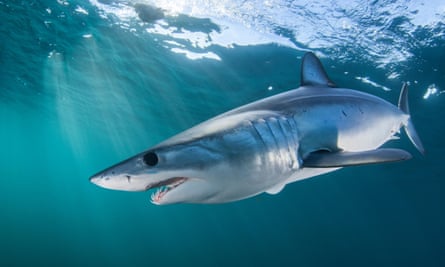
EU and US block plans to protect world’s fastest shark.

EU and US block plans to protect world’s fastest shark

The population of shortfin mako, mainly caught as bycatch but also prized by sports fishermen, is facing an alarming decline


Mako shark, Cape Point, South Africa
The mako shark population could take five decades to recover even if fishing were to stop immediately. Photograph: Nature Picture Library/Alamy

Conservationists accused the EU and the US at negotiations of Atlantic fishing nations this week of blocking urgently needed plans to protect the world’s fastest shark species.

The strength and speed of the shortfin mako, which can swim up to 43mph, makes it a target for sports fishermen, particularly in the US, while its highly prized meat and fins have led to the shark being overfished globally – and dangerously so in the north Atlantic.

The population could take five decades to recover even if fishing were to stop immediately, according to scientists at the International Commission for the Conservation of Atlantic Tunas (ICCAT), a fisheries management organisation.

https://c57143a4934f9b373b5b5a4496815464.safeframe.googlesyndication.com/safeframe/1-0-37/html/container.html The majority of mako caught in the north Atlantic in 2019 were landed by EU vessels, mainly from Spain and Portugal followed by Morocco. Most mako sharks are bycatch – accidentally caught by boats hunting different species.

Last year, international governments voted to regulate trade in the endangered species, under the Convention on International Trade in Endangered Species, after the EU co-sponsored a proposal.

But there was no outright ban, and this week Britain – in its first official act as an independent member of ICCAT – backed a proposal by Canada for such a ban. The UK said it was extremely disappointed that no agreement had been reached in 2019.

The EU and the US, however, refused to back the ban, saying it would not in itself stop mako mortality as bycatch. Each suggested separate proposals that would allow boats to continue to land mako in certain circumstances. Given the lack of consensus, the ICCAT committee chairman said he had no choice but to postpone any decision on mako catches until 2021.

“North Atlantic mako depletion remains among the world’s most pressing shark conservation crises, yet the EU and US put short-term fishing interests above all else and ruined a golden opportunity for agreeing a clear and simple remedy,” said Ali Hood, director of conservation for the Shark Trust.

Grantly Galland, an officer for the Pew Charitable Trusts’ fisheries team, said the delay in adopting a ban would speed the decline of a species already at dangerously low population levels.

“The only real advice from scientists to ICCAT is to have a no-retention policy. Another year of catching at the current level will leave the population in the north Atlantic in even worse shape,” Galland said.

Scientists warned last year that the important predator was declining faster than previously thought. They recommended annual landings of mako in the north Atlantic be reduced from 3,000 tonnes to 300, to allow the population to recover.

Ian Campbell, associate director of policy for Project Aware, a non-profit working with sports divers in ocean protection, said: “It has been heartbreaking to watch the US devolve from a global shark conservation leader to a primary obstacle to international, science-based protections for endangered makos.” He urged the incoming Joe Biden and Kamala Harris administration to “restore US commitment to science and the precautionary approach”, particularly for vulnerable marine life.

EU and US block plans to protect world’s fastest shark | Sharks | The Guardian

If Only His Money Was Put To Good Use !!

The Plastic Nile — Sky documentary exposes the extent of Africa's waste  problem | Financial Times

Egypt: The Nile River is suffering from plastic pollution | World News |  Sky News

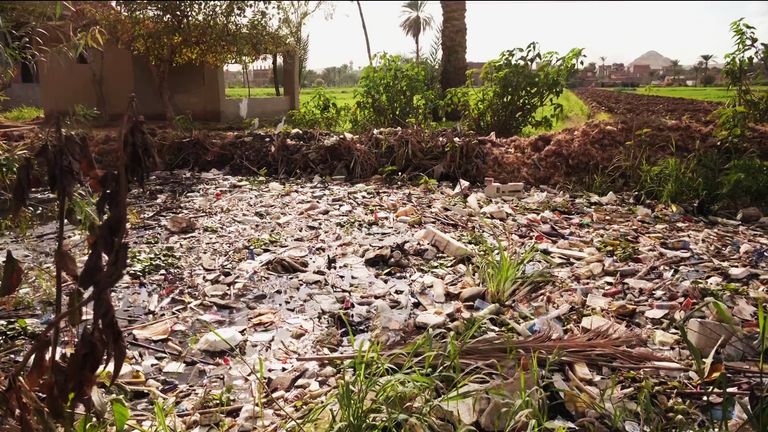
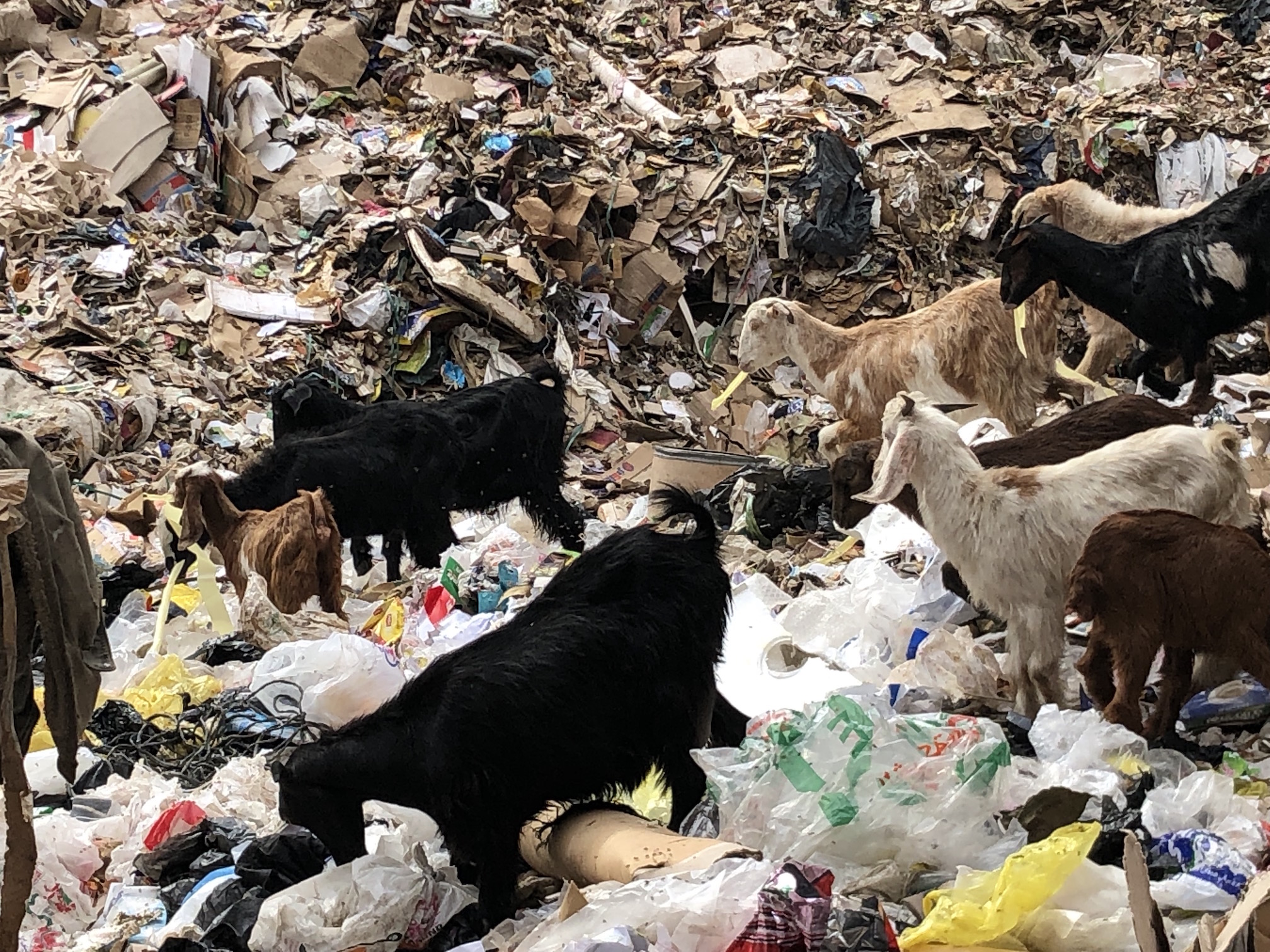
I watched today a very disturbing programme on the plastic pollution down the entire lengths of the White and Blue Nile rivers.  Microplastics which are in all the fish now swimming the Nile; caught and eaten by people; and the huge, massive plastic dumps on which cows, donkeys and goats are grazing to survive.  Tributaries of the Nile now completely clogged / blocked up with used plastic bags and just the largest amount of plastic bottles you will ever see.  Depressing, real depressing.

It was on ‘Sky’ – and here is the link in which you can see some of the devastation I witnessed in the programme.

https://news.sky.com/story/plastic-nile-pulling-up-plastic-from-the-river-is-horribly-frighteningly-easy-11996674

Here is the trailer video for the programme – https://youtu.be/3Iz1OzZDgUw

“Fish in the Nile have no choice but to eat plastic”.

90% of plastic polluting our oceans comes from just 10 rivers | World  Economic Forum
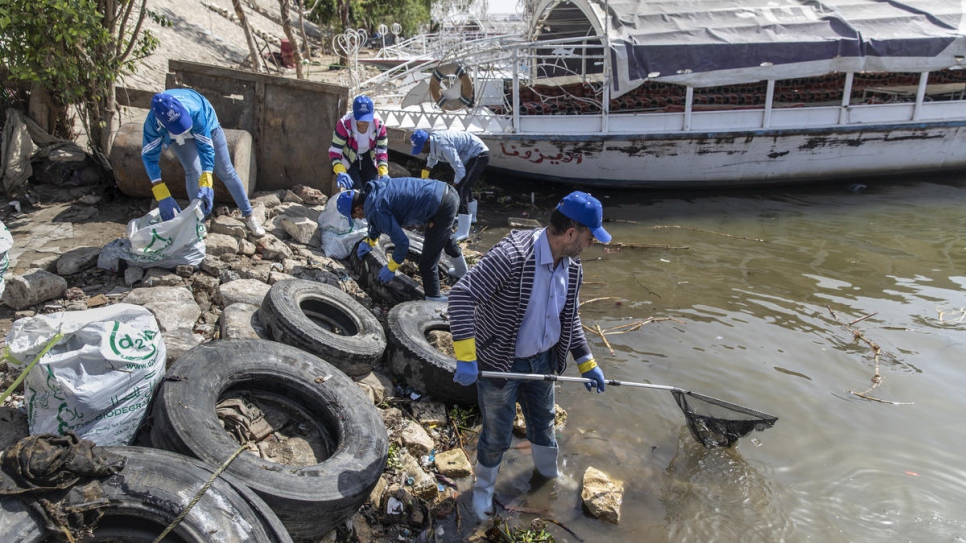
UNHCR - Refugees in Egypt pitch in to fight plastic pollution in the Nile

The thing I find most depressing is that there are some world people who; given their financial status; could pump some money into solving eco disasters such as this.  Instead they become simple losers who do everything in their power to remain non-losers.  For weeks now we have watched with sadness and amazement, the things that one person will do to try and hold on to power; when the good people of the USA have enacted their democratic right and voted to rid themselves of the plague that currently infests the White House.

But, he, the ‘infestation’; is a global warming climate denier, does not give a damn about animals or the environment in general; yet seems to expect; or should that be ‘demand’, that people fully support him ?

He has money which could be put into fighting world climate and eco devastation projects; instead he pumps it all into keeping his own, and his families heads above water; attempting to preserve his status when the democratic right of the American people have told him to take a walk.

His fortune will not solve any eco problems the world has; which is very sad considering that if he really wanted to be ‘liked’ by a lot more; he could easily invest into campaigns to improve the planet and make it a better place rather than the eco disaster it is now rapidly becoming.  So, in my personal view; an idiot who will never get one ounce of respect out of me.  Respect has to be earned; I have learnt that throughout my life trying to be a voice for animals; and to me; he deserves not one ounce of respect; he is simply not even a spoiled rich-boy, or a greedy fat-cat; he is a Jabba the Hutt of privilege.

And worse, for me, being a Brit, he is that most unforgivable of all things to the British: a big time bully.

I think you can guess who I write about !

How the World's Mightiest River turned into the Plastic Nile

Below – From supporter ‘Climate Change Take Action Now’ who we thank for drawing this very important issue to our attention.  We are really an animal site; but like all people involved with animals; protection of the environment and the wonderful world we inhabit is all part of the same game.

Regards Mark – and give a shit when it comes to being a voice for the planet and for the environment.

https://youtu.be/K9MaGf-Su9I

Climate change: Europe’s melting glaciers | DW Documentary.

It is far too late to save the Alpine glaciers. And now, the dangers caused by tons of melting ice are rising sharply. Every year, climate change is destroying two of the currently 70 square kilometers of glaciers left in the Alps.

The permafrost in the Alps is thawing, and transforming what used to be sturdy slopes into loose screes. In addition, climate change is leading to significantly more extreme weather conditions every year, while heavy rainfall causes serious erosion. The result: avalanches and landslides like those in Bondo, Switzerland, or Valsertal in Austria.
In Switzerland, residential areas are shrinking as people are forced to leave their homes forever. The disappearance of glaciers as water reservoirs is already posing a major problem. Farmers in Engadine, who have been using meltwater for irrigation for centuries, are already facing water shortages. Last summer, they had to rely on helicopters to transport water to their herds in the Grison Alps. Above all, alpine villages depend on winter tourism to survive. Yet experts are forecasting that by mid-century, there will only be enough natural snow left to ski above 2,000 meters, which will spell out the end for about 70 percent of the ski resorts in the Eastern Alps. But instead of developing alternatives, lots of money is still being invested in ski tourism. Snow cannon are used to defy climate change, and artificial snow systems are under construction at ever higher altitudes. As usual, it’s the environment that is set to lose as the unique alpine landscape is further destroyed by soil compaction and erosion. Some municipalities are now working on new models of alpine tourism for the future. As global temperatures continue to rise, the cooler mountain regions will become increasingly attractive for tourists, especially in the summer.

——————————————————————–

A few glacier related issues we have covered on WAV in the past:

Switzerland: Pizol glacier: Swiss hold funeral for ice lost to global warming. – World Animals Voice

Tibet: Tibet sees 27.7 percent fall in glacier ice coverage, research finds. – World Animals Voice

Greenland’s Ice Has Melted Beyond Return, Study Suggests. – World Animals Voice

Environmental – The ‘doomsday’ glacier. – World Animals Voice

Climate Change Reconsidered: Science the U.N. Will Exclude from Its Next Climate Report – News on Climate Change

https://youtu.be/jaVL1Ham-4A

Climate Change Reconsidered: Science the U.N. Will Exclude from Its Next Climate Report.

“Climate Change Reconsidered II: Physical Science” — produced by a team of 40 scientists — is the newest volume in the Climate Change Reconsidered series produced by The Heartland Institute and members of the Nongovernmental International Panel on Climate Change (NIPCC). As in previous reports, thousands of peer-reviewed articles are cited to determine the current state-of-the-art of climate science. This newest volume’s findings challenge the alarmist reports of the United Nations’ Intergovernmental Panel on Climate Change (IPCC), whose next report is due out later this month. NIPCC authors paid special attention to contributions that were overlooked by the IPCC or that presented data, discussion, or implications, arguing against the IPCC’s claim that dangerous global warming is occurring, or will occur, from human-related greenhouse gas emissions.