Category: Environmental

The criminal works of Monsanto

USA-Flagge


German pharmaceutical giant Bayer is hiring an outside law firm to review claims circulating in the French media that its seed firm, Monsanto, compiled illegal lists of influential journalists and lawmakers.

Bayer, who acquired the controversial agrochemical business last year, said on Sunday that the decision to commission the independent review came after its own internal investigation into the matter. It added that it understood the concerns raised over the week.

“This is not the way Bayer seeks dialogue with society and stakeholders. We apologize for this behavior,” the company said. However, it maintained that in the company’s eyes, there was nothing illicit about the way such lists were compiled.


The complaint that Monsanto had illegally compiled a dossier of influential journalists, media publications, and politicians was initially made by the French daily, Le Monde”. The paper said one of its journalists was among 200 names on the dossier, who would then be targeted by Monsanto lobbyists in a bid to sway their views on glyphosate-based herbicides. A complaint was then made to French police under the charge that the list of personal information was made “by fraudulent, unfair or illicit means.”

Korruption

The French investigation is the latest in a string of legal woes inherited by Bayer”, who have seen their share value plummet by almost 40 percent since taking over Monsanto.

German pharmaceutical firm Bayer lost 6.8 percent on share value in trading Tuesday after a US jury awarded a couple from California $2.055 billion in punitive damages for failure to warn of cancer risks of its Roundup herbicide.

According to Monday’s ruling, Roundup weed killer was liable for causing cancer, while US agrochemical firm Monsanto, acquired by Bayer last June, failed to inform consumers about the potential risks. Glyphosate, the basic component in Roundup, was found to be the cause of non-Hodgkin lymphoma in both Alva and Alberta Pilliod.

The jury awarded $18 million in compensatory and $1 billion in punitive damages to Pilliod, while his wife will get another $37 million in compensatory and $1 billion in punitive damages. The couple has reportedly used the herbicide since the 1970s.

The case marks the third verdict delivered against Roundup since August 2018. Since acquiring Monsanto in a $63 billion deal, Bayer has inherited thausand of lawsuits over the weed killer. The corporation has repeatedly defended the controversial product, claiming that scientific evidence supports Monsanto’s position that glyphosate-based herbicides are not carcinogenic.
Bayer-Monsanto

The 46-year-old Dewayne Johnson was the first to win the trial. He was diagnosed with end-stage lymphoma and has accused Monsanto of concealing the risks of his weed killer. The jury agreed.

Dewayne Johnson was the first cancer victim to take the company to court. The San Francisco groundskeeper was awarded $289 million, as the court ruled that the popular herbicide was responsible for his lymphoma. While the award was reduced to $78 million on appeal, it opened the floodgates for thousands of similar cases, and there are more than 11,200 such lawsuits currently pending against the German agrochemical conglomerate.

Bayer’s spokesman called the latest decision “excessive and unjustifiable,” saying that the company would appeal the verdict.
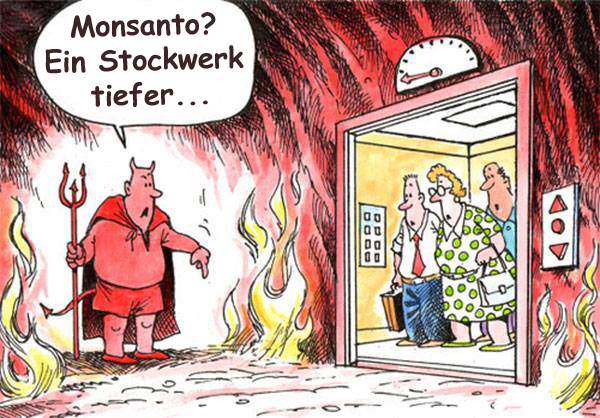
MOnsanto-Hölle

“Monsanto? One floor lower…”

https://www.rt.com/business/459296-bayer-stock-lowest-california-ruling/

My comment: Fuck you Monsanto !!!!! The only thing you have ever been able to give this planet is death, destruction, suffering for humans and animals.

I hope those who serve you will find a miserable death, and because it is so beautiful in hell, take away the corrupt politicians with you!

My best regards, Venus


‘Is the microphone really on?’: watch Greta Thunberg address UK MPs

sweden


‘Is the microphone really on?’: watch Greta Thunberg address UK MPs

Greta Thunberg (born 3 January 2003) is a school girl in Sweden who, at age 15, began protesting about the need for immediate action to combat climate change outside the Swedish parliament and has since become an outspoken climate activist.[1][2][3][4] She is known for having initiated the school strike for climate movement that formed in November 2018 and surged globally after the United Nations Climate Change Conference (COP24) in December the same year. Her personal activism began in August 2018, when her recurring and solitary Skolstrejk för klimatet (“School strike for the climate”) protesting outside the Swedish parliament in Stockholm began attracting media coverage.

On 15 March 2019, an estimated 1.4 million students in 112 countries around the world joined her call in the striking and protesting. Another event is scheduled for 24 May 2019.

Thunberg has received various prizes and awards for her activism. In March 2019, three members of the Norwegian parliament nominated Thunberg for the Nobel Peace Prize.

She recently visited London and addressed Members of Parliament.

See her speech here:


USA: Arizona – Ban Wildlife Killing Contests – Take Action Now !

Proj coy action alert

Dear Mark,
If you’ve already submitted comments to the Arizona Game and Fish (AZGF) Commission in support of their proposed rule to ban wildlife killing contests in the state – thank you!

If not, there’s still time to submit your comments. The Commission is accepting public comments on the proposed rule through this Sunday, May 12th.

There is also an opportunity to speak at the Commission’s June 21st meeting in Phoenix. Details below.

Wildlife killing contests are cruel and senseless events where participants compete to kill the greatest number, the largest, the smallest, or even the youngest of the targeted animal for prizes and entertainment. Hundreds of bobcats, coyotes, cougars, foxes, rabbits, badgers and other species are killed in these contests every year in Arizona.
Please write to the Commission TODAY urging them to support the proposed rule to prohibit wildlife killing contests.

Email comments to the Arizona Game and Fish Department:
rulemaking@azgfd.gov

You may also mail written comments to:
Arizona Game and Fish Department
Attn.: Rules Section
5000 W. Carefree Highway
Phoenix, AZ 85086

You can simply say, “Please adopt a rule change to Article 3, R12-4-303 that bans wildlife killing contests in Arizona. As someone who cares deeply about Arizona’s wildlife, people, and pets, I strongly support this proposed rule and changes to it that will remove loopholes, enhance enforcement, and broaden protections to all unprotected animals. Thank you for considering a ban on these barbaric events.”

To be most effective, we strongly encourage you to personalize your message, expressing why abolishing wildlife killing contests is so important to you.When taking into account the public’s opinion, the Commission sorts comments by original letters and form letters – original, personalized letters will have much more impact.

If you live out of state, you may also submit written comments for the official record but it is especially important to personalize your letter. Consider discussing how you do not wish to spend tourism dollars in a state that allows wildlife killing contests.

Additional Talking Points:
● Banning wildlife killing contests will prevent a small minority of the population from recklessly slaughtering our wild animals for private gain.
● Killing contests are ethically and ecologically indefensible.
● Killing contests are a bloodsport like dogfighting and cockfighting. Killing wildlife for thrills and prizes–with no respect for their intrinsic or ecological value–is senseless violence and waste.
● Killing contests damage the reputation of responsible hunters by violating fundamental hunting ethics – threatening the future of hunting. Countless animals are injured or orphaned during killing contests.The events put non-target species (including imperiled wolves) at risk. Participants use electronic calling devices, which mimic the sounds of prey or young in distress, to lure the target animals in for an easy kill.
● The public will no longer tolerate wildlife killing contests. Six city and county governments in Arizona – Tucson, Dewey-Humboldt, Flagstaff, Coconino County, Pima County, and Yavapai County – have passed resolutions condemning wildlife killing contests. New Mexico banned coyote killing contests in April, and California and Vermont have taken similar actions in recent years.
● There is no scientific evidence that indiscriminately killing wild animals reduces their populations, increases populations of game animals like deer, or protects livestock. Randomly killing coyotes, for example, disrupts their pack structure, which can increase their populations and increase conflicts with coyotes. Preventing conflicts with the use of humane, non-lethal methods is more effective.
● Wild animals play an important ecological role in healthy ecosystems. Native carnivores control rabbit and rodent populations, keep environments free of animal carcasses, and increase biodiversity.
● We do not seek a ban on hunting. We simply call for an end to organized events where participants compete to kill animals for “fun” and prizes.

Learn more about wildlife killing contests here, the scientific reasons behind why killing coyotes doesn’t solve problems here and here, and the National Coalition to End Wildlife Killing Contests here.
Save the date!
You will have an opportunity to speak in support of the proposed rule in June at the Commission’s telephonic meeting. We encourage you to attend – your voice speaks volumes.
What: Arizona Game and Fish Commission Telephonic Meeting
Date: June 21, 2019
Time: 9:00 a.m.
Location: 5000 W. Carefree Hwy., Phoenix, AZ 85086

Thank you for speaking up for the voiceless animals who need your help.


USA: Cyanide Bombs Banned In Oregon. Coyotes, Foxes and Other Wildlife Are Safer !

USA-Flagge


Dear Mark,

Great news out of Oregon!

Thanks to your help—as well as that of our colleagues with Predator Defense, Oregon Wild, Audubon Society of Portland, and others—SB 580, a bill to ban cyanide devices (also known as M-44s or cyanide bombs), was signed into law earlier this week by Governor Kate Brown.

The legislation prohibits the use of deadly M-44s to kill coyotes, foxes and other wildlife in Oregon.

This victory in Oregon—following bans in California (1998/ballot measure) and Washington (2000/ballot measure)—sets a standard for the humane treatment of wildlife in the thirteen states that have yet to ban cyanide bombs. These cruel and senseless devices are still used for predator control in Nevada, Utah, Colorado (only on private land), Montana, Wyoming, New Mexico, Texas, Oklahoma, North Dakota, South Dakota, Nebraska, Virginia, and West Virginia. (Idaho placed a temporary moratorium on M-44 use in 2017.)

We will continue pressing for a ban of poisons and other indiscriminate wildlife killing methods across the West, and we thank all of our supporters who spoke up for Oregon’s wildlife, people and pets—your voices made a difference!

For coexistence,

Katie Stennes
Project Coyote Programs & Communications Manager

P.S.: More good news! On Monday in Californiathe State Assembly passed AB 1788, which would ban deadly rodenticides, by a vote of 50 to 16—that bill now moves on to the Senate.


Global: Nature Crisis: Humans ‘Threaten 1 Million Species with Extinction’

Nature crisis: Humans ‘threaten 1m species with extinction’


bees

All Pictures – Getty Images.

On land, in the seas, in the sky, the devastating impact of humans on nature is laid bare in a compelling UN report.

One million animal and plant species are now threatened with extinction.

Nature everywhere is declining at a speed never previously seen and our need for ever more food and energy are the main drivers.

nature

These trends can be halted, the study says, but it will take “transformative change” in every aspect of how humans interact with nature.

Read the full BBC article and watch the video at:

https://www.bbc.co.uk/news/science-environment-48169783


Nature

British soldier killed by elephant during anti-poaching operation in Malawi.

flagge-england_jpg


Not something that is widely known, but British forces have been working in Africa for quite a while to help protect endangered wildlife from poachers. It is terrible to hear this news today.


British soldier killed by elephant during anti-poaching operation in Malawi

British soldier has been killed during an anti-poaching operation in Malawi, the MoD has announced.

Guardsman Mathew Talbot of The 1st Battalion Coldstream Guards, was killed whilst on counter poaching operations in the African country on May 5, 2019.

The Telegraph understands Gdsm Talbot was killed by an elephant and that there were no other injuries to local nationals or other British soldiers.

Defence Secretary Penny Mordaunt said: “I was deeply saddened to hear of the death of Guardsman Mathew Talbot, who died while carrying out vital counter-poaching work in Malawi.

British soldiers are deployed across Africa helping in the fight against illegal wildlife poaching. Animals under particular threat include elephants, rhinos and lions.

Malawi’s elephant population is estimated to have halved from 4,000 in the 1980s to 2,000 in 2015.

The deployments to Nkhotakota and Majete Wildlife Reserves in the country started last May, following a successful pilot scheme in Liwonde National Park in 2017.

British troops are training rangers in tracking, general infantry skills and bushcraft, doubling the number of rangers mentored by soldiers in Malawi to 120.

Training has been funded by the Department for Environment, Food and Rural Affairs’ Illegal Wildlife Trade Challenge Fund and was boosted by nearly £1 million of extra funding late last year.

Part of the extra funding went to the Wildlife Crimes Investigations and Intelligence Unit, an initiative that has improved intelligence gathering markedly. Last year 1000 kgs of ivory were seized and 114 arrests made, a ten-fold increase in detentions compared to 2015.

Full article – https://www.telegraph.co.uk/news/2019/05/07/british-soldier-killed-elephant-anti-poaching-operation-malawi/


The bees dying means people die


Bienen

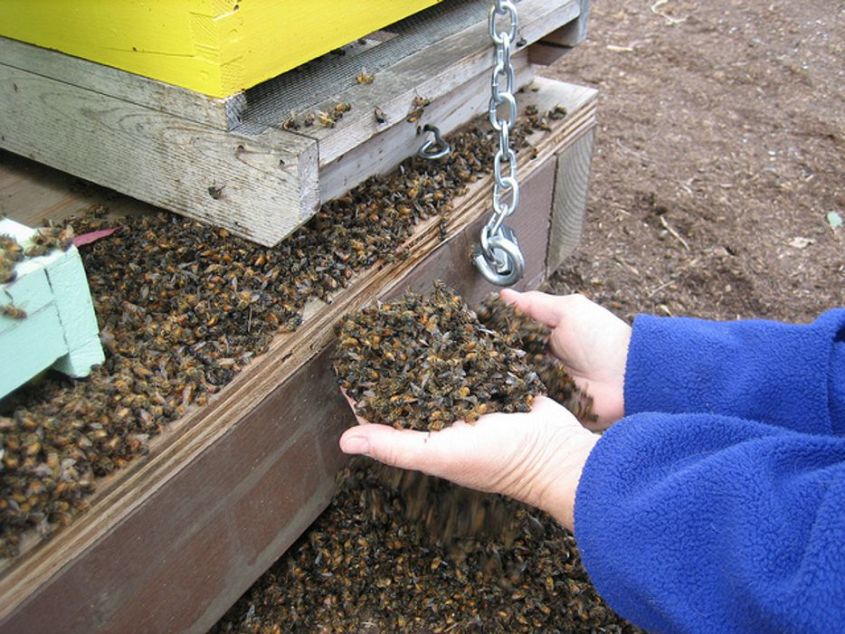
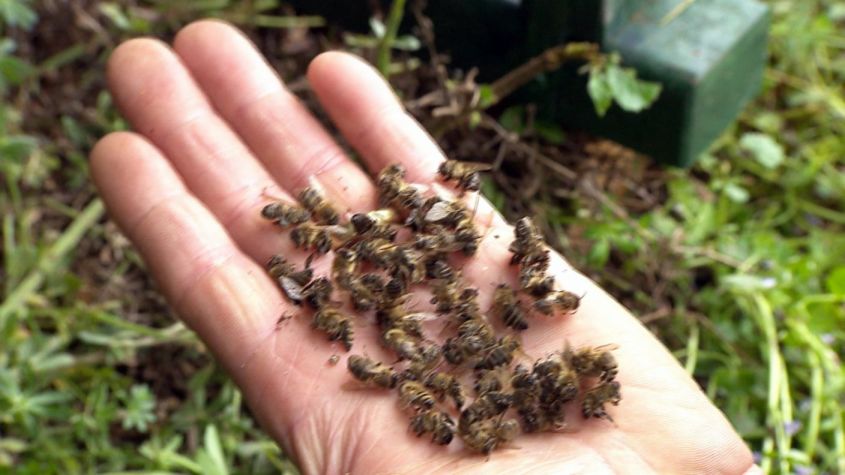
In October 2018, more than 72 million bees died – in just one day. Three months after the mass extinction the cause was confirmed.
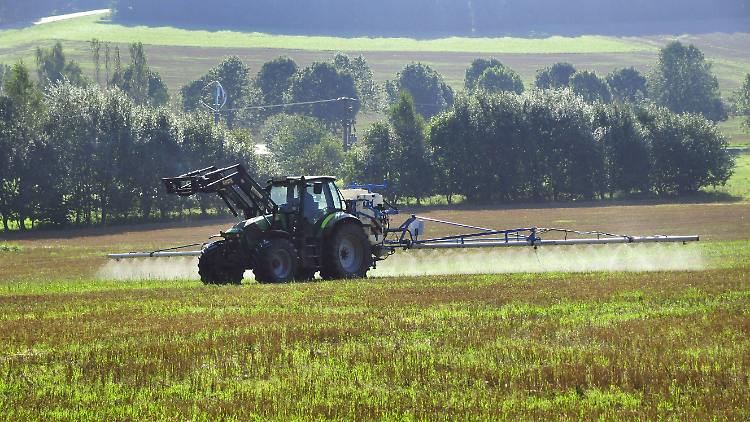
A pesticide sprayed on a nearby field is responsible.
In Argentina, near the city of La Paz, south of the Traslasierra Valley, 920 beehives were ruined in just one day.

Bienen6

On the other side of the world another beekeeper lost a million of his bees. Now the Australian beekeeper also received confirmation from a lab that the bees had died of fipronil poisoning, an insecticide commonly used to kill termites.
The beehives were about 5 kilometers away from another beekeeper, where about 120 beehives previously died from the same insecticide.
In Europe, an Austrian fruit-grower was even sentenced to jail for illegally spreading an insecticide. Dozens of neighboring bee colonies were destroyed.

massensterben von Bienenjpg

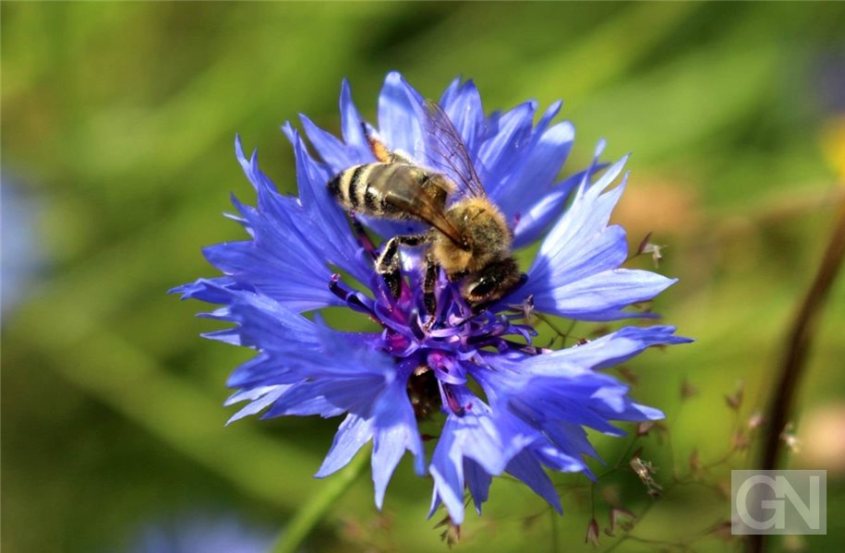
For a 450 gram jar of honey 1152 bees are needed, covering 180,246 km and visiting 4.5 million flowers !!!
That’s 156 km per bee!

bienen-auf blumejpg

It is a dying that is watched with concern worldwide.
Scientists have found that honeybees in Europe are killed by 57 different pesticides.
The vast majority of them are approved for use in the European Union.
The pesticide Thiacloprid from Bayer will continue to be used without restriction.
The most industrious of all animals, which reliably fly from flower to flower, disappears slowly.

biene-startbild
A life without the bee is unthinkable. She is the big breadwinners of the people. The worldwide demand for natural products rests on their delicate wings.

The causes of the dramatic decline in insects are in industrial agriculture. In view of Monsanto’s “giant wedding” with its German rival Bayer, the criminal power of agriculture will increase worldwide in the coming years.  Pesticides, notably neonicotinoids and the insecticide fipronil, are threatening not only bees, but also other animals such as butterflies, birds, fish and earthworms, and threaten the foundations of global food production. This is proven by a study in which 29 researchers from all continents and different disciplines evaluated around 800 individual studies over the past two decades.

wiese sprüher jpg

If bee mortality does not end soon, it could have serious consequences for food supplies worldwide, because not only in Europe, but also in other parts of the world there is a mass extinction of bees.
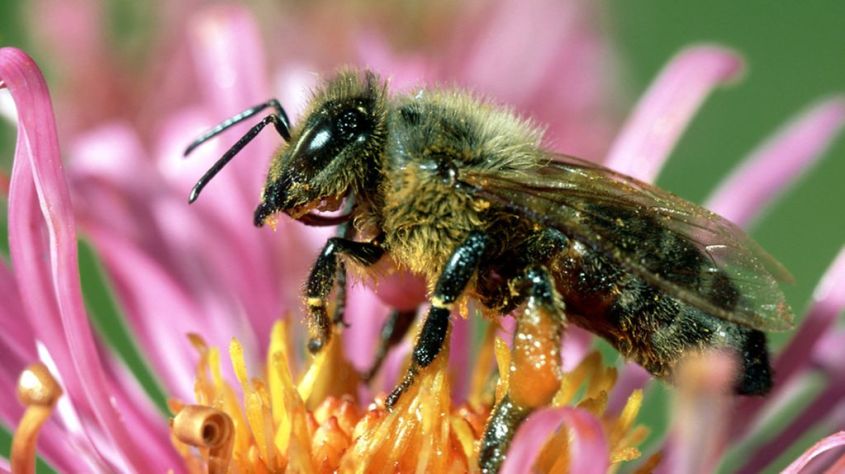
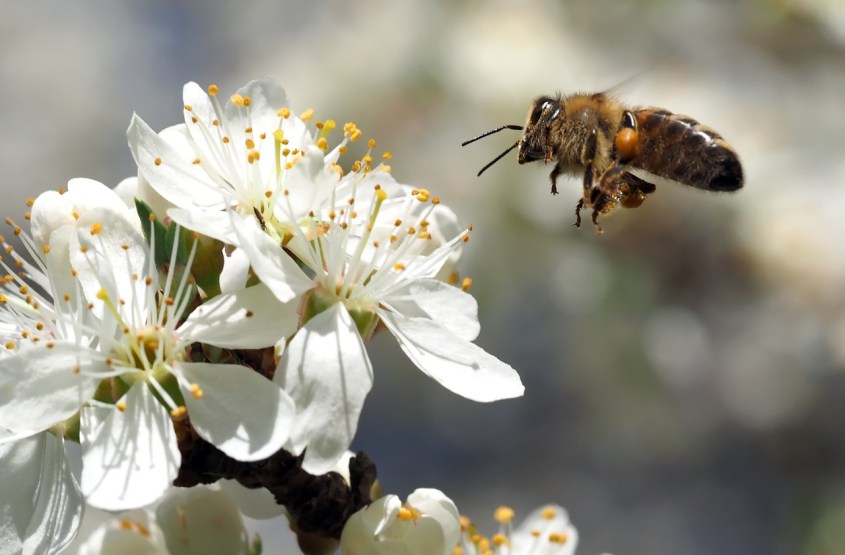
Bees not only produce honey, they pollinate more than 90 vegetables and fruits. Apples, nuts, avocados, soybeans, asparagus, broccoli, celery, pumpkins and cucumbers are likely to be rare without bees.
Sweet things like citrus fruits, peaches, kiwis, cherries, blueberries and strawberries and a variety of melon varieties depend on the fertilization of the flying workers.

bienen-auf Blumen


https://netzfrauen.org/2019/04/27/bienen-3

My comment: Now Monsanto also wants to fight bee pests – using genetic engineering.
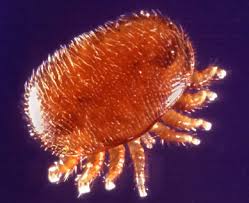
Monsanto’s focus is on the Varroa mite, a parasite that makes it difficult for honey bees worldwide.

Varroa Milbejpg
In addition to bee pests, he will fight off weeds and insects in the future.
Monsanto sees bright prospects for its new “BioDirect” products – the market is already worth $ 1.7 billion a year. So it’s not about saving the bees. So it’s all about huge profits again.

And so Monsanto is omnipresent to each one of us. Whether in the glass of milk, in the Schnitzel, in the chicken leg… which animal is not fed with the cheapest, ie gene manipulated cereals?

We have t-shirts made of GM cotton, eat honey that could be contaminated, we fry our broccoli patties in GM corn oil. Whether we like it or not, for most consumers, especially in the US, Monsanto is a daily guest. Who only causes catastrophes. For humans, animals and nature.

My best regards, Venus
England: Tv Wildlife Expert and Bird Campaigner Has Death Threats After Recently Winning Campaigns To Protect Birds From Being Shot.

England

Image result for chris packham

Chris Packham, who is a well known animal advocate and tv wildlife presenter; especially relating to all aspects of British wildlife; and also the hunting of migratory birds in Europe, has now had a “very calculated” death threat against him and his family after he campaigned for measures to protect birds from being shot.

https://www.bbc.co.uk/news/av/science-environment-48108157/chris-packham-they-threatened-to-organise-a-car-crash

https://www.bbc.co.uk/news/science-environment-48105287

Dead Crows were hung on his home gate:

Image result for chris packham

Here are links to a couple of issues relating to Chris which were posted on our other site, Serbian Animals Voice; and also the BBC:

https://serbiananimalsvoice.com/2018/01/30/uk-bbc-winterwatch-a-daily-visit-to-british-wildlife/

https://serbiananimalsvoice.com/2018/01/29/england-in-search-of-the-lost-girl-chris-returns-to-sumatra-to-find-the-little-girl-that-haunts-him-from-a-photo-he-took-20-years-ago/

https://www.bbc.co.uk/programmes/p05vqwhk

https://www.bbc.co.uk/programmes/p05vq7qf


Chris said the  threats would not stop him from continuing his conservation work.

“People like myself are very dogged and determined,” he said.

“I cannot allow these things to sway me.

There are too few people standing up and fighting to protect our environment, our landscape, our wildlife.”


USA: Orcas Have No Food Due To Human Overfishing.

USA-Flagge


By Joe Loria September 6, 2018

According to a recent article from Komo News, some of Seattle’s most popular restaurants are ditching chinook (king) salmon in an effort to help save critically endangered orcas.

Chinook will not be served at Vine and Spoon or Alchemy in West Seattle. The restaurant owners joined others in taking a stand after a concerned customer brought up the plight of the orcas and shared images of a mother orca grieving her dead calf and another orca struggling to survive.

Matt Mead, marketing director for Vine and Spoon, said:

The plight of the orcas right now is so tragic so important to maintain their food resource it was very simple and no-brainer to take off the king salmon from our menu to help our environment.

Declared endangered in 2005, the Southern Resident orca population has seen little recovery. In fact, more than two-thirds of these whales’ pregnancies fail, and a recent study suggests the orcas are starving because of human activity.

Overfishing of chinook salmon is believed to be the main cause of the orca population’s decline. Chinook salmon, who compose roughly 80 percent of the whales’ diet, are a critically endangered species, and overfishing is the primary reason. Popular wild-caught fish, chinook salmon were added to the list of overfished species in 2015.

The National Oceanic and Atmospheric Administration published a report in 2013 warning about the impact of salmon fishing on Southern Resident orca populations. Although the report expresses uncertainty about the long-term effects, it states that ending or reducing salmon fishing would have an immediate positive impact.

Our oceans are extremely complex ecosystems, so when one species declines, others suffer. For instance, Atlantic puffins on the Shetland Islands depend on sand eels to survive. Once sand eels were overfished, puffin numbers dramatically declined. When herring is overfished, cod populations fall. Many fish species and their predators are now endangered or face extinction because of overfishing.

The best thing we can do for all marine animals is to refuse to support an industry that disrupts the balance of nature’s ecosystems and puts species at risk for extinction.

But eating seafood doesn’t just hurt orcas and other “cute” marine mammals many people value; it’s also unspeakably cruel for the innocent fish killed for food. Fish are similar to dogs and cats in their experience of pain and pleasure.

In 2011 Mercy For Animals conducted an undercover investigation at a fish slaughter facility and exposed fish being skinned alive. They thrashed and fought to escape the workers’ knives. As the fish gasped for oxygen, workers ripped off their skin with pliers.


Sounds horrifying, right? See for yourself.


Remember, the best way to protect fish and other marine animals is to leave them off your plate. Learn more about switching to a humane plant-based diet to prevent cruelty to all animals used for food. Then check out Gardein’s fishless filets and crabless cakes, and click here for compassionate sea-inspired recipes