Category: Environmental

The world dictatorship of Bayer- Monsanto


deutsche flagge


Share crash at Bayer!

Hard times for Bayer shareholders, but nobody can say they did not know it.
What did the shareholders think? that Bayer and Monsanto would always come away with their atrocities?
Bayer not only has the problem with Monsanto and Glyphosat, but has to fight even with collective complaints for possible health damage by the contraceptive spiral Essure®.
Bayer-Monsanto Karikatur 3

It has been proven that Monsanto’s products cause cancer, but also that the manufacturer did not adequately warn of the risks and even acted deliberately. The jury had largely approved the plaintiff’s side.

Now also the judgment of the judge Suzanne Ramos Bolano at the Supreme Court in San Francisco, who the cancer verdict confirmed! This ruling confirms that $ 289 million in compensation will be reduced to $ 78 million.
But if the plaintiff settles for the lower sum, the process will not be rolled up again.

One has to imagine that: since the verdict in August, Bayer stock market value has fallen by about 23 billion euros. And don`t forget: The Singapore government is Bayer’s biggest shareholder!
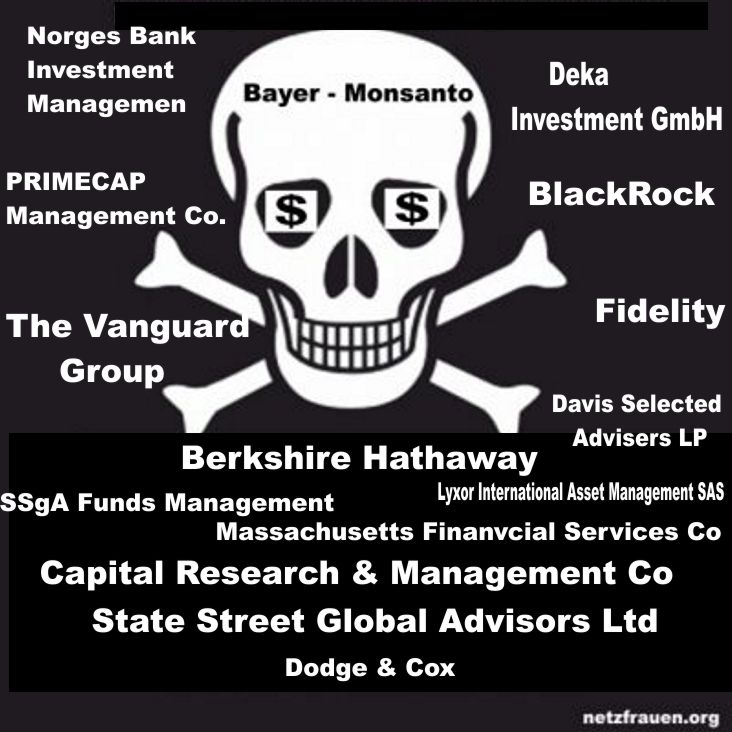
Monsanto-Bayer.-Aktionäre vor der FusionjpgThese were the shareholders before the merger

Ian Hilliker, an analyst at Jefferies LLC in London, said in a statement to his clients that, according to his estimate, a class action lawsuit by 8,700 plaintiffs suffering from cancer due to exposure to glyphosate could reach $ 680 billion in Monsanto’s liability.

The chemical company Bayer is on June 7, 2018 on target: In a few days he became the sole owner of the US seed company Monsanto. The loaded name should disappear with the merger. For about 66 billion dollars (about 59 billion euros) Bayer becomes the world’s number one in the crop protection and seed business.

Whoever thought that Monsanto has the most patents on seeds and plants, is wrong, it is the German Bayer group. This holds the world’s most patents on seeds and plants, even more than Monsanto.
German companies are also major customers of Monsanto’s genetically modified products. In fattening factories, chickens, ducks, geese, turkeys, cattle and pigs regularly eat GM soy and the agar industry is huge in Germany. After all, Germany is one of the largest meat suppliers in the world.

https://netzfrauen.org/2018/10/24/bayer-6/

My comment: With the poison “coctails” of herbicides and insecticides that we eat and drink every day, the danger of cancer production also increases.
Herbicides and insecticides are poisons and they are now in our diet. It was even found in breast milk. Numerous studies have shown that this toxin causes serious damage to mammals.

What will become of us? Soya producers use 88 percent more pesticides than they did six years ago. The reason: more and more “weeds”, which should not have come up with glyphosate, have become resistant to this. There are also problems with resistant insects on allegedly “insect-resistant” genetically engineered maize plants.

We are experiencing a new, creeping form of world dictatorship named Bayer/ Monsanto.

My best regards, Venus

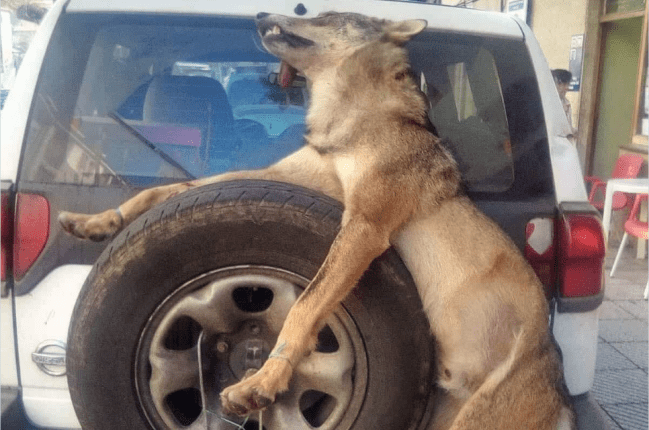
Spain: Take Action Against The ‘Ranger’ Who Killed A Wolf And Then Tied It To His Car For All To See – Petition.

Spain


https://ladyfreethinker.org/sign-fire-forest-ranger-tied-trophy-wolf-vehicle-boast/


SIGN: Fire Forest Ranger who Tied ‘Trophy Wolf’ to Vehicle for All to See

 ranger kills wolf

Image Credit Twitter @juralde


PETITION TARGETS: The Professional Association of Agents of the Natural Environment of the Principality of Asturias (AGUMNPA) & ​Spanish Ambassador Santiago Cabanas Ansorena

In an act of disgraceful brutality, a park ranger in the Asturias region of Spain slaughtered a wolf and then tied the animal’s corpse to the back of his vehicle with rope, proudly displaying the kill for all to see.

This ranger is responsible for protecting the safety of wildlife — instead, they chose to murder an innocent animal and parade the body around as a humiliating insult.

Juan Lopez de Uralde, deputy for the Alava-based Podemos party, shared the photo, criticizing the cruel act and spreading awareness about animal abuse in his principality. He claims that the wolf was killed last Tuesday, then callously tied to the ranger’s vehicle.

Lax oversight in the region has led to a lack of protocol and guidelines when it comes to monitoring animal rights. While it is unfortunately legal to kill wolves in some areas of Asturias, this despicable act took this liberty too far.

Sign this petition to urge officials to condemn this brutal act and push for this park ranger to resign from his position. This man has no business working around animals and should be immediately dismissed if he does not resign.


https://ladyfreethinker.org/sign-fire-forest-ranger-tied-trophy-wolf-vehicle-boast/


Vietnam: First ethical elephant tours launch. Click on Link For Full Article.

Vietnam flagge


https://www.theguardian.com/travel/2018/oct/23/vietnams-first-ethical-elephant-tours-launch-in-yok-don?CMP=twt_gu&fbclid=IwAR3QQSJ95dYqXIx3pbv2apFZseaYIishaUP-sk3Q3kKJKfyeP5IVgOoNtDs


Vietnam’s first ethical elephant tours launch

Yok Don national park has stopped offering elephant rides and now encourages travellers to see elephants in their natural habitat.

Amid growing global condemnation of elephant riding as a tourist activity, Yok Don national park in southern Vietnam has ended the practice and replaced it with the first ethical elephant experience of its kind in the country.

The formally captive group of four elephants were released from their chains earlier this month and no longer carry tourists on rides through the park. Visitors can instead observe the animals roaming freely in their natural habitat.

Previously, the Yok Don elephants, like many around the country, were chained up for extended periods of time, often without access to water. They were harnessed with heavy riding baskets, sometimes carrying tourists around the park for nine hours a day.

Click on the above link to read much more.

Canada: Great News – Senate passes bill that would ban whale, dolphin captivity in Canada.

Canada


Senate passes bill that would ban whale, dolphin captivity in Canada


After a multi-year legislative battle, a bill to outlaw keeping cetaceans like whales and dolphins in captivity has cleared the Senate — all but ensuring the end of a once-popular theme park attraction in Canada.

S-203 — first introduced by now-retired Liberal senator Wilfred Moore in December 2015, with the backing of Green Party Leader Elizabeth May — would ban keeping and breeding these marine mammals in captivity through amendments to the Criminal Code.

Fines of up to $200,000 could be imposed on parks flouting the law — a sum set deliberately high as a deterrent. 

The bill finally cleared the Red Chamber Tuesday night after nearly three years of debate and study. It now will be shuttled through the House of Commons by May.

The bill has the support of MPs from across the political spectrum, including Liberal Nathaniel Erskine-Smith, Conservative Michelle Rempel and New Democrat Fin Donnelly.

The bill’s passage in the upper house comes after years of advocacy work by animal welfare advocates, who have long argued that holding these highly intelligent creatures in concrete tanks is a cruel and perverse form of entertainment.

The fight for cetacean rights picked up considerable public support after the release of the 2013 documentary film Blackfish, which documented some of the perils involved in holding whales, dolphins and porpoises in parks like Sea World.

The Senate bill really has two targets in mind: the Vancouver Aquarium and Marineland in Niagara Falls, Ont.

The Vancouver Aquarium once defended holding these mammals in captivity on both scientific and educational grounds, but recently said it would no longer display whales or dolphins at its facility as protests over captivity have become a “distraction” for the business.

Marineland has been a vocal opponent of the Senate bill, saying it would devastate attendance — and threaten conservation efforts — at theme parks where these animals are on display. It has also said the bill threatens the seasonal employment of hundreds of local residents during the summer months.

Marineland’s owner, John Holer, testified at a Senate committee before his death last summer, asking senators to halt the bill. Today, Marineland issued a statement calling S-203 anti-science.

“Bill S-203 was not supported by the relevant ministries or the credible scientific community,” says the statement. “Sadly, it impairs legitimate scientific and research programs and is explicitly targeted to close Marineland.

“The bill and the debate around it (have) been highly emotional, lacking in fact-based or science-based analysis and mired in unnecessary conflict incited by radical animal rights groups from the United States.”

·         Ottawa to ban capture of dolphins, whales

·         All-party group calls for an end to ‘Senate games’ on three animal rights bills

The Senate bill would, through the breeding ban, phase out captivity over time. That means Marineland would still be able to keep its current stock of some 55 cetaceans even if the legislation is passed by the Commons.

The hope of many activists is that some or all of the marine mammals currently in captivity in Canada eventually would be moved to an open water seaside sanctuary in either B.C. or Nova Scotia.

The bill would also prohibit the importing of cetaceans, or their sperm, tissue cultures or embryos.

Holler had an ally in Conservative Manitoba Sen. Don Plett, who has steadfastly opposed the Senate bill. Plett continually sought to put off a vote through the creative use of some parliamentary procedure.

The Senate fisheries committee, of which Plett was a member, studied the bill for some eight months over 17 committee meetings with more than 30 witnesses — considerably more time than a Senate public bill typically spends under scrutiny at committee.


Senate passes shark fin ban

The Senate passed another animal welfare bill Tuesday: S-238, which will ban the import and export of shark fin products.

Conservative Nova Scotia Sen. Michael MacDonald, who tabled the bill, has said the practice has done vast damage to the world’s shark population — which has declined nearly 80 per cent over the last 50 years.

Canada is the world’s third largest importer of shark fins, surpassed only by mainland China and Hong Kong, where shark fin soup is a popular delicacy among the wealthy. In 2015 alone, Canada imported over 144,000 kilograms of shark fins.

“Tens of millions of sharks are left to die every year for nothing but the prestige associated with a bowl of shark fin soup,” MacDonald said.

That bill will now be sent to the Commons for further debate among MPs.


https://www.cbc.ca/news/politics/tasker-whale-dolphin-captivity-canada-senate-bill-1.4876136


India: More Amazing Rescue Videos From Animal Aid Unlimited. Please Make Sure You Donate To Keep These Rescues Going !

India


animal aid unlimited new header.

You go home sweaty, dirty, having sat in the sand, or had a dog in your lap, pee down your front, dried milk splatters from the calf-feeding, a big smile on your face, and your heart bursting with love.“–Caroline Moody, Animal Aid Volunteer…

Tiny puppy found taking final breaths saved 


This little girl was about to die. She lay unconscious with the labored breathing that usually comes just before death. Our rescue team rushed her to Animal Aid where we discovered she was in shock with severe dehydration, probably caused by untreated diarrhea. We immediately started her on IV fluids but she remained almost comatose and slept through the night. We weren’t sure we could save her, and wondered what the following day might bring. And wow, were we in for a surprise. Meet Lilly after just 24 hours.

Please donate for the next small one who needs help right now


Saving a Mama dog who risked her life for her puppies


We’ve all heard stories about mothers risking their lives for their babies–but now we’ve seen it with our own eyes. Angelina is one of the gentlest, sweetest dogs we’ve ever met. But don’t try messin’ with her little pod of baby angels because she’s done everything in her power to protect them. She became dangerously injured in the process-a wound that tore mammary tissue from her belly and a huge laceration on her neck. That’s what it took to make sure each and every one of her babies was safe. Angelina will be spayed when her young’uns are weaned. In the meantime, she’s going to be one busy lady. Meet our beautiful hero today.

Please donate for animals with terrible injuries.


Dog saved after eye comes out of socket


Slum-dwellers called us to rescue a dog from their community whose eye had popped out after an accident. He must have been in excruciating pain. The damage was so extensive we had to remove the eye, but this gentle sweetheart’s recovery was beautiful.

Please donate to save animals in extreme emergencies


Street dog having violent seizure rescued


We got a call that a street dog was flailing in the road having a violent seizure. Luckily our ambulance was only moments away and when we arrived, she was still having the seizure. The seizure was probably caused by a trauma-maybe a car accident. We stabilized her with anti-seizure and other medicines, and so began her six week recovery of her ability to balance and walk. Meet beautiful Stella …

Please donate for animals who wouldn’t stand a chance without our help.


Celebrate the Care-givers: Nandu!  

nandu

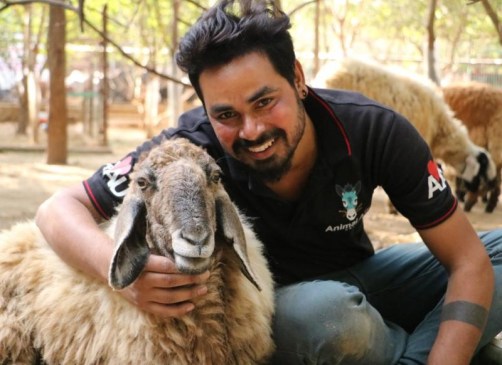
Meeting the Rescue Team in action is the first step many people take on their path of animal compassion. And for this reason, having a winning way with people is as important as being brave, creative and gentle in harrowing rescues.  Nandu Dungri, has served animals in Animal Aid with his heart, soul and handsome smile for 9 years–lifting more dogs, cows and donkeys from perilous situations than almost anyone in India. Nandu is “Papa” of 3, “Brother” to 80 staff members, and cherished friend to thousands of grateful animals. 

animal aid unlimited india


EU: Industrial Farming Budget Is Now Being Prepared. Add Your Voice To Make Things Better – Please Sign The Open Letter.


EU- Flagge


Industrial farming kills bees with pesticides, over-fertilises our fields, and tortures animals in factory farms. And yet, it is subsidised with €59 billion every year from our taxes. [1] What more? This is the biggest part of the EU budget! [2]

Right now, politicians are discussing how to redistribute this money. Will future subsidies go to farmers who feed us healthy food and treat animals humanely? Or will it remain as bad as it is now?

Thousands of us, farmers and consumers, from Malta to Aarhus, from Warsaw to Madrid, will come together next weekend in days of action. We’ll protest, we’ll cook sustainable food for the public, we’ll teach about sustainable farming and we’ll demand a U-turn away from harmful farming practices.

Today we’re launching an open letter, which we will publish in a press release on Friday to open the action days. We need a great big boom for the start: 100,000 signatures, in order to show the media and decision-makers that we, Europeans, care about our food and our farming. Please sign now.

farm16

I want to be one of the 100,000 – I’ll sign the open letter

At last, some of the European Ministers of Agriculture are realising the disaster happening before our eyes: insects, pollinators of our plants and nourishment for birds, are vanishing. [3] The German government, for instance, is discussing a program to protect insects. The Ministry for the Environment wants to spend €100 million per year on the program (great!), but the Minister of Agriculture is not in favour of it. [4] €100 million is a lot of money, but it’s a tiny amount compared to €59 billion that industrial farming gets from the EU. Instead of taking decisive action, they are spending their time bickering! This sort of thing is happening all over the EU.

But this arguing also shows we have an opportunity. Some politicians are open to our call for better farming. But others still aren’t listening. That is why we chose a pot and a spoon as symbols for the campaign: We will bang one against another and make enough noise to be heard.

FF14

In another three weeks we will repeat our action, this time in Brussels. We will show up in front of the building where EU Ministers of Agriculture will meet to decide about the future of our food. We’ll bring vegetables, pots, pans and cutlery with us. We’ll cook for the politicians, we’ll make noise, and we’ll deliver the demands of European citizens for a U-turn against harmful industrial agriculture.

Sign the open letter

Agricultural policy is a hotly contested issue because of the massive amounts of money involved. The proposed EU budget for the next seven years provides far too much money for industrial agriculture and far too little money for more sustainable farming and environmental protection. It’s time for governments to put the public interest before the interest of big business.

FF2

The past year has shown us that we can prevail against the lobby of the big agricultural industry. Just last year, our community and our partners managed to cut the length of the license for the toxic pesticide glyphosate down to only five years, when EU politicians wanted 15!

Your signature shows that we care about food and farming: We want our daily bread to be healthy, we want our farmers to prosper and we want animals to be treated humanely.

FF5

Sign the open letter

From kitchens and farmlands (and offices) all over Europe,

Mika (Bordeaux), Jörg (Lübeck), Virginia (Madrid), and the rest of us at WeMove.EU

PS: Whenever we eat something, we depend on the agricultural industry. Our food can only be as good as the agricultural model with which it’s produced. For us and for our environment, let’s grow our food in ways that reduce waste, reduce the amount of toxic chemicals, and promote a resilient and diverse food and farming system.

Sign the open letter now.

Optigal_Brueterei_Kueken_P

References:
[1] https://www.politico.eu/article/central-europes-big-farms-cry-foul-over-eu-commission-funding-cuts-phil-hogan/
[2] https://ec.europa.eu/agriculture/sites/agriculture/files/cap-post-2013/graphs/graph1_en.pdf
[3] https://www.truthdig.com/articles/insects-are-vanishing-at-an-alarming-rate-new-study-finds/
[4] https://www.archyworldys.com/ministry-of-the-environment-100-million-against-insect-deaths/ and http://www.taz.de/!5542911/


‘Gods In Shackles’ – A Conference To Tackle The Exploitation Of Captive Wild Animals.

The PAWS 2018 International Captive Wildlife Conference is taking place November 9-11 in Burbank, California. A very important theme of the conference is “Confronting Captivity”, which reflects a growing resistance to the exploitation of captive wild animals around the world. The problems of captivity abound with tourist elephant rides, orca whales in marine parks, and big cats in circuses.

One of the most notable speakers at this year’s conference is Sangita Iyer, founder of the non-profit organization Voice for Asian Elephants Society. Sangita is a native of India, and an award-winning journalist and wildlife documentary filmmaker. She is the director and producer of the globally acclaimed documentary Gods In Shackles, which was nominated at the United Nations and has garnered over a dozen international awards. Sangita has gained recognition throughout India for her courage in exposing the plight of captive elephants, who are continuously exploited for profit behind the veil of culture and religion.

Sangita’s groundbreaking documentary Gods In Shackles shines a light on India’s religious parades and festivals, and their continuous exploitation and abuse of the country’s elephants. Through her work with Voice for Asian Elephants Society, Sangita hopes to ignite change in the way that elephants are treated in her native India and throughout the world.

You can view the trailer for Gods In Shackles here:


Voice for Asian Elephants Society are currently collaborating with another speaker at the conference, Steven Wise, who is the President of the Nonhuman Rights Project. They are working together for the rights of personhood for India’s elephants. The PAWS conference features nearly 50 other amazing speakers from 15 countries. You can hear directly from those who are leading the way in confronting the captivity of big cats, elephants, bears, and marine mammals. You will learn about the exploitation of wild animals in circuses, zoos and marine parks; as well as the rescue and care of these animals in sanctuaries.

The speakers at the conference are fighting these issues every day on the front lines. They are working for change through scientific research, ethics, law, conservation, and animal care, policy and welfare. PAWS has been presenting inspiring conferences since 1992, and this is the only U.S.-based conference of its kind. This year’s International Captive Wildlife Conference features speakers who are leaders in their fields. The hope is to promote action to improve the welfare of wild animals living in captivity throughout the world.

The International Captive Wildlife Conference happens just once every four years, and there’s still time to register for this year’s conference but registration closes October 31. You can attend one day, two days, or all three. Student discounts are available, and tasty plant-based lunch and snacks are included each day.

The three-day event is taking place at the Pickwick Conference Center in Burbank, CA, and will run from 8:30 a.m. to 5 p.m. each day. For a full list of speakers and discussions — and to register — visit the conference website here.


UK: Urge TUI UK to stop selling tickets to SeaWorld.

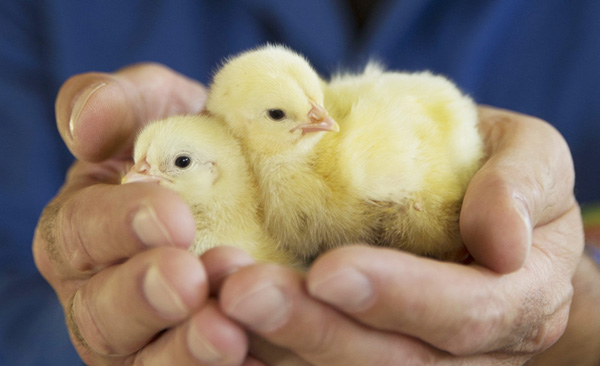
Speak out for chickens

UNKG0001

Hi Mark,

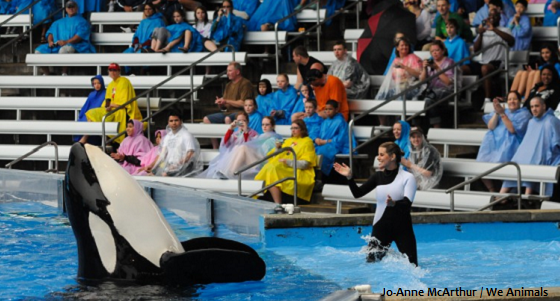
SeaWorld: Where enslaved animals are confined to tiny tanks and forced to perform pointless tricks to entertain visitors.

Orcas, other dolphins, beluga whales, seals, and many other animals are suffering in captivity at the marine abusement park. These intelligent, social animals often die prematurely from stress and other captivity-related problems.

At least 40 orcas and dozens of other dolphins have died at SeaWorld from causes including severe trauma, intestinal gangrene, and chronic cardiovascular failure.

Major US companies and the UK’s biggest travel provider, the Thomas Cook Group, have already severed ties with the marine park. Now, we need to show TUI UK that we won’t rest until it ends its support of orca abuse, too!

Please take a moment to urge TUI UK to stop selling tickets to SeaWorld:

 Contact TUI UK

Thank you for all that you do to help animals.

Sincerely,

Priya S

PETA UK


USA: Bear Cub Stuck in Plastic Jug for Three Days. Take Your Plastic Home And Dispose Of It Properly.

USA


Bear Cub Stuck in Plastic Jug for Three Days

Posted by Carly Day | October 20, 2018

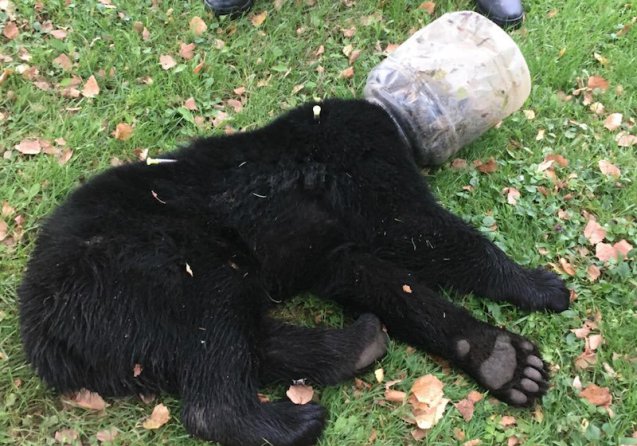
bear-cub-jug

Image Credit: Maryland Dept of Natural Resources

Just days after reporting on the devastating viral photo of a deer in Spain with its head trapped in a plastic jug, we received heartbreaking reports of a male bear cub in Maryland that suffered from the same fate.

Luckily for the 100-pound black bear, the Maryland Department of Human Resources – Wildlife & Heritage Service were able to locate the animal, tranquilize him and remove the jar — but only after the terrified animal spent three days stumbling around, unable to eat or drink.

The cub — affectionately nicknamed “Buckethead” by rescuers — was reunited with his mother and sibling once he recovered.

Although this case was resolved without any loss of life or injury, it is a sobering reminder of the huge impact that careless human behavior has on precious wildlife.

The tragedy of plastic trash in the world’s oceans is well documented, taking the lives of thousands of marine mammals and fish every year, but our waste problem isn’t limited to the sea; there are increasing cases of land mammals dying from our trash habits every year.

Two Oceans Aquarium report that half of the camels that die on the Arabian Peninsula every year perish due to health issues caused by consuming plastic bags. This year, an Indian elephant died after eating plastic shopping bags and several reindeer in Norway were killed after becoming entangled in discarded fishing nets.

Not only are these kinds of death unnecessary, but they are also often protracted and painful. Some animals — like the black bear in our story — get trapped in plastic and may be unable to eat or breath, or become entangled in waste materials which cause injuries, infection and a slow death. Others ingest trash, causing impaction and starvation.

Plastic is an epic, worldwide problem that must be dealt with before it’s too late. Data tells us that shoppers in the United States use an average of one plastic bag per person every day, as opposed to progressive countries like Denmark, where each person uses an estimated four plastic bags per year.

The cases that we see are only the tip of the iceberg, and it’s up to every individual to act now to start making a difference, starting in our own backyard.

England: So Called Evidence That The Bovine TB government strategy is working is called untrue by vets and animal specialists.

England


https://www.theguardian.com/environment/2018/oct/21/badger-cull-success-claim-attacked-experts

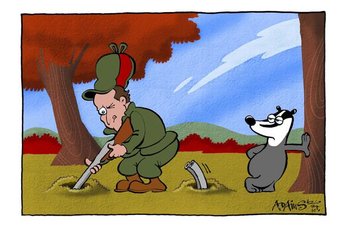
badg cartoon

George Eustice’s boast that government strategy is working called untrue by vets and animal specialists

bad cull 1

Government claims that the controversial badger cull is reducing tuberculosis rates in cattle have been undermined by a group of leading vets and animal welfare experts who have shared data that, they say, confirms it has made no difference.

Last month the farming minister George Eustice said: “Reductions in TB cases in Somerset and Gloucestershire are evidence that our strategy is delivering results.” But the group, which includes Iain McGill, the former government vet who helped expose the BSE cover-up, Adam Grogan, head of wildlife at the RSPCA, and Mark Jones, head of policy at the Born Free Foundation, disagrees.

In a letter, published in edited form in today’s Observer, and in full on the Network For Animals website, they are among 15 signatories who claim that “when ministerial statements are used as justification for the slaughter of badgers on an industrial scale … it is vital that they … reflect the best available veterinary and scientific advice”.

badger artwork

The agriculture ministry’s claims are based on the “incidence rate” – calculated by examining the number of new cases of TB in cattle herds. However, the signatories claim this approach, using “complex and sometimes obscure calculations”, is wrong. They suggest the focus should be on the percentage of cattle herds in badger culling zones which have the disease at a specific point in time.

Their letter states: “Examination of that data … demonstrates no reduction in the prevalence of bTB (bovine TB) infected herds in Gloucestershire or Somerset as a result of culling.”

It continues: “The prevalence in cattle is no lower than it was before culling, despite the killing and removal of 1,879 badgers in Gloucestershire and 1,777 in Somerset. A total of 3,656 badgers have been killed with no perceivable disease control benefits.”

There is now public disquiet at the violence and animal suffering associated with the badger cullLetter’s signatoriesIn Gloucestershire the prevalence of the disease fell to 6.9% in the three years running up to the cull before plateauing at 7.1% after four years of culling. In Somerset it fell successively for the three years up to the cull to 6.1%, before rising to 7.2% after four years of culling.

badgers north west hunt sabs

“There are approximately the same proportion of bTB affected herds now as there were before culling started,” the signatories claim. “Badger culling has not resulted in a decrease in bTB in cattle in cull zones … Any statement made to the contrary is untrue.”

The Zoological Society of London claims there is “no robust evidence that England’s policy of mass culling” is reducing TB in cattle. The signatories call on Eustice to withdraw his statement. “When proven harm is committed to animals on a very large scale, accompanied by documented animal abuse and … unaccompanied by any disease control benefits, the only option for any responsible government is to abandon the policy immediately,” they write.

The Department for Environment, Food and Rural Affairs said: “The minister was commenting on this drop in new cases which is the primary measure behind our analysis on the effect of the culls. This is the same measure used in the randomised badger culling trial.

“Calling our calculation of the rate of new bTB cases ‘opaque and impossible to confirm independently without raw data’ is simply incorrect.”