Regards Mark
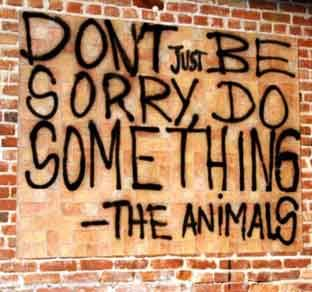
Below – taking the animal rights word to the street.


Regards Mark
Below – taking the animal rights word to the street.
Via Eurogroup for Animals.
NEW report: current levels of animal production and consumption in the EU is proving very expensive
31 May 2023
What kind of impact does industrial livestock farming really have on the planet? We commissioned a new report by the Impact Institute, ‘External costs of animal sourced food in the EU’, to explore the various problems associated with these systems to people, animals and the environment. The numbers are shocking – but the solutions are clear.
The rate at which Europeans farm and consume animal products, including meat and dairy, is getting increasingly unsustainable. The latest evidence shows that this level of production and consumption is having huge effects on global problems, including climate change and public health, along with causing suffering to millions of sentient beings each year, as welfare standards for animals are not strong or enforced enough on European factory farms – something we’re currently campaigning to change.
As it stands, the rate at which the EU produces and consumes animal-sourced products has been linked to:
Poor animal welfare standards: because the animals reared on European factory farms often face issues including illness, being trapped in cages, poor nutrition, lack of capacity to express their natural behaviours, suffering during transport, and inhumane slaughter
The antimicrobial crisis: as antibiotics are used routinely on the animals within industrial systems, who as mentioned, are more prone to falling sick due to the poor conditions in which they are raised
Non-communicable diseases: as the scale at which red meat, like beef and pork, is being eaten has been linked to cardiovascular disease, kidney disease, and cancers in people
Environmental destruction: because of the way land is used to grow feed for animals, as well as because of the air pollution that is created by some factory farming systems (for instance, the ammonia produced from breeding broiler chickens at scale). The EU is already experiencing the first impacts of climate change, including severe weather and drought – almost one fifth of which can be attributed directly to greenhouse gases from meat and dairy production.
All of these issues stemming from industrial livestock farming come with great cost. Our new report estimates that the external costs produced by the industry are nearly eight times higher than any profits made by it. Transitioning to a sustainable farming future with high animal welfare standards, more plant-based diets, and nature and climate-friendly agricultural practices in place could save the EU a lot of money, as well as help to secure a happier and healthier future for the planet.
Our food and farming systems urgently need to change
The report estimates that if plant-based diets, less meat consumption, and high animal welfare standards were prioritised in Europe’s food and farming systems, then there would be a reduction of 79% of the external costs related to the environment, public health, and animal welfare that the current consumption and production of animal-sourced foods causes today. Download the report ‘External costs of animal sourced food in the EU’ here, to discover its full findings.
Policymakers shouldn’t delay. Our new report provides several recommendations and insights for them to bear in mind when they write new food, farming and animal welfare-related laws – and there are some great opportunities to incorporate them in their ongoing revision to the animal welfare legislation and upcoming focus on a Framework for Sustainable Food Systems.
Food and farming systems that are truly sustainable and good for animals, people and the planet start with high animal welfare standards! Learn more about the kind of Europe we’d like to see by 2050 in our ‘future of farming’ position paper.
Regards Mark
Borrowed from Stacey at ‘Our Compass’.
Please use the following link to read more and watch the video via the second link.
The Dark and Disturbing World of Silk | Our Compass (our-compass.org)
Regards Mark


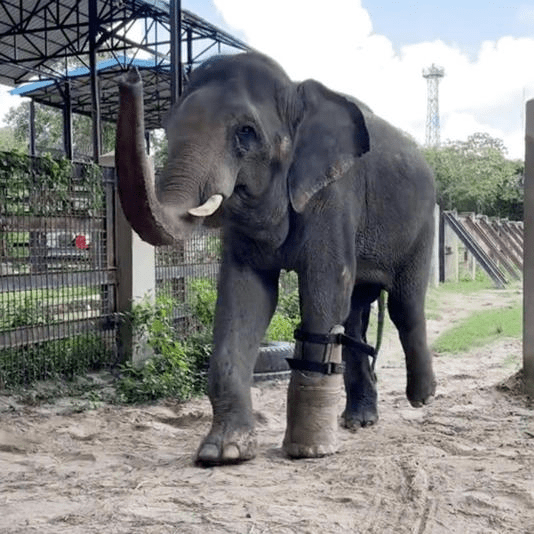
Elephant with a missing foot is given a prosthetic so he can walk again
Elephant with a missing foot is given a prosthetic so he can walk again (msn.com)
An elephant who lost his foot to a snare when he was only a year old can walk, run and swim again now he’s been fitted with a prosthetic.
Chhouk, an 11-year-old Asian elephant, was taken in by the Wildlife Alliance, a conservation organisation in Cambodia.
The organisation is partnered with Paradise Wildlife Park, a UK-based group which helped to fund the prosthetic foot, which is made out of old tyres and other recycled materials.
Cam Whitnall runs Paradise Wildlife Park and Big Cat Sanctuary and, along with his family, supports animal welfare causes worldwide.
Cam, 27, said: ‘It’s amazing – you can’t help but smile.
‘It’s a really special moment, to see what we’re helping to conserve and help, not just Chhouk but all over the world.
‘It’s the best feeling in the world to help animals.
‘The level of care that he gets is brilliant and he has a great life now. There’s no better feeling.’
Click on the top link to see video footage;
Regards Mark


All Photos – Pstra.
Firstly; thank you Jack for your kind comments about the site and posts. Appreciated.
Pig farming across Europe could look a lot different with high animal welfare standards in place
To protect the health and happiness of farmed animals, as well as reach the EU’s sustainable food and farming goals, it’s critical that much fewer animals are farmed, and those that are enjoy the highest possible animal welfare standards.
We spoke to farmer Maciej, who works for the Pstra Wybiegana group in Poland, about his experiences of raising pigs whose welfare is made a priority each day.
Across Europe, millions of pigs are suffering on factory farms: where their natural instincts are stifled, their bodies are mutilated and they spend significant periods of their lives trapped in dirty, tiny cages.
It doesn’t have to be this way. In their revision to the animal welfare legislation, the European Commission must include strict, specific rules for pigs to ensure they can live satisfying and engaging lives. These assurances are the least any sentient being deserves – and there are a range of case studies across Europe that show exactly what kind of measures work to ensure pig welfare.
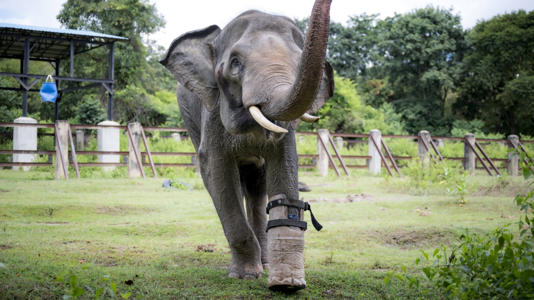
One such example comes from a pig farm in the heart of Poland, Pstra Wybiegana – a collaborative effort by two farms to raise pigs following extremely high animal welfare standards. We asked farmer Maciej to tell us more about their efforts to ensure their pigs lead good quality lives under their care.
Why have you chosen to farm following high animal welfare standards?
We just feel like this is the only way humans should work with animals – we should of course all be following the highest possible animal welfare standards we can! They deserve the very best of what we can offer them.
We also think that by following these standards, we’re offering our consumers peace of mind when they buy animal products from us, as well as contributing to a more sustainable planet and better food systems.
By only selling small amounts locally of high quality animal products, we encourage our consumers to eat much fewer animal-derived products in general: which is better for public health and the environment. By operating on this scale, we’re also supporting the local economy, while at the same time putting a lot of effort into making our farm truly nature friendly. By only working with a small number of pigs we’re able to give each of them a lot of attention too, which is really gratifying.
Tell us a bit about your farm. What do you feed your pigs?

Our pigs have a diverse diet, which includes steamed potatoes, greens, grain middlings and whey.
Potatoes give our pigs energy, greens give them fibre and vitamins, and grain middlings and whey supply proteins, vitamins and water. All of these different ingredients have real nutritional value – and what’s more, they taste great. Our pigs love their food – but we don’t overindulge them, because it’s important to their welfare that they have opportunities to forage for their own snacks in the wild, as this is one of their deeply-ingrained natural instincts. Fortunately, our variety of outdoor areas provides plenty of opportunities to do that.
What kind of habitats can your farmed pigs access?
Our pigs are able to experience a range of different habitats and terrains, and we let them out all year round.
We think that this diversity in their environment is important, as they’re able to get a lot of benefits from being exposed to a variety of areas. As a few examples, we provide them with:
Large, grassy grounds – so our farmed pigs can enjoy digging and rooting in search of food, as well as playing in water
Runs – which have been specifically designed to help them interact with each other and enjoy themselves
Showers – where they can cool down in the summer
Small rock areas – to stimulate their brains and give them something to bite on, which is good for their dental hygiene
Cosy indoor areas – to which they can retreat and relax in comfortable hay when they want a moment alone, or shelter from adverse weather.
How do your farmed pigs socialise?
Along with using our runs and enjoying our showers together, you’ll often see our farmed pigs moving in groups. It’s impossible for them to be lonely. From what we’ve seen, they prefer to be in herds with no more than 40 – 50 pigs, wherein they can build their own hierarchy and establish a leader. Of course, these groups are successful as well because we have such a mixture of environments for them to live in. It’s not hard for them to get some space when they need to, so they all feel relaxed and secure here.

What would you say to a farmer who’s nervous about transitioning to a higher animal welfare farming model?
I would say that the more people care about their animals’ lives, the better. Following high animal welfare standards is the only humane way to work with animals, and it’s critical we respect them. You can make a profit, too, by farming at a smaller scale – on our farm, we use the power of local connections to exist very comfortably next to the global market.
We love higher animal welfare principles, and they work. We can see it in our pigs who are healthy, happy, and thriving, which also makes it a pleasure for us to work with them. We think an important step in the road ahead is consumer transparency. People increasingly care about animals and want to ensure their animal-derived products come from sources where high animal welfare standards are set.
In Poland, we’re trying to implement such a standard for pork called ‘Pstra Wybiegana’. It’s based on a system of digital transparency, which shows consumers that we take the best care of our pigs at every step of the production chain. Farmers and clients can both use the system to record and find out more about the origins of their pork. We believe this will be some kind of revolution in Poland, and will encourage consumers even more to think of animal welfare when they shop.
It’s critical the European Commission considers all farmed species in their revision to the animal welfare legislation, making sure to leave no animal behind.
Regards Mark
Below – The current EU system for many – WRONG, WRONG, WRONG !


Animal Equality secure a happy result from the PETI Committee on outlawing fast-growing broiler breeds
29 May 2023
Animal Equality
On May 24, the European Parliament’s PETI Committee discussed the petition submitted by Animal Equality Italy to outlaw fast-growing broiler breeds on the basis of incompatibility with EU law. MEPs and the European Commission, represented by Kirsten Vornhagen, exchanged views on this vital issue affecting the lives of billions of birds farmed in the EU.
Across Europe, countless broiler chickens are leading lives filled with suffering. To support high levels of production on factory farms, they’re bred to grow very rapidly, which means they often experience severe health problems. Our member Animal Equality brought this issue to the EU institution’s attention this week, by getting a petition in the PETI Committee of the European Parliament to ban the farming of fast-growing broilers across Europe. We’re delighted to report the results of the meeting were positive.
The Petitions Committee’s opinion marks a major step toward ending the suffering of billions of chickens throughout the European Union. Indeed, the breeding of these animals, genetically selected to suffer for the benefit of the meat industry, is an aberration contrary to any animal welfare standards. It is now necessary for the European Commission to act to prevent the unjustified exploitation of these animals from continuing any further.
– Animal Equality’s Vice President for Europe, Matteo Cupi
The animal welfare provisions are there, but they need to be respected, and it is up to the EU Commission to make sure that happens. I am really glad that there is this petition and I think it is necessary to ask the Commission whether the law or the reported practice should be changed.
– MEP Margrete Auken
It was decided the petition will be kept open, and it was further confirmed the European Commission was aware of the issues it raised. Kirsten Vornhagen from the Commission’s Animal Welfare Unit mentioned that one of the options the Commission is looking at in their impact assessment of the upcoming animal welfare legislation is a legal requirement for the use of slow-growing breeds, as recommended by EFSA. We welcome this initiative as one that has the potential to bring about immense positive change to the billions of broilers farmed in the EU. We will be closely following the developments in this space.
It’s critical that the Commission factors in all kept animals in their ongoing revision to the EU’s animal welfare laws! Learn more here.
Regards Mark


Djurens Rätt exposes troublesome links between mink farms and factory farming
29 May 2023
Djurens Rätt
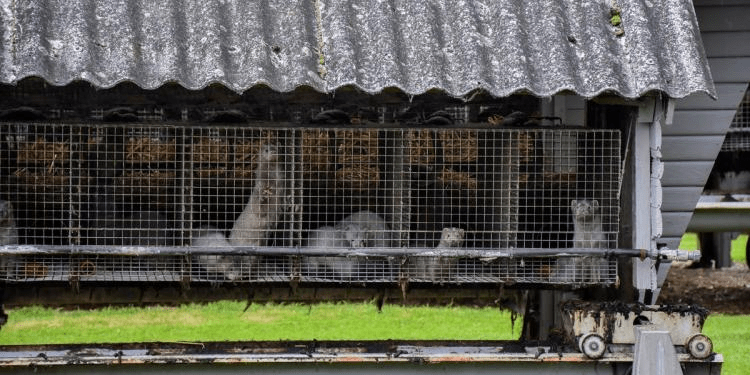
In a new report, Djurens Rätt has revealed that the mink farms in Sweden directly contribute to the death of a minimum of 30 million fish per year, in addition to the hundreds of thousands of minks killed for their fur. Through feed production, with links to depleted seas and chicken factory farming, the report shows economic incentives between mink farms and other factory farms.
Public opinion has already turned against mink farming for fur in Sweden due to the poor living conditions for animals and cruel killing methods, as proven by the European Citizens’ Initiative Fur Free Europe which calls for an EU-wide ban on fur farming and the sale of farmed fur products.
The new report reveals a lesser known problem; that Swedish mink farms also contribute to extensive suffering in other species and the loss of at least 30 million individual lives per year. Mink farming was also found to contribute to funding chicken factory farming, which has created economical motivation for farmers to protect the existence of fur farms. Djurens Rätt wants to see a ban on mink farms to combat the problem.
Animal welfare is evidently a part of sustainability, and it is not sustainable to breed carnivores in small wire cages in a system that also contributes to suffering in other industries. The report Djurens Rätt published is more proof that mink farms are unsustainable and need to be phased out immediately
Camilla Bergvall – President, Djurens Rätt
Key conclusions
There would be positive effects for sustainability and Sweden’s biodiversity if mink farms closed.
There are intimate economic links between mink farms and other factory farms, especially within the chicken industry and in fisheries.
Slaughterhouse waste in Sweden is increasing with rising animal production. It is currently not used in a sustainable way.
Read the report “The troublesome links between mink farms and factory farming”.
Regards Mark


| Victory: Historic New Law Passes to Protect Wild Horses in Colorado! In a stunning bi-partisan victory for wild horses, the Colorado General Assembly passed unprecedented and groundbreaking legislation known as the Colorado Wild Horse Project that was signed into law by Colorado Gov. Jared Polis during a special ceremony on May 20, 2023. The bill was created when legislators, advocates, and other stakeholders came together to provide protections from brutal roundups and removals for Colorado’s wild horses. LEARN MORE |
The bill’s primary sponsors were Sens. Joann Ginal (D) and Perry Will (R), House Majority Leader Rep. Monica Duran (D), and House Minority Leader Rep. Mike Lynch (R). These sponsors secured bipartisan support in both chambers of the General Assembly, where the bill was passed by an overwhelming majority after expert testimonies by advocates, including In Defense of Animals’ Senior Campaigner for Wild Horses and Burros, Ginger Fedak.
This new state law is necessary because nationally, the US Congress has struggled to pass laws favorable to America’s wild horses and burros for years. No wild horse and burro-friendly progress has been made on the national front since the 1971 Wild Free-Roaming Horses and Burros Act was passed!
Gov. Polis and First Gentleman Marlon Reis have been staunch supporters of America’s wild horses and burros and have spoken out to halt the roundups in the state. However, the national government is solely responsible for “managing” wild equids, so there was little that could be done at the state level. The new law is the culmination of several years of work to allow the state to be part of the stewardship process.
The bill signing ceremony occurred in the Little Book Cliffs Herd Management Area (HMA) in the western part of the state near Grand Junction. Gov. Polis said they could see nine wild horses from where they stood. Before signing, Gov. Polis delivered some encouraging remarks. With the new law, he said, “We can ensure that our wild horse herds have a humane and sustainable future in western Colorado. We also want to highlight that this will set a national example. It’s a first-of-its-kind partnership for how the state, ranchers, advocates, local communities, conservationists, and federal land managers can come together to achieve the best outcome to successfully manage these majestic animals that are synonymous with the American West.”
State Senator Perry Will, one of the bill’s four original bipartisan sponsors, was also at the signing ceremony. He said, “I’m real excited about this bill. It’s a collaborative effort, and I think it’s really going to set the stage for management of our wild horses into the future. I see this as a win/win for everyone involved, and the big win is for the wild horses because that’s the whole purpose.”
SB23-275 prioritizes retaining healthy wild horse herds in Colorado’s four HMAs, thereby reducing costly and destructive roundups that have proven ineffective in the national plan. Thank you, Colorado!
For more on how to get involved in supporting efforts like this, visit our Wild Horses campaign.
Regards Mark

Animal rights activists in Madrid protest against plans for a large-scale octopus farm

The Spanish activists said there are no regulations to guarantee the welfare of the captivated octopuses
Animal rights activists gathered Sunday in Madrid to protest plans for the construction of an octopus farm in Spain, saying there are no respective laws in the country and the European Union to guarantee the welfare of the animals in captivity.
The proposed farm, which aims to breed octopuses on a large scale in captivity, is scheduled to be built next year in the Canary Islands, a Spanish archipelago located in the Atlantic Ocean.
A few dozen people showed up to express their concerns regarding a project that plans to confine 3 million octopuses in pools, despite these creatures being solitary predators in their natural habitat.
“It is similar to imprisoning tigers together. They will prey on one another and will also attempt to escape due to their high intelligence and adeptness,” said Jaime Posada, a spokesperson for the protest called by various animal welfare organizations.
Octopuses grown in captivity will behave differently from those in the wild, said Nova Pescanova, the seafood company promoting this farm. Since 2018, the company has run a pilot project in a research facility in northern Spain, where they have succeeded in breeding five captivity-born generations of the cephalopod.
“It is not possible to grow any (animal) species in the European Union without respecting their welfare conditions. It is the standard, and our group does nothing but comply with guidelines and legislations,” said Roberto Romero, the multinational’s aquaculture director.
Since the demand for octopus consumption has been on the rise, farming octopuses is being regarded as a first step towards ensuring sustainable food production.
Octopus is a staple in the Mediterranean diet, particularly popular in Spain and Italy, although both of them import most of the octopus they consume. Recently, the global demand for this delicacy has expanded, with countries like the United States witnessing a 23% increase in imports and China experiencing a 73% surge between 2016 and 2018, according to the U.N. Food and Agriculture Organization.
Animal rights activists in Madrid protest against plans for a large-scale octopus farm | Fox News
Regards Mark

UK ivory ban list to be extended to include five more species including hippos
Trading ivory from a hippopotamus, walrus, narwhal, killer whale and sperm whale will soon be made illegal, the Government has said.
The Ivory Act 2018 came into force last June to protect elephants and ban the import, export and dealing of their tusks.
But it will now be extended to cover five more species after it was revealed they are most at risk of ivory exploitation.
Hippos, walruses and sperm whales are all classed as vulnerable on the International Union for the Conservation of Nature’s red list.
Read more:
UK ivory ban list to be extended to include five more species | UK News | Metro News
Hippos and killer whales among five more species to be added to ivory ban list | UK News | Sky News
The sale of ivory from the tusks and teeth of five more species will be banned under government plans.
The import, export and dealing of elephant ivory was banned in the UK last year. The animals that could join the list are killer whales, hippos, walruses, narwhals, and sperm whales.
The creatures are hunted and killed for their ivory which is often used in decorative carvings.
The government plans to extend the Ivory Act 2018 to include them.
People found to be breaking the law can be given unlimited fines or be jailed for five years.
Parliament must vote on the extension of the Act before it can come into force.
Ivory ban to extend to hippos and killer whales – BBC News
Ivory ban to be extended to five new species (msn.com)
Regards Mark
 World Animals Voice