Category: Environmental

EU / Australia: Last chance to embed animal welfare in the EU-Australia trade agreement.

25 October 2023

As negotiations for a free trade agreement (FTA) between the EU and Australia enter the final stage, Eurogroup for Animals, Australian Alliance for Animals and Animals Australia urge the two sides to include ambitious provisions on animal welfare in the agreement.

Improving animal welfare is strongly linked with the pursuit of sustainable food systems. However, current trade policies appear to be exacerbating rather than mitigating the adverse consequences of intensive livestock farming. This is the case with Australian beef exports, where 96% of exports to the EU originate from animals held in grain-fed feedlots; yarded areas that adversely impact animal health and welfare by causing respiratory and digestive issues, and contribute to increased water, soil and air pollution in Australia.

According to the EU’s own impact assessment, a trade agreement with Australia that grants expanded market access for Australian beef without attaching any animal welfare conditions would further incentivise beef production predominantly in feedlots. This would undermine the EU’s ongoing sustainable food systems transition. It is crucial for both parties to establish conditions for preferential tariffs on beef that originates from grass-fed systems, explicitly excluding beef produced within commercial feedlots, as the EU did with New Zealand.

Above – Conditions For Exported Australian Sheep.

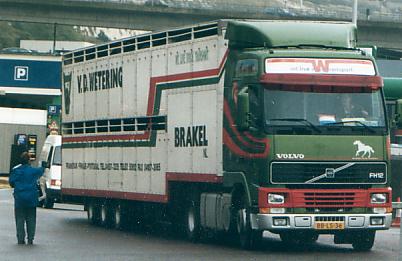
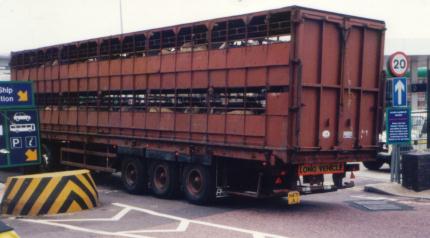
Australia’s current rules on transporting live animals over long distances are minimal and virtually unenforceable, allowing animals to travel for up to 48 hours without food or water. Introducing a condition related to the protection of animals during transport in trade preferences related to ruminant meat would thus also have a positive impact. 

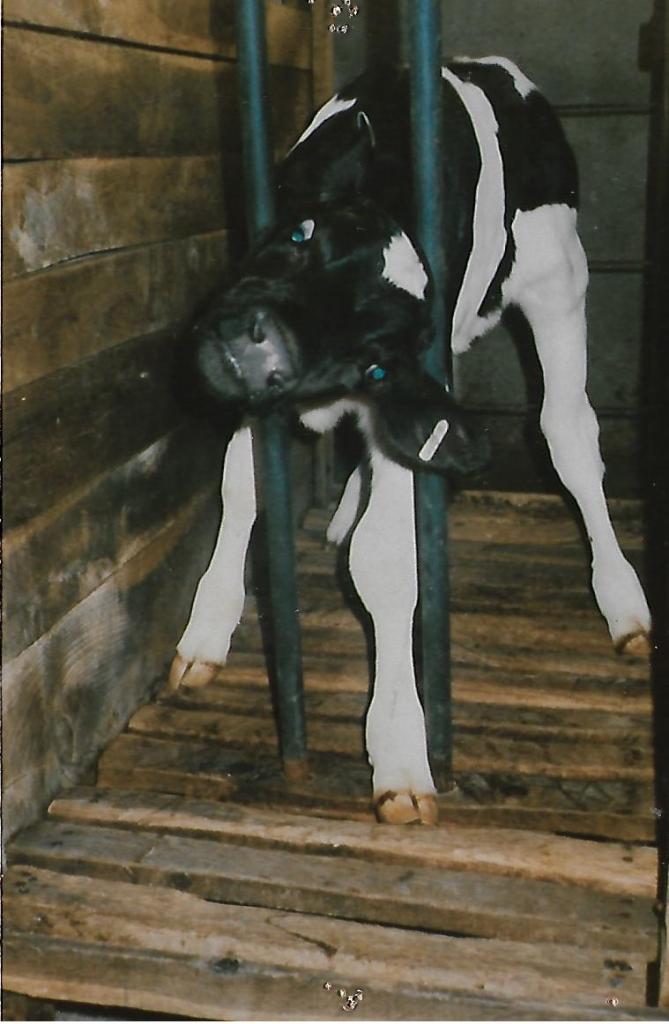
This trade agreement is also an opportunity to set up strong cooperation mechanisms to tackle other topics such as the lack of use of pain relief during procedures like sheep mulesing in Australia. 

Above — Mulesing.

It will be important to also use such a platform to share best practices and combine efforts to phase out live animal exports, especially since Australia has committed to phasing out its live sheep export trade and the EU is currently revising its legislation on the protection of animals during transport. 

The EU and Australia together represent 473 million citizens, many of whom believe more should be done to improve the life of farm and wild animals. According to a 2018 report, 9 out 10 Australians are concerned about the welfare of farmed animals, and nearly as much want a reform to address this.

In Europe, animal welfare is a great ethical concern. Seven out of the ten successful European Citizens Initiatives (ECI) have been dedicated to animal welfare issues. The recent support for the ECI End the Cage Age paves the way for both sides to cooperate as Australia has pledged to phase out the production of battery eggs by 2036.

We also urge the EU and Australia to address the large-scale, inhumane killing of kangaroos for commercial use. The EU is the main market for Australian kangaroo meat and leather, an industry which raises concerns about animal welfare, conservation and public health. Both parties must consider prohibiting the trade of kangaroo-based products primarily on ethical grounds. The EU and Australia both have a responsibility to solve this; in a recent survey, 67% of Australians stated that other countries should have a responsibility not to drive the commercial killing of kangaroos.

It is possible to strike a balance between economic interests and our shared commitment to ensuring the welfare of animals. We call upon political leaders of the EU and Australia to stand firm on their commitment to develop and safeguard high animal welfare standards.

Regards Mark

Australia: Australians believe kangaroos should be protected from commercial killing as EU remains one of the biggest importers.

24 October 2023

Press Release

A new poll has found out that Australians want to protect kangaroos against commercial killing as non-profit organisations urge the EU, one of the biggest importers of kangaroo products, to ban imports.

98% of Australians think it’s important to protect kangaroos as part of a strategy to safeguard Australian ecosystems, while 64% believe that Australians should take a stance against commercial killing of kangaroos, a poll has found. More than 75% think it’s both unacceptable and inhumane how an estimated 400,000 of joeys are killed annually as part of this commercial killing.

Every year, approximately two million kangaroos fall victim to commercial slaughter for their skins and meat, with Europe wielding immense influence over what has become the largest commercial terrestrial wildlife slaughter on the planet. Kangaroo leather is used to produce football shoes, motorbike suits and other luxury fashion products while kangaroo meat is sold in European supermarkets, served in restaurants and used in pet food. 

Big businesses are however moving away from using kangaroo products, including Nike and Puma, who both announced that they will move on to synthetic materials instead.

67.3% of Australians agree that other nations should refrain from driving the commercial slaughter of Australian wildlife if it entails cruelty or ecological threats, akin to the EU’s ban on seal products. In addition, 64.2% believe that the trading of kangaroo body parts should stop. 

The EU has a key role to play to stop the massacre of millions of kangaroos, including dependent joeys. Just like the EU banned the import of seal products in 2009 because of cruel hunting methods, it is now time to act to end the suffering of these national Australian icons. This survey is a clear reminder that EU policy has an impact on animals and people beyond its borders and can champion a compassionate and sustainable movement.

Reineke Hameleers, CEO, Eurogroup for Animals

The Eurobarometer results that were published last week are unequivocal: Europeans want the EU to protect animals and their welfare. On behalf of all Europeans, we ask for ambitious animal welfare legislation now. This also means the end of kangaroo products imports. This cruel hunt does not align with the values of Europeans, nor Australians, and it is time for the EU to act.

Manuela Ripa, MEP (Greens/Efa)

This wildlife trade is poorly regulated, jeopardising kangaroo populations, and the brutal fate of countless healthy joeys is nothing short of barbaric. The Australian government is failing to protect our kangaroos from the legalised commercial wildlife trade, but this new national survey demonstrates that Australians genuinely care.

Mick McIntyre, Founder, Kangaroos Alive

The EU and Australia are nearing the end of negotiations for a free trade agreement, with both sides expecting talks to conclude soon. It is therefore critical that the partners take the opportunity of these final stages to achieve ambitious provisions on animal welfare in the agreement and put an end to cruel trade.

Nine out of 10 Australians said kangaroos should remain part of the Australian landscape and believe that co-existence is key, compared to a mere 9.7% that considers kangaroos to be a pest, mostly due to road hazards.

The survey was commissioned by Kangaroos Alive, a non-profit organisation committed to  campaigning nationally and globally for a moratorium on the killing of kangaroos. The organisation has been part of an ongoing campaign in Europe lobbying to stop kangaroo imports into the EU. 

Regards Mark

EU: The rules of the game: will the views of EU citizens make the Commission finally deliver the new animal welfare legislation?

23 October 2023

WAV Comment – In addition to making things a lot better, lets have EU wide legislation that gives stray (homeless) dogs and cats much more rights – they are homeless; not wild !

  • I could show you dozens more photos I have on file re EU strays, but I dont want photos, I want legislation.
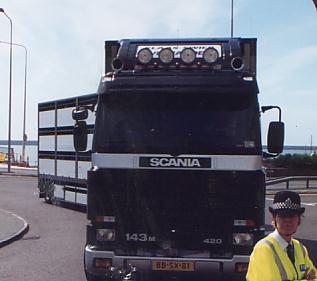
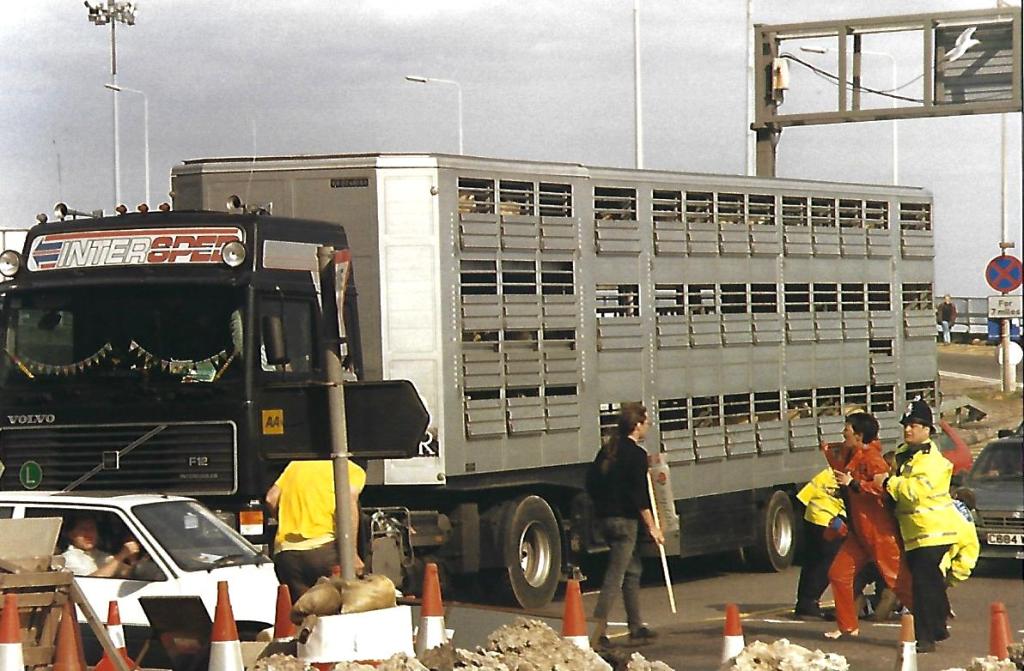
  • Pack EU Commissioners in a livestock transporter for 2 days, urinating over each other – then see how quickly EU animal transport rules will change !

Opinion

Written by Reineke Hameleers

The past few weeks have been among the hardest in my position as the CEO of Eurogroup for Animals but also, in some respects, the most surreal. In the ten years I have proudly spent leading this organisation, I experienced many political hurdles. Together with my team and our member organisations, we went through long years of lobbying and campaigning that were met with political inaction on the part of the European Commission.

After hitting the rubber wall so many times, we were thrilled by the prospect of new and updated animal welfare legislation, which the European Commission promised to deliver in line with the aims of the EU Green Deal and in the wake of our incredibly successful citizens’ mobilisations. It was refreshing for us to finally collect all the science, prepare our concrete asks, and talk about change for billions of kept animals. 

This week it became clear that, at least for this political term, the European Commission does not intend to deliver all of the promised and much-needed reforms of animal welfare legislation. There are reasons why this is happening and I won’t analyse them in detail here. All I can say is that none of them holds water in a healthy democracy because this backtracking represents a betrayal of the trust millions of European citizens had put in the European Commission to take action for farmed animals. 

Today, the disconnect between civil society and European politics has become even more evident. For one, the plenary debate at the European Parliament in Strasbourg on the European Citizens’ Initiative “Fur Free Europe” demonstrated that there is incredible cross-party parliamentary support for a ban on fur farming. Secondly, the results of the latest special Eurobarometer on animal welfare, only just published, show once again and without a shadow of a doubt that European citizens deeply care for farmed (and domestic) animals and want their policymakers to act.  We know, however, that the pressure from the industrial agriculture lobby is immense and that the stakes are high due to the impending European elections in 2024. 

We had anticipated that any attempt at passing legislation to reform animal farming would encounter fierce opposition from our opponents. I do not think we were wearing rosy glasses. After engaging for years with all stakeholders in countless meetings and occasions, and with all the scientific and field evidence on our side, we thought there were solid bases on which to build a revised farmed animal welfare legislation. 

But then the pandemic hit, then war, causing international instability and an ongoing economic crisis. The promises of a greener, more sustainable food and farming system and good lives for animals became controversial in light of the events. As elections approach, one must be “realistic”. What was promised to millions does not count anymore when there’s a re-election on the line. These are the rules of the game. 

Now that European citizens have spoken again, loud and clear, directly and through their elected representatives, what will the European Commission do? I believe the European Commission still can (and should) do the decent thing and put forward all the planned legislative proposals on animal welfare. When it does, we will be there to ensure that the new laws really make a difference in the lives of billions of non-human animals. 

Regards Mark

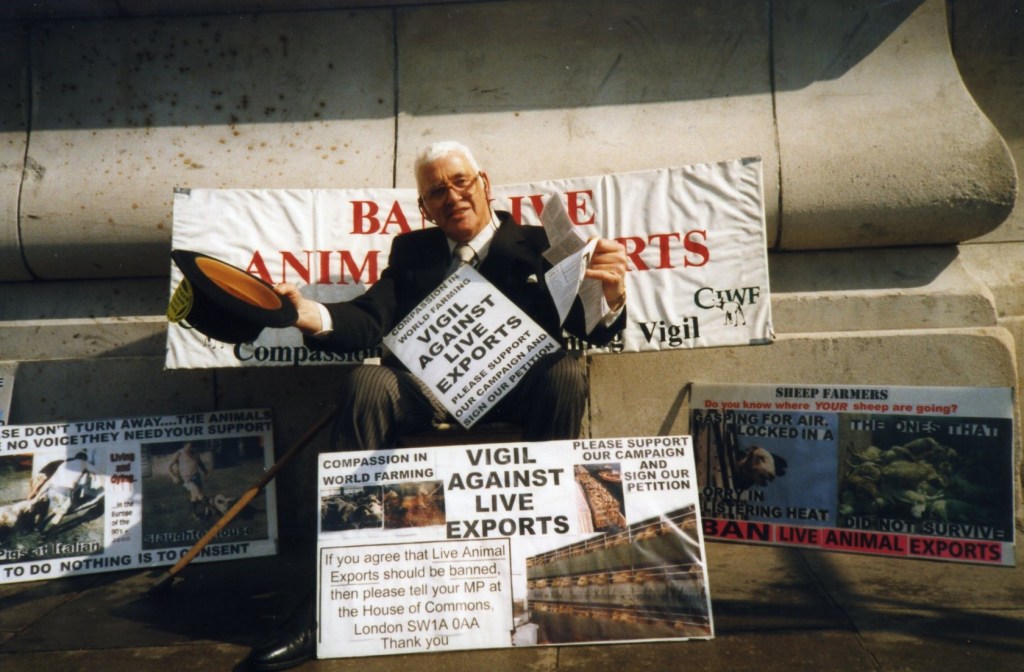
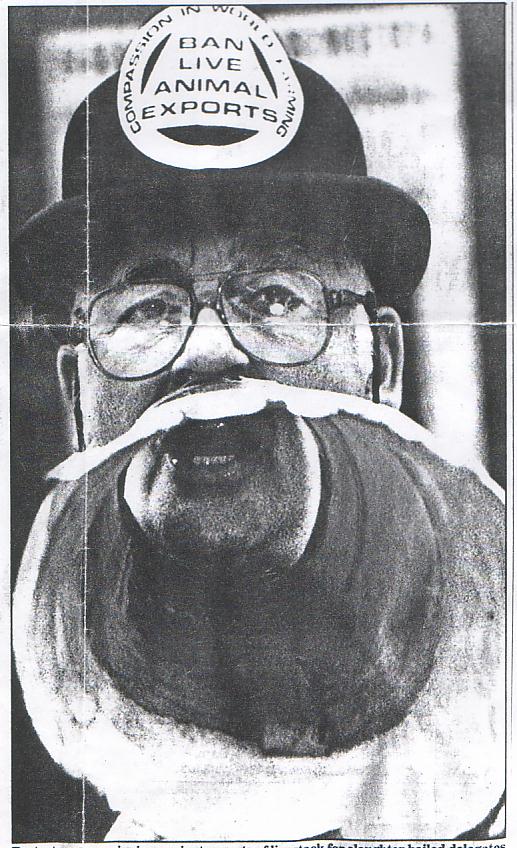
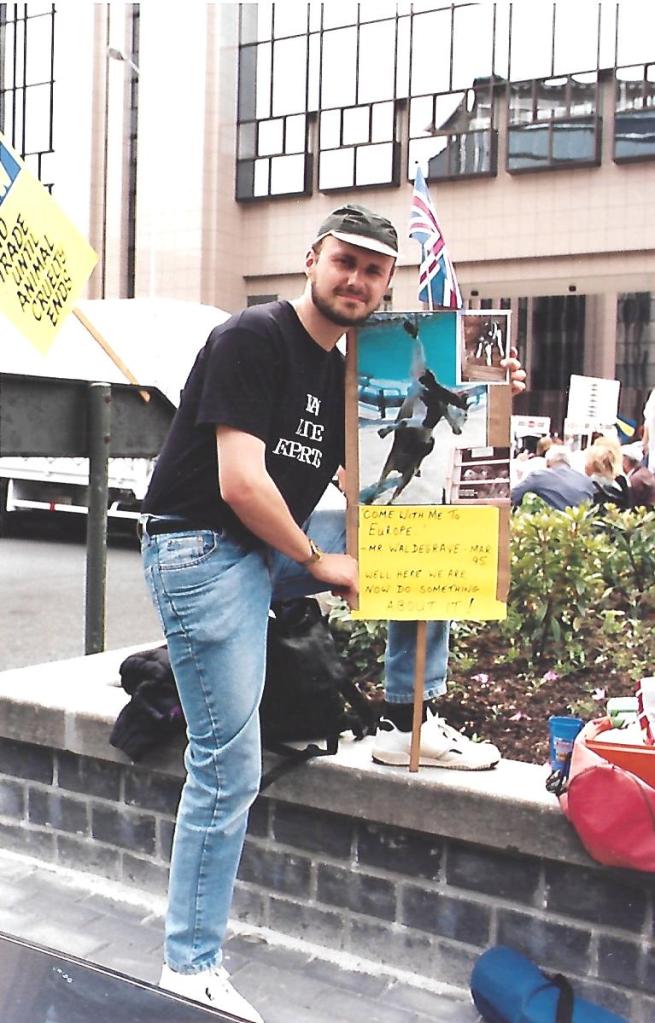
Younger days planning something ! – probably involving live animal exports.

EU: European Parliament supports plant-based food production but misses crucial need to reduce animal numbers.

WAV Comment – When you are behind rose tinted spectacles, and think that you are faultless in every way, it must be very easy to miss seeing the need to reduce animal numbers in food production !! – how very ‘Euro politics’; missing the ‘bleeding obvious’ ! – Mark

20 October 2023

In the vote on its own-initiative report on the European Protein Strategy, MEPs recognised the need to increase plant-based production for human consumption, but failed to address the crucial need to reduce animal numbers, particularly in intensive farming.

Eurogroup for Animals regrets that the Parliament rejected the amendment tabled by a large number of MEPs from different political groups, calling on the Parliament to recognise the need to reduce the production and consumption of animal-sourced protein from intensive farming in the report on the European Protein Strategy.

Around two-thirds of EU agricultural land is used for animal production, and a large proportion goes to producing feed for animals in intensive farming. Moreover, European animal farms have intensified in the last decade. 

Russia’s invasion of Ukraine sparked a discussion about EU food security, with the European Commission reviewing its report on the development of plant proteins to improve EU food security, reducing dependence on feed imports and reducing environmental and climate impacts. The biggest threat to long-term food security in Europe is the overconsumption of animal protein, which exceeds national dietary guidelines, planetary boundaries and negatively impacts animal welfare. The science is clear that in order to ensure long-term food security, we need to grow more food for people and less feed for animals on arable land.

We welcome the Parliament’s consideration of animal welfare when it comes to insect farming for food and feed, but are concerned that insect farming is mainly a feed industry with questionable sustainability credentials and that risks sustaining intensive animal farming. We are also concerned about the positive view on methane reducing feed-additives, which are understudied and risk leading to poor animal welfare.

Eurogroup for Animals encourages the European Commission to focus on plant-based protein production for food, not feed, when reviewing its report on the development of plant proteins and to recognise the need to reduce animal numbers in intensive farming. This would support real long-term food security and strengthen Europe’s ability to produce enough food for everyone.

Regards Mark

Wales: Good News to Finish – ANIMAL rights campaigners welcomed a total ban on snares and glue traps in Wales, which came into force yesterday.

ANIMAL rights campaigners welcomed a total ban on snares and glue traps in Wales, which came into force yesterday.

Rural Affairs Minister Lesley Griffiths called it a “historic day” for animal welfare and said she is proud Wales is the first of the UK nations to introduce the move.

RSPCA Cymru’s Billie-Jade Thomas said: “We very much welcome the ban on snares and glue traps coming into force today.

Continue reading at:

Animal rights campaigners welcome Wales’ total ban on snares and glue traps | Morning Star (morningstaronline.co.uk)

Regards Mark

USA: This Animal-Rights Group Wants Adidas to Hire New President Opposed to Kangaroo Cleats.

This Animal-Rights Group Wants Adidas to Hire New President Opposed to Kangaroo Cleats

A week after Adidas announced North America president Rupert Campbell will leave the company at the end of the month, the Center for a Humane Economy called on the company to replace the outgoing executive with someone opposed to using kangaroo hides on soccer cleats.

“Adidas has long been the biggest apologist and end-user of kangaroo skins for soccer cleats in the world,” said Wayne Pacelle, president of the Washington, D.C.-area animal welfare group and Animal Wellness Action. “It now stands alone among the biggest athletic shoe brands in financing the slaughter of kangaroos, including the mass orphaning of joeys.”

Continue reading at:

This Animal-Rights Group Wants Adidas to Hire New President Opposed to Kangaroo Cleats (yahoo.com)

Regards Mark

EU: Wake Up Commission ! – The Figures Are Here – Special Eurobarometer on animal welfare: EU citizens give strong impetus to deliver all animal welfare legislation.

19 October 2023

Press Release

A new barometer on animal welfare shows an overwhelming majority of European citizens who demand better EU legislation that truly protects animals, with over nine in ten Europeans stating that it is important to protect the welfare of farmed animals, and an absolute majority deeming it very important. More than eight in ten Europeans believe that farmed animals in their countries should be better protected than they are now. These results should prompt the European Commission to follow through on its commitment to deliver all the proposals to revise the EU animal welfare legislation as promised.

The much awaited special Eurobarometer on Attitudes of Europeans towards Animal Welfare has finally been published today. The poll surveyed 26,376 citizens across all member states between 2 and 26 March 2023, and acts as an official tool that is used to advise the EU institutions when drafting reports and legislations.

The results confirmed the strong support from EU citizens towards animal welfare, confirming the previous survey from 2016, which had also sent a very strong message for the EU to better protect animals. 

Highlights from the survey:

Over 90% of Europeans consider that farming and breeding practices should meet basic ethical requirements, while two-thirds of respondents said that they would like to have more information on the conditions in which farmed animals are raised.

Nearly six in ten Europeans (57%) said that fur farms should be banned in Europe, in line with the 1.5 million citizens who made this call in the successful Fur Free Europe ECI 

Over nine in ten Europeans believe that farmed animals should have enough space to be able to move around, lie down and stand up, with 89% saying that animals should not be kept in individual cages, supporting the call by 1.4 million citizens who asked for a ban on cages. Currently in the EU, over 300 million farmed animals spend their lives confined in cages, which cause them immense suffering.

Nearly nine in ten Europeans (88%) said that it is important to improve the welfare of animals in slaughterhouses. 

89% of Europeans favoured a ban on mutilations, a practice that is still very common in the EU, despite the pain it causes. 

Three quarters of respondents found the practice of killing male chicks after birth to be unacceptable. In addition, eight in ten Europeans believe that ensuring sufficient skills and training in people handling animals is important.

On the issue of live animal transport, which the EC is expected to propose a revision on, 83% of respondents think that the travel time for the transport (for ‘commercial purposes’) of live animals within or from the EU should be limited.

When it comes to food imports from non-EU countries, over eight in ten Europeans (84%) believe that the current animal welfare situation should change, either by imposing import requirements or a very strict labelling system. 

60% of the respondents indicated that they would be willing to pay more for products sourced from animal welfare-friendly farming systems, despite the survey being carried out during high inflation periods.

74% believe that the welfare of companion animals should be better protected, and over eight in ten respondents said that good welfare conditions for horses, cats and dogs bred for commercial purposes is important.

These results come at a time when the European Commission comes under fire for failing to uphold its commitment to deliver the full proposals to revise the EU animal welfare legislation, and backtracking from its promises as part of the Farm to Fork Strategy.

The support of EU citizens for better animal welfare is enormous, with this Eurobarometer once again they made a clear call for better protection for animals on all fronts. We urge the European Commission to listen to this loud and clear message and come forward with a solid commitment and timeline for the Kept Animals and Slaughter Regulations

Reineke Hameleers, CEO, Eurogroup for Animals

Regards Mark

“As Long As Men Massacre Animals, They Will Kill Each Other” – World Migratory Bird Day, Today 14/10.

Thanks Stacey

world migratory bird day | Our Compass (our-compass.org)

Yes, it is now a very troubled World.  Mark.

World migratory bird day

OCTOBER 14, 2023

by karenlyonskalmenson

❤️World migratory bird day 2023❤️

The 13th of May

The 14th of October

Today

For birds to fly

Far

Above the troubled world below

To navigate above us

In ways only they know

Regards Mark /Stacey.

Pythagoras

Pythagoras of Samos (Πυθαγόρας; c. 570 BC – c. 496 BC) was an Ionian Greek philosopher often revered as a great mathematicianmysticscientist, and putative founder of the traditions referred to as Pythagoreanism.

Polish elections: which parties defend animal welfare?

Polish elections: which parties defend animal welfare?

13 October 2023

Otwarte

For the first time, Polish organisations Albert Schweitzer Foundation, Otwarte Klatki, Green REV Institute and Compassion in World Farming Poland joined forces on a pre-election campaign to encourage citizens to vote for animals in the national elections taking place on 15 October.

On their campaign website, the organisations demand protection of animals used for the production of meat, milk, eggs, and clothing. They oppose industrial farming that negatively affects the well-being of people, animals and the environment, and they support transforming the food system to a sustainable and plant-based one.

According to their ranking of Polish political parties, the Razem (Together), Zieloni (Greens) and Nowa Lewica (New Left) parties are the leading parties for animal welfare issues in Poland. The ruling nationalist Prawo i Sprawiedliwość (Law and Justice) party is vying for an unprecedented third term in office, but is not projected to gain a majority in the parliament. The main opposition party Platforma Obywatelska (Civic Platform), led by former European Council president Donald Tusk, would also need support from a coalition. Civic Platform ranks 6th for animal welfare, and is likely to join up with other more animal welfare-friendly parties. Prawo i Sprawiedliwość ranks 8th with a final score below zero, and would seek a coalition with Konfederacja (Confederation), who rank bottom in the animal welfare chart. 

Every year, over a billion chickens are killed in our country. We produce the most poultry meat for slaughter in the entire EU. We want to inform voters interested in the fate of farm animals about the views and plans of political parties regarding the protection of their rights. We want to create pressure on politicians to take urgent actions to improve the welfare of farm animals.

Grzegorz Stachacz, Director, Albert Schweitzer Foundation

The campaign has reached major media, with coverage on TVN24, the largest online news service in Poland, ONET, and FAKTY TVN

The ranking is based on party positions for welfare demands including phasing out cages for laying hens, pigs, calves, rabbits and quails, banning fur farming and the slaughter of day-old chicks. On transport, the organisations call for a ban on the export of live animals and a maximum transport duration of 8 hours for live cattle, pigs, sheep and goats. For poultry and rabbits, the transport duration should be limited to 4 hours.

The ranking also covers party positions on creating an Ombudsman position on animal protection, and transitioning to a sustainable food system.

Regards Mark