Category: Environmental

Trophy Hunting – Time For Global Action To Stop It NOW !

The photos and many of the words are taken directly from the Campaign to Ban Trophy Hunting site which can be visited at:

About – Campaign to Ban Trophy Hunting

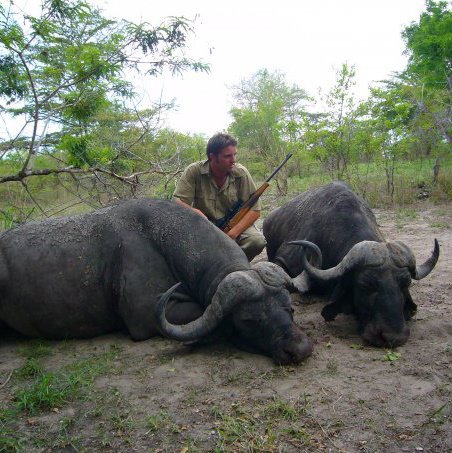
WHAT IS TROPHY HUNTING?

The UK All-Party Parliamentary Group on Banning Trophy Hunting defines it as “as a ‘sport’ by those who practice it. It consists of killing an animal for recreation, and then displaying its body as an expression of a hunter’s ‘prowess’. It is distinct from the control or management of wildlife populations, which should be carried out humanely by trained professionals.”

WHAT ARE ‘HUNTING TROPHIES’?

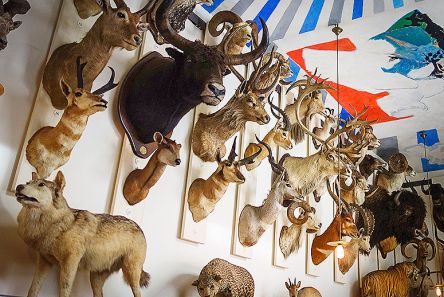
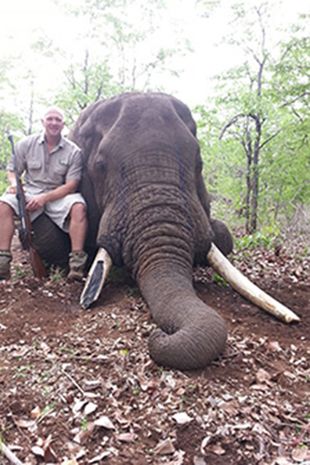
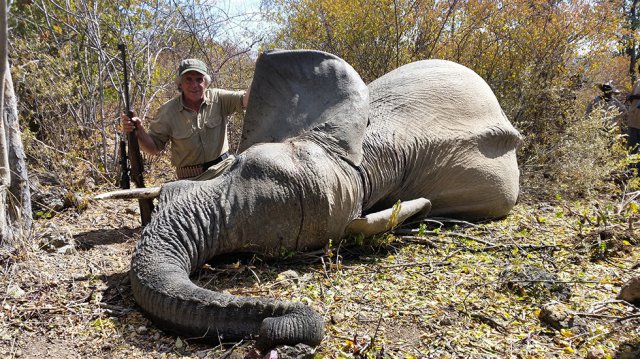
Trophies include whole bodies of animals, their heads or skulls, skins, tails, feet and even genitalia.

In the case of elephants they can include trunks and ears too.
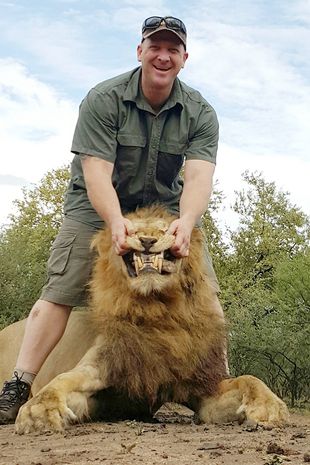
CANNED’ LIONS

There are over 300 Lion ‘Factory Farms’ breeding thousands of lion cubs for trophy hunters to shoot in enclosures.

They are also killed for their bones to make ‘lion wine’ and ‘lion cake’ for wealthy Asian businessmen.
SICK PRIZES

In recent years, over 800 Trophy Hunters have won prizes for having shot lions, elephants, leopards AND rhinos.

The hunting industry hands out special awards every year to hunters who kill over 125 different species of animal.
HUNTING HOLIDAYS

There are thousands of hunting companies, mainly in South Africa and the US.

Some make millions of dollars a year.

Some offer Black Friday deals and even ‘free’ animals for hunters to shoot, such as monkeys.

EXOTIC CREATURES

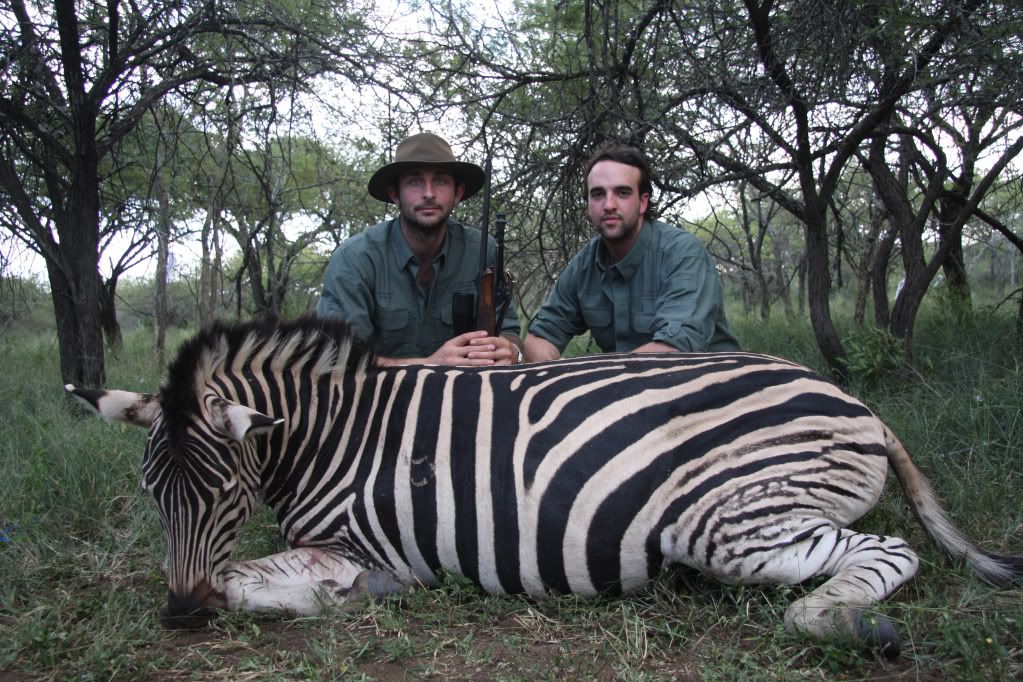
Many Trophy hunters like to shoot kangaroos, camels, seals, beavers, wild cats, reindeer, and sheep.

In the US, there are estates which import and breed animals such as zebras – so hunters don’t have to fly to Africa to shoot their favourite animal.

In some places, hunters can drive around in tanks, take young children hunting, and even shoot animals from helicopters using a machine gun.
SUFFERING

Studies suggest at least 50% of animals shot by Trophy Hunters are not killed instantly and instead die slow, painful deaths.

Evidence presented to the UK Parliament

Witness(es): Dr Mark Jones, Head of Policy, Born Free Foundation; Eduardo Goncalves, Founder, Campaign to Ban Trophy Hunting; Dr Audrey Delsink, Wildlife Director, Humane Society International UK

Environment, Food and Rural Affairs Committee

Tuesday 2 November 2021 

Watch the committee presented with evidence from the above by clicking on the following link:

Parliamentlive.tv – Environment, Food and Rural Affairs Committee

Visit the (UK) campaign to ban trophy hunting working to expose and end trophy hunting all over the world; see lots more at:

Campaign to Ban Trophy Hunting

KILLING ANIMALS FOR PLEASURE IS CRUEL, UNNECESSARY, AND HAS NO PLACE IN A CIVILISED SOCIETY.

Humans have no right to take the life of an animal for recreation. Animals experience suffering and pain when they are hunted for trophies. Killing endangered wildlife for pleasure only helps push them even further towards extinction.

The Campaign to Ban Trophy Hunting calls for:

-Governments to ban trophy hunting and the import and export of hunting trophies

-Effective enforcement of existing national and international laws against trophy hunting, with tough penalties for offenders

-An immediate halt to the trade in trophies of vulnerable, threatened or endangered species

-Trophy hunting exemptions to be removed from existing international conservation agreements

-Negotiations to commence on a comprehensive global agreement banning trophy hunting

News – News – Campaign to Ban Trophy Hunting

View the huge range of well known supporters calling for a ban – Supporters – Campaign to Ban Trophy Hunting

Actions – Including Petitions:  Action – Campaign to Ban Trophy Hunting

Donations to help the fighting fund – Donate – Campaign to Ban Trophy Hunting

Investigations – Investigations – Campaign to Ban Trophy Hunting

Why its time to ban trophy hunting – Opinion – Campaign to Ban Trophy Hunting

Shop for merchandise – SHOP – Campaign to Ban Trophy Hunting

Regards Mark

England: Veganuary Vegan Bites.

The following tasty treats have come to us through liaison with the Viva! Vegan recipe club.

Why not give them a try (for Veganuary) when you have some time.


Speedy One Pot Kale, Bean & Lemon Stew

This is a lovely, hearty, healthy stew which is very quick to make – perfect for busy evenings or for taking to work in a thermos for the office lunch.

Click here for the full recipe details:

Speedy One Pot Kale, Bean & Lemon Stew – Vegan Recipe Club

Golden ‘Chicken’ & Leek Pies 

These seasonal pies are mmmnn delicious! You can choose whether to make 1 large pie, 6 medium-sized (using pie cases or ramekins) or 12 little pies (using a muffin tin).

Click here for the full recipe details:

Golden ‘Chicken’ & Leek Pies – Vegan Recipe Club

Quick & Creamy Black Eyed Bean Curry

This curry is healthy, delicious, easy to make and certainly not lacking in flavour. Add to the list of weekly staples 🙂

Click here for the full recipe details:

Quick & Creamy Black Eyed Bean Curry – Vegan Recipe Club

Guest Chef Specials:

Krimsey Lilleth was born in Baton Rouge, LA and raised in the rich, celebratory culture of the deep south. She spent a good deal of her childhood in the great outdoors and swampy, magical forest teeming with all sorts of critters she came to love and respect.

Krimsey’s mission is to inspire others to care for themselves, animals and the environment through food. She is the founder of the late-and-great Los Angeles restaurant, Krimsey’s Cajun Kitchen, the world’s first vegan Cajun restaurant! 

We can’t wait to try Krimsey’s incredible recipes – perfect for a post-Christmas pick-me-up. 

Deep South Pasta Casserole

Click here for the full recipe details:

Deep South Pasta Casserole – Vegan Recipe Club

Cinnamon S’mores French Toast Roll-ups

Click here for the full recipe details:

Cinnamon S’mores French Toast Roll-ups – Vegan Recipe Club

Sign up to the Vegan recipe club by clicking here:

Delicious Vegan Recipes | Vegan Recipe Club

Download the Vegan recipe club app by clicking here;

Vegan Recipe Club App – Vegan Recipe Club

Some Veganuary specials for you to try – just click here:

Advance recipe search – Vegan Recipe Club

Happy Munching !

Regards Mark

Finland proceeds with plans to kill wolves.

Photo – Act

6 January 2022

Susiryhmä

In December, the Finnish Ministry of Agriculture and Forestry announced a proposal to kill 20 wolves from 4 packs outside the reindeer herding area this winter, with the supposed purpose of “regulating the growth of the wolf population, preventing damage and promoting the acceptability of the wolf”.

This proposal goes against Finland’s legal obligation to prohibit the deliberate killing of wolves as specimens of a strictly protected species listed under the Annex IV(a) of the Habitats Directive.

Members of the European Parliament from the Intergroup on the Welfare and Conservation of Animals recently sent a letter to Minister Jari Leppä, calling for withdrawal of the Ministry’s proposal.

File

Letter from the Intergroup on the Welfare and Conservation of Animals RE: Call to withdraw the proposal to kill twenty wolves698.84 KB

Our member organisation Luonto-Liiton Susiryhmä also took action to stand against the plans, highlighting the fragility of Finland’s endangered wolf population, and the public’s support for the protection of wolves.

Despite these efforts, the Finnish Ministry has not withdrawn the plans.

The actions from the Finnish Ministry of Agriculture and Forestry under Minister Jari Leppä are promoting wolf persecution and conflict. The decision from the Ministry to kill 20 wolves next winter goes against EU legislation which Finland has the legal obligation to comply with. The wolf is a highly endangered and strictly protected species in Finland and according to the rulings of the CJEU, this protection applies not only in its natural habitat but also near human settlements. In this time of crisis for nature, Finland should be a role model for protecting it´s endangered species according to the law instead of focusing on finding the legal “loopholes” to make it easier to kill these animals. Quota-based wolf hunting is not a measure that promotes tolerance or coexistence with wolves, but quite the opposite. Preventing conflicts with large carnivores is possible – as shown in many European countries with much bigger wolf populations – by the effective use of preventive measures. Killing a wolf should always be an exceptional and last resort, used when no other option exists and after all other alternative means have been exhausted.

Francisco Sánchez Molina, Luonto-Liiton Susiryhmä

Eurogroup for Animals, along with Luonto-Liiton Susiryhmä, strongly condemns this action and encourages humane alternatives to be employed in order to encourage successful coexistence with large carnivores, and to protect this highly endangered species. 

Read more at source

http://www.luontoliitto.fi/susiryhma/in-english

Luonto-Liiton lausunto maa- ja metsätalousministeriön luonnokseen koskien suden…

Regards Mark

EU: The new Common Agricultural Policy: One small step for agriculture policy, one giant leap for animal welfare.

WAV Comment: Phil Hogan is Irish; https://en.wikipedia.org/wiki/Phil_Hogan and has, although not legally permitted in his position as EU Commissioner, been a very vocal supporter of the Irish agriculture industry. This should not be permitted by the EU of ‘their’ Commissioners; but hey, we all know the EU and how it operates. Phil Hogan has been a big voice for Irish Agriculture and probably not much else – full stop !

5 January 2022

On 2 December, the Slovenian Minister of Infrastructure and the President of the European Parliament formally signed into law three new regulations that, taken together, form the basis of the new Common Agricultural Policy for 2023 — 2027 (and possibly beyond).

This new CAP has been derided, disparaged and denigrated by environmental groups and agricultural producers alike, and not without good cause from the former. At a time when Europe aspires to lead the world in a green revolution, we have a policy that, whilst a big improvement on the current CAP, still fails to live up to the lofty ambition of the von der Leyen Commission’s Green Deal.

In a large part, this can be blamed on the fact that the proposals were not born of the current Commission at all, but were legacies of the Juncker Commission, and in particular of an Agriculture Commissioner (Phil Hogan) who was more interested in agricultural orthodoxy than environmental originality. Blame should also be levelled at the doors of Member States. In order for any legislative package to be adopted, it needed support from a minimum of 15 countries, representing 65% of the Union’s total population. Politics is still, ultimately, the art of the possible, and sometimes there is no point in reaching for the stars when you can only get as far as the moon.

EU Ag Commissioner Phil Hogan – A Promotional Voice for Irish Agriculture.

And so to the detail. Ultimately we needed a CAP that rewards a new set of environmental and animal welfare provisions: cleaner water, better soil quality, higher biodiversity, better grazing and housing standards. Farmers are custodians of our landscape; more of them need to be encouraged to follow best practice and behave as such. We needed a shift to rewarding the outcome, not the activity. Did we get this?

Yes, and no. Voluntary coupled support, which allows Member States to target ‘aid’ to a specific agricultural sector, survives. Although capped at 13% of the European Agricultural Guarantee Fund (otherwise known as the “first pillar”) — i.e. those funds that go straight to farms to support their incomes — this remains to be a remnant of the original CAP that is neither just nor justifiable. The use of voluntary coupled support in 2018, for instance, totalled €3.99 billion, of which 40% went to support beef production and a further 21% to support milk production. Furthermore, new “good agricultural and environmental conditions” (known as GAECs) — standards for environmental protection which directly impact on habitat protection — were watered down by Member States and MEPs.

However, it’s also not all bad. A full 25% of the European Agricultural Guarantee Fund will, for the first time, be composed of new incentives for farmers, obliging them to deliver outcomes that go above and beyond minimum requirements. Crucially, thanks to our efforts and collaboration with both European Parliamentarians and Member State diplomats, these new ‘eco-schemes’ also include measures to drive improvements in animal welfare. On top of this, the wholly discretionary European Agricultural Fund for Rural Development — the so-called “pillar II” — also remains available to improve animal welfare.

We should not underestimate the impact that these eco-schemes can have for millions of animals. For the first time in the history of the CAP, animal welfare can now be incentivised through direct payments, providing farmers with a pot of money worth over €10 billion per annum. Eco-schemes, which ultimately must be used, have already been identified as a key mechanism to enable farmers, for instance, to transition to cage-free systems. Several Member States have already identified their use to support pasture-based grazing for their cattle herds.

Indeed, under the new CAP, it is now over to Member States to make the best use of this new funding, and to ensure that animal welfare is prioritised. However, governments can no longer point fingers at Brussels and complain about a lack of funding for higher animal welfare. The money is there. Now it must be used.

The new CAP, taken as a whole, is certainly not perfect. The challenges for the next reform will be to do away with coupled support entirely, to ensure eco-schemes form the backbone of the European Agricultural Guarantee Fund, and to oblige all Member States to use some of the funds available to drive animal welfare forward.

However, this CAP still has the power to improve the lives of millions of animals across our European Union. It’s a big step in the right direction. We are not where we need to be yet, but we are, at least, on the right path. 

Regards Mark

Photo – Mark (WAV)

Worldwide Rally Against Trophy Hunting (W.R.A.T.H.) – January Protests; Washington D.C., New York, Las Vegas and London. The Protests Coincide with the Safari Club Int’l Annual Conference in Las Vegas (Jan. 19th – 22nd).

Comment: Hi Mark! Hi Venus!

Happy New Year!

I am wondering if your readers know of the anti-trophy hunting protests in Washington D.C., New York, Las Vegas and London. The protests coincide with the Safari Club Int’l annual conference in Las Vegas (Jan. 19th – 22nd).

The Organizer is Worldwide Rally Against Trophy Hunting (W.R.A.T.H.) on Facebook. https://www.facebook.com/endtrophyhunting

Details on the London Rally– scheduled Jan. 19th– Noon to 3:00, before Statue of George V, Westminster. Or click this link: https://fb.me/e/3J0sg1VM4

Tamara Bedic, Esq.

Animal Rights Committee, Chair

National Lawyers Guild, NYC

https://www.facebook.com/NLGNYC.Animal.Rights/

Regards Mark

Brasil: It Is Either the Amazon or Bolsonaro. There Is No Space For Both.”

General elections are scheduled to be held in Brazil on 2 October 2022 to elect the PresidentVice President, and the National Congress. Elections for state Governors and Vice Governors, State Legislative Assemblies, the Federal District Legislative Chamber and the District Council of Fernando de Noronha will be held at the same time.

Brazil: Will Bolsonaro Win the 2022 Elections? | IE Insights

This article is more than 5 months old

Brazilian academics and activists issue warning amid fresh assault on environmental protections

Amazon rainforest ‘will collapse if Bolsonaro remains president’ | Amazon rainforest | The Guardian

The collapse of the Amazon rainforest is inevitable if Jair Bolsonaro remains president of Brazil, academics and environmental activists have warned amid a fresh government assault on protections for the forest.

Despite evidence that fire, drought and land clearance are pushing the Amazon towards a point of no return, they say the far-right leader is more interested in placating the powerful agribusiness lobby and tapping global markets that reward destructive behaviour.

The onslaught on forest safeguards has picked up pace. On Wednesday the lower house was due to vote on legislation that would reward land grabbers by legalising ownership of property that had been illegally invaded and cleared before 2014.

The previous day, the government shifted responsibility for forest fire satellite monitoring away from the National Institute for Space Research, a scientifically-robust organisation that had carried out the task for decades. Control has been given to the National Institute of Meteorology, which is under the influence of the agriculture ministry and the farming sector.

In the past few months, Congress has also diluted standards for environmental impact assessments and a committee has approved a bill – PL 490 – that has been described as the greatest assault on indigenous rights since the launch of the Brazilian constitution in 1988.

Continue on next page.

Sands of time are slipping away for England’s crumbling coasts amid climate crisis.

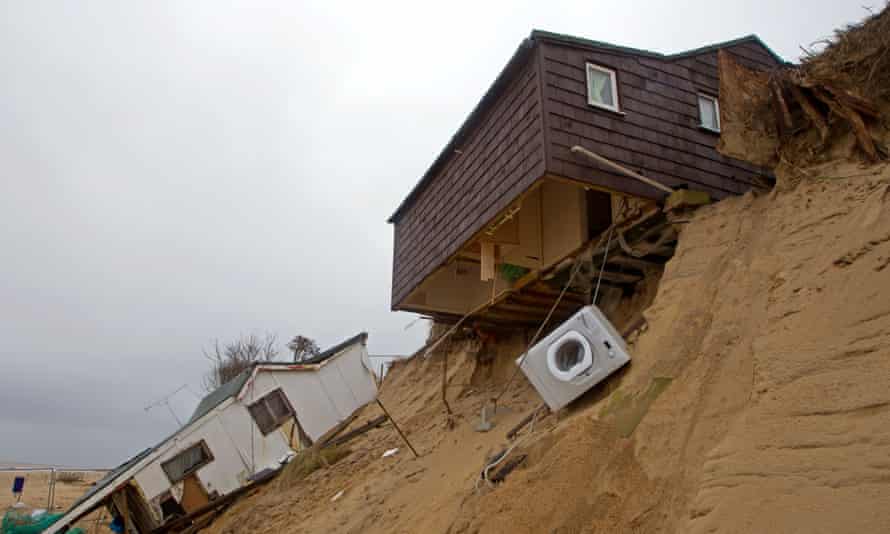
Houses left perilously close to the cliff collapse in Mundesley
Houses left perilously close to the cliff collapse in Mundesley. Photograph: Joe Giddens/PA

Sands of time are slipping away for England’s crumbling coasts amid climate crisis | Climate crisis | The Guardian

From a distance, the beach at Winterton-on-sea in Norfolk looks like the opening scene of Saving Private Ryan, with hundreds of grey bodies lying motionless across the sand. On closer inspection, it becomes clear they are not fallen soldiers but a huge colony of seals taken to the land for pupping season.

It’s an amazing annual sight that draws tourists and nature-lovers from across the country, but another process is taking place that is pushing people back – the growing threat of coastal erosion. Just along from where the armies of grey seals lay with their white pups, there used to stand the Dunes Cafe, a much-loved beach facility with a large and loyal clientele.

A year ago it was demolished to prevent its imminent collapse as a result of land lost to sea and storms. The ground where it stood is, like the cafe itself, no longer there. It’s a story of disappearance taking place all along the eastern coast of England, but particularly in East Anglia, that bulbous protrusion jutting into the North Sea.

That climate change and rising sea levels take their toll on the landscape is an old story, but one with an urgent new twist. “The sea level’s been rising since the last ice age, 20,000 years ago or so,” says Jim Hall, professor of climate and environmental risk at Oxford University’s Environmental Change Institute. “And it’s going faster. We’re probably not seeing its effect very much yet on the coast, though we will in the future.”

Chalets teeter on the edge following tidal surges in Hemsby, Norfolk, in 2013
Chalets teeter on the edge after tidal surges in Hemsby in 2013. Photograph: Nature Photographers Ltd/Alamy

England: We Brought The Pandemic On Ourselves – Jane Goodall Is Interviewed by Plant Based News.

In an exclusive new interview, Dame Jane Goodall sat down with Plant Based News’ own Robbie Lockie to discuss her new book. The renowned ethologist – referring to the study of animals in their natural habitat – delved into the food system, animal suffering, and hope.

Goodall penned the new release, called The Book of Hope: A Survival Guide for Trying Times, alongside Douglas Abrams, the internationally bestselling co-author of The Book of Joy. In The Book of Hope, the pair take an intimate look at humankind’s complex relationship with planet Earth. This includes the ways in which humans have wronged the planet, but also, and importantly, the ways in which we can start making amends.

Regards Mark

Sea Shepherd clean up garbage from human animals

4.4 tons- 8 people- 5 days

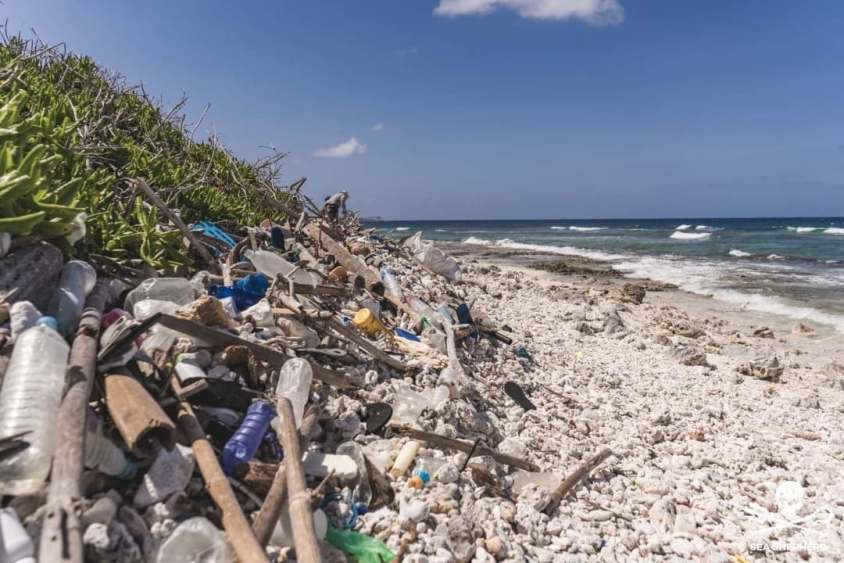
Australia: During the Cocos Keeling Island clean-up on Home Island, our “Trash Bash Crew” ventured beyond Pulu Gangsa and tackled new stretches of beach towards Kampong Atas.
During the three-day cleaning of this stretch of beach, the team removed 2,719 kilograms of plastic waste.

Most of the time, styrofoam, flip-flops, plastic bottles, threads, hard plastic pieces and large discarded suspension lines were removed.

When the team walked along the cleaned beaches at the end, they were all proud of their successful work: they had collected a total of 4.4 tons of rubbish on Home Island within 5 days.

4.4 tons of garbage that no longer poses a threat to the turtles, hermit crabs, rays, sharks and fish that the team observed during their time on this special island.

An indescribable reward for those tough days, carrying heavy trash (376 bags plus ropes and nets), and some of the harshest weather conditions we’ve encountered while doing a cleanup.



https://www.facebook.com/SeaShepherdDeutschland/

And my neighbor grumbles about the dog shit that can sometimes be found on the trail.
As if humans weren’t the most harmful animal on the planet, but the dogs!

We sincerely thank the Sea Shepherd activists

My best regards to all, Venus

England: 24/12/21 – Videos From Some Animal Friends – Enjoy and Celebrate Your Achievements !

We have been sent some videos celebrating some of the animal achievements this year.

Enjoy watching the videos and celebrate your victories; but please remember, at this time, there are still animals confined to cages and stalls, and bears confined to horrific cage systems in order to be milked daily for their bile. 

The fight for animal rights is not over – will it ever be ? – but we must celebrate our wonderful results this year and the new lives that are happening for so many animals.

Regards Mark and Venus.

The first video is from Jill at ‘Animals Asia’; who says:

In Vietnam, 16 precious bears are celebrating their first-ever Christmas at our sanctuary.

And in China, 99 bears who made the long journey from the ex-bear bile farm in Nanning to our Chengdu Sanctuary will be celebrating Christmas with their new furry friends outside of concrete enclosures and surrounded by lush green trees.

What an incredible gift you’ve given these beautiful brave survivor bears. They may be thanking Santa Paws, but we are thanking you.

As a small gift to you, we’ve put together a special Christmas video that we hope will bring festive cheer and leave you grinning from ear to ear.

Some supporters sent baubles with touching notes of love and peace to Tuong Lai. You’ll see we made sure she received them.

And you’ll spot Goldie, Wonder, Yen and more joyful bears opening their Christmas gifts and filling up their big round bellies with some of the most deliciously sweet festive treats…

Once again, thank you so much. Your love and dedication to Asia’s animals are the reason so many bears have been freed from pain and suffering this Christmas. And it’ll be the reason no bear is left behind as we work towards ending bear bile farming in Vietnam.

I’d like to wish you and your family a bear-y merry Christmas, on behalf of everyone here at Animals Asia, including, of course, the rescued, contented bears whose lives you’ve changed for the better.

With festive bear hugs,

A close-up headshot of Animals Asia’s Founder and CEO, Jill Robinson smiling into the camera with blonde shoulder-length hair. She’s wearing a black t-shirt with the white Animals Asia logo on her shirt sleeve and a red and white Father Christmas hat.

Jill Robinson MBE, Dr med vet hc, Hon LLD
Founder and CEO

The second video is from live export campaigner friend of several decades, Phil at ‘Compassion In World Farming’ (London.

Philip says:

Every petition you have signed, every letter you have written and every £1 you have donated has contributed to making big changes for farmed animals this year that will significantly improve their lives in future. Without you, none of our work would be possible, so thank you.

To show you just how incredible you are, please have a look at this short video highlighting some of the wonderful changes you have helped to achieve. 

I do hope you and your loved ones have a wonderful Christmas and I look forward to the great things we can achieve together in 2022. Once again, on behalf of everyone at Compassion: thank you so much for being wonderful! With my warmest wishes,

I do hope you and your loved ones have a wonderful Christmas and I look forward to the great things we can achieve together in 2022. Once again, on behalf of everyone at Compassion: thank you so much for being wonderful!

With my warmest wishes,

Phil Lymbery

Philip Lymbery
Global CEO, Compassion in World Farming

Animal Aid – Kent, England UK