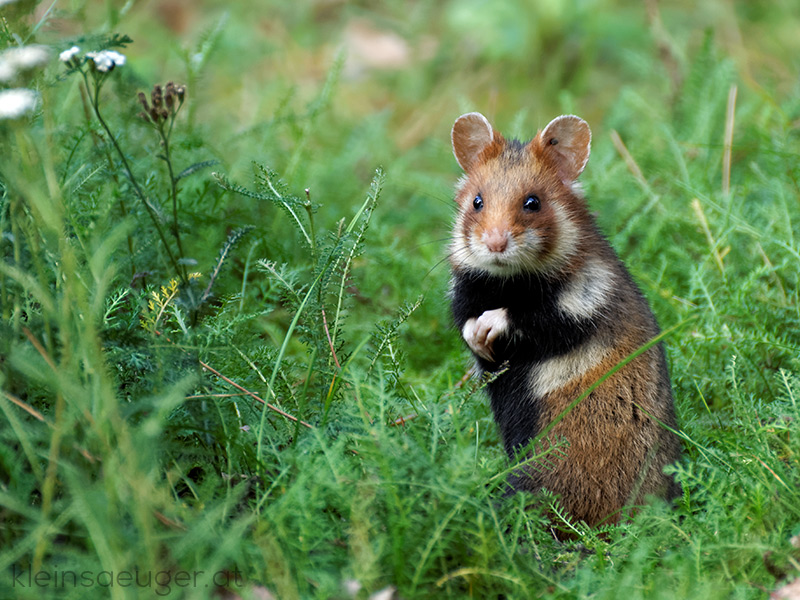
The European Court of Justice(ECJ) has further strengthened the protection of the habitat of the European hamsters, which are threatened with extinction
This emerges from a judgment of the ECJ published on Thursday (case C-357/20).
Accordingly, the term “breeding site” includes all areas that are necessary for the successful reproduction of an animal species – including the area surrounding the breeding site.
In the case of the threatened European hamster, a different interpretation of the term could mean that the areas required for the reproduction and the birth of the young animals would not be protected, the ECJ found.
The background to the judgment is a request from the Vienna Administrative Court.
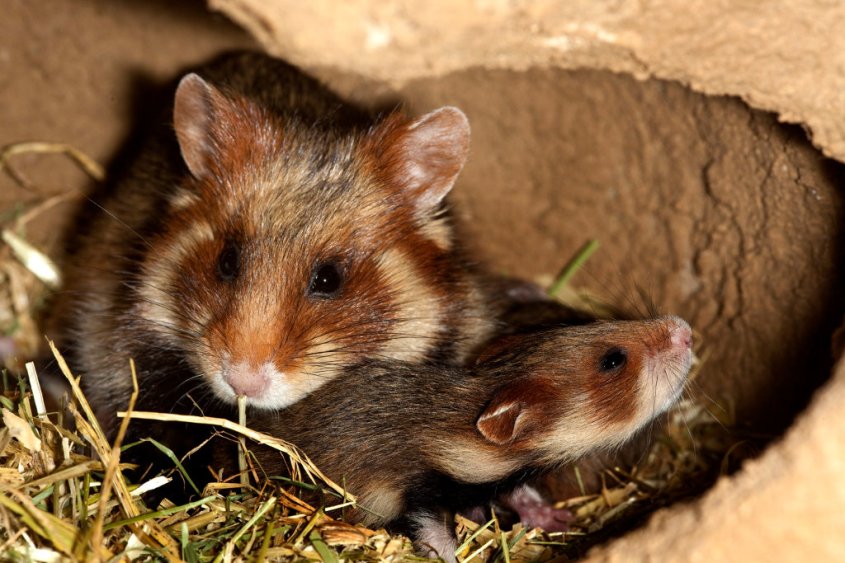
It is about the interpretation of an EU species protection directive. Specifically, it is about construction work in Austria for which a construction road was laid. Not only was there no permit for this, they also destroyed entrances to hamster burrows.
As a result, an administrative authority imposed a fine on the manager of the company commissioned with the construction.
The latter then lodged a complaint with the administrative court.
European hamster on the red list since 2020
In an earlier judgment on the case, the ECJ had already ruled that resting and breeding sites for field hamsters may not be destroyed even if the animals no longer use them, but may return there.
The European hamster has been on the Red List as critically endangered since 2020 and could not survive for the next 30 years.
Environmentalists see the main reason for the intensive agriculture, which takes the cute animals away from their habitat.
In their new ruling, the judges have also clarified the differences between “damage” and “destruction” of a breeding site or resting place.
Accordingly, it denotes the gradual reduction in ecological functionality or its complete loss – regardless of whether this is done on purpose.
And I mean…It is estimated that the European hamster population has declined by 99 percent since the 1950s.
Not only modern agriculture with the use of chemicals and powerful technology is a threat to the European hamster, but also the land consumption by humans.
In the industrialized country of Germany, around 60 hectares are sealed every day, i.e. more than 80 football fields are built with asphalt or buildings. This area is lost to nature.
And also the habitat of many animals.
The European hamster is dependent on the agricultural landscape. There he finds steppe-like habitats in which he digs his burrows and finds rich food.
But because modern agriculture brings in the harvest earlier and almost completely, the European hamster not only lacks cover and thus protection from enemies, but above all sufficient food for wintering.
If they fail to gather enough food, they will not survive the winter.
Now the ECJ has finally strengthened the right of endangered animals to their habitat: not only their burrows should be protected, but the entire environment.
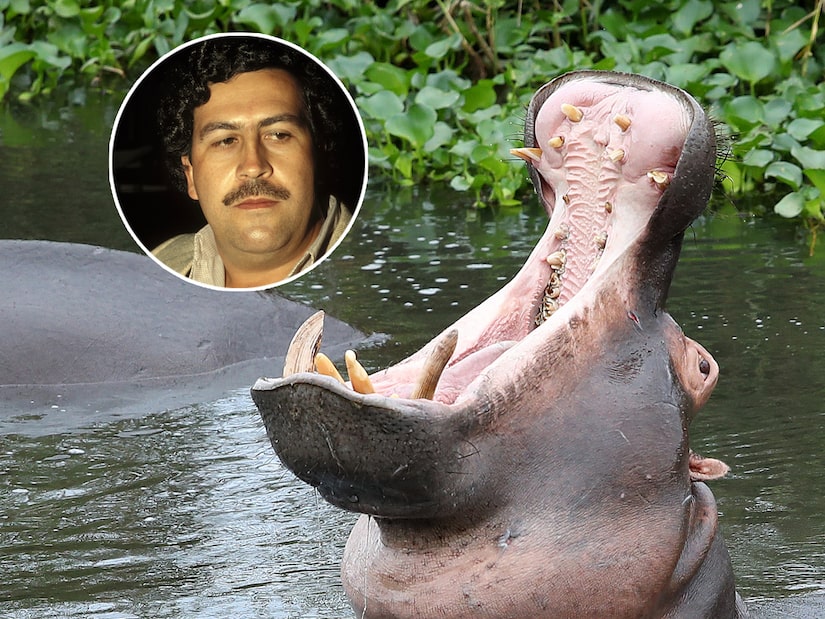
Once upon a time, infamous drug cartel leader Pablo Escobar decided to use a portion of his obscene wealth to establish his own private zoo at his home in Colombia.
What began as four hippos — dubbed “cocaine hippos” due to their association with Escobar — over the past almost forty years has grown into a population of 100 hippos living in Colombia’s Magdalena River.
They wound up there through no fault of their own and are just making a home for themselves. But now, the Colombian government wants to kill them all off.
We can’t let that happen!
Luckily, these hippos aren’t without defenders.
The Animal Legal Defense Fund(ALDF) is suing the government of Colombia to stop these killings, and the case is ongoing in court.
But already, the case has yielded an amazing new result.
The U.S. courts became involved in a small portion of the lawsuit — and for the first time, have now legally declared animals as persons under U.S. law.
In this particular instance, that includes the hippos!
Legal personhood for the hippos is a huge deal, because it means they (and maybe in the future, other animals) can have lawyers represent their interests, and to have matters concerning their health and wellbeing heard in court.
Legal personhood is a hugely important tool for protecting animals’ rights and preventing cruelty.
Right now, it’s being used to help these descendants of Escobar’s cocaine hippos.
In the future, it could potentially help neglected and abused animals at roadside zoos, or whales at SeaWorld.
In Colombia, animals — including these hippos — actually already have legal standing, meaning they can have lawyers and bring lawsuits to ensure their interests are protected.
According to Newsweek, in July, Colombian attorney Luis Domingo Gómez Maldonado filed a lawsuit on behalf of the animals to prevent them from being slaughtered, claiming that sterilisation was a preferable alternative.
But having it in the U.S. now too gives them one more leg up in this battle for their lives.
Now that the U.S. and Colombia are both in agreement that hippos have legal personhood, it’s time for the Colombian government to also abandon its horrible plan to kill off these hippos who did nothing wrong.
If the hippos can’t live where they’ve been existing in the Magdalena River, that’s fine — but there are other alternatives besides mass slaughter.
Sign the petition to demand protections for these 100 innocent hippos!
And I mean…Colombian drug lord Pablo Escobar, the most famous drug dealer on earth was shot dead in 1993.
A man with more cash than Bezos, Pablo amassed a huge collection of exotic animals for his private zoo in the Medellin.
Illegally smuggled into the country, the media quickly nicknamed them ‘Cocaine Hippos’.
The ‘cocaine hippos’ are the descendants of animals Escobar illegally imported to his Colombian ranch in the 1980s when he reigned over the country’s drug trade.
After his death most animals were relocated with the exception of four hippos.
Although its generally believed they escaped, rumours were rampant they were intentionally set free. Their numbers greatly increased in the wild, today it’s estimated over one hundred hippos are swimming in the waterways, and are believed to be the biggest herd outside Africa
Some autorities might approve extreme measures such as culling the animals. They say the hippos pose an immediate threat to the local ecology and humans.
Other experts believe they are “restoring ecological services” that have been lost for thousands of years owing to “human-driven extinctions.”
And we say: They are like the village pets.
People must be more afraid of the snakes than the hippos.
In addition: Rescuing them is a matter of principle, and really part of a larger movement that works to ensure that the interests of animals are represented in court.
We are not asking for a new law to be passed. We only demand that animals have the opportunity to enforce the rights already granted to them.
EU disgraced after report found bloc ‘offshores environment damage’
World leaders have mostly left Glasgow’s COP26 climate summit after striking a range of agreements on reducing carbon emissions and other elements of human-induced climate change. More than 100 countries promised to end and reverse deforestation by 2030, while a number of leaders joined an initiative led by the US and EU to cut emissions of methane by at least 30 percent by 2030. China, Russia and India were not among the names on the list.
India did, however, pledge to reach net zero emissions by 2070 – ending its position as one of the last major economies in the world to hold out on such a commitment.
European Commission President Ursula von der Leyen announced a €1billion (£846million) contribution to the Global Forests Finance Pledge.
The five-year support package looks to help partner countries protect, restore and sustainably manage forests worldwide and deliver on the 2015 Paris Agreement.
Last year, the EU threw its weight behind the climate debate after announcing its ambitious Green Deal which was at the heart of its coronavirus pandemic recovery plan, and doubled up as a step towards federalism.
While the announced figure to help the cause was put at €750bn (£637bn), the European Commission said the real figure would be almost €2trillion (£1.7tn) after spending from future budgets was added in.
Many hailed the plans as outlining what the future looked like, with Ms von der Leyen declaring: “This is Europe’s moment.”
Yet, others were less convinced.
Richard Fuchs, Calum Brown and Mark Rounsevell, three scientists writing in a report for the science journal Nature, claimed that: “Europe’s Green Deal offshores environmental damage to other nations.”
They focused on the element of the deal which saw millions of tonnes of crops and meat imported into the bloc each year.
This is part of the bloc’s efforts to make Europe the first climate-neutral continent by 2050, setting targets to reduce carbon emissions and enhance forests, farming, green transport, recycling and renewable energy – all of which Ms von der Leyen said will help the EU show “the rest of the world how to be sustainable and competitive”.
But, the authors said: “Problems lurk behind the rhetoric.”
The EU relies heavily on agricultural imports, only China imports more, with the EU in 2019 buying one-fifth of the crops and one percent of the meat and dairy products consumed within its borders.
his allows Europeans to farm less intensively, but “the imports come from countries with environmental laws that are less strict than those in Europe. And EU trade agreements do not require imports to be produced sustainably.”
The October 2020 paper notes the various deals the EU has signed in the past two years with countries and trade blocs around the world, which have covered nearly half of its crop imports.
The authors write: “The net result? EU member states are outsourcing environmental damage to other countries, while taking the credit for green policies at home.
“Although the EU acknowledges that some new legislation will be required around trade, in the short term, nothing will change under the Green Deal.”
Between 1990 and 2014, European forests expanded by nine percent, an area roughly equivalent to the size of Greece, some 13 million hectares (Mha).
Elsewhere around the world, however, some 11 Mha was deforested to grow crops that were consumed within the EU.
And, three-quarters of this deforestation was linked to oilseed production in Brazil and Indonesia.
These are regions of the planet that hold unparalleled biodiversity and are home to some of the world’s largest carbon sinks – crucial for mitigating climate change.
The paper goes on to note the various transformations that will take place within European agriculture under the deal: “A ‘farm to fork’ initiative aims to reduce fertiliser use in Europe by 20 percent and pesticides by 50 percent, with one-quarter of land to be farmed organically by 2030.
In a healthy environment, people would be thrilled to find out that we can end animal exploitation and improve our health and the environment at the same time. We would all be working together to close slaughterhouses immediately. So, why do people side with the animal abusers and gaslight anyone who doesn’t? Because eating and using animal products is a form of cultural narcissism.
We’re becoming increasingly aware of narcissism, but few of us know that it doesn’t only apply to individuals. Collective and cultural narcissism also exist. The problem is, however, that this can be hard to see when it’s part of our own culture. So, I’m going to unpack exactly how the meat industry and other animal industries engage in collective narcissism, and how society’s support for these industries is a form of cultural narcissism.
If you eat or use animal products yourself, then please read this with an open mind. My goal is not to call you a narcissist, but to arm you with information, so we can end this form of cultural narcissism together.
Objectification
Two thirds of US households have at least one cat, dog, or other companion animal. We don’t expect these animals to do anything for us. They’re valued purely for their company. Often, they’re considered part of the family, and we recognize that they each have their own unique personality and love them for it.
In the animal industries, however, the exact opposite happens. One of the core traits of narcissism, treating others like objects, is expressed to the fullest extent here. The industries don’t bring animals into this world to love them, but to kill them and sell their bodies. They literally turn living beings, who are just as sentient as cats and dogs, into products. The animals’ desire to stay alive isn’t even factored into the decision, only how much they weigh when they’re killed.
Entitlement and grandiosity
Entitlement is about taking what isn’t ours. And if there’s one thing that isn’t ours, it’s someone else’s life. Taking a life is the most extreme form of entitlement. Even if it was an “us or them” situation, the idea that animals should die for us would still be entitled, but it would be understandable. However, that’s not even remotely the case. To quote the largest organization of nutrition experts in the US:
“It is the position of the Academy of Nutrition and Dietetics that appropriately planned vegan diets are healthful, nutritionally adequate, and may provide health benefits for the prevention and treatment of certain diseases. These diets are appropriate for all stages of the life cycle, including pregnancy, lactation, infancy, childhood, adolescence, older adulthood, and for athletes.”
So, not only are all animal products unnecessary, cutting them out of our diet can actually benefit our health. And the average person has access to a wide variety of plant-based food. We even have plant-based products that look and taste like animal products. So, the industries aren’t killing trillions of animals for us out of any kind of necessity.
The fact that, even under these circumstances, they feel entitled to kill as many animals as they want so we can eat as many animals as we want can only be described as grandiosity.
COP26: Changing food systems and how we treat animals is a major opportunity for climate change mitigation
31 October 2021
News
For too long, animal protection has been absent from the conversation around the climate emergency. However, animals and animal-related sectors play a significant role in ensuring a transition towards climate-resilient societies.
Today marks the start of the 26th UN Climate Change Conference of the Parties (COP26) in Glasgow, where parties and world leaders will come together to accelerate action towards the goals of the Paris Agreement and the UN Framework Convention on Climate Change.
One of the main themes of this year’s COP is nature-based solutions to the twin crisis of climate change and biodiversity loss. This provides an important opportunity to raise the profile of animal protection issues in the climate agenda.
Livestock farming represents a significant share of the planet’s emissions that cannot be ignored. The recent report on global warming from IPCC is clear: we have no time to lose in cutting methane emissions. Reducing livestock numbers could contribute significantly to achieving the Paris Agreement targets. Failing to reduce livestock numbers will put most of the UN SDGs out of reach.
Eurogroup for Animals’ contribution
To inform COP26 attendees about the environmental issues associated with animal-related sectors, as well as how improved animal welfare and transformed food systems can help build back better, Eurogroup for Animals have created a leaflet entitled “Protecting Animals to Protect the Planet”.
WAV Comment – I think this issue alone, along with many other at COP26, shows that ’Mr Normal man and woman’ have now had enough with the over inflated, false promises made by so many over inflated, false and self-opinionated leaders from some of the worlds nations.
People want change and they want it now; not more weasel words which 10 years later amount to nothing as we have seen from recent COP conferences.
The complete U turn by the port authorities in Scotland relating to the ‘Rainbow Warrior’ was a very, very wise move. Who knows what would have happened if the young climate protesters on board were denied entrance to the Clyde / Glasgow.
Direct action works; and by their past lack of actions, the opinionated politicians are now viewed very much as a laughing stock by so many people – those who want action and change, Now !
And this is only Day 1; plenty more days to come and for the politicians to actually earn some respect (?) by finally taking action on global warming.
People have opinions and feelings – and THEY VOTE !
Climate activists on board the Rainbow Warrior are to sail into the heart of Glasgow after officials agreed to allow the ship into the Cop26 restricted zone.
Port authorities wanted to block the famous vessel from entering the area, which bans craft from the stretch of the Clyde next to the SEC conference centre, but on Monday afternoon Police Scotland confirmed the vessel was to be allowed to continue to its destination.
Activists Jakapita Faith Kandanga, 24, Edwin Namakanga, 27, Maria Reyes, 19, and Farzana Faruk Jhumu, 22, who are from communities which would be most affected by a changing climate, are on board the ship.
In a joint statement they said the “authorities understand that our presence at the climate summit is too important to shut out”.
“It’s ridiculous to think that climate talks could be held without the most affected people there and it’s positive that the police and port authorities have changed their minds,” they said.
“World leaders attending the talks could learn a lot from this co-operation. We have been ignored long enough, and now, with a safe passage to Glasgow, our voices must be heard at Cop26.”
Greenpeace said it had been warned by HMS Vigilant, as it approached the Firth of Clyde, that if the Rainbow Warrior continued its voyage it would be in breach of maritime laws and Police Scotland would “act appropriately”.
But the pressure group said that, following a meeting with Hettie Geenen, the ship’s captain, port authorities told her they would help facilitate the four youth climate activists’ arrival.
The four campaigners, from Namibia, Uganda, Mexico and Bangladesh, are just a handful of the thousands of protesters who are descending on the city as world leaders discuss how to fight a changing climate.
Police Scotland Assistant Chief Constable Gary Ritchie said: “Harbour authorities had been in regular communication with the Rainbow Warrior and had instructed that, due to the restrictions and some significant safety concerns, it could not sail to its intended destination.
“Despite this, the Captain of the Rainbow Warrior signalled her intent to continue.
“Accordingly, following consultation between police and harbour authorities, it was considered that the safest option for the crew of the Rainbow Warrior and wider public was to ensure the safe passage of the vessel to its destination.
“We are now engaging with Greenpeace and all relevant partners to ensure the safe passage of this vessel, it’s passengers and the wider public.”
Over the next two weeks of the conference, 120 dignitaries and heads of state are set to attend the UN event which has been billed as vital in stopping climate change and rising global temperatures.
As world leaders made their way to the city on Monday, Oxfam’s “big heads”, featuring Joe Biden, Boris Johnson, Emmanuel Macron, Angela Merkel, Justin Trudeau, Mario Draghi, Narendra Modi, Vladimir Putin and Xi Jinping, made an appearance along with a traditional Scottish pipe band in Glasgow’s Royal Exchange Square, where they were “blowing hot air”.
Nafkote Dabi, Oxfam’s climate change policy lead, said rich nations are not cutting emissions fast enough to keep the most vulnerable countries safe.
“We must all halve global emissions in the next nine years but we are heading in the opposite direction. Leaders must not delay a moment longer – every fraction of a degree costs lives,” she warned.
“Developed nations must live up to their promise from 12 years ago to deliver 100 billion dollars (£73 billion) every year to help vulnerable nations adapt to climate change and reduce emissions.
“This support should be in the form of grants – not loans – and half of it should be for adaptation. It is also critical that they agree a way to finance loss and damage for the unavoidable impacts of climate change that are already destroying homes and lives.”
Greta Thunberg who inspired the climate strike movement across the globe, was surrounded by police officers and activists as she arrived at Glasgow Central railway station on Sunday night.
The 18-year-old is expected to take part in demonstrations during the summit, including a march through the city on Friday, organised by campaigning organisation Fridays for Future Scotland.
The demonstration will walk from Kelvingrove Park to George Square.
Ms Thunberg is also expected to speak at a rally taking place on Saturday, hosted by the Cop26 Coalition, which will march from Kelvingrove Park to Glasgow Green.
On Sunday, Extinction Rebellion marched through Edinburgh in solidarity with protests taking place across the world.
I have taken this directly from the site run by one of our supporter friends Barbara.
Please have a look at it when you can. You know we are primarily an animal rights group; but when we feel it is necessary, we change hats and speak up for human rights. Here is such a case.
In the U.S., Indigenous Peoples’ Day evolved as an alternative to « Invasion Day » – Columbus Day – which celebrated Columbus’ arrival in the New World on October 12th 1492 and the beginning of the colonization of North America.
Native Americans protested honoring a man who had enabled their genocide and forced assimilation.
About Barbara Crane Navarro – Rainforest Art Project
I’m a French artist living near Paris. From 1968 to 1973 I studied at Rhode Island School of Design in Providence, Rhode Island, then at the San Francisco Art Institute in San Francisco, California, for my BFA.
My work for many decades has been informed and inspired by time spent with indigenous communities. Various study trips devoted to the exploration of techniques and natural pigments took me originally to the Dogon of Mali, West Africa, and subsequently to Yanomami communities in Venezuela and Brazil.
Over many years, during the winters, I studied the techniques of traditional Bogolan painting. Hand woven fabric is dyed with boiled bark from the Wolo tree or crushed leaves from other trees, then painted with mud from the Niger river which oxidizes in contact with the dye.
Through the Dogon and the Yanomami, my interest in the multiplicity of techniques and supports for aesthetic expression influenced my artistic practice. The voyages to the Amazon Rainforest have informed several series of paintings created while living among the Yanomami. The support used is roughly woven canvas prepared with acrylic medium then textured with a mixture of sand from the river bank and lava. This supple canvas is then rolled and transported on expeditions into the forest. They are then painted using a mixture of acrylic colors and Achiote and Genipap, the vegetal pigments used by the Yanomami for their ritual body paintings and on practical and shamanic implements.
My concern for the ongoing devastation of the Amazon Rainforest has inspired my films and installation projects. Since 2005, I’ve created a perfomance and film project – Fire Sculpture – to bring urgent attention to Rainforest issues.
To protest against the continuing destruction, I’ve publicly set fire to my totemic sculptures. These burning sculptures symbolize the degradation of nature and the annihilation of indigenous cultures that depend on the forest for their survival.
Tesco is fanning the flames of the forest fires raging across Brazil.
The UK supermarket buys meat from companies owned by Amazon rainforest destroyers, and sells chicken and pork fed on soya from deforested land elsewhere in Brazil.
Here’s what you need to know – and what you can do to help stop them.
WAV Comment: Should Greenpeace not be given a place at the COP26 table ? – or is it just a UN / government showpiece for the press and media ? – people want action and they want it like NOW !
Regards Mark
Rainbow Warrior aims to defy Glasgow port by sailing youth activists to Cop26
The Rainbow Warrior is planning to sail to the Cop26 summit in Glasgow in defiance of port authorities, environmental group Greenpeace has said.
The campaign group’s famous ship is carrying youth strikers from communities most hit by climate change to demand world leaders “stop failing us”.
Greenpeace said it had been warned by port authorities not to sail up the River Clyde to the global climate conference, but added the vessel would still attempt the journey.
If the voyage is successful, the four youth activists on the Rainbow Warrior plan to meet fellow members of the Fridays for Future climate strike movement on Monday afternoon outside the summit to deliver their message.
They are warning that the climate talks should not go ahead without people who are most affected, but say many activists have been shut out by a failure to distribute vaccines equally between countries and travel restrictions, while major nations have big delegations attending.
The Rainbow Warrior set sail from Liverpool on Saturday night, and contacted the Clyde port authority to request permission to berth outside the Cop26 conference, but was told it could not sail up the Clyde and the area was controlled by police.
The captain decided to ignore the warnings and will continue the ship’s journey as the activists’ message and presence at Cop26 is fundamental to its success, Greenpeace said.
A “stop failing us” message is written on large banners hung between the Rainbow Warrior’s masts and bows.
Speaking onboard, 19-year-old climate activist Maria Reyes, from Mexico said: “From vaccines to visas and travel restrictions, we’ve already had to overcome many obstacles that the Cop26 organisers tried to use in an attempt to shut us out.
“But we’re here, we’re coming and we won’t be stopped.
“Inequalities such as gender violence, racial discrimination, class inequality and forced migration are exacerbated by the climate crisis.
“By denying us entry these so-called ‘leaders’ are fanning the flames of these inequalities. Enough empty speeches, there won’t be climate action without climate justice.”
Edwin Namakanga, 27, from Uganda, said: “World leaders should be rolling out the red carpet to people most affected by this crisis, not denying us from making our way to Cop26.
“We’re only four activists but we’re representing millions and our voices must be heard.”
Shell and BP, which together produce more than 1.7bn tonnes of greenhouse gases a year, have not paid any corporation tax on oil and gas production in the North Sea for the last three years, company filings reveal.
The oil giants, which have an annual global footprint of greenhouse gases more than five times bigger than Britain’s, are benefiting from billions of pounds of tax breaks and reliefs for oil and gas production.
Shell and BP paid no corporation tax or production levies on North Sea oil operations between 2018 and 2020, and claimed tax reliefs of nearly £400m, according to annual “payments to governments” reports analysed by the Observer.
Over the same three-year period, they paid shareholders more than £44bn in dividends.
A petroleum revenue tax of 35% was effectively scrapped by the then chancellor, George Osborne, in 2016 and oil giants can claim billions of pounds in taxpayer handouts for decommissioning rigs.
The North Sea is now one of the most profitable areas in the world for oil and gas production, after tax cuts by the government to encourage production.
Shell and BP have set targets to achieve net zero carbon emissions by 2050 by investing in cleaner energy, but say the UK will continue to need oil and gas from the North Sea, which also supports thousands of jobs.
Climate campaigners are now challenging the UK tax regime in a high court case. They want the payouts to be scrapped and a ban on any new oil and gas projects in the North Sea to help cut carbon emissions.
Philip Evans, oil and gas campaigner for Greenpeace UK, said: “It’s outrageous that as the UK prepares to host global climate talks in Glasgow, we still have one of the lowest effective tax rates in the world for oil extraction.
We’re giving tax breaks worth billions of pounds to companies that have been fuelling the climate emergency for decades.”
There are about 180 oil rigs in the North Sea and the sector has generated about £360bn in net tax revenues since 1970, which is about £7.2bn a year.
The UK has some of the lowest oil tax rates in the world. An analysis by research company Rystad Energy in January found the UK is now the most profitable country in the world for the development of oil and gas “mega-projects”.
Taxpayers will foot a bill of more than £18bn for the decommissioning of the oil and gas infrastructure in the North Sea up to 2065 – made up of tax repayments and a reduction in offshore corporation tax. Campaigners want the handouts to be scrapped and used for investing in clean energy.
Kwasi Kwarteng, the business secretary, faces a legal challenge over the tax handout to oil and gas operators by campaigners. Paid to Pollute, a group of environmental organisations, says that the taxpayer handouts to oil and gas companies are unlawful because they conflict with the UK’s legal duty to achieve net zero emissions by 2050. A judicial review is due to be heard before the end of the year.
Gabrielle Jeliazkov, a campaigner at Platform, a UK group that investigates the social and environmental effects of the global oil industry and is supporting the legal case, said: “The government has spent too long backing oil giants through tax breaks and subsidies. It has had devastating consequences for the climate.”
Shell and BP also face strong opposition over new projects in the North Sea. A report published last week by Friends of the Earth and the New Economics Foundation found that the oil and gas industry is preparing to seek approval for 30 offshore projects by 2025.
Shell has defended plans for the Cambo project, a controversial oilfield off Shetland that contains about 800m barrels of oil and is awaiting approval from the Oil and Gas Authority, a government licensing body. Greenpeace lost a legal bid this month for the government to revoke the permit for BP to drill at the Vorlich oilfield in the North Sea, which started production in November last year.
It was reported by Reuters last week that Offshore Petroleum Regulator for Environment and Decommissioning had rejected Shell’s plans to develop the Jackdaw gasfield in the North Sea after considering its environmental statement.A Shell spokesperson said: “Our total oil production already peaked in 2019 and we expect it to continue declining, including through divestments. We’re already investing billions of dollars in low-carbon energy. The North Sea Transition Deal agreed earlier this year also maps out how the sector will reduce emissions in line with the government’s net zero targets.” The company said it paid no corporation tax on North Sea production last year because of tax losses in previous years.
A BP spokesperson said: “All BP’s North Sea assets are owned by companies that are subject to UK tax in accordance with UK law. Over the years, BP has contributed over £40bn in taxes to the UK government from its North Sea business.
“In recent years, in line with longstanding UK tax regulations, tax relief on the significant investments we have recently made in the North Sea business and the challenging price environment, including the steep oil price falls in 2015 and 2020, have meant we have paid no North Sea corporate taxes.”
A government spokesperson said: “The UK oil and gas industry has paid around £375bn in production taxes to date – with companies in the North Sea subject to headline rates that are more than double those paid by other businesses. Relief for decommissioning costs is a fundamental part of the UK’s tax system.”
Does the industry dog wag the government tail ?; or the tail wag the dog ?
 This emerges from a judgment of the ECJ published on Thursday (case C-357/20).
 As a result, an administrative authority imposed a fine on the manager of the company commissioned with the construction.
 The European hamster is dependent on the agricultural landscape. There he finds steppe-like habitats in which he digs his burrows and finds rich food.
 What began as four hippos — dubbed “cocaine hippos” due to their association with Escobar — over the past almost forty years has grown into a population of 100 hippos living in Colombia’s Magdalena River.
 Luckily, these hippos aren’t without defenders.
 Legal personhood for the hippos is a huge deal, because it means they (and maybe in the future, other animals) can have lawyers represent their interests, and to have matters concerning their health and wellbeing heard in court.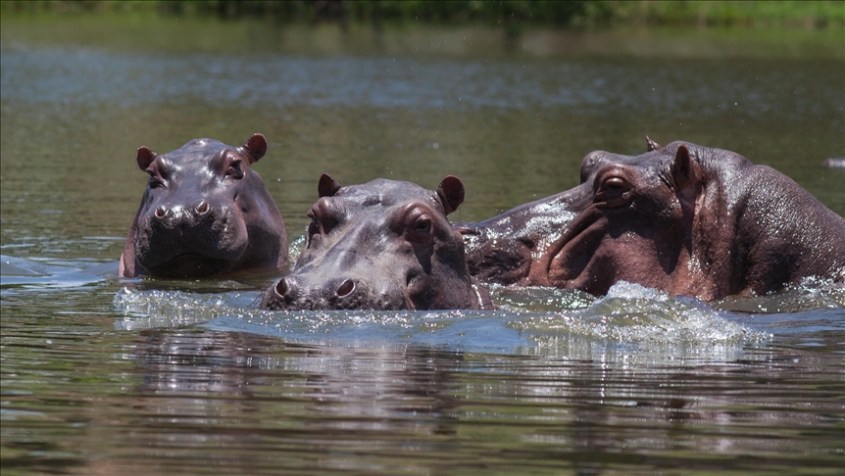













 World Animals Voice