Category: Environmental

UK: OPINION: Why The CO2 Shortages Make It The Best Time To Go Vegan.

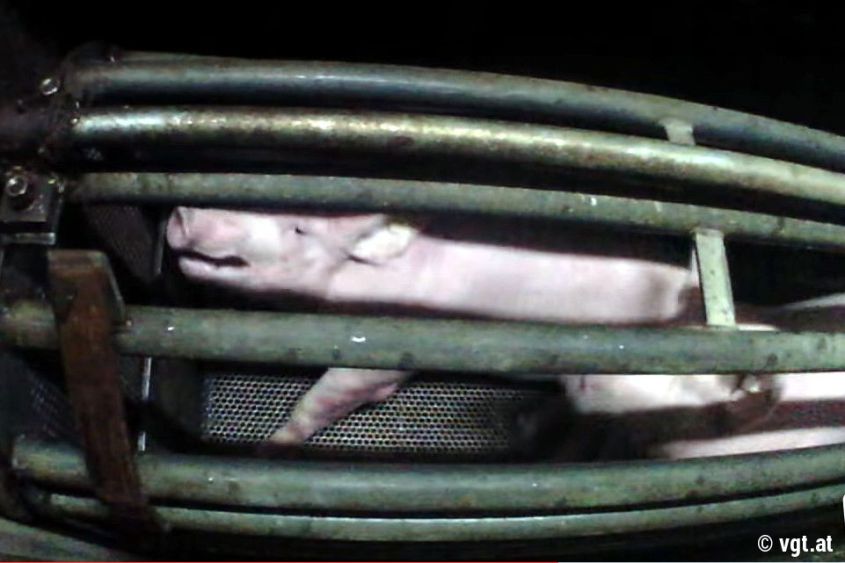
‘Gassing methods can cause horrendous suffering to animals in their last moments.

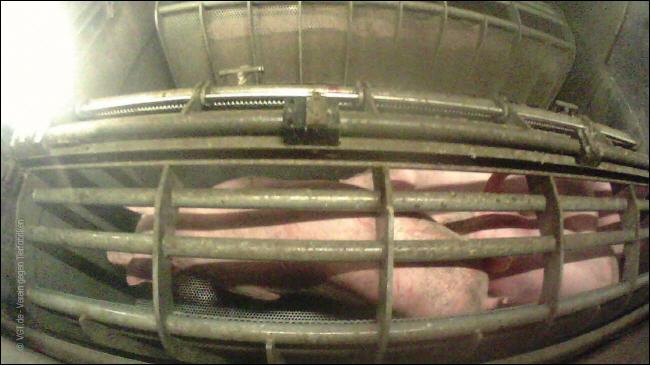
Pigs are lowered into a chamber containing at least 70 percent CO2 in air.

During this time they will struggle, gasp for breath, squeal, and climb over each other until they finally lose consciousness.

The pigs must remain in the gas mixture until they are completely unconscious which can take up to 30 seconds. After this, the animals are then shackled by one hind leg, hoisted and their throats cut to drain their blood’.

Regards Mark

OPINION: Why The CO2 Shortages Make It The Best Time To Go Vegan (plantbasednews.org)

OPINION: Why The CO2 Shortages Make It The Best Time To Go Vegan

The UK meat industry is reaching ‘breaking point’ and warns Christmas will be cancelled as it fears CO2 slaughters will be stopped…

This week’s headlines are overrun with the issues surrounding the current surge in gas prices. And, the knock-on effect they are expected to have on the UK’s food security.  Damning reports from both farmers and meat processors warn that the CO2 shortages could cancel Christmas, and that the meat industry is reaching breaking point. This is affecting the slaughter process of pigs, poultry, and beef, as well as packaging. 

Siobhan Dolan from vegan charity Viva! explains the connection between CO2 and the meat industry.

CO2 shortages and the meat industry

For billions of animals slaughtered each year in the UK, CO2 is the last thing they will breathe before dying.

In fact, this technique of slaughter, known as gassing, is the most common slaughter technique for many intensively farmed animals.

This is usually because it is the cheapest and quickest way to kill many animals at once. While it has often been thought to cause less suffering than other visibly more brutal methods, this is not true. And, gassing methods can cause horrendous suffering to animals in their last moments.

Pigs are lowered into a chamber containing at least 70 percent CO2 in air.

During this time they will struggle, gasp for breath, squeal, and climb over each other until they finally lose consciousness.

The pigs must remain in the gas mixture until they are completely unconscious which can take up to 30 seconds. After this, the animals are then shackled by one hind leg, hoisted and their throats cut to drain their blood.

The length of time it takes to kill pigs and the acute distress it causes have led to calls to ban the CO2 stunning method.

How birds are slaughtered with CO2

Most poultry birds killed in the UK face a similar fate. Birds are transported to slaughterhouses in crates.

Then, while still in the crates, they are placed into a chamber. Here, they are exposed to either concentrations of CO2 or a mixture of inert gases (nitrogen and argon). The gas mixture deprives birds of oxygen, causing them to lose consciousness and die. 

In a nutshell, CO2 is used to slaughter millions of animals each year in the UK. And, the current shortage could pose significant delays to the number of animals processed for slaughter.  

Factory farmed animals are bred and reared in filthy, overcrowded sheds. As a result, they often suffer from disease, injury, and psychological problems.

In these environments, profits take priority over animal welfare and Viva!’s countless investigations prove that animals suffer for food production.

Why are animals allowed to be killed like this?

Conditions on factory farms are likely to deteriorate even further. And, animals will experience prolonged suffering on factory farms if delays occur at slaughterhouses as the industry is predicting.

There are also reports from the industry regarding the possibility of animals being destroyed (killed) on farms, should the issue continue.

However, shouldn’t the bigger question be; why are we allowing animals to be kept in these conditions, killed in this way, and continuing to eat them?

Especially, considering how much we understand about animal sentience and the impact animal agriculture is having on the climate crisis? 

CO2 shortages might mean you can’t eat turkey this Christmas, but there are plenty of incredible meat alternatives on the market that can win over even the most dedicated carnivores.

Veganism – Now might be a good time to give it a go…

Netherlands: Dutch Farmers Face Calls To Reduce Livestock By 30% To Help Protect The Planet.

Quote from article:

This is significant given the number of land animals being raised for food in the country.

The Netherlands has more than 100 million chickens, 12 million pigs, four million cows, and 600,000 goats, according to DutchNews. It’s also the EU’s largest meat exporter’.

Dutch Farmers Face Calls To Reduce Livestock By 30% To Help Protect The Planet

The proposals sparked protests from the farming community, while environmentalists call for more action

Farmers in the Netherlands are facing calls to cut livestock production by almost a third. The proposal is in response to the ongoing ‘nitrogen crisis’ that the country faces, including concerns about ammonia pollution. 

Is nitrogen dangerous?

Nitrogen is the most abundant element in our atmosphere – making up around 78 percent of the atmosphere, according to NASA. It’s essential for life, but too much can damage the ecosystem. 

Excess nitrogen can leach into underground water sources or enter oceans via agricultural runoff. This can lead to algae blooms, which deplete oxygen in the water and can create aquatic dead zones. Dead zones typically cannot support life of any kind. 

Ammonia is made of nitrogen and hydrogen. In high concentrations, ammonia can cause respiratory problems, dermatitis, eye irritation and in severe cases, blindness or death. 

What is the nitrogen crisis?

In 2019, the Council of State – the highest Dutch administrative court – ruled that the government was breaching EU law, stating that the country’s efforts to reduce excess nitrogen in vulnerable natural areas were insufficient. 

Up to 18,000 infrastructure and construction projects were halted in an attempt to lower emissions. The government also reduced daytime speed limits to 100km per hour (62mi) on motorways.

But according to the National Institute for Public Health and the Environment, animal husbandry and manure applications are the chief culprits of nitrogen oxide and ammonia pollution.

This is significant given the number of land animals being raised for food in the country. The Netherlands has more than 100 million chickens, 12 million pigs, four million cows, and 600,000 goats, according to DutchNews. It’s also the EU’s largest meat exporter.

The proposals

Farmers could have to reduce numbers of dairy cows, pigs, and poultry.

The finance and agriculture ministry has published two proposals to cut livestock numbers by 30 percent. According to The Guardian, it’s one of the ‘most radical plans of its kind in Europe’. 

Both proposals use buy-back schemes to reduce animal numbers – including dairy cows, pigs, and poultry. One proposal also subsidizes sustainable land management and livestock housing, while the other focuses on price incentives, such as a levy on ammonia emissions. 

“We are a relatively small country with a lot of inhabitants, industry, transport and agriculture, so we are reaching the limits of what nature can take,” Rudi Buis, a spokesperson for the agriculture ministry, told The Guardian. “There is a high level of urgency for us to tackle the nitrogen compounds problem. This means that in the near future, choices must be made.”

Farming community’s response

The proposals have attracted criticism from members of the farming community. The Farmer’s Defence Force (FDF), which has nearly 60,000 members in its Facebook group, was established to help farmers who are under ‘attack of environmental extremists’.

On its website, FDF calls the nitrogen reduction plans ‘disgusting’. In July, FDF and fellow farming group Agractie staged protests in multiple regions in the Netherlands. 

Some of the demonstrations saw farmers filling the roads with hundreds of tractors.

“The snow is not blackened by farming activities, the air is not poisoned with heavy metals by farming activities. You will not find increased cancer rates around farms,” FDF writes on its website. “The air was clean during the lock-downs – when the farmer plowed on and industry and air traffic came to a virtual standstill.”

The groups are planning further protests in the coming weeks. 

‘Step in the right direction’

Meanwhile, other groups have pushed for more to be done to protect the planet.

Coalition party D66 previously proposed reducing the number of livestock in the Netherlands by 50 percent. 

D66 parliamentarian Tjeerd de Groot spoke to RTL Nieuws about the issue in 2019.

“[Seventy] percent of Dutch nitrogen emissions come from agriculture, a large part of which comes from intensive livestock farming. That is huge,” de Groot said, per the NL Times

“At the same time, the contribution of intensive livestock farming to our own economy is not even one percent. The ratio is completely missing.”

Bram van Liere, of environmental organization Friends of the Earth Netherlands, applauded the move.

“It’s a step in the right direction,” van Liere said to The Guardian. “We would do more on buying out farmers and helping them transition to sustainable agriculture.”

Dutch Farmers Face Calls To Reduce Livestock By 30% To Help Protect The Planet – Plant Based News

Regards Mark

UK: British Government refuses to halt post-Brexit Faroes trade deal despite whale and dolphin massacres.

Government refuses to halt post-Brexit Faroes trade deal despite whale and dolphin massacres

Exclusive: Department for International Trade defies plea for sanctions after nearly 1,500 mammals killed

The government has refused to suspend a free-trade deal with the Faroe Islands over whale and dolphin massacres, in defiance of calls from conservationists.

Hunters caused widespread outrage last week when they wiped out a super-pod of 1,428 dolphins – thought to be the worst bloodbath of the mammals in the islands’ history.

Just 10 days later, they responded to the global revulsion by slaughtering 53 pilot whales only a few miles from the first massacre.

Wildlife campaigner Dominic Dyer has called for ministers to suspend the £580m post-Brexit agreement that the government agreed with the Faroe Islands in 2019 “until the slaughter ends for good”.

More than 21,000 people have signed a petition on the government website backing the plea in three days.

The government told The Independent it is “extremely concerned about the sustainability and welfare implications for the animals involved in these hunts” but that it would not review the trade deal.

Instead, it says it will “continue to engage in a frank and respectful dialogue” with the government of the Faroes.

Zac Goldsmith, the minister for animal welfare, tweeted of the dolphin killings: “This is one of the most sickening spectacles I’ve ever seen. It shames our species.”

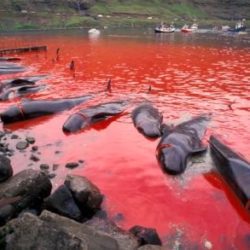
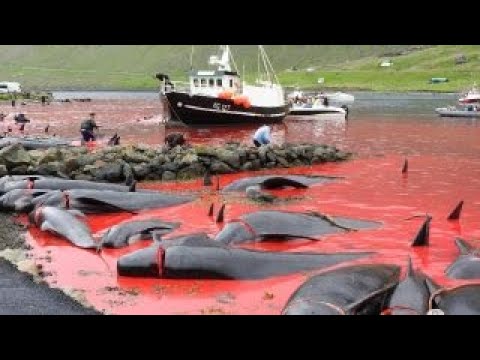
Known as the “Grindadrap”, the annual hunt involves herding whales and dolphins on to a beach where they are knifed to death as their blood turns the sea red.

The practice has been branded “barbaric”, “sick” and “sadistic” but those who defend it say it is a tradition that does not risk driving the animals into extinction.

Mr Dyer said: “We are currently granting the Faroe Islands a preferential trade agreement worth over £500m a year – it’s time for sanctions to stop this barbarism.”

The deal accounts for more than 25 per cent of the Faroes’ global trade, he said, with exports from the islands – mostly fish sold in British supermarkets – worth £582m a year.

UK exports to the islands amount to £34m, said Mr Dyer, whose petition reads: “If the UK is to be considered a world leader in the protection of marine mammals, it must use this leverage now.”

When asked by The Independent whether it would agree to suspend or review the deal, the Department for International Trade said it had no plans to do so.

A spokesperson for the Department for Environment, Food & Rural Affairs (Defra) said: “The UK is strongly opposed to the hunting of any cetaceans and continues to call on all whaling nations, including the Faroe Islands, at every appropriate opportunity to cease their whaling activities in favour of well-managed, responsible tourism, such as whale-watching.

“We recognise there is a long tradition in the Faroe Islands of killing pilot whales and dolphins for meat and other products, and we wish to continue our frank conversations relating to cetacean conservation, to encourage them to stop these hunts.”

Government policy is to “maintain diplomatic pressure” on the islands to end the hunts and re-engage with the International Whaling Commission.

Boris Johnson’s wife, Carrie, and his father, Stanley, have previously joined campaigns against whaling outside the Japanese embassy in London.

Government refuses to halt post-Brexit Faroes trade deal despite whale and dolphin massacres | The Independent

WAV Comment:

We tried 30 years ago to make this an issue in England, and to bring it to peoples attention.

When was this ? – around 1991 probably.  Joanne; Mark (WAV) and Trevor (at front) campaign outside an English local supermarket buying produce from the Faroe Islands – responsible for the whale slaughter (see picture below).

As an Englishman, I am sickened to the core that our limp wristed, gutless government are not making this a big issue in the trade deal currently in progress. It simply shows that money talks louder than anything else, and governments (in this case the British government) are happy to look the other way and ignore the killing of over 1,400 marine animals in the last week. God knows how many since we were on the streets – too many, and something should have been done about this decades ago.

Regards Mark

Read the article below by clicking on https://serbiananimalsvoice.com/about-us/ and then scrolling down to the same picture, which you can click on to enlarge and read.

Tesco terrors
Faroe whale slaughter
Petition · STOP THE ANNUAL SLAUGHTERING OF PILOT WHALES IN THE FAROE ISLANDS  · Change.org
News - EIA
Gruesome whale hunts in Faroe Islands exposed by activists - YouTube

UK: 1 In 5 Kids In The UK Are Vegan Or Want To Be, Survey Finds.

Vegan Baby

1 In 5 Kids In The UK Are Vegan Or Want To Be, Survey Finds

Are young people leading the plant-based movement?

Nearly 60 percent of children in the UK are vegan or vegetarian or want to be, a new survey has found.

BBC Good Food surveyed 1,004 children between the ages of five and 16.

The global food media brand discovered that 8 percent of participants were eating a fully plant-based diet. A further 13 percent were vegetarian. 

Additionally, 15 percent of children said they would like to become vegan, and roughly one in five (21 percent) said the same about vegetarianism. 

Reports didn’t clarify what the children’s reasons were for eating plant-based food. But sustainability was on their minds for at least part of the research. The survey found that 44 percent of kids said they hope that no food is packaged in plastic in 10 years’ time. 

Christine Hayes, Editor of BBC Good Food, commented: “It was fascinating to survey children’s eating habits, behaviours and opinions around food.”

“They are passionate about exploring alternative diets and methods of food production that could be more sustainable for the planet,” Hayes added.

Young people leading the way

The recent findings reaffirm the widely held belief that young people are leading the charge toward plant-based living. 

A 2019 BritainThinks report concluded that Gen Z and Millenials are slightly more likely to be vegan than older age groups.

And earlier this week, it was reported that a majority of young people (aged 15 to 20) were taking action to help fight the climate crisis. Specifically, 26 percent of participants said they eat plant-based to help protect the planet.

1 In 5 Kids In The UK Are Vegan Or Want To Be, Survey Finds – Plant Based News

30% Of Brits Are Now Eating Less Or No Meat At All, New Survey Finds

Animal welfare, environmental, and health reasons are motivating Brits to adjust their diets

Anew survey has indicated that the eating habits of people in the UK are changing, with more individuals ditching meat in favor of vegan food. 

The survey

Market research website Appinio hosted the survey, which included 1,000 participants from the UK.

Five hundred women and 500 men took part, and the average age of participants was 41.1.

Just 68.6 percent of participants said they were omnivores.

Four percent were vegan, and 8.7 percent were vegetarian. These figures are notably higher than they have been in previous years. 

For instance, in 2019, research found that just over 1 percent of people in Great Britain identified as vegan. 

Eating more plan

The recent Appinio survey also found that 5.4 percent of participants were pescatarian (meaning they don’t eat meat besides fish). Further, 11.4 percent said they were flexitarian, referring to those who actively try to reduce their meat intake and eat primarily plant-based food. 

The survey asked participants whether they would consider replacing some of the meat in their diets with plant-based alternatives. Of the 800 participants who responded to the question, half said yes. And 6.8 percent said they ‘want to switch to plant-based meat entirely’.

Respondents also explained why they have purchased plant-based meat, dairy-free alternatives, or other vegan options in the past. The leading motivator was health, with 46.3 percent saying they believed the vegan options are better for you. 

Animal welfare and environmental reasons also played a part, with around a third of participants selecting those responses. 

30% Of Brits Are Now Eating Less Or No Meat At All, New Survey Finds – Plant Based News

Only 1 In 10 Young People Trust Adults To Help Solve The Climate Crisis

Young people are cutting energy and water use and eating plant-based for environmental reasons

Many young people are determined to tackle the climate crisis, new research shows, but don’t believe adults will step up to the plate. 

About the study

Analysis firm United Minds conducted the study on behalf of Electrolux, the world’s second-largest home appliance maker. 

Electrolux wanted to learn more about young people’s outlook on sustainable living, and use this information to guide its own environmental targets. The global study was made up of a quantitative survey as well as in-depth interviews. 

It included nearly 14,000 people aged 15 to 20. The respondents were from 13 countries: Argentina, Australia, Brazil, Chile, France, Germany, Israel, Poland, Sweden, Thailand, UK, USA, and Vietnam.

The findings

More than half of the respondents felt that sustainability is the single most important issue faced by society today. And 59 percent said they are ‘very anxious’ about the matter.

Nearly 60 percent of young people said they are willing to ‘drastically’ change their lifestyle to protect the planet. Even more (74 percent) agreed that everyone must make a collective effort to become more sustainable. And young people predominantly trust in themselves to lead the charge towards a sustainable future, with 37 percent saying so.

Twenty-seven percent of respondents believed scientists will take on the responsibility, while 17 percent said influencers will. 

But only one in 10 participants thought adults will lead the way.

Notably, 43 percent of respondents felt that young people will actually solve the climate emergency.

Eco-friendly actions

The young participants were already taking action to lighten their load on the planet. Fifty-six percent were reducing energy use at home, without around half limiting food waste and recycling. 

Others were keeping water use down, buying second-hand clothes, and using eco-friendly transportation. Twenty-six percent of young people said they eat plant-based to help protect the planet. 

The research mirrors similar data surrounding young people, diet, and the climate. 

Gen Z and Millenials are the age groups that are mostly likely to be vegan or vegetarian, a BritainThinks report found. Further, it highlighted that more than a third of Gen Z vegetarians follow a meat-free diet for its lower impact on the planet. In general, Baby Boomers still consume the least amount of plant-based meat, according to a market report by Tastewise. But the trend is shifting. Tastewise found that Baby Boomers are consuming 57 percent more vegan meat compared to June 2019. Meanwhile, Gen X’s vegan meat consumption only increased by 4 percent in the last year. 

‘It’s their future at stake’

“We believe there’s a big opportunity in combining different perspectives in order to shape a better future,” Tove Chevalley, Head of Electrolux Innovation Hub, said in a statement. “That’s why we want to involve young minds already today, as the actions we take today will define the future they will live in.”

Chevalley continued: “As the study shows, young people have a very determinant and proactive mindset when it comes to sustainability, it’s their future at stake and they want to be part, or actually take lead, in creating solutions for the future home.”

Only 1 In 10 Young People Trust Adults To Help Solve The Climate Crisis – Plant Based News

Regards Mark

USA: ‘Smoke cows’: Could more US wildfires mean less milk from Oregon’s huge dairy herd?

Photo – WAV Archives

https://www.theguardian.com/environment/2021/sep/22/us-research-points-to-lower-milk-yield-from-cows-exposed-to-wildfire-smoke

‘Smoke cows’: Could more US wildfires mean less milk from Oregon’s huge dairy herd?

A team at the Oregon State University has begun a three-year study looking at the effects of poor air quality on cattle

Juliana Ranches drove to work in eastern Oregon in early September through wildfire smoke so thick that, for a moment, she thought it was just a grey, foggy day and it would soon start to rain.

Ranches is a livestock researcher relatively new to living in the area, and the conditions were unlike anything she had experienced before, leading her to ask questions about the animals that spend their summers in the smoke. Eastern Oregon has this year experienced regular wildfires since early July.

“We know there is a negative effect,” Ranches said, referring to the cows grazing outside in some of the most polluted air in the US. The area registered 160 on the air quality index (AQI) in early September after reports of a large number of wildfires, a level that can put human health at risk.

“There is a little bit of work out of California with [dairy and beef] producers and indirect impacts, reporting lower conception rates and birthrates, but we cannot say for sure because there are no studies in a controlled environment looking into that.”

Research into the impact on livestock bred for human consumption is limited, although it is known that particulate matter from the smoke is a significant health threat, especially when exposure is long-term.

According to new preliminary research from the University of Idaho, a sample of dairy cattle exposed to poor air quality and heat stress produced less milk – about 1.3 litres less than normal (just over two UK pints) – a day than average. Some cows had not fully recovered two weeks after the air quality improved. But because this observation was based on just one herd, the data does not yet translate into solid recommendations for ranchers and farmers. The work must be scaled up to explore larger patterns.

It is why Ranches, along with her colleague Jenifer Cruickshank, who specialises in dairy management, has begun a three-year study to collect more data on cows and the effects of wildfire and smoke, as part of which they have put nearly 30 cows out to pasture.

“I call them my smoke cows,” said Cruickshank. During a wildfire event that results in an AQI measure over 50, she takes daily milk samples and blood tests, which will be analysed as stress markers. The cows’ respiratory rate and body temperatures are also documented.

Continued on next page.

EU Organic Day: what it could mean for animal welfare.

https://www.eurogroupforanimals.org/news/eu-organic-day-what-it-could-mean-animal-welfare

EU Organic Day: what it could mean for animal welfare

23 September 2021

News

Today, Eurogroup for Animals joined the European Commission, the Council and the Parliament at the launch of the first EU Organic Day

This launch is part of the European Organic Action Plan 2021-2027, released last March, which follows the objectives set out in the Farm to Fork and Biodiversity Strategies of “at least 25% of the EU’s agricultural land under organic farming and a significant increase in organic aquaculture by 2030.”

Eurogroup for Animals particularly welcomes the contribution of the Action Plan to better align animal welfare with the societal demands on higher animal welfare and to further improve animal welfare in organic production. The recognition of the link between aquaculture and animal welfare, as well as the promotion of organic aquaculture are also welcomed. 

The Commission states that organic farming already plays an important role in improving the welfare of animals and that animal welfare is an integral part of sustainable food systems. However, there are still animal welfare issues in organic farming that urgently need to be addressed

Today at the launch of EU Organic Day, we used the opportunity to alert the institutions to the need for a comprehensive animal welfare labelling system as well as a need for animal welfare standards to aim higher: the need for stricter criteria to define adapted breeds, a truly compulsory access to pasture for livestock, a ban on mutilations, availability of immunocastration, transport time limitations, and proper enforcement for the existing organic rules for animal welfare. 

Eurogroup for Animals recommends the European Commission to:

  • Quantify the target for organic aquaculture by aligning it with the target for terrestrial farming, i.e. 25% of aquaculture sites by 2030.
  • Implement concrete animal welfare improvements such as slow-growing breeds in broilers, a ban on surgical castration of pigs and transport time limitations.
  • Adopt Methods of Production (MoP+) labelling with one of the top levels integrating organic production.
  • Ensure proper enforcement of the existing organic rules for animal welfare, e.g effective stunning of fish at slaughter, before granting the organic logo. 
  • In identifying the obstacles for more organic agriculture and aquaculture, the reduction and replacement of animal products and a shift to more plant-based diets, as well as the need to shift to low-trophic aquatic species, should be seen as solutions. 

Eurogroup for Animals welcomes the new Organic Action plan and sees the potential of organic production to be classified as the top tier method of production as well as an EU-wide labelling system for animal welfare. However, organic farming should lead the way towards the EU’s sustainable and humane food production model, reflecting the ambitions of the Farm to Fork strategy. While the language in the Organic Action Plan is still vague, we welcome the commitment to improving animal welfare, including farmed fish. We are looking forward to working with the Commission and other stakeholders to ensure organic farming will embrace the highest possible animal welfare standards.

Reineke Hameleers, CEO, Eurogroup for Animals

Animal welfare and food labeling: initiating the transition through high quality consumer information

File

Report – Animal Welfare and food labeling1.84 MB

Regards Mark

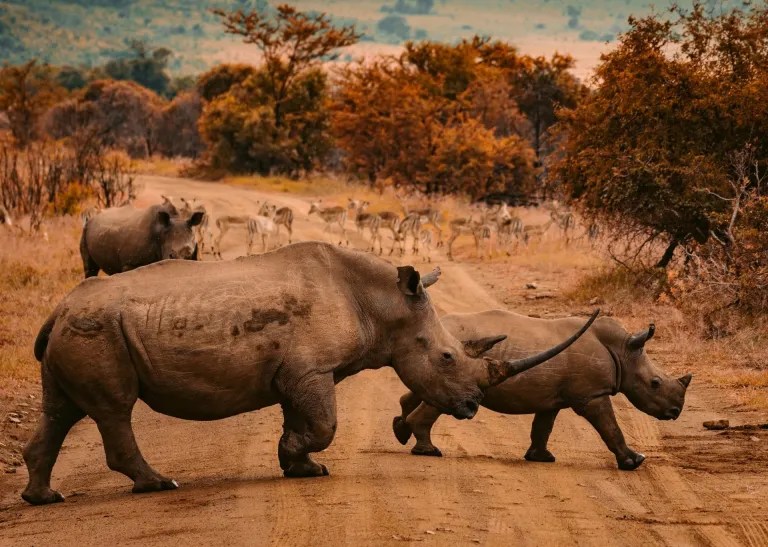
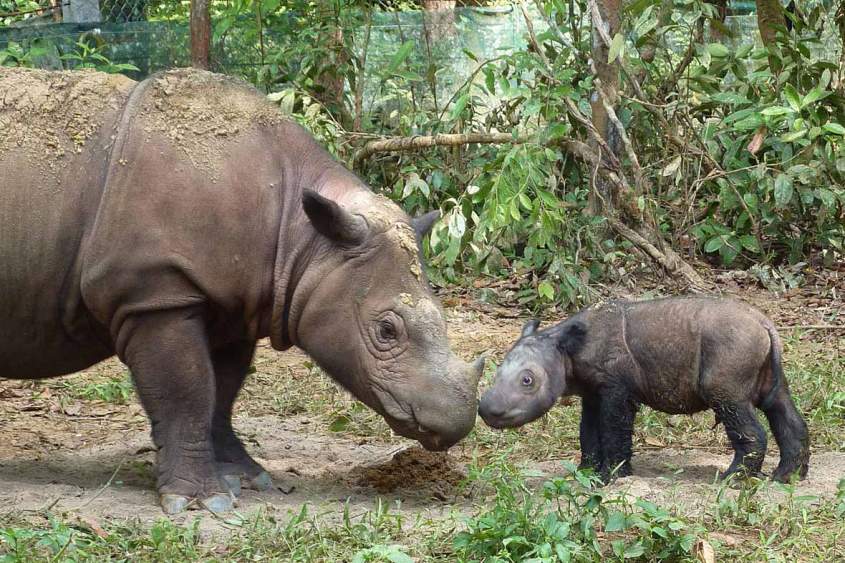
Rare rhino species are experiencing sensational population growth!

In a good 100 years from just 100 to 3,700 today – with falling poaching!

The IRF, an advocate for all things related to the rhino, publishes an annual report entitled “The State of the Rhino,” which this year highlights that even in the midst of a rare pandemic, there are committed people in a dozen Countries are working to keep the rhinoceros healthy and recover.

In fact, the IRF has invested $ 20 million in rhinoceros conservation projects around the world over the past 10 years and its work is paying off in many countries.

The greatest success is undoubtedly the great unicorn rhinoceros.
The rhinoceros, native to India and Nepal, were only 100 left at the beginning of 1900.
Today there are 3,700 and their number is constantly increasing.

In the past eight years, poaching incidents have decreased from 41 in 2013 to just one.

In the Indian state of Assam there are rhinos in four protected areas and this year the population in the magnificent Manas National Park on the border with Nepal has reached 47 animals, after it was founded only a few years ago with 4 animals.

107 larger unicorn rhinos were also counted in Nepal.

The Javanese rhinos in Indonesia gave birth to four new calves, bringing the number of the critically endangered species to 75, significantly reducing the number of natural deaths.
This means that the number of Javanese rhinos has almost doubled compared to 2011.

In Africa, the black rhinoceros population has risen by 16 to 17% over the past decade, while the South African “rhinoceros court”, which was set up exclusively for poaching cases, reopened in April this year, giving rangers the opportunity to target suspects testify without having to travel to a bigger city.

In Zimbabwe, black rhinos have been reintroduced after a 30-year absence and are steadily increasing, while in Kenya, thanks to efforts to combat poaching, the number of rhinos killed has fallen to 0 this year from 59 in 2013.

“We must act today to ensure that these wonderful animals can continue to grow for future generations. Let’s continue to build on our successes in the great unicorn, black and Javanese rhinos and reverse the decline in Sumatran and white rhinos by working together to keep rhinos growing on Earth”.
Nina Fascione, managing director of the IRF

https://wildbeimwild.com/wildtiere/seltene-nashornart-verzeichnet-sensationelles-populationswachstum/52668/2021/09/22/v6P9himwk

And I mean…This is great news!
In the jungle of horror reports that we read, hear, see about animals every day … these positive news work like opium for our souls.
The belief that the struggle each of us against animal exploitation, animal cruelty and animal slavery could bear fruit is growing stronger.
We remain vigilant, active, hopeful

My best regards to all, Venus

Great Britain: carbon dioxide to stunning the animals is running out

British slaughterhouses threaten to run out of carbon dioxide to stunning the animals – with consequences for the food supply.
Many energy suppliers in the country also have problems because of the high prices.

After tens of thousands of truck drivers are missing, and many food items such as fruit, vegetables and milk have therefore not been picked up from the farms at the usual speed for a few days, the gas is now also running out.

More precisely, the carbon dioxide, which is urgently needed, especially in the food industry.
For example for the production of meat.
Both during slaughter and packaging afterwards.

80 percent of British pigs are processed in just 10 slaughterhouses, and they all rely on CO2 stunning, reports “Tagesschau” magazine.
If there is no gas, the animals can no longer be removed from the slaughterhouses and have to be slaughtered on the farms.
Exactly this scenario is now imminent, as the British meat producers warn.
Immediately afterwards, the supply of regional fresh meat will collapse, according to the producers.

The background to the CO2 shortage is that the US operator CF Industries has temporarily closed two of its fertilizer companies in northern England due to the sharp rise in energy prices.
The production is currently not profitable.

The carbon dioxide that the food industry so urgently needs is a by-product of this very fertilizer production.
In the production of fertilizers, there is also a strong reliance on gas, which is now becoming a scarce commodity.

As a result, factories have recently been closed, which further reduces the available quantities.
Now there is criticism of the enormous market concentration, which leads to extreme dependence on a few companies.

England’s Economics Minister Kwasi Kwarteng has signaled that he is in talks with the US operators of the fertilizer companies with the aim of restarting production as soon as possible.

But another trouble spot seems more urgent for the government: the looming bankruptcy of energy suppliers.
Because in view of the sharp rise in energy prices – caused by the recovery of the global economy after the corona crisis – a number of companies will not survive.

Prime Minister Boris Johnson, who is on his way to talks in the US today, tried to spread optimism.
“The situation will improve once the markets have sorted themselves out again,” said Johnson

https://www.tagesschau.de/wirtschaft/gasknappheit-grossbritannien-101.html

https://www.oekoreich.com/medium/dramatische-lage-tieren-droht-notschlachtung-kein-frischfleisch-in-supermaerkten

And I mean…With Nord Stream 2, Russia wants to once again significantly increase the supply of natural gas from Western Europe.
Anti-Russian politicians and many conservative media are spreading fear that the new pipeline through the Baltic Sea could be used as a geostrategic weapon

The Nord Stream 2 project was recently completed, but the certification process at the EU is artificially delayed by various actors such as Poland.
This Nord Stream 2 pipeline will supply the European Union with natural gas, thereby increasing the security of supply.

The EU has never been enthusiastic about Nord Stream 2 and has left its future “solely in the hands of the Germans”.

Various conspiracy theorists have spread fear and concern that “the pipeline would make Europe dependent on Russian gas supplies and give the Russian oligarchs a substantial injection of money.”

It also weakens the position of Ukraine, because this country is collecting a lot of money for the gas that is currently still being transported through its territory.
And thus the false conviction was generated that the construction of a second pipeline through the Baltic Sea was primarily for political reasons.

The Russian state-owned company Gazprom is the sole owner behind Nord Stream 2 and is also assuming half of the planned total costs of 9.5 billion euros.

Our Ex-Chancellor Gerhard Schröder is the head of the Nord Stream 2 Shareholders’ Committee.
With 55.6 billion cubic meters, Germany is the largest importer of natural gas from Russia within the European Union.
And Germany will continue to be dependent on Russian natural gas for some time to come.

England, luckily, no longer belongs to the EU.
So there are two alternatives for the British:
Either convince the abandoned fertilizer companies to go back to business, or …
to be the first country in Europe to get out of factory farming.

My best regards to all, Venus

Russia forest fire damage worst since records began, says Greenpeace.

Source – ‘The Guardian, London.

https://www.theguardian.com/world/2021/sep/22/russia-forest-fire-damage-worst-since-records-began-says-greenpeace

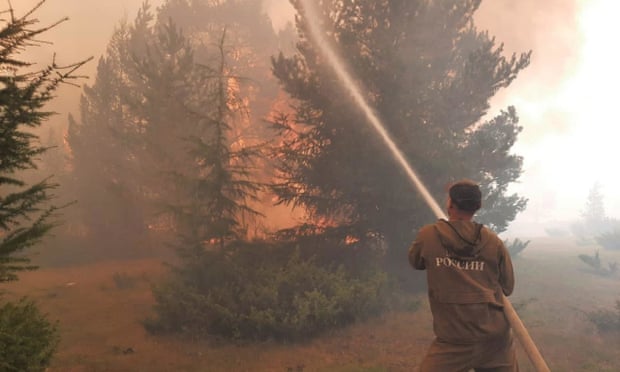
A firefighter trying to extinguish wildfire in the republic of Yakutia, Russia, in August 2021.
Photograph: Emercom Of Russia Handout/EPA

Russia forest fire damage worst since records began, says Greenpeace

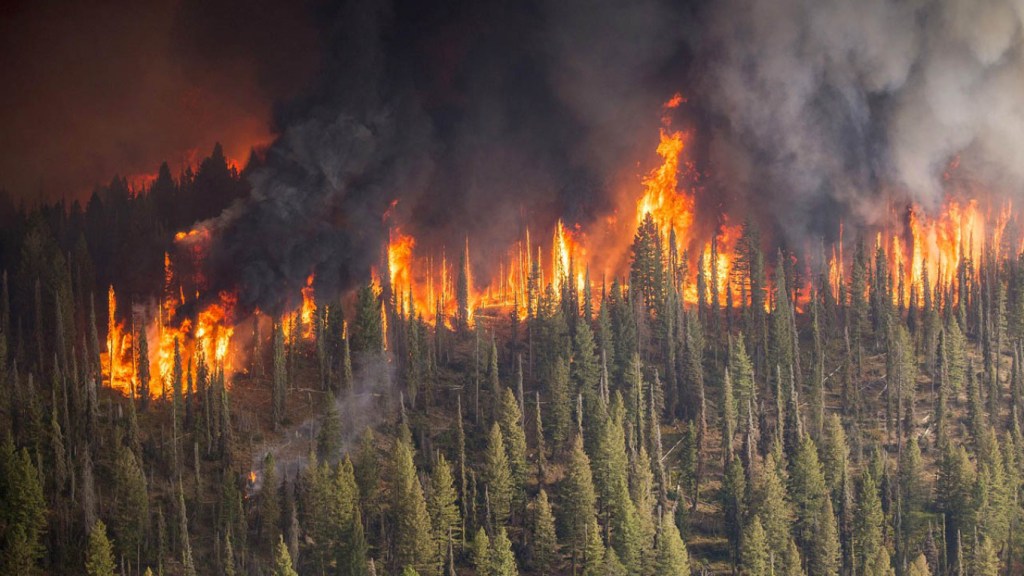
Analysis shows over 18.16m hectares were destroyed in 2021, an absolute record since satellite monitoring beganRussia has endured its worst forest fire season in the country’s modern history, according to recent data from the Russian Forestry Agency analysed by Greenpeace.

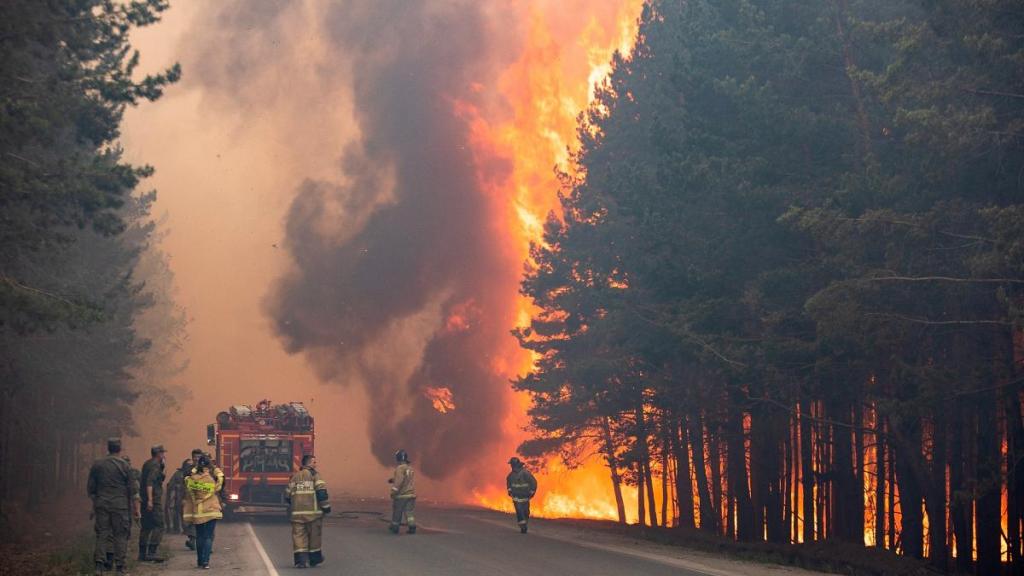
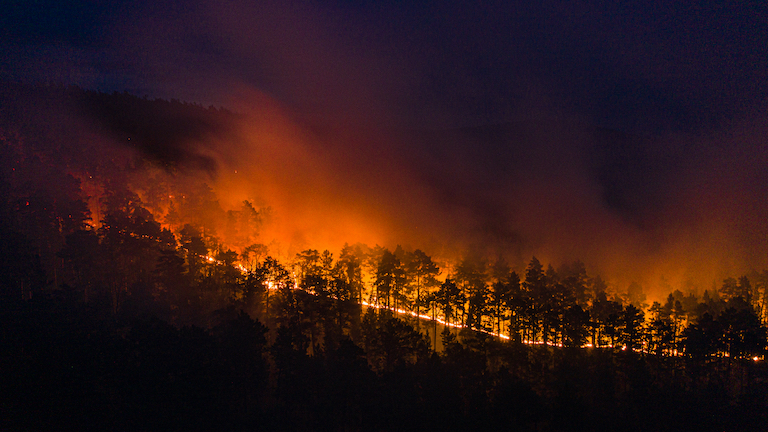
Fires have destroyed more than 18.16m hectares of Russian forest in 2021, setting an absolute record since the country began monitoring forest fires using satellites in 2001. The previous record was set in 2012, when fires covered 18.11m hectares of forest.

The record was surpassed late last week after a long fire season that has also produced unprecedented levels of global wildfire emissions and upturned daily life for hundreds of thousands of people living in Siberia and elsewhere in central Russia.

“For the past several years, when the area of the fires has surpassed 15m hectares, it has become, in all likelihood, the new normal in the conditions of the new climate reality,” Greenpeace Russia wrote.

‘Airpocalypse’ hits Siberian city as heatwave sparks forest fires

Read more

Those fires have primarily affected communities in Siberia, where dry, hot summers have turned the vast taiga forests into a tinderbox. In Yakutia, a northern Siberian region that has been particularly hard-hit, smog covered the capital city, Yakutsk, for weeks, and villagers have had to come together in last-ditch efforts to save their homes.

“Emergency workers have come and villagers are also fighting the fires but they can’t put them out, they can’t stop them,” Varvara, a 63-year-old from the remote village of Teryut, said by telephone in July. “Everything is on fire.”

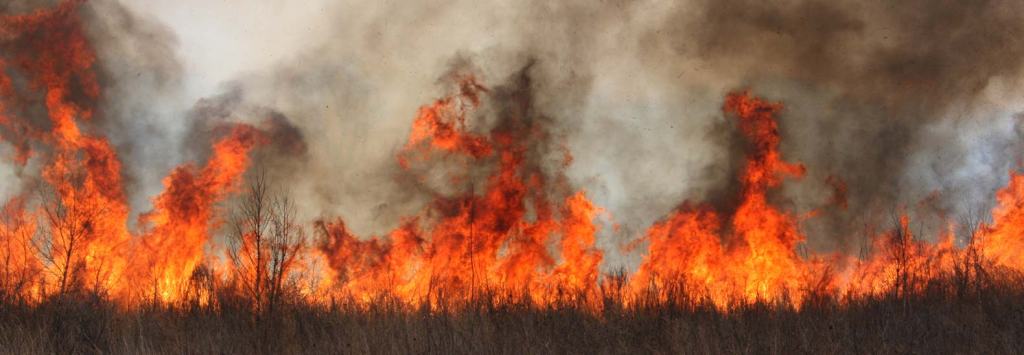
The statistics do not record other types of fires taking place outside Russia’s forests. “If we counted all the fires – grass, reed, tundra, where there is no forest fund – then we would see an even higher number,” wrote Grigory Kuksin, the head of Greenpeace Russia’s firefighting project. The total area could be as high as 30m hectares, he said, an area the size of Italy or Poland.

Burning forests in Russia helped produced some of the worst global emissions in recent months. The Copernicus Atmosphere Monitoring Service of the EU found that burning forests released 1.3 gigatonnes of carbon dioxide last month, the highest since the organisation began measurements in 2003.

The taiga forests of Siberia pumped 970 megatonnes of carbon dioxide into the atmosphere between June and August – more than all the forests in the rest of the world put together. The fires in Yakutia played an important role in that, as the fire season lengthens and pushes farther north, amid unusually high temperatures and lower than normal soil moisture.

According to Greenpeace Russia, the fires in Yakutia are continuing, including north of the Arctic Circle. “That is not characteristic for this time of year,” Kuksin wrote.

Grassfires are also ongoing mainly in Russia’s southern regions of Rostov, Volgograd, Astrakhan and Orenburg, Greenpeace said. Climate change will also make it more difficult for emergency workers to manage Russia’s regular peat fires, which have enveloped Moscow and other cities in noxious smog in past years.

Regards Mark