WAV Comment – You could say in response that the beef, (general) meat and dairy industries are getting concerned about the amount of people switching to a plant based diet.
An ad commissioned by members of the meat industry claims eliminating beef consumption is not realistic Credit: Adobe.
Dear Wall Street Journal: Anti-Vegan Propaganda Isn’t Just Wrong, It’s Dangerous
The beef industry paid for a major ad to be placed in Wall Street Journal. The ad claimed that meat is not damaging the planet
Last week, major international newspaper Wall Street Journal (WSJ) published a full-page ad that praised the sustainability of the meat industry. The ad also took a swing at the vegan movement, claiming that if every American stopped eating animal products, greenhouse gas emissions would only fall by 0.36 to 2 percent globally.
The ad was, unsurprisingly, paid for by the Beef Checkoff, a program designed to increase the consumption of beef.
The Center For Consumer Freedom (CCF) also worked on the ad. The CCF – which has meat industry representatives on its advisory board – runs campaigns attacking environmental protection groups and animal rights organizations.
“Beef’s environmental footprint may drive headlines, but the truth is, eliminating beef is not a realistic or impactful solution for climate change,” part of the ad reads. It carries on, saying that raising cattle actually helps protect the planet.
But the claims lack meaningful evidence. And while the meat industry’s editorial tantrums are not a new concept (see the similar ads it placed in WSJ and The New York Times in 2019), they are arguably more damaging than ever.
The global climate emergency is accelerating at an unprecedented rate. We cannot afford to be spreading misinformation on such a major scale (WSJ distributes around 2,834,000 copies a day).
So, here is an open letter to the publication, urging it to correct the advertisement. You can read the full version below.
Dear Wall Street Journal, Dear Mr. Murray,
We were forwarded the attached advertisement with manipulated science displayed in the Wall Street Journal on August 14, and we would like to ask your help in rectifying the advertisement, as continuing to promote beef consumption will cause tremendous damage to our planet.
This advertisement is based on questionable data. It is not credible, and contradicts data supported by the international scientific reports and data from institutions such as the FAO, UNEP, and the IPCC (leading international climate data sources).
Total emissions from global livestock: 7.1 Gigatonnes of Co2-equiv per year, representing 14.5 percent of all anthropogenic GHG emissions … Cattle (raised for both beef and milk, as well as for inedible outputs like manure and draft power) are the animal species responsible for the most emissions, representing about 65 percent of the livestock sector’s emissions … feed production and processing (this includes land use change) and enteric fermentation from ruminants are the two main sources of emissions, representing 45 and 39 percent of total emissions, respectively.
The US figures for livestock production are lower but typically do not include any emissions caused elsewhere, for example for the production of livestock feed, usually in South America, which are a key driver of greenhouse gas emissions.
Furthermore:
Switching to a plant-based diet could reduce your food-related emissions by up to 50 percent.
We would prefer the Wall Street Journal to disassociate itself from the advertisement, and a confirmation it will not advertise such misleading data again.
We would be grateful if this message could be forwarded to the correct department within the Wall Street Journal.
Yours truly,
Jasmijn de Boo, Vice President, ProVeg International
A very good guide from PETA about the different varieties of plant milk
Soy milk, oat milk, rice milk, dozens of types of nut milk … The choice of vegan milk is growing all the time.
We’ll break that down.
Sure, almost everyone knows soy milk by now.
But you can make vegan milk from all kinds of legumes, nuts, seeds and grains.
Basically, all types of plant milk can be used just like cow milk, and very few people will need more than one type in the refrigerator.
In addition to personal taste, it is then above all worthwhile to pay attention to whether you prefer to buy sweetened milk(which is usually as sweet as cow’s milk) or unsweetened milk and whether you value the addition of calcium and vitamin B12.
Our list will help anyone looking for milk for a specific purpose.
Soy milk
The classic and usually the first alternative to cow’s milk that can be found in cafes or supermarkets. Soy milk comes in all possible variations and mixed forms (for example with rice milk), even if some people still claim to taste the beans through.
Otherwise the perfect all-rounder, as long as you are not allergic.
Oat milk
Another great all-purpose milk that isn’t quite as common as soy milk yet, but is working on it.
Not only great for soy allergy sufferers, but also for people for whom the soy milk in coffee always curdles despite everything. The best latte art can be conjured up with oat milk.
Rice milk
The most watery and neutral type of plant milk. That can be annoying if you like the hot chocolate rather creamy, for example, but it can also be great if you don’t want to have an exaggerated extra taste with cornflakes, for example.
Nut milk
The plant milk with the strongest taste of its own – and that includes not only hazelnut milk, but also that made from cashews, coconut and almonds, even if they are not nuts from a botanical point of view.
In any case, great for coffee and other drinks that no longer need syrup to taste great.
Rather less suitable for everything that needs neutral milk.
And often simply too expensive for large cookie campaigns and other occasions where the taste is lost anyway.
If you are looking for a specific purpose, our list will help.
The list could go on forever, and there are sure to be people for whom nothing but lupine milk, spelled milk, hemp milk or quino milk comes into their homes.
For a start, however, it is usually enough to start at the top of the list and work your way down until you have found your favorite milk for your favorite purpose.
And I mean…For the majority of our society, the vegan lifestyle is considered an extravagant lifestyle that only people with a lot of money could afford.
This impression can come from looking at the prices charged for many vegan foods – including soy milk.
Vegan alternative products are often 50-100% more expensive than their animal counterparts.
But reality looks different…A vegan way of life is the most cost-effective way of life – if you also include the “hidden costs” of animal production in the calculation.
These include global warming, the destruction of primeval forests, pollution of the world’s oceans and the increasing diseases of civilization that are putting a strain on the health system.
But that’s not all.
In order to produce animal milk, artificially inseminated cows have to be forced to produce milk for life. The suffering of animals is enormous
This is an actual cost.
And there are real problems that cannot always be solved with money and that affect not only those who caused them, but all inhabitants of the earth (and future generations).
In the supermarket, however, it looks exactly the opposite: soy milk often costs significantly more than cow’s milk there.
Animal products would be significantly more expensive than vegetable products if there were no government subsidies.
Practically every agricultural operation also receives subsidies for the cultivation of plants, but the subsidies for factory farming are significantly higher.
No wonder dairy products are so cheap.
Animal products are the main cause of the worst ecological problems – and yet they are so easy to avoid when people become vegans.
Also because there are very good, plant-based alternative products that do not have to go without anything.
They taste good and they protect the environment and animals
WAV Comment – we have experienced exactly the same scenario working with stray dogs in Serbia; which started in 2005. See https://serbiananimalsvoice.com/about-serbian-animals/ for more details of the work / legislation. The Serbian government have always attempted to kill strays in different regions as they considered it most effective at reducing numbers. In reality, we have always argued that killing strays in any area simply creates a void; (less dogs in ‘the area’ initially, for a week or so max); which very quickly opens the door to strays from other areas to wander in and fill the void as they often find more opportunity for food left by the culled strays.
As they are un sterilised, and with a more adequate food supply; the strays that have entered a newly culled region multiply rapidly, often ending with stray numbers above and beyond those experienced before the cull (planned to reduce numbers !). In addition, there is always the risk that specific animal diseases not experienced in a particular region (in the past) may now become infected with new disease due to animals moving in to fill the cull void. Culling makes no sense.
Killing strays does not work; but sterlilisation of strays, so that they can no longer reproduce, does reduce stray animal numbers significantly over a relatively short time. This (sterilisation – NOT kill) was always our argument with the government; and we were ignored by the ‘kill’ mental vision attitude of the Serbian government, which they continue to enforce to this day.
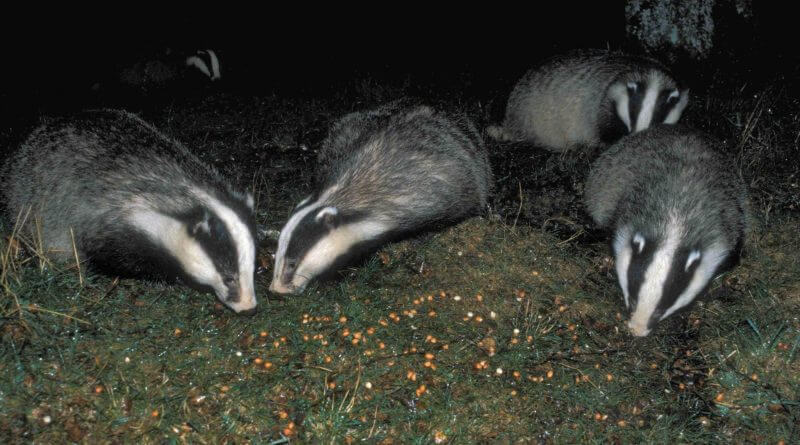
Are we not witnessing exactly the same type of thing here with the badger cull in the UK ? – read the article below – Killing off badgers sees the beautiful animals that survive cover 61 per cent more land each month, say scientists from the Zoological Society of London and Imperial College of London.
After a cull, the odds of a badger visiting a new area increases 20-fold. Researchers believe this could be linked to reduced competition and increased food availability as (culled) badgers are removed from the population. As with Serbia, here, others move in to fill the void left.
Increased food availability is the reason why these animals wander over greater areas; they take up the remnants in the food chain which has been left by murdered animals. Culling Serbian strays, and Culling British badgers; two of the same very wrong government approaches in reality.
The worst thing is that in both circumstances; governments are convinced that their approach is the only way forward. We are very happy to view things from a different angle, and strongly disagree from our own experiences.
Separate research published in March also suggested culling badgers actually spreads TB. It found that culls disrupt local populations and drive them into previously uninfected areas. It makes no sense, other than a blood lust shown by Serbian shinters and UK badger killers.
Culling badgers actually spreads TB, latest study suggests
Odds of a badger visiting neighbouring territory after a cull increased 20-fold – which spreads infection
The government’s claim that culling badgers reduces tuberculosis rates in cattle has come under fire after a major study suggested it could be making the problem worse.
Killing off badgers sees the creatures that survive cover 61 per cent more land each month, say scientists from the Zoological Society of London and Imperial College of London.
After a cull, the odds of a badger visiting a new area increases 20-fold.
This is because new territories open up as individuals are removed – which increases the risk of TB transmission to both cattle and other badgers, according to the paper published in Applied Ecology.
The badger cull is designed to halt the spread of bovine TB, which costs taxpayers more than £100m a year in compensation payouts to farmers.
The practice is highly controversial, with farmers and ministers often squaring off against campaigners who have called it “the biggest destruction of a protected species in living memory”.
Lord John Krebs, emeritus professor at the University of Oxford, commented: “This research shows how important it is to find out about badger behaviour. It shows that culling badgers can cause surviving individuals in an area to move around more, and as a result they could come into contact with infected cattle and help to spread TB.
“The ill-thought out plan to control TB by killing badgers could therefore backfire.”
Scientists say the changes were witnessed as soon as culling began, meaning even badgers that were killed may have first spread the infection over wider areas while the scheme was being implemented.
However, the animals spent less time outside of their setts in culled areas – on average, 91 minutes less per night.
Researchers believe this could be linked to reduced competition and increased food availability as badgers are removed from the population.
The research group, from ZSL’s Institute of Zoology and Imperial’s MRC Centre for Global Infectious Disease Analysis, studied 67 badgers across 20 cattle farms in areas with and without farmer-led culling in Cornwall, collecting GPS-collar data between 2013 and 2017.
Separate research published in March also suggested culling badgers spreads TB. It found that culls disrupt local populations and drive them into previously uninfected areas.
Scientists at Scotland’s Rural College found that unless strict rules are followed, it may be better to carry out no culling at all rather than continuing an ineffective operation that makes things worse.
Lead author and ZSL-Imperial PhD researcher Cally Ham said: “Badgers spend a large proportion of the night foraging for food above ground, and as culling reduces the size of the population, competition for food will also be reduced.
“We believe this accounts for the reduced activity levels, as well as bold individuals becoming obvious targets for culling and being quickly removed from the population.
“Because culling partly relies on shooting badgers moving around at night, the fact that badgers were active for fewer hours per night could actually be undermining culling efforts to further control badger numbers.”
Last year the government commissioned a review of its strategy for tackling bovine tuberculosis in livestock amid ongoing controversy about badger culling to control the disease.
Measures to tackle the disease include cattle testing and movement controls, improving “biosecurity” or protective measures to prevent disease spread on farms, developing vaccines for cattle and badgers, and culling badgers – which can spread TB to cattle – in 32 areas of England.
The independent review found farmers must do more to tackle the spread of TB between cattle, which is a bigger part of the problem than badgers.
While it said that culling showed a “real but modest effect” and was a judgement call for ministers, the review led by Sir Charles Godfray said poor uptake of biosecurity measures and trading in high-risk livestock was hampering disease control.
Since the government implemented the culling policy in 2011, ZSL scientists have been working to understand whether badger vaccination could be used to reduce the infection of TB in the UK’s badger population, and so help control TB in cattle.
Ellie Brodie, senior policy manager at The Wildlife Trusts, said: “This new study further shows that instead of helping to control TB, culling badgers can in fact contribute to spreading the disease across ever larger areas.
“Badgers live in tight-knit groups but culling disrupts their normal behaviour as survivors roam to new fields that can be shared with cattle. Vaccinating badgers is a positive solution to controlling TB in the badger population and one we urge the government to invest in”.
A spokesperson for the Badger Trust said: “The latest research from ZSL shows that this mass destruction of a protected species could be resulting in perturbation, increasing the risk of TB spread in badgers and possibly cattle.
“Badger vaccination is the most cost effective and humane way of reducing TB in badgers that do not have the disease. It also removes the risk of perturbation and brings farmers and wildlife protection groups together in a spirit of mutual respect, trust and confidence.
“The government should halt the culling of badgers and move to a national badger vaccination strategy.”
A Defra spokesperson said: “Bovine TB remains the greatest animal health threat to the UK, costing taxpayers over £100m every year as well as causing devastation and distress for farmers and rural communities.
“There is no single measure that will provide an easy answer to beating the disease and we are pursuing a range of interventions to eradicate it by 2038, including tighter cattle movement controls, regular testing and vaccinations.”
But animal farmers LOVE the animals, and as anag representatives often claim, the animals are treated better than otherhumansmychildrenmysignificantother …
Why do you believe their lies? All animals exploited for food, die for food; any victim “produced” in a manner that considers them commodities, is a being NOT cared for. Animal exploitation is inherently cruel, and the “process” requiring suffering, pain, and violence, is one mimicked globally, from the smallest HappyHappyFarm to Smithfield, it is all related, your Uncle Ted’s Fun Farm that kills ten animals per year directly contributes to CAFOs/FFs/ILOs that kills trillions of animals worldwide each year. Humane? Welfare? Humans have historically claimed animals deserve care and consideration, a belief that has led to the normalized violence and abject fear of animals who are denied all choices about what is fundamentally theirs – their bodies.
I have seen so many people horrified by this expose. Why? What do otherwise rational, knowledgeable people think happens to animals they use and consume?
But I do wonder how many of them are actually horrified enough to STOP CONSUMING ANIMALS. But not contributing to such horrors may be a little “too humane” for people who love the taste of animals more than they believe the animals don’t want to die for such.
And for all the Prop 12 cheerleaders, have you stopped consuming animals as you clearly agree that the current “model” is worse than what Prop 12 will deliver? When veal crates were largely replaced in the United States with a roomier form of confinement, veal consumption INCREASED: people feel responsible inflicting violence on infants because calves are “allowed” a larger prison.
Too, if more space is important for animals, NOT KILLING ANIMALS IS MORE SO. Humans are so obsessed with self-indulgence that they actually believe the cost of “retrofitting” confining spaces is more than the cost of lives.
Short and funny report from the police in Bochum, Germany
🐢🐢🐢 #turtlecontent 🐢🐢🐢
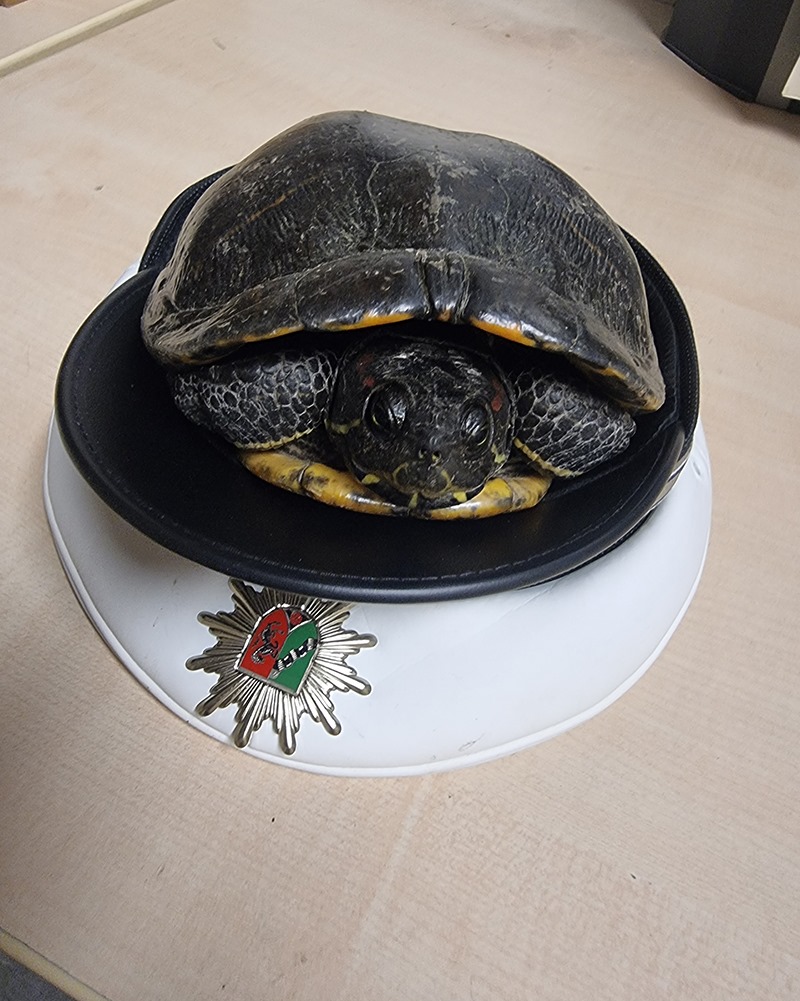
📌 No, this road user was not driving too fast on the streets, she was not drunk and was not under the influence of narcotics.
📌 However, police officers from the night watch had to pull her out of circulation and take her into custody late on Saturday evening (August 7th). 📌🐢Who are we talking about here? From a turtle whose age, name and address have not yet been determined.
After a concerned citizen called, the officers placed the armored reptile very carefully in a police hat, took it to the station and informed the public order office.
City workers then housed the turtle in a species-appropriate manner.
And I mean...A special kind of mission.
That was once a mission according to my principles, which say that every life counts; well done guys and girls, thank you so much for this heartfelt turtle rescue.
This is a 4 page article – select page from 1-4 at bottom left.
Is The Future Lab-Grown? From Meat To Diamonds: Meet The Companies Leading The Way
We’ve all heard of lab-grown meat by now. But did you know diamonds, trees, and even humane bone can be made in a laboratory?
C ellular agriculture, aka lab-grown meat and dairy, will transform animal agriculture. It shifts production away from farming animals to instead focus on processes at the cellular level.
Think tank Blue Horizon suggests that by 2035 ‘every tenth portion of meat, eggs, and dairy eaten around the globe is very likely to be alternative’.
Questions remain about the technology. Is it artificial? Will people accept it? Is it better or worse for the environment?
Some answers are becoming clearer every day. Not only in terms of the food we eat.
Yes, most ‘lab-grown’ tech companies are working to produce animal-derived agricultural products (‘meat’, ‘leather’, ‘milk’, ‘eggs’ etc.). But, there’s a whole world of innovation in other areas.
That is good news for animals and the plant-based community. It helps make ‘lab-grown’ an acceptable idea. Let’s begin with diamonds.
Diamonds are forever?
Earlier this year, Pandora, the world’s largest jewelry company, announced that, going forward, it would only use lab-created diamonds, and not mined diamonds.
Lab-grown diamonds have been around since the 1950s. But high energy costs and a lack of ability to create ‘pretty’ diamonds meant they were mainly used in industry, such as drill bits on heavy machinery.
But as with lab-grown meat, technology has advanced and costs have come down. Now lab-grown diamonds are helping consumers avoid the environmental and ethical problems associated with the ‘natural’ product.
Human rights abuses
The charity Human Rights Watch reports that even today most jewelry companies can’t assure its customers that its diamonds are free from human rights abuses. These are particularly child labor, and punitive amputations for villagers who mine in surrounding areas and ‘steal’ company property.
For many mine workers, COVID-19 also worsened conditions and exploitation.
Environmentally, lab-created diamonds still use a lot of energy. But they are up to 10 times more efficient than the fossil fuels, explosives, and heavy machinery used in diamond mines.
It is much easier to source renewable energy for lab-created diamonds. Pandora’s commitment is that they will use 100 percent renewables by 2022.
Choosing sustainability
As with plant-based meat and dairy alternatives, the switch in purchasing power is being driven by young people. They are prioritising sustainability when choosing expensive jewellery.
Mined diamonds can no longer be marketed as ‘natural’ in contrast with lab-created. The jewellery industry now recognises both as ‘real’ diamonds.
Lab-grown is cheaper
What is really driving change in consumer habits is cost. Lab-created diamonds are around 30 percent cheaper than mined diamonds. That means more people can purchase them for different reasons. (It’s another reason why price parity in the alternative meat and dairy sector is so important.)
That’s perfect for a company such as Pandora, which prides itself on creating affordable accessories for people. Up to 77 percent of people in Europe are aware of lab-grown diamonds.
“The roadblock to the success of this category has never been the consumer,” research company MVEye reported in 2020. “It has been the trade.”
Waorani leader Nemonte Nenquimo and A’i Kofan leader Alexandra Narvaez recently co-published a powerful op-ed, Our Territories, Our Decision, in Ecuador’s most widely distributed newspaper. We are excited to share it with you today.
As the Waorani and Kofan prepare to fight a court battle in the coming months that may well determine the future of the Amazon in Ecuador and of our planet, Nemonte and Alexandra invite us to look back at history to understand how the legal justifications of the Spanish colonizers hundreds of years ago are at their core the same as those used by government and industry today.
As Nemonte and Alexandra describe, “What the Ecuadorian governments and industries call ‘free, prior and informed consultation’ is nothing more than the following: they give us confusing and misleading information about what they want to do in our territories, and if we do not agree, they threaten us by waging war against us again.”
We cannot allow this to continue. We have a massive opportunity to change course and to defend Indigenous peoples’ right to free, prior, and informed consent and self-determination for their territories.
As the Waorani and Kofan prepare for their case to be heard by the Constitutional Court of Ecuador, we need your help to apply global pressure so that the ruling upholds respect for Indigenous peoples’ rights to decide over the future of their territories and cultures.
Stay tuned over the next week for important new opportunities to get involved and support the decision-making power of the next generation of Indigenous leaders and forest defenders. Because what happens in the Amazon matters everywhere.
The Amazon Frontlines Team
We give 100% support to the Amazon Frontlines tean and campaign;
UK-Australia Free Trade Agreement sets a dangerous precedent for Animal Welfare
After several weeks of anticipation, the UK and Australia announced on 15 June that they have reached a political agreement on a trade deal. The future Free Trade Agreement (FTA) will grant huge trade preferences to Australian beef and sheep meat, with no further condition on animal welfare standards. This is a dreadful precedent for UK trade policy.
The Agreement in Principle, published on 17 June, confirms that the FTA will open duty-free and unconditional tariff-rate quotas (TRQs) for beef and sheep meat, starting at 35,000 tonnes for beef and at 25,000 tonnes for sheep meat. In both cases, the volume is set to increase over ten years (up to 110,000 tonnes for beef and 75,000 tonnes for sheep meat yearly), after which the TRQs will be replaced by unconditional liberalisation, accompanied by safeguards for another 5 years.
Similarly to the EU-Mexico Global Agreement, the UK-Australia deal is set to include a chapter on Animal Welfare and Antimicrobial Resistance (AMR). This is welcome, but the language described in the Agreement in Principle lacks ambition. The UK government is likely to depict the inclusion of non-derogation and non-regression clauses in this chapter as a victory , however, considering the low level of Australian animal welfare standards, a commitment not to lower such standards – or not waiver them – is hardly a ‘success’. In addition, non-derogation and non-regression clauses can usually only be activated when the derogation to or regression of the standards has an impact on trade or investments, which is very hard to prove.
Allowing such cheap low quality imports in the market in Great Britain will have various implications. In addition to further fueling unsustainable practices in Australia, the massive market access granted to Australian beef and sheep meat could undercut English, Scottish and Welsh farmers, as they remain subject to higher standards – and thus, higher costs. For farmers in England and Wales, this comes at a time when they begin to transition to a fundamentally new type of income support system, one that rewards them solely for better environmental stewardship and for better animal husbandry. If not well managed, this new system could potentially lead to a lowering of the availability of higher welfare British products, and thus to a greater share of lower welfare imports. In addition, central and devolved governments in the UK have set out a range of ambitious agendas to improve farm animal welfare- notably within England – and the lack of measures on imports could well diminish the support for these reforms among farmers in Great Britain.
By negotiating very fast, without even having published a trade strategy, the UK seems to have sold out animal welfare for the sake of a quick deal. Addressing animal welfare in trade policy requires a long term vision and an understanding of the far-reaching interlinkages between animals and trade. The UK-Australia deal is thus a very bad precedent and does not bode well for future negotiations with the US, Mercosur or India.
The new Reclypse sneakers are made with plant-based materials
Stella McCartney Debuts Sustainable Vegan Sneakers Made With Recycled Fishing Nets
Stella McCartney will soon debut its vegan Reclypse sneakers, which are made with recycled and sustainable materials
Fashion house Stella McCartney is set to increase its cruelty-free range once again.
The UK-based company, which aims to produce sustainable clothing and accessories, will release its new vegan Reclypse sneakers later this month.
Reclypse sneakers
The shoes feature lining created from ECONYL regenerated nylon, which is sourced from pre- and post-consumer waste like fishing nets and carpet.
The Reclypse sneakers – which are handmade in Italy – come in four colours. They have a recycled polyester upper, as well as a tractor sole containing plant-based and renewable materials.
They also feature contrast panels of vegan leather and mesh.
“The Stella McCartney Reclypse is fashion innovation, taking luxury trainers one step closer to sustainability and circularity – it stylishly blends athleticism with escapism,” reads a release sent to Plant Based News.
Is Stella McCartney vegan?
It’s certainly not Stella McCartney’s first foray into animal-free fashion. The brand does not use animal-based leather, feathers, fur, or exotic skins. However, it does use wool in some of its designs.
Stella McCartney was founded by a designer of the same name, who is also the daughter of Sir Paul McCartney.
Both he and his daughter are long-time vegetarians. The designer’s late mother, Linda, was also a vegetarian and the founder of plant-based meat brand Linda McCartney.
Stella McCartney’s new vegan Reclypse sneakers are part of the brand’s WI21 collection, which launches on August 25.
Emperor penguin populations are at risk due to the climate emergency Credit: Adobe.
98% Of Emperor Penguins Could Be Extinct In 80 Years, Climate Crisis To Blame
Whilst the species isn’t listed as endangered under environmental law, scientists say this is the case because governments don’t want to accept responsibility for climate change…
Almost the entire population of the Emperor Penguin species will face extinction within the century, scientists warn.
Furthermore, most colonies will hurtle toward death by just 2050.
And, accelerated sea ice loss due to climate change is the cause, according to a major new study.
Emperor Penguins in danger
By 2100, a staggering 98 percent of the iconic penguin species will face being wiped out entirely, the Global Change Biology report reads. ‘Almost all’ colonies will be quasi-extinct, meaning the species is doomed for extinction even if some remain alive.
Currently, the birds – the largest of all penguins – form colonies on sea ice in Antarctica. But due to hiking greenhouse gas emissions and climate change, their lives are under threat.
“The need for legal recognition and enhanced precautionary management for emperor penguins is now urgent,” they state. This is because the threats are ‘within the foreseeable future’.
Scientists behind the study include Judy Che-Castaldo Judy, Shaye Wolf, Marika Holland, and Sara Labrousse.
Endangered Species Act
However, Emperor Penguins are not listed as an endangered species under environmental law, the US Endangered Species Act (ESA).
If they were added to the list, ‘enforceable tools’ are used to help save species, such as protecting habitats.
But the authors claim it could be unlikely that the species will be protected by the ESA because it would force governments to change the way they approach environmental issues.
In the report, they state: “ESA listing would require all US Federal agencies to evaluate and ensure that their activities do not jeopardize the species or their habitat, which could include limiting GHG emissions for species endangered by climate change.”
Animal agriculture and climate change
Creatures at risk of extinction due to climate change is the fault of many human behaviors. Experts and scientists globally state that the biggest driver of this is the meat industry.
A report published last year indicated forests burned for animal agriculture for thousands of years is one of the causes of staggering greenhouse gas emissions.
Furthermore, annual methane emissions are found to cause more global warming issues than all fossil fuel sources combined.









 📌🐢Who are we talking about here? From a turtle whose age, name and address have not yet been determined.





 World Animals Voice