Category: Environmental

Amazon Rainforest Now Emits More CO2 Than It Absorbs For The First Time.

WAV Comment:  Here in England; there has been no real summer – it has rained a lot for weeks; suddenly in the last few days it is clear sky and temperatures are at 31 degrees.  Germany, Belgium and the Netherlands are having huge rainstorms, and over 150 people have been killed. 

https://www.theguardian.com/world/2021/jul/18/angela-merkel-to-visit-flood-ravaged-areas-in-germany

https://www.bbc.co.uk/news/world-europe-57858829

Death toll exceeds 180 as Germany and Belgium hit by devastating floods |  Germany | The Guardian
Photo – (Germany) – The Guardian

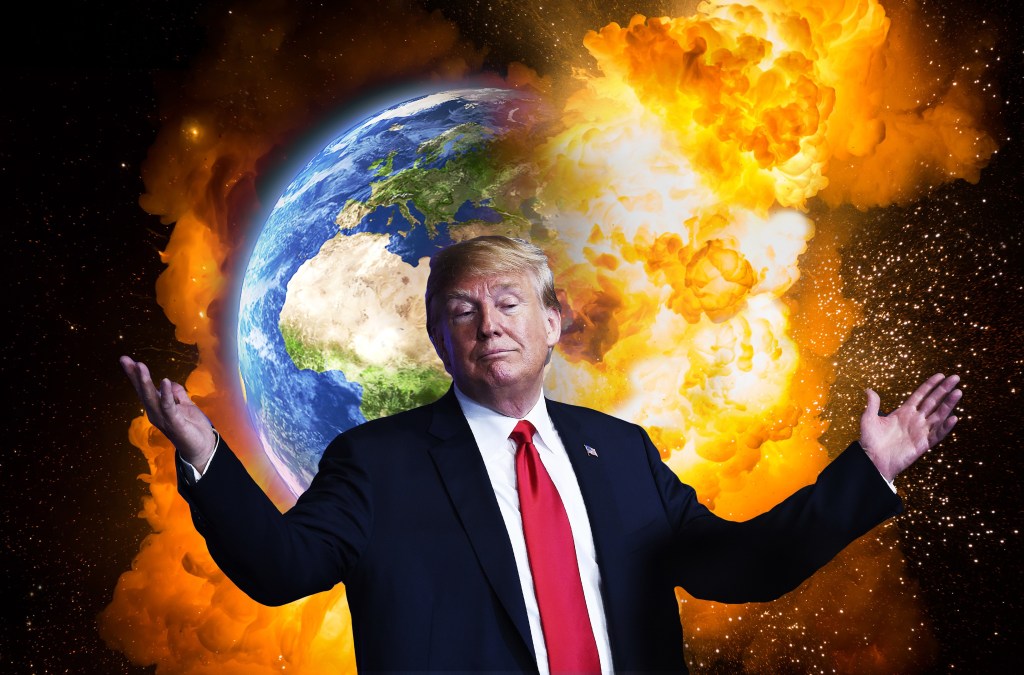
Mr EX President Trump was full of self gratification for pulling out of the Paris climate accord agreement.   I remember watching all the ‘seals’ clapping him on the White House lawn when he announced.  Fortunately President Biden has tons more sense and has re joined.

If anyone wants to send this to Trump, and Bolsonaro, then great.  2 fools who between them have contributed to major global environmental damage.  Thank god that at least one of them is no longer in charge !

Drone footage shows flood damage in Germany and Belgium - BBC News

Above – Germany (BBC)

CASE STUDY - Amazon Rainforest - Tropical Rainforests and Deciduous  Woodlands

Amazon Rainforest Now Emits More CO2 Than It Absorbs For First Time

Animal agriculture has been linked to the worsening state of the Amazon rainforest

For the first time, the world’s largest rainforest is worsening the climate crisis, a new study has found. The Amazon rainforest’s ability to absorb emissions once slowed down climate change, but it now expels a billion tonnes of carbon dioxide every year.

Many of the emissions are caused by fires intentionally set to clear land for beef and soy production. A lot of the soy produced is fed back into the meat industry. In fact, according to WWF, nearly 80 percent of the world’s soybean crop is fed to livestock.

Rising temperatures and droughts are also contributing to increased emissions.

Scientists Warn Human Impact On Amazon Rainforest Is ‘Worse Than We Realize’

‘Accelerating climate change’

Brazil’s National Institute for Space Research led the study, which spanned over a nine-year period. Researchers launched around 600 flights over four main sites in the Brazilian Amazon. This allowed them to record carbon dioxide and carbon monoxide levels up to 4,500 meters above the forest.

They discovered that while the rainforest soaks up 0.5 billion tonnes of CO2 annually, it emits 1.5 billion. The remaining 1 billion tonnes left in the atmosphere is equal to the annual emissions of Japan – the fifth-largest polluter in the world.

Luciana Gatti, who led the research, said to The Guardian: “The first very bad news is that forest burning produces around three times more CO2 than the forest absorbs.

“The second bad news is that the places where deforestation is 30 percent or more show carbon emissions 10 times higher than where deforestation is lower than 20 percent.”

She added: “Imagine if we could prohibit fires in the Amazon – it could be a carbon sink. But we are doing the opposite – we are accelerating climate change.”


https://plantbasednews.org/news/environment/amazon-rainforest-emits-more-absorbs/


Canada: ‘Heat dome’ probably killed 1bn marine animals on Canada coast, experts say.

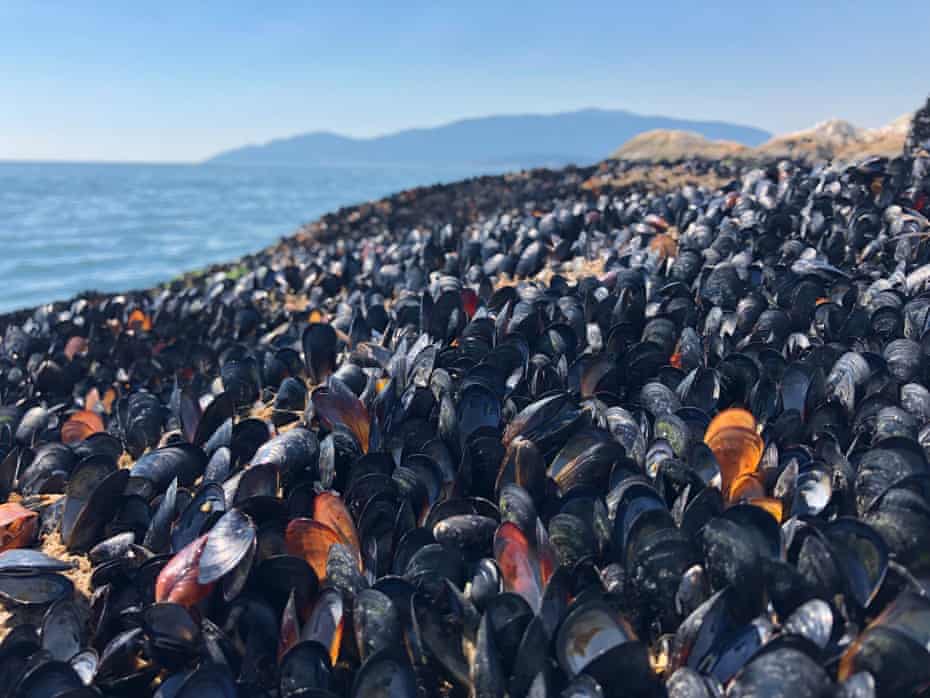
Dead mussels at the waterline in British Columbia.
Dead mussels at the waterline in British Columbia. Photograph: Christopher Harley

‘Heat dome’ probably killed 1bn marine animals on Canada coast, experts say

‘Heat dome’ probably killed 1bn marine animals on Canada coast, experts say | Canada | The Guardian

British Columbia scientist says heat essentially cooked mussels: ‘The shore doesn’t usually crunch when you walk’

More than 1 billion marine animals along Canada’s Pacific coast are likely to have died from last week’s record heatwave, experts warn, highlighting the vulnerability of ecosystems unaccustomed to extreme temperatures.

The “heat dome” that settled over western Canada and the north-western US for five days pushed temperatures in communities along the coast to 40C (104F) – shattering longstanding records and offering little respite for days.

The intense and unrelenting heat is believed to have killed as many as 500 people in the province of British Columbia and contributed to the hundreds of wildfires currently burning across the province.

But experts fear it also had a devastating impact on marine life.

Christopher Harley, a marine biologist at the University of British Columbia, has calculated that more than a billion marine animals may have been killed by the unusual heat.

A walk along a Vancouver-area beach highlighted the magnitude of devastation brought on by the heatwave, he said.

“The shore doesn’t usually crunch when you walk on it. But there were so many empty mussel shells lying everywhere that you just couldn’t avoid stepping on dead animals while walking around,” he said.

Harley was struck by the smell of rotting mussels, many of which were in effect cooked by the abnormally warm water. Snails, sea stars and clams were decaying in the shallow water. “It was an overpowering, visceral experience,” he said.

While the air around Vancouver hovered around the high 30s (about 100F), Harley and a student used infrared cameras to record temperatures above 50C (122F) along the rocky shore.

“It was so hot when I was out with a student that we collected data for a little bit and then retreated to the shade and ate frozen grapes,” said Harley. “But of course, the mussels, sea stars and clams don’t have that option.”Mussels are hardy shellfish, tolerating temperatures into the high 30s. Barnacles are even sturdier, surviving the mid-40s (about 113F) for at least a few hours.

“But when the temperatures get above that, those are just unsurvivable conditions,” he said.

The mass death of shellfish would temporarily affect water quality because mussels and clams help filter the sea, Harley said, keeping it clear enough that sunlight reaches the eelgrass beds while also creating habitats for other species.

“A square meter of mussel bed could be home to several dozen or even one hundred species,” he said. The tightly bunched way mussels live also informed Harley’s calculation of the scope of the loss.

“You can fit thousands on to an area the size of a stove top. And there are hundreds of kilometres of rocky beach that are hospitable to mussels. Each time you scale up, the numbers just keep getting bigger and bigger. And that’s just mussels. A lot of sea life would have died.”

While mussels can regenerate over a period of two years, a number of starfish and clams live for decades, and they reproduce more slowly, so their recovery is probably going to take longer.

Harley has also received reports from colleagues of dead sea anemones, rock fish and oysters.

Experts have cautioned that the province needs to adapt to the reality that sudden and sustained heatwaves are likely to become more common as a result of climate change.

Another heatwave is expected to strike the western United States and south-western Canada in the coming week, highlighting the relentlessness of the dry summer heat.

“The nerdy ecologist part of me is excited to see what will happen in the coming years,” said Harley. “But most of the rest of me is kind of depressed by it. A lot of species are not going to be able to keep up with the pace of change. Ecosystems are going to change in ways that are really difficult to predict. We don’t know where the tipping points are.”

Great article by The Guardian, London, as always

Regards Mark

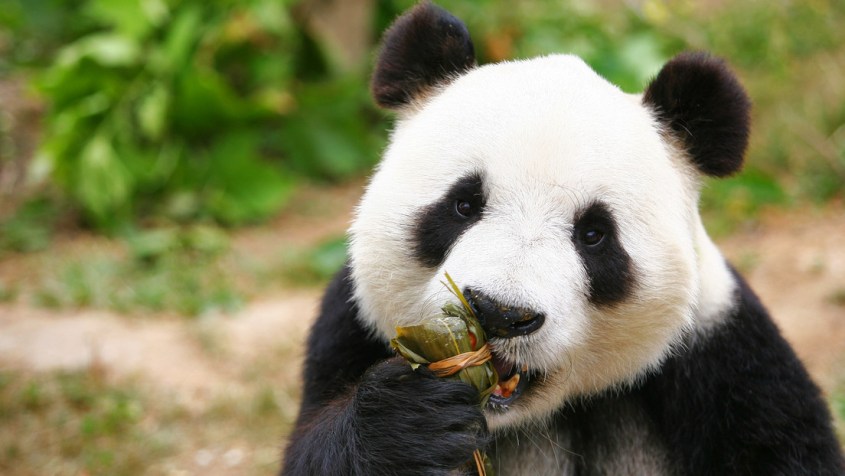
China: Panda is no longer under endangered status!

Giant pandas are no longer classified as endangered but are still vulnerable, Chinese officials say.

The classification was downgraded as their number in the wild has reached 1,800.

Experts say that the country managed to save its iconic animal through its long-term conservation efforts, including the expansion of habitats.

China considers pandas a national treasure, but have also loaned them to other countries as diplomatic tools.
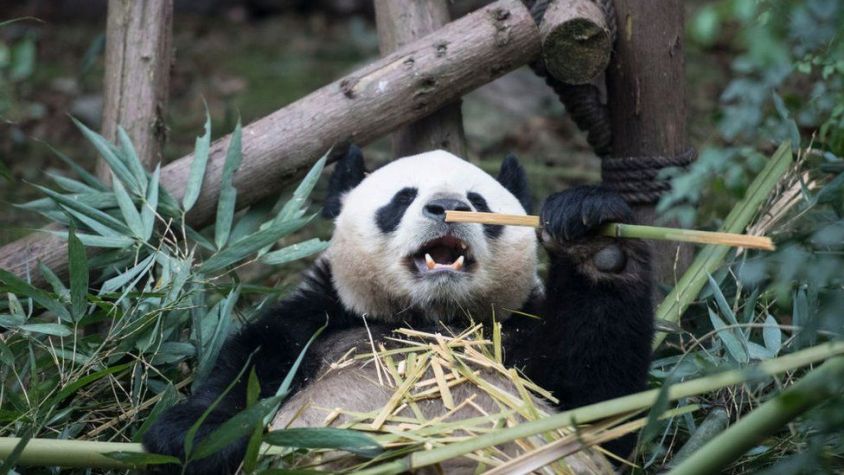
The latest classification upgrade “reflects their improved living conditions and China’s efforts in keeping their habitats integrated”, said Cui Shuhong, head of the Ministry of Ecology and Environment’s Department of Nature and Ecology Conservation at a news conference.

The new classification comes years after the International Union for Conservation of Nature (IUCN) had already removed the animal from its endangered species list and re-labelled it as “vulnerable” in 2016.

At the time, however, Chinese officials had disputed the decision, saying that it could mislead people into believing that conservation efforts could be relaxed.

Chinese efforts to create and populate bamboo forests have helped pull the pandas back from brink of extinction
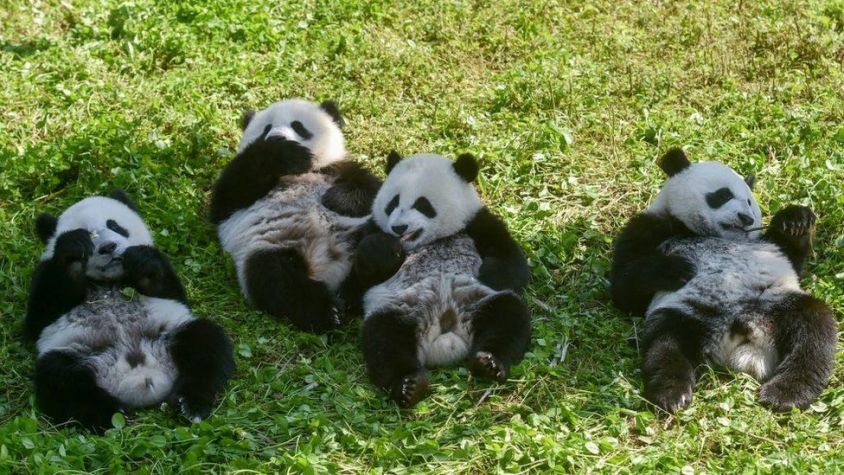
This week’s announcement by China’s environmental ministry is the first time the animal’s status was changed on its own endangered species list, which uses similar standards as the Swiss-based IUCN.

Chinese social media users were delighted at the news, saying that it is “proof” that conservation efforts are worth it.

“This is the result of years of hard work. Well done to all the conservationists,”

one person wrote on microblogging platform Weibo.

Giant pandas are no longer classified as “endangered” – but are still “vulnerable”
Experts have said that the success is largely due to Chinese efforts to recreate and repopulate bamboo forests. Bamboo makes up some 99% of their diet, without which they are likely to starve.

Zoos have also attempted to increase numbers via captive breeding methods.

https://www.bbc.com/news/world-asia-china-57773472

And I mean…It is good to read such beautiful news.
So far we only know the sad fact that the human species are becoming more and more and the animal species are becoming less and less.
Yes! it is always worth fighting, and we will continue to fight for the animals

My best regards to all, Venus

Sustainable Fashion Brand Collaborates With Sea Shepherd For New Clothing Line.

The t-shirts, hoodies, and tote bags are made with organic and recycled materials Credit: TOMORROW

Sustainable Fashion Brand Collaborates With Sea Shepherd For New Clothing Line

A new sustainable clothing line aims to raise awareness about ocean conservation

 Social activism brand TOMORROW has joined forces with Sea Shepherd to release a collection of sustainable, vegan clothing. The range is an effort to raise awareness about ocean conservation.

The new line is TOMORROW’s latest foray into ‘activism you can wear’.

The brand teamed up with six artists to produce the line: B. Thom Stevenson, Ellen Rutt, Humberto Cruz (I SCREAM COLOUR), Kelly Knaga, Kit Agar, and Luca Bjørnsten.

The vegan range includes organic cotton t-shirts and hoodies, as well as tote bags made from recycled fabrics.TOMORROW plans to donate 50 percent of the line’s proceeds to the artists and Sea Shepherd.

The PETA-certified brand said in a press release: “The innovative campaign shines a light on the importance of ocean conservation and enabling real action to protect marine wildlife.”

“Sea Shepherd accomplishes these goals through public education, investigation, documentation and, where appropriate, help to enforce violations of international treaties, laws and conventions designated to protect the oceans.”

Sea Shepherd

Founded in 1977, Sea Shepherd targets issues like whaling, plastic pollution, and marine habitat destruction.

In 2019, the Liberian Ministry of Defense awarded Sea Shepherd the Distinguished Service Order. The order honored the non-profit for its  ‘immense support and contribution in assisting the Liberian Coast Guard to fight against illegal, unreported and unregulated (IUU) fishing in Liberia’.It’s the highest military award that the ministry gives.

The year prior, Sea Shepherd helped arrest and seize the Damanzaihao – the world’s largest fish factory ship. The blacklisted vessel was capable of killing 547,000 tons of fish annually.

Find more information about the TOMORROW X Sea Shepherd range here.

Sustainable Fashion Brand Collaborates With Sea Shepherd For New Clothing Line | Plant Based News

Regards Mark

USA: Minnesota DNR calls off wolf hunt this year despite support from farmers, hunters.

The Minnesota Department of Natural Resources said Wednesday that there will be no wolf hunting or trapping season in Minnesota in 2021. Agency officials said they will wait until a new state wolf management plan is in place early in 2022 before deciding on any wolf harvest options. (Photo by iStock/AB Photography courtesy of the Wisconsin DNR)
The Minnesota Department of Natural Resources said Wednesday that there will be no wolf hunting or trapping season in Minnesota in 2021. Agency officials said they will wait until a new state wolf management plan is in place early in 2022 before deciding on any wolf harvest options. (Photo by iStock/AB Photography courtesy of the Wisconsin DNR) 

Minnesota DNR calls off wolf hunt this year despite support from farmers, hunters

Agency officials made the annoucement during a video meeting of the state wolf advisory committee.

Minnesota DNR calls off wolf hunt this year despite support from farmers, hunters | Park Rapids Enterprise

ST. PAUL — The Minnesota Department of Natural Resources on Wednesday, July 7, said there will be no wolf hunting and trapping season in Minnesota in 2021 as the agency continues to develop a new long-term wolf management plan.

DNR officials made the announcement during a video meeting of the agency’s wolf plan advisory committee that is helping plot the future of wolf management in the state.

Agency biologists say they won’t authorize a hunt until after a new wolf management plan is in place which they said likely won’t happen until early 2022, but no later than March.

“This morning we reiterated to the (committee) that there would be no decision on a wolf season prior to the completion of the wolf plan update,” Dan Stark, the DNR’s large-carnivore specialist, said Wednesday. “We anticipate the completion of the wolf plan process in early 2022.”

Minnesota could hold a wolf hunting and trapping season this year because the animal has been taken off the federal endangered species list, as of January, with management now in the hands of state and tribal resource agencies.

Current state law says the DNR “may’’ hold a wolf hunt when federal protections are removed. Legislation to force the DNR to hold a wolf hunt, and another bill to prevent them from holding a wolf hunt, both failed to pass the 2021 Minnesota Legislature, leaving the decision up to the agency.

Many farmers and deer hunters have pushed for a wolf season, saying the big canines are killing livestock, threatening pets and people, depleting deer numbers and need to be culled.

But wolf supporters say the animals should remain protected. Collette Adkins, carnivore conservation director at the Center for Biological Diversity and a member of the state’s wolf plan advisory committee, said the DNR is making the right decision.

“Minnesota’s wildlife managers have wisely prioritized first updating the management plan to reflect new science and the values of all Minnesotans,’’ she said. “That’s a welcome contrast to what happened just next door in Wisconsin, which rushed to hold a winter hunt and decimated their wolf population earlier this year.”

Wisconsin’s Natural Resources Board, pressed by legal action and state lawmakers, ordered a wolf hunt in February which led to 216 wolves being killed in just 72 hours, 82% more than the state goal. Supporters said the culling was long overdue. But critics said the wolf season was too much, too soon after federal delisting. Wisconsin officials are debating another wolf hunt set for November.

In June 2020, the Minnesota DNR released a report that found 87% of Minnesota residents agree that maintaining the state’s wolf population is important. That agency last summer also formed its Wolf Advisory Committee with the goal of evaluating and updating the current 20-year-old Minnesota Wolf Management Plan. Committee members include representatives of local governments, wolf advocacy groups, environmental protection organizations, hunters and trappers and livestock operators.

The DNR estimates that there are about 2,500 wolves in Minnesota currently, by far the most of any state outside Alaska.

Nationally, the Biden administration says it is reconsidering all moves by the Trump administration regarding the Endangered Species Act. Wildlife groups also have moved to sue the federal government over the decision to delist wolves in the western Great Lakes region — Michigan, Minnesota and Wisconsin.

Regards Mark

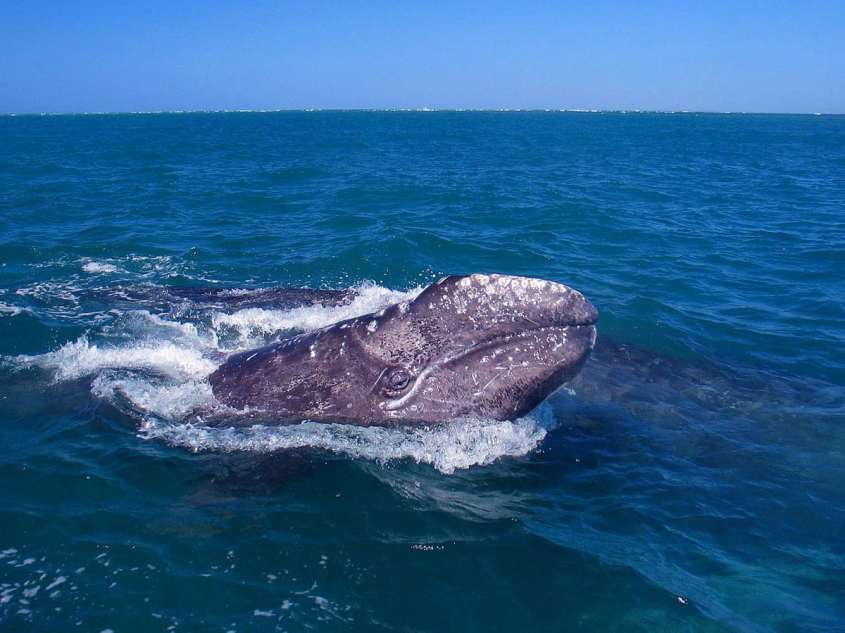
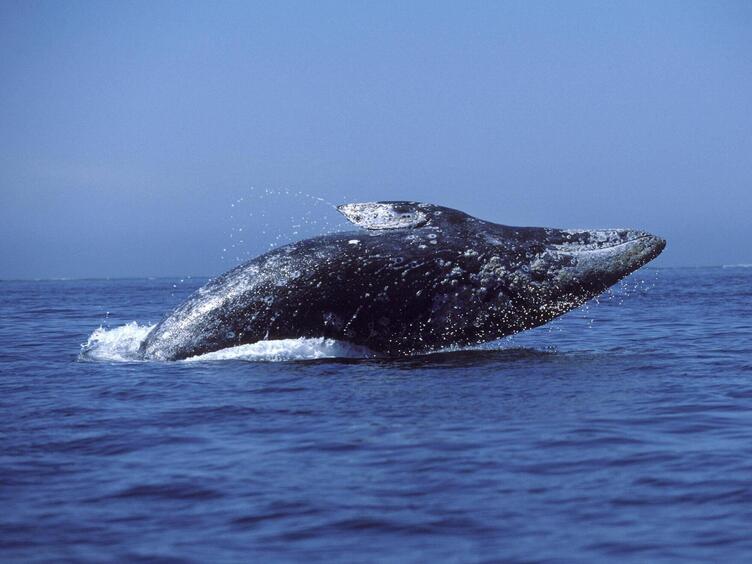
Gray whale “Wally” swims in Italy

A young gray whale swims off the coast of Italy – the animals actually live in the Pacific. Has global warming opened a way across the Arctic and Atlantic?

A gray whale has been sighted on the coast of Italy and is causing all sorts of speculations about its origin.
Because the giant animals actually live on the other side of the globe on the coasts of the East and West Pacific.
The one-year-old gray whale, christened “Wally” by the Italian press, was sighted in the Gulf of Naples near Sorrento, near the island of Ponza and in front of the US naval base of Gaeta, and was last swimming around near Fiumicino near Rome, like the coast guard reported on Thursday.

Gray whale in the Pacific | The population of gray whales in the Pacific Ocean is around 22,000, far below the previous population of around 96,000.

The appearance of a gray whale in the Mediterranean Sea is extremely rare.
Several experts suspect that the melting of the polar ice caps in the Arctic will open up new routes into the Atlantic for gray whales.
In fact, the marine mammals in this ocean were thought to be extinct.
“Gray whales are coastal whales and sometimes invade large lagoons,” write whale conservationists from the Marevivo organization.
So they could also explore the way to the Mediterranean. The animal is “probably malnourished because our ecosystem does not offer enough resources. But it’s strong enough to look for food. “

The Mexican whale expert Jorge Urban, interviewed by the Italian newspaper »La Repubblica«, speculates that gray whales, arriving in the Atlantic, can enter different waters: »North America, Iceland, Spain and finally the Mediterranean, a great lagoon for them« so Urban.

Gray whales can weigh up to 35 tons. Here is a copy off the coast of Mexico.

Other experts suggested that because of its young age, the animal might even have been born in the Atlantic.

This would raise new research questions on the return of the animals to regions where the species became extinct some time ago.
Because of the climate crisis, gray whale experts are concerned about the way the gray whales live in the Pacific: In the Arctic, the sea ice is dwindling and with it the food supply.
The animals therefore have to swim further and further north in search of food.

https://www.spektrum.de/news/verirrte-tiere-raetsel-um-grauwal-vor-italien/1863577

And I mean…In fact, this marine mammal species has long been extinct in the Atlantic and Mediterranean.
To date, only the East Pacific gray whale populations have recovered. The West Pacific gray whales are more threatened than ever by oil and gas drilling.

There is much speculation as to where “Wally” came from: It is unlikely that the animal swam all the way. That’s what the experts say. The whale is still too young for that.
It is more likely that the young whale was born in the Mediterranean Sea.

That would be a real sensation. Because that would mean that there are even more gray whales in the Mediterranean.

No matter where the guest Wally “comes from, we wish you all the best and a long, carefree life

My best regards to all, Venus

USA: U.S. proposal would ban mink farming to stem COVID-19 mutation.

U.S. proposal would ban mink farming to stem COVID-19 mutation

U.S. proposal would ban mink farming to stem COVID-19 mutation – The Globe and Mail

A bipartisan proposal in the U.S. House would ban the farming of mink fur in the United States in an effort to stem possible mutations of the coronavirus, something researchers have said can be accelerated when the virus spreads among animals.

The bill introduced this week is an effort from Reps. Rosa DeLauro, D-Conn., and Nancy Mace, R-S.C. It would prohibit the import, export, transport, sale or purchase of mink in the United States.

Researchers have said that spread of COVID-19 among animals could speed up the number of mutations in the virus before it potentially jumps back to people.

Last year, the European Centre for Disease Prevention and Control issued new guidance to curb the spread of the coronavirus between minks and humans. The agency warned that when COVID-19 starts spreading on a mink farm, the large numbers of animal infections means “the virus can accumulate mutations more quickly in minks and spread back into the human population.”

Denmark reported last year that 12 people had been sickened by a variant of the coronavirus that had distinct genetic changes also seen in mink.

“What we want to do is ban the inhumane practice of farming mink for fur,” Mace said Friday during an interview with The Associated Press. “At the same time, it’s also a public health crisis, so it helps fix both of those situations.”

“Knowing that there are variants, and being someone who cares about the humane treatment of animals, this is sort of a win-win for folks,” she added. “And I believe that you’ll see Republicans and Democrats on both sides of the aisle work on this together.”

According to Fur Commission USA, a non-profit representing U.S. mink farmers, there are approximately 275 mink farms in 23 states across the United States, producing about 3 million pelts per year. That amounts to an annual value of more than $300 million, according to the commission.

There have been several mink-related coronavirus cases in the U.S. In December, a mink caught outside an Oregon farm tested positive for low-levels of the coronavirus. State officials said they believed the animal had escaped from a small farm already under quarantine because of a coronavirus outbreak among mink and humans.

According to the U.S. Centers for Disease Control and Prevention, a mink on a Michigan farm “and a small number of people” were infected with a coronavirus “that contained mink-related mutations,” something officials said suggested that mink-to-human spread may have occurred.

While mink-to-human spread is possible, CDC officials said “there is no evidence that mink are playing a significant role in the spread of SARS-CoV-2 to people.”

Our Morning Update and Evening Update newsletters are written by Globe editors, giving you a concise summary of the day’s most important headlines. 

Sign up today.

Regards Mark

Question – what do you call a man that does not listen to others ?

Answer – Mr. Trump.

Related articles:

B.C. mink farm in quarantine after animal tests positive for COVID-19 – The Globe and Mail

One of two quarantined mink farms in B.C. resumes breeding program – The Globe and Mail

B.C. mink farmer euthanizes remaining 1,000 animals on farm after positive COVID-19 tests – The Globe and Mail

England: 13 Elephants To Be Flown To Africa (From England) and Re Homed by the Aspinall Foundation.

WAV Comment:  The Aspinall Foundation is based in our (England) home county of Kent.  There are 2 facilities; which are not ‘zoos’ in the typical sense.  Instead, they are breeding facilities with the intention of returning endangered species back to their ‘homelands’; with the hope they will establish new breeding colonies.

This programme to home 13 elephants back to Africa from the UK will be a world first.  We watched Damian on the BBC this morning; and the aim is to fly all 13 animals to Africa in one consignment.  They have each had a special crate for their journey made, and they have been getting used to entering those over the last few weeks.  When loaded; all the crates contain the elephants will be taken to the airport where they will all be loaded onto one single cargo aircraft.  Then they will be flown to Africa and the whole process repeated to get them to their new home.

It is a massive logistical task; but we have every confidence that it will go ok.

What a shame that African elephants have to be bred in the UK and then flown to Africa.  What a shame that some hunter dickheads pay big bucks to kill the beautiful animals that are already there.  But this breeding and rehoming project just shows that there are people and organisations that are better than the hunters.  We have supported the Foundation monthly for over 20 years, and when you see this, it shows your monthly donation is being put to good use.

Below I have included a link so that you can see the conservation work the foundation is doing.

As you can see in the videos below, they also specialise in putting Gorillas back into the wild from the facility at Howletts, Kent, England

Regards Mark

Link – https://www.aspinallfoundation.org/


Herd of 13 elephants to be flown from the UK to Africa in groundbreaking rewilding project (inews.co.uk)

Herd of 13 elephants to be flown from the UK to Africa in ground breaking rewilding project

The ambitious project is the first of its kind in the world

An animal conservation charity is to rewild 13 elephants from the UK to Africa in what will be a world first.

The Aspinall Foundation’s project – the largest it has ever undertaken – will fly the elephants, weighing 25 tonnes, more than 7,000 km (4,350 miles) to their ancestral homelands. 

This is the first time that a herd of elephants has ever been rewilded anywhere in the world and no elephant rewilding project of this scale has ever been attempted before. 

The logistics of the operation have been described as “huge”. 

All of the elephants will be transported on one 777 plane accompanied by a team and vets. 

Prior to the journey – which is set to take place next year – the animals will be acclimatised to smaller spaces. 

Once the elephants are in Africa, the charity will work with The Sheldrick Wildlife Trust and the Kenya Wildlife Service, to rewild the entire breeding herd of 13 African elephants, including three calves.

At present, the elephants  – one of the most successful breeding herds in Europe – are located in an eight-acre enclosure at Howletts Wild Animal Park in Kent. 

They comprise two interrelated families but the intention is to rewild them as one larger herd. 

Two different sites, both in the south of Kenya, are currently under consideration for the elephants.

The elephants will face new risks not encountered in captivity, such as new diseases and different food, but The Aspinall Foundation says its experience of rewilding projects will help guide the animals’ transition.

As will The Sheldrick Wildlife Trust, which has been at the forefront of African elephant conservation for more than four decades and provided a “wild future” to more than 260 rescued orphans and operated projects to ensure they and their families are protected throughout their lives. 

The Aspinall Foundation hopes the project will have a positive effect in the zoo industry by discouraging the trade in elephants and bolster commitment to returning animals to the wild, where possible.

It also hopes to prove that proving such a project can be done will encourage zoos to do the same.

The public can support the project by donating through its JustGiving page. 

Damian Aspinall, Chairman of The Aspinall Foundation, said: “This is an incredibly exciting project and a genuine world-first. 

“As with any conservation project of this magnitude, there are obviously big risks, but we consider them well worth it to get these magnificent elephants back into the wild where they belong.

“By supporting the project, members of the public will be part of conservation history, helping to restore an iconic species to its ancestral homeland.

“If this is successful, I would love to see elephants held in captivity all over the world be rewilded too.”

For more information, or to donate to the project, visit justgiving.com/campaign/backtothewild


Regards Mark

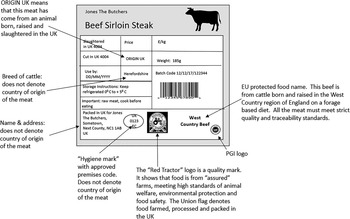
EU: Finally After Decades of Asking, The EU Consumer May Now Be Given More Detailed Information On Their Food Products – Production; Transportation; Slaughter Method Etc.


WAV Comment:  For decades, we (in past forms), along with other massive numbers of animal welfare groups across Europe, have been calling for this.  Are we now going to see the EU Commission finally wake up and listen to what people have been asking for years ?

One EU wide labelling system is drastically needed, rather than the current dozen different labelling schemes that include farm animal welfare criteria in at least six European countries.  Consumers need to know how their food is produced; is it free range or intensive ? (hopefully cages will go but we need this info earlier); stunned in a slaughterhouse or to religious standards (non stunning / ritual) only ? – we would like to see the country of origin and the country of slaughter; as this will no doubt involve the consumer if the animal involved has suffered live transportation. Labelling needs to apply to ALL products, and to an informative standard, rather than the yukspeak people have had so far. If people knew the facts; we think shoppers would amend their shop drastically. Is this why the EU has never moved on this issue ?

It is time for change, as it was time for change twenty years ago, but then, the EU considered itself above us / more important to bother with issues such as this.  People power is now demanding change, and they want it now; as we have seen with the cage systems; consumers want to know where their food comes from.  We regard this one standard labelling system as a positive move, but ALL aspects of animal welfare must be given / included to a nowdays much informed consumer. 

The days of buying products and not being given any useful information on them has passed, it is now time for change.  Bring it on !

Regards Mark

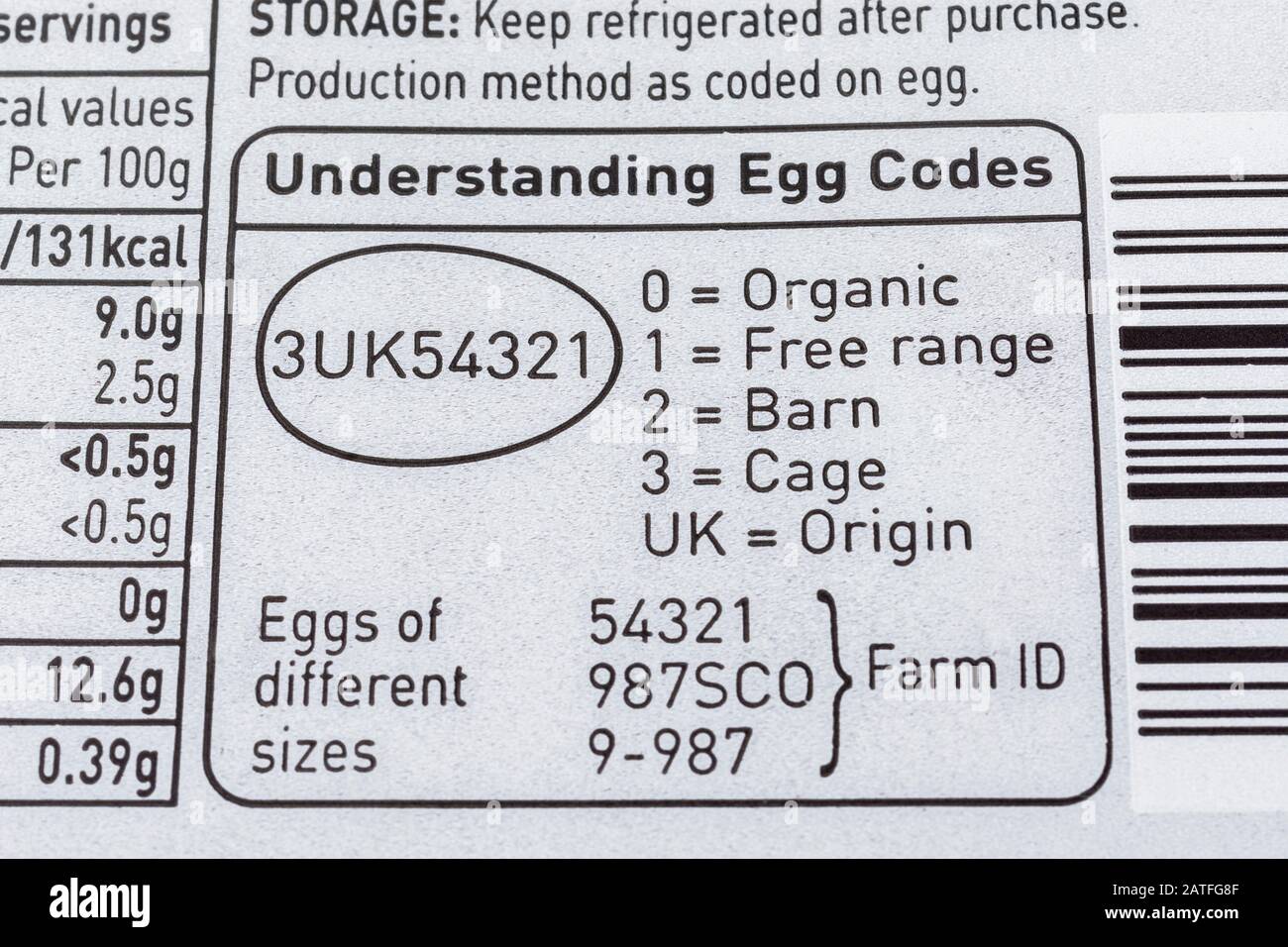
Close up food label on egg box from ASDA explaining UK Egg Codes. Food  packaging, nutrition labels, food labelling, British produce, food Stock  Photo - Alamy

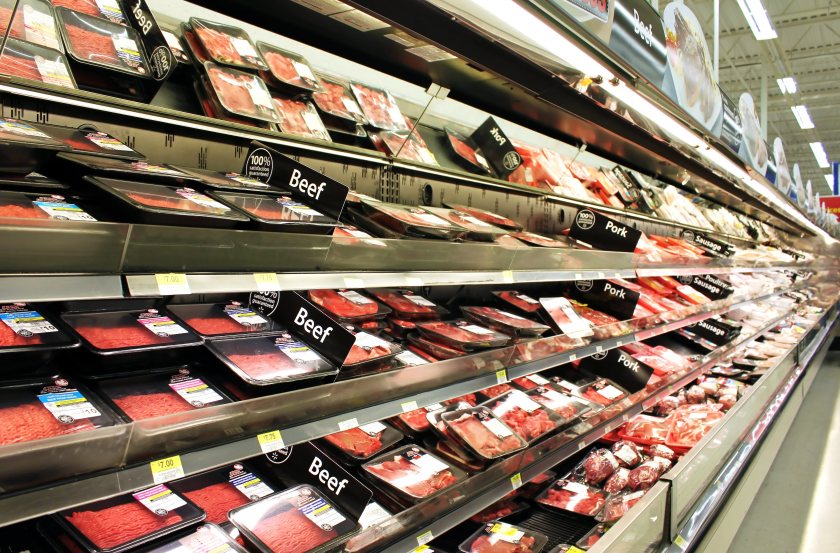
BVA is campaigning for the introduction of mandatory method of production labelling of meat

Lidl trials new meat 'production method' labelling | Food and Drink  Technology

European Commission gives green light for a comprehensive labelling system displaying the well-being of animals over the whole animal food production cycle

7 July 2021

Today, the European Commission’s Subgroup on Animal Welfare Labelling published its final recommendations giving green light for an EU-wide label on animal welfare which will create greater transparency, better opportunities for farmers and a progression framework to improve animal welfare. In order for the labelling system to be effective, it is, however, important the European Commission commits to a mandatory Method Of Production + (MOP+) label which guarantees a harmonised uptake across food industries in the EU.

MOP+ is the most transparent, progressive and fair labelling method. It gives clear and transparent messaging to consumers about how animals are reared as well as allowing for a benchmarking platform amongst existing labels. It also allows for a progression on animal welfare standards by stimulating improvements on animal welfare and providing a full range of products with different levels of welfare to the consumers. On top of that, it provides farmers with a transparent way of demonstrating their achievements on animal welfare, allowing for a fair compensation of their efforts.

The conclusions foresee the labelling to start off as voluntary and state that the possibility of becoming mandatory should be evaluated at a later stage. They also state that a voluntary label represents a great risk to the impact of the label, since not only could the uptake be low but it would also be likely to only be adopted by producers already committed to higher animal welfare standards. The impact of a voluntary label on animal welfare would therefore be lower than of a mandatory label. This would not serve the purpose of providing full transparency to consumers and a fair level playing field for farmers and certainly would not serve the purpose of improving animal welfare across the EU.

Further to that, the recommendations do not mention the coverage of the label in terms of range of production systems. It states animal welfare labels should cover as many individuals as possible. Eurogroup for Animals asks for the scope to be from minimum EU standards to premium standards, also clearly indicating products that do not comply with the minimum EU animal welfare standards, to guarantee the label’s effectiveness. 

Other positive key points of the recommendations:

  • EU animal welfare label should also protect the use of terms and claims indicating a better welfare for animals.
  • The scope should include not only the rearing but also the slaughter and transport phase. Standards used in animals that are directly involved in the production as sows or cleaner fish should also be included in the label.
  • Besides fresh products, processed products or products used in food services should also be covered.
  • The EU label should help harmonise and take existing labels into consideration, helping the consumer gain more clarity on those. 
  • Active participation of all stakeholders is necessary in the creation of an EU wide animal welfare related label and its development should be monitored and evaluated.
  • Animal welfare is an important part of sustainability, but in case of labelling integration, animal welfare can never be diluted.

Currently, there are a dozen different labelling schemes that include farm animal welfare criteria in at least six European countries, risking the Single Market to becoming fragmented.The European Commission aims to counter this trend and is expected to put forward a proposal for a harmonised food labelling scheme in the context of its Farm to Fork strategy (F2F). At the end of last year, the Council of the European Union on Agriculture and Fisheries also adopted Council Conclusions which had called for an EU-wide animal welfare label aimed at improving animal welfare for as many food producing animals as possible. 

File

Animal Welfare and Food Labelling1.84 MB


ENGA pushes for non-GMO food labelling across Europe


Country-of-Origin Labelling, Food Traceability Drivers and Food Fraud:  Lessons from Consumers' Preferences and Perceptions | European Journal of  Risk Regulation | Cambridge Core
For Shoppers - Global Animal Partnership Animal Welfare Food Labeling

Global: July 6 – Is World Zoonoses Day

July 6 – World Zoonoses Day

A zoonosis is an infectious disease that has jumped from a non-human animal to humans. Zoonotic pathogens may be bacterial, viral or parasitic, or may involve unconventional agents and can spread to humans through direct contact or through food, water or the environment

https://www.cbd.int/article/world-zoonoses-day-2020

World Health Organisation:

A zoonosis is an infectious disease that has jumped from a non-human animal to humans. Zoonotic pathogens may be bacterial, viral or parasitic, or may involve unconventional agents and can spread to humans through direct contact or through food, water or the environment. They represent a major public health problem around the world due to our close relationship with animals in agriculture, as companions and in the natural environment. Zoonoses can also cause disruptions in the production and trade of animal products for food and other uses.

Zoonoses comprise a large percentage of all newly identified infectious diseases as well as many existing ones. Some diseases, such as HIV, begin as a zoonosis but later mutate into human-only strains. Other zoonoses can cause recurring disease outbreaks, such as Ebola virus disease and salmonellosis. Still others, such as the novel coronavirus that causes COVID-19, have the potential to cause global pandemics. 

https://www.who.int/news-room/fact-sheets/detail/zoonoses


List of zoonotic diseases found in the UK – Defra:

https://www.gov.uk/government/publications/list-of-zoonotic-diseases/list-of-zoonotic-diseases

Regards Mark