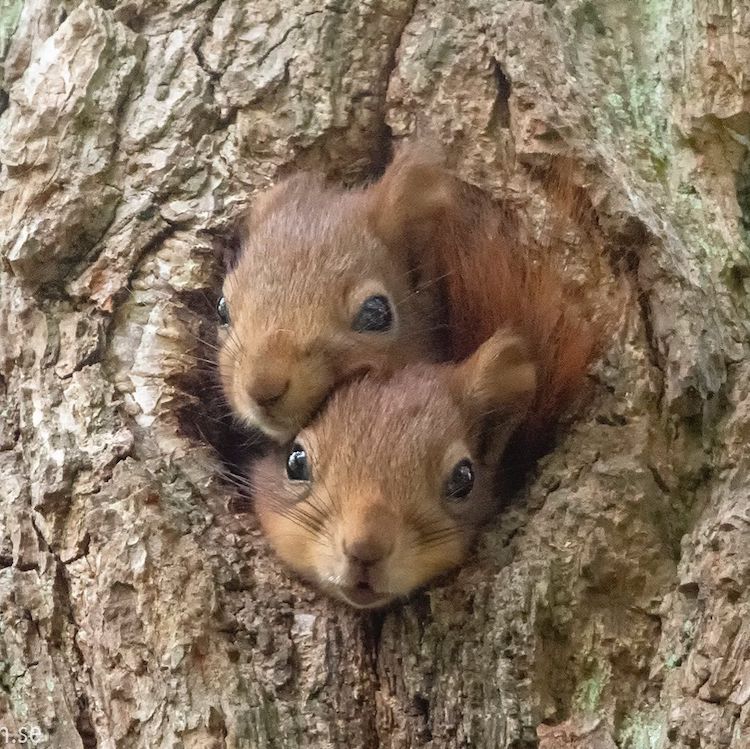
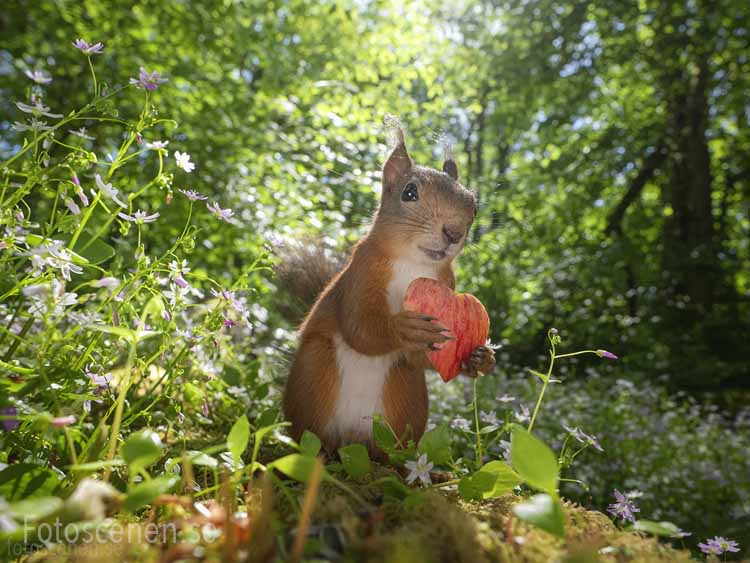
Seeing a squirrel in the wild is always an exciting moment, but we rarely get to see the cute creatures up-close. Most of the time, you might just see a flash of fluffy red fur scurrying up a tree or darting across the forest floor. However, Swedish photographer Johnny Kääpä has earned the trust of his local squirrels, who now curiously approach his camera and pose for snapshots.
SIGN: DON’T EXECUTE MOTHER BEAR AND CUBS JUST FOR LIVING CLOSE TO ROAD
PETITION TARGET: U.S. Fish and Wildlife Service
Agrizzly bear nicknamed Felicia and her two cubs could be killed just for living near a highway in Jackson Hole, Wyo., according to USA Today.
Wildlife Advocate Savannah Rose Burgess said the bear family has no record PETITION: Don’t Execute Mother Bear and Cubs Just for Living Close to Road (ladyfreethinker.org)of acting aggressively, charging, or taking food from humans who have been spotted approaching them. Felicia also caught the attention of award-winning photographer Thomas Mangelsen, who has documented her for more than six years and said she has always been calm and collected.
But wildlife officials are saying that “human-conditioned behavior” — through no fault of Felicia’s or her family’s– could lead to human-wildlife conflict. They propose relocating or killing the bear family as the only possible solutions.
If park rangers fail to scare the bears off with “targeted hazing operations” — which could include loud noise or rubber bullets — theseinnocent wild animals could pay with their lives, according to a U.S. Fish and Wildlife Service (FWS) statement.
Killing an entire family of bears who have no history of acting aggressively must not be allowed.
Felicia and her cubs must be protected.
Sign this petition urging the U.S. Fish and Wildlife Service to find an alternative solution for Felicia and her cubs that does not involve killing them.
The last known 800 Tapanuli orangutans on Earth face having their Indonesian forest home ripped from beneath them — by a British company’s thirst for gold.
Jardine Matheson and its gold mining company want to destroy this precious ecosystem in Batang Toru, Northern Sumatra out of pure greed — driving the rarest great ape to extinction.
Just in the past month, satellite images revealed a new expansion of the Martable Mine into the heart of orangutan territory. But if we act fast with a massive public campaign exposing Jardine Matheson, we can stop the mine’s expansion and protect the orangutans and their habitat before it’s too late.
The Tapanuli orangutan, which is the rarest great ape in the world, was first documented by scientists in 2017. It’s the first great ape to be recorded for a century and it only lives in the Batang Toru Forest in Indonesia.
Sadly, there are only 800 of the charismatic primates left.
Unfortunately for the newly identified and already endangered great ape, its forest home sits on top of a rich seam of gold – which is currently being mined by a British company.
Jardine Matheson has been run by the same British family, the Keswicks, since the Victorian era. It bought the Martabe gold mine in 2018 and has expanded it further into the habitat of the Tapanuli orangutan ever since.
So far, the Martabe mine has already destroyed at least 30 ha of Tapanuli orangutan forest habitat — an area of the Batang Toru forest equivalent to at least 42 football fields.
If we don’t act now, scientists warn that the entire Tapanuli orangutan population could be decimated in less than 10 years.
The survival of the Tapanuli orangutan truly is a test for humanity, but in reality it’s a simple one. All that Jardine Matheson needs to do is to halt any future expansion projects in Batang Toru and work with the International Union for Conservation of Nature on a plan to preserve the rarest great ape and its habitat.
When SumOfUs members come together, we achieve wonders. In May 2015, we got together to tell Jardine Matheson and its luxury hotel subsidiary Mandarin Oriental to save and protect the Sumatran Elephant, and it listened to all of us. Today, an even greater threat is looming over the last Tapanuli orangutans and we must ramp up the pressure on Jardine Matheson to do the right thing once again.
TAKE ACTION NOW red Rubber Stamp over a white background.
It’s estimated that we have pollinators to thank for one in every three bites of food we eat, but they are increasingly threatened by the widespread use of toxic pesticides and disappearing at unprecedented rates. Not only is this bad news for us, it’s bad news for them and the other wild animals who depend on them, and for the environment. However, food retailers have an opportunity to change things by sourcing products from pollinator- and environmentally-friendly sources. Please join us in telling the retail grocery chain Kroger that you will shop elsewhere until it commits to improved ecological farming methods and stops selling products produced with pollinator-toxic pesticides.
While there are a number of factors contributing to bee and other pollinator declines, scientists have continued to point to the dangers posed by pesticides, such as chlorpyrifos and glyphosate, which are widely used in agriculture. At low doses, these pesticides can weaken them and make them more vulnerable to diseases, pests and other stressors, while higher levels are enough to kill them directly. Death by pesticide is a grisly, painful affair, with pollinators suffering from vomiting, wing paralysis, and uncoordinated movements.
The threat posed by pesticides is so grave, and so black and white, that even Walmart, the largest food retailer in the world, has implemented a major new policy with the aim of protecting pollinators. Walmart has announced that moving forwards, it will be sourcing “100%” of the fresh produce and flowers it sells from suppliers that adopt Integrated Pest Management (IPM) — an effective and environmentally sensitive approach to “pest” management that strives for the least possible hazard to animals and the environment — as verified by a third party. Moreover, it has committed to encouraging its suppliers to establish pollinator habitats on at least 3% of the land they own, and to work with local organizations to establish pollinator habitats in major pollinator migration corridors. Lastly, it is encouraging its suppliers to label pollinator-friendly plants with special tags to help their customers grow pollinator-promoting gardens. To date, this is the farthest-reaching commitment made by any U.S. food retailer to protect pollinators.
As the world’s largest supermarket chain, Kroger is a powerhouse of a store, with the ability rivalling Walmart to change things for the better for bees and other pollinators. While Kroger updated its pollinator policy in 2019, it doesn’t go nearly far enough, nor does it include any commitments to eliminate pesticides or help suppliers expand ecological farming methods that protect pollinators. Walmart has shown the way forward. It is time for Kroger to follow suit.
Join us in telling Kroger you’ll be shopping elsewhere until it commits publicly to a clear, time-bound policy that defends pollinators, by calling, posting on social media, and submitting our letter!
1. Please call Kroger to politely let the store know that Walmart shares your concern over pollinators, and that you’ll be shopping there until you hear that Kroger has also made a public commitment to improved ecological farming methods and to stop selling products produced with pollinator-toxic pesticides.
Call Kroger Customer Service 1-800-576-4377 Press 8, then press 3
Some talking points you can mention:
Bees and other pollinators are the foundation of our food system. 75% of all staple crops, and 80% of all flowering plants, require the help of pollinators.
Pollinators are currently dying at unprecedented rates, and their very survival is threatened.
Death by pesticide is a grisly affair, with pollinators suffering from vomiting, wing paralysis, and uncoordinated movement.
Walmart, the largest food retailer in the world, has implemented a major new policy with the aim of protecting pollinators.
You will be shopping at Walmart until Kroger commits publicly to a policy that defends pollinators.
2. Comment on Kroger’s social media accounts.
On Kroger’s Facebook page, please let the store know how impressed you are that Walmart cares so much about pollinators, and that you will be shopping there until Kroger commits publicly to protecting pollinators.
On Twitter, please send the following message to Kroger:
@Kroger #Walmart cares about #pollinators. Why not #Kroger? I will be shopping at Walmart until Kroger stops selling products produced with pollinator-toxic #pesticides. #SaveTheBees #InsectsAreAnimals #EcoFriendly #Extinction
3. Please fill out the form on this page (use link at top) to send our letter to Kroger telling the company that you care about pollinators, and won’t be shopping there again until it announces a new pollinator-friendly policy.
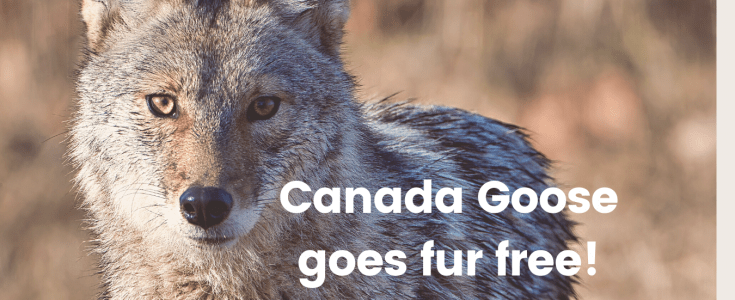
Respect for Animals is delighted at the news that the retail giant Canada Goose is to end the use of real fur in all its products. The company has been notorious for using coyote fur trims on its parka coats, taken from animals caught in cruel leghold traps in North America, methods banned in the UK and the European Union. The decision to bring this to an end is a major blow to the cruel and unnecessary fur industry.
In a statement, Canada Goose said:
“Today, Canada Goose announced that it will end the use of all fur in its products… Through a phased approach, Canada Goose will end the purchase of fur by the end of 2021 and cease manufacturing with fur no later than the end of 2022.”
Respect for Animals welcomes this historic move and encourages all remaining retailers to listen to consumers and adopt fur-free policies as a matter of urgency.
Thank you to all those activists who have devoted time, effort and money over the years trying to convince Canada Goose to ditch the cruelty of real fur.
The future of fashion is fur-free!
The anti-fur movement is celebrating the news that the retail giant Canada Goose is to end its use of real fur in all its products. The company has been notorious for using coyote fur trims on its parka coats, taken from animals caught in cruel leghold traps in North America, methods banned in the UK and the European Union. The decision to bring this to an end is a major blow to the cruel and unnecessary fur industry.
In a statement, Canada Goose said:
“Today, Canada Goose announced that it will end the use of all fur in its products. This announcement is driven by its focus on its purpose-based platform, HUMANATURE, relentless innovation, and expanding lifestyle relevance. Through a phased approach, Canada Goose will end the purchase of fur by the end of 2021 and cease manufacturing with fur no later than the end of 2022.”
The move by Canada Goose is a further devastating blow to the fur trade’s baseless attempts to present itself as ‘sustainable’ through debunked schemes such as FurMark.
According to CNN:
“Thursday’s announcement is part of Canada Goose’s mission to become more sustainable. Earlier this year, it released it’s “most sustainable parka to date” that uses 30% less carbon and requires 65% less water during production compared to its current parka. The Toronto-based company said it’s committed to achieving net-zero carbon emissions by 2025.”
Respect for Animals welcomes this historic move and encourages all remaining fur-selling retailers to listen to consumers and adopt fur-free policies as a matter of urgency.
Thank you to all those activists who have devoted time, effort and money over the years trying to convince Canada Goose to ditch the cruelty of real fur.
Great article as always from the Guardian, London.
NSW plan to use ‘napalm’ poison to control mouse plague rejected over fears for wildlife
Pesticides regulator says it has concerns about the effects of bromadiolone on animals that eat mice
The national pesticides regulator has refused a request from the New South Wales government to allow farmers to use a rodent poison described as “napalm for mice” around crops to battle the devastating mouse plague.
Conservationists had warned the use of bromadiolone would have devastating affects on native species in the central west and put endangered birds at risk.
The blood-thinning chemical– part of a class of poisons called second generation anticoagulant rodenticides (SGARs) – is known to stay active for months and can pass through the food chain, causing secondary poisoning of animals that eat the dead and dying.
The Australian Pesticides and Veterinary Medicines Authority wrote to the NSW Department of Primary Industries on Wednesday to say its two emergency permit applications to use the poison, submitted in May, would be declined.
APVMA chief executive Lisa Croft said: “The APVMA’s primary concern is environmental safety, particularly in relation to animals that eat mice.
“Before the APVMA is able to approve any application, we must be certain that it is safe, that it will work, and that it will not prevent our farmers from selling their produce overseas.”
The authority has approved six other emergency permit applications to use zinc phosphide, which can still harm wildlife but does not have the same long-lasting affects.
Bromadiolone is only approved for use in and around buildings and, like other SGARs, is widely available to the public.
The APVMA has given the state 28 days to respond, but the NSW agriculture minister, Adam Marshall, said he accepted the decision.
“The APVMA was extremely diligent in its consideration of our request and despite being disappointed [at] not getting the outcome we wanted for the state’s farmers, they are the independent regulator and we accept the umpire’s decision.”
The NSW government had secured a supply of 10,000 litres of bromadiolone and Marshall said in May it would be “the equivalent of napalming mice across rural NSW.”
He said on Wednesday: “Resources that were to be used to distribute bromadiolone will now be redeployed to support the other key support measures.”
In a statement, NSW Farmers Association vice president Xavier Martin said the association supported the APVMA’s decision and said his members had concerns about the risks of using the poison.
The boom in the non-native mice has devastated crops and grain, and caused damage to homes, buildings and machinery. There have been reports of a stench of mouse urine, of dead mice and of the rodents flooding homes and biting children and crawling over people in their sleep. Martin said a cold snap had “slowed activity down, particularly in the central west region” and while farmers were reporting a fall in mice numbers in the north-west region and Riverina, “many are still baiting and are concerned about a return to plague proportions in spring”.
BirdLife Australia is campaigning to stop SGRs being sold to the general public and had asked the APVMA to block the permits.
Holly Parsons of BirdLife Australia welcomed the decision, adding: “We still have concerns about the impacts that second-generation anticoagulant rodenticides have on our wildlife but are glad that such a mass quantity has been stopped from entering our agricultural and natural food chains.”
The NSW Environment Protection Authority has said previously that some bird deaths reported in the central west region had been caused by zinc phosphide, but there were no reports of poisons being misused.
Parsons added: “We note the six additional permits to distribute zinc phosphide, and call again on the APVMA to implement additional monitoring of potential impacts to wildlife from this chemical.”
Marshall said the government had allocated $150m to give farmers a 50% discount on zinc phosphide purchases.
Regional households can also claim rebates of up to $500 for mouse bait, traps and cleaning products and small businesses can claim up to $1,000.
WAV Comment – Now with new and younger people with different views in (UK) Parliament, it is time that things change, and that is exactly what is happening; much to the benefit of animals and their welfare.
UK elephants currently in zoos and safari parks will be allowed to die out naturally; but they will never be replaced by new and younger animals. As one political source says; you should focus on elephant protection in the area where the elephant is.”
Regards Mark
UK – Keeping elephants in zoos or safari parks will be BANNED over claims that they suffer from mental illness in captivity
Legislation will prohibit keeping elephants in zoos as well as importation
The existing population will also be allowed to die out naturally under new rules
Move by environment minister Zac Goldsmith is likely to delight Carrie Symonds
Keeping elephants in zoos or safari parks is to be banned, the Daily Mail can reveal today.
Legislation will prohibit importation of any new animals and the existing population will be allowed to die out naturally.
The move by environment minister Zac Goldsmith is likely to delight Boris Johnson’s wife Carrie, who is a champion of elephant welfare
Campaigners have long warned that the highly intelligent animals suffer from mental illness in zoos.
They are also plagued in captivity by illnesses, including crippling arthritis, and live on average for just 17 years according to the RSPCA. This compares with more than 50 years in the wild. The legislation will bring to an end more than seven centuries of elephants being kept in captivity in Britain.
Elephant Campaigners – Carrie Johnson, Wife of Prime Minister Boris, and Zac Goldsmith, Environment Minister.
Environment Minister Zac Goldsmith is said to have introduced legislation to support future populations of animals raised in the United Kingdom for the seventh century.
The first elephant arrived in England in 1255 under Henry III as a gift from King Louis of France.
Currently, there are 51 elephants in 11 zoos across the UK. This includes Warburn, Whip Snade, Colchester and Chester.
However, since January 2020, it has been illegal for circuses to keep elephants for entertainment.
According to RSPCA, elephants suffer from illness in captivity and live on average only 17 years compared to their wild siblings who live up to the age of 50.
And their welfare report is set to form a debate against their breeding in the zoo-it will be announced later this year as part of the breeding animal bill.
One senior source told:
“It’s very likely that you can’t make an elephant happy in a zoo. Instead, you should focus on elephant protection in the area where the elephant is.”
Mark Jones of Charity Born Free said: “There are many species that do not belong to the zoo. Elephants are one of them.
“It should be phased out and the needs of these very widespread, highly complex social animals cannot be met in a captive environment.”
“It’s not appropriate to keep elephants in the zoo,” said Conservative Chairman Lorraine Pratt.
“They need to have a lot of space to walk around, and they also have a close family group.”
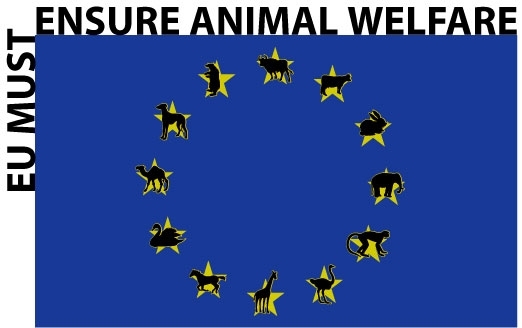
Tuesday 22/6/21 will see the 9th meeting of the EU Animal Welfare Platform
The EU Presidency is urrently held by Portugal for the period 1 January 2021 – 30 June 2021.
In case you are not aware, the EU Presidency is held for a 6 month period by each of the EU member states in turn. It is known as a ‘Rotating’ Presidency, giving each member state a period to set out agendas. When Portugal completes its time, the Presidency will be taken over by Slovenia. You can view all past and future presidencies via this link:
Hopefully there will be some positive news and information; relating to long distance animal transport and also the the ‘End the Cage Age’ relating to the ban on intensive animal farm systems throughout Europe. Other issues discussed will include equine (horse) welfare and the alternative methods to pig surgical castration, and welfare issues associated with dairy cattle.
I think that with the excellent news relating to the ending of intensive cage systems for farm animals –
The citizen of Europe is finally being listened to. Politicians know they have to meet the EU citizens demands or face being un elected whenever the next chance arises. So now we see positiveaction on intensive cages; as demanded by EU citizens. Hopefully there will be positive progress on animal transport to third countries; but we will have to wait and see what news the meeting brings.
All the more reason to add your name to petitions and letters when you have the chance. It may not seem much at the time; but these are very effective ways to make your feelings know; so plese take part.
Rergards Mark
9th Meeting Overview:
The 9th meeting of the Animal Welfare Platform will open with a message from Health and Food Safety Commissioner, Stella Kyriakides, who will give an update on the progress of the ongoing European Commission’s actions under the Farm to Fork Strategy.
Agenda – View the Agenda details via the following:
The agenda of the meeting includes presentations by the Commission of the outcomes of the evaluation of the EU Strategy for Protection and Welfare of Animals (2012-2015), the preliminary results of the Fitness Check of the EU animal welfare legislation and the conclusions of the sub-group on animal welfare labelling. In addition, the third EU Reference Centre for the welfare of ruminants and equines, which was recently designated, as well as the Code of Conduct for responsible business and marketing in relation to animal welfare, will be presented.
MEP Paolo de Castro will introduce the main elements of the recently adopted European Parliament Resolution on the ECI “End the Cage Age”. Furthermore, the Portuguese Presidency will present updates on their work on long distance transport to third countries.
The two first sessions of the meeting will be conducted as part of the United Nations Food Systems Summit 2021 Dialogues to underline the key role that animal welfare plays in the sustainability of food systems. The Platform will have an opportunity to contribute to these dialogues, which are part of the preparations for the Summit in September.
The one-day meeting will be web-streamed (from 09:30 CET).
WAV Comment: Now that is really cool news – who would have ever thought ? – the burger giant now seeing the future as palnt based. Well done Cologne !
A store in Cologne served meat-free burgers and plant-based nuggets from June 7-11 Credit: Burger King DE
Huge Queues Gather After Burger King Store Hosts ‘Plant-Based’ Takeover
In what has been described as a ‘world’s first’, one Burger King outlet ditched meat from its menu for a limited-time…
A Burger King store witnessed huge queues gathering outside after it hosted a plant-based takeover.*
One of the fast-food chain’s outlets in Cologne, Germany, ditched meat from June 7-11.
Burger King’s ‘plant-based’ takeover
In what has been described as a ‘world’s first’ – the store sold exclusively meat-free versions of its whopper and Chicken Royale burgers, as well as plant-based nuggets.
All vegan meat served was created by The Vegetarian Butcher – a Unilever-owned brand that partnered with Burger King last year.Pictures from social media show the restaurant’s exterior undergo a green makeover. Posters stating: ‘100 percent taste, 0 percent meat’ were displayed outside and inside the store.
‘The burgers were delicious’
“I was there today. It was really busy, people were standing outside,” one social media user wrote on Facebook.
“The burgers were delicious and tasted like the original. Thanks also to the great staff, who kept a clear head despite this rush and did a great job.”
Commenting on the success of the pop-up, Burger king Deutschland said: “Thank you cologne! “Thanks to the many, many enthusiastic guests. And especially thanks to our super team from the Plant-based Burger King Restaurant.
“For the past five days, you’ve been plant-based whopper and co. [You’ve] Made a lot of guests happy! Big shout out to all of you. You are simply plant-astic!”
*While all meat served during the meat-free takeover was vegan. Some items contained cheese and mayonnaise.
Before dying under a hail of bullets on Thursday, so-called Mpumalanga rhino poaching kingpin Petros “Mr Big” Mabuza (57) instilled fear wherever he went.
Mabuza lived a very adventurous and risky life as an alleged rhino poacher. He made a lot of cash, allegedly had police officers on his payroll and was not shy to splash his loot on what others may call hedonism. Most people called him by his clan name, Mshengu, as a sign of reverence.
According to Jamie Joseph, the director of Saving the Wild, who has been working closely with police to get Mabuza arrested and convicted for rhino poaching, the man from Hazyview lived a lavish lifestyle. “He has been throwing illegal parties which, according to someone in regular attendance, included naked women dancing on the tables, class A drugs on the bar dished out like canapés and armed guards at the entrance,” Joseph said.
The loaded man he was, Mabuza allegedly owned houses – from Hazyview, White River and Mbombela.
Mpumalanga police are on the trail of Mabuza’s killers.
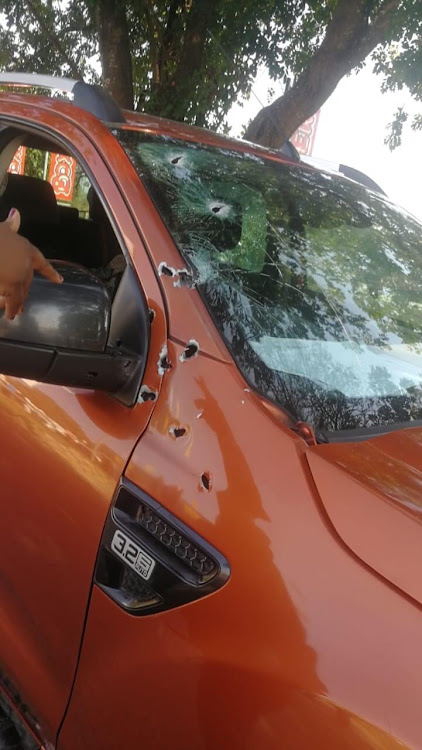
Brigadier Leonard Hlathi, the provincial police spokesperson, said Mabuza was sitting in his double-cab Ford Ranger on Thursday in Hazyview when three armed men in a black VW Polo opened fire on him in broad daylight, before fleeing.
“He was rushed to hospital where he later succumbed to the gunshot injuries. During the shooting, an elderly woman passerby, also became a victim as she too was shot on her lower body but she is recuperating in hospital,” Hlathi said.
The motive for Mabuza’s killing was still unknown, Hlathi said. According to those who knew “Mr Big”, it will not be easy to pinpoint why he was a marked man because he had “multitudes of enemies” as he had interest in various “businesses”.
Beside his alleged involvement in the lucrative illicit rhino horn trade, he was also rumoured to be commanding and sponsoring cash-in-transit heists.
He was a bully at the rank and his profile is really, really bad
Local resident
“Another thing, he was a loan shark who confiscated people’s houses and cars. Even in the taxi business, he was a bully at the rank and his profile is really, really bad,” said a local resident.
The person said Mabuza started from “rock bottom, playing dice”, before he ventured into more illegal and serious businesses.
He was facing two rhino poaching charges in the Mpumalanga High Court. In one case he was out on R250 000 bail, He was charged alongside two accomplices. In another case he was out on R90 000 bail. He was arrested with five accomplices. Mabuza was first arrested in 2018.
Saving the Wild’s Joseph said had Mabuza lived long enough, he would not have been convicted because the courts in Mpumalanga and KwaZulu-Natal, where his operation had extended, were “captured”.
“A successful conviction with a strong sentence would have sent a powerful message to other rhino poaching traffickers that government is serious about cracking down on wildlife crime – but they are not,” she said.
“Mabuza was a ruthless killer and stole the lives of many humans and rhino. And he got away with it for so long because of his political allies. We’re down to the last of the rhino and President Cyril Ramaphosa has never acknowledged the crisis,” she added.
Joseph was allegedly threatened by Mabuza and his henchmen during one of his court appearances.
Lieutenant Colonel Leroy Bruwer, of Mpumalanga Hawks, who was investigating rhino poaching cases, was assassinated on March 17 2020. The criminals waylaid him as he drove to work from his home in Sabie to Mbombela.
He was killed after he had testified in one of rhino poaching court cases.
Mr Big’s Ford Ranger found riddled with 17 bullet holes
Alleged rhino poaching kingpin Sydney Petros Mabuza was gunned down in Hazyview, Mpumalanga, on Thursday afternoon.
His car, a Ford Ranger, was found riddled with 17 bullet holes.
Mabuza, who was known as Mshengu and Mr Big in the community, was facing a number of charges, including rhino poaching and murder.
He was out on R200,000 bail for rhino poaching following his arrest in eMalahleni in 2019.
Provincial police spokesperson Brig Leonard Hlathi confirmed that Mabuza was killed.
“We are calling for the community of Hazyview to help us locate the suspects responsible for the fatal shooting, which is clearly a hit. The man was shot in broad daylight in town, in front of people, and we believe people have seen and know the wanted suspects. We call on the public to contact the police anonymously,” said Hlathi.
In footage that surfaced on social media, the bakkie is seen parked on the side of the road, next to it a black vehicle.
Several people are seen opening the bakkie’s doors as the black car drives off and makes a U-turn.
A number of men also come from the front passenger side and hop into the black vehicle before driving away.
In the footage, one can hear people screaming.
“We do not want to speculate if this was gang related or not but the investigation is going to lead us,” said Hlathi.
Hawks spokesperson in the Province Cpt Dineo Sekgotodi Said as the hawks dealing with cases of Mabuza they have come to know that he was shot dead on Thursday but that will not hinder their investigation as they have other suspects on the cases.
“We have got the news that one of the suspects in the rhino horn cases have been killed. But as we speak he was facing charges along other accused which means our investigation will not stop. There are other cases we are investigating around that and if his Murder was part of his crew hiding information we will know as the investigation progresses,” Said Sekgotodi.
In the case of the murder charge Mabuza faced, he and another three people allegedly conspired to murder a man who owed him money and then dumped his body in a river in Bushbuckridge.













 World Animals Voice