Urge the COP26 Climate Summit to Serve a 100% Vegan Menu
The 26th Conference of the Parties (COP26) climate summit is fast approaching.
Urge the president of COP26 – Alok Sharma – to set a meaningful example during this time of climate emergency by serving a fully vegan menu at the event.
Eating Vegan Is Better for the Environment
The fishing, meat, dairy, and egg industries are not only cruel to animals but also cause catastrophic damage to the environment. For decades, the United Nations has identified animal agriculture as a leading cause of deforestation, pollution, ocean dead zones, habitat loss, species extinction, and zoonotic disease spread.
Plant-based foods have a far smaller carbon footprint than their animal-derived equivalents, even when comparing imported plant proteins to flesh from grass-fed, locally farmed animals. And a switch to vegan eating can reduce food-related carbon emissions by 73%. Quite simply, eating meat and dairy is part of what got us into this mess.
The COP26 Climate Summit Should Set an Example
Given everything we now know about the devastating impact of animal agriculture on the environment, serving meat, dairy, or eggs at a climate change summit would be like distributing cigarettes at a health convention.
Plants are the way forward, and a vegan menu would not only allow attendees to dine with a clear conscience but also set an important example for the world to follow.
Take action and tell Alok Sharma, president of COP26, to set an example and only serve vegan food at the event:
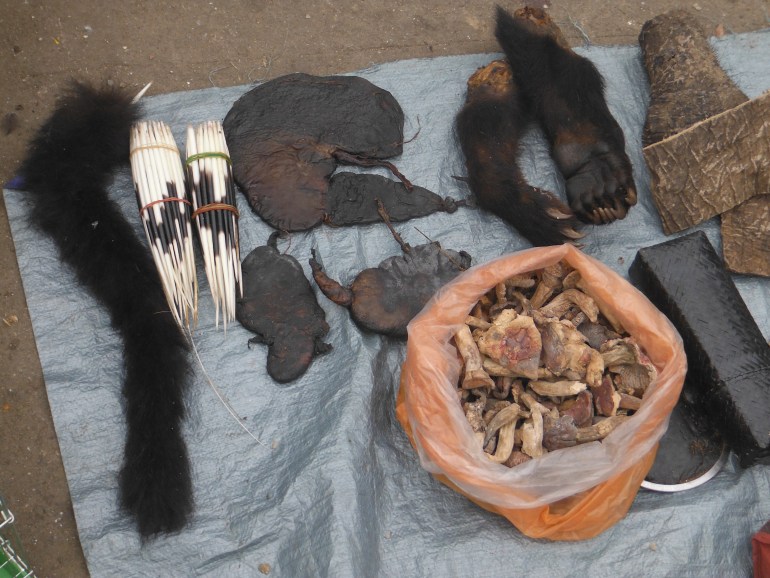
Pangolin scales for sale in a market in Mong La in Myanmar [Courtesy of Chris R Shepherd/TRAFFIC]
Bear paws, pangolin scales: Wildlife trade flourishing in Mekong
Investigation finds thousands of illegal animal parts and products at markets across five countries
A new study by TRAFFIC, a group that monitors the illegal trade in wildlife, has found thousands of animal parts and products – from pangolin scales to ivory and bear bile – for sale in five countries in mainland Southeast Asia, underlining the region’s struggle to address wildlife crime and the need to intensify anti-trafficking efforts.
The group says its researchers found close to 78,000 illegal wildlife parts and products for sale in more than 1,000 outlets in select towns and cities in Cambodia, Laos, Vietnam, Thailand and Myanmar throughout 2019 and 2020.
The parts and products originated from a wide array of animals including bears, big cats, helmeted hornbills and pangolins, but TRAFFIC said ivory products were among the most prominent.
Laotian Giant Flying Squirrel in a market in Muang Sing, Laos [Courtesy of Agkillah Maniam/TRAFFIC]
Individual species, many of them endangered, were found to have been used for multiple products. Researchers found pangolin scales both raw and ground for medicinal use, as well as made into jewellery or talismans. The pangolin is said to be the world’s most trafficked mammal.
“The variety and prevalence of illegal wildlife trade in several locations emphasised that the circumstances facilitating illegal trade have not only remained but, in some cases, proliferated,” Agkillah Maniam, a TRAFFIC consultant said in a statement.
The lower Mekong region has long been recognised as a hub for the illegal wildlife trade and has been a focus of efforts to improve enforcement and policy interventions, as well as providing officials with the tools to effectively combat such crimes.
In 2019, the nonprofit Environmental Investigation Agency found Vietnam’s “out-of-control, illegal wildlife trade” had helped drive demand globally, and that the Southeast Asian nation was now “the leading destination for illicit ivory”.
Poachers operating in Malaysia’s forests, often from Vietnam or Cambodia and working for buyers in China and elsewhere in the region, are blamed for helping push the Malayan tiger to the brink of extinction.
Wildlife parts for sale in Mong La market in Myanmar [Courtesy of Chris R Shepherd/TRAFFIC]
TRAFFIC’s research found that wildlife markets across the five Mekong countries continue to operate in the open, including in the Special Economic Zones (SEZs) that governments have set up to boost foreign investment and create jobs.
Although restrictions associated with COVID-19 did have some effect on the illegal trade, TRAFFIC says surveys carried out late last year showed illegal products remained easily available.
In December 2020, Vietnamese authorities seized 93kg of African rhino horns from a warehouse near Ho Chi Minh City’s international airport.
“It would be naïve to think that the pandemic alone will dampen wildlife crime in the long term,” said Kanitha Krishnasamy, director for TRAFFIC in Southeast Asia. “Monitoring and investigations must continue.
“There’s also a need for strengthening collaboration and public commitment from all governments in the region. The illicit wildlife trade problem here is not something countries can tackle on their own.”
He’s looking for guidance on how to do it. We have some ideas
President Biden has been getting an earful lately from a few influential people worried about the fate of wolves, and he’s seeking guidance on what to do to protect them.
Appearing this week on Brave Wilderness, a popular children’s YouTube program that focuses on connecting its young audience to the great outdoors, President Biden talked about concerns he’s hearing from his grandchildren.
“One of the things I’m getting from my grandkids — some of them are really little — they’re calling me and saying ‘Pop, they’re going to kill all the wolves! Why’s that happening, Pop?’” President Biden said.
He appeared on the YouTube show alongside Dr. Anthony Fauci to encourage Americans to get vaccinated for Covid-19, which will allow more freedom and safety while traveling this summer, particularly to America’s treasured national parks. But halfway through the conversation, President Biden brought up his grandchildren’s concern for wolves.
This is heartening given the dire circumstances wolves face today. The Trump administration in its last days in power removed federal endangered species protections from wolves across the country. Shortly thereafter, hunters in Wisconsin killed over 200 wolves in less than three days. The hunt involved deeply inhumane and unsporting tactics, including the use of bait and snares and dogs to flush the exhausted wolves into firing lines. Earthjustice is in court challenging the Trump administration’s unlawful and unscientific decision.
Elsewhere, Idaho and Montana have adopted extreme policies to allow hunts that would kill up to 90% of the wolf populations in those states. This would negate decades of success recovering the species in the Northern Rockies potentially tipping wolves’ trajectory back toward extinction. The hunts are expected to begin this summer.
During the YouTube conversation, host Coyote Peterson mentioned one of his favorite video projects was with the Colorado Wolf Center, to educate kids about the plight of wolves and how sorely they need federal protections. He said he was encouraged to hear the president cares about wolves.
“I’m in! I’m in!” President Biden responded. “Let me know the places you think, I mean this sincerely now… are the most at-risk natural resources out there. I have my views and I’m working on them, and have someone [Administrator Deb Haaland] at the Department of Interior who really cares about it. You oughta talk to me about it.”
This call for input on how to save the wolves is welcome, and we have some ideas. Ultimately, getting Endangered Species Act protections back for wolves is the most important thing we can do. The president is reviewing the decision to delist wolves now and he has the power to undo it.
We also urge federal agencies to adopt stronger policies to protect wolves on public lands in places like Idaho and Montana which — due to Congressional carve outs — are excluded from federal protections unless the populations go into freefall.
We are heartened the president cares about the wolves and recognizes that our children and grandchildren deserve to inherit a world where wolves remain in the wild, and not just as dusty relics in a museum.
Speaking about the youngest generation, President Biden said, “I want them to see and understand that we all have a responsibility to nature, but we also have a responsibility to one another.”
This is a 3 page article – please click on page numbers at the end of post to select page – thank you.
Mother 1
As someone who researches the dairy industry regularly, I have observed over the last few years a distressing surge in pro-dairy messaging from an increasingly visible and vocal sector of animal agriculture: female dairy farmers, many of whom are also mothers. It is painful and disturbing, to say the least, to read these mothers righteously defending the reproductive subjugation of other mothers, and the destruction of other mothering relationships for profit. But I believe this growing trend is no coincidence; rather, in a climate of increased criticism of dairy farming practices, it represents a strategic industry shift to put more female faces on dairy farming, and to reframe this mother-exploiting industry as a maternal, nurturing one.
Fortunately, I am also frequently privy to comments and messages from mothers relating how the process of becoming a mother led them to see the dairy industry for what it truly is: an assault on motherhood and bodily sovereignty. The poignant insights these mothers relate articulate a uniquely powerful perspective that I believe deserves a larger audience. For this reason, I founded Mothers Against Dairy , a year-round campaign devoted to showcasing the stories of vegan mothers for whom motherhood influenced their decision to reject dairy and go vegan, as well as reflections from mothers who were already vegan before becoming a parent, but whose mothering relationship deeply reinforced for them the injustice of dairy farming.
In the nearly two years that have passed since first posting a call for statements, I have received hundreds of inspiring reflections from vegan mothers around the world. New stories are shared each month on our Facebook and Instagram accounts, which have a combined following of more than 30,000 readers. Submissions to be featured at Mothers Against Dairy are accepted on an ongoing basis and can be uploaded to our website or emailed to info@milkhurts.org. To keep up with new statements and other news about the campaign, follow our Facebook, Instagram, and our new Twitter account, and sign up at our website to be notified each time a new story is published.
Below are 10 heartfelt reflections that first launched the Mothers Against Dairy campaign on Mother’s Day of 2016.
WAV Comment – we are not publishing all the experiences here – please click on the link given to view them all.
Self immolation is brning yourself to death in protest. As of July 2020, 156 monks, nuns, and ordinary peopleself-immolated in Tibet since 27 February 2009, when Tapey, a young monk from Kirti Monastery, set himself on fire in the marketplace in Ngawa City, Ngawa County, Sichuan.[4] According to the International Campaign for Tibet (ICT),[5] “Chinese police have beaten, shot, isolated, and disappeared self-immolators who survived.”[
I (Mark) have been a supporter of ‘Free Tibet’ (London) for quite a while now. I am an animal rights campaigner; but am also a human rights campaigner when I feel it is right, and I feel the need to try and support oppressed peoples.
China invaded Tibet during the 1950’s, and now have total control over what happens there.
The Tibetan people have lost their rights due to the Chinese control; hence the fight, with my support to once again Free Tibet from China and the abusive government that has destroyed its people.
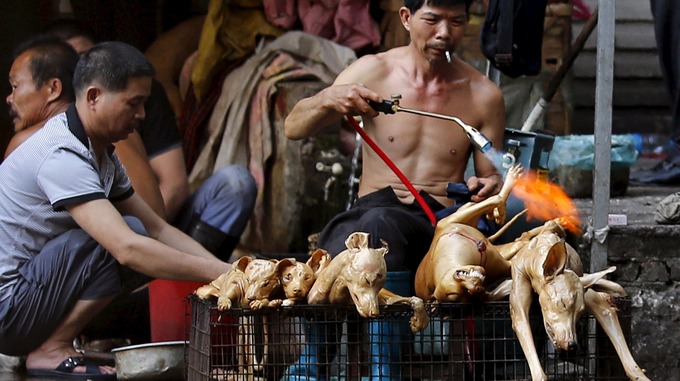
YULIN – The annual dog meat “festival” in Yulin is scheduled for June 21st and animals need your voice as part of the effort to bring cruelty like this to an end. China, despite all its supposed chages to animal welfare policies recently, still do not appear to have control over something which causes immense and illegal animal suffering. China seems to have totalitarian rights in Tibet, but when dog suffering in XChina is invooved, they seem to turn the other way.
You can support the call to end the Yulin dog meat’festival’ by visiting
The 2022 Winter Olympic Games are going to be held in Beijing, China.
Olympianism is the coming together and celebration of cultures through acceptance. It has a philosophy of life which places sport in the service of humankind; its vision being to build a better world through sport. Its values and principles include respect, friendship, diversity and autonomy. By awarding the games to China for the 2022 Winter Olympics, the IOC – International Olympic Committee has shown that when it comes to China; it is willing to turn a blind eye to human rights abuses.
This is a betrayal of the olmpic movement and especially the people of Tibet; who now live under the crippling rule of the Chinese Communist Party – the CCP. The 2022 Winter Olympics will be held freely in Beijing; but witout a demonstration of strength by groups and organisations opposing the regime. With no chance of improving the Chinese stance on human rights; or any prospect of the IOC changing its decision; it is left to groups, organisations and individuals to make a stand; hence the reason for me issuing this post in support of the people of Tibet; people who’s voices have been silenced for so long.
Prior to the 2008 Olympics, the CCP in China made a series of promises that China would become more open, and embrace human rights. These promises were quickly cast aside with a brutal crackdown on peaceful protesters on the eve of the 2008 games. Over one hundred Tibetans were KILLED; many mnore were arrested, tortured and forcibly relocated.
For 13 years Beijing has been punishing Tibetans for protesting about the Beijing Olympics 2008. This year, 2021, Tibet was classified vy the think tank Freedom House as the worst place in the world for civil liberties. Meanwhile, the CCP is currently committing genocide against the Tibetan Uyghur peoples; with many of the tactics being used against the Uyghur people from contolling tactics developed by China in Tibet.
The IOC let the people of Tibet down by their actions in 2008. So now I want to kake you aware of the situation and why we say ‘NO Beijing 2022’ until the people of Tibet are free as an independent state (as they were before the Chinese invasion).
Animals rights, human rights; when things are wrong, you have to take action by being a voice. We are not afraid to take action.
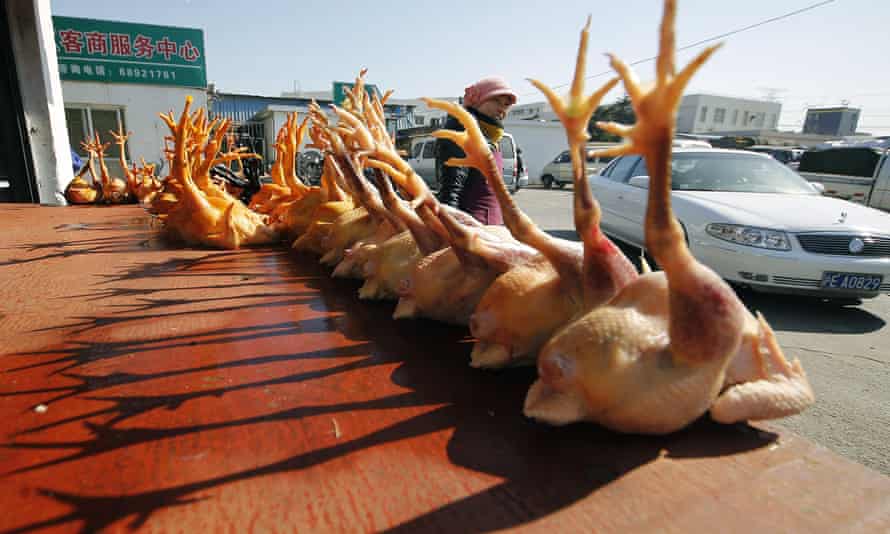
Chicken carcasses at a wholesale poultry market in Shanghai. Many strains of avian flu are present in China and some sporadically infect people. Photograph: AP
China confirms first human case of H10N3 bird flu strain
Man, 41, in Jiangsu, diagnosed on 28 May but risk of avian virus spread is low, says state health agency
A 41-year-old man in China’s eastern province of Jiangsu has been confirmed as the first human case of infection with the H10N3 strain of bird flu, although health officials in China said the risk of large-scale spread remained low.
The man, a resident of the city of Zhenjiang, went to hospital on 28 April after developing a fever and other symptoms, China’s national health commission said.
He was diagnosed as having the H10N3 avian influenza virus on 28 May, the commission said though it did not give details about how the man had been infected with the virus. The man was stable and ready to be discharged from hospital. Medical observation of his close contacts had not found any other cases.
H10N3 is a low pathogenic, or relatively less severe, strain of the virus found in poultry, and the risk of it spreading on a large scale is very low, the commission added.
The strain was “not a very common virus”, said Filip Claes, regional laboratory coordinator of the Food and Agriculture Organization’s Emergency Centre for Transboundary Animal Diseases, at the Asia and Pacific regional office. Only about 160 isolates of the virus were reported in the 40 years to 2018, mostly in wild birds or waterfowl in Asia and in some limited areas of North America, and none had been detected in chickens so far, Claes said.
Analysing the genetic data of the virus would be necessary to determine whether it resembled older viruses or if it was a novel mix of different viruses, he added.
Many different strains of avian influenza are present in China and some sporadically infect people, usually those working with poultry. There have been no significant numbers of human infections with bird flu since the H7N9 strain killed about 300 people during 2016-2017.
No other cases of human infection with H10N3 have previously been reported globally, the commission said.
WAV Comment – A few weeks ago we heard from Jill that there would soon be some very special news; so we waited. Today, 1/6/21, we have finally had the news we had patiently been waiting for; and that is; 101 moon (ex bile) bears have been rescued by Animals Asia from an ex-bear bile extraction and breeding facility in Nanning, China, to their bear rescue centre in Chengdu, 750 miles away.Safe now at their new home; free from abuse.
This unprecedented, historic and momentous event has been eight years in the making. It has been the most challenging, unpredictable and emotional journey we (Animals Asia) have been on as an organisation. But we are at last able to share the joyous news with our amazing supporters, that the Nanning bears are finally home.
Our story begins in 2013 at a huge bear breeding and bile farming facility in Nanning. Nanning is a beautiful, mountainous region of southern China.
The new owner of the land that the facility stood on, Mr Yan, was disturbed to find the then 132 bears in tiny, filthy and barren cages, having been used for bile extraction and breeding by the previous owner.
Mr Yan contacted Animals Asia to ask for our help, and there began a tumultuous eight-year journey to bring the bears home, with myriad legal and logistic challenges to negotiate and overcome.
But, today is a cause for celebration. We did it. 101 bears are home. And we simply couldn’t be happier or more grateful to all our loyal supporters for making this day a reality.
The final journey begins
Late on Friday 9 April, we received the news we’d been waiting for: the last permit allowing us to move the bears to our sanctuary in Chengdu had finally been signed!
In a huge feat of logistics, where Covid-19 could have disrupted plans at any moment, each bear was individually moved into a transport cage, loaded onto a truck and travelled the 750 miles from Nanning to Chengdu.
Animals Asia’s Founder and CEO Jill Robinson said:
“We’ve rescued hundreds of bears over the years, but no one has ever attempted anything on this scale before, bringing so many bears home to sanctuary in a single operation. We couldn’t have done it without our amazing Bear and Vet team in China, without the help of the local authorities and without the help of the local community too. But most importantly we could never have done this without you, our supporters, our donors, our family”.
The entire mission took place over three phases between 19 April and 27 May 2021, with the bears being transferred in three convoys of nine trucks, each carrying up to four transport cages.
Each leg of the operation took over 55 hours and was accompanied by Animals Asia’s specialist team of vets and bear carers to ensure the bears were kept safe and healthy along the way.
“We’re so proud of how the bears handled the journey,” said Animals Asia’s China Bear & Vet Team Director, Ryan Marcel Sucaet.
“Most of them have spent their entire lives in confinement. To be suddenly transported halfway across China could have been very distressing for them, but our team did an incredible job of keeping them calm, well fed, stimulated and comfortable along the way, as well as attending to their ongoing medical needs.”
Home at last
When we got the bears back to Chengdu, the real work began! Our sanctuary team has been preparing for the Nanning bears’ arrival, preparing enclosures and planning group integrations.
The bears were placed into quarantine to slowly introduce them into their new life with its new and unfamiliar smells, sounds and surroundings. We need to monitor the bears’ progress and ensure they are both mentally and physically ready before we integrate them into the main sanctuary with other bears. However some bears in one section of the sanctuary have been able to venture out into a specially prepared enclosure.
When we first arrived at Nanning, the bears were in separate cages. Over the years, we slowly introduced them to one or two other bears after getting to know their characters, needs and temperaments.
At the sanctuary they will live with several other bears, some from Nanning and some established residents, based on their personality, age, body weight, health condition and gender. It sounds easy, but it will take our beautiful bears time to build trust and settle into their new environment and become fully integrated into sanctuary life.
“We’re so excited to have them here,” said Ryan. “After nearly eight long years of waiting, and a lifetime of suffering, we can finally give these beautiful bears the lives they deserve.”
These bears need a lifetime of continual kindness and specialist care. If you’ve been inspired by their journey please consider becoming a monthly donor to help make every day special for a rescued moon bear.
We’ve just finished the move and we wanted to tell the world right away. We’ll be going into a lot more detail over the next month or so, introducing you to all of the bears who are now happily residing at our award-winning sanctuary in Chengdu and showing you how this massive undertaking was achieved!
This is it. This is the moment we’ve all been waiting for.
I’m overcome with excitement and relief to share this news with you. Animals Asia has just welcomed 101 former bile farm bears home to our China sanctuary!
As you know, for years, we’ve been caring for the bears at a closed-down bear bile extraction and breeding facility in Nanning, China, while we worked behind-the-scenes to get the permits needed to bring them to our sanctuary 1,200 kilometers away. That day finally arrived.
Never forget your important part in THE BIGGEST BEAR RESCUE EVER!
You’ve been with us on every step of this epic and tumultuous journey. These beautiful bears are finally home, ready to start the lives they deserve – and it’s all thanks to you.
We’ve rescued hundreds of bears over the years, but no one has ever attempted to bring so many bears home to sanctuary in a single operation. It’s a massive achievement, and we couldn’t have done it without you.
You were by our side through the highs and devastating lows. And your support has been the life force that’s kept us going.
These very special bears are now starting their new lives. Ones of happiness, joy and endless amounts of love.
Words simply can’t convey how grateful I am to you for your kindness. Without you, and the belief you have in Animals Asia, this incredible feat, quite simply wouldn’t have happened.
I’ll be writing to you again soon with more about this incredible rescue, but for now, please see this very special update on how you have saved 101 beautiful souls.
With endless love and gratitude,
Jill x
PS To see more about the Nanning bears and how you made their journey possible, visit our website.
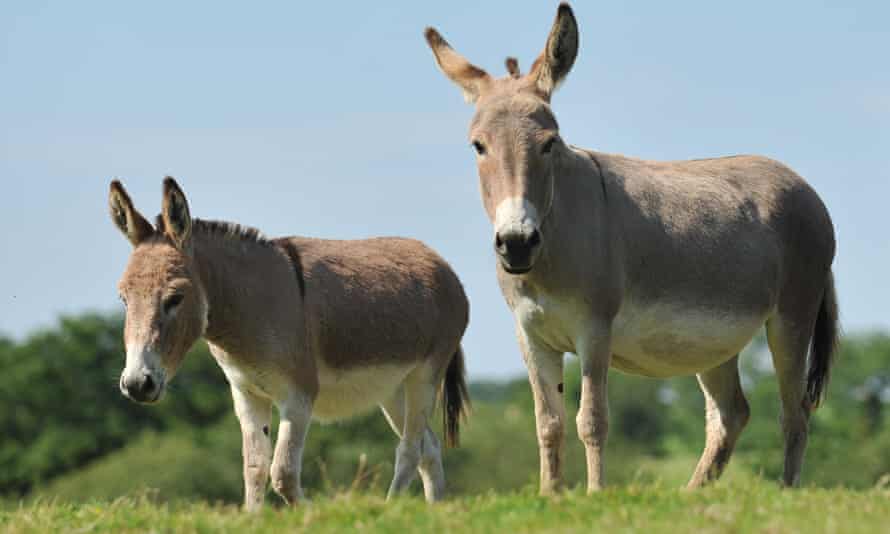
Donkeys to help re-establish rare wild flower in Devon
Animals will be used to tread in seeds of small-flowered catchfly at Donkey Sanctuary rewilding project
The donkey has performed many roles: carrying Jesus, giving seaside rides to children and being the butt of many jokes over thousands of years of domestication. Now an unfamiliar job can be added to the list: ecosystem engineer.
The hard-working animals will help re-establish one of Britain’s rarest wild flowers by trampling over specially seeded plots.
More than 20,000 seeds of the small-flowered catchfly have been sown on farmland at the Devon headquarters of the Donkey Sanctuary, the international animal welfare charity.
The sowing is part of the Colour in the Margins project led by the charity Plantlife seeking to restore rare arable plants such as the small-flowered catchfly, which has vanished from about 70% of its former range.
The seeds, which have been sown alongside other wild flowers and grains, will also help provide food for threatened birds such as the linnet, yellowhammer and skylark, which have been recorded at the sanctuary.
If they germinate successfully this summer, the Donkey Sanctuary will host a trial next spring to discover if donkeys can assist the germination process by walking across specially seeded plots, a technique known as “treading in”.
Ruth Angell, the ecology and conservation manager at the Donkey Sanctuary, said: “Increasing biodiversity is essential for an enriched and resilient environment which can support rare species as well as our resident herds of donkeys.
“It is important to us that our donkeys benefit from different types of activities and experiences. Our donkeys will be able to enjoy a walk with our grooms and benefit from one to one time while they walk over the plots.”
Other animals including wild horses and cattle are widely used as “conservation managers”, with their trampling and grazing helping wild plants to flourish and flower. Tamworth pigs have also proved extremely useful in “ploughing” wild turf with their snouts and making space for annual wildflowers to germinate at the rewilded farm of Knepp in West Sussex.
Cath Shellswell at Plantlife said: “We’re incredibly grateful to partners like the Donkey Sanctuary who are helping these fantastically rare wild flowers come back from the brink of extinction by giving them a helping hand in one of their original regional strongholds. We look forward to seeing small-flowered catchfly return and working with the sanctuary to ensure this tiny plant has a thriving future.”
Nature looks after nature; it is only the human that destroys it.
A man suspected of killing 70 endangered tigers has been arrested in Bangladesh after a 20-year search.
Habib Talukder – known as Tiger Habib – was finally caught following a tip off, after three previous arrest warrants had been issued for him, police said.
He has operated in the Sundarbans mangrove forest, on the border between India and Bangladesh.
The area is home to the world’s largest population of Bengal tigers. Only a few thousand remain in the wild.
Black market traders buy their pelts, bones and even flesh for sale around the globe.
“He was on the run for a long time,” police chief Saidur Rahman told the Dhaka Tribune.
The BBC is not responsible for the content of external sites.
The 50-year-old Habib Talukder started his career collecting honey from bees in the forest.
Honey hunter Abdus Salam told AFP news agency that the locals “equally respect him and are scared of him”.
“He’s a dangerous man who could fight alone with [tigers] inside the forest.”
Officer Abdul Mannan told the Dhaka Tribune that both the police and the forestry department had sought to arrest Habib Talukder for years.
“He secretly entered the Sundarbans and hunted wild animals despite being banned from entering the forest long ago,” he told the paper. “He has been carrying out these criminal activities even though there are multiple cases against him… some powerful gangs are involved in this.”
The paper reports the suspect was detained on Saturday morning.
Bangladesh tiger census data released in 2018 showed numbers in the Sundarbans had risen to 114 that year from a record low of 106 in 2015.



![Pangolin scales for sale in a market in Mong La in Myanmar [Courtesy of Chris R Shepherd/TRAFFIC]](https://www.aljazeera.com/wp-content/uploads/2021/06/21.jpg?resize=770%2C513)













 World Animals Voice