Eating Our Way To Extinction: Both Entertaining and alarming, this powerful documentary will change the way you look at the food industry – forever! Credit: Eating Our Way To Extinction
New Kate Winslet-Narrated Film Set To Explore Ecological Impact Of Diets
‘Time is running out’, pleads Kate Winslet in the film dubbed to deliver ‘hard truths’ about food production
A new documentary narrated by academy award winner Kate Winslet and featuring Richard Branson is unraveling the impact of diet on the ecological and climate crisis. Eating Our Way To Extinction specifically focuses on animal agriculture to deliver ‘hard truths’ about our global changing landscapes.
Eating Our Way To Extinction
It takes audiences on a journey around the world from Scotland to the Amazon Rainforest, hearing stories about food production and its effect on the environment.
Throughout the documentary, people at the very forefront of the climate crisis relay their experiences. It also features local activists and celebrities, as well as scientists who add their verdicts on ‘the most pressing issue of our generation’.
Its goal is to create conversations and help people, industry leaders, and governments question their ‘everyday choices’.
‘When food costs the earth, who pays the price?’
The trailer, which was released this week, depicts shocking examples of natural disasters and human destruction – among pictures of farmed animals. And it’s dubbed to ‘make you never look at your food or the food industry in the same way again.
‘Time is running out’, Winslet – who is also executive producer – exclaims. The film is directed by Ludo Brockway and Otto Brockway.
Moreover, renowned actor Leonardo DiCaprio says it’s is the film future generations ‘will be wishing everyone watched today’.
Eating Our Way To Extinction is out on September 16 via a limited theatrical release for one night only.
The digital release will be coming this Autumn, on multiple online platforms. We will release more information as we get it. You can sign up for more information here
Simmons’Cruelty supplies Cracker Barrel and Kroger, among others
In the fall of 2020, Animal Equality investigated Simmons Farm Raised Catfish slaughterhouse, located in Yazoo City,Mississippi.
Simmons isone of the largest USDA inspected catfish slaughterhouses in the U.S., supplying grocery stores Kroger, Save a Lot, and Piggly Wiggly, as well as restaurant chains Cracker Barrel and Captain D’s.
Our investigative team found numerous instances of animal abuse and suffering—incidents that are in violation of existing state animal cruelty laws.
For example, we documented fish kept out of water for prolonged periods up to an hour before they were finally beheaded while conscious.
Contrary to the investigator’s findings, Simmons claimed the fish are processed “within 30 minutes” and in a “swift{and}sterile” manner.
Animal Equality filed complaints with state attorneys general in Alabama, Georgia,Louisiana, Mississippi, and Tennessee, alleging that Simmons’s false and misleading claims about its products and production practices constitute unfair or deceptive trade practices under those states’ consumer protection laws.
In response, Simmons agreed to remove from its website the claim that the fish are processed “within 30 minutes.”
Simmons Farm Raised Catfish slaughterhouse kills 21,000 catfish per day—animals who are raised in the company’s intensive confinement ponds
Parmigiano Reggiano, or Parmesan, is one of the world’s most famous cheeses. It is marketed as “premium,” “traditional,” and an example of Italian “excellence.”
Yet, the vast majority of cows farmed to produce this renowned cheese are still being prevented from expressing some of their most basic, natural behaviors. Most never set foot on grass. Some may even spend their lives tied to a post inside their shed.
Please send the message below to the President of the Parmigiano Reggiano Consortium. Call on the Consortium to do more to protect the welfare of every Parmesan cow.
In 2017, Compassion in World Farming Italia undertook an investigation into the welfare conditions for cows supplying milk for Parmesan cheese.
The majority of farms supplying milk to Parmigiano Reggiano are “zero pasture,” and our investigators found animals confined, thin, in some cases lame, being kept in squalid conditions.
Compassion’s investigation caused a public outcry, and the Parmigiano Reggiano Consortium have subsequently taken some steps to improve animal welfare in their supply chain. In particular, they have committed €10 million ($11.8 million) to a 3-year voluntary animal welfare program.
But, while this is a good first step, it is not enough. A voluntary scheme cannot ensure protection for all Parmesan cows. And the Consortium have not yet formally committed to eliminating tethering or to giving all animals access to pasture.
WAV Comment – You could say in response that the beef, (general) meat and dairy industries are getting concerned about the amount of people switching to a plant based diet.
An ad commissioned by members of the meat industry claims eliminating beef consumption is not realistic Credit: Adobe.
Dear Wall Street Journal: Anti-Vegan Propaganda Isn’t Just Wrong, It’s Dangerous
The beef industry paid for a major ad to be placed in Wall Street Journal. The ad claimed that meat is not damaging the planet
Last week, major international newspaper Wall Street Journal (WSJ) published a full-page ad that praised the sustainability of the meat industry. The ad also took a swing at the vegan movement, claiming that if every American stopped eating animal products, greenhouse gas emissions would only fall by 0.36 to 2 percent globally.
The ad was, unsurprisingly, paid for by the Beef Checkoff, a program designed to increase the consumption of beef.
The Center For Consumer Freedom (CCF) also worked on the ad. The CCF – which has meat industry representatives on its advisory board – runs campaigns attacking environmental protection groups and animal rights organizations.
“Beef’s environmental footprint may drive headlines, but the truth is, eliminating beef is not a realistic or impactful solution for climate change,” part of the ad reads. It carries on, saying that raising cattle actually helps protect the planet.
But the claims lack meaningful evidence. And while the meat industry’s editorial tantrums are not a new concept (see the similar ads it placed in WSJ and The New York Times in 2019), they are arguably more damaging than ever.
The global climate emergency is accelerating at an unprecedented rate. We cannot afford to be spreading misinformation on such a major scale (WSJ distributes around 2,834,000 copies a day).
So, here is an open letter to the publication, urging it to correct the advertisement. You can read the full version below.
Dear Wall Street Journal, Dear Mr. Murray,
We were forwarded the attached advertisement with manipulated science displayed in the Wall Street Journal on August 14, and we would like to ask your help in rectifying the advertisement, as continuing to promote beef consumption will cause tremendous damage to our planet.
This advertisement is based on questionable data. It is not credible, and contradicts data supported by the international scientific reports and data from institutions such as the FAO, UNEP, and the IPCC (leading international climate data sources).
Total emissions from global livestock: 7.1 Gigatonnes of Co2-equiv per year, representing 14.5 percent of all anthropogenic GHG emissions … Cattle (raised for both beef and milk, as well as for inedible outputs like manure and draft power) are the animal species responsible for the most emissions, representing about 65 percent of the livestock sector’s emissions … feed production and processing (this includes land use change) and enteric fermentation from ruminants are the two main sources of emissions, representing 45 and 39 percent of total emissions, respectively.
The US figures for livestock production are lower but typically do not include any emissions caused elsewhere, for example for the production of livestock feed, usually in South America, which are a key driver of greenhouse gas emissions.
Furthermore:
Switching to a plant-based diet could reduce your food-related emissions by up to 50 percent.
We would prefer the Wall Street Journal to disassociate itself from the advertisement, and a confirmation it will not advertise such misleading data again.
We would be grateful if this message could be forwarded to the correct department within the Wall Street Journal.
Yours truly,
Jasmijn de Boo, Vice President, ProVeg International
A report of the Organisation: “Together for the animals”
In the country of the world’s largest wool supplier, Australia, around 30 million sheep are killed every year as soon as their wool productivity drops.🐑
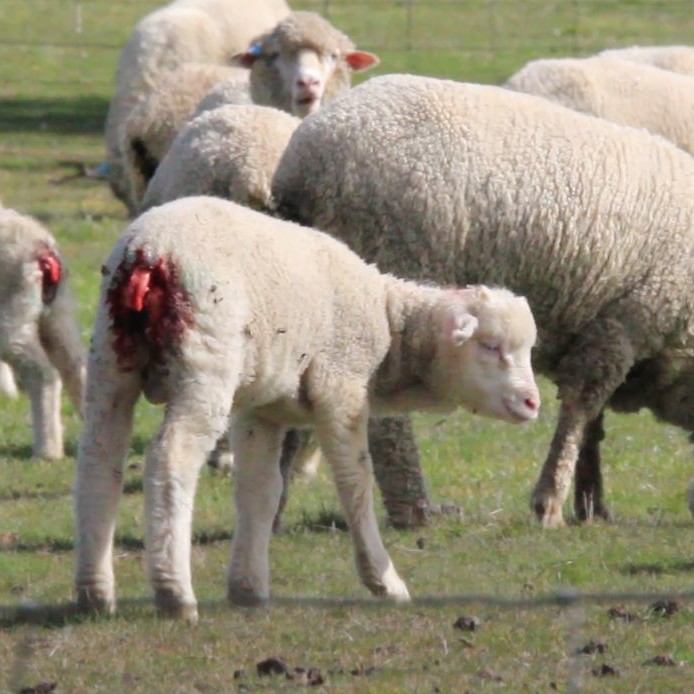
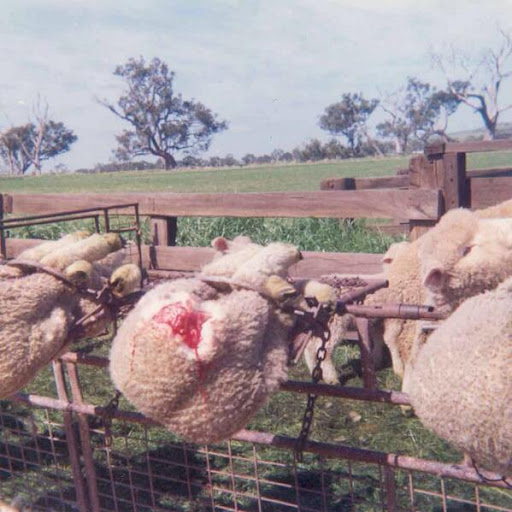
Australia | 2017 | Sheeps and lambs on a farm with mulesing practice. Mulesing is the removal of strips of wool-bearing skin from around the breech (buttocks) of a sheep to prevent flystrike (myiasis). Here: Mulesed lambs next to their mother sheep
The sheep are forced to reproduce and many babies are supposed to provide a lot of wool.
But of them around 10-15 million die a cruel death per year.
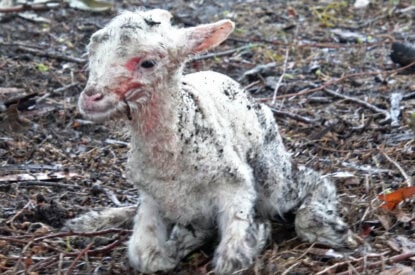
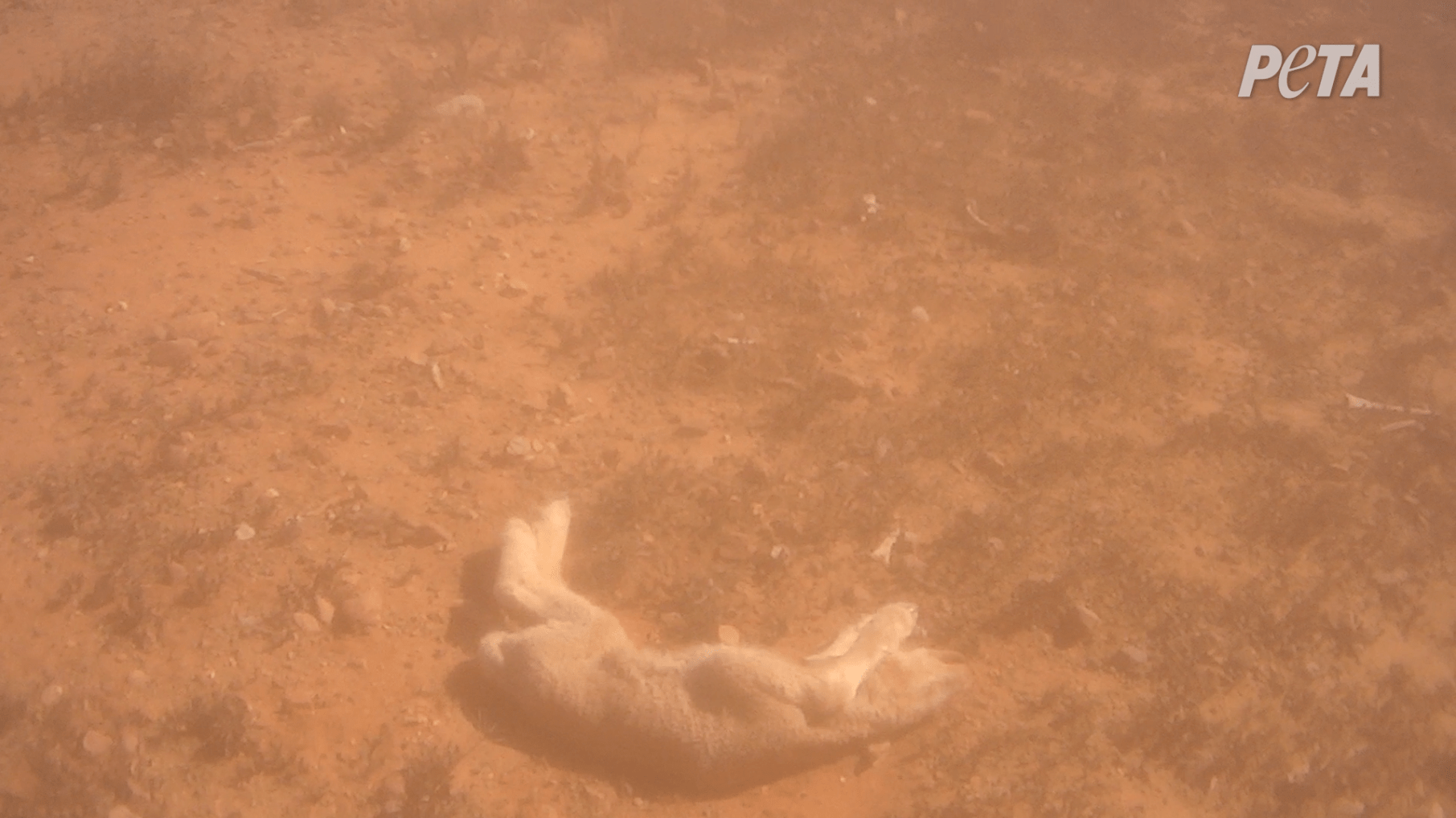
The newborn lambs, also called winter lambs, succumb to cold, precipitation and starvation.
Sheep farmers manipulate the due date of their female animals through artificial insemination in order to keep profits high. Often there are winter births.
As soon as the lambs wean themselves from their mother’s milk, the meadows are lush and rich. This saves feed for the farmers and at the same time the creatures intended for the meat industry can be fattened faster, but the animals pay the blood toll for this heartless approach.
About every fourth lamb freezes to death in the Australian winter or dies from gross neglect.
In other ways too, like Dr. Frankenstein started the births in Mary Shelley’s bestselling novel.
Through godless genetic manipulation, twin and triplet births are forced.
Due to the insufficient supply of pregnant mothers, the lambs are born weak and often sick. If the mother dies due to pregnancy toxicosis at birth, the young are left orphaned and run to certain death.
When two breeds of sheep are accidentally paired, undesired animal souls often see the light of day.
Their wool is not economical enough for the wool industry, they are deliberately and mercilessly left to their cruel fate in the pastures.
The surviving babies are cruelly mutilated – their tails are cut off and painful rubber rings are put around their stumps so that they die and fall off.
All of this, of course, is widespread without anesthesia.
Merino sheep are also cut out part of their anal folds to prevent flies.
Also here mostly without anesthesia.
This is particularly painful for the animals and is commonly known as “mulesing”.
And the shearing, too, is brutal and terrible.
Australian farm workers work for starvation wages and the aggressiveness is therefore very high. The sheep then pay the wages for this.
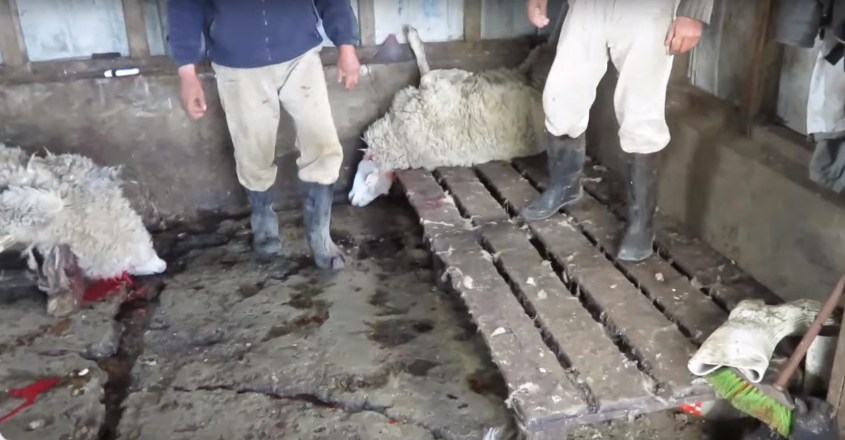
Many undercover recordings show severe abuse of the innocent animals by workers from blows, kicks, deliberate cuts to ears bitten off.
And many of the sheep are brutally massacred in the slaughterhouse or exported to the Near East, where they are threatened with death from the barbaric slaughter. Winter lambs really have a hard time in Australia.
We therefore strongly condemn these approaches of the wool industry.
These animals don’t deserve such treatment.
They too feel pain, they too are mothers and children.
We appeal to the clothing industry to ban wool products from their assortment and not to use these animal quality articles on the consumer.
There are enough alternatives.
Vegetable and synthetic wool, bamboo, cotton, hemp, linen, flax, lyocell, tencel, modal, plastic and recycled plastics, SeaCell, soy silk, nullarbor, or viscose are just a few of the empathic alternatives, and the future lies in Kerasynth ( Wool from living hair follicles), Weganool (cashmere made from silk plants and organic cotton), Woocoa (wool made from coconut, hemp and mushrooms) and werewool (wool made from human DNA).
So renounces any wool products according to the motto:
And I mean…The farmers of Australia justify their Dachau-methods – also called “mulesing” – that mulesing only serves to protect the sheep!
In reality, the farmers only want to avoid costly regular shearing of the sheep to avoid infestation with the eggs.
The Australian wool industry itself promised in 2004 to stop mulesing by 2010 and to find alternatives.
A few years later, however, the farmers gave up their efforts and almost nothing has changed to this day – only that today we are informed about these medieval methods – what mulesing is
In 2008, a tangible scandal broke out in Australia.
An exposed Swedish animal rights activist named Katarina Lingehag Ekholm was offered a free trip to Australia by a representative of the Australian Wool and Sheep Industry Association if she would forego a scheduled documentary on the practice of mulesing and not be on the television program (as planned ) would appear.
The process was recorded on video, and the offer is said to have even been approved by the Australian government, which they denied.
The incident with the bribery of the animal rights activist aggravated the criticism of the practice of mulesing, especially from Sweden.
Large US clothing companies and 19 Swedish companies are already boycotting wool from Australia, including H&M.
The Australian wool industry fears that other European countries could join the boycott.
According to the Magazin “trade sheet” (Handelsblatt), Australia annually exports wool with a value of 350 million euros to Europe. Australia earns around two billion euros worldwide with its wool.
Most of the wool is processed in China and exported all over the world from there.
In Australia itself there is no significant processing industry for this animal fiber.
Hands off wool!
Everyone knows the atrocities of the fur industry;
The production method of wool is no less excruciating than that of fur and today, thanks to the internet and the media, we are more knowledgeable than ever.
It’s good that we have a conscience, a big brain, empathy and the ability to make decisions, and can make the right decisions against animal suffering and criminal practices in the animal industry.
101 BEARS ARE HOME. NOW THEY NEED YOUR HELP TO HEAL…
Animals Asia had been caring for over a hundred bears on a former bile farm in Nanning, China for seven years. Until the day that all of us here at Animals Asia (and many of you too!) had been waiting for…
Finally, we were able to bring the Nanning bears home to our sanctuary in Chengdu, in what was the biggest bear rescue in history.
If you’ve seen the incredible short film above, you’ll know what a mammoth task it was, and how much work is now needed to rehabilitate and provide life-long care for these brave bears.
Will you help them on their road to recovery with a donation?
For years, these poor frightened bears suffered relentless, agonising bile extractions. The rest of the time they were mostly left in their tiny metal cages, with minimal food and water and nothing to keep them entertained.
Now that these ex-bile bears have left their concrete prison and made it safely through the sanctuary gates, we need to carry out urgent surgery, diagnostics, heart scans, ultrasounds and provide vital medicines – the cost of healing the hurts of all these gentle moon bears is daunting.
They’re finally free, but waiting to heal. Please, make an urgent donation today.
They could smell the misery even before they saw it.
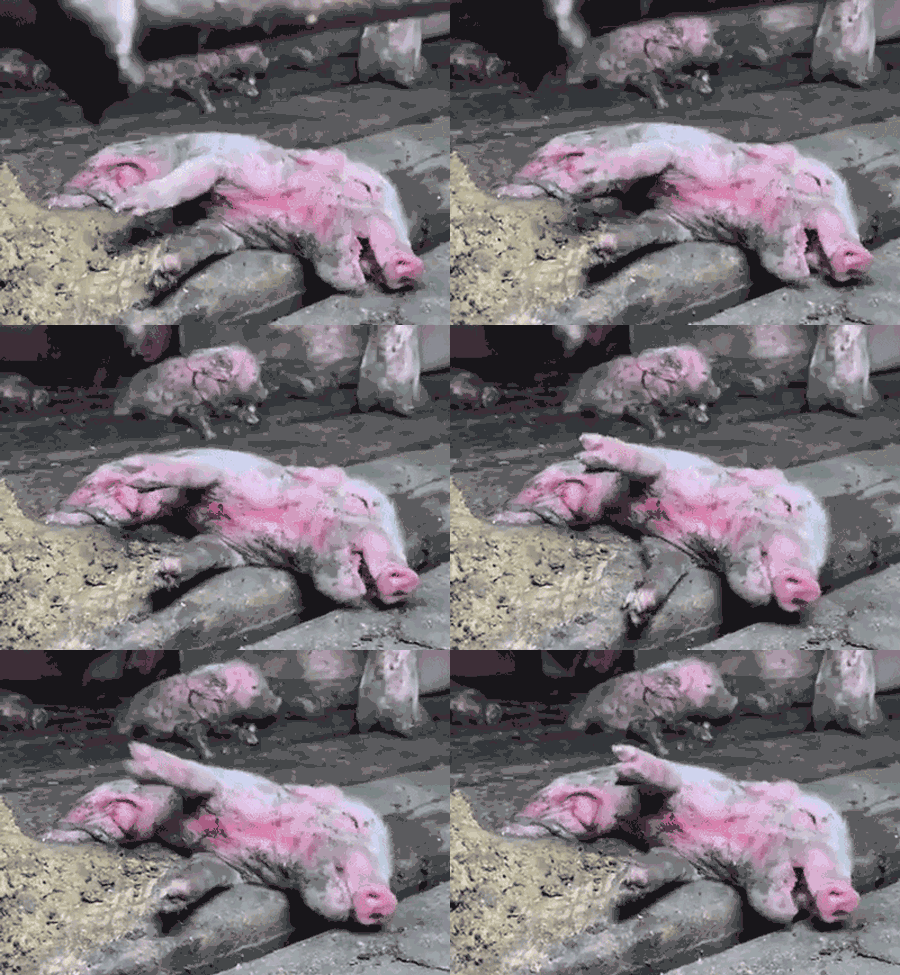
Inside a sprawling Indiana farm, the bodies of dead or dying piglets just hours old were strewn on a filthy floor inches above a lagoon overflowing with feces. Mother pigs, crammed inside metal crates, lay helpless while their babies cried out in agony just beyond their reach.
If we don’t take action to help piglets and their mothers—and other vulnerable, tormented animals in need—who will?
“At East Fork Farms there is nothing but fear and distress,” a whistleblower wrote. “Pain, injury and disease [are] everywhere.”
Horrifying conditions like these are inherent in the massive facilities where pigs, cows, chickens, and others are imprisoned, fattened, and violently killed, all for a cut of flesh on someone’s plate. Pigs are at least as sensitive, kind, and intelligent as the dogs who share many of our homes—but their wonderful qualities don’t protect them from such tremendous suffering.
They can’t do anything to end the neglect and abuse, but we can.
No one should endure this agony—will you help stop it?
We’re making progress, but there is still so much work to do. A day after hearing from PETA, JBS USA—a subsidiary of the world’s largest slaughterer of farmed animals—banned this hideous Indiana farm from its supply chain. Hundreds of thousands of people have now viewed the disturbing footage online. We’ve placed billboards urging authorities to take action against the facility. And as more consumers than ever consider the environmental devastation, pathogen risks, and cruelty associated with eating other animals, we’re providing a wealth of resources (including our popular, free vegan starter kit) to help kind consumers embrace a healthier and more animal-friendly way of living.
Thank you so much for all that you do for animals.
But animal farmers LOVE the animals, and as anag representatives often claim, the animals are treated better than otherhumansmychildrenmysignificantother …
Why do you believe their lies? All animals exploited for food, die for food; any victim “produced” in a manner that considers them commodities, is a being NOT cared for. Animal exploitation is inherently cruel, and the “process” requiring suffering, pain, and violence, is one mimicked globally, from the smallest HappyHappyFarm to Smithfield, it is all related, your Uncle Ted’s Fun Farm that kills ten animals per year directly contributes to CAFOs/FFs/ILOs that kills trillions of animals worldwide each year. Humane? Welfare? Humans have historically claimed animals deserve care and consideration, a belief that has led to the normalized violence and abject fear of animals who are denied all choices about what is fundamentally theirs – their bodies.
I have seen so many people horrified by this expose. Why? What do otherwise rational, knowledgeable people think happens to animals they use and consume?
But I do wonder how many of them are actually horrified enough to STOP CONSUMING ANIMALS. But not contributing to such horrors may be a little “too humane” for people who love the taste of animals more than they believe the animals don’t want to die for such.
And for all the Prop 12 cheerleaders, have you stopped consuming animals as you clearly agree that the current “model” is worse than what Prop 12 will deliver? When veal crates were largely replaced in the United States with a roomier form of confinement, veal consumption INCREASED: people feel responsible inflicting violence on infants because calves are “allowed” a larger prison.
Too, if more space is important for animals, NOT KILLING ANIMALS IS MORE SO. Humans are so obsessed with self-indulgence that they actually believe the cost of “retrofitting” confining spaces is more than the cost of lives.
Supermarket chain Morrisons says it has launched an urgent investigation after campaigners claimed chickens on farms run by its suppliers are being grown so fast they can barely stand up.
In a video narrated by the naturalist Chris Packham undercover filming claims to show fast-growing birds deformed and dying on farms in Norfolk and Suffolk.
Open Cages, an animal welfare charity, said new breeds of birds that grow fast feed consumers want for cheaper chicken. They claim modern chickens grow 400% faster than those farmed in 1950.
These chicks are born and locked into these giant factory farms. And in only 35 days are forced to grow to a monstrous size. Frankenchickens are cheap and efficient. Basically all cheap chicken will come from Frankenchicken breeds . People look at this footage and they will think that this is an anomaly – they’ll ask me if something illegal is happening here but no this is perfectly legal.
Connor Jackson, Open Cages Chief Executive
The organisation filmed in four intensive chicken farms in May and June.
Those farms supply the Cranswick chicken factory which provides meat for Morrisons labelled Red Tractor approved, something designed to reassure people of high standards.
ITV News approached Red Tractor for a comment but have not had a response at the time of writing.
TV naturalist Chris Packham said it is ‘cruel beyond belief’ and is calling for Morrisons to sign the Better Chicken Commitment which would mean only slower growing chickens are used.
Other retailers like M&S, Waitrose and KFC are among 240 companies across Europe to commit to stop selling the fast growing birds.
In a statement Morrisons say they have launched a ‘full investigation’ and that they ‘care deeply about animal welfare’.
We care deeply about animal welfare and require all our suppliers to maintain the highest standards. We have asked Cranswick to conduct a full investigation and get back to us.
Morrisons
Cranswick have yet to respond to our requests for comment, but elsewhere the company has said “we take the welfare of chickens at our farms very seriously and it is always our first priority.”
ITV news has not been able to independently verify the footage that came out of the farms. The video is also edited so may not reflect overall conditions the chickens face.
Morrisons claims to “take animal welfare seriously.” However, despite horrific animal suffering in its supply chain, it has refused to sign up to the Better Chicken Commitment. These scientific measures are backed by over 40 animal protection charities from across Europe. Bred to grow so fast their bodies can’t keep up, ‘FrankenChickens’ sold at Morrisons are living lives of misery. It’s time for change. When will Morrisons hold true to their word and take this issue seriously?
BRED TO SUFFER
Birds have been so genetically manipulated that they grow to be three times as large as they would without such invasive tampering — and in less time. This accelerated growth leaves birds crippled under their own weight and causes a myriad of other problems.
TRAPPED IN FILTH
Industrial farming operations house hundreds of thousands of birds inside filthy, windowless sheds. Due to this severe overcrowding, these birds are provided slightly less space than a sheet of paper to live on. Often they are unable to walk and lie in ammonia-laden litter causing sores and respiratory problems.


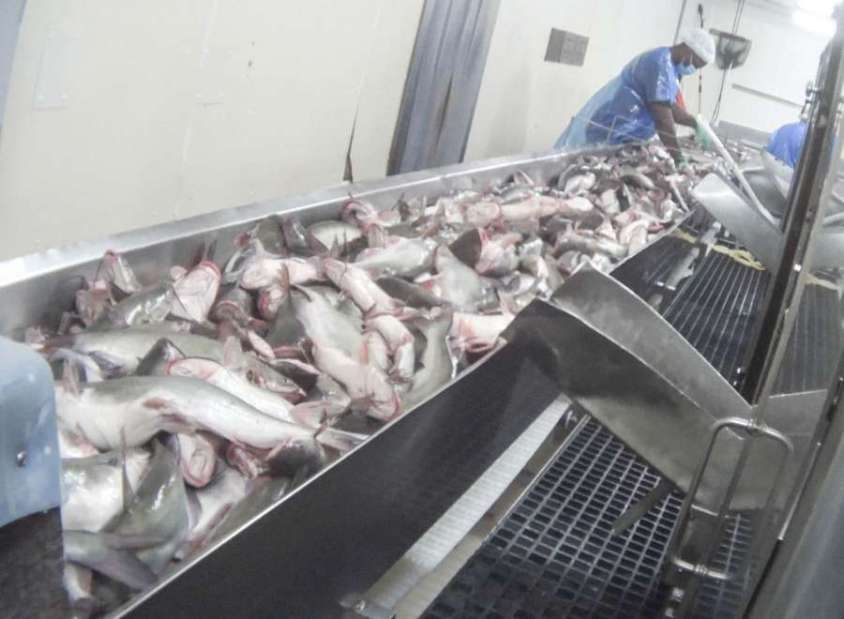 Simmons Farm Raised Catfish slaughterhouse kills 21,000 catfish per day—animals who are raised in the company’s intensive confinement ponds