Category: Farm Animals

Vietnam: 26/3/21 – Bile Bears Xuan and Mo Have Now Been Rescued by Four Paws and Are In Sanctuary Starting a New Life and Long Road to Recovery.

WAV Comment – some really fantastic news from Four Paws – absolutely brilliant to know that Xuan and Mo have already been recued now by Four Paws and are at the sanctuary home getting what they deserve after so many years of being kept in a basement and being used for daily bile extraction.

We covered this story in an old posts:

Vietnam: Urgent Rescue – Kept in a basement: Free Xuan and Mo from a life in darkness – Please Give Right Now ! – World Animals Voice

Vietnam Suffering Bears: The Life-Changing Moment Of Rescue and Relocation Is Now Just Days Away. – World Animals Voice

Donations to Four Paws to help them are always welcome – see above links or the web site.

https://www.four-paws.org.uk/?gclid=EAIaIQobChMIosLP5-TN7wIVhpftCh3J8AsQEAAYASAAEgI35fD_BwE

We rescued bears Xuan and Mo from a life in darkness 

Their whole life Xuan and Mo were kept in a windowless basement in Vietnam. But Tuesday was a big day for them – the day we relocated them to our BEAR SANCTUARY in Ninh Binh. This was the day they saw daylight for the first time since many years!

The transport to our sanctuary took around 9 hours. The first health check unfortunately revealed that both suffer from a gallbladder disease. Xuan additionally has a liver disease and his teeth are in terrible condition. 

Xuan and Mo will stay in a quarantine area for the first three weeks to prevent any potential disease transfer to our resident bears. There, they receive intensive medical care, are gradually introduced to a new healthy diet, are provided an array of different enrichment, bedding etc. and trust begins to be built between them and their caretakers.

Kept in a basement: Free Xuan and Mo from a life in darkness

Breaking news!

Xuan and Mo were successfully rescued! On Tuesday the 23rd of March our team arrived in the Son La Province. Luckily, the bears were quite calm and not afraid when our team approached them. Maybe they knew that we want to change their life for the better. After a 10 hour drive, they finally arrived at their new home in our BEAR SANCTUARY Ninh Binh.

Bears are very resilient, but it will be a long way to recovery nonetheless. Both suffer from gallbladder disease. Xuan additionally has a liver disease and his teeth in terrible condition.

You can still support their recovery. Will you help them to start their new life?

***

A life in darkness

No light, no ventilation or fresh air, nothing but the rusty bars of tiny barren cages. Kept in a windowless and wet basement since they were cubs, bears Xuan and Mo have suffered unimaginably.

The only time they get to see light is when their owner comes to feed them or worse: puncture their gallbladder with a needle, a painful procedure to extract their bile. This bile was used for medicinal purposes by the family of the owner. For years these bears have known nothing but pain and abuse. Without our help, Xuan and Mo will go through this cruelness until the end of their life.

Our team is still shocked by what they discovered in Son La Province, Vietnam. These keeping conditions are one of the worst we’ve ever seen. We have to get them out as soon as possible. Will you join this mission and support their rescue?

They deserve so much more in life

At our BEAR SANCTUARY Ninh Binh, they could get all the care and time they need to recover from the horrors they have endured. There, they could discover for the first time what a species-appropriate life for bears can look like. But we can’t rescue them without you.

The fate of Xuan and Mo depends on your donation. Will you help us to rescue them?

How your donation can change the lives of Xuan and Mo: 

  • They will be relocated to our BEAR SANCTUARY Ninh Binh 
  • They will get the extensive veterinary care they urgently need 
  • They will have access to a large outdoor enclosure 
  • They will get enrichment, bedding material and showers 

Images © Hoang Le | FOUR PAWS

Regards Mark

EU: 5 Freedoms Was Not Enough; Now We Have 7 Demands !

WAV Comment:  I really wish I had an ounce of faith that all these Euro Yukspeak words actually meant something; but I completely lost faith in the Eurojargon about better animal welfare many years ago.  For me, over 30 years of live animal transportation investigations and experiences may have had something to do with the loss of faith in ‘the EU systems’ that ‘protect’ animals, in this case, during transport – EU Reg 1/2005 for the ‘protection of animals during transport’:  https://www.europarl.europa.eu/RegData/etudes/STUD/2018/621853/EPRS_STU(2018)621853_EN.pdf

So now ‘the countdown is officially on’ ?

Now they talk about 7 key demands – and for so long over the years we have heard from the very same people about we the ‘five freedoms’ which should have applied to all animals within the EU:

The Five Freedoms include:

  • Freedom from Hunger and Thirst. By ready access to fresh water and diet to maintain health and vigour.
  • Freedom from Discomfort.
  • Freedom from Pain, Injury or Disease.
  • Freedom to Express Normal Behaviour.
  • Freedom from Fear and Distress.

These Five Freedoms are globally recognized as the gold standard in animal welfare, encompassing both the mental and physical well-being of animals; and the five freedoms have existed within EU strategy (on paper anyway) for quite a long time.

With so much undercover footage being presented to the EU over the years from farms, slaughterhouses, animals in transport, etc, by welfare organisations, showing failures across all the 5 freedoms, I guess we can say that the EU does not practice what it preaches. 

Yet here we are being told that there will be 7 key demands that will ‘shed light on the failures and poor enforcement of the current animal welfare legislation and call on the European Commission to commit to revising the entire legislation, leaving no animal behind’.

I really hope that no animal is ‘left behind’; but as I say, with a few years experience, and running animal welfare websites since 2005, cynical me thinks this is simply another stalling tactic by the EU simply because certain member states are not enforcing the regulations.  Romania and the sheep transporting ship which overturned leaving Midia – Romania: Secret Decks of Sheep On The ‘Queen Hind’ Which Sank at Midia ??. We Still Wait For EU Action and the Report Promised by the Romanian Government. – World Animals Voice  – February 2021, and still we have no answers !  So much for 5 freedoms, let alone 7 key demands !

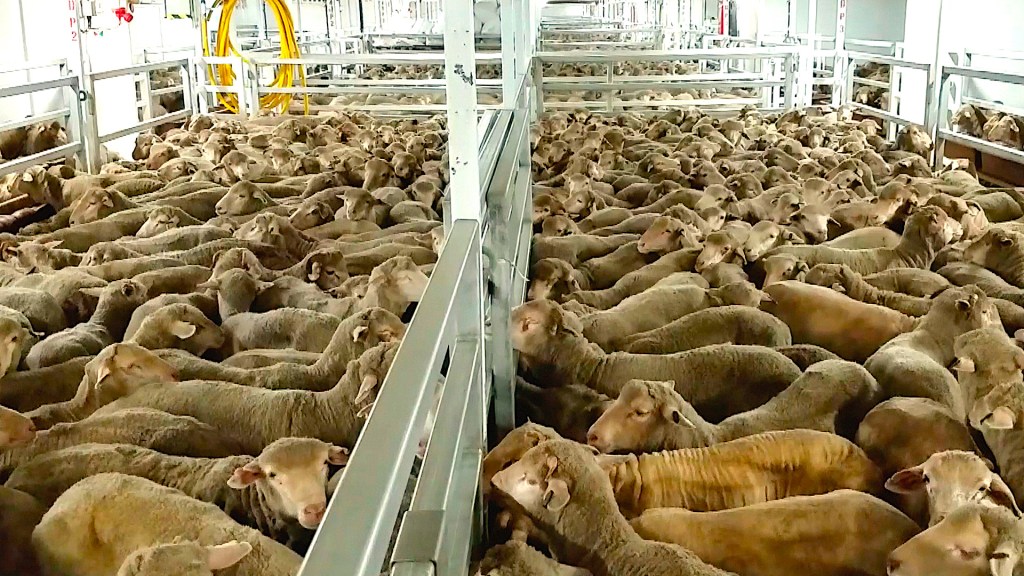
The EU lost the plot on all this ‘animal welfare stuff’ many, many years ago; and I think the very recent incidents relating to the livestock carriers ‘Karim Allah’ and the ‘Elbeik’; where live animals were shipped around the Med for over 3 months, just shows what a complete and utter farce the whole EU ‘animal welfare’ thing is.   And I mean; have a look at just 2 of our past posts:

Spain: 10/3/21 – All Animals On The ‘Karim Allah’ Have Now Been Murdered By The Spanish Authorities After 3 Months at Sea. The Reality of Live Exports. – World Animals Voice

Togo: Live Animal Transport: Elbeik Still At Sea with 1700 Animals and Over 100 Feared Dead – Expected to Dock In Cartagena, Spain Tonight. ‘Karim Allah’ Killing Team Still In Cartegena. What Happens Later ? – World Animals Voice

Do not have any trust in the EU and its yukspeak, because that is exactly what it is – Yukspeak; or to put it another way; a means to further investigate, delay any action and produce yet more endless reports on what is the bloody obvious, and which everyone in the animal welfare lobby has known about and has been shouting about, and providing substantial evidence on for decades.

The EU is an over inflated no good – if it had any intentions of promoting animal welfare, then it would have acted a damn site more on animal transport legislation alone when we first saw the 1/2005 of that year come into force.  They failed then, they fail now, and they will continue to fail in the future.  Sadly, as always; it is the innocent animals that are the pawns, and who suffer as a result.

Regards Mark.

Continued on sheet 2 – select 2 from below.

This is how meat production works in Germany

Press release:
-Systematic shafts uncovered /

-German slaughterhouse tortures animals to death /

-North Rhine-Westphalia authorities fail to protect animals

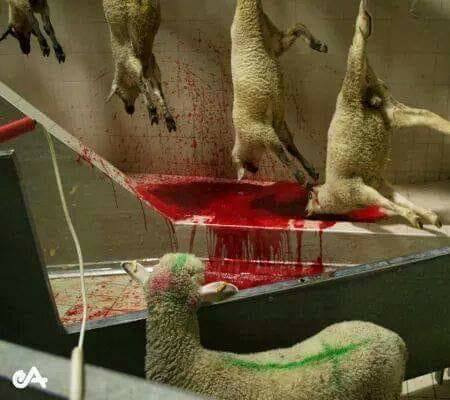
SOKO animal welfare investigators can use current images from the last few weeks to prove that animals were systematically slaughtered in full consciousness at the Prott meat center in Selm North Rhine-Westphalia (NRW) on every slaughter day.

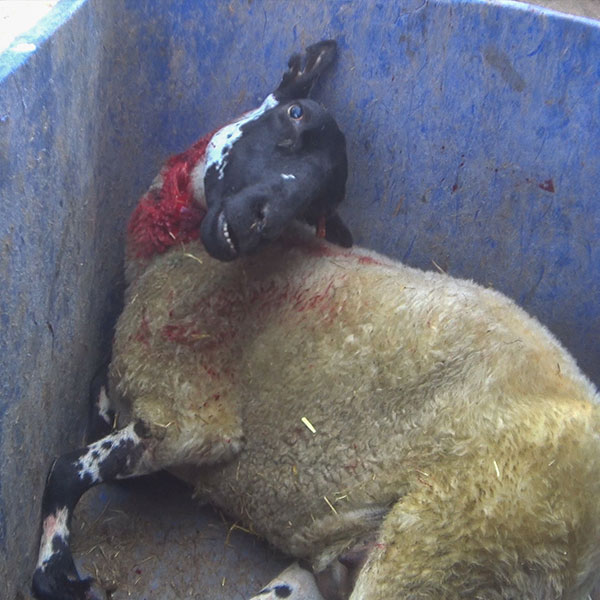
“The sheep were brutally slashed and thrown into a heap, cattle fought for their lives bleeding and dangling from chains and roared in pain,” says SOKO animal welfare investigator Friedrich Mülln, describing the situation.

The authorities had been warned for almost 20 years and failed to stop the shafts.

(The video is in German, but a detailed explanation of what you see is already in the report)

https://fb.watch/4qKQ6zfxkj/

The shaft of animals is illegal in Germany and only possible under very strict conditions in exceptional cases.
However, there are no special permits in North Rhine-Westphalia.

The Prott slaughterhouse, which is run by Germans, on the other hand, has specialized in slaughtering without anesthesia (!!!)

Continue reading “This is how meat production works in Germany”

22/3/21 Is ‘World Water Day’ – Prepare to Enter the ‘Dead Zone’; How Intensive Livestock Production Fuels Water Pollution Around the Globe.

WAV Comment – Today, 22nd March 2021, is the United Nations ‘World Water Day’.  Philip is a personal friend and fellow campaigner, CEO of Compassion In World Farming (England) who we have worked with for around 30 years.  Here he describes entering the ‘Dead Zone’.

Philip Lymbery | Water and Welfare

Today, 22nd March 2021, is the United Nations World Water Day. It’s about raising awareness of the value of water and the importance of protecting this vital resource on which we all depend.

For me World Water Day brings back memories of my investigations in the USA whilst writing Dead Zone: Where the Wild Things Were, where I witnessed for myself how intensive livestock production fuels water pollution around the globe.

I had travelled about 15 miles out in the Gulf of Mexico and was looking at something resembling a construction site. All around me were oil rigs. I’d heard a lot about this place in the middle of nowhere from the media. A place out at sea where nothing lives. Called the ‘dead zone’. An expanse of water so polluted that nearly all the oxygen has gone. A liquid symbol of what happens when efforts to prevent, mitigate or contain environmental damage fail and the water represents worst-case scenario; the marine ‘end of days’. The gathering body of oxygen-depleted – hypoxic – water forms a barrier to life, killing just about everything that can’t flee.

My plan had been to see the dead zone for myself – and not from the comfort of a boat. So snorkel fixed, I slipped into the water. At surface level the pea-green sea looked nothing out of the ordinary. As I peered into the gloom below, I could see fish and the water around me looked very much alive. Had there been some mistake? I ducked down again and held my breath this time, swimming down. Now things began to grow clearer – or rather not. A few metres beneath the surface, everything changed. The water was cooler, saltier and far more murky. I could see very little and without diving kit, I could go no further. I wouldn’t reach the dead zone myself, for it was far, far below, coating the bottom half of the water in a suffocating blanket.

Sadly, the dead zone in the Gulf of Mexico is not unique – they exist all over the world but among biologists, marine scientists and conservationists, it is among the most notorious. It now boasts the world’s second-largest area of oxygen-depleted water (the Baltic is the biggest). It’s a squalid claim to fame. The zone emerges every year, without fail, from February to October, stretching all the way from the shores of Louisiana to the upper Texan coast.

And the main culprit? Fertiliser.

According to the National Oceanic and Atmospheric Administration (NOAA) the source of the problem is the ‘flowing green oceans’ of corn in the Midwest of America. It is an area of intensive corn and soybean production, where large amounts of nitrogen from fertiliser and manure are applied to the soils every year. Excess nitrate is washed into rivers and streams and ends up in the Gulf. One would think the corn and soya would be feeding the world, but you’d be wrong, it’s feeding factory farmed animals. The problems in the Gulf are squarely linked to the food on our plates.

The reality of all this was brought home to me when I took to the air in a tiny Cessna plane. I was expecting various warehouses with impressive pallet-stacks of fertiliser bags, but we flew over a small town of sprawling industry, one of many perched on the banks of the Mississippi and to my horror, they were all fertiliser factories. But the term ‘fertiliser factory’ entirely failed to convey the sheer scale of this hidden part of the industrial farming jigsaw.

Dead zones are emerging around the world. Industrial agriculture systems, with their high dependence on artificial fertilisers and chemicals, are a major source of pollution of our precious water. Quite simply our hunger for ‘cheap’ meat from animals fed on cheap corn grown on chemical-laced fields is poisoning and driving out precious species and damaging ecosystems on land, rivers and sea. But it’s not too late to reverse the situation – a reduction in meat, dairy and egg consumption especially from factory farms, can reduce the water impact of our diets and greatly improve the welfare of farm animals.

This is why we need to seize the opportunity of this year’s United Nations Food Systems Summit to move toward a global agreement to end factory farming. To reset our food system towards regenerative, restorative, nature-friendly ways of producing food. The UN summit presents an incredible opportunity to focus this debate in one place and form the catalyst for change on a global basis.

Please join us and become a food systems hero.

Thank you.

Note: For more information and to watch the video ‘The Downstream Disaster’ from the Dead Zone series of films, please click here 

Spain: Human Meat for Sale During Animal Rights Protest in Barcelona.

Humans covered in blood on white trays sold as meat, photo: Reuters/Nacho Doce

Human meat for sale during animal rights protest in Barcelona

Animals rights campaigners organised a “humans sold as meat” protest in Barcelona on Saturday. Naked protesters were covered in fake blood, lying on white trays under plastic sheeting, replicating animal meat for sale. 

On the plastic sheeting, there were “Human Meat” stickers with a barcode and price on them, just like you would find meat in the supermarket.

“We are fighting against the suffering of animals,” Cristina Ibañez from the Spanish animal welfare organization AnimaNaturalis told Reuters. “For their right to life, they want to live the way this person who is walking wants to live, or just like I want to live.”

“That’s why it’s not fair, and it’s nutritionally unnecessary that we continue to exploit and kill animals just to satisfy our appetite,” Ibañez said.

The protest was staged outside the famous ‘La Boqueria’ market, which has several meat vendors. “You can live without eating meat, and it’s very important to do this because animals suffer a lot throughout the meat production process,” one of the protestors, Andrea, said.

The demonstration was on the same day as MeatOut Day, an event on the first day of spring to promote a vegan lifestyle, originally started in the United States in 1985 to question the consumption of animal products worldwide.

“MeatOut was designed to remind us of animal agriculture’s devastating impact to the animals, our health, and the environment,” they say on their website.

“Theologians have long debated whether there is life after death. For animals on factory farms, there is no life before death.”

Human meat for sale during animal rights protest in Barcelona (theanimalreader.com)

India: 21/3/21 – Latest Super Rescues and Recoveries From ‘Animal Aid Unlimited’.

WAV Comment:  Here is the latest videos from friends Erika and Jim who founded ‘Animal Aid Unlimited’ in India.  I enjoyed watching all the rescues and recoveries; but especially enjoyed the story of Nellie Bell, who was ridden with severe mange and infected wounds; but who after the wonderful work by the AAU team, was transformed into a beautiful little dog which you can see at the end of the video.

Enjoy – sad starts but as always, happy endings.

Regards Mark

Baby stuck in her birth canal but Apricot was rescued in time for emergency C-section

We don’t know how long the little expired body was stuck in this mother’s birth canal,but we were so glad someone saw this crisis and called us to rescue her in time to save the mother’s life and her babies inside. Once back in our hospital, our medical team assessed that she would not be able to deliver the remaining puppies normally and needed an emergency C-section.

We named her Apricot, and when her youngsters were a little older, we returned the family to their beautiful neighborhood.

Please donate.to save a life with emergency surgery.

Rescue of Little Maharana trapped in a sewer.

Animal Aid Unlimited on Instagram: “A young calf was trapped deep inside an underground sewer. The debris and filth floating in the water made this rescue particularly…”

A young abandoned boy calf was trappeddeep inside an underground sewer. Thedebris and filth floating in the water made this rescue particularly difficult. Using a headlamp, our rescuer had to wade through the dirty water and then lift the calf into a position where he could bring him back to the opening, where many waiting hands of passers-by were ready to help hoist him, weakened and waterlogged, up and out of the sewer. We brought him back to Animal Aid to give brave Little Maharana plenty of rest, good food and love.

Please donate for the most difficult rescues.

Transforming the spirit of Nellie Bell, who almost scratched herself to death.

This dear girl was literally falling apart, suffering from advanced mange and a wound she had probably caused by scratching.The wound on her back had become infested with maggots.

All her strength had been spent just to stay alive as long as she had.She didn’t even react during her first treatment and this made saving her all the more incredible. It wasn’t just her body that was restored. It washer being and her self that seemed to heal at the same time.

You might find yourself saying, “This just cannot be the same dog!” But look deep into her eyes, and you’ll see who was hiding there all the time.

To give life and joy to animals who had lost all hope, please donate.

Pumba gets a new home!

Pumba’s new family is giving him a loving home, lots of space, peace and beauty.We found in his new family a beautiful commitment to nurture this most innocent boy.

We rescued Pumba a year ago after he was abandoned by his owner, morbidly overweight and unable to walk. It took months of care, physio, exercise, coaxing and love to get him back on his feet, but was it ever worth it.

Click here to watch Pumba’s recovery video.

With a poignant tear of joy, we’re so happy to share his gorgeous spirit with people who will love him as we do.

Woof, wonnnnh, moooo and WOW!

Sponsor an Angel today!

Living with sanctuary sweethearts whose permanent home is Animal Aid makes bonds strong between the animals and their caregivers, both staff and volunteers. Some of our animal family were rescued from abuse. Others had been in life-threatening accidents.

Each sanctuary animal is part of the soul of Animal Aidand your support makes it possible to give them life-long shelter and care.

(20+) Watch | Facebook

Please click here to sponsor a sweetheart today:

Sponsor an animal | Support a special needs animal | Animal Aid Unlimited

USA: Utah Becomes Eighth State to Prohibit Cages for Egg-Laying Hens.

Are There Really Cruelty-Free Eggs? - Humane Facts

Utah has just passed a law prohibiting the confinement of egg-laying hens in tiny wire enclosures known as “battery cages,” becoming the eighth U.S. state to do so.

Just moments ago, Gov. Spencer Cox signed the bill—which the state’s legislature passed earlier this month—marking another major milestone in our campaign to move all egg-laying hens out of cages and into cage-free housing. The new law mandates cage-free conditions and more space for each bird. It also requires enrichments that are vital to the hens’ psychological and physical well-being, including perches, nest boxes, and areas designed for scratching and dust-bathing.

Utah joins a growing list of states where lawmakers and voters, regardless of political affiliation, have prohibited battery cages. This includes Michigan, Oregon, Washington, Massachusetts, California, Rhode Island and Colorado.

This is a particularly exciting moment for us: the Humane Society of the United States has been working relentlessly–and strategically–to transform how egg-laying hens, more than 300 million each year, are raised in this country. We have focused on confinement because since the advent of battery cages decades ago, hundreds of millions of hens have been suffering in these tiny, barren cages so small that they can’t even spread or flap their wings.

Given the scale of this problem, this has been an uphill battle, but we have pressed on with your support. As a result, today we are in the midst of a cage-free revolution. More and more, consumers are demanding an egg industry shift to cage-free, lawmakers are making policy to end cage confinement, and corporations and egg producers are moving to change their practices and embrace cage-free housing.

When we started our cage-free campaign in 2005, the percentage of hens in cage-free environments was in the low single digits. Now, almost 30% of the egg industry is cage-free, representing nearly 100 million hens per year who otherwise would have been caged. This may be the greatest reduction of farm animal suffering in U.S. history.

We recognize that we still have a long way to go and that moving to cage-free systems doesn’t address all animal protection concerns, including partial beak amputation and the routine killing of day-old male chicks. But the freedom of movement and the mandated enrichments do improve the hens’ quality of life significantly.

We are deeply grateful to all the Utah legislators from both parties who voted for the measure ending cage confinement. Some of these lawmakers worked tirelessly to bring together a diverse array of stakeholders to support the legislation. We’re also appreciative of those in the egg industry who worked with us over the past year to find common ground. These egg producers are sincerely working to transform their industry and animal husbandry practices in order to meet consumer expectations. We’re proud of this collaboration, and we’ll never stop working with unconventional allies to make major strides for animals.

This is critical work, and it’s far from over, but we are thrilled about how far we have come. Let’s take a moment to celebrate today’s victory in Utah, even as we pledge to keep working with lawmakers and pressuring corporations until no chicken is ever confined in a cage.

Breaking news: Utah becomes eighth state to prohibit cages for egg-laying hens · A Humane World (humanesociety.org)


Vietnam Suffering Bears: The Life-Changing Moment Of Rescue and Relocation Is Now Just Days Away.

News from Four Paws

FOUR PAWS International (four-paws.org.uk)


We’re hoping the same transformation will be possible for two bears in Vietnam. Bears Xuan and Mo have been suffering in a wet basement since they were cubs. With no light or ventilation, they have been kept in rusting barren cages.

The only time they get to see some light is when their owners come to puncture their gallbladder with a needle to extract their bile.

Since our team has discovered Xuan and Mo’s shocking reality, we’ve been working around the clock to arrange their rescue from their life in darkness and relocation to BEAR SANCTUARY Ninh Binh, where they will enjoy, for the first time in their lives, a species appropriate life in the fresh air.

This life-changing moment is now just days away.

See also our recent WAV post on this:

Vietnam: Urgent Rescue – Kept in a basement: Free Xuan and Mo from a life in darkness – Please Give Right Now ! – World Animals Voice


Spain: As matadors return to the ring amid Covid restrictions, campaigners say it is time bullfighting was outlawed.

As matadors return to the ring amid Covid restrictions, campaigners say it is time bullfighting was outlawed

Seen as an art by admirers in Spain, bullfighting has met with fierce criticism in recent years from an emboldened animal rights lobby which has been supported by left-wing parties

As matadors return to the ring amid Covid restrictions, campaigners say it is time bullfighting was outlawed (inews.co.uk)

When Diego Urdiales put on the gold traje de luces (suit of lights) and bright pink stockings for the first time in over a year, he had mixed emotions. “I was scared, yes. I had been thinking about the fight for weeks. There is a responsibility to the public, to the bull,” the matador said the day after coming face-to-face with half-tonne bulls. 

“The situation is complicated right now with Covid-19. It was good to return to la corrida, of course, but I had a mixture of feelings as I had been away from the ring for so long.”

Urdiales did not disappoint his fans and killed his first bull, named Elegante, with ease. Covid-19 restrictions meant only 20 per cent of the normal crowd could watch the victory at the ring at Ubrique, in southern Spain on Sunday.

As bullfighting makes a tentative return with smaller crowds, questions remain – even among supporters – about the future of what Spaniards call la fiesta nacional.

Seen as an art by admirers in Spain, bullfighting has met with fierce criticism in recent years from an emboldened animal rights lobby which has been supported by left-wing parties.

Now after the pandemic has banished the crowds and pushed the industry onto the ropes, matadors, breeders and promoters are staging a fight-back.

“There are more young people at the bullfights than ever before,” insists Urdiales, who is considered one of the best matadors in Spain by admirers.

The slow decline of a spectacle lionised by the likes of Pablo Picasso and Ernest Hemingway is illustrated in the number of bullfights held in Spain over the past decade. In 2012, there were 1,997 fights but this figure fell to 1,425 by 2019, according to Spain’s ministry of culture.

Ruben Amon, a journalist and author of End of the Fiesta, a book about bullfighting, says the art has been badly misunderstood. “It is under an ideological, cultural and political threat,” he says. “Ideological because bullfighting is linked to the political right. Cultural because they will always find ways to get rid of it by saying it is not civilised. Lastly, political because a progressive government seeks ways to rid Spain of the second most popular mass spectacle.”

Amon, an aficionado all his life who also wrote a biography of Plácido Domingo, contends that rearing bulls on huge farms is far kinder to the animals than factory farming of chicken or pigs.

“There are only 2,500 bulls killed every year but there are tens of thousands of pigs or chicken slaughtered,” he said. Another misunderstanding, he claims, is that bullfighting is a man’s world, from which women are excluded.

“It is a masculine world but not a macho world,” he says. Some 245 women work in an industry which employs about 15,000 people, according to government figures.

Amon also suggests there are gay bullfighters who are scared to emerge from the closet. “I know gay bullfighters but they do not want to go public, just like in basketball or football. It is still not easy for homosexuals to come out.”

José Zaldivar is under no illusion about the true nature of bullfighting.

The vet has been campaigning to end what he calls torture. In his office in Madrid, he has a veritable arsenal used by the matador to do battle with the bull, from the sword which ends its life to the banderillas which are punctured into the animal’s back to weaken it.

“In Spain, our law protects animals from cruelty except those which are used in public spectacles like bullfighting,” Zaldivar tells i. “There is no doubt in my mind that the bull is subjected to stress, pain and injuries which I would call torture.”

Zaldivar, who is president of the Association of Veterinarians for the Abolition of Bullfighting, holds out little hope that the spectacle will end in Spain unless its status as part of the cultural heritage is withdrawn.

In 2013, the then conservative government passed a law which established the cultural character of bullfighting as “indisputable”.

This meant in 2016, a ban on bullfighting in Catalonia was annulled by the Constitutional Court, which ruled it undermined the state law on cultural heritage. It meant regional governments could regulate but not ban bullfights.

An attempt to hold bloodless bullfights in Majorca was overruled by the court which said the animals must die or the true nature of the bullfights would be lost.

Torture is Not Culture, an animal rights group, claims that the bloody spectacle could not survive without grants from the European Union Common Agricultural Policy which, they claim, amounted to €130m last year.

However, if the economic damage inflicted by the Covid-19 pandemic has not signed the death knell for bullfighting, some within the industry believe growing indifference may deliver the estocada – the death blow in bullfighting parlance.

Antonio Lorca, the bullfighting critic of El País newspaper, said that bullfighting will recover after the pandemic, but it will never be the same again.

“The biggest problem is the younger generation has so many other things to be interested in,” Lorca told i. “My own daughter is not interested in bulls. She prefers films and music. I think it will become something for a minority and for tourists.”