Category: Farm Animals

England: Why We Need Your Support To Stop Maritime Live Animal Exports.

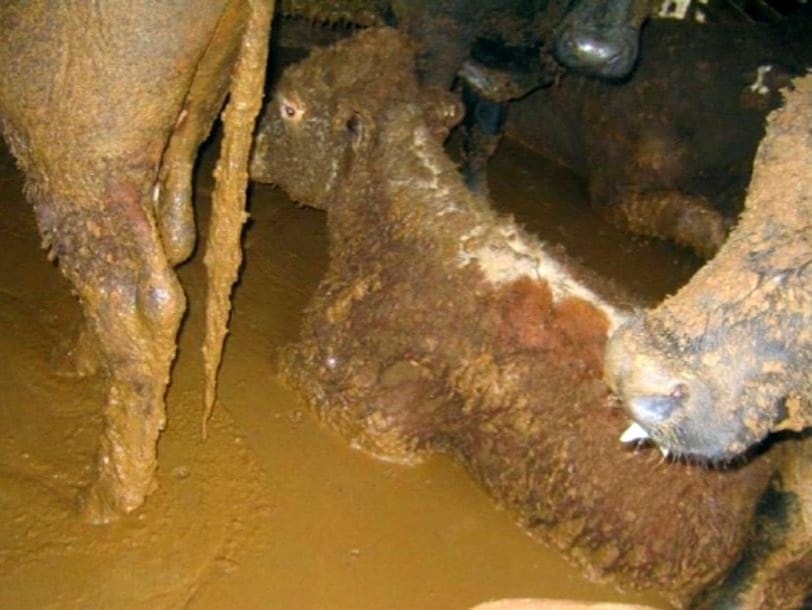
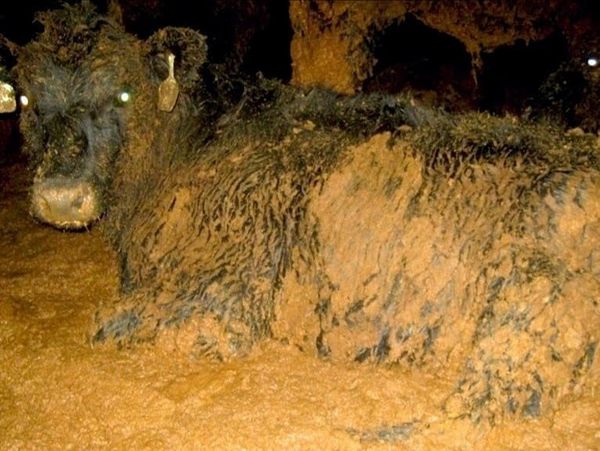
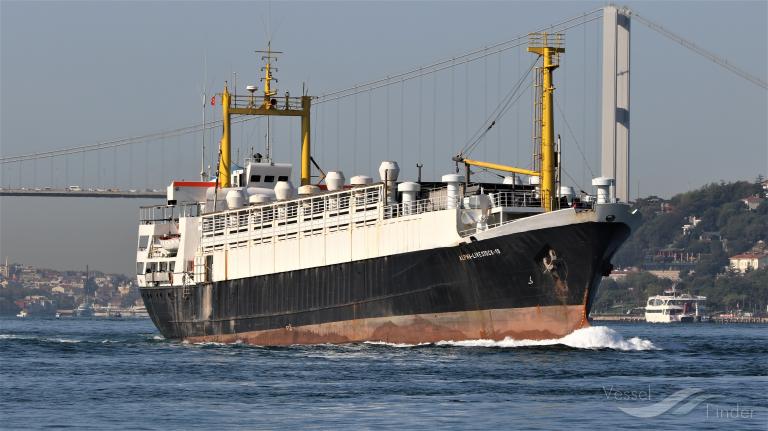
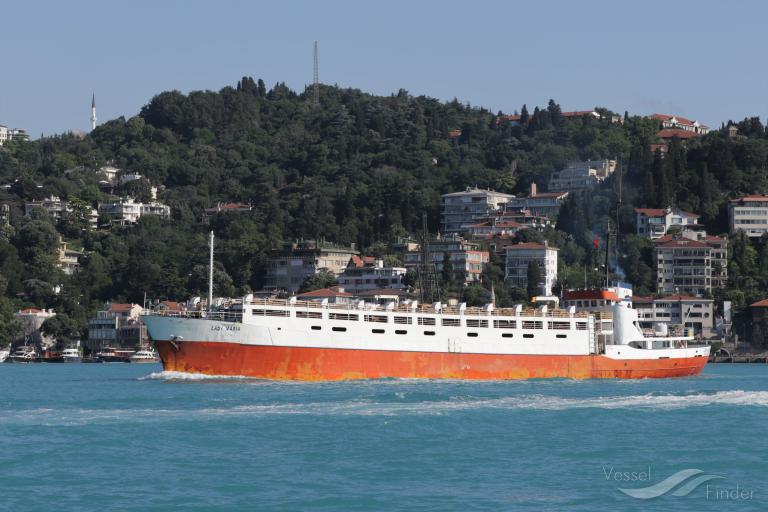
Live animals being shipped by sea.

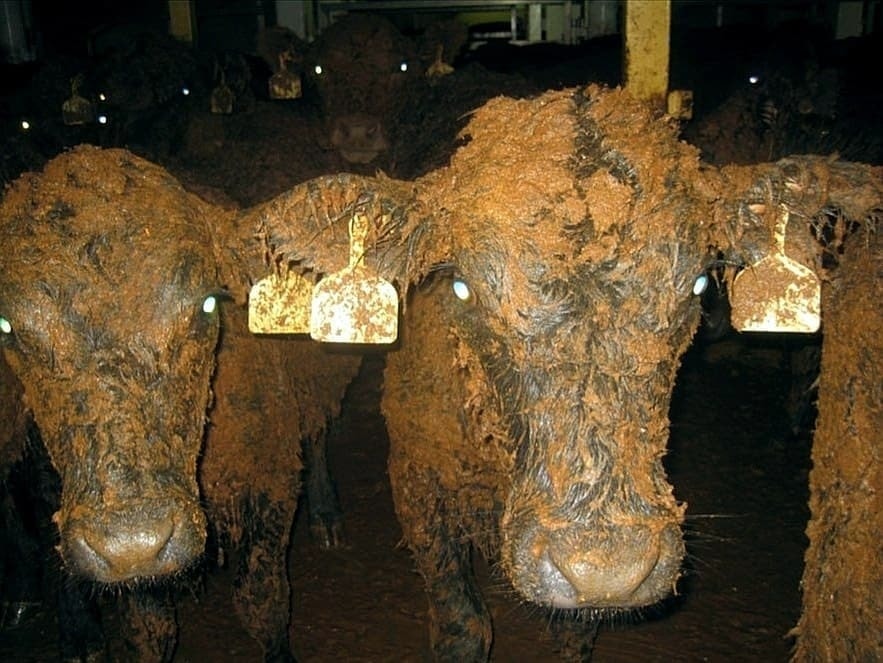
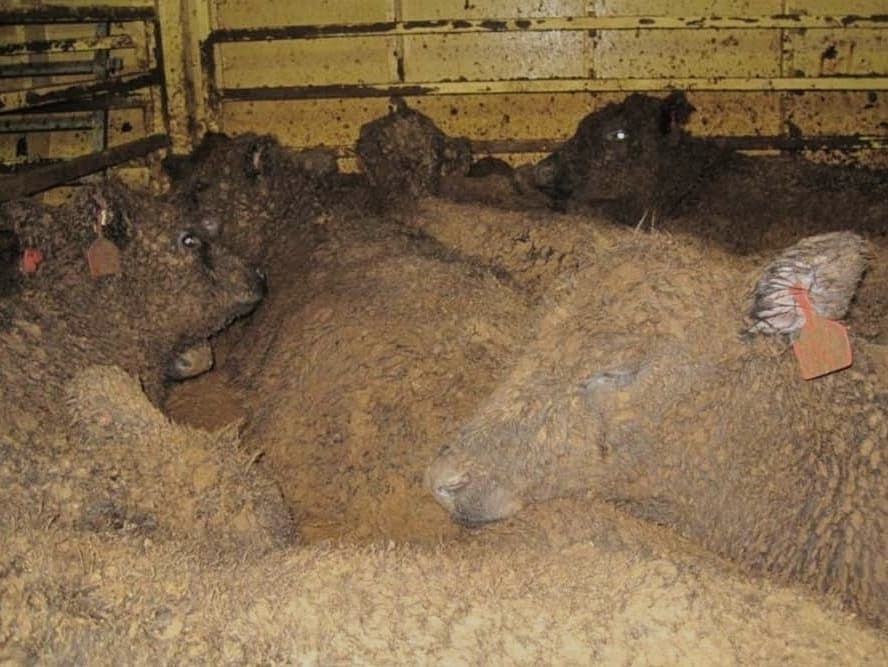
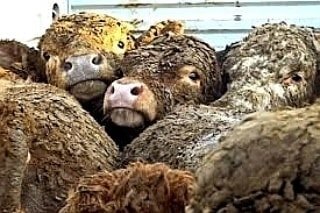
These photos have nothing to do with the Karim Allah, or the current problems in the Suez Canal. 

We now do understand that they are from the ‘Elbeik’; which was going round the Med for over 3 months.

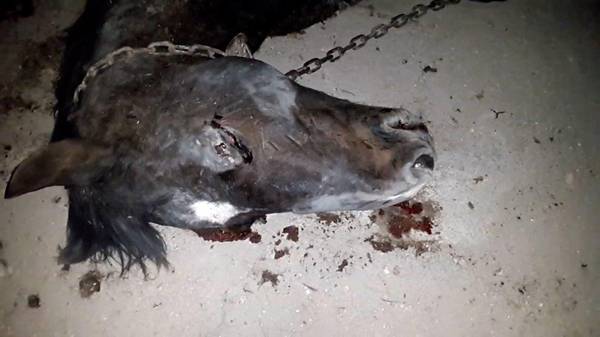
They have everything to with the conditions faced by some animals when they have suffered at sea for longer terms.

Unlike some others, we will not hesitate to show the reality of this business.

Please remember this photo when we ask for your help and support with regard issues trying to stop this disgusting trade.

All our live export posts can be found at Live Transport – World Animals Voice

Thanks; Regards

IT IS WHY WE FIGHT FOR THEM !!

Mark

New Zealand: The NZ Government Will Soon Decide Whether to Ban Live Export. Your Input Needed Now – Immediately.

WAV Comment:  We hope that we have given you extra fodder over recent weeks on the issue of live animal exports.  The Karim Allah, the Elbeik; and now the issue of over 20 livestock vessels stopped because of the problems in the Suez Canal.

Live Transport – World Animals Voice

It is vital that NZ gets the message that it must stop live animal exports; so please send your message (link below) as soon as possible – there is not time to delay.

Regards Mark and Venus.

The NZ government will soon decide whether to ban live export.

The fate of hundreds of thousands of animals in New Zealand hangs in the balance. We’ve heard from our friends at the NZ group SAFE For Animals that their Prime Minister could be making a decision on a long-awaited review of the live export industry any day now.

Please urge Prime Minister Jacinda Ardern now to end live animal export for good.

Take Action by clicking on the following:

URGENT: Ask PM Jacinda Ardern to ban live export (animalsaustralia.org)

The review into live export, which started nearly two years ago, considered a range of options from improving systems to a total ban on this cruel practice. The papers are now with the government and they’ll decide soon which of these options to implement. So animals need your voice urgently today.

New Zealand hasn’t exported live animals for slaughter for many years, which is a testament to caring people speaking out against this cruelty. But a loophole has allowed the ongoing export of ‘breeder’ animals from New Zealand — meaning pregnant dairy cows are being shipped all the way to China and other countries around the world. There these vulnerable animals face repeated forced pregnancies, with their calves taken soon after birth, and eventual slaughter that doesn’t need to meet New Zealand standards.

One tragic outcome of this loophole trade was the Gulf Livestock 1 disaster last year. On 2 September 2020, the live export ship capsized in heavy seas and sank off the coast of Japan on the way to China. Forty-one of forty-three crew members and all 5,867 New Zealand cows onboard died at sea. Sadly, this was the latest in a long list of disasters at sea in the global live export industry.

Prime Minister Ardern and her Cabinet meet on Mondays: let’s make sure that emails from compassionate people have placed animals front of mind as they start their next meeting.

Take action for NZ cows »


The decision that New Zealand makes on this will also set a hugely important precedent for animals in Australia and other countries,

Please join other caring people in speaking out for cows and their calves now.

Together, we can take this important opportunity to call for a kinder future for animals in New Zealand and around the world.

For the animals

Lyn White AM
Animals Australia

England: 28/3/21 – At Least 20 Livestock Ships Caught in Suez Canal Logjam are ‘Biohazard Timebomb’, Charity Warns.

WAV Comment:  Well done ‘The Guardian’ (London) national press for keeping us so well informed on this issue. As usual and have we have seen with issues such as the capsize of the ‘Queen Hind’ in Midia (Ro); the jack arse Romanian government have nothing to say – just like their masters at the EU.  Everyone in power keeping tight lipped about animal suffering as always.  Today, 28/3; it would appear that there are now 20 livestock vessels having problems in relation to the Suez incident.

If this is not time to stop all live animal exports, then when is ?

Do politicians listen ? – Do they hell !

Regards Mark

View all our posts regarding live transport by visiting:  Live Transport – World Animals Voice

Suez Canal: Livestock ships caught in logjam pose ‘ticking biohazard timebomb’, charity warns | The Independent

Suez Canal: Livestock ships caught in logjam are ‘biohazard timebomb’, charity warns

At least 20 vessels carrying live animals, according to industry tracking data, which could pose problems if Ever Given rescue effort proves prolonged and feed supplies run low

With the MV Ever Given mega-ship still stranded in the Suez Canal and blocking traffic in both directions, it emerges that at least 20 of the cargo vessels forced to queue in the MediterraneanRed Sea and along the historic waterway are carrying livestock, raising concerns about the animals’ welfare.

Data from freight tracking website Marine Traffic indicates that 11 of the delayed container ships are carrying cattle, sheep and other livestock, while the Australia-based NGO Animals International has identified a further nine, according to The Guardian.

Marine Traffic spokesperson Georgios Hatzimanolis said three of the carriers, the Omega Star, the Unimar and the Sea Star, “appear to be stuck at various points in the canal” rather than queuing for entry.

Gerit Weidinger, EU coordinator for Animals International, said the Unimar and Omega Star appear to have left Spain on 15 March and 16 March respectively while a further nine of the boats were loaded in Romania earlier this month.

While the animals aboard are not in immediate danger, the prospect of the rescue effort to free the Ever Given taking several weeks to accomplish poses serious questions about their welfare.

“I wouldn’t expect just after a two-day delay for a problem to have built up,” Peter Stevenson, chief policy officer at Compassion in World Farming, told Bloomberg. “It’s as time goes by that the problems get worse. Occasionally, there are real scandals when things go wrong, but it’s a day-to-day horror.”

“My greatest fear is that animals run out of food and water and they get stuck on the ships because they cannot be unloaded somewhere else for paperwork reasons,” Ms Weidinger said.

“Getting stuck on board means there is a risk of starvation, dehydration, injuries, waste buildup so they can’t lie down, and nor can the crew get rid of dead animal bodies in the canal. It’s basically a ticking biohazard timebomb for animals and the crew and any person involved.”

Companies transporting livestock by sea reportedly set sail with at least two or three days’ worth of extra hay or feed on board and could potentially have more delivered by barge if they cannot reach port in time, a process known as “midstream loading”.

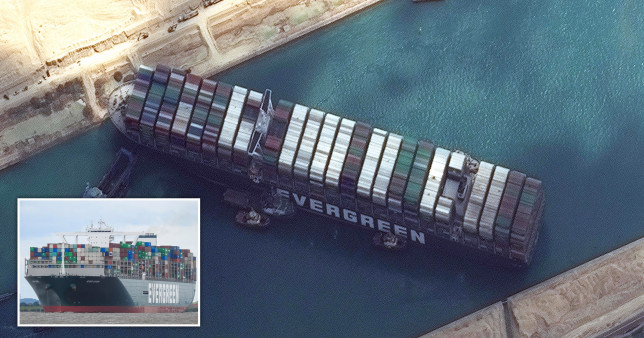
The chaos in the canal began on Tuesday when the Ever Given, a 220,000-tonne container ship operated by Taiwanese shipping giant Evergreen was apparently blown off course by 30mph winds and became wedged in the bank, bringing traffic to a standstill in a trade route that accounts for approximately one-tenth of the world’s seaborne freight.

Efforts to free it using a team of tugboats, diggers and cranes have yet to see the ship refloated, with the ongoing delays to the delivery of container cargo expected to have widespread knock-on effects for the global supply chain.

“Even the slightest delay in traffic can result in congestion and disturb the delivery of goods and commodities on both sides,” analysts at S&P Global Platts warned earlier this week.

Earlier report from The Guardian:

At least 20 livestock ships caught in Suez canal logjam | Animals | The Guardian


At least 20 livestock ships caught in Suez canal logjam

Concerns for animals’ welfare if Ever Given blockage crisis is protracted

At least 20 of the boats delayed due to a stricken container ship in the Suez canal are carrying livestock, according to marine tracking data, raising concerns about the welfare of the animals if the logjam becomes protracted.

The 220,000-ton Ever Given is causing the longest closure of the Suez canal in decades with more than 200 ships estimated to be unable to pass, and incoming vessels diverting around southern Africa’s Cape of Good Hope.

Georgios Hatzimanolis, a spokesperson for the tracking website Marine Traffic, said while some livestock ships were waiting to enter the canal, three – the Omega Star, the Unimar and the Sea Star – “all appear to be stuck at various points in the canal”. Marine Traffic data showed 11 delayed livestock ships, while an NGO has identified others, bringing the total identified so far to 20.

Five of the ships identified had loaded animals in Spain, and nine had loaded in Romania earlier this month, according to the NGO Animals International.

Gerit Weidinger, EU coordinator for Animals International, said data from marine tracking websites indicated the Unimar left Spain on 15 March bound for Jeddah. The Omega Star left Spain, she said, on 16 March bound for Port Said.

There were no immediate welfare concerns for the animals, but if the Ever Given has to be lightened to make it easier to dislodge, using cranes to remove enough containers could take weeks and the surrounding ships would need to leave and find longer alternative routes.

The nearby ports of Said and Suez could be used to reload fodder if supplies run low, though the process may not be straightforward with so many ships in the queue.

Thousands of cattle have already been slaughtered this year because of delays at sea.

Two ships, the Karim Allah and the Elbeik, were forced to spend months away from port because their original destination refused to accept the animals due to a health paperwork dispute that raised fears the cattle could be carrying the bovine disease bluetongue. The dispute ignited a chain of events that saw both vessels eventually return to Spain.

The animals on board the ships returned in such a poor condition Spanish authorities ordered them to be slaughtered in the port of Cartagena. More than 850 cattle on the Karim Allah were slaughtered earlier in March, while the Elbeik slaughter is ongoing with an estimated 360 of the almost 1,800 who commenced the journey culled as of Thursday.

Weidinger said she was concerned if the crisis became protracted the animals’ welfare could become an issue.

“My greatest fear is that animals run out of food and water and they get stuck on the ships because they cannot be unloaded somewhere else for paperwork reasons,” she said.

“Getting stuck on board means there is a risk [for the animals] of starvation, dehydration, injuries, waste buildup so they can’t lie down, and nor can the crew get rid of dead animal bodies in the [Suez] canal. It’s basically a ticking biohazard timebomb for animals and the crew and any person involved,” she said.

Asked about the ships with Spanish-origin livestock on board, the Spanish agriculture ministry said on Thursday: “We cannot tell you anything about these ships, but due to the blockage of the Suez canal as a result of the grounding of the cargo ship, the Spanish administration has given orders that no animal transport ships bound for Saudi Arabia and Jordan should be loaded until the canal can be navigated normally.”

Romanian agriculture and veterinary authorities have yet to comment.

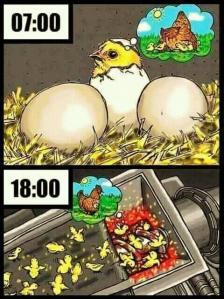
The cruel death of the day-old chicks

The economic interests of the poultry mafia have so far been one of these “reasonable reasons” for the brutal massacre of 45 million male chicks in hatcheries in Germany every year.

Germany produced 20 billion eggs in 2020.
A horror crowd!

To do this, over 45 million hens in Germany have to live a miserable existence in cramped, dark stables.
The ban on shredding from 2022 is an overdue step and does not change anything in the basic exploitation and suffering of chickens.

In 2019, 45.3 million male chicks were massacred in Germany.
They do not lay eggs and put on little meat.
Under this logic, it is legal male chicks brutally gas or shredded a few hours after they saw the light of day.

Producing living beings in order to kill them is the worst form of fascism.

My best regards to all, Venus

England: Big Problems For Livestock Ships Stranded In the Suez Canal. We Have Major Concerns for Animal Welfare.

27/3/21 – I was hoping that I would not need to write this; especially after the farce involving the EU and animals in transport recently, but there is now another problem yet regarding live animals in maritime shipment, as before.  I will try to summarise from the information we currently have.

We all know about the very recent issues regarding the Karim Allah and the Elbeik which carried livestock for over 3 months; unable to find a port that would accept them – scroll here to see all the posts – Live Transport – World Animals Voice

Livestock vessels currently use the Suez Canal (Egypt) https://en.wikipedia.org/wiki/Suez_Canal  to get from the Mediterranean Sea into the Red Sea when going to the Middle East.  The Suez is a small, narrow waterway.

In the past week, a huge 220,000 tonne container carrying ship called the ‘Ever Given’ managed to get jammed in the Canal; thereby blocking off access all other ships following behind.   https://en.wikipedia.org/wiki/2021_Suez_Canal_obstruction

Amongst these ships were several livestock carrying vessels; probably 8; Vessels Jersey, Unimar Livestock, Omega Star, Harmony Livestock, Dragon, Lady Maria, Sea Star Livestock, and Gemma star.

Some of these can be seen on one of our recent posts:  England: A Snapshot of the Maritime Livestock Trade – Vessels Currently Shipping Live Animals Around the World. A Disgusting Animal Abuse Issue. – World Animals Voice

All of them left from either Midia (Romania) or Cartagena (Spain).  We have no confirmation at this time, but suspect that the vessels from Romania were carrying sheep (Romania is a big sheep producing nation); and probably cattle being transported from from Spain.  Because of the number of livestock carrying ships involved, and the numbers of animals each are carrying; it is currently impossible to give an overall total for the numbers of animals involved in this crisis. But it will be in the ‘many thousands’.

By Friday 26/3, the maritime traffic jam had grown to more than 200 ships outside the Suez Canal, all affected by this one ship blockade.  With massive international pressure growing to resolve the issue, as well as the huge financial involvement of cargoes carried, the megaship’s owners, Japanese firm Shoei Kisen KK, said 10 tugboats had been deployed to attempt free it.

So, the current situation is that many livestock ships with animals on board are literally stranded in the Suez Canal.  Word from London today (27/3) is that a possible ‘free up and re float’ of the ‘Ever Given’ may take place very soon.  Knowing the situation on the Karim Allah and the Elbeik regarding lack of food and water; we naturally have concerns for the welfare of all animals carried on all the ships.

27/3 – I have checked all ship positions today, it has taken some research time, but I can confirm the following:

Vessel ‘Jersey’ – – registered Togo – en route to Jordan – stuck in Suez Canal.

Vessel ‘Unimar Livestock’ – registered Togo – en route to Jeddah – stuck in Suez Canal.

Vessel ‘Omega Star’ – no details

Vessel ‘Harmony Star’ – sailing under flag of Tanzania – en route to As Suways / Suez Port, Egypt.

Vessel ‘Dragon’ – sailing under the flag of Togolese Rep. – en route to Jordan – stuck in Suez Canal.

Vessel ‘Lady Maria’ – en route to the port of Jeddah – Waiting in Med Sea at entrance to Suez Canal.

Vessel ‘Sea Star Livestock’ – en route to As Suways / Suez Port, Egypt – stuck in Suez Canal.

Vessel ‘Gemma Star’ – no details.

So as you can see with so many large livestock carriers; problems to say the least !

Some of these vessels have been stuck for around 4-5 days now at least.

I hope this gives a small insight into livestock transportation by sea; and the mega problems (feed and watering etc) that just one incident such as this can bring.  Many of these vessels are heading to the Middle East where animals will be ritually slaughtered without any prior stunning.

This is all fuel to our fire in our work to get live animal exports stopped.

Regards Mark

What is behind importing horse meat?

NGO investigations and EU audits carried out since 2010 have shown non-compliance with relevant EU requirements relating to animal welfare and traceability of horses in Argentina, Australia, Canada and Uruguay. Horses are systematically neglected and mistreated along the production chain of horsemeat.

They are beaten, kicked and receive electric shocks. They are malnourished and exposed to extreme weather conditions in slaughterhouse pens and at assembly centres. Injured, sick and weak horses receive no veterinary care and are left to die unassisted.

Currently, EU animal welfare requirements only apply to slaughterhouses.

The assembly centres and transport are not covered by EU rules. Horses are transported over long distances without water, crammed together in unsuitable cattle trailers, and many do not survive the journey to the slaughterhouse.

For several years, NGOs have been providing evidence that the audits of the EU Commission and European importers are manipulated by horse dealers and slaughterhouse operators.

Australia, Meramist Slaughterhouse

For example, pregnant, injured, sick and emaciated horses are replaced or removed.

The reports of the latest EU audits in Uruguay and Argentina state that the assembly centres were either empty or the horses had been exchanged shortly before the visit.

In the above-mentioned countries, horses are not considered to be food-producing animals and are commonly given drugs that are prohibited in the EU for use in horses destined for human consumption.

The traceability systems in place are unreliable, as they rely on the honesty of horse owners and dealers, who give sworn declarations on the medical treatments in the six months prior to slaughter.

Argentina, a slaughterhouse in Land L: Injured horses are pulled from the transporters with chains and left to die.

In the EU, horses are microchipped and have a passport showing their medical history.

In the export countries, they are tagged shortly before being sent to slaughter. Due to the lack of traceability, horses of unknown origin and with unclear drug history as well as stolen horses enter the food chain, which poses a high food safety risk for European consumers.

We call upon the European Commissioners Stella Kyriakides (DG SANTE) and Valdis Dombrovskis (DG Trade):

Continue reading “What is behind importing horse meat?”

Vietnam: 26/3/21 – Bile Bears Xuan and Mo Have Now Been Rescued by Four Paws and Are In Sanctuary Starting a New Life and Long Road to Recovery.

WAV Comment – some really fantastic news from Four Paws – absolutely brilliant to know that Xuan and Mo have already been recued now by Four Paws and are at the sanctuary home getting what they deserve after so many years of being kept in a basement and being used for daily bile extraction.

We covered this story in an old posts:

Vietnam: Urgent Rescue – Kept in a basement: Free Xuan and Mo from a life in darkness – Please Give Right Now ! – World Animals Voice

Vietnam Suffering Bears: The Life-Changing Moment Of Rescue and Relocation Is Now Just Days Away. – World Animals Voice

Donations to Four Paws to help them are always welcome – see above links or the web site.

https://www.four-paws.org.uk/?gclid=EAIaIQobChMIosLP5-TN7wIVhpftCh3J8AsQEAAYASAAEgI35fD_BwE

We rescued bears Xuan and Mo from a life in darkness 

Their whole life Xuan and Mo were kept in a windowless basement in Vietnam. But Tuesday was a big day for them – the day we relocated them to our BEAR SANCTUARY in Ninh Binh. This was the day they saw daylight for the first time since many years!

The transport to our sanctuary took around 9 hours. The first health check unfortunately revealed that both suffer from a gallbladder disease. Xuan additionally has a liver disease and his teeth are in terrible condition. 

Xuan and Mo will stay in a quarantine area for the first three weeks to prevent any potential disease transfer to our resident bears. There, they receive intensive medical care, are gradually introduced to a new healthy diet, are provided an array of different enrichment, bedding etc. and trust begins to be built between them and their caretakers.

Kept in a basement: Free Xuan and Mo from a life in darkness

Breaking news!

Xuan and Mo were successfully rescued! On Tuesday the 23rd of March our team arrived in the Son La Province. Luckily, the bears were quite calm and not afraid when our team approached them. Maybe they knew that we want to change their life for the better. After a 10 hour drive, they finally arrived at their new home in our BEAR SANCTUARY Ninh Binh.

Bears are very resilient, but it will be a long way to recovery nonetheless. Both suffer from gallbladder disease. Xuan additionally has a liver disease and his teeth in terrible condition.

You can still support their recovery. Will you help them to start their new life?

***

A life in darkness

No light, no ventilation or fresh air, nothing but the rusty bars of tiny barren cages. Kept in a windowless and wet basement since they were cubs, bears Xuan and Mo have suffered unimaginably.

The only time they get to see light is when their owner comes to feed them or worse: puncture their gallbladder with a needle, a painful procedure to extract their bile. This bile was used for medicinal purposes by the family of the owner. For years these bears have known nothing but pain and abuse. Without our help, Xuan and Mo will go through this cruelness until the end of their life.

Our team is still shocked by what they discovered in Son La Province, Vietnam. These keeping conditions are one of the worst we’ve ever seen. We have to get them out as soon as possible. Will you join this mission and support their rescue?

They deserve so much more in life

At our BEAR SANCTUARY Ninh Binh, they could get all the care and time they need to recover from the horrors they have endured. There, they could discover for the first time what a species-appropriate life for bears can look like. But we can’t rescue them without you.

The fate of Xuan and Mo depends on your donation. Will you help us to rescue them?

How your donation can change the lives of Xuan and Mo: 

  • They will be relocated to our BEAR SANCTUARY Ninh Binh 
  • They will get the extensive veterinary care they urgently need 
  • They will have access to a large outdoor enclosure 
  • They will get enrichment, bedding material and showers 

Images © Hoang Le | FOUR PAWS

Regards Mark

EU: 5 Freedoms Was Not Enough; Now We Have 7 Demands !

WAV Comment:  I really wish I had an ounce of faith that all these Euro Yukspeak words actually meant something; but I completely lost faith in the Eurojargon about better animal welfare many years ago.  For me, over 30 years of live animal transportation investigations and experiences may have had something to do with the loss of faith in ‘the EU systems’ that ‘protect’ animals, in this case, during transport – EU Reg 1/2005 for the ‘protection of animals during transport’:  https://www.europarl.europa.eu/RegData/etudes/STUD/2018/621853/EPRS_STU(2018)621853_EN.pdf

So now ‘the countdown is officially on’ ?

Now they talk about 7 key demands – and for so long over the years we have heard from the very same people about we the ‘five freedoms’ which should have applied to all animals within the EU:

The Five Freedoms include:

  • Freedom from Hunger and Thirst. By ready access to fresh water and diet to maintain health and vigour.
  • Freedom from Discomfort.
  • Freedom from Pain, Injury or Disease.
  • Freedom to Express Normal Behaviour.
  • Freedom from Fear and Distress.

These Five Freedoms are globally recognized as the gold standard in animal welfare, encompassing both the mental and physical well-being of animals; and the five freedoms have existed within EU strategy (on paper anyway) for quite a long time.

With so much undercover footage being presented to the EU over the years from farms, slaughterhouses, animals in transport, etc, by welfare organisations, showing failures across all the 5 freedoms, I guess we can say that the EU does not practice what it preaches. 

Yet here we are being told that there will be 7 key demands that will ‘shed light on the failures and poor enforcement of the current animal welfare legislation and call on the European Commission to commit to revising the entire legislation, leaving no animal behind’.

I really hope that no animal is ‘left behind’; but as I say, with a few years experience, and running animal welfare websites since 2005, cynical me thinks this is simply another stalling tactic by the EU simply because certain member states are not enforcing the regulations.  Romania and the sheep transporting ship which overturned leaving Midia – Romania: Secret Decks of Sheep On The ‘Queen Hind’ Which Sank at Midia ??. We Still Wait For EU Action and the Report Promised by the Romanian Government. – World Animals Voice  – February 2021, and still we have no answers !  So much for 5 freedoms, let alone 7 key demands !

The EU lost the plot on all this ‘animal welfare stuff’ many, many years ago; and I think the very recent incidents relating to the livestock carriers ‘Karim Allah’ and the ‘Elbeik’; where live animals were shipped around the Med for over 3 months, just shows what a complete and utter farce the whole EU ‘animal welfare’ thing is.   And I mean; have a look at just 2 of our past posts:

Spain: 10/3/21 – All Animals On The ‘Karim Allah’ Have Now Been Murdered By The Spanish Authorities After 3 Months at Sea. The Reality of Live Exports. – World Animals Voice

Togo: Live Animal Transport: Elbeik Still At Sea with 1700 Animals and Over 100 Feared Dead – Expected to Dock In Cartagena, Spain Tonight. ‘Karim Allah’ Killing Team Still In Cartegena. What Happens Later ? – World Animals Voice

Do not have any trust in the EU and its yukspeak, because that is exactly what it is – Yukspeak; or to put it another way; a means to further investigate, delay any action and produce yet more endless reports on what is the bloody obvious, and which everyone in the animal welfare lobby has known about and has been shouting about, and providing substantial evidence on for decades.

The EU is an over inflated no good – if it had any intentions of promoting animal welfare, then it would have acted a damn site more on animal transport legislation alone when we first saw the 1/2005 of that year come into force.  They failed then, they fail now, and they will continue to fail in the future.  Sadly, as always; it is the innocent animals that are the pawns, and who suffer as a result.

Regards Mark.

Continued on sheet 2 – select 2 from below.

This is how meat production works in Germany

Press release:
-Systematic shafts uncovered /

-German slaughterhouse tortures animals to death /

-North Rhine-Westphalia authorities fail to protect animals

SOKO animal welfare investigators can use current images from the last few weeks to prove that animals were systematically slaughtered in full consciousness at the Prott meat center in Selm North Rhine-Westphalia (NRW) on every slaughter day.

“The sheep were brutally slashed and thrown into a heap, cattle fought for their lives bleeding and dangling from chains and roared in pain,” says SOKO animal welfare investigator Friedrich Mülln, describing the situation.

The authorities had been warned for almost 20 years and failed to stop the shafts.

(The video is in German, but a detailed explanation of what you see is already in the report)

https://fb.watch/4qKQ6zfxkj/

The shaft of animals is illegal in Germany and only possible under very strict conditions in exceptional cases.
However, there are no special permits in North Rhine-Westphalia.

The Prott slaughterhouse, which is run by Germans, on the other hand, has specialized in slaughtering without anesthesia (!!!)

Continue reading “This is how meat production works in Germany”

22/3/21 Is ‘World Water Day’ – Prepare to Enter the ‘Dead Zone’; How Intensive Livestock Production Fuels Water Pollution Around the Globe.

WAV Comment – Today, 22nd March 2021, is the United Nations ‘World Water Day’.  Philip is a personal friend and fellow campaigner, CEO of Compassion In World Farming (England) who we have worked with for around 30 years.  Here he describes entering the ‘Dead Zone’.

Philip Lymbery | Water and Welfare

Today, 22nd March 2021, is the United Nations World Water Day. It’s about raising awareness of the value of water and the importance of protecting this vital resource on which we all depend.

For me World Water Day brings back memories of my investigations in the USA whilst writing Dead Zone: Where the Wild Things Were, where I witnessed for myself how intensive livestock production fuels water pollution around the globe.

I had travelled about 15 miles out in the Gulf of Mexico and was looking at something resembling a construction site. All around me were oil rigs. I’d heard a lot about this place in the middle of nowhere from the media. A place out at sea where nothing lives. Called the ‘dead zone’. An expanse of water so polluted that nearly all the oxygen has gone. A liquid symbol of what happens when efforts to prevent, mitigate or contain environmental damage fail and the water represents worst-case scenario; the marine ‘end of days’. The gathering body of oxygen-depleted – hypoxic – water forms a barrier to life, killing just about everything that can’t flee.

My plan had been to see the dead zone for myself – and not from the comfort of a boat. So snorkel fixed, I slipped into the water. At surface level the pea-green sea looked nothing out of the ordinary. As I peered into the gloom below, I could see fish and the water around me looked very much alive. Had there been some mistake? I ducked down again and held my breath this time, swimming down. Now things began to grow clearer – or rather not. A few metres beneath the surface, everything changed. The water was cooler, saltier and far more murky. I could see very little and without diving kit, I could go no further. I wouldn’t reach the dead zone myself, for it was far, far below, coating the bottom half of the water in a suffocating blanket.

Sadly, the dead zone in the Gulf of Mexico is not unique – they exist all over the world but among biologists, marine scientists and conservationists, it is among the most notorious. It now boasts the world’s second-largest area of oxygen-depleted water (the Baltic is the biggest). It’s a squalid claim to fame. The zone emerges every year, without fail, from February to October, stretching all the way from the shores of Louisiana to the upper Texan coast.

And the main culprit? Fertiliser.

According to the National Oceanic and Atmospheric Administration (NOAA) the source of the problem is the ‘flowing green oceans’ of corn in the Midwest of America. It is an area of intensive corn and soybean production, where large amounts of nitrogen from fertiliser and manure are applied to the soils every year. Excess nitrate is washed into rivers and streams and ends up in the Gulf. One would think the corn and soya would be feeding the world, but you’d be wrong, it’s feeding factory farmed animals. The problems in the Gulf are squarely linked to the food on our plates.

The reality of all this was brought home to me when I took to the air in a tiny Cessna plane. I was expecting various warehouses with impressive pallet-stacks of fertiliser bags, but we flew over a small town of sprawling industry, one of many perched on the banks of the Mississippi and to my horror, they were all fertiliser factories. But the term ‘fertiliser factory’ entirely failed to convey the sheer scale of this hidden part of the industrial farming jigsaw.

Dead zones are emerging around the world. Industrial agriculture systems, with their high dependence on artificial fertilisers and chemicals, are a major source of pollution of our precious water. Quite simply our hunger for ‘cheap’ meat from animals fed on cheap corn grown on chemical-laced fields is poisoning and driving out precious species and damaging ecosystems on land, rivers and sea. But it’s not too late to reverse the situation – a reduction in meat, dairy and egg consumption especially from factory farms, can reduce the water impact of our diets and greatly improve the welfare of farm animals.

This is why we need to seize the opportunity of this year’s United Nations Food Systems Summit to move toward a global agreement to end factory farming. To reset our food system towards regenerative, restorative, nature-friendly ways of producing food. The UN summit presents an incredible opportunity to focus this debate in one place and form the catalyst for change on a global basis.

Please join us and become a food systems hero.

Thank you.

Note: For more information and to watch the video ‘The Downstream Disaster’ from the Dead Zone series of films, please click here