Free Xuan and Mo from a life in darkness Dear Mark, We are still in shock. Never have we seen more cruel bear keeping conditions.
Since they were cubs, Xuan and Mo have been kept in a windowless basement of a shop. No light, no fresh air, nothing but the rusty bars of their tiny barren cages. They are so desperate to get out.
A life in darkness
Some days ago, we visited the bears to talk to the owner and see if there is any possibility of us rescuing them. To take pictures, the room had to be illuminated with flashlights to see the cages and the animals at all. It was hard to breathe because the air reeked of faeces.
The only time Xuan and Mo get to see light is when their owner comes to feed them or worse: puncture their gallbladder with a needle, a painful procedure to extract their bile. This bile was then used for medicinal purposes by the family of the owner.
Kept in a basement: Free Xuan and Mo from a life in darkness
A life in darkness
No light, no ventilation or fresh air, nothing but the rusty bars of tiny barren cages. Kept in a windowless and wet basement since they were cubs, bears Xuan and Mo have suffered unimaginably.
The only time they get to see light is when their owner comes to feed them or worse: puncture their gallbladder with a needle, a painful procedure to extract their bile. This bile was used for medicinal purposes by the family of the owner. For years these bears have known nothing but pain and abuse. Without our help, Xuan and Mo will go through this cruelness until the end of their life.
Our team is still shocked by what they discovered in Son La Province, Vietnam. These keeping conditions are one of the worst we’ve ever seen. We have to get them out as soon as possible. Will you join this mission and support their rescue?
At our BEAR SANCTUARY Ninh Binh, they could get all the care and time they need to recover from the horrors they have endured. There, they could discover for the first time what a species-appropriate life for bears can look like. But we can’t rescue them without you.
The fate of Xuan and Mo depends on your donation. Will you help us to rescue them?
From wherever you are reading this, you can join their rescue mission now. With your support, we will bring them to our BEAR SANCTUARY Ninh Binh and give them the life they deserve.
Helping them will only take 3 minutes – can they count on you?
Kind regards,
The FOUR PAWS team
PS: For years these bears have known nothing but pain and abuse. Without our help, Xuan and Mo will go through this cruelness until the end of their life. Please join this mission and help us to get them out of this dark basement!
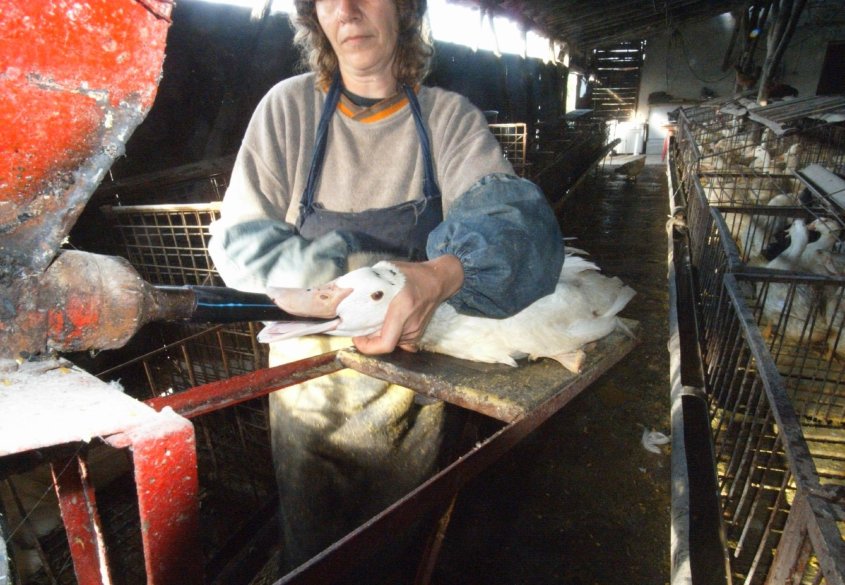
The United Kingdom will ban the import of foie gras and 13 large Italian supermarkets have decided to stop selling this product, considered by the EU as harmful, due to the mistreatment it entails for animals.
While the production of foie gras is illegal in the UK as a cruel practice, the country still imports approximately 200 tonnes of the product from abroad each year.
However, after fierce campaigns by animal rights organizations, the import of foie gras to the UK will finally be banned in a new post-Brexit law.
Animal Welfare MinisterLord Goldsmith has confirmed that he plans to introduce a ban on imports to the UK “in the next few months”.
Lord Goldsmith tweeted: “Foie gras is unbearable barbarism. It’s hard to imagine that anyone can see the process and still enjoy eating it. “ Before Brexit, the UK was subject to laws that considered the product a ‘delicacy’ and integral to French cuisine.
A spokesman for the Department of Environment, Food and Rural Affairs said the foie gras production “raises serious concerns.”
WAV Comment – Looks Really Cool !! – Things are really starting to move plant based now. That’s the Future.
MINNEAPOLIS TO GET ITS FIRST VEGAN BURGER CHAIN
New vegan burger chain Stalk & Spade—the first of its kind to open in Minneapolis—will expand nationally through franchising starting this spring.
Next month, vegan fast-casual burger shop Stalk & Spade will open in Wayzata, MN, a suburb of Minneapolis. Created by restaurateur Steele Smiley, Stalk & Spade will feature vegan versions of traditional fast food, such as burgers, cheeseburgers, chicken sandwiches, French fries, chicken nuggets, and shakes. All recipes were developed by the team after months of testing.
Smiley believes the plant protein concept can be a market leader and plans to build on the Wayzata location by expanding nationally through franchising, starting this spring. “I’m utterly convinced we’ve cracked the code on plant-based burgers. You won’t know the difference,” Smiley told media outlet Twin Cities Business. “I knew the only way people would come is if the food tastes like classic favorites.”
Plant-based eating is the future
A long time vegan, Smiley says his 11-year-old son inspired him to create the plant-based burger concept when, one night, he asked for a burger while eating at Smiley’s salad chain Crisp & Green. “We’re going to look like a national brand from day one: dine in, order ahead, car-side pickup,” Smiley said. “I believe all-plant eating is our future. It’s exciting to be first.”
Love the plant-based lifestyle as much as we do? Get the BEST vegan recipes, travel, celebrity interviews, product picks, and so much more inside every issue of VegNews Magazine. Find out why VegNews is the world’s #1 plant-based magazine by subscribing today!
WAV Comment – ‘No Objections to the Bill’; your compassion is making a difference.
We see this as a very positive move for the issue of dog meat (farms) in South Korea. But do not stop now, see the newsletter link below for info and to take more actions.
This Bill No.7035, bans the slaughter and sale of dogs and cats as food, and imposes penalties in case of violation. We are also cooperating with the push ahead of the proposed amendment.”
Learn more and further actions:
Click HERE to learn more about the Bill No. 7035 and take actions to help.
Our local favourite brother-sister vegan butcher duo will open their second brick-and-mortar later this year. Herbie Butcher’s Fried Chicken is set to open late spring from Aubry and Kale Walch, the pioneering siblings behind The Herbivorous Butcher. The new location on 48th and Chicago in South Minneapolis (735 East 48th Street) will provide comforting and homestyle classics including vegan fried chicken biscuit sandwiches, mac and cheese, seasonal sides, milkshakes, malts, and a fried chicken bucket.
Co-founder Kale Walch said, “Our mission has always been to try to save the world by bridging the gap for omnivores that haven’t quite made the full jump to veganism yet. By making vegan meats and cheeses that are even better than what they were used to, we start to accomplish just that. Herbie Butcher’s Fried Chicken continues our brand’s mission by making a fried chicken that won’t leave anyone questioning if a plant-based lifestyle is possible without sacrificing the foods we love.”
This is second major win for Kale and Aubry Walch who recently stood up to big-time conglomerate Nestlé. Nestlé aimed to trademark “The Original Vegan Butcher,” “The Vegan Butchers,” and “Vegan Butcher,” but met opposition from the siblings and eventually backed down, giving up all claims. Twin Cities residents know that the Herbivorous Butcher’s homemade meat-free meats and dairy-free cheeses are deserving of the term “vegan butcher,” one they have proudly embodied since opening in 2016. Now that Nestlé will not own these titles, it benefits and allows small businesses everywhere to use them.
Announcing a vegan fried chicken concept and trademark victory in less than the span of a month this early in the year is the bit of good news we’ve all been waiting for.
Cultured meat from Eat Just – which debuted in Singapore last year Credit: Eat Just
‘Cultivated meat presents as an achievable low-carbon, cost-competitive agricultural technology that can play role in achieving a carbon-neutral food system’
Cultivated meat, compared with conventional beef, can slash global warming impacts by up to 92 percent, states a new study.
Researchers from CE Delft also found cell-based meat could cause 93 percent less air pollution and use up to 95 percent less land and 78 percent less water.
The studies model a future large-scale cultivated meat production facility. It shows that by 2030, the cost of cell-based meat, when manufactured at scale, could drop to $5.66 per kg.
The LCA analyzes various scenarios. This includes the adoption of renewable energy by both the conventional and cultivated meat industry ‘should they go all-in on their climate mitigation efforts’.
In the most optimistic scenario, which factors in ambitious projections of conventional animal agriculture’s achievements in environmental impact improvements, cultivated meat outperforms all forms of conventional meat.
The LCA shows that cultivated meat, when produced using renewable energy, reduces the cumulative environmental impacts of conventional beef by approximately 93 percent, pork by 53 percent, and chicken by 29 percent.
In these scenarios, the conventional products are also produced using renewable energy.
Moreover, CE Delft says this production cost will enable cultivated meat to ‘compete with multiple forms of conventional meat’. As well as ‘serve as a high-quality ingredient in plant-based meat products’.
‘A carbon-neutral food system’
Ingrid Odegard is CE Delft’s Senior Researcher. In a statement sent to PBN, she said: “We show that cultivated meat presents as an achievable low-carbon, cost-competitive agricultural technology that can play a major role in achieving a carbon-neutral food system.
“This research provides a solid base on which companies can build, improve, and advance in their goal of producing cultivated meat sustainably at scale and at a competitive price point.”
‘Massive reductions in emissions’
Elliot Swartz is a Senior Scientist at The Good Food Institute (GFI). He added: “As soon as 2030, we expect to see real progress on costs for cultivated meat. And, massive reductions in emissions and land use brought about by the transition to this method of meat production.
“This research signals a vote of confidence. It serves as a practical roadmap for the industry to address technical and economic bottlenecks, which will further reduce climate impacts and costs.
“Government investment in R&D and infrastructure will be critical to accelerating the development of cultivated meat. And, help us achieve global climate goals.
Swartz then concluded: “Favorable policies and carbon markets can incentivize the restoration of agricultural land for its carbon sequestration and ecosystem services potential. This maximizes the climate benefits of cultivated meat.”
Alternative proteins
GFI Executive Director Bruce Friedrich also said the world will not achieve net-zero emissions ‘without addressing food and land’. Moreover, he states that alternative proteins are a ‘key aspect of how we do that’.
“Decarbonizing the global economy is impossible with the diffuse production process and range of gases involved in conventional animal agriculture,” Friedrich explained.
“As these new models illustrate… If we can concentrate the environmental impact of meat production in a single, manageable space — and if we power that space with electricity generated from clean energy sources — that’s how the world gets to net-zero emissions.”
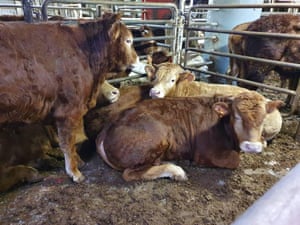
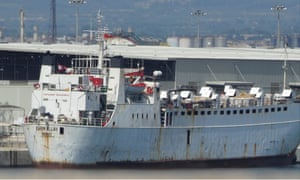
Hundreds of animals are now being euthanised in Spain, after the second ship, Karim Allah, returned with the unwanted young bulls, who are all only between seven and eight months old now. The same fate unfortunately awaits the animals transported in the Elbeik if it reaches Spain.
Compassion in World Farming has been in close contact with the relevant authorities in Brussels, Greece, Cyprus, Spain and Italy to minimise the suffering of the animals involved.
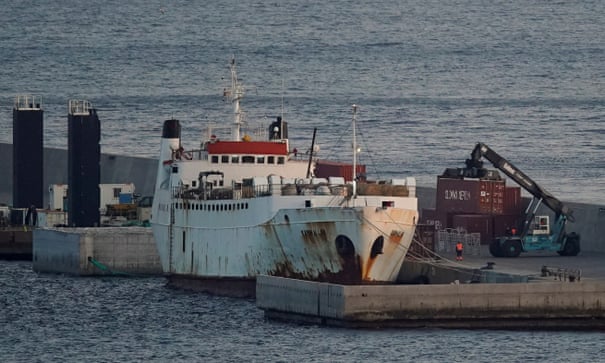
The EU has intervened to put diplomatic pressure to reduce the suffering of animals, who have been stranded at sea for over two and a half months. In the latest controversy to hit the trade of live animals, a pariah ship carrying over 1,700 cattle was allowed to anchor in Crete this weekend, after European Commissioner for Health and Food Safety Stella Kyriakides intervened on Friday.
The Elbeik is one of two vessels departing from Spain in mid-December, carrying young bulls for Libya and Turkey. Due to concerns over the bluetongue disease, the two ships were refused entry at all ports they reached. The animals have thus been circling the Mediterranean in hellish conditions.
On Friday, Kyriakides intervened and asked the Greek authorities to provide assistance with the Elbeik which was in need of fuel, feed and food, as well as to assess the condition of the animals.
“Unlike a sack of potatoes that can be shipped back and forth, cattle are capable of feeling pain and suffering,” said Olga Kikou, Head of Compassion in World Farming EU. “It is an extremely upsetting situation where thousands of young bulls got stranded in sea for over two and a half months, only to be killed back in the country where they came from – and this is considered legal, despite EU law that intends to protect animals during transport and recognises animals as sentient beings!”
Olga added: “The intervention by Commissioner Stella Kyriakides was instrumental in mitigating the suffering of the young bulls in this instance. Still, we all need to look at the upcoming revision of the rules on animal transport and we cannot stress enough how ambitious that revision should be. To avoid such scandals and to end this unnecessary suffering, once and for all, the EU must ban the exports of all animals outside its borders. Even animals sent for breeding will encounter cruel treatment due to lack of parity with EU animal welfare standards. It is about time animals are not treated as cargo in the European Union.”
Every year millions of farmed animals are transported live on long and gruesome journeys, quite often in filthy conditions, cramped, and often trampling on each other. In summer, they are transported in scathingly high temperatures, dehydrated and exhausted. Some of them perish.
The EU Commission’s ‘Farm To Fork’ strategy clearly states that the EU Commission intends to review the legislation on animal transport. In December 2019, the Council of the EU highlighted in its conclusions on animal welfare that ‘clear shortcomings and inconsistencies remain’ regarding the challenges of long-distance transport.
According to the European Commission’s overview audit reports of animal transport by land and by sea, there is widespread non-compliance and regular failure by Member State authorities to enforce the EU law protecting animals during transport. In addition, there are many loopholes that need to be strengthened. In particular, we call for an end to exports of animals outside the EU.
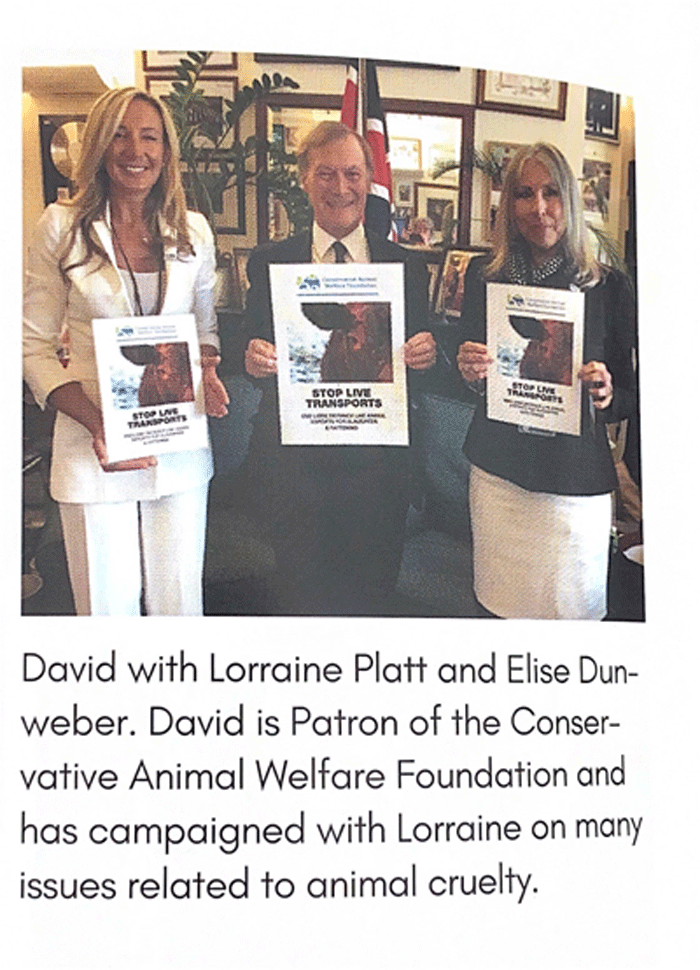
Sir David Amess MP will lead a Ten Minute Rule Bill on prohibiting the use of farrowing crates
There are 500,000 sows in the UK, 55% are caged. The crates severely restrict the sow’s movement and her strong instinct to build a nest before giving birth.
On the 10 March Sir David Amess MP will lead a Ten Minute Rule Bill on prohibiting the use of farrowing crates and improving the welfare of pigs entitled “Pig Husbandry (Farrowing) Bill”. We must put a stop to this cruel practice.
There are 500,000 sows in the UK, 55% are caged.
The crates severely restrict the sow’s movement and her strong instinct to build a nest before giving birth. Farrowing crates have been banned in Sweden, Norway and Switzerland already. The farrowing crate use is allowed and used routinely in the rest of the EU, however there are commercially available free-farrowing systems: 360 degrees; PigSafe; and, SWAP systems.
Sow stalls (where pregnant pigs are kept indoors in sow stalls, have no access to the outdoors and are deprived of natural movement) are illegal in the UK and Sweden and banned across the EU from 2013, except for the period of weaning of the previous litter until the first 4 weeks of gestation. They are being phased out in the US and in New Zealand.
Conservative Animal Welfare Foundation calls for a ban on farrowing crates which severely restrict the sow’s movement and her strong instinct to build a nest before giving birth.
The Farrowing Crate is a small metal cage in which pregnant sows are imprisoned for weeks on end, usually from a week before giving birth until their piglets are weaned three to four weeks later. She will be subjected to this roughly twice a year. The metal frame of the crate is just centimeters bigger than the sow’s body and severely restricts her movements. She is completely unable to turn around, can scarcely take a step forward or backward, and frequently rubs against the bars when standing up and lying down.
Beside her cage is a “creep” area – for her piglets. The flooring is hard concrete and some form of heating, either mats or more commonly heatlamps, is used as a substitute for the warmth of their mother’s body.
Sows instinctively want to care for their baby piglets but are deprived of building them a nest on industrial farms and are unable to exhibit their natural behaviours. We need Change now. Pigs are highly intelligent animals and scientists have shown that they can play computer games.
WAV Comment – we are very much trying to get news and information from Spain re the ‘Karim Allah’, which docked at the south-eastern Spanish port of Cartagena last week. We think that (and via other groups also) that all the cattle started to be slaughtered at the port commencing 6th or 7th of March 2021. When we get confirmation of the exact situation, we will publish more.
Horsemeat from overseas: animal welfare and consumer protection at risk
8 March 2021
AWF
Press Release
The latest NGOs investigations and EU audits in Australia and North and South America have, again, revealed massive problems with animal welfare and food safety. Today, the Intergroup on the Welfare and Conservation of Animals of the EU Parliament hosted a meeting on the import of horsemeat from overseas to analyse the problem.
FOR IMMEDIATE RELEASE: Brussels, 8 March, 2021
New video footage proves that horses are systematically abused, mistreated and neglected. Severely injured and sick horses do not receive veterinary care or euthanasia. Downer horses are pulled off the trucks with chains and left to die. In Canadian feedlots, newborn foals still freeze to death at temperatures as low as minus 36° Celsius
Horsemeat imports from overseas have been criticised by international animal welfare organisations for many years. The Animal Welfare Foundation (Germany) and Tierschutzbund Zürich (Switzerland) published their first comprehensive investigation report about horsemeat production in North and South America in 2013.
As a result, all Swiss supermarkets took horsemeat from overseas off their shelves. Several Belgian, Dutch and French retailers followed their example. In 2015, the biggest Swiss meat importer GVFI (Basel) also stopped these imports on the ground that the equines’ traceability is not ensured. Yet, around 17,000 tons of horsemeat from overseas continue to be imported every year to the EU and Switzerland.
An international animal welfare coalition, via a petition which has already gathered nearly 120,000 signatures, is currently calling on the European Commission to immediately suspend the imports of horsemeat from countries where EU requirements on food safety and animal welfare are not respected.
“Since 2015, European importers have been trying to get to grips with the blatant animal welfare violations in their partner slaughterhouses overseas by producing new manuals and arranging on-site visits”, added Gurtner. However, the importers’ attempts to control the production conditions have been ineffective to this day, as confirmed by recent NGOs investigations and EU audit reports.
The malicious trade and slaughter of horses of unclear origin is causing serious animal welfare issues as well as health- and food safety risks. Horsemeat ends up indistinguishable in processed products, often sold in snackbars and cafetaria’s, so consumers may even be unaware of what they are actually eating. Besides, the animal abuse uncovered in the NGO’s documentaries is horrific. There are no excuses for the European Commission to look the other way any longer. The import of horsemeat from overseas has to be immediately stopped
The most recent EC audit reports on horsemeat production in Uruguay (2018) and Argentina (2020) confirm “serious questions about animal welfare at the time of killing” and that “the shortcomings identified in the operation and effectiveness of the control system at these facilities do not allow the CCA (Central Competent Authority, ed) to provide guarantees that they are under adequate control, and thus to provide assurances that they meet relevant EU standards”.
The same EU audit reports also indicate that the audits did not reflect the everyday situation. “The inspections are announced in advance and slaughterhouses and horse dealers have developed a system to mislead the inspectors”, explains Gurtner. Footage recorded by NGOs shows that pens are emptied before the audits, or that sick and injured horses are exchanged with healthy animals.
The EU suspended Mexican horsemeat imports, following issues similar to those that occured in Uruguay, Argentina, Canada or Australia, and it led to a decrease in production and exports. Yet, now we witness an increase of Argentinian horsemeat imports into the EU, so any positive impact has been hindered by the lack of coherence of the EU approach on this dossier. The EU should send a clear message to its trading partners stressing that respecting the rules matters, and suspend imports where requirements are not met. Then, it should use its trade negotiations to incentivise progress and only restore imports if rules are respected
Concluded Reineke Hameleers, CEO, Eurogroup for Animals.
WAV Comment – As always, I want to thank Stacey at ‘Our Compass’ Stacey | Our Compass (our-compass.org) for supplying this info to me. For Regan Russell, and for Jill Phipps, killed here in England when murdered by a livestock truck carrying calves for export, there will never be any so rightly deserved justice. The ‘system’ is fine tuned to stop the law doing what it rightly should. But we, in the animal activism world will always look and remember Regan and Jill for what they were and for what they did; paying the ultimate price for simply showing compassion to those who had never experienced it before. Mark.
Animal exploitation perpetuates normalized violence, towards all, I have never witnessed so much hostility, anger, and belligerence than from the purveyors of animal consumption. To disregard animals in such incalculable numbers and in unimaginable ways, inflicting intentional, massive, and relentless suffering and pain on trillions of animals per year, taking their lives willingly and indifferently, promotes violence towards all animals, including humans. You cannot deal in bloody violence, perpetuate and sanction it, and not have it affect others.
I can attest I saw relentless activism on behalf of the killer and not the victim, fundraisers where people happily provided thousands of dollars to the killer, not to the victim, as per normal in the animal agriculture industry: the victims are hidden and society excuses such because it personally profits and benefits from the victimization. There was no expressed remorse, regret, genuine condolences, only anger, ridicule, and mockery towards those very humans who are opposed to exploitative violence.
Even if you disagree, your opinion is meaningless to the victims, who suffer, feel pain, and die violently and unwillingly. Regan Russell is another victim of the brutal, violent, and despicable animal agriculture industry.
The trucker who killed Regan Russell was cited with careless driving, a non-criminal charge.
Anita Krajnc was charged with criminal mischief, facing up to 10 years in prison, for giving water to pigs.
Regan Russell, 65, was violently struck and killed by a pig transport truck in front of Sofina’s Fearmans slaughterhouse on Friday, June 19, 2020. She was at a Toronto Pig Save vigil with six other activists giving pigs water on one of the hottest days of the year. She regularly attended pig vigils and on this particular day Regan was there to oppose Ontario’s “ag-gag” Bill 156, which had passed two days prior.
On the morning of June 19th, 2020, seven activists from the love-based animal rights group Toronto Pig Save were demonstrating outside Sofina Foods’ Fearmans slaughterhouse in Burlington, Ontario. What began as a peaceful vigil (giving water to pigs and offering them comfort moments before their death) and protest against “ag-gag” Bill 156 soon ended in horror for vegan activist Regan Russell.
It was a little after 10 am as another truck carrying pigs appeared on the horizon, but something was off. Though the truck would be turning right onto a service road, the driver remained in the left lane, not moving, holding up traffic for several light-cycles. Russell, waiting at the crosswalk on the far side of the service road, eventually decided to join her companions. Suddenly, the truck lurched forward and the other activists heard a terrifying scream, but the driver kept going until security guards waved him down.
By then, 65-year old Regan Russell, a decades-long pioneer in Canadian animal rights activism had been dragged more than the entire length of the truck, and she was dead.
No criminal charges were brought against the driver due to the passing of Bill 156 just one day before, a statute designed to protect transporters from animal rights activists. Dubbed an ag-gag, Bill 156 is an undemocratic and unconstitutional piece of legislation that allows force to be used against protesters. It also infringes on the right to assemble and criminalizes activists and whistleblowers working to expose violence against animals on farms, at slaughterhouses, and in transport trucks.
Directed by award-winning filmmaker Shaun Monson (Earthlings, Unity), and featuring never-before-seen footage, There Was a Killing provides first-hand accounts and in-depth analysis from attorneys Robert Monson, Lisa Bloom, and David Simon exposing corruption and a cover-up that has allowed the animal agriculture industry to avoid the legal and economic consequences of their behavior through a law some may see as a license to kill.
Regan Russell spent the final moments of her life providing comfort to pigs who had never experienced the touch of a kind hand. While her tragic death has brought upon deep sorrow in the Animal Save [Movement] community, we will honor her memory by vigorously confronting the cruelties she fought so hard to prevent by marching with Black Lives, protecting Indigenous rights, fighting for LGBTQ equality, and living a compassionate vegan life. The Ontario government can attempt to silence us with the passage of its Ag-Gag bill -Bill 156 – but we will never go away and we will never back down.
Take PETA’s Cruelty-Free Shopping Guide along with you next time you head to the store! The handy guide will help you find humane products at a glance. Order a FREE copyHERE
Searching for Cruelty-Free Cosmetics, Personal-Care Products, Vegan Products, or more? Click HERE to search.
Free PDF of Vegan & Cruelty-Free Products/Companies HERE
Want to do more than go vegan? Help others to do so! Click below for nominal, or no, fees to vegan literature that you can use to convince others that veganism is the only compassionate route to being an animal friend:
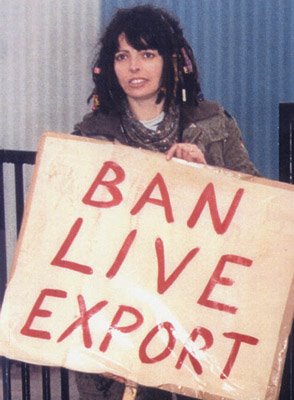
You know, people do things and take actions in many different forms, because they know that what is being seen by everyone is simply not right. Many know it is true, and yet continue to do nothing about it; others do get up off their butt and decide to take action; and that action comes in many forms; that is what makes us all different; and what often makes the difference in getting change. A while back I was asked why I have always been so involved in campaigns against live animal transport. It is a very long story, but the reply I gave hopefully explains a little about it. For me, when I was 8 or 9 years of age, it was that simple day, but a different one, when I witnessed something as a young lad all those years ago and decided that what I was witnessing was simply not right; so time for action. 50 years later we still have not won on this disgusting issue, but we have hell made a dent and have the vast majority of the worlds public support behind us ! – and that is positive for any campaign.
Regards Mark.
So what made you get into live animal exports so much Mark ?
I have really been an animal activist since the age of about 16. I am into the rear end of my 50’s now; but fighting for animals every day for so many years has always been a challenge and an enjoyment; I don’t regret one single day of trying to make a difference for them despite some failures (which you always get) with some issues. To say every day was ‘an enjoyment’ is probably wrong; you see a lot of bad stuff; but fighting for animals, yes, that is a total enjoyment.
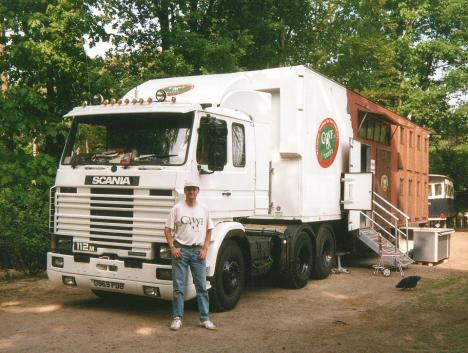
Live exports; yup; lets go back to when I was around 8 or 9 years old. Like most young lads, I lived on my bike and went anywhere and everywhere I could on it, day in, day out. At the time, we lived close to one of the major motorways (freeway, autoroute; many names in many different places) that went on to the Channel port of Dover. Kent is the nearest part of England to Europe, and is still known as the ‘Gateway to Europe’ for freight and holiday traffic.
So one Sunday I was out on my bike; it was raining and quite windy, but what the hell; that was biking ! – at one specific location on this major motorway, which was a regular on my route, the official ministry staff were pulling over Dover bound freight heading for Europe, to check they were roadworthy and had all the necessary taxes and documentation that was required by law.
As a young lad; and things have not changed much ever since; I am still a bit of a truck ‘Diesel Head’ – I still love anything truck and heavy freight; I would sit on the grass near to these officials and revel in being able to see all this heavy freight being pulled over and stopped just a few metres from where I sat on the grass. This ‘official’ pull over and stop place used on the motorway was on a gradual upwards incline; so in a way, many loaded trucks were naturally going slower; which was ideal for the officials to select their ‘victims’.
Then, on that day, in a matter of seconds; things changed; and my life really has never been the same since. Looking back (down) the incline at the trucks clambering up the slope; out of the gloom and rain I saw this ‘slow goer’. The plod (policeman) stepped into the first lane of the motorway just ahead of it, pointed at the truck and then pointed towards the small lay by area where we were. In compliance with what was being said to him through hand signals, this same truck steered left onto the lay by area; where it stopped a few metres from me.
Bloody hell; I had never witnessed anything like it before. It was the big; 3 axle trailers as you often see; but instead of the usual box or tilt type; this was loaded up with 4 tiers of live sheep. In those days, (which is illegal now); the top tier had no roof for animal protection, and so the poor unfortunates on the top deck were trying to hide down below the end and side panels of the trailer; in order to get a little protection form the wind and rain which the elements threw at them. Those located in the middle of the pack were hemmed in due to stock densities; and had no chance of getting to the sides; so they simply endured all the wind and the rain; it was a simple as that.
I sat there for the five minutes or so that this truck stopped; mesmerized by what I was seeing; whilst the driver, T shirt laden in his warm and cosy cab, went through his paperwork with the officials.
I was only 8 or 9; but I knew there and then that what I was witnessing was sheer animal abuse; and the immense suffering that was being imposed on the animals on this truck that were unable to defend themselves or their rights from ‘mighty man’. Within minutes; the paperwork was obviously declared as correct, and the animal carrier pulled back out onto the motorway from its stop point to continue its journey; with so many innocent and suffering sheep aboard.
For me; that was it; mentally, I declared to myself there and then that one day when I got bigger and had a chance to do it; I would do whatever I could to stop this disgusting business that I had just witnessed – the transport of live and sentient animals over long distances.
Fifty years later, I have probably grown up now (?), and am still doing the fight. Now, public awareness of the suffering of the live trade, and the huge public support through many years of education, is so much behind us and giving the drive. That boyhood vision of taking action as a ‘grown up bloke’ eventually arose, and I never ever looked back and considered that it was time to call it a day.
When I got into my teens I was pretty level headed, but when it came to animal abuse and suffering; I became an ‘angry young Turk’; trying most things to stop their suffering. My first ever ‘proper’ demonstration was at the age of 16 when I went ‘up the road’ into London town to take part in well organised campaigns against the barbaric dog and cat meat trade in the far East.
The more I started learning about other different issues of animal suffering, as you do at such events, the more I became involved with different campaigns against the abuse. But those visions of the live export sheep that day from my childhood stayed with me; I never forgot them or their suffering; and I guess that speaking up in their defence against live transport years later became my real No.1 issue; and still is.
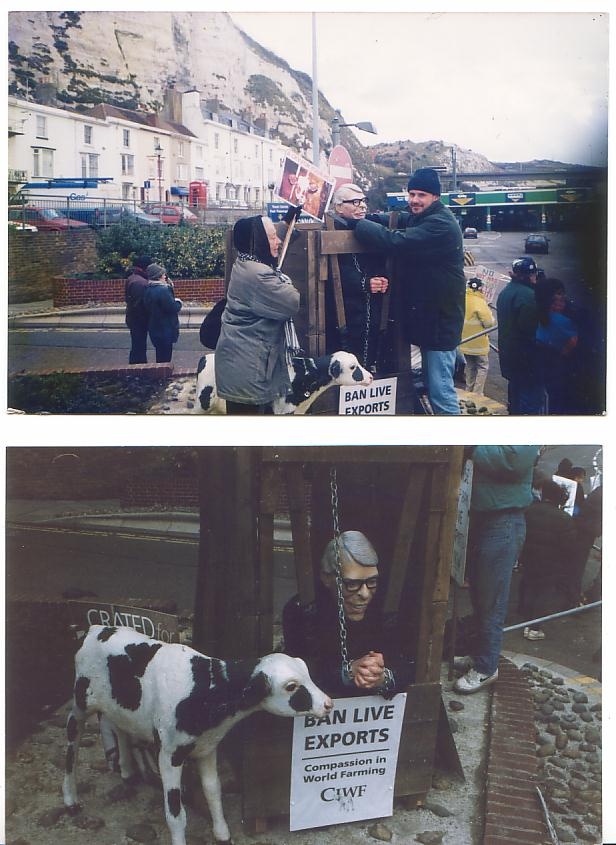
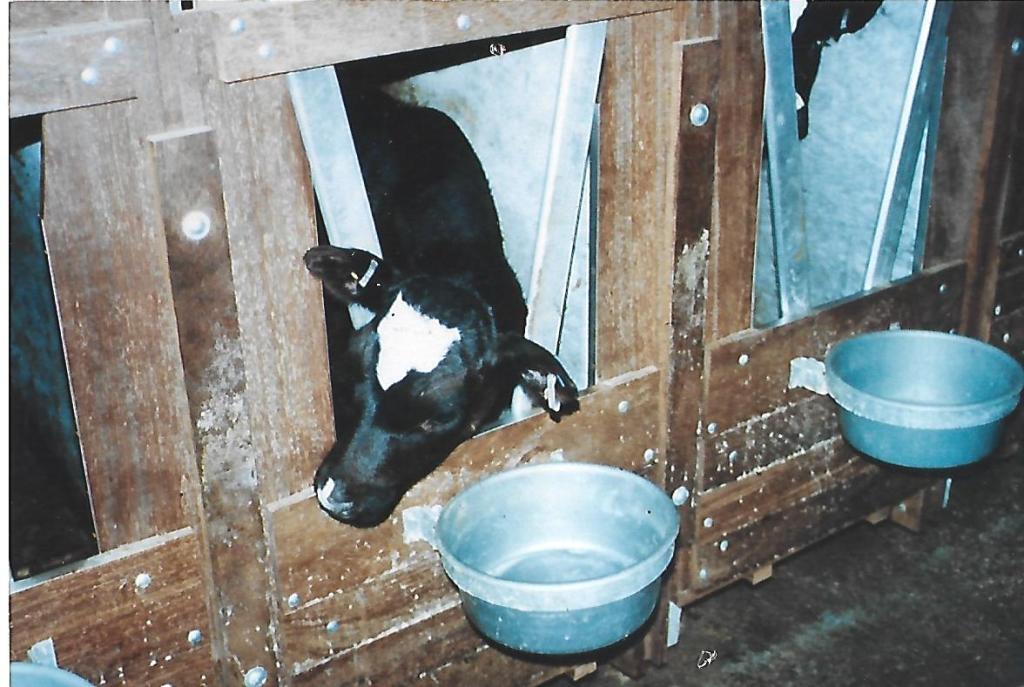
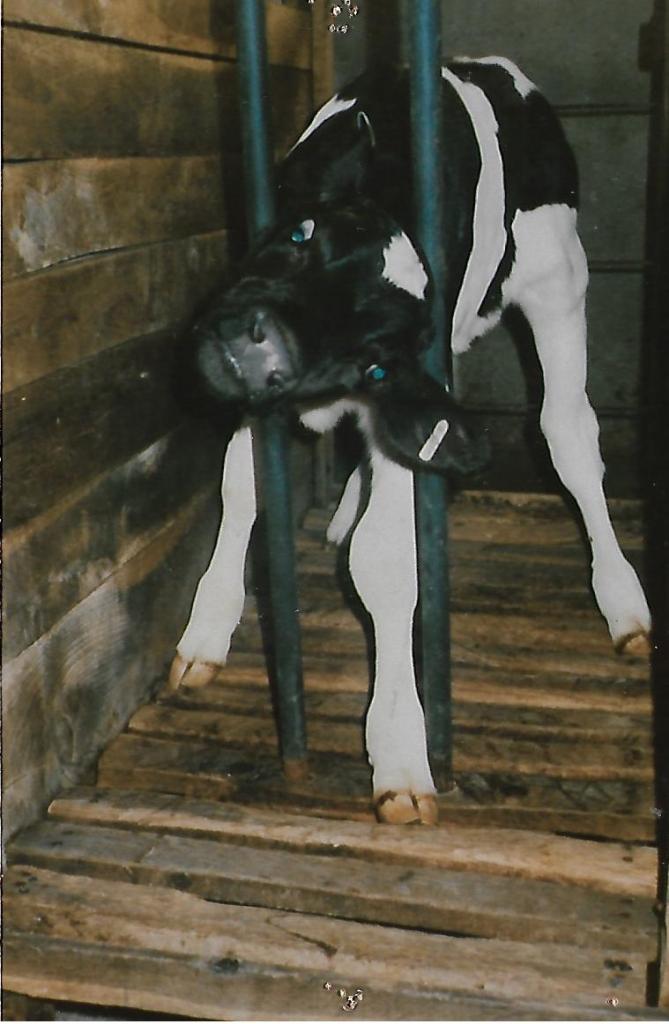
A cold day in Dover, England – fighting for the crated veal calves. Putting the Prime Minister in the crate to experience his authorisation of such a system.
As time went on, the angry Turk became very involved with 2 animal rights groups locally; and as a group we were effective. At that time; animal rights was a huge thing in the UK, as it still is, but some in political circles then wanted to brand us, the animal rights advocates, as terrorists; as in those days, with bombing and killings by the IRA being a big thing in the UK; it was (probably) ‘politically convenient’ to include animal activists in the same ‘terrorist’ corner; which was wrong, as animal activists were trying to stop killing rather than supporting it; a thing which has never changed with them.
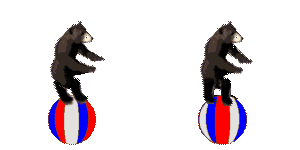
Over the years, and living near to London town, I and others from the group would often go into central London city to take part in demonstrations against the fur trade – at places like Harrods and other major fur retailers. As part of a local group, I also became very involved with trying to get travelling circuses (with animals) to stop using them in their performances. I have nothing at all against performing circuses; they can be great and fun for any family; but I do have a problem with big cats being kept in check in the ring with whips and elephants etc having to walk round on balls just to get a clap – it is pathetic and needs stopping everywhere. To this day I still campaign a lot to try and get animals freed from travelling circuses wherever it still happens in the world.
It continues; another day, another time …………………….
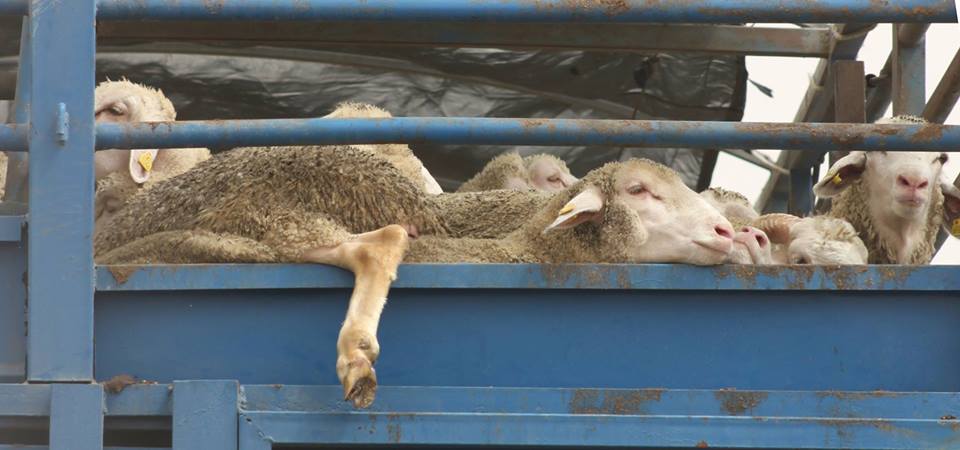
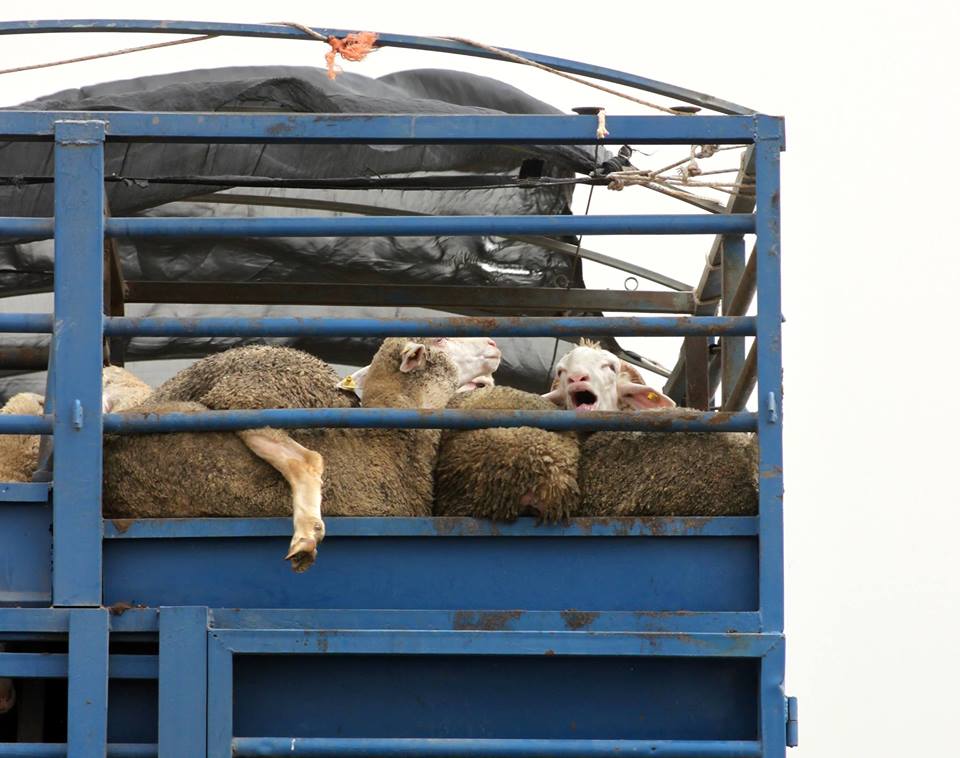
Above – Exposing the export of live sheep from Serbia




/cdn.vox-cdn.com/uploads/chorus_image/image/68929250/herbie_butchers_fried_chicken_2.0.jpg)







![everybody[1]](https://serbiananimalsvoice.files.wordpress.com/2008/03/everybody1.jpg?w=225)