Category: Farm Animals

Spain: Cattle stranded at sea for two months are likely dead or ‘suffering hell’

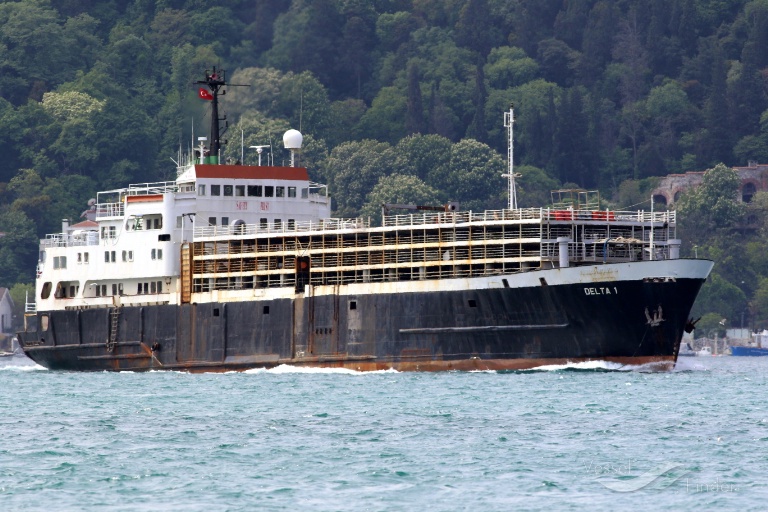
The cattle ship Karim Allah docked in Tarragona, Spain, 2020.

 The cattle ship Karim Allah docked in Tarragona, Spain, 2020. Photograph: Animal Welfare Foundation/Tier Schutz Bund Zurich

Above – Crisis, what crisis ? Bernard Van Goethem (Mr ‘Crisis Management ??’) does nothing to sort out the problems here; and Mr Goethem; still no EU action on the ‘Queen Hind’ capsize at Midia, Romania.

WAV Comment – BIG thanks to ‘The Guardian’ (London) for sticking with, and reporting on this incident so very well over the last few months.  Click on our live export tag  Live Transport – World Animals Voice to read all the previous news from the Guardian (and more) about this most disgusting business in sentient beings.

And where is the EU ? – and Bernard Van Goethem ? – the crisis management head at DG Sante who is supposed to be involved with issues like this ? – it IS a crisis, is it not ?

Typical EU – complete and utter crap !

Found this toilet in Germany. It has a special poop shelf instead of going  straight in the water. Skid marks galore! : CrappyDesign

Cattle stranded at sea for two months are likely dead or ‘suffering hell’ | Environment | The Guardian

Cattle stranded at sea for two months are likely dead or ‘suffering hell’

Two livestock ships have been refused entry to multiple countries on health grounds since leaving Spain in December

One of two livestock ships at sea since mid-December with thousands of cattle on board is now at the Spanish port of Cartagena, but the fate of its cargo is unclear.

The two vessels left from different ports in Spain before Christmas to deliver their cargoes of animals, but were each refused entry by various countries including Turkey and Libya, owing to suspected outbreaks onboard both ships of the bovine disease bluetongue.

Spain’s government and the country’s largest association of beef producers, Asoprovac, have both said the cattle came from areas free of bluetongue.

On Tuesday, the Spanish news agency EFE reported that although Turkey had originally agreed to take the cattle, satisfied they were bluetongue free, the animals were rejected on arrival because of disease fears.

A Spanish government source confirmed that the Karim Allah, carrying a reported 895 calves, was anchored just outside the Spanish port of Cartagena. The other ship, Elbeik, carrying 1,776 animals, continues to sit at anchor in Turkish waters off the coast of Cyprus.

Silvia Barquero, the director of Animal Equality Spain, said she understood that many animals were already dead and any still alive would be “suffering a real hell”.

Official veterinary inspections of both ships had been due to take place late last week in Cyprus and Sardinia, but neither ship approached shore to allow vets on board.

On Tuesday, a spokesperson for Spain’s agriculture ministry described the ships’ plight as a “failed operation by a Spanish exporter, who was going to sell the animals in Turkey, then tried unsuccessfully to sell them in Libya”. The spokesperson did not respond to questions about animal numbers, conditions on the ships or possible next steps.

The spokesperson added that the Karim Allah, “now arriving in Cartagena, left Spain with animals that had the corresponding health certificates and which were from areas free of bluetongue. The animals therefore left the port of Cartagena in good health.”

Last week, the ministry said the Elbeik, which left from the Spanish port of Tarragona, was also carrying cattle from bluetongue-free areas.

Maria Boada Saña, a vet with NGO Animal Welfare Foundation, said she feared that at least 100 animals on the Karim Allah were already dead.

“The Karim Allah arrived Sunday night at Cartagena, sailing away from a planned veterinary inspection Saturday morning in Sardinia,” she said.

She added that a Spanish agriculture ministry source said that although the ship was in Spanish waters, it had not yet requested entry to Cartagena port.

“That means we have no idea right now if animals are alive or dead,” said Boada Saña. “Other sources, though, have told me the Karim Allah has not asked for animal feed. To me, the way it sailed away from an inspection, the way it is waiting and not asking for food probably means most of the animals are dead.”

Dead animals would have to be removed from the ship by hoist and the operation could take at least a day, or much longer, depending on numbers, said Genoa-based lawyer Manuela Giacomini.

In a related development, a Spanish government source confirmed that Cartagena port had temporarily suspended the departure of livestock ships until the Karim Allah docks. The vessel continues to be anchored in front of the harbour and the decision to enter the port was up to the owner of the ship, the source added.

Prof Kristen Stilt, director of Harvard’s animal law and policy programme, who is writing a book about the transport of live animals, said it was an inherent risk with live transport that the animals would be rejected at their destination port.

Once labelled as rejected, Stilt said it was “very likely that no other country [would] accept them, as we are now seeing with the two vessels at sea with calves from Spain”.

Another problem for crew and livestock, she said, was the absence of an international arbiter that could assess claims of disease and make a binding determination. The result, she said, was “usually catastrophic in terms of loss of animal lives”.

Above – Fighting the fight against live exports – Dutch MEP Anja Hazekamp

Dutch MEP Anja Hazekamp said “the only way to stop animal cruelty related to animal transport” was to introduce a total ban on the export of live animals outside the EU.

“Both vessels concerned have EU certificate approvals, which means that they can load European animals and send them to third countries, such as Libya, Lebanon, Egypt and Saudi Arabia,” she said. “In total there are around 80 vessels with such a certificate.”

Sign up for the Animals farmed monthly update to get a roundup of the best farming and food stories across the world and keep up with our investigations. And you can send us your stories and thoughts at animalsfarmed@theguardian.com.

Regards Mark

Spain: Cartagena Port suspends exports of livestock following Bluetongue disease incident.

Regards Mark

Murcia Today - Cartagena Port Suspends Export Of Livestock As Transporter  Returns With Outbreak Of Bluetongue On Board
Photo – Animal Welfare Foundation (AWF)

Cartagena Port suspends exports of livestock following Bluetongue disease incident

Thanks to Robert for sending this link / information to us.

By Andrew Atkinson

A cargo ship that has been at sea for almost two months that left Cartagena Port with hundreds of cows on board has returned to dock – with dead cows caused by Bluetongue disease.

Cartagena Port has temporarily suspended exports of livestock following the incident.

The Karim Allah departed Cartagena on December 18 with 800 head on board heading for Turkey, where it was refused entry.

It is one of two animal cargo transporters that has been affected with the Bluetongue disease. The Elbeik that departed Tarragona was refused entry into Libya and is moored off the coast of Cyprus.

The Karim Allah is the only animal transporter ship that has left Cartagena to have had any issues, with millions of cattle having departed to destinations over the years.

“The animals were fit and healthy having left the Port in December,” said the President of the Cartagena Port Authority.

Many of the cows have died, with others in a state of poor health, due to the non-contagious Bluetongue disease.

The Animal Welfare Campaign has called for a ban following the incident.

The Ministry of Agriculture, Livestock and Fisheries have undertaken an inspection of the Karim Allah after docking at Cartagena Port.

Caption: The Karim Allah departed Cartagena on December 18 with 800 head on board heading for Turkey, where it was refused entry. Photo: Animal Welfare Campaign.

Source – Cartagena Port suspends exports of livestock following Bluetongue disease incident – The Leader Newspaper

The odyssey of the 2,700 Spanish cattle that have been roaming the Mediterranean for two months.

The odyssey of the 2,700 Spanish cattle that have been roaming the Mediterranean for two months – Teller Report

Last Monday, February 22, the ship Karim Allah, loaded with 880 head of Spanish cattle, returned to Cartagena (Murcia), from where it had left on December 18.

The odyssey of the 2,700 Spanish cattle that have been roaming the Mediterranean for two months – Teller Report

Last Monday, February 22, the ship Karim Allah

, loaded with 880 head of Spanish cattle, returned to Cartagena (Murcia), from where it had left on December 18.

He was returning to the place of departure after spending more than two months roaming the Mediterranean after Turkey, the country to which the merchandise was destined, refused to accept it, considering insufficient documentation that proved that the cattle were free from the disease of the blue tongue

.The return to Spain seemed the definitive solution to a surrealist commercial conflict that, however, has not yet closed.

Since Monday, the ship has been anchored in the vicinity of the port of Cartagena, but does not ask for permission to enter before the warning of the Ministry of Agriculture

Continue reading at:

Romania: Secret Decks of Sheep On The ‘Queen Hind’ Which Sank at Midia ??. We Still Wait For EU Action and the Report Promised by the Romanian Government.

Video added late 24/02 – Note ‘Safety First’ at front – pity they did not take their own advice.

Also, live sheep can be seen stuck in the vessel at the end of the video.

A cargo ship carrying sheep that capsized off the coast of Romania

Extra Decks Found on Capsized Livestock Carrier

WAV Comment – we are covering a lot at the moment re live exports.  This is not current news but goes back to November 2019 when the ‘Queen Hind’ sank shortly after leaving the port of Midia in Romania; allegedly carrying 14,600 destined for slaughter in Saudi Arabia.

For information; it would appear that several secret decks were found on the vessel during attempts at salvage; and that in fact, many more sheep had been carried to those declared officially.  Naturally, Romania has denied this, and the EU being the EU, has dragged its heels in every respect with regard to getting official information about this.

The only information to emerge since the sinking has been the discovery of secret compartments onboard with dead animals inside, by the company hired to remove the ship from the water.

Read more at: 

https://www.theguardian.com/environment/2020/nov/27/romania-accused-of-silence-over-ship-that-capsized-killing-14000-sheep

We have no faith in the Romanian system or what its government says.  They are certainly not the best animal welfare nation on the planet.  With our experience in live animal transport, we would have no surprise whatsoever that additional (secret) decks were fitted into the vessel; simply to increase numbers and to obtain more profit.  Was overloading due to the secret decks the reason that the Queen Hind capsized shortly after leaving Midia, we ask ?

Have a read of the information and links to that we have supplied below.  If we ever witness the EU taking action against Romania regarding this incident then it could be considered progress.  When everyone keeps quiet and ‘below deck’ about the realities, it could be said that there is a cover up.  Please read the info and make your own decisions.

Despite promises from the Romanian government that the results of the capsize will be published on the Ministry website; our search today (24/2/21) has still revealed nothing.

Life is being a pain in the arse to some;

Regards Mark


Secret decks allegedly found on livestock carrier | Insurance Marine News

Secret decks found on ship that capsized killing thousands of sheep

Discovery by salvage divers off Romania raises new questions over EU exports of live animals

Secret decks for extra animals have been found in a livestock carrier that sank off the Romanian port of Midia in November drowning thousands of sheep, according to the company carrying out the massive salvage operation.

Only 180 sheep survived out of the 14,600 initially believed to have been onboard the Queen Hind, which was carrying them from Romania, the EU’s biggest exporter of the animal, to Saudi Arabia.

But the revelations about secret decks are likely to increase the death toll by several thousands, and raise fresh questions on whether overloading was to blame for the capsize.

The vessel was left on its side in the water as it sank not far from port, with sheep corpses piling up around it. Images of the tragedy made headlines worldwide and led to renewed calls by animal activists to impose a ban on live exports from Europe to non-EU countries, particularly the Middle East and north Africa.

The Romanian national daily Adevărul reported on Sunday that the firm that won the auction to bring the vessel to shore, Grup Servicii Petroliere (GSP Offshore), made its first attempt on Saturday but operations were halted after the crane’s cables were unable to bear the load.

Gabriel Comănescu, GSP’s president, was quoted by Adevărul as saying that “during the operation, the divers entered the water, [and] found additional decks.

These additional decks also have animals on board”.

Comănescu added: “There are decks not included in the cargo plan, they are undeclared. It is the problem of the authorities to find out why they were loaded and why they were not included in the cargo plan. It’s a big question. There is a much larger load than over 14,000 sheep.”

Gabriel Paun, of Animals International, said the revelation “confirms our initial suspicion that the vessel capsized because of overloading”. He added: “We are outraged that this came out from the company bringing the vessel back to the shore and not from the Romanian government itself.”

Animals International said it will file complaints to the EU commission and the Romanian prosecutor’s anti-corruption department.

“[GSP] came with the right equipment last week and they tried to lift it up with a crane and bring it to the shore,” Paun said. “They had calculated that the ship was full of water and animals, so they were prepared to lift more [weight] but still the cables broke.”

He had been told that the head of the company had sent down divers to investigate, and discovered secret decks loaded with thousands of animals.

Brian da Cal, UK director at the animal welfare organisation Four Paws, said he feared that the death of thousands of sheep could have been avoided.

“The allegations regarding hidden decks on the ship are of huge concern and strengthens our calls for an outright ban of long-distance transports of live animals and a maximum of eight hours transportation duration. No matter how strict the rules may be and how tragic this accident is, mass deaths like this are becoming more common.”

He said Four Paws was able to rescue 254 sheep from the half-sunken ship but several died later of exhaustion and injuries – 180 survived and are now being kept in a location north of Bucharest.

Paun said: “We’re saying that Romanian authorities are not to be trusted because this vessel has been inspected by the Romanian government [and] they’ve missed the extra decks which were not in the cargo plan.”

Paun said Romania exports about 3 million sheep annually. European live animal exports rose from a value of $1bn (£800m) in 2000 to $3.3bn in 2018.

An official from the Romanian national veterinary and food safety authority, in comments carried by Adevărul, appeared to dismiss the allegations and said the vessel was heavier because “dead sheep do not have the same weight as the live ones”.

A border police spokesman also dismissed the story as speculation.

The Guardian has contacted MGM Marine Shipping, the management company behind the Queen Hind, for comment. The Romanian embassy was also approached.

Secret decks found on ship that capsized killing thousands of sheep | Romania | The Guardian

Exclusive: livestock ships twice as likely to be lost as cargo vessels -  Pehal News

More…

https://www.maritime-executive.com/article/extra-decks-found-on-capsized-livestock-carrier

Extra Decks Found on Capsized Livestock Carrier

Salvors working on the capsized livestock carrier Queen Hind claim they have found extra decks on the vessel.

The Palau-flagged Queen Hind capsized shortly after departing the Port of Midia in Romania on November 24 last year. While the crew escaped safely, only 180 of 14,600 sheep were saved. Salvors Grup Servizi Petroliere (GSP) claim that there could have been more sheep lost, as divers found that the extra decks had animals on board.

Divers were sent to investigate after cranes were unable to lift the vessel as planned. Cables snapped under the extra weight which could mean that several thousand more sheep were onboard than previously reported. The salvors claim the extra decks were not documented on the cargo loading plan.

The claim that extra sheep were on board has been disputed. Local media reports cite an official saying that the salvors may not have accounted for the extra weight of water-logged sheep; the salvors dispute this. Additionally, it has been noted that exact counts of sheep are not made at boarding.

The Guardian reports Gabriel Paun, a spokesperson for Animals International, saying the vessel was suspected to have capsized due to overloading. Animals International plans to make a formal complaint to the European Commission about the case.

https://safety4sea.com/secret-decks-found-on-capsized-livestock-carrier-off-romania/

Secret decks found on capsized livestock carrier off Romania


More than two months after the livestock carrier ‘Queen Hind’ capsized and sank off Romania taking down over 14,o00 sheep, the company tasked with the ship salvage has discovered secret decks that could accommodate a higher number of animals. This has created allegations that the sheep death toll was higher than thought.

Casualties | 05/02/20

The livestock carrier was heading from Romania to Saudi Arabia, when it overturned just off Midia Port, Romania, on 24 November, with approximately 14,600 sheep and 22 crew members onboard. The crew was saved but only 180 sheep survived.

However, the recent revelations by the salvage company on extra decks are likely to increase the death toll by several thousands, and raise fresh questions on whether overloading was to blame for the capsize, The Guardian reports.

In particular, the salvage firm Grup Servicii Petroliere (GSP Offshore), halted operations Saturday, after the crane’s cables were unable to bear the load, the Romanian national daily Adevărul reported.

As such, the divers entered the water and found additional decks, which also had animals onboard, Gabriel Comănescu, GSP’s president, was quoted as saying.

There are decks not included in the cargo plan, they are undeclared. It is the problem of the authorities to find out why they were loaded and why they were not included in the cargo plan. It’s a big question. There is a much larger load than over 14,000 sheep,

…he stressed.

Meanwhile, this news re-surges initial suspicions that the incident occurred due to overloading.

In light of this, animal welfare organization Animals International said it will file complaints to the EU commission and the Romanian prosecutor’s anti-corruption department.

EU revealed to be world’s biggest live animal exporter.

Extra Decks Found on Capsized Livestock Carrier

EU revealed to be world’s biggest live animal exporter

“to improve the welfare conditions of the animals transported outside the EU” – “it would “continue to monitor exports of live animals and take all the necessary measures within the remit of its competence in order to improve the implementation of the EU legislation.”

WAV Commentwhat complete and utter EU bollocks as always. EU = animal abuse – full stop.

A European Commission spokesperson said in an email it was cooperating with the World Organisation for Animal Health (OIE) “to improve the welfare conditions of the animals transported outside the EU” and that it would “continue to monitor exports of live animals and take all the necessary measures within the remit of its competence in order to improve the implementation of the EU legislation.”

EU revealed to be world’s biggest live animal exporter | Live exports | The Guardian

Secret decks found on ship that capsized killing thousands of sheep |  Romania | The Guardian

Bloc exported more than 1.6 billion chickens, pigs, sheep, goats and cattle in 2019, but faces criticism over welfare failings

New analysis suggests the EU could be responsible for up to 80% of the global trade in live farm animals, which continues to be linked to animal welfare failings.

Global data provided to the Guardian by the UN’s Food and Agricultural Organization (FAO) indicates that 1.8 billion live chickens, pigs, sheep, goats and cattle were moved across a border in 2019. The EU was estimated to be responsible for more than three-quarters of that total.

“A large part of the cross-border movement of live animals takes place in the EU,” said the FAO’s livestock development officer, Anne Mottet.

The global trade in live farm animals – worth more than $20bn (£14bn) a year – was revealed by a Guardian investigation last year to have more than quadrupled in size over the past 50 years. However, inadequate regulation means that animals might be put at risk on some journeys, or exposed to cruelty when they reach their destination.

The (UK) government is proposing to ban the export of live animals from England and Wales, unless it is for breeding or longer-term use – not just for fattening and slaughter.

Concerns about animal welfare during transport led the EU to establish a committee of inquiry last year to investigate alleged failings.

Transport risks for live animals include stress during loading and unloading, injury, hunger, thirst and exhaustion, according to a report published today by animal advocacy organisation Eurogroup for Animals, which also highlighted the potential for lower slaughter standards on arrival and the higher risk of infectious disease spread during stressful transportation.

The Eurogroup for Animals is calling for regulatory reform including shorter journey times and a “shift from live transport to a trade in meat and carcasses as well as genetic material.”

The FAO argues that it does not make sense to aggregate all transported animals in the same way. “Some are very small and other large. One cannot add chicken and cows. For example, 95% of the 1.8 billion animals that crossed a boarder in 2019 are chicken, while cattle represented less than 1% of this total,” said Mottet.

One of the factors driving the EU’s live transport of animals, said Ditte Erichsen, a veterinarian with Animal Protection Denmark, is that countries tend to specialise in producing a particular food animal, often for export.

“Denmark has become the world’s largest exporter of pigs,” said Erichsen. Most of them, she said, are piglets of about three months in age and their journey times are often over eight hours. According to the Eurogroup report, which uses Eurostat data, about 15.7 million Danish pigs left the country in 2019.

“This is the result of a tendency which we have seen over the last decade, where the pig production has specialised to a degree, where the piglets are born in one country, fattened in another and maybe slaughtered in a third country,” Erichsen said.

Particular risks for pigs, she said, are heat stress because pigs cannot sweat, suffocation due to overcrowding, prolonged hunger and thirst and no space to rest.

Iris Baumgaertner, of Swiss-German NGO AWF-TSB, said in Germany the specialty is hatched chicks. The report found that the country exported 312 million head of poultry within the EU in 2019, of which almost 100 million weighed under 185 grams.

“The number of animals being transported around the EU, and the millions of chickens leaving Germany, is the insane result of globalisation and specialisation,” Baumgaertner said.

EU subsidies are another factor driving animal transport, said Gabriel Paun, a Romanian animal advocate and EU director for NGO, Animals International. “In the Middle East and north Africa, they prefer [their] local sheep meat but the Romanian meat is very cheap, partly because of the EU subsidies,” Paun said.

Paun said 2020 data is expected to show that an estimated 3 million Romanian sheep were exported to Saudi Arabia. Transport itself is cheap, with a shipment to Saudi Arabia costing about $25 (£18) per head, or less on larger ships, Paun said.

Romania has recently been accused of “complete silence” over its investigation into the sinking of the Queen Hind in November 2019, which resulted in the deaths of more than 14,000 sheep.

Although data on the live transport of fish is limited – and counts fish in weight rather numbers of animals – the Eurogroup report estimates that nearly 54,000 tons of live fish were transported around the EU in 2019. Of those, 75% are trout, carp, eel and bluefin tuna.

Live fish are equally prone to transport stress. “[Fish] are starved for at least a day prior to transport, but sometimes up to two weeks, which can cause aggression between fish as they look for food,” said Christine Xu of the Aquatic Life Institute. Other transport risks include poor water quality and overcrowding.

A European Commission spokesperson said in an email it was cooperating with the World Organisation for Animal Health (OIE) “to improve the welfare conditions of the animals transported outside the EU” and that it would “continue to monitor exports of live animals and take all the necessary measures within the remit of its competence in order to improve the implementation of the EU legislation.”

The following is an old article, but interesting as it still reflects the situation.


EU’s live export trade puts welfare of millions of animals at risk – report

EU’s live export trade puts welfare of millions of animals at risk – report | Animal welfare | The Guardian

This article is more than 9 months old

European commission finds welfare gaps, non-compliance and poor planning in trade of animals to North Africa and the Middle-East

The welfare of millions of cattle, sheep and goats exported from the EU is being put at risk by failings including heat stress, bad planning and a lack of information from the destination country, a new European commission report has found.

Among the systemic problems identified were poor planning for high temperatures, an issue that has been raised repeatedly by campaigners. In summer, the report said, animals “in many vehicles arriving to ports” must sometimes “endure temperatures of over 35C”.

The report criticised the way that, as one campaigner put it, animals “disappear’” at their destination. It noted that most EU countries “do not receive any feedback” from the country of destination about the condition of the animals on arrival. Nor do they get any information, “from the transporter, ship’s Master or vessel operator”.

Also singled out were poor contingency planning, incomplete or incorrect departure documentation, and an inability to prevent recurring compliance problems.

One of the welfare organisations that worked with the commission to produce the report gave it a cautious welcome. “We find it strong even if it pardons Ireland and Portugal where we also found lots of problems,” said Animals International’s EU director, Gabriel Paun.

But others pointed out that the report also raised many issues. Peter Stevenson, policy adviser for Compassion in World Farming (CIWF) , said: “The new report reveals a disturbing picture of non-compliance by member state authorities and exporters.”

Romania, a major breeder and exporter of sheep, comes in for particular criticism following the drowning of more than 14,000 sheep last November. The sheep were on board Romanian-approved livestock ship, the Queen Hind, which keeled over shortly after leaving the Romanian port of Midia. Only 180 sheep survived.

The report identified gaps in animal welfare regulations, which, it said, “are not geared to detect issues that could cause vessels to tilt and overturn”.

Ireland and Portugal are praised for having comparatively better systems in place for livestock approval and health inspection prior to loading, helping to minimise welfare risks.

Uncertainty as to who is legally responsible for the proper care of livestock at different points on their journey – particularly in ports or during sea journeys – is another weakness, the report said.
Delays at ports are another problem, as many thousands of animals arrive for the same shipment. Of Europe’s 13 exit ports, only six, the report said, “have facilities in the port or arrangements nearby where, in case of need, the transporters can unload, rest, water and feed the animals”.

The report found that ships are also rife with problems, with only 24% of livestock vessels licensed by “white list” countries. Ships that fly the flag of a white list countries are recognised as having a consistently low rate of port detentions for regulatory failings.

Asked what action the commission would be taking following the report, a spokesperson said it would “explore the feasibility of harmonising and strengthening, through a legal act, the inspections of livestock vessels into an EU database in cooperation with the European Maritime Safety Agency (EMSA)”.

The spokesperson added that the commission was “cooperating with the OIE [World Organisation for Animal Health] to develop a network of contact points dedicated to animal transport in third countries. The objective is to reinforce our collaboration with these countries on this issue”.

More than 30 EU welfare organisations wrote to the European commission last week arguing that cattle exports to Libya by Ireland, Spain and Romania were in breach of EU regulations. The letter said that under EU Article 13 the commission and member states are obliged “to take animal welfare into account in a thorough and serious manner in formulating and implementing policies in specified fields”.

The EU’s live animal export welfare failings are laid out in the Welfare of Animals Transported by Sea report, circulated this week and based on information gathered by thecommission from EU countries including Spain, Croatia, Slovenia, Romania, Portugal and Ireland in 2017 and 2018.

The European Union exports around 1 million cattle and 2 million sheep each year to non-EU countries, mainly in the Middle East and North Africa. In 2019, the value of the EU’s live animal export trade was more than €12bn (£10.6bn).

Australia / Namibia: People power stops new live export business in its tracks.

 Below – Romanian Live Export Protesters

Protesters in Romania gather to demand an end to live export from the country
Namibian sheep
Above – Namibian Sheep

From our campaigner friends at Animals Australia.

People power stops new live export business in its tracks

A plan to begin exporting live animals from Namibia to Kuwait has been quashed thanks to a united, global effort drawing attention to the suffering caused by the trade.

The idea that when one door closes another opens, is mostly reassuring. But when it comes to the global live export trade, this universal truth is the reason we need to remain ever vigilant. You see, as countries have become clued-up to the cruelty inherent to live export — and widespread opposition to it — live exporters have found it harder to shore up business.

When Australia restricted sheep exports during the dangerous northern summer months, exporters knocked on Romania’s door. And Animals Australia was there. When Romania began questioning the trade, they went to South Africa. Again, we were already there. When South Africa’s NSPCA took the battle to stop the trade all the way to the High Court, it was abundantly clear: this global trade in animal cruelty is well and truly matched by a global effort to stop it.

From Australia to New Zealand to Brazil to South Africa and to dozens of countries throughout Europe — there is a powerful, international collaboration of groups and individuals working together to save animals from this ruthless industry.

And it’s a compassionate effort that has just paid off in Namibia, with new plans to begin live export from the Southern African nation put on hold indefinitely.

The business plan put forward by Tradeport Namibia proposed to import 70,000 live sheep, 50,000 goats and 5,000 cattle from South Africa and Botswana for live export from Namibia to Kuwait.

As exposé after exposé has revealed — it’s a sea journey fraught with risk for the animals who would be confined in cramped and stressful conditions for weeks before facing terrifying fully conscious slaughter upon arrival.

A rapid-fire public and media education campaign was launched in Namibia to highlight the reality of live export for the animals. In its submission objecting to the business plan, Namibia’s SPCA noted that the trade undermines Namibian laws and standards and that allowing live export would:

And the warnings have been heeded. In announcing that plans to export live animals would be ‘put on ice’, Tradeport Namibia noted the strong opposition, locally and internationally, to the export of live animals and that the company did not want to be involved in a business that will attract widespread outrage.

A united global front is turning the tide on live export. We don’t always win, but we are always there. And every action you take to support these efforts takes us another step towards shutting the door on this industry, for good.

Check it out in full via:

People power stops new live export business in its tracks | Animals Australia

Power to the people !

Regards Mark

People power stops new live export business in its tracks

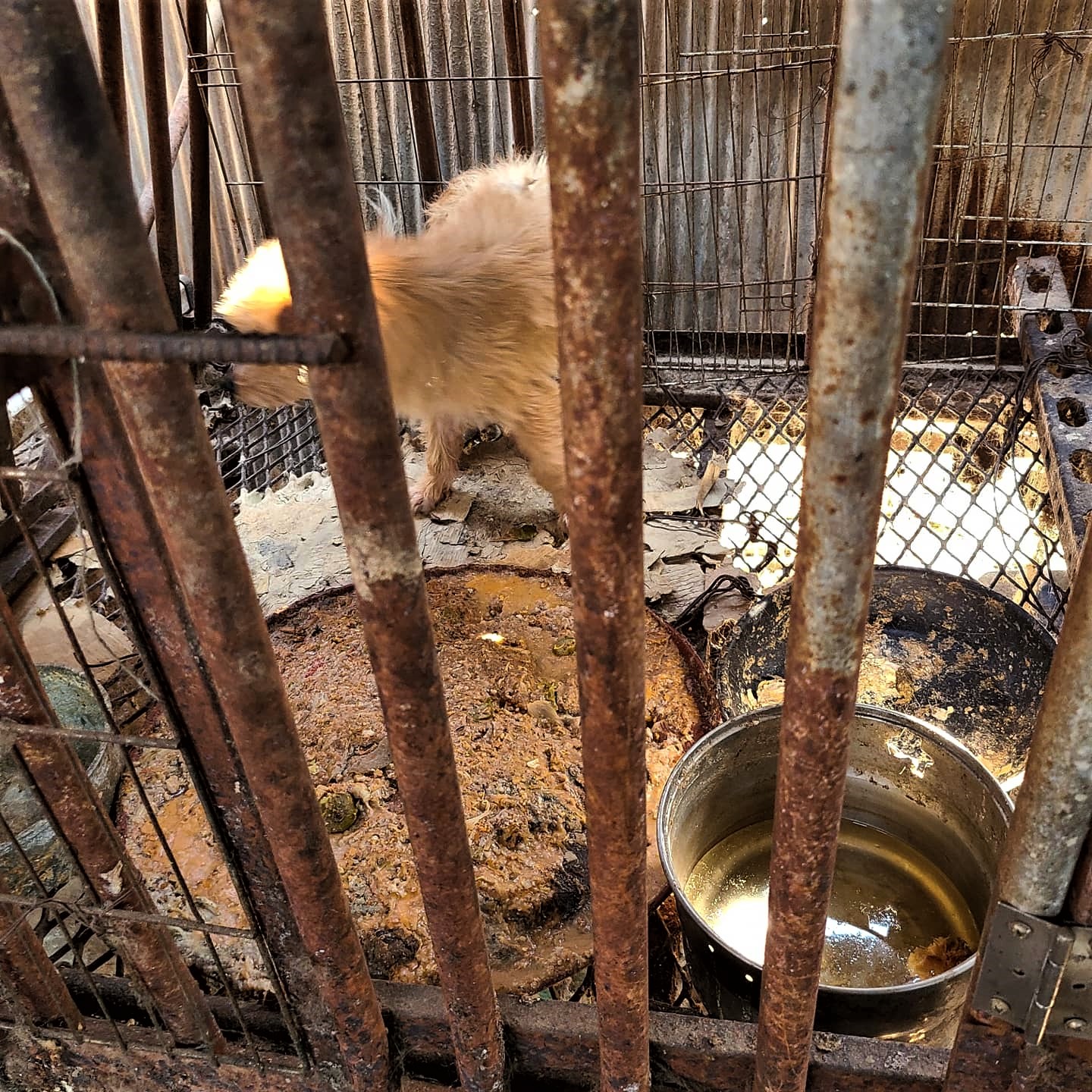
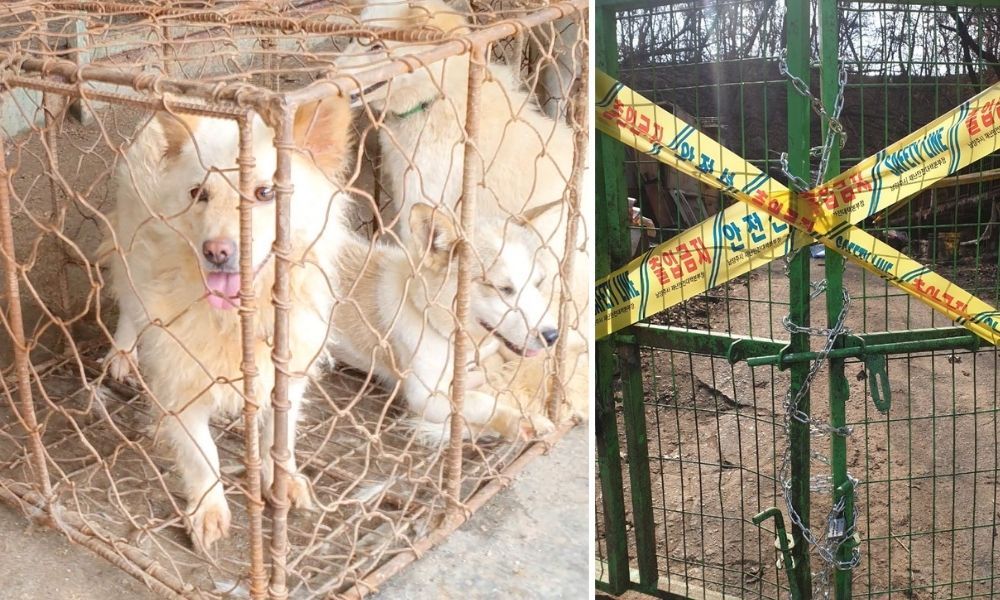
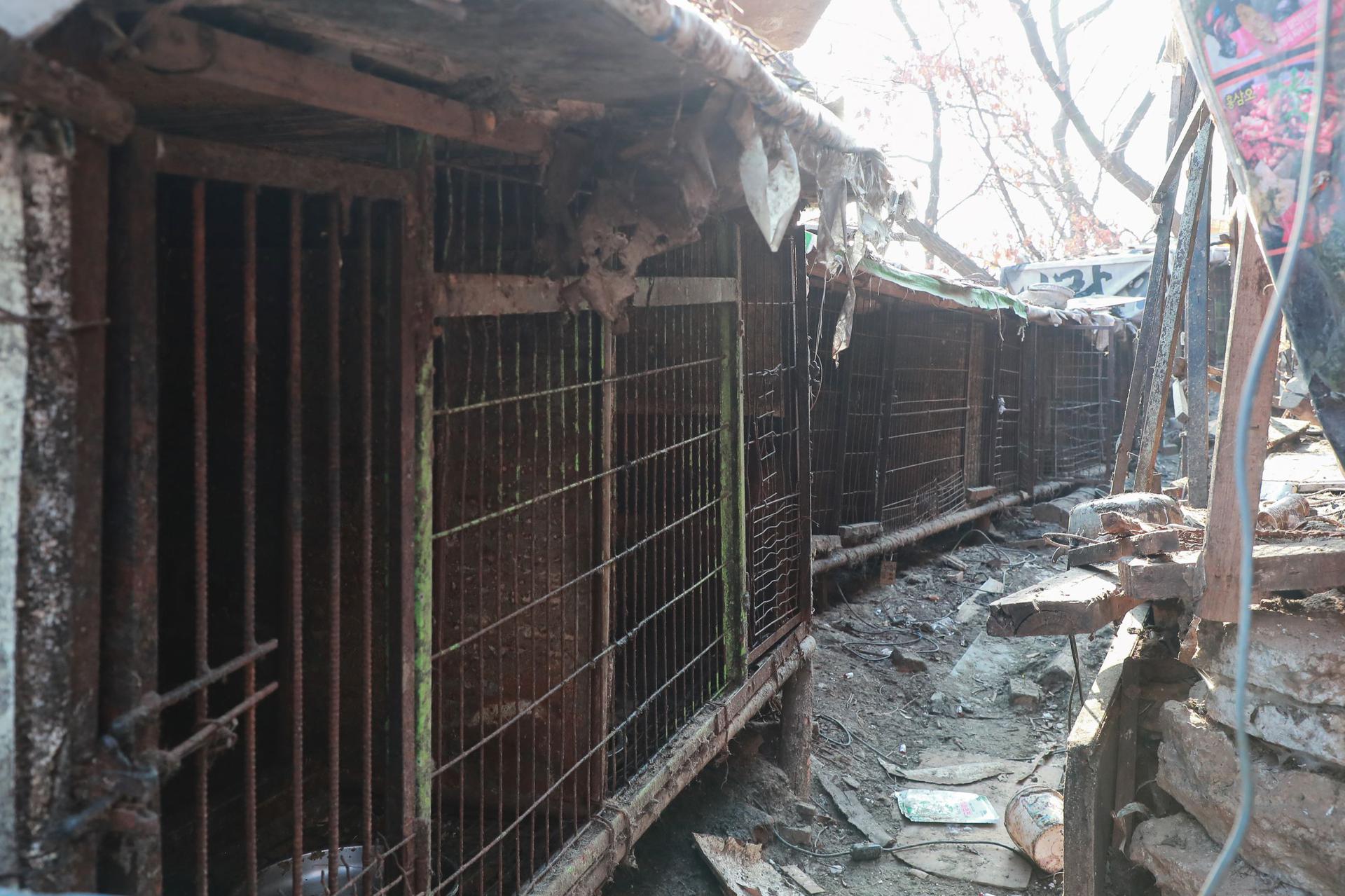
South Korea: Broken Political Promises – Meat Dogs Freeze To Death During Korean Winters; DISGUSTING, and Shame On Korean Politicians !

Watch the video below:

South Korean Meat Dogs.

View the latest newsletter and actions to take via the following links.  \Please watch the video above as it shows the reality of what a disgusting animal abuse situation this is. So much for action and promises by people in power !! – they do nothing.

There are 2 newsletters here, not 1:

https://r.newsletter.koreandogs.org/ajc350odtht7e.html?utm_source=sendinblue&utm_campaign=_Dogs_left_to_starve_and_freeze_to_death_on_dog_farm_in_Yeoju_Take_action_to_stop_the_unimaginable_cruelty_TODAY!_&utm_medium=email https://r.newsletter.koreandogs.org/ajcsf8odtht7e.html?utm_source=sendinblue&utm_campaign=_Daegu_Chilseong_Dog_Meat_Market_slaughters_dogs_while_you_wait__Help_stop_the_cruelty_to_our_loving_friends!_&utm_medium=email

Regards Mark

Promises, Promises, from the man who does nothing.

England: New Section To WAV – Vegan / Recipes – Plant Based Foods.

Still working on this; but here is the start;

Regards Mark

23/2/21

Link – Vegan / Recipes – Plant Based Food. – World Animals Voice

We are trying to promote a Vegan plant based lifestyle on this site; and to show you the realities of what goes on with ‘the other side’ – meat production, involving live animal transport; the dairy industry etc.

WAV is not a cookery site, but given the chance; we will give links to other sites and areas where you can delve deeper into the easy world of going Vegan.

So; now we are established a bit more, its time for a change, and a change which we hope will be of benefit.

On the site from today there will be a new section called ‘Vegan / Recipes’.  Here we will be giving you all further insight into the way forward to making veganism very easy; and cutting out meat and dairy.  It should be a cool place for new, aspiring, and ready to be vegans.

So if you are a foodie, or are looking for new ideas to broaden your already existing vegan diet, we hope this section will be of use to you.  Recipes and links will continue to be included in general news for a time, but gradually we hope to place all vegan diet related posts into this area.  Check it out; we will be transferring existing posts to the new area over the coming days as a starter anyway.

Link – Vegan / Recipes – Plant Based Food. – World Animals Voice

Enjoy – one of my fav tracks – Top man Vegan and animal rights advocate, Morrissey, and fab Kent girl Siouxsie Sioux – all Kent girls are the best !

New report finds that all mink farms should be considered “at risk” of COVID-19 infection.

Photo – Otwarte Klatki

New report finds that all mink farms should be considered “at risk” of COVID-19 infection | Eurogroup for Animals

New report finds that all mink farms should be considered “at risk” of COVID-19 infection

18 February 2021 NewsOn the cusp of the mink breeding season, which is set to resume at the end of this month, the European Food Safety Agency has released a report finding that all mink farms should be considered at risk for COVID-19 outbreaks and must be strictly monitored. Following the release of this report, animal protection groups FOUR PAWS, Humane Society International/Europe, Eurogroup for Animals and Fur Free Alliance – and their member organisations – have issued a strong call urging the European Commission to instruct Member States to immediately suspend mink production.

This call reflects a recently published scientific statement on public health risks associated with SARS-CoV-2 and intensive mink production. 

“The only way to keep EU citizens safe is to immediately suspend mink production in the Member States where this cruel practice is still legal before the breeding season starts,” said Joh Vinding, Chair of the Fur Free Alliance. “If this does not happen, the current mink population will increase five-fold by May. Even though only the breeding animals are present right now, there have still been COVID-19 outbreaks on mink farms in Spain and Poland. If the mink population is allowed to grow and all the cages on the fur farms are filled, the risk of disease transmission will likely also increase. The past year has shown that, irrespective of all monitoring and biosecurity protocols taken, the SARS-CoV-2 virus can spread uncontrollably amongst mink populations. At the time of this global health crisis, such risks need to be eliminated entirely.”

The EFSA report notes that in regions with a high density of fur farms, the SARS-CoV-2 virus is likely to spread from one mink farm to the next. EFSA recommends that Member States not only implement passive, but also active monitoring systems. They advise that measures should include frequently testing all people who come into contact with mink, testing samples from dead or sick animals, testing of wild mustelids captured near fur farms and genetic sequencing analysis for tracing the origins of outbreaks and identifying possible viral mutations.  

“Implementing such measures is extremely costly and will largely be financed by taxpayers’ money, despite the fact that the majority of EU citizens oppose the practice of fur farming” said Pierre Sultana, Director of Four Paws European Policy Office. “We know, for example, that just for one single farm, the Italian authorities spent a total of €50,000 between August and November 2020 to implement biosecurity measures. Regardless of the expense,one thing is patently clear: biosecurity and monitoring measures have their limitations and are not as effective as were originally believed. While they can help to detect outbreaks early on, they cannot entirely prevent mink from becoming infected. This is why we, as animal protection NGOs, have united in our call to immediately suspend all mink production in the EU.” 

“The necessity of halting mink production has become even more urgent following the recent discovery of the  so-called ‘Cluster 5’ mutation of SARS-CoV-2 in German patients,” said Dr Joanna Swabe, Senior Director of Public Affairs for Humane Society International/Europe. “This dangerous mutation of the virus that originated in Danish mink was believed to have been eradicated after the mass culling of Denmark’s entire mink herd last year. However, these recent cases suggest that the authorities were not entirely successful in eradicating this dangerous viral mutation, which could potentially undermine the efficacy of COVID-19 vaccines in humans. We applaud Sweden for already taking action to ban mink breeding in 2021. Reportedly Belgian fur farmers have also voluntarily taken a decision to suspend breeding due to the risks associated with COVID-19. It is vital that the remaining Member States that still permit fur production follow their example.”

“The demand to suspend mink production is supported by a statement signed by numerous scientists from the fields of virology, infectious diseases, clinical microbiology, veterinary medicine and environmental health, which confirms the serious threat that fur farming poses to human health,” said Reineke Hameleers, CEO of Eurogroup for Animals. “It calls for the immediate suspension of mink farming as an appropriate, precautionary and proportionate measure based on public health concerns. The experts behind this statement, as well as EFSA, point out that due to the confined living conditions of animals in fur farms, once the virus has been introduced, it is almost impossible to stop transmission. The high number of individuals living in close proximity also provide ideal conditions for virus mutations to occur, as seen in Denmark. New variants may not respond to the vaccines that are currently available and could cause significant setbacks in Europe’s efforts to battle the virus.”  

Notwithstanding our unwavering position that fur farming should be permanently banned across the EU due to unacceptable animal welfare outcomes and future potential public health risks, in the interim, we are calling on the European Commission to act immediately to suspend mink farming, the breeding of mink, and the import and export of live mink and their raw pelts, across the European Union.

ENDS

Read the Scientific statement on public health risks from SARS-CoV-2 and the intensive rearing of mink

Read the EFSA Report 

An undercover woman reports …

From the Facebook page “Animals want life”

(Text under the Foto) : “We pay tribute to the brave and selfless women and men who take it upon themselves to make the films and pictures in animal factories and slaughterhouses that we can then use to educate the world about these terrible conditions”

“Being an animal rights activist is a tough job
We should show respect to these people
for their commitment, instead of complaining:
Why do you just film instead of helping?

The fact is: animal rights activists help the animals,
by documenting and forwarding them to the responsible authorities or media.
Often animal rights activists on site can do nothing more than a document, as they often put themselves in danger.

Received charges of assault and theft, in addition to the offense: trespassing
I myself document the animal suffering in stables in order to report violations to the responsible veterinary office, with luck the animals will be confiscated
And yes, it breaks my heart every time I can’t save the animals.
Try to save e.g. 10,000 turkeys from the next fattening facility yourself, right?

200 piglets, or 36 cattle, in which the latter – among other things – I have already succeeded
So please, don’t blame animal rights activists who put themselves in danger to help animals

Please help us by sharing the posts and drawing the attention of as many people as possible to animal cruelty.

Thank you very much”
💓
“Animals want life”

The undercover investigators have our full respect.
And our heartfelt thanks
Weeks, or even months in animal farms or animal research laboratories, are confronted with incredible suffering and live permanently under the risk of being discovered.
They should be an example for all of us

My best regards to all, Venus

Russia Confirms First-Ever Case Of H5N8 Bird Flu Strain Being Passed To Humans.

Russia Confirms First-Ever Case Of H5N8 Bird Flu Strain Being Passed To Humans

Russia Confirms First-Ever Case Of H5N8 Bird Flu Strain Being Passed To Humans
Officials say seven workers at a poultry plant have contracted the virus Credit: Adobe. Do not use without permission.

According to reports, seven workers at a poultry plant have contracted the H5N8 bird flu strain in Russia

Russia Confirms First-Ever Case Of H5N8 Bird Flu Strain Being Passed To Humans | Plant Based News

Russia has confirmed the first case of a bird flu strain being passed to humans.

Officials say seven workers at a poultry plant have contracted the H5N8 variant of the virus. 

‘Possible mutations’

According to the BBC, head of Russia’s consumer health watchdog Anna Popova said all the workers are now ‘feeling well’. She also said that ‘adequate measures had been quickly taken’ to stop the disease from spreading. 

Popova added: “The discovery of these mutations when the virus has not still acquired an ability to transmit from human to human gives us all, the entire world, time to prepare for possible mutations and react in an adequate and timely fashion.”

Bird flu strain

Last year, the UK government ordered all birds to be kept inside ‘to eradicate’ avian flu.

The measures came into force on December 14, following multiple outbreaks of bird flu on UK farms.  One outbreak was discovered on a farm in North Yorkshire, where a confirmed case of the H5N8 virus saw 10,000 turkeys be killed. 

A joint statement from Great Britain’s three Chief Veterinary Officers said: “We have taken swift action to limit the spread of the disease and are now planning to introduce a legal requirement for all poultry and captive bird keepers to keep their birds housed or otherwise separate from wild birds.

“Whether you keep just a few birds or thousands, from 14 December onwards you will be legally required to keep your birds indoors, or take appropriate steps to keep them separate from wild birds. We have not taken this decision lightly, but it is the best way to protect your birds from this highly infectious disease.”

Regards Mark