Category: Farm Animals

USA: Animal cruelty and toxic waste in pig farms

View the lives of innocent pigs, born on concentration camps called “Farms for toxic Bacon” (USA)...and see how it is far from natural or humane…in fact, it is a torturous and abusive, living hell….this video shows just how cruel and barbaric this industry is to one of the most intelligent of all animals…

https://fb.watch/3HOxPdGw-A/

if this was dogs in the video, there would be an uproar worldwide…

if you call yourself an animal lover, loving all of them is what that means….even if you do not like them, the least you must do is leave them alone…

LEAVE ALL ANIMAL PRODUCTS OUT OF YOUR CHOICES, THEIR BODIES ARE NOT FOOD OR CLOTHING — Text–Animal Freedom Fighter–

 And I mean…About 110 million pigs are slaughtered in the United States each year, making about 23 billion pounds of pork.

Smithfield’s Tar Heel, N.C.,  is the largest slaughterhouse in the world. It processes more than 30,000 hogs every day.

Industrial pig waste contains … ammonia, methane, hydrogen sulfide, carbon monoxide, cyanide, phosphorous, nitrates, and heavy metals.

In addition, the waste nurses more than 100 microbial pathogens that can cause illness in humans …

In addition, humans who have fallen into these lagoons have died.

In an average week, more than 2 million pigs are slaughtered in the U.S., almost exclusively to be processed and eaten by people as “pork” products—primarily bacon, ham, and sausage.

Humane Society of the United StatesSometimes dead piglet parts is ground up and fed to living pigs.

In 2017, about 235 million pigs were sold in the U.S., and 95% of those were raised on concentration camps called “Pig-Farms“ with 5,000 or more individual pigs, under the cruel way, we saw on the video.

US’s largest “farm” keeps over 900,000 female sows at any given time designated for breeding until they are “spent” and slaughtered.

Ist möglicherweise ein Bild von Essen

Don’t believe the myth of the happy pig next door that the advertisements want to sell you as a happy animal that doesn’t suffer under industrial violence.
Anything associated with animal consumption is suffering.

My best regards to all, Venus

South Korea: PLEASE SIGN: PASS NEW BILL TO BAN S. KOREA’S BRUTAL DOG MEAT TRADE.

SIGN: PASS NEW BILL TO BAN S. KOREA’S BRUTAL DOG MEAT TRADE


SIGN: Pass New Bill to Ban S. Korea’s Brutal Dog Meat Trade

Petition Link – Petition: New Bill Would Ban Slaughter and Sale of Cruel Dog Meat in South Korea (ladyfreethinker.org)

PETITION TARGET: South Korean Ambassador Lee Soo-hyuck and South Korean President Moon

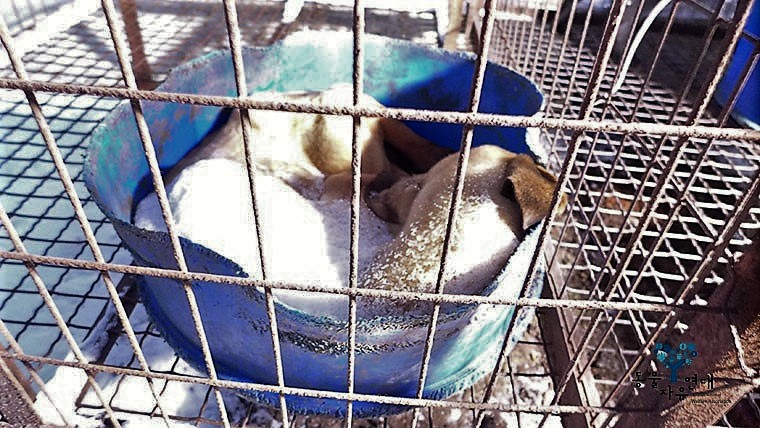
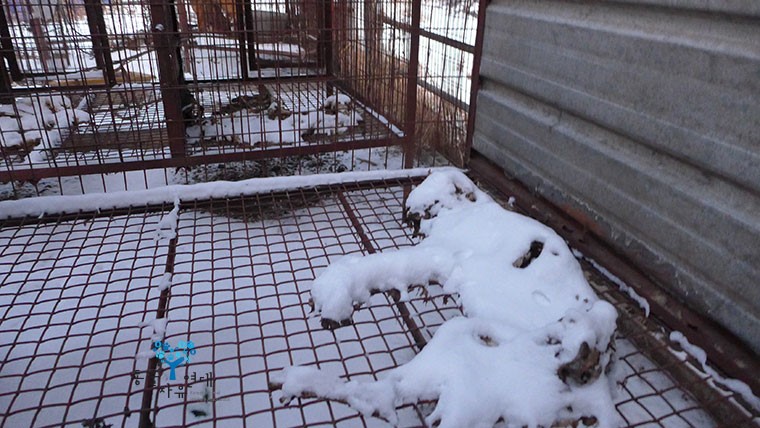
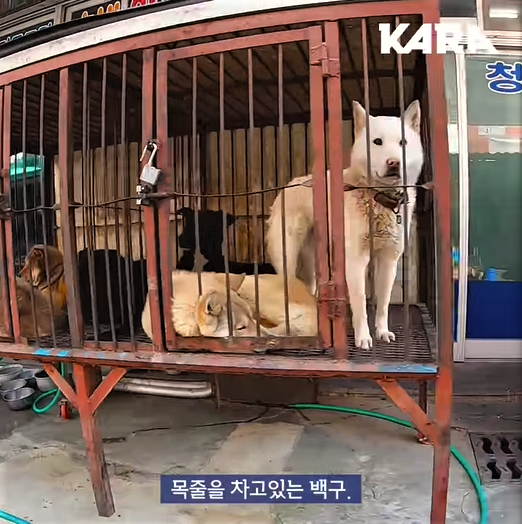
Crammed into filthy metal crates and cages, more than 200 dogs cowered in fear waiting to be sold for slaughter at the Nakwon dog auction in Namyangjusk, S. Korea. Sadly, an estimated million dogs suffer similar fates in the nation’s horrifying meat trade.

But there is new hope for the dogs hung, electrocuted and butchered for profit.  A bill proposed by Congresswoman Han Jeong-ae — the country’s newly installed Minister of the Environment — would “eradicate the culture of dog” meat as food in South Korea for good.

Ten members of the Korean National Assembly have already backed this bill. Add your voice now to help this lifesaving legislation pass!

Lady Freethinker’s undercover footage of the Nakwon House of Horrors made international headlines and sparked public outrage by exposing the terrifying, sickening conditions endured by dogs bred, brutally killed, and dismembered for dog meat. 

But the horrors have continued in S. Korea — the only country in the world that still has large-scale, commercial dog farms. And some of the country’s legislative leaders have had enough. 

House Bill 7035 proposes an amendment to the country’s Animal Protection Act that would explicitly ban the slaughtering and processing of dogs for food or their meat. 

The bill provides for penalties against violators, but also includes a 5-year grace period and subsidies for businesses transitioning away from the dog meat trade.

More South Koreans than ever before — an estimated one in four — keep dogs as companion animals and people’s attitudes toward them are changing, the bill’s sponsors note.

“The general public’s awareness of animal welfare has also greatly improved, and there is a very high demand for socially banning dog consumption,” the bill’s text reads.

A Nielsen poll conducted last year reported that 84% of South Koreans polled said they didn’t or wouldn’t eat dog meat. The poll also reported 59% of those polled supported the outright banning of dog meat and 57% believed dog meat consumption reflected poorly on their country.

South Korea’s current leader, President Moon Jae-in, has compassion for animals and even adopted a dog rescued from the dog meat trade named Tory. He’s in the perfect position to leave a legacy for animals that won’t ever be forgotten.

Sign this petition asking President Moon and the Korean Ambassador to the U.S. to support this important bill that will show the world what a great and compassionate country South Korea is and that will prevent the suffering and deaths of thousands of innocent dogs killed in the horrific dog meat trade.

Regards Mark

Northern Ireland (NI): Thousands of unweaned NI calves face ‘cruel’ exports of up to 30 hours without food.

WAV Comment – Northern Ireland (NI) is part of the United Kingdom, although located in the North of the island of Ireland. Ireland is a located in the South and is an independent nation, still a member of the EU.

Image result for northern ireland

Thousands of unweaned NI (Northern Ireland) calves face ‘cruel’ exports of up to 30 hours without food, say charities

DAERA has admitted that 5,863 weeks-old calves were exported last year

Thousands of unweaned calves from Northern Ireland are ‘cruelly’ going without food for up to 30 hours as they are shipped live for slaughter abroad, animal welfare charities claim.

They say some are just weeks old when they are packed into lorries and shipped to ‘suffer’ long journeys from Antrim and Armagh to Spain via Wexford’s Rosslare Port.


A truck can contain around 300 calves (Image: Eyes on Animals, Ethical Farming Ireland and Compassion in World Farming)

Read the full article at:

https://www.belfastlive.co.uk/news/belfast-news/northern-ireland-unweaned-calves-export-19830127

Check out a lot of our older posts (and videos) relating to the dairy business and the suffering of dairy calves at:

Search Results for “dairy calves” – World Animals Voice

Also, check out our latest articles relating to dairy, calves and Vegan milk alternatives at:

13 Best Vegan Milk Alternatives to Dairy Milk. – World Animals Voice

Regards Mark – It bums me off big time – Its a pretty simple message really:

Check out past work I have undertaken on this by visiting About Us. | Serbian Animals Voice (SAV) – scroll down until you see the calf photos re investigations. 2 shown here for example:

PMAF Inv 7
PMAF Inv 5

Here is a link to just one of the investigation reports as presented to the EU – Microsoft Word – JH.04.03.2010_REPORT on NON-COMPLIANCE with RESTING TIMES in relation to CONTROL POST at F-HEAUVILLE.doc (wordpress.com)

The calves have always been given a really bad time in transport; it is not new news. Pity that someone does not take the action they should. Any suggestions who that should be DEFRA and the EU ?

mark 3

13 Best Vegan Milk Alternatives to Dairy Milk.

And why we do not support dairy – see for yourself:

Don’t be a part of these abuses; select from the alternatives.

These days, whether you’re a vegan, sensitive to milk or just don’t like the taste, there are many non-dairy options available.  Check it all out here by clicking on the following link:

13 Best Vegan Milk Alternatives To Dairy Milk – Vegan Diet Society


Table of Contents

1- Almond Milk

2- Oat Milk

3- Soy Milk

4- Flax Milk

5- Coconut Milk

6- Hemp Milk

7- Rice Milk

8- Hazelnut Milk

9- Macadamia Nut Milk

10- Cashew Milk

11- Quinoa Milk

12- Potato Milk

13- Sunflower Seed Milk

Tip

1- Almond Milk

https://fa327b3e95b3c28d57eae411ee05131e.safeframe.googlesyndication.com/safeframe/1-0-37/html/container.html Almond milk is made from ground almonds, water, and (in the majority of cases) sweetener.

Many varieties of almond milk are also fortified with minerals and vitamins.

Naturally nutritious, this milk is also a good milk to make at home.

As well as being low in fat and calories, almond milk is naturally high in many beneficial minerals and vitamins, including vitamin E.

There’s no cholesterol or saturated fat in the milk.

Furthermore, it is low in sodium and high in healthy fats (such as omega fatty acids), which helps to prevent heart disease and high blood pressure.

2- Oat Milk

Oat milk is made with pre soaked oat groats, which are hulled grains broken into fragments.

An interesting fact about oat milk is that it contains more calcium in one serving than regular cow’s milk.

Oat milk contains 36% of the RDA for calcium, while one serving of whole milk contains 28%.

In addition, one serving will also give you 10% of your recommended daily amount of iron.

The oat milk is one of the best vegan milk alternatives to dairy milk.

3- Soy Milk

Excellent for cooking, baking, in a glass or over cereal, soy milk is an easy method to add protein and dimension to your recipes.

Soy milk may also contain natural substances called isoflavones, which have been linked with a reduced risk of heart disease and a 25 percent decrease in breast cancer recurrence when at least 10 mg of isoflavones are consumed daily.

4- Flax Milk

Flax seeds are a natural source of Omega-3s, and it is the best non-dairy option for this purpose.

Flax seed milk has high levels of phytochemicals, ideal to nourish our bodies and to balance the hormones, particularly in women.

5- Coconut Milk

Coconut milk is immensely rich in minerals and vitamins, such as – potassium, iron, calcium, magnesium, and zinc or vitamin C and E.

6- Hemp Milk

It is prepared from the seeds of hemp tree and is regarded as one of the healthiest choices for dairy-free milk.

Hemp milk contains 10 essential amino acids, making it an ideal choice for vegan bodybuilders and athletes of any dietary persuasion who are constantly needing to refuel and build muscle.

7- Rice Milk

Rice milk is a delicious, healthy beginning for anyone trying to find a healthy alternative to milk products.

Low in fat and naturally high in B vitamins, this milk contains selenium and manganese, which are potent antioxidants that help protect you from cancers and infections.

8- Hazelnut Milk

Hazelnut milk is an amazing vegan alternative to dairy milk.

Rich in folic acid, which is crucial for growing adults and babies, and also is it is rich in plant-based omega-3 fatty acid ALA, which has been proven by many studies to help keep cholesterol and blood pressure in check.

9- Macadamia Nut Milk

Macadamia nut milk is a nutritional powerhouse of omega-6 fatty acids, antioxidants, and phytochemicals guaranteed to improve your health.

They also contain moderate amounts of calcium, zinc, copper, phosphorus, potassium, and magnesium.

10- Cashew Milk

Cashew milk is lactose-free, but the nutrients vary depending on whether you make it at home or buy a commercially prepared product.

One cup of homemade cashew milk made using 1/4 cup of cashews has 10 grams of carbohydrates and 189 calories.

11- Quinoa Milk

Quinoa milk is high in dietary fibre, protein, vitamins, and all essential amino acids.

This great taste, easy-to-drink product also contains important minerals such as manganese, magnesium, iron, copper, zinc and phosphorus.

12- Potato Milk

Potato milk has lots of health benefits, particularly for anyone who has food intolerances or allergies, including children with autism.

That’s because potato milk is gluten-free, dairy-free, casein-free, cholesterol-free, fat-free, and soy-free.

13- Sunflower Seed Milk

This amazing non-dairy milk recipe is satisfying and less expensive than using nuts.

Because sunflower seeds are high in vitamin E, this milk keeps our immune system rockin’ and our skin glowing

Additionally, they’re loaded with magnesium that helps keep our bones strong and our muscles relaxed.

Tip

Make your own dairy free milk.

It’s incredibly easy and in some cases, more economical and healthier to make your own vegan milk.

Calf and cattle markets in Germany

Most consumers have probably never heard of the fact that many calves and cattle are sold at cruel auctions for fattening and breeding.

Likewise unknown is the fact that both young and adult animals are brought to so-called collection points and from there to other companies, to the slaughterhouse, or abroad.

Video material available to PETA shows recordings of four cattle auctions and a calf collection point, which makes one thing very clear: the animals suffer immensely and those responsible act out of purely economic interests.

(The video is in German, but everything is explained in detail in the article and the pictures speak for themselves anyway).

At such auctions, farmers and breeders can purchase new animals for fattening or breeding.

Animals that cannot find a buyer are sold abroad for below value, because those responsible are only interested in their profit.

As the video recordings show, the animals are constantly stressed. Although they express their panic through constant vocalization, foaming at the mouth, and fearful eyes, their suffering is ignored by those present.

Ultimately, they should be degraded to a commodity and sold at the highest possible auction prices. This rough treatment of sentient beings cannot be justified in the 21st century.

Suffering auctions in four different German cities: Ansbach, Neumünster, Osnabrück and Verden

1) Ansbach calf market: Here, panicked calves are herded into the auction hall one after the other. Their fear is completely ignored by those present. Normally these calves would still have to be with their mothers, but in the livestock farming industry, family groups count for nothing, because purely economic interests are at stake.

2) Neumünster cattle auction: If the meek animals do not want to go any further, they are pulled by the nose ring or their sensitive tails are bent, among other things. These painful (and forbidden) methods are intended to force the animals to move on. The cattle show constant signs of stress and pain

3) Osnabrück cattle market: Here, too, the animals show a consistently high level of stress and are very unwell. They are kept close to the rope and forced to keep walking. A cow is stung with an item for no reason even before it is in the auction hall. This shows once again that even animals weighing several hundred kilos are at the mercy of humans.

4) Weaning auction Masterrind Verden: The young cattle are driven into the auction hall with sticks. Once there, a stick is tapped on the animal’s back to make it clear to buyers that they can bid on this animal. Even laypeople can see that this behavior leads to anxiety and stress in the insecure calves.

Collection point in Walsrode: Animal children roughly transported in vans
Animals from different farms come together at collection points and are often sold abroad from there. Here, young calves are physically pushed into a transporter.

These babies should actually be with their mothers.

PETA reports to the responsible authorities

Due to the long-term suffering of the animals and other violations of the animal welfare law, such as the kinking of the tails, we have reported to the responsible authorities. We call on those responsible to see such auctions for what they are – namely animal cruelty, which has no place in the 21st century – and to stop holding them.

https://www.peta.de/neuigkeiten/rinder-auktionen/

And I mean…German farmers say everywhere: We love our animals!
That such documentaries still exist in one of the richest countries in the world in the 21st century … only shows how corrupt -and therefore incapable of acting- this political system is.

As long as the farm animal- mafia is subsidized with our tax money, mass animal cruelty/keeping, contamination of the groundwater due to plant toxins and manure are promoted.
Most of the politicians in Germany who make decisions about factory farming have their own animal farms.
So they have a personal interest in their preservation.

The cattle farmers are merciless on many farms and businesses.
In some farms in Germany, the superfluous calves are said to be illegally killed shortly after birth.
Agricultural informants speak of it as normal: animals are drowned and slain. The calves are suffocated with a plastic bag over their heads.
Or simply drowned in the manure.

These are the practices.
Originated from the commission of the worst criminals – the meat-eater!

My best regards to all, Venus

Australia: The Reality of Dairy; Killing Calves – If You Still Drink Milk, Watch This and Learn – Then STOP It.

The reality of dairy: killing calves | Animals Australia

https://youtu.be/1oTGe41A8Vo

At the slaughterhouse

Numerous investigations in Australian slaughterhouses have documented the terror dairy calves face prior to and during the slaughter process. It’s the final cruelty for these babies who have been born – and killed – for one reason; to keep their mothers producing milk for humans.


Regards Mark


South Korea: Message Back from ‘Korean Dogs’ in California re ‘Bounce Back’ Issues. Try the e People Petitions First – This Will Get To Government. Read On …..

A few days ago in one post re the Korean (Meat) Dogs campaign, I said that we had tried to send e mails as per the website; but many had been returned by the administrator within a few minutes.

South Korea: 12/02/21 – Latest Newsletter; but PLEASE READ ALL the info below. Act as Detailed Please. – World Animals Voice

I said then that I would be contacting Korean Dogs in California to sound them out about this.  So I did.  Within a day I had a very nice message back from our animals friends at Korean Dogs in California.  Giny sent the following info, which I am repeating in full as I hope it will help you with your actions.

As Giny says – The e-People petition is the most effective of all the actions you can take so please try doing that today. This will never bounce back and you will ALWAYS get a response from the Korean government. www.e-People.go.kr

So I suggest that (initially), the E People petition route is probably the best way to start.

Thanks to Giny for her very rapid response to my questions; I informed her that we will continue to support their wrk and campaigning until the Korean meat dog issue is a thing of the past.

Regards Mark


Call for Action! – Stop the Dog and Cat Consumption in S. Korea! (koreandogs.org)

——————————————————————————————————-

Here is the response from Giny:

Dear Mark,

Thank you for caring about the animals in the South Korean dog and cat meat industry and contacting us.

And thank you for taking action!

Please refer to our FAQ regarding this issue: https://koreandogs.org/faq-koreandogs-org/

Q: I have sent emails to addresses given on your web-pages, but many of them ‘bounce’ or have some other message saying they cannot be delivered. Why is this?


A: There could be several reasons why your emails are returned or not delivered. Your returned email will indicate the reason for the returned email such as “Message blocked”, “The receiver denied your mail.” One suggestion that we would like to make is that you separate your personal email with the petition mailing email account. You can also set up multiple email accounts on gmail for petition email sending.


In addition, the sources from where we have collected these email addresses could be out of date, or incorrect; or may have changed since we collected this information and listed it on our website. We do try our best to keep up-to-date information, but, as you can appreciate, it is not always possible to reflect these changes.


The e-People petition is the most effective of all the actions you can take so please try doing that today. This will never bounce back and you will ALWAYS get a response from the Korean government. www.e-People.go.kr

We also urge everyone to pass on your message by sending postal letters, and making telephone calls. Telephoning is particularly effective as the message cannot be so easily ‘ignored’.

Thank you!

Giny

Forgotten fish- a harrowing investigation

Animal Equality’s undercover footage has revealed animals suffering from prolonged pain in a Scottish Salmon Company slaughterhouse. The investigation, showing fish-killing processes, is the first of its kind to be released in the UK.

The Scottish Salmon Company supplies major UK supermarkets Waitrose and Co-op, alongside premium retailers, hotels, and restaurants. The corporation also has a global reach, exporting its products to over 20 countries across the world.

In the UK, up to 77 million fish are raised and killed every single year – that’s over two per second.

Today, we released our latest investigation. As the first of its kind showing undercover footage from within a Scottish salmon slaughterhouse, it is truly groundbreaking.

Several extremely serious animal welfare cases of abuse were witnessed. A significant number of salmon were filmed fully conscious when killed; others were thrown to the ground and left to languish.

The company that owns and operates the slaughterhouse has been linked to Waitrose and the Co-op.

Scottish produce is often perceived by consumers as synonymous with ‘higher welfare’ and ‘higher quality’ practices, yet our investigation shows that even with stunning machinery in use, there is chaos, confusion, and unimaginable suffering.

Our investigation shows that fish need stronger protection.

Despite a stunning device being in place in this facility, numerous salmon displayed consciousness at the time of slaughter, evidenced by flapping, wriggling, and grasping motions.


Many salmon’s gills were cut when they were still conscious, causing them to be in agony for up to several minutes as a result.

Some salmon were stunned with a club after their gills were cut, causing their blood to spray out. In some instances, conscious animals were clubbed as many as seven times.

Continue reading “Forgotten fish- a harrowing investigation”

“Tethering ”must not become a UNESCO World Heritage Site!

The town of Garmisch in Bavaria (Germany) is located near the mountain “Zugspitze”, at 2,962 m the highest mountain in Germany.

The city consists of two places, the second is Partenkirchen, and both were united in 1935.

Garmisch is considered a more elegant district, Partenkirchen (with its cobblestone streets) exudes a traditional Bavarian ambiance.

This district of Garmisch-Partenkirchen is planning to protect the cultural landscape there as a UNESCO World Heritage Site.

That wouldn’t be bad either, because it is a beautiful natural area, one of the few still existing in Germany, which is endowed with wild natural beauty.

In this context, the “tethering” of cattle should also be classified as a cultural asset worthy of protection.

Animal Rights Watch sees it as an attempt to misuse the title “World Heritage Site” to legitimize traditional cruelty to animals.

Nationwide, around 1 million cows live in what is known as “tethered”. Every fourth cow in the dairy industry is affected, most of them in smaller farms – even with organic labels.
In Garmisch-Partenkirchen, more than 50 percent of all cows in the dairy industry are “tied up”.

The affected animals are tied to the neck with a short chain, rope, or iron rod.
The remaining freedom of movement is just enough for the cows to lie down and get up again. For months they stand practically motionless in one place without the slightest change.

Continue reading ““Tethering ”must not become a UNESCO World Heritage Site!”

Pressure On The Government For A Fur Free UK – News From ‘Respect for Animals’.

The latest news from Mark and the team at ‘Respect for Animals’, Nottingham England.

Web – http://www.respectforanimals.org/

Pressure On The Government For A Fur Free UK

Three senior Labour frontbenchers have written to the government calling for a fur ban in the UK.

Emily Thornberry, Shadow Secretary of State for International Trade, Ed Miliband, Shadow Secretary of State for Business and Energy, and Luke Polland, Shadow Secretary of State for the Environment, Food and Rural Affairs, wrote to Liz Truss earlier this month.

The letter denounces the fur trade as ‘barbarous’ and ‘unnecessary’, adding:

“Britain led the way in abolishing fur farming two decades ago, but we still contribute significantly to this cruel and outdated global trade by importing and exporting tens of millions of pounds worth of fur and fur products each year.

“Annually, more than 100 million animals worldwide are bred and killed for their fur, living their short lives in miserable, painful confinement.

“Millions more are trapped in the wild, left in agony for long periods before they are killed.

“All too often nowadays, this dreadful suffering is endured simply to provide the fur trim on gloves, hats, hoods, and other fashion accessories.”

Last year Respect for Animals composed an Early Day Motion calling for a ban on fur imports and sales, which was submitted with support from MPs across the political divide. Early Day Motion 267 (‘Real Fur Imports’) has since become the second most popular EDM in this session, which 139 signatures so far.

British Citizens ONLY – TAKE ACTION!

Please write to your MP and urge them sign our Early Day Motion (267).
If your MP has already signed or does not sign EDMs generally, then please urge them to write to the government calling for action.

We need to put maximum pressure on ministers in order to make history and achieve a Fur Free UK.

Also ….

Mink farms in Ireland will be shut down ‘by the end of the year’

Successive governments have pledged to ban fur farming in Ireland for some years now, after a campaign co-led by Respect for Animals.

Finally, the government has confirmed that mink farming will be outlawed in Ireland by the end of the year.

Banning fur farming is a part of the programme for government and was listed as a priority bill when the new year’s legislative programme was published.

It is listed for pre-legislative scrutiny this spring, meaning the Oireachtas agriculture committee will be able to examine the bill before it formally goes through the legislative process.

In early February, the Minister for Agriculture, Food and the Marine, Charlie McConalogue T.D.,  launched Ireland’s first over-arching Animal Welfare Strategy, which included a fur farming ban as number one priority,

He elaborated:

“Before Easter, I will bring legislation before the Oireachtas to prohibit fur farming in the State.”

The Department of Agriculture wrote to fur farmers to tell them that legislation would be moving forward this year to curb the practice.

While no formal date has been set or confirmed for the introduction of legislation, it is understood that mink farms will have to wind up their farms before the end of this year.

A compensation scheme will be put in place, although a final decision on the terms has yet to be finalised. Further consultation will take place on the shape of any scheme.

Respect for Animals is delighted at this progress and will hold the government to account in order to ensure that the horrendous process of fur factory farming is ended in Ireland once and for all in 2021.

Regards Mark