WAV Comment: The fur industry has a lot of questions to answer regarding its abuses and what has resulted from this sick trade. Fur out now ! – globally.
First case of coronavirus detected in wild animal
By Helen Briggs BBC Environment correspondent
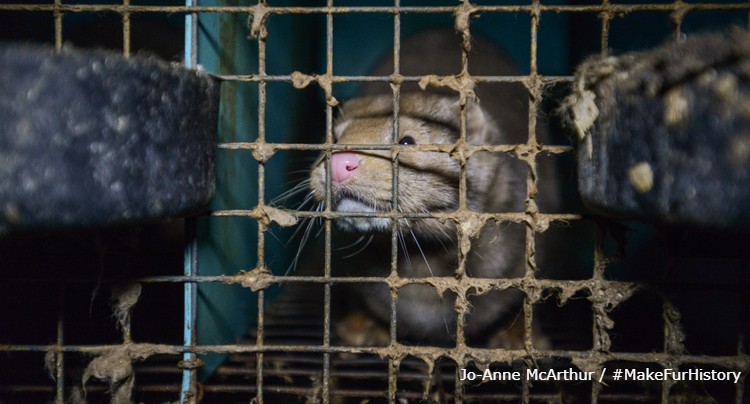
The first known case of coronavirus in a wild animal has been reported, leading to calls for widespread monitoring of wildlife.
The US Department of Agriculture (USDA) said a wild mink had tested positive around an infected mink farm in Utah.
Coronavirus outbreaks at fur farms in the US and in Europe have killed thousands of the animals.
As a consequence, millions of farmed mink have had to be culled across Europe.
The USDA said it had found one positive case in “free-ranging, wild mink” in Utah as part of wildlife surveillance around infected farms.
Several animals from different wildlife species were sampled and all tested negative, the agency added.
It said it had notified the World Organisation for Animal Health, but there is no evidence the virus has been widespread in wild populations around infected mink farms.
The discovery raises concerns that the infection could spread between wild mink, said Dr Dan Horton, a veterinary expert at the University of Surrey, UK.
The case “reinforces the need to undertake surveillance in wildlife and remain vigilant”, he added.
Mink are known to escape from mink farms and become established in the wild. In the UK, a population of mink that escaped from fur farms many years ago is thought to exist, but they are sparsely distributed and rarely come into contact with people, Dr Horton added.
The virus has also been found in zoo tigers, lions and snow leopards in the US, and in a small number of household cats and dogs.
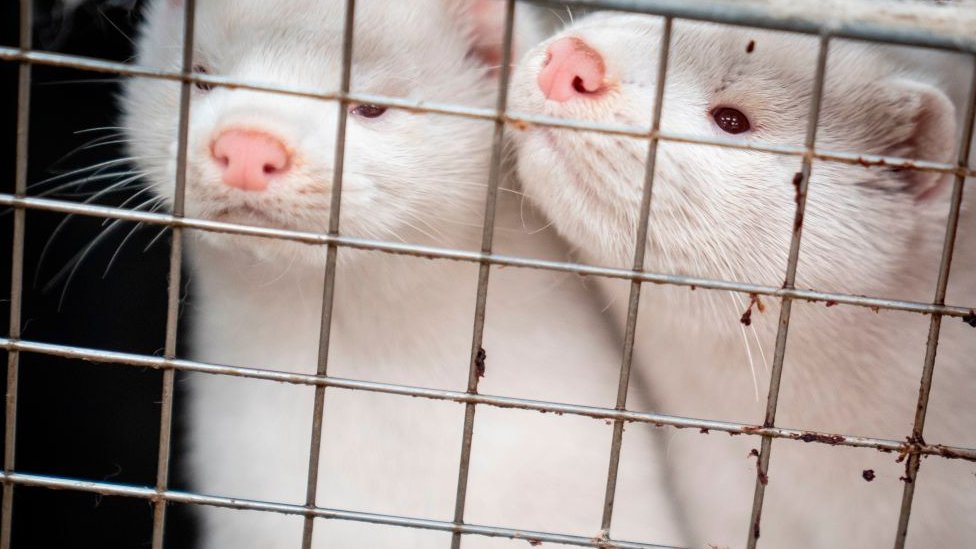
Above – Would you allow your cats and dogs to be confined in such manner for weeks on end? Of course not, it would be shockingly cruel AND illegal. So why are you condemning these innocent creatures to such horrific fates? Source CTV News
When referring to unacceptable animal cruelty, please remember that pigs, cows, chickens, and mink do not enjoy the social status of other animals, such as dogs and cats, and their abuses are accepted under a moniker of “welfare” and “humane”, both terms compromised by humans to categorize animals whose own bodies are controlled, violated, mutilated sans pain relief, separated from family, and violently, terrifyingly killed.
In the United States, all ten billion land animals exploited for food each year are specifically exempt from the Animal Welfare Act, and nine billion poultry are additionally denied any (oxymoronic) coverage under the Humane Slaughter Act, a meaningless regulation that requires animals be violently killed.
To die prematurely, exploitatively, fearfully, unwillingly is ABUSE, those nice human-created labels and laws are not meant to protect animals, they are meant to protect humans from moral discomfort causing the needless and violent death of trillions of animals killed globally each year.
For the “small, local, organic farm” preachers, the animals don’t care where you live, and providing food for an animal before you kill him or her doesn’t mitigate your contribution to their loss of body autonomy and forced and fearful death in an industrial slaughterhouse. And the global demand for animal “products” require they be confined in predominantly extremely intensive conditions, forced to endure diseases, pain, abnormal genetic variations, squalor, bodily violations and intrusions, and violent death.
Protecting animals, considering their welfare and well-being, and practicing humane approaches all PRECLUDE exploiting/killing them. Anything you do to a pig would be an illegal violation if done against cats, dogs, and humans. That you can pretend otherwise does not nullify the animal’s hellish experience so you can enjoy a five-minute tasty snack: no meal should require suffering.
Furthermore, Ag-Gag laws are pretentious violations of constitutional rights, no person or entity should be granted the lawful ability to hide illegal activity, including cruelty and gross negligence, from the public to whom they “market” animals and from whom they derive profit. To all who champion such egregiously abusive laws, I ask, “What are you hiding?” To match your claims of “welfare” and “humane” (which have been consistently proven false), where is the transparency? The public has a right to and an interest in your business; that you profit from social ignorance and intentional suffering as inflicted on vulnerable, defenseless animals, and then take herculean steps including more time, money, and resources to conceal abuse rather than fight abuse is a disgustingly greedy, inhuman, utterly shameless, and appalling market strategy. SL
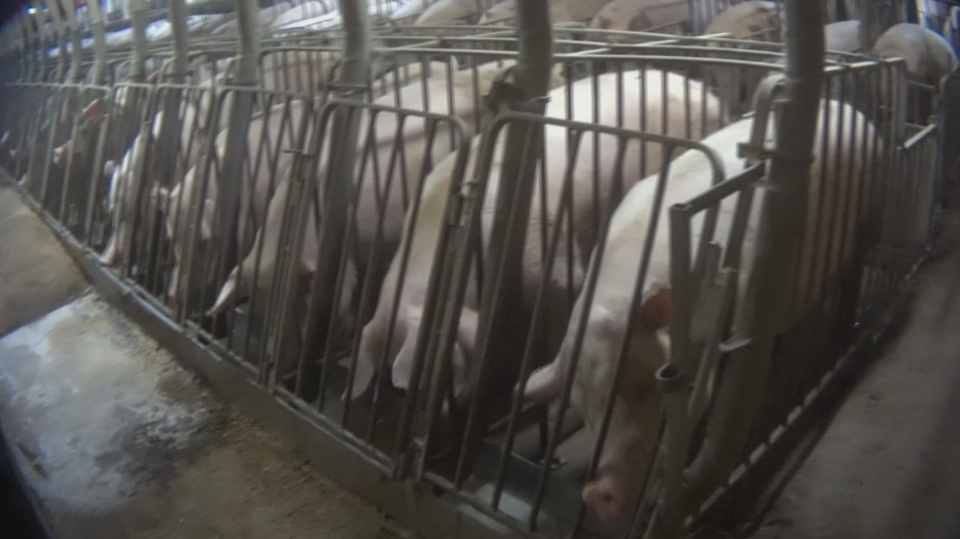
For seven weeks, a man, who asked to be identified only as Elijah, worked at a farming facility in Putnam, Ont., 30 km east of London.
His job as a hog farm technician at the Arnold Barn, which is managed by Paragon Farms, included tasks like feeding, moving and vaccinating pigs. W5 has agreed to protect Elijah’s true identity.
However, Elijah had another motive for working at the barn. Using a hidden camera, he recorded hours of video footage at the facility.
“It’s not necessarily the safest job that I could be working, but I did it because I see that these animals are suffering,” he told W5’s Sandie Rinaldo.
Animal Justice, a Canadian animal law advocacy organization, hired Elijah to go undercover, and shared some of the video he recorded with W5.
The footage documents what Elijah claims are instances of animal abuse and neglect, including disturbing images of farm workers forcefully slapping and hitting pigs with plastic boards, and jabbing them with pens.
Other filmed incidents include workers discussing how pregnant sows had been deprived of drinking water for several days, workers castrating male piglets without the use of painkillers and filthy conditions in the barn.
W5 offered to show the video to the general manager of Paragon Farms, with an opportunity to comment afterward. A lawyer acting for Paragon sent W5 a written statement indicating, in part, that “Paragon Farms immediately inspected the barn in question” and “welcomed an inspection by … the Animal Welfare Services branch (of the provincial government) within hours of being notified of the allegations. No material concerns were identified.”
The statement added that a veterinarian “with expert certification” inspected the animals and “has not identified incidents of abuse or neglect.”
THE END OF UNDERCOVER WHISTLEBLOWERS?
Camille Labchuk, executive director of Animal Justice, believes that because there is no proactive provincial monitoring or inspection of farm facilities, neglect and abuse of livestock remains hidden and free of scrutiny. Only a complaint can trigger an investigation of a farm by provincial authorities.
“We urgently need more transparency in the food system because the meat industry keeps animals behind closed doors without any government oversight or inspection,” Labchuk said.
“There’s no way for Canadians to learn the truth unless a brave whistleblower goes in there and films this footage and exposes it to the public.”
Hidden camera video filmed by animal rights groups and shared with journalists have helped raise public awareness of conditions and animal mistreatment in farms and slaughterhouses.But undercover filming by employee activists at livestock facilities may soon become outlawed in Ontario.
This past June, the Ontario government partially proclaimed the Security from Trespass and Protecting Food Safety Act, known initially as Bill 156.
Promoted by Ontario’s Minister of Agriculture, Food and Rural Affairs Ernie Hardeman as a way to improve the protection of farms, farmers and their livestock from trespassers and biosecurity risks, the act may soon make it illegal for undercover activists like Elijah to work and film at farm facilities under “false pretenses.”
A similar law, initially known as Bill 27, was passed in Alberta late last year and Manitoba is looking to follow suit.
Critics call them “ag-gag” or agricultural gag laws. Modelled on U.S. laws that have been introduced in 29 U.S. states since 1990, only six states still have these laws on the books. The rest have been defeated or deemed unconstitutional.
Professor Samuel Trosow, who teaches law at Western University in London, believes these types of laws are problematic.
“The way that Bill 156 has been written, same thing for the Alberta law, does violate Section 2(b) of the Constitution that guarantees everyone freedom of expression,” Trosow told W5’s Sandie Rinaldo in an interview.
“I don’t think this is about protecting farmers in their homes. I think this is about protecting large corporate producers and their factory farms from the public scrutiny that results when people come in and take films.”
While a section of Ontario’s Security from Trespass and Protecting Food Safety Act currently prevents people from interfering with animal transport vehicles, the provision regarding false pretenses, which may prevent employee whistleblowers from filming inside farm facilities, has yet to be proclaimed.
Labchuk intends to challenge the law if and when that happens.
“If you ask ordinary Canadians what they think, they’re appalled when they hear that the government’s trying to shut down transparency on farms and hide from them where their food comes from.”
Take PETA’s Cruelty-Free Shopping Guide along with you next time you head to the store! The handy guide will help you find humane products at a glance. Order a FREE copyHERE
Searching for Cruelty-Free Cosmetics, Personal-Care Products, Vegan Products, or more? Click HERE to search.
Free PDF of Vegan & Cruelty-Free Products/Companies HERE
Want to do more than go vegan? Help others to do so! Click below for nominal, or no, fees to vegan literature that you can use to convince others that veganism is the only compassionate route to being an animal friend:
PLANS to ban the export of live animals from England and Wales for slaughter and fattening, which have been strongly supported by West Dorset MP Chris Loder, have been unveiled.
The plans were revealed by the UK’s environment secretary, George Eustice, in the start of a renewed push by the Government to strengthen the UK’s position as a world leader on animal welfare.
An estimated 6,400 animals were sent to Europe for slaughter in 2018, according to the Department for Environment, Food and Rural Affairs (DEFRA).
Mr Loder has worked closely with the RSPCA and the British Veterinary Association among others to (enable this to happen) and is urging as many people as possible to support his campaign by responding to the Government consultation.
In his speech in the House of Commons on October 23, during the second reading of the Animal Welfare (Sentencing) Bill, the MP demanded the house support and deliver the government’s pledge to end live animal exports – claiming that it was disgraceful that well cared for farm animals could be loaded on to a lorry and sent thousands of miles by land and sea to destinations as far as Libya and Lebanon.
Mr Loder said: “Today’s announcement is a victory for animal welfare. It is a direct benefit of Britain leaving the EU. It is the EU’s trading rules on the movement of animals, along with the lobby from the National Farmers’ union to continue live exports for slaughter and fattening, that has enabled this cruel practice for so long.
“Bringing an end to the unnecessary suffering of animals during transport is long overdue. Through my Animal Welfare Bill, which reaches the Committee Stage early next year, I hope not only to achieve tougher custodial sentences for those who inflict the worst kinds of cruelty on innocent animals; but also to deal with the cruelty that has been happening on a mass scale, such as with live animal exports.”
Live animals commonly have to endure excessively long journeys during exports, causing distress and injury.
The issue of unwanted male calves from the dairy industry has been an issue here in the UK for decades; probably even longer. Female cows have to be in calf in order to produce milk. When they give birth the female calves are kept to re supply older or less productive females in the heard; who go off for slaughter. For male calves; they are simply an un wanted ‘by product’ of the dairy business. When they are born, if it is a male; it is not uncommon for them to be shot in the head immediately by the farmer.
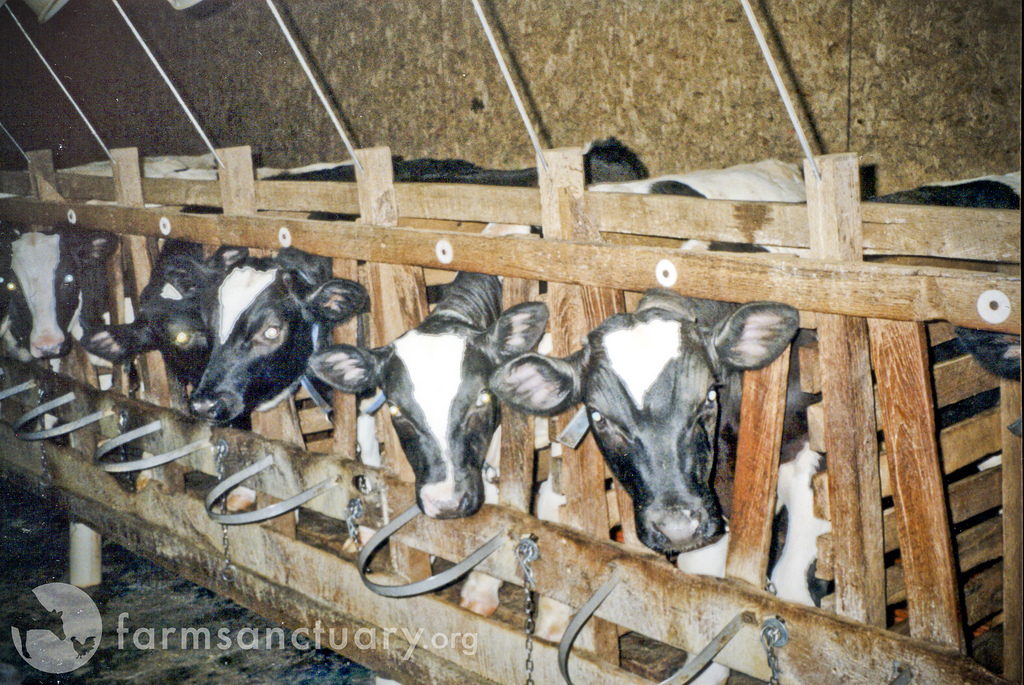
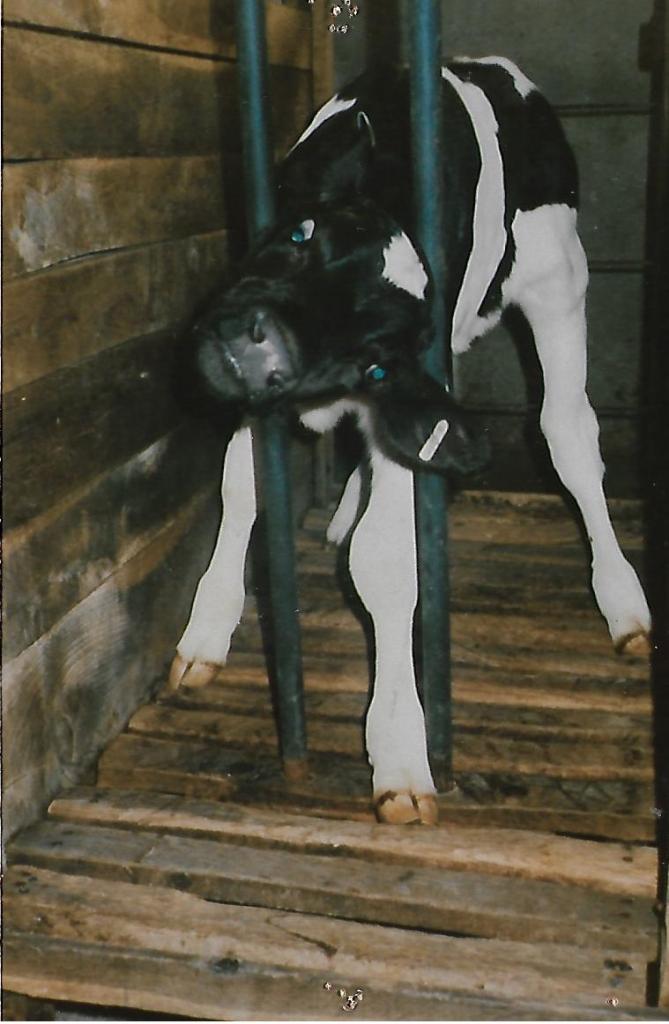
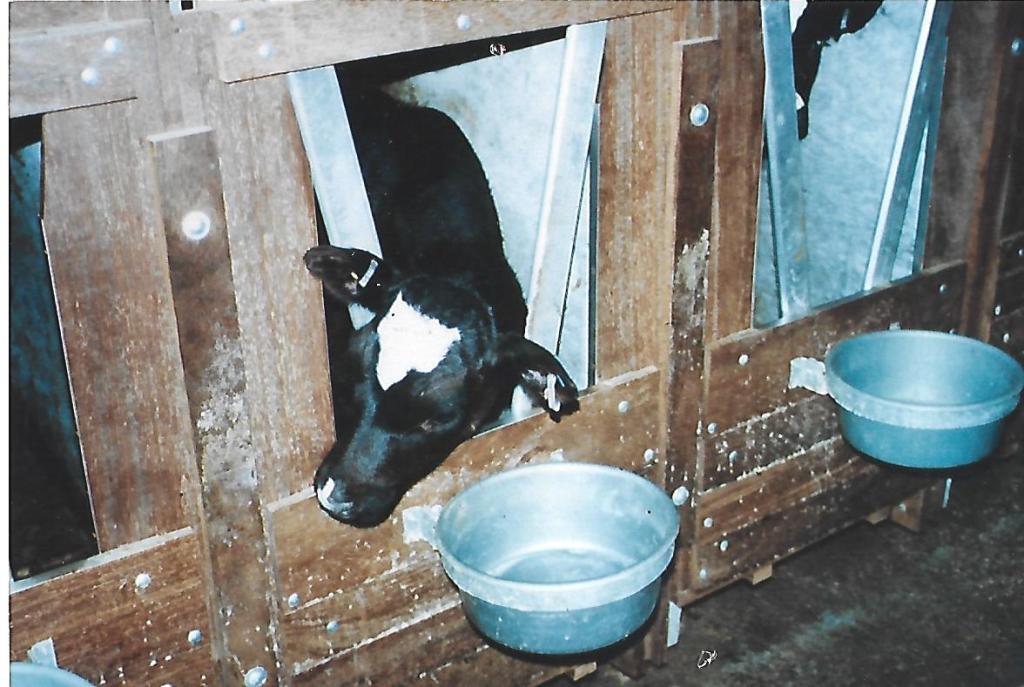
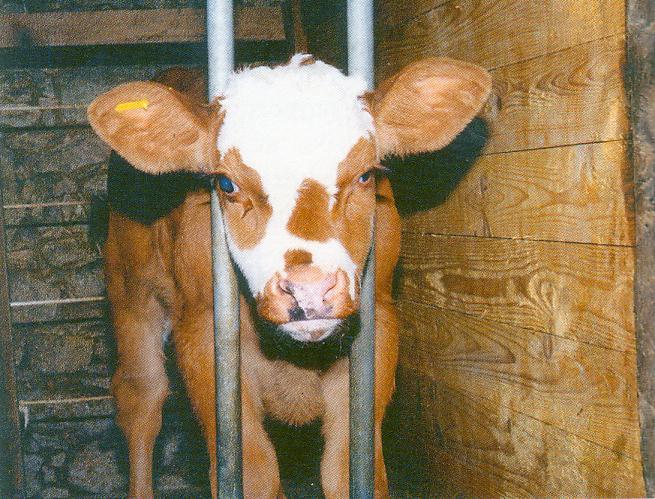
The UK banned the use of veal crates back in 1992; it was a big victory for the AR movement. Veal crates were individual pens without enough room for the calves to turn round, lie down properly, or groom themselves. They were; and still are, barbaric devices – living coffins for the animals put into them.
Sadly, whilst bleating on about how wonderful it was that crates were banned; the UK government refused to stop young male calves from being exported to mainland Europe to be put into the crates; the very things that were banned because of cruelty in the UK.
In the past, here in the UK, unwanted male calves were exported live to places such as the Netherlands where they were incarcerated into veal crates for 6 months and then taken out and sent for slaughter. In the older days; calves in the crates never got the iron they needed; they became anaemic over the months; and with no bedding in the crates but only a wooden slatted floor, the calves would become desperately deficient of iron in their little bodies.
But this was fine for the veal producers of Europe as it made ‘white veal’ which is a common type of meat. Because of the export and treatment of young male calves in the crates; the British public have repulsed the business and ‘veal’ has always had a bad name in the UK because of the exports and the crates. Not many Brits eat veal – it has a bad name in the UK – simple as that !
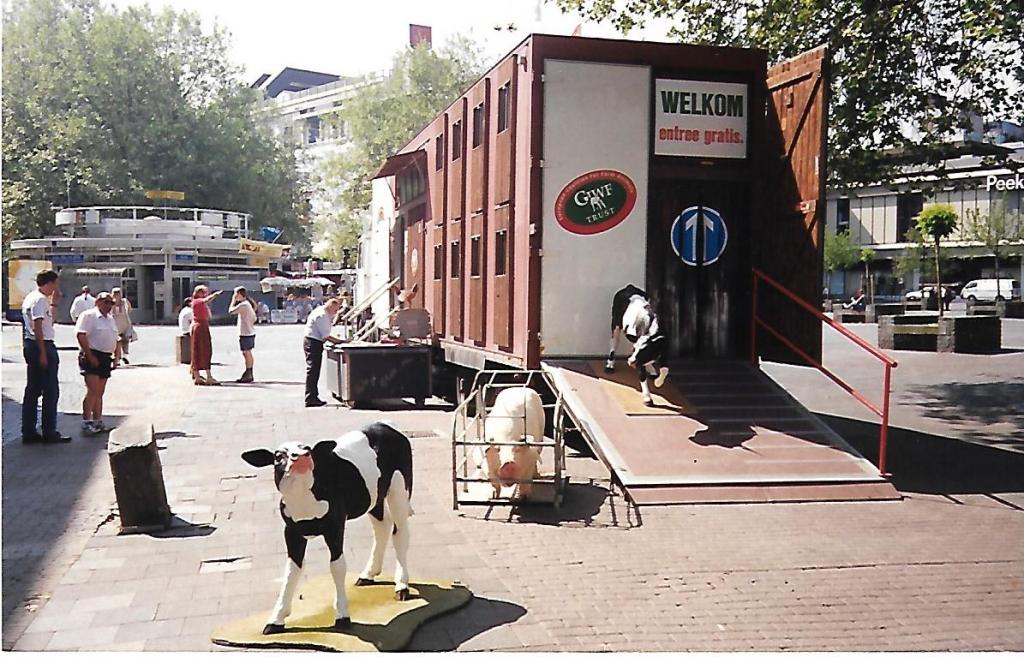
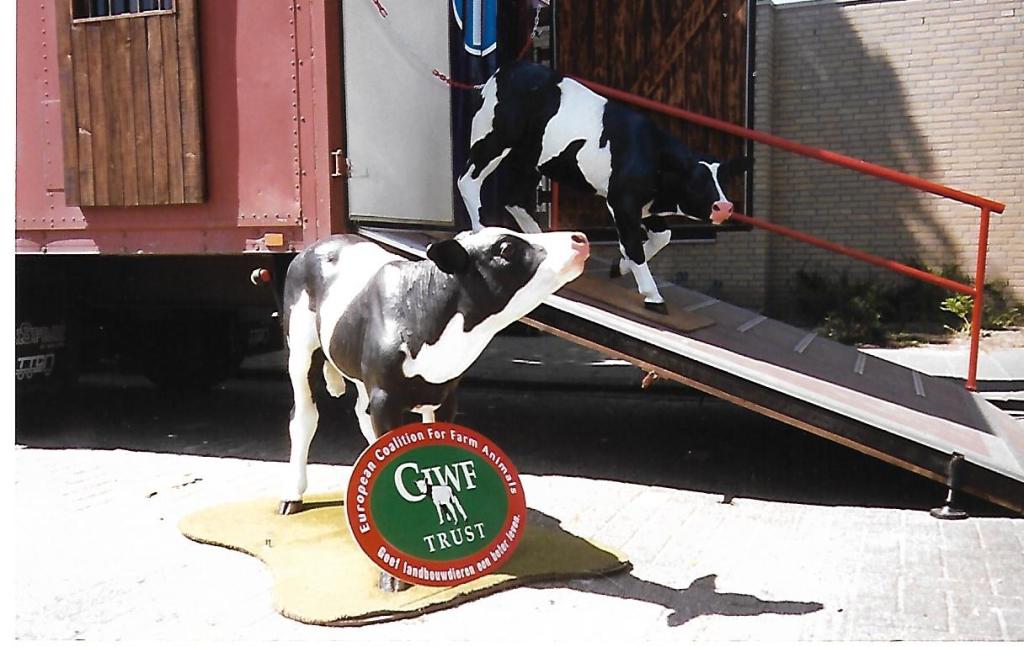
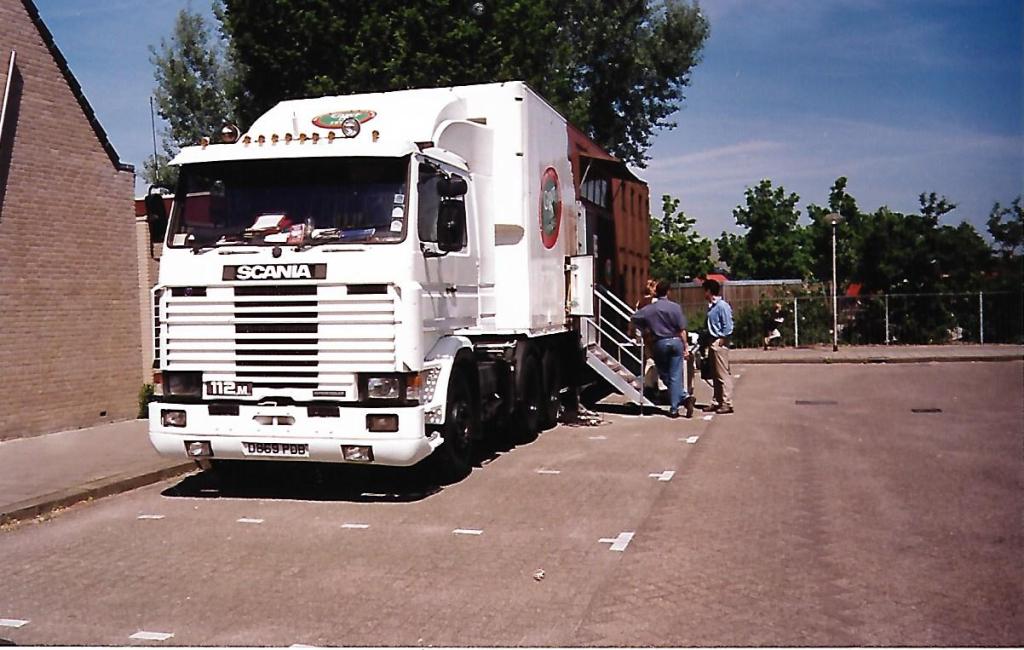
I did a lot of protesting about the export of veal calves at English ports; and checked out places in the Netherlands with John when we took the CIWF intensive farming truck and roadshow there.
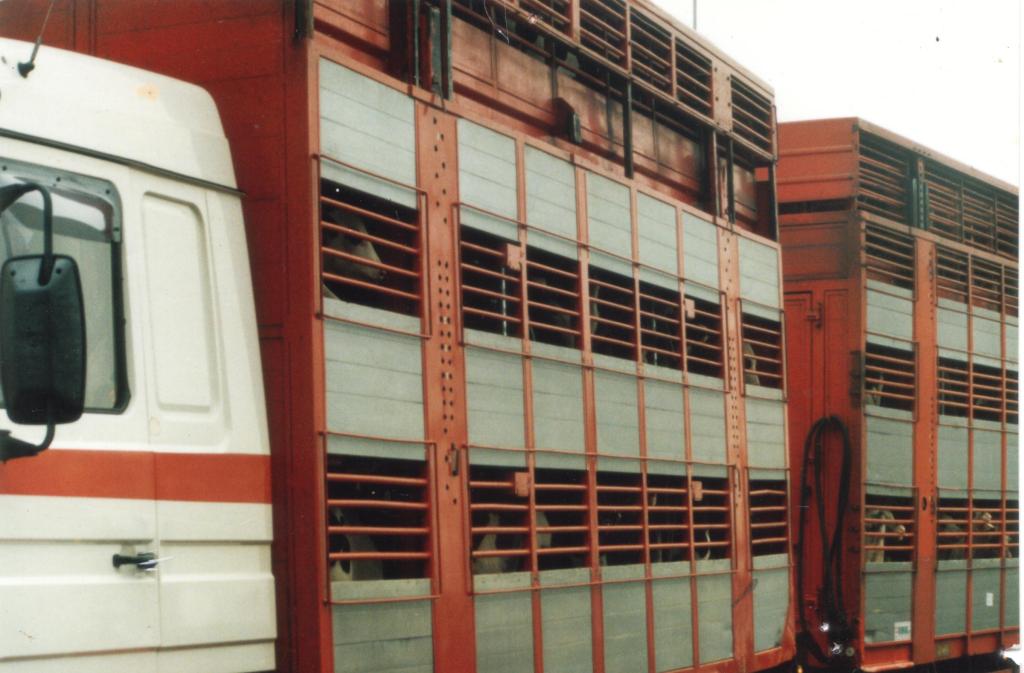
Here is a photo (above) I took at Dover of young British male calves being exported to Europe. You can see their tongues wrapped around the trailer bars where they are wanting to suckle; as they have been separated from their mums.
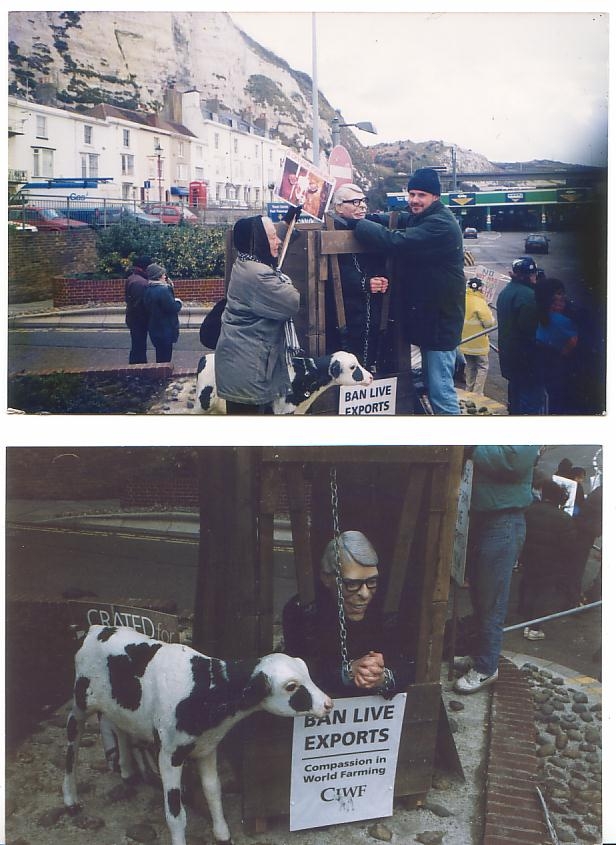
At some time; I cannot remember exactly when, (but it was cold and windy – hence clothing) we took a veal crate to Dover and put someone pretending to be our Prime Minister; then John Major MP; into the crate. The calf within was liberated and John Major was stuck in there for him to get a ‘taste’ of what he was doing to the calves. I am shaking John Major warmly by the throat in this picture at Dover – the place of so many young calf exports over the years. The lady near me is Barb; a hunt sab even though she was in her 70’s !
So; moving on to this article from the great ‘Guardian’ newspaper from London; it is great news that there will now be legislation coming in which will stop ‘unwanted’ male calves from being shot after birth. But; I still have a major gripe with the dairy industry and the way females are treated as mere ‘milk machines’. I will be glad when the whole dairy industry has to close down; and we can celebrate with a glass of alternative plant based ‘milk’.
When you campaign for improvements in animal rights and welfare; steps are taken small rather than in huge strides. I guess this is one small step for the better; but we still need to put our attention into the female cows used in the dairy business also.
Regards Mark
Guardian Article:
The end of dairy’s ‘dirty secret’?
Farms have a year to stop killing male calves
Supermarket support and rising use of sexed semen expected to help UK farmers meet new welfare rules by the end of 2021
Dairy farmers have until the end of next year to prove they are no longer killing male calves on-farm under new rules which will apply to nearly all UK farms from January, the Guardian has learned.
The number of male calves being killed straight after birth, known as the “dirty secret” among farmers, has prompted outrage from animal welfare groups and many within the farming sector.
A Guardian investigation in 2018 estimated that 95,000 were being killed every year within a few days of birth. The lack of viable markets for bull calves and public apathy towards consuming British rosé veal had meant it was sometimes cheaper to kill calves rather than rear them.
However, a rise in the use of sexed semen, which dramatically reduces the number of male calves born, and new retailer policies to help farmers find markets for their calves is leading to a fall in animals being killed.
Around 60,000 male calves are now killed on-farm every year, according to industry estimates, which is around 15% of the bull calves born on dairy farms. But this figure is expected to drop significantly with new rules restricting the killing of calves coming into force from next year.
All farms covered by the Red Tractor standards (the scheme applies to 95% of milk produced in the UK) will have to have written breeding and management policies in place and maintain data on all births and deaths, according to new rules due to be announced imminently.
The new standards state farms will be banned from the “routine euthanasia of calves”.
The rules come into force on 1 January, but a spokesperson for Red Tractor told the Guardian this week that farmers would have until the end of next year to meet the standards.
A steady increase in the use of sexed semen since the early 1990s has recently seen sales jumping from 18% in 2017 to more than 50% of total semen sales in 2020. Industry figures expect it to completely replace conventional semen within five years.
“It’s been a gamechanger,” said Andrew Suddes, a farm consultant for Promar. “Farmers are able to produce heifer [female] calves more easily. You can now produce the replacement heifers that you need with sexed semen, and use beef semen on the rest [of the cows] to produce calves that can be better kept and reared for beef.”
Although sexed semen increases costs for farmers, it can reduce the proportion of male calves being born to less than 10%.
A number of retailers have already banned the killing of male dairy calves or their export overseas from farms in their supply chains. Retailers including Sainsbury’s, Co-op, Waitrose, Marks & Spencer and Morrisons now have calf schemes in place to help ensure rearing dairy bull calves is economically viable for farmers.
In the case of Morrisons, farmers are required to rear the calves to a certain weight until 15–40 days of age, at which point they will be bought by a beef-rearing company. The retailer also committed to buying calves born on farms under bovine tuberculosis restrictions, which leave farmers with few markets to sell to.
Just to let you know that I am doing fine putting together a response to the UK government (Defra) consultation which we hope will see the end of live animal exports. There is a great deal of contribution to be made, as I personally have over 30 years involvement with live animal transport – it is one of my top hates. But it is going very well and things are on track for an early finish – maybe by the end of this year.
I am still trying to get posts for this site completed also; but at the moment the consultation is the main thing. It is a massive opportunity to make a huge difference and it has to be fully taken.
The consultation is open until the end of January 20121. I am posting below our links to this, which include a link if you wish to take part. From what we can find out, the consultation is also open to non UK residents.
WAV Comment – well done and big thanks to all the crews at West Sussex Fire and Rescue Service – they did a brilliant job !
Huge farm fire in Sussex: animals rescued from blaze
Animals have been rescued by firefighters from a blaze at a farm in Sussex.
West Sussex Fire and Rescue Service said they were called at 9.30am last night (December 10) to a farm in Five Oaks Road, Slinfold, near Horsham, West Sussex, to reports of a barn fire.
When crews arrived, the blaze had spread to several buildings, and firefighters spent hours battling the flames.
Six fire engines and two water carriers attended the blaze.
With Christmas around the corner, the animals to be saved reportedly included turkeys, pigs and cows. A fire service spokesman said firefighters rescued livestock and moved them to safety in unaffected buildings.
No people needed to be rescued.
It is currently unknown if any animals perished in the fire.
Police and the ambulance service were on scene as part of the routine response to this size incident.
At around 2am today (December 11) the majority of crews left the scene with one fire engine remaining.
The cause of the fire is still being investigated, the fire service said.
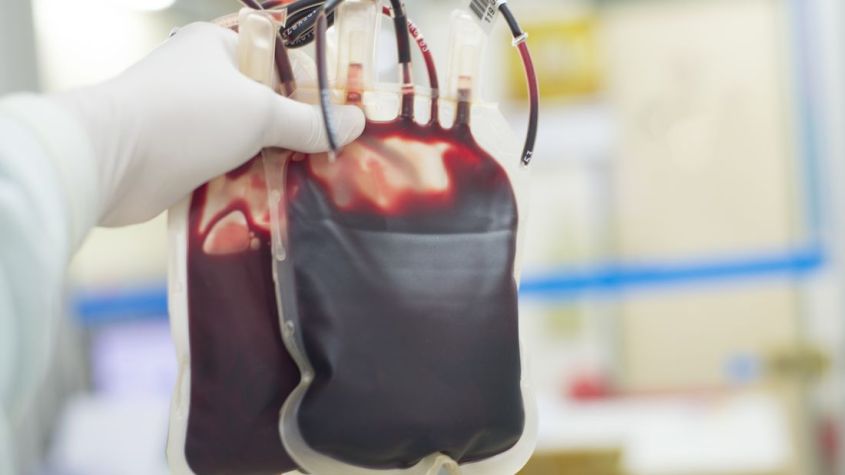
In Thuringia, business with the blood of pregnant mares has been kept secret for years. According to MDR research, the responsible ministry had also known about the blood samples for years. The topic is now a political issue.
So far, blood samples for the production of the hormone PMSG are known mainly from South America. Pregnant mares were repeatedly tortured there in order to be able to produce a drug for factory farming.
In December 2019, the FAKT magazine discovered that blood samples were also taken from horses in Germany.
That happens in Meura in Thuringia.
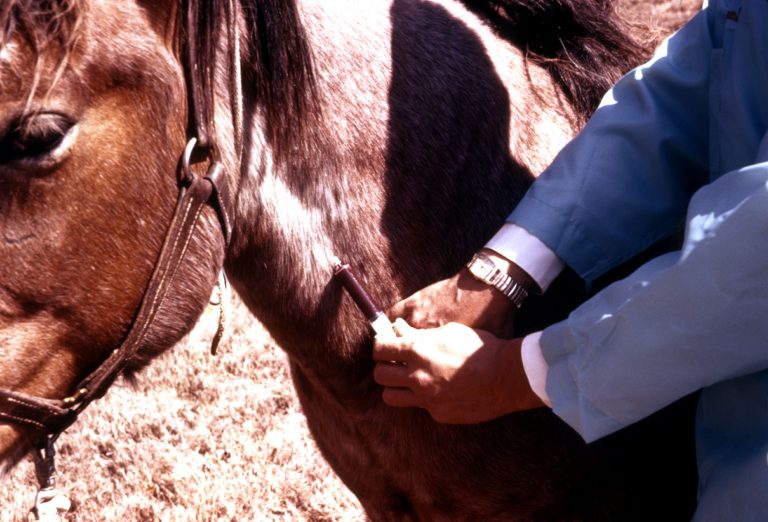
Anke Sendig runs a stud there. “The blood is taken four times a week, four liters each time,” she explains in December 2019 when the deal was uncovered. “If everything is chic and normal, then 16 liters of whole blood are drawn a week.”
The hormone is then sold and later used in factory farming. This means that sows become pregnant and piglet at the same time. For the horses at the stud in Thuringia, this means that around 100 mares are drawn with large cannulas within 50 days. The operator claims that it would do this in accordance with the requirements.
More blood is drawn than allowed
Karsten Feige from the Clinic for Horses at the University of Veterinary Medicine in Hanover has worked on the guidelines for taking blood from horses. This sets the guideline for the maximum amount of blood that can be drawn from an animal.
Over 100 liters of blood were drawn from the mares in Meura in seven weeks.
“That clearly does not match the guidelines,” says veterinarian Karsten Feige. “If we use the guidelines to the maximum, you can lose a maximum of 24 liters from a 500-kilogram horse, but not 112.”
Experts also say that no blood should be drawn from pregnant mares.
The operators of the stud counter that red blood cells are returned to the animals and that the guidelines are only recommendations.
“They are not laws, they are guidelines. But of course, they do imply that you should absolutely adhere to them,” replies Professor Karsten Feige.
If this is not done, there must be a good reason. Otherwise, there could be legal consequences, as court rulings have shown.
WAV Comment – Going cage free is a progress; so worthy of reporting.
BREAKING: RESTAURANT BRANDS INTERNATIONAL ANNOUNCES GLOBAL CAGE-FREE COMMITMENT
RBI just became the first major restaurant group to commit to a truly global cage-free policy. Millions of chickens at 25,000 restaurants will be spared the horrors of battery cages.
In a historic win for animals, Restaurant Brands International (RBI)—a fast-food conglomerate that includes Burger King, Popeyes, and Tim Hortons—has announced that all of its worldwide locations will stop sourcing eggs and egg products from caged chickens by 2025 in 92 percent of their markets and by 2030 for the remaining 8 percent. RBI’s pledge comes after activists waged a relentless six-week campaign spearheaded by the Open Wing Alliance (OWA), a global coalition of 75 chicken welfare organizations, of which The Humane League (THL) is a founding member.
You, our incredible supporters, were too loud and tireless to ignore.
Activists in Russia, Taiwan, Denmark, Turkey, Sweden, Finland, and Indonesia led socially-distanced protests outside Burger King restaurants. Tens of thousands of customers bombarded RBI restaurants with phone calls and flooded their social media pages demanding that they ditch the battery cages in their supply chain. And over 270,000 activists signed a petition calling for RBI to commit to higher welfare standards for chickens raised for all of its locations and all of its egg products—no exceptions.
Thanks to you, within a few years,a hen laying eggs for Burger King will be able to spread her wings without hitting the side of a cage. Her feet won’t get caught in the wire mesh floor, leading to mangled or broken limbs. She’ll have more than a sheet of paper’s worth of area in which to move around, allowing her to engage in natural behaviors like perching, roosting, foraging, and exploring. Her feathers won’t fall off from the constant friction of rubbing against a wire prison.
To ensure these changes are implemented by the deadline, RBI has promised to provide annual progress reports. We will be working with RBI to translate the commitment across several languages. As always, it’s up to us to hold this company to its word.
If and when we do, RBI’s commitment will impact millions of chickens at more than 25,000 locations. This real, tangible progress is a testament to your persistence, your scrappiness, your unwillingness to quit or settle for half-measures. Between RBI going cage-free and Aldi pledging to end live-shackle slaughter in its largest market, our movement has built up a ton of momentum to carry us into next year and beyond. If this is what you all can accomplish in a year as challenging as 2020, we can only imagine what you’re capable of in 2021.
RBI is now the first major restaurant group to commit to a truly global cage-free policy. It won’t be the last.
Animals in Italy need our help. The country has suspended fur farming amid COVID-19 outbreaks on mink farms. This is a great step forward, but we must urge the prime minister to shut down the industry permanently:
Fur farms have been hotspots for COVID-19 outbreaks in Italy, Canada, Denmark, France, Greece, the Netherlands, Poland, Spain, Sweden, and the US.
When stressed animals are confined next to each other in filthy, unsanitary conditions, it’s no surprise that diseases spread easily. As minks are particularly susceptible to respiratory illnesses, mink farms around the world are dangerous breeding grounds for diseases including COVID-19. Indeed, a mutated version of the coronavirus originating in minks is posing a risk to the effectiveness of future vaccines.
For the sake of the animals who are suffering terribly and the humans whose lives are being put at risk by these festering cesspools, PETA is appealing to Italian Prime Minister Giuseppe Conte to close the country’s remaining mink farms permanently. Will you send him a message, too?
Urge Italy to Ban Fur Farms
Around 200,000 minks a year are still imprisoned on Italy’s 13 remaining fur farms. It’s time to shut these facilities down.
Investigations into Italian mink farms have found that animals spend their short, miserable lives in wire cages, with no access to grass or water to swim in. Many were severely injured, and some were driven to self-mutilation or cannibalisation of their cagemates by the stress of captivity.
The minks are killed when they’re only about 6 months old – crammed by the dozens into a box and gassed to death.
These fur farms are putting public health at risk, too. When it comes to the risk of disease, they’re no different to the live-animal market in which the novel coronavirus is believed to have originated. It’s very easy for infectious diseases to spread on fur farms through the exchange of urine, excrement, pus, and blood. Minks with infections, sores, and festering, open wounds caused by the wire flooring they stand on are a common sight. Fur farmers and handlers are among those who most commonly suffer from the zoonotic bacterial disease tularaemia.
Following reports that minks tested positive for COVID-19 on fur farms in the Netherlands and workers are believed to have contracted the virus from the animals, the Dutch parliament voted by an overwhelming majority to bring forward the implementation of a fur-farming ban in the country. Such bans are already in place in Austria, the Czech Republic, Israel, the UK, and several other countries.
Italians know that fur belongs in the history books, not in our wardrobes. Over 90% of the country’s population is against fur farming; iconic Italian designer brands such as Armani, Gucci, Elisabetta Franchi, Prada, and Versace are all fur-free; and in the past 30 years, the number of fur farms in Italy decreased from 125 to 13.
Animal protection and environmental groups call for animal welfare to be included in COVID-19 recovery policies at special session of the UN General Assembly addressing pandemic
Today, animal protection and environmental NGOs from across the world are calling on global leaders meeting at a special session of the United Nations General Assembly on the coronavirus pandemic, taking place 3-4 December, to address the wellbeing of animals in COVID-19 recovery and financing efforts, as well as policies intended to “build forward better”.
As world leaders meet to consider the international cooperation required to deal with COVID-19, animal protection and environmental groups from Africa, Asia, Oceania, the Americas and Europe have signed a new joint-manifesto outlining actions required to transform farming systems, shift food consumption habits, end the unnecessary exploitation of wildlife, increase vaccine development efficiencies, and ensure animal wellbeing.
Reports that the COVID-19 crisis likely arose from the exploitation of animals, as well as recent revelations about potential COVID-19 variants emerging from mink farms, has drawn greater attention to how human uses of animals can increase the risk of future pandemics. In July, a study released by the UN Environment Programme and the International Livestock Research Institute identified the increase in consumption of animal products, intensification of animal production systems, and wildlife exploitation as primary drivers of pandemic risk.
To reduce the future risk of pandemics the manifesto implores global decision-makers to take concrete steps to incorporate policies linking the health of animals, the environment and humans into COVID-19 policy and financing to ensure a resilient, sustainable and humane future.
Animals Australia says:
The IMF estimates that the cost to the global economy of dealing with COVID-19 will eventually reach US$28 trillion. The costs of transitioning away from intensive animal farming and other high-risk animal industries, which would reduce animal suffering and the risk of future pandemics, is a fraction of that. The fact that over 150 global animal welfare and other organisations have come together to highlight the need for a more scientifically considerate and sustainable approach to rebuilding our food systems after the devastations of 2020 is a testament to the importance of these crucial investment considerations. It is imperative that at this historic moment in time decision-makers around the globe recognise the need to transition to sustainable plant-based agriculture – and we implore them to do so.
Asia for Animals says:
The Asia for Animals Coalition proudly supports this manifesto and the call for it to be addressed at the forthcoming General Assembly Special Session. The UN must seize this opportunity and lead the way in showcasing a One Health and One Welfare approach for the treatment of animals and the environment, and ensure Asian governments prioritise these actions. On behalf of our network organisations around the globe and the many millions of members they represent, we respectfully ask that the UN considers the stringent action points set out in this document as a move towards safeguarding our future globally and the sustainability of our planet as a whole.
Coalition of African Animal Welfare Organisations says:
There has never been an opportunity like we have today ‘to build back better’, Covid-19 is giving humanity a chance to reset and acknowledge our interconnectedness with nature. Science has proven time and again that zoonotic diseases spread faster and are deadlier when animals are kept in overcrowded conditions. Africa can not be dealt a blow by ‘paying for the sins’ of the developed world – a world which industrially farms animals. We call on the United Nations General Assembly to endorse and guide a transition towards a better life for all by promoting sustainable food systems that farm as close as possible to nature.
Eurogroup for Animals says:
As the COVID-19 pandemic has shown the world, the question of how we treat animals has become even more central than before. One of the major drivers behind the spread of zoonoses is the pressure on biodiversity created by the loss of habitat. We’re sacrificing the habitat for agricultural purposes, especially intensive animal farming. A booming wildlife trade also contributes to this phenomenon. If we do not address the way we treat animals, we will only postpone the next pandemic. It is high time for the UN to include this question on its agenda.
The Global Forest Coalition says:
Increased intensification of agricultural products has not only shown the strong links between an increase in demand for meat, deforestation and climate change, but also its effects on human health. Previous swine and avian flu events already warned us about possible future outbreaks, but despite this, intensification of farm animal production has continued. Animal exploitation has reached unthinkable scales, as live animals are being exported without regard to animal welfare or the potential for zoonotic diseases. Today we pay the price. Hence, we need to ensure that sustainable food systems address these risks and put us on the desired path of living in harmony with nature, including the way we relate to other animal species in relation to our consumption habits.