I am sending this out to folks who visit the site; some of whom who are involved with live animal transport in European organisations.
The UK government is looking at making legislation in law for a ban on live animal exports and transport issues such as stopping export for further fattening. We welcome this as it is a big issue here in England.
After lots of wrangling the last few days; I ended up back with CIWF hours later, and Meg has kindly mailed me today. It would appear (from the Defra guidelines) that anyone can answer; so I assume non UK contributions are also allowed to take part in the consultation.
The consultation is open until the end of January 2021 so there are still what, 6+ weeks to complete.
Regards Mark
Audience 12. Anyone may respond to the consultation.
Those who have an interest include: • Animal welfare organisations; • Breeding associations; • Farming unions; • Livestock and genetics businesses; • Livestock and poultry farmers, and horse owners; • Livestock, poultry and horse traders; • Livestock or animal vehicle manufacturers; • Local authorities (LAs); • Show, competition and race organisers; • Trade bodies; • Transport companies; and • The veterinary profession. 4 Responding to the consultation 13.
This consultation starts on 3 December 2020 and closes on 28 January 2021.
We would ask you to respond to the consultation questions using the online tool which can be found on Citizen Space at
BLACK SABBATH/HEAVEN & HELL bassist Geezer Butler has teamed up with peta2 — the world’s largest youth animal rights organization — to shoot a brand-new pro-vegetarian ad featuring Butler as he picks at his bass next to the tagline “I’m Geezer Butler, and I’m a vegan.”
“I used to eat meat when I was a little kid, but I didn’t know where it came from,” says Butler, who was born in Birmingham, England. “And one day, I cut this piece of meat open, and blood came out of it, and I asked me mother, ‘Where did this come from?’ and she said, ‘From animals,’ and that was it.”
In an exclusive interview with peta2, Butler talks about how he enjoys having friends over for dinner, serving them faux meat, and waiting for the compliments to start rolling in before telling his guests that they just ate a delicious vegan meal.
And his compassion for animals goes beyond the dinner table. Butler and his wife are very involved in the battle against puppy mills and the cat and dog overpopulation crisis. “There are so many dogs and cats and all kinds of animals [who] need homes,” he says. “You know, there’s no reason to go out and buy them from a pet shop when you can just get them from your local shelter.”
Leading animal protection organisations call for the permanent closure of fur farms in Europe
Humane Society International
BRUSSELS—In the wake of COVID-19 outbreaks on mink farms throughout Europe – which have also laid bare the cruel conditions under which these animals are intensively confined – leading animal protection organisations today held an online conference to address the animal welfare and public health concerns associated with fur production. This event was organised in collaboration with the European Parliament’s Intergroup on the Welfare and Conservation of Animals.
Hosted by MEPs Anja Hazekamp (GUE/NGL) – pictured below, Niels Fuglsang (S&D) and Anna Deparnay-Grunenberg (Greens/EFA), this timely event brought together politicians and policymakers with prominent experts on animal welfare, veterinary epidemiology, NGOs and even a former fur industry insider to consider the animal welfare and disease risk problems related to exploiting fur-bearing species, such as mink and foxes, for their pelts. Recent footage from fur farm investigations was also screened to illustrate the inherent welfare problems involved in fur production.
Above – the brilliant Anja Hazekamp – a strong voice for animals,
Dutch MEP, Animal Welfare Intergroup President and Vice-Chair of the Parliament’s Environment Committee, Anja Hazekamp said:
“Confining wild animals in small wire cages for the trivial purpose of fur production should be consigned to the past. The horrific footage from Polish and Finnish fur farms, which we have seen at today’s meeting, are far from unique. We saw exactly the same kind of images of animal suffering on fur farms in the Netherlands over a quarter of a century ago when the political debate on banning fur production began. In the past days, the very last mink on Dutch farms were gassed to death and the cages stand empty after the industry phase-out was brought forward to eliminate potential coronavirus reservoirs. Fur farming is now over in my country. I look forward to the day when we can end the suffering of all animals on fur farms and see a completely fur-free Europe”
Dr Joanna Swabe, senior director of public affairs for Humane Society International/Europe, added:
“In the past months, the public has been confronted with the fact that fur farms are not only places of enormous animal suffering, but they can also act as virus factories. The living conditions on fur farms, which confine wild species at high densities and in close proximity, fail to satisfy the animals’ most basic welfare needs, leaving them highly stressed, which can lead to their immune systems being compromised. The outbreaks of the SARS-CoV-2 virus on fur farms have confronted us with the terrifying reality that fur factory farms create ideal conditions for diseases to propagate from one animal to another, and for viruses to mutate into forms potentially virulent to humans. We don’t need frivolous fur fashion. And we certainly don’t need these unnecessary reservoirs for coronaviruses. More than ever, it is time to make fur history.”
Reineke Hameleers, CEO, Eurogroup for Animals, noted:
“Given the urgency of the situation we believe it is high time for the Commission to show leadership and introduce measures to suspend fur farming across the EU. The potential risks of the SARS-CoV-2 virus further spreading and potentially mutating, pose serious threats across borders and require an EU approach. We trust that this proposal will be made at the forthcoming AgriFish Council meeting. In the longer term we believe the moment is ripe to phase out this sector once and for all. Several EU surveys have shown that the vast majority of EU citizens do not approve of fur farming and 11 EU countries have already banned or restricted this industry or are in the process of doing so. The pandemic has put the spotlight on the vulnerability of fur farming which end is long overdue.”
Facts:
Eight EU Member States have officially identified COVID-19 positive animals on mink farms: Denmark (289 farms), France (1 farm), Greece (12 farms), Italy (1 farm), Lithuania (1 farm), Netherlands (70 farms), Spain (1 farm), Sweden (13 farms).
Researchers at the Medical University of Gdansk also found eight COVID-19 positive mink on a fur farm in Poland.
SARS-CoV-2 virus has also been found in mink on 16 US fur farms and one Canadian mink farm.
Mink-to-human transmission was first identified in the Netherlands through whole genome sequencing and has also been found in Denmark. The emergence of a new mink variant of the SARS-CoV-2 virus was detected in Denmark leading to fears that this COVID-19 mutation moving from mink to humans could jeopardise future vaccines. This variant had already been found in 12 people in northern Denmark.
On 4th November 2020, the findings of the State Serum Institute led to Danish government announcing the radical step of culling all mink on the remaining fur farms and a temporary ban on mink production in the country.
In 2013, the Netherlands adopted a ban on fur farming. The industry was due to be phased-out by 1st January 2024. However, the Dutch government forced an early shutdown of its mink industry due to continuing outbreaks of COVID-19 – despite the adoption of strict biosecurity measures and preventative culling of all affected mink herds – on its remaining fur farms.
The Irish Department of Agriculture recommended that farmed mink in Ireland should be culled and restocking prohibited on its remaining three fur farms. A ban on fur farming was already pending.
Fur farming has already been prohibited and/or is in the process of being phased-out in various EU Member States, such as Austria Czech Republic, Croatia, Slovenia, Slovakia, the Netherlands, Luxembourg and Belgium.
Legislative proposals to ban fur farming are currently also under consideration, or have been announced, in 6 countries including Poland, Lithuania, France, Ireland, Bulgaria and Estonia.
In addition to these fur farming bans and industry phase-outs, Germany adopted stricter regulations, which have effectively eliminated the breeding of all animals for fur; Sweden similarly eliminated fox and chinchilla production in this way. Denmark has also prohibited and is phasing out the breeding of foxes on animal welfare grounds.
Hungary has also just announced a ban on mink, fox, ferret and coypu production as a precautionary measure due to animal welfare and COVID-19 concerns to prevent fur producers from moving their operations there.
WAV Comment: So the human race never learns; as it is more superior to everything else and does not need to be told. Well we are telling in the following; check them all out.
We also ask; in reality, where are the WHO, the UN, etc? – with global crisis issues and the following where a new 84,000 sow facility begins in China; the origin of Corona; should they really be allowed to do this ? – and why no global action from the same with regard wet market operations globally – they should all have been closed down months ago. Buy money talks louder than anything we guess.
China Builds World’s Largest Multi-Storey Pig Farm Just 1 Year After Swine Flu Prompted Mass Cull
The mega farm is roughly 10 times the size of a typical breeding facility in the U.S, and has the ability to hold 84,000 sows and their offspring
Chinese hog producer Muyuan Foods has built the world’s largest multi-storey pig farm – despite fears of a new swine flu strain causing a ‘potential pandemic’.
The food giant’s mega farm is located near Nanyang and can hold around 84,000 sows and their offspring – with plans to produce more than two million pigs annually.
‘Cash flow is ample’
According to Reuters, this is roughly 10 times the size of a typical breeding facility in the U.S. In the first nine months of this year, Muyuan’s profits skyrocketed a staggering 1,413 percent.
Qin Jun, Muyuan’s vice general manager told the publication: “We have hit a very favorable period for development.
“Pig prices are very high, our profits are really good, and cash flow is really ample.”
Swine flu
Last year, it was reported that up to 200 million pigs could be culled or die from outbreaks of African swine fever that spread across the country.
The Ministry of Agriculture and Rural Affairs declared China’s hog herd had plummeted a staggering 41 percent in October compared to the year before.
This caused the price of pork to spike 110 percent – the highest level of inflation the industry has seen in eight years.
Pandemic potential
More recently, a new strain of swine flu discovered in China is said to have the ‘characteristics of viruses with the potential to cause a human pandemic’.
The strain has genes from a mix of pig, avian and human viruses and genes from the 2009 H1N1 flu pandemic virus.
According to Dr. Munoz, a member of the AAP Committee on Infectious Diseases, the findings should not be ‘taken lightly’.
“We shouldn’t let our guard down with influenza because there’s always going to be a possibility of new threats from emerging strains, and hopefully we can learn from our experience with COVID to be better prepared,” she added.
“This is also a reminder of why we need to be part of the global community and the WHO for sure.
The following is a response from Juliet – founder and CEO at Viva! – an English animal welfare organisation; in response to an issue we recently reported on – the EU giving financial aid to help prop up the fading meat industry and to get people to be ‘Beefatarians’.
The European Commission has given financial support to a campaign which aims to promote a “balanced diet without deficiencies” and to “strengthen the knowledge and competitiveness” of the European beef sector.
The European Commission has agreed to finance 80 per cent of the €4.5 million budget for the “Become a Beefatarian” campaign, meaning they are pumping €3.6 million into marketing beef in France, Germany, Belgium, Portugal and Spain. The campaign makes some outrageous claims about the beef industry, including highlighting their ‘respect for animal welfare standards, the environment and sustainability’.
The campaign goes on to claim that beef provides ‘quality proteins’ with no deficiencies. They state that beef production provides “pastures as a great carbon sink, soil fetilisation, effects against erosion and desertification, prevention of fires etc.”
In response, Juliet Gellatley, founder and director of Viva! said:
“This campaign is utterly delusional. It has been proven time and time again that red meat, such as beef, is linked to heart disease, diabetes, and cancer, due to its high level of saturated fats, cholesterol, and salt. In addition, it is packed with animal hormones, antibiotics, and a whole host of other unsavoury ingredients which our bodies simply aren’t designed to digest. The scientific evidence against red meat is backed by government bodies and leading agencies, such as the World Health Organization. Beef doesn’t contain anything of nutritional benefit that you can’t find in healthier foods. A wholefood plant-based diet, on the other hand, provides all the nutrients you need to lead a healthy, balanced lifestyle, without all the added hidden nasties.”
“The environmental aspects of this campaign are laughable. Animal farming is at the heart of the climate crisis. Beef farming in particular is causing mass deforestation as land is cleared for grazing and to grow animal feed, which in turn contributes to desertification. These crops could instead be fed to the human population, producing enough food to feed the entire world. The science is clear: vegan diets result in 76 per cent less land use and 50 per cent less greenhouse gas emissions.12 It is quite simply the most effective way to improve your health and save the planet.”
“This campaign is another example of biased, harmful marketing which is funded by the meat industry. We are disappointed in the European Commission for backing this campaign. It’s high time they paid attention to the latest scientific evidence and listened to consumer demand, by supporting plant-based food initiatives and encouraging the public to go vegan. Just think of the positive impact we could have on the planet with those financial resources!”
WAV Comment: Denmark has made a 110% hash up of this right from the very start. A vote of no confidence in this woman sounds like a positive move. Does she shed tears for the 17 million Mink that have been murdered by her nations blood lust for a dying financial business ? – no; not for the mink but for the 6,000 fur farmers who are now being seen by the world for what they are.
UPDATE – 8/12/20 – this may be a good time to tell you, as we are on the subject of Danish mink; that we have still had NO reply from the Danish Ambassador in London re our letter of 12th November.
We are nearly a month on from when the letter was sent. What is wrong with them we ask ? – does the lack of reply from a Danish official overseas (in the UK – London) maybe tell us that they do not know what to say really ? – all we want is a reply to our letter, but they seem unable to even do that.
Mark, join our second action and help expose what’s happening behind the closed doors of one of Britain’s worst pig farms.
We confronted the owner of this place, watch to see what he had to say for himself!
It’s vital to the pigs at Flat House Farm that we get our film seen by as many people as possible!! So please share our video far and wide.
No matter whether you’re vegan, vegetarian, or a meat-eater, you are sure to agree that this cruelty has to end!
Shocked by those conditions?
Send us a quote or, even better, a reaction video of your friends after they’ve watched our film! Ask them how it makes them feel to see this and what shocked them most.
Culled minks with COVID-19 mutation rise from their graves in Denmark
By Jan M. Olsen The Associated Press
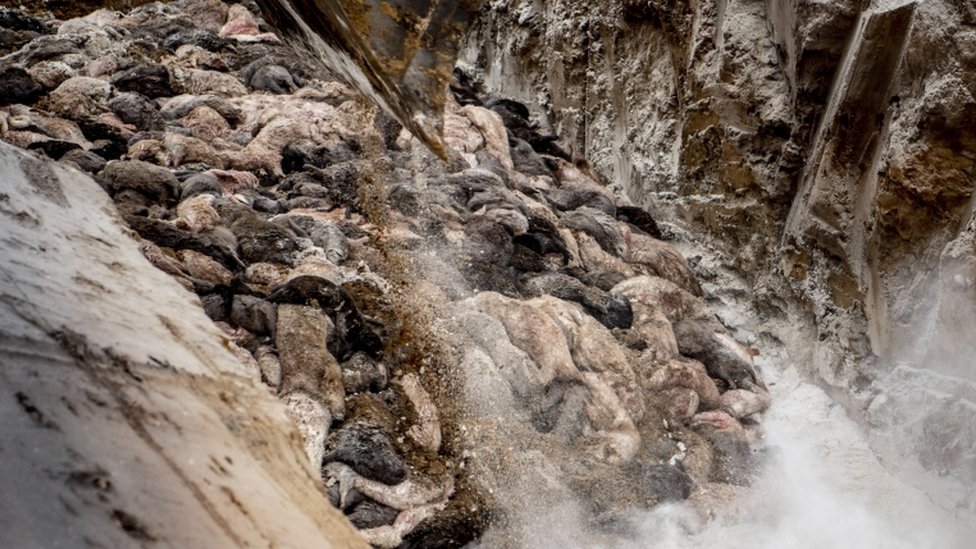
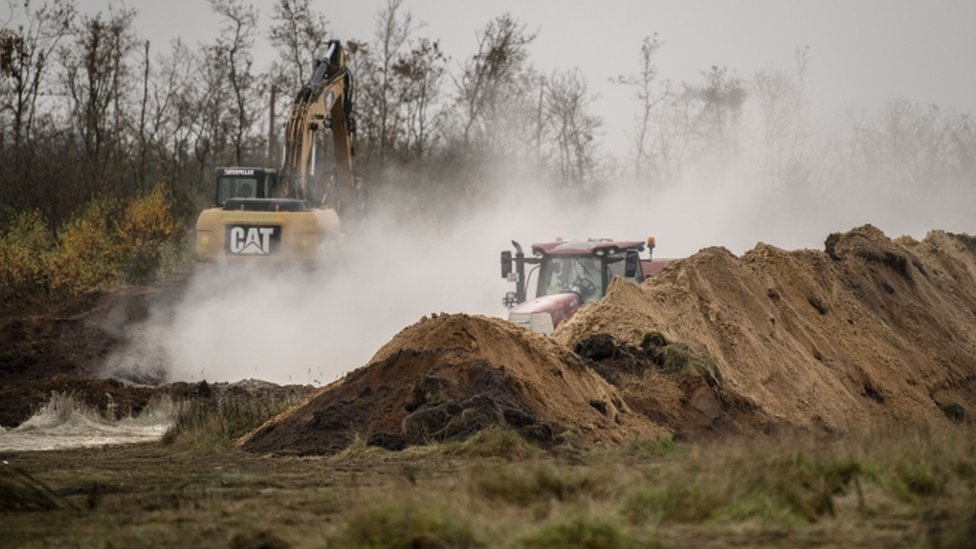
Some of the thousands of mink culled to minimize the risk of them re-transmitting the new coronavirus to humans have risen from their shallow graves in western Denmark after gases built up inside the bodies, Danish authorities said Thursday.
“The gases cause the animals to expand and in the worst cases, the mink get pushed out of the ground,” Jannike Elmegaard of the Danish Veterinary and Food Administration said. He said it affected “a few hundred” animals.
The mink are buried in trenches that are 2.5 metres (8.25 feet) deep and 3 metres (10 feet) wide. A first layer of about 1 metre of dead mink are then covered with chalk before another layer of animals is laid, covered again with chalk and then with dirt, Elmegaard told The Associated Press.
But because the soil where they are buried is sandy, some have re-emerged. “We assume it is the mink that were in the upper layer that pop up,” he added calling it “a natural process.”
“Had the earth been more clayish, then it would have been heavier and the mink would not have resurfaced,” he told the AP. The animals who resurface are reburied elsewhere, and authorities guard the site to keep away foxes and birds.
Denmark culled thousands of mink in the northern part of the country after 11 people were sickened by a mutated version of the coronavirus that had been observed among the animals.
Earlier this month, the Social Democratic minority government got a majority in parliament to back its decision to cull all of Denmark’s roughly 15 million mink, including healthy ones outside the northern part of the country where infections have been found. The proposed law also bans mink farming until the end of 2021.
The government had announced the cull despite not having the right to order the killing of healthy animals, an embarrassing misstep that caused it to scramble to build political consensus for a new law.
The coronavirus evolves constantly as it replicates but, to date, none of the identified mutations has changed anything about COVID-19’s transmissibility or lethality.
Health officials have declared a COVID-19 outbreak at a mink farm in B.C.’s Fraser Valley.
In a media release Sunday night, Fraser Health said eight people at the farm had tested positive, and that it was screening employees and contact tracing.
The health authority did not identify the community or the farm.
A spokesperson for the health authority said “the information bulletin is all we have to share at this time,” when asked for more specific information.
The farm has been ordered to stop transporting animals, products and goods from the farm under the BC Animal Health Act, Fraser Health added.
WorkSafeBC is contacting other mink farms to discuss requirements under their COVID-19 safety plans, it said.