Category: Farm Animals

Germany: private battlefields!

What’s going on with Germany’s farmers ?!

In Baden-Württemberg, south Germany, a country butcher stunned his cattle with gunshots from a long gun.

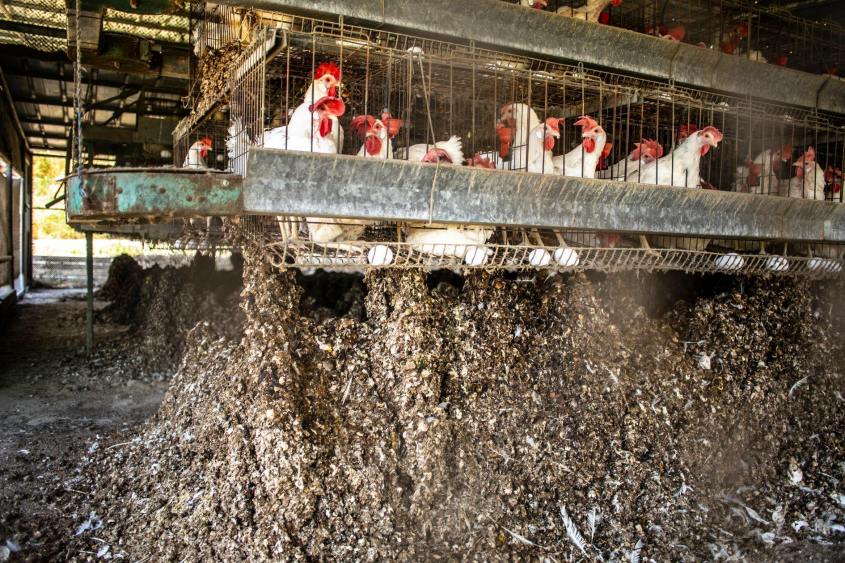
Outwardly, the farm presented itself as an idyllic butcher’s shop, but behind the facade, the animals stood in their own feces.
Before being slaughtered, he stuns them with shots from a long gun – absolutely illegal.

In the white butcher’s smock, you can see the farmer in his slaughterhouse with the gun pointed at the cow.
A shot in the head, but it doesn’t work, the cow just stumbles and falls on the calf.
Then there is another shot.

“It was filmed in secret for three weeks,” says Philip Hermann from the organization Butcher Against Animal Murder.
“This is a trustworthy butcher who runs a family farm. The keeping of the animals and the slaughtering process are so cruel that it is hard to imagine.
The video shows that cows smeared with manure stand knee-deep in manure, unanesthetized turkeys bleed to death, pigs are beaten and piglets can hardly breathe”.

Every Monday is slaughter day on the farm, every Monday the misery repeats itself.
Instead of stunning the cows with a captive bolt, the farmer shoots them in the head with a caliber that is far too small.
Only with the second shot do the animals fall to the ground.

The vet says: The authorities should have intervened here long ago”.
The butcher-farmer sees it differently: “my animals have no transport routes. We do everything to make sure that they are fine “

The Vet Office speaks of “serious violations of the Animal Welfare Act”, has closed the animal operation, and filed criminal charges.

The public prosecutor’s office is investigating and the farmer is no longer allowed to keep animals.

https://www.facebook.com/MetzgerGegenTiermord


Some explanations about the video: Philipp Herrmann visits the crime scene with the journalist, where the organization “Butchers Against Animal Murder” secretly filmed the “animal-friendly” stable for three weeks.
He himself used to be a butcher, today he campaigns for animals.

The farmer shoots and does not hit the cow. She falls on the floor with full consciousness.
He doesn’t shoot again until two and a half minutes later.
In addition, because there are other animals around, there is a risk of accidents, according to the veterinarian and animal welfare officer.
The cow is then carried to the slaughterhouse with a crane, and you can clearly see that it was not completely hit by the farmer’s shots, so it is still alive.
The recordings show that it is not re-stunned.
The cow is cut up in this condition, although it is completely smeared with feces. Violation of the hygiene regulations
You can see how the animals are kept in the excrement up to the knee.
The vet doctor finds the images shocking.

The reporter then visits the butcher’s shop, which delivers “own” meat.
She orders turkey steaks and asks if everything comes from one source.
The butcher proudly says: “It’s all our own production, we do everything ourselves, we have our own farm, if you need something for Christmas, you would get it too”.

When the reporter leaves the shop, you can see how many meat eaters are waiting to buy meat from the farmer next door without suffering.
Or rather, to pay dearly for the farmer’s lie.
You can then see in the recordings with what good conscience these consumers can buy the turkey from this “animal-friendly” farm
The turkeys are slaughtered without anesthesia. Their necks are twisted and left bleeding on the ground.

When confronted with the farmer, he claims:” I almost always hit when I shoot, the one in the video was just an exception.
I did everything to make the animals feel good”.

As soon as the activist says that he cuts the turkeys himself and makes them bleed and suffer, he replies … no, he doesn’t … “this is all an exaggeration … the activist should leave the court, immediately”!!

Although he hired his lawyer to take over the matter, he couldn’t help much too!
The veterinary office has revoked his license to slaughter animals.
And he has to hand over the animals by the end of the year.
Only the butcher’s shop remains open !!

Maybe he comes up with the idea of transforming the butcher’s shop into a barbershop.

My best regards to all, Venus

EU: 23/10/20 All Eyes on EU Court for Decision on Religious Slaughter.

Belgium Bans Religious Slaughtering Practices, Drawing Praise and Protest -  The New York Times

All eyes on EU court for decision on religious slaughter

22 October 2020

Stunning animals before slaughter and avoiding unnecessary suffering is surely the least we owe these fellow sentient beings.

The practice of pre-stunning is mandatory throughout the EU.

Although the EU Animal Slaughter Regulation allows for a ‘religious exception’, it also expressly enables member states to adopt “national rules aimed at ensuring more extensive protection of animals at the time of killing”.

That’s how Denmark, Sweden and Slovenia were able to ban slaughter without stunning.

However, today a compromise between a religious exception, allowing slaughter without stunning, and an outright ban of the practice is close to reach.

Read more at source

EU Observer

Source:  https://uk.reuters.com/article/uk-eu-court-religion-slaughter/eu-court-adviser-backs-ritual-animal-slaughter-without-stunning-idUKKBN2611M9

EU court adviser backs ritual animal slaughter without stunning

By Reuters Staff

BRUSSELS (Reuters) – EU judges should strike down a Belgian law requiring all animals be stunned prior to their death, which has effectively outlawed slaughter according to Jewish and Muslim rites, an EU court adviser said on Thursday.

Gerard Hogan, an advocate general of the Court of Justice of the European Union, said an EU law of 2009 set out that animals should normally be stunned before they are slaughtered, but made a clear exception for slaughter prescribed by religious rites.

EU judges typically follow the opinions of advocate generals although are not bound to do so. They would normally deliver their ruling in two to four months.

The case came to the EU court in Luxembourg after a 2017 decree in the Belgian region of Flanders to amend its law on protection and welfare of animals by requiring all animals be first stunned.

Jewish and Muslim association challenged the decree and Belgium’s Constitutional Court referred the case to the EU Court of Justice.

Hogan said the religious exception reflected the European Union’s desire to respect freedom of religion and the right to manifest religious belief in practice and observance despite avoidable suffering caused to animals.

Jewish and Muslim methods of slaughter involves the animals’ throats being cut with a sharp knife, which advocates says results in death almost immediately. Traditionally, prior stunning is not permitted.

Belgian campaign group Global Action in the Interest of Animals (GAIA), whose representatives were present at the court on Thursday, said it was disappointed and perplexed by the opinion, but noted the judges might rule differently.

“How will the court deal with (EU) members that have for years had general bans on slaughter without stunning: Denmark, parts of Finland, Slovenia and Sweden?” said GAIA lawyer Anthony Godfroid.

All eyes on EU court for decision on religious slaughter

https://euobserver.com/opinion/149811

The popular image of a ritual killing is that of a butcher restraining an animal to expose its throat, covering its eyes with its ears while muttering prayers to calm it.

Sadly, this is far from the experience of animals being killed without pre-stunning for halal or kosher meat, where they are strung up and knifed in a relentless industrial process.

  • By now technological development makes it possible for animals to be butchered humanely, while still preserving religious freedom (Photo: Lukas Budimaier)

Even when their throat is cleanly cut, the massive injury triggers a barrage of sensory information to the brain, meaning their last, long minutes of consciousness as they bleed out are filled with pain and terror.

Stunning animals before slaughter and avoiding unnecessary suffering is surely the least we owe these fellow sentient beings.

That’s why the practice of pre-stunning is mandatory throughout the EU.

Although the EU Animal Slaughter Regulation allows for a ‘religious exception’, it also expressly enables member states to adopt “national rules aimed at ensuring more extensive protection of animals at the time of killing”.

That’s how Denmark, Sweden and Slovenia were able to ban slaughter without stunning.

However, today a compromise between a religious exception, allowing slaughter without stunning, and an outright ban of the practice is close to reach.

This is the method known as reversible stunning, which renders the animal unconscious for the time it takes to cut its throat while respecting the religious requirement of it remaining alive so the blood is pumped out by its still-beating heart.

According to well-established scientific evidence, this method is not only less traumatising for the animal and makes its handling easier for the butcher, but it is also accepted by a growing number of representatives of these religious communities.

However, reversible stunning now faces a major legal challenge across Europe.

After the Flemish region introduced reversible stunning in 2017, various Jewish and Muslim associations contested this decree before national courts and sought its total or partial annulment.

The case reached the Belgian Constitutional Court, which referred the matter to the European Court of Justice for a final decision.

What’s at stake in the present case is not a ban on religious slaughter, but whether a member state may adopt measures to improve the welfare of animals being slaughtered in the context of a religious rite – the aim of the Flemish legislation in requiring the animal to be reversibly stunned.

Not only does this method meet religious community requirements to have animals alive at the time of the throat cut, but it is also proportionate to its declared goal to protect animal welfare while guaranteeing the religious liberty and freedom contained in the EU’s Charter of Fundamental Rights.

Reversal on reverse stunning?

However, in a recent opinion, though seemingly favourable to the adoption of other technical conditions to minimise the suffering of animals at the time of the killing, a member of the Court of Justice of the EU – Advocate General (AG) Hogan – proposed that the court should find that member states were not permitted to implement reversible stunning.

The opinion argues that the ‘religious exception’ was intended to “grant more specific protection to the freedom of religion” in this context and that when establishing stricter national rules, member states must “operate within [its] confines”.

Yet this appears to overlook the fact that the EU legislation submits the adoption of stricter national rules to only one condition, that the importing country – in this case, Belgium – does not prevent the circulation of animal products from another member state with a laxer regime, i.e. meat from animals that were not stunned before slaughter.

There would be no need for this provision to exist if countries were entirely bound by the ‘religious exception’.

We disagree with the contention that the “preservation of the religious rites of animal slaughter often sits uneasily with modern conceptions of animal welfare” and that as a result, the court should not allow member states to “hollow out” the ‘religious exception’. Technology and best practices are there to guarantee that both interests can be reconciled and respected.

Far from being motivated by Islamophobia and anti-Semitism, the Flemish decree prescribing reversible stunning is the outcome of long-standing consultations with the relevant religious communities in an effort to strike a new balance between the exercise of religious freedom and animal welfare.

The acceptance of reversible stunning appears all the more important when analysing the broader context: in Europe, there are many more animals slaughtered without stunning than those needed, but no labelling is required for such meat.

This situation severely affects EU consumers’ right to know if they’re buying and consuming meat that might be derived from animals that have not been stunned before killing.

When these religious traditions were established, there were well-founded sanitary reasons for encouraging people to shun the flesh of animals they could not identify as being recently alive. But advances in food safety have long made such practices redundant.

By now technological development makes it possible for animals to be butchered humanely, while still preserving religious freedom.

It is time for European law to recognise it is no longer acceptable to deny them a kinder end to their lives.

Regards Mark

‘Meat And Dairy Carry Infectious Disease Pathogen Linked To Diabetes And Crohn’s’ – A Plant Based News Article.

Reproduced from Plant Based News without any amendments.

Link:  https://plantbasednews.org/lifestyle/meat-and-dairy-carry-infectious-disease-pathogen-linked-to-diabetes/


Meat And Dairy Carry Infectious Disease Pathogen Linked To Diabetes And Crohn’s

In the world of diabetes, more than 92 percent of all patients have either prediabetes or type 2 diabetes, with the remaining eight percent having either type 1 or type 1.5 diabetes.

Both type 1 and type 1.5 diabetes are autoimmune conditions that have a genetic basis, but often require an environmental ‘trigger’ to begin.

Given that type 1 diabetes has increased by 100 percent in prevalence over the past 25 years, scientists are constantly on the lookout for environmental triggers that might help explain why the rate of type 1 diabetes diagnosis is higher today than it has been at any point in human history, and why the prevalence of type 1 diabetes is increasing by about three percent per year.

MAP in Dairy Products Increase The Risk Of Type 1 Diabetes

Even though many people think of autoimmune conditions as being caused by poor genetics, a collection of fascinating research is suggesting that drinking milk and eating meat can both increase your risk for type 1 diabetes and type 1.5 diabetes—in addition to Crohn’s disease—via a specific pathogen known as mycobacterium avium paratuberculosis (MAP).

MAP is a distant relative of the bacteria Mycobacterium bovis, which is the culprit for tuberculosis (TB) and leprae (leprosy) in humans and TB in animals. MAP does not cause TB or leprosy in humans.

MAP is a mycobacterium, or a bacteria that grows like a fungus, and has been shown to influence susceptibility to autoimmune type 1 diabetes.

Studies show the connection between MAP and type 1 diabetes apparent that a recent review of current scientific literature showed that 100 percent of human studies analyzed detected the presence of MAP bacteria in those living with type 1 diabetes.

So how does MAP enter the food supply? Well, it’s a little… unsavory. MAP infects the gastrointestinal tract of industrialized cows (cows being raised for food or milk) causing an often fatal condition known as Johne’s disease. 

While the MAP bacteria lives in the intestines of cows, it is also present in the fecal matter of infected cows, which means that the MAP bacteria can easily be passed between animals exposed to one another’s fecal material. Unfortunately, this is all too common when hundreds or thousands of cows are living together in close quarters, as is common in large industrialized farms.

Under ideal conditions, MAP present in the intestines and fecal matter of livestock would pose no threat to human health, assuming that their intestines were removed after slaughter and their fecal matter remained separated from the slaughterhouse.

However, when animals are slaughtered, fecal residue from the soil ends up clinging to the boots, clothes, and gloves of slaughterhouse workers, which then cross-contaminates the carcasses of the animals, contaminating both the milk and the meat products en route to the grocery store.

No matter how stringent the conditions are at industrial slaughterhouses, MAP migrates into dairy and meat products; avoiding this fecal contamination when animals are slaughtered is virtually impossible at large scale.

This means that MAP is present in milk and dairy products that you purchase at the grocery store, including raw milk, bulk milk, pasteurized milk, infant food formula, cheese, ice cream, and flavored milk drinks. A study published in 2007 revealed that more than 68 percent of all U.S dairy operations housed cows infected with MAP, and that more than 95 percent of farms containing more than 500 cows housed animals infected with MAP.

Even though milk must be pasteurized (treated at high heat to kill off disease-causing bacteria) before being sold at grocery stores, a small fraction of live MAP bacteria can survive pasteurization.

Approximately three out of every 100 milk products purchased in the U.S contain living MAP bacteria, meaning that milk and milk products are a vehicle that transports infectious bacteria directly from cows to humans, increasing risk for developing various autoimmune diseases, including type 1 diabetes.

MAP is Also Present in Meat Products

MAP is also present in the meat you buy at the grocery store or butcher, including beef, pork, chicken, and organ tissues. Studies have shown that between 15-20 percent of commonly eaten meat products test positive for MAP DNA, and that ground beef presents the greatest risk for transporting MAP into the human food chain.

recent investigation in 298 children in Sardinia, Italy, found that those who ate more meat before the age of two years old developed significantly more cases of type 1 diabetes and that ‘high meat consumption tends to be an important early life cofactor for type 1 diabetes development’.

This same research team also showed that both milk consumption and meat intake are significantly correlated with the incidence of type 1 diabetes in children younger than 15 years old in forty countries around the world.

What Causes Autoimmunity?

But how exactly does autoimmunity happen in the first place? The process is known as molecular mimicry, a sneaky tactic used by various bacteria and viruses in which pathogenic proteins attempt to evade detection by the human immune system by ‘disguising’ themselves as mammalian proteins.

In both young children and adults, microscopic holes in the lining of your gut wall allow pathogenic proteins to pass directly from your digestive system into your blood before they have been sufficiently cut by digestive enzymes.

Once these pathogenic proteins are present in your blood, your immune system recognizes them as foreign proteins and mounts an immune response that targets them for destruction. But because these pathogenic proteins contain specific regions that mimic proteins found in your body, your immune system can mistakenly target proteins on human cells in tissues all over your body for destruction, setting the stage for an autoimmune reaction.

Think of autoimmunity as a form of biological ‘friendly fire’ in which your immune system is hijacked by a pathogenic protein that tricks your immune system into destroying critical human cells containing proteins with a similar structure.

When infected with MAP, your immune system manufactures antibodies that mistakenly attack the ZnT8 protein on the surface of beta cells, targeting them for destruction.

To target these proteins for destruction, your immune system activates cells known as macrophages to engulf and destroy entire beta cells, leading to a near or complete loss of insulin production.

Final Remarks

As is true in almost all biological scenarios, the connection between dairy and meat consumption and type 1 diabetes is indefinite. Therefore, not everyone who drinks dairy and eats cattle, sheep, goats is at risk for type 1 diabetes.

But what this evidence does indicate is that even pasteurized dairy products at the grocery store may harbor living MAP bacteria, which can influence your risk for the development of type 1 diabetes. Despite needing more novel studies to demonstrate MAP’s causation for Crohn’s disease and multiple sclerosis, it is not worth the detrimental risk on your health.

Given that the insulin producing beta cells in your pancreas are the only cells in your body capable of manufacturing insulin, it’s important to ensure that the food you eat protects these critical cells at all ages.

While reducing your intake of dairy products can minimize your risk for type 1 diabetes, eliminating dairy products altogether is the safest way to truly minimize your risk.

Link:  https://plantbasednews.org/lifestyle/meat-and-dairy-carry-infectious-disease-pathogen-linked-to-diabetes/

England: Ready for ‘World Vegan Day’ on 1/11; Vegan ‘Butcher’ Shop Selling Entirely Plant Based Food Is Ready to Go !

London shares the way for Vegans with the Netherlands.

What a brilliant concept which will obviously attract so many people, and hopefully turn more towards ditching meat – the first permanent Vegan ‘butcher’ shop – Rudy’s Vegan Butcher is set to open its doors on ‘World Vegan Day’, November 1.

With this, even if people still currently eat some meat; just out of pure interest, they will investigate what is on offer here and hopefully try it; maybe finding out that meat free is even better for them.

Rudy's Vegan Butcher is set to open its doors on World Vegan Day, November 1, in Islington, north London. Ahead of its launch, the eatery has released a mocked-up photos of its produce, which looks just like a traditional butcher, though all its items are entirely plant-based
For those outside of London who want to get their hands on some vegan meat, Rudy's will be delivering nationwide - with all orders on World Vegan Day coming with a free pack of baycon. The shop - which also has its own restaurant in Camden - already sell DIY kits at home (pictured)

Here is the link:

https://www.dailymail.co.uk/femail/food/article-8856045/The-UKs-completely-vegan-butcher-set-open-north-London-week.html?ito=amp_twitter_share-top

You can only just make it out in one of the photos of the shop; but there is tiling (on the left) showing a pig – and underneath the words ‘friends not food’. – how great and true is that ?

The store, which is decked out and looks just like a traditional butcher, is completely different as all its items are entirely plant-based.

On sale will be homemade pastrami, dirty burger patties, cheeze sauce & chilli-non-carne, as well as a rack of jack, lobstah salad, meatballs, chick’n lover pate and shredded BBQ pulled porc.  We (WAV) note that all the foods have variations in names  (cheeze, lobstah, porc) which is obviously to get round all the junk that is put out by the EU etc declaring that you cant call milk by name etc if it is not from a cow.  See more on our past posts relating to all that at:

You Can Have ‘Cleansing Milk’ for Your Skin, ‘Milk of Magnesia’ for Stomach Upsets; Yet the Dairy Industry Does Not Want ‘Soya Milk’ to Be Called Such. Desperate Times for Them.

EU: The Tester – Will the European Parliament Listen to 94% of EU Citizens and Make the Future of CAP Animal Welfare-Friendly; or Not ?

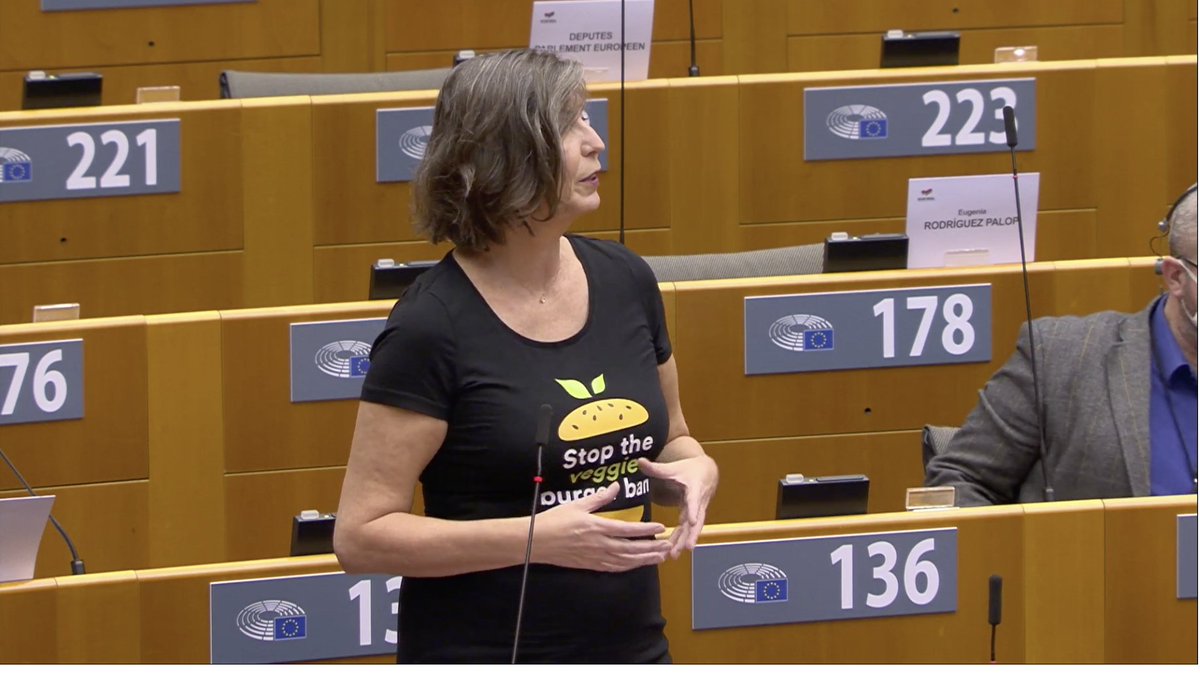
EU: Environmental Groups Campaign Against EU’s Potential ‘Veggie Burger’ Name Ban.

Additional – for information – In the USA:

USA: the meat mafia sabotages Proposition 12

For those outside of London who want to get their hands on some vegan meat, Rudy’s will be delivering nationwide – with all orders on World Vegan Day coming with a free pack of baycon.  

The shop – which also has its own restaurant in Camden – already sell DIY kits at home. 

For opening day, the shop will also be giving away 100 lbs of free baycon to the first 200 customers through the door. 

Sounds great and progressive for plant based eating;

Regards Mark

You Can Have ‘Cleansing Milk’ for Your Skin, ‘Milk of Magnesia’ for Stomach Upsets; Yet the Dairy Industry Does Not Want ‘Soya Milk’ to Be Called Such. Desperate Times for Them.

The animal agriculture industry is feeling extremely threatened by the growth in the numbers of people going vegan and consuming a plant only diet, and, in response, is calling for a ban on the use of terms such as burger, sausage, cheese, milk, ice cream etc for plant based equivalents. The Irish Farmers Union is attempting to persuade Irish MEP’s to vote to ban words traditionally used by the animal agriculture industry such as burger, steak, milk, cheese etc.

Interview on Newstalk

Sandra Higgins was interviewed by Mark Cagney, along with IFA President Tim Cullinanon on this morning’s Newstalk Breakfast. You can listen to the interview here.

Food terminology

The production of plant based equivalents of animal foods has a history that is thousands of years old, dating to Chinese Buddhist monk’s use of seitan (made from wheat gluten) and tofu (made from soya beans). There has been an enormous growth in the production and supply of plant based substitutes for animal foods which meets the demand by people for more ethical food production which necessitates the use of plants instead of animals.

Many vegans would prefer to dissociate from terms which have been used to associate living, sentient animals with food, because they are not food, they are feeling beings with rights. It is perfectly feasible to eat a wholefoods, plant diet without these substitutes. Indeed, it is cheaper and in many cases healthier to do so. However, people buying and consuming plant based substitutes, for the most part, live in countries where we have all grown up consuming animal products such as burgers, cheese, milk and ice cream. It is a matter of convenience to have plant based substitutes replace dietary patterns and recipes based on animal products. Many of these products are a very useful way of meeting our nutritional needs. They ease the transition to a plant diet and to veganism for many people and that can only be a good thing.

Most terms such as burger, sausage, etc refer to the shapes of food. Many animal versions of these products already contain more plant ingredients than animals’ bodies. It is the right of the plant based foods industry to label their products in a manner that facilites their sale.

Is this threatened Ban something Vegans should Be Concerned About?

The cost to the plant based food industry of changing it’s labelling and packaging would be harmful to a growing, ethical, and sustainable method of food production which, in every way, is better than using the lives and bodies of other animals who share our capacity to feel and have an interest in staying alive. Interestingly, there are two cases in the US that we are aware of, that have won their right to use dairy terminology (Miyoko’s Butter and Plant Based Milk in Virginia).

The EU has already banned the use of dairy terms such as milk on plant milks. The ban has done little to halt the rapid expansion of the market for plant substitutes for dairy products. Most people do not even notice the label. The Gestalt principles of perception operate even when most of an object is missing. Our minds are programmed to logically make sense of the world in terms of our understanding. That is why a carton of a product made from oats or soy does not have to be labelled ‘milk’ for the consumer to purchase it on the understanding that it is milk. The main concern in the consumer’s mind is that the milk did not violate the rights of other animals to their lives; that it is not harmful to the environment; and that it contributes to a diet that is nutritionally adequate, healthy, tasty, and affordable.

Misplaced Perception of Threat

The perception of threat by the animal agriculture industry is completely misplaced. The future of food production must, necessarily, be plant based and farmers will be necessary for the production of that plant food and are entitled to earn a living and be supported to transition in other ways to a more ethical, sustainable way of farming that excludes the use of other animals. The industry itself has seen the potential for expansion into the production of plant based foods; many of the vegan substitutes on our supermarket shelves are produced by the industry as it cashes in on this growing market. Given the current crises facing us in terms of a pandemic that has its origins in our oppression and use of other animals, combined with the loss of biodiversity and the climate crisis, which are caused, to a significant extent, by animal agriculture, surely it is in our interests to find solutions to halt disaster and ensure the sustainability of human life, than to argue over the terminology of the food we consume.

Misleading? The Kettle Calling the Pot Black

The argument that plant based substitutes for animal foods are misleading is ironic. The most misleading products of all on our shop shelves are those made from the bodies of other animals. The lengths to which the industry goes to to hide the standard legal practices on farms and in slaughterhouses, to fight against the science that explains the damage that animal agriculture inflicts on the environment and on other life, and to attempt to dispute the facts on the health benefits of a plant diet, are evidence  that it is an industry based on misleading consumers.

There isn’t a single producer of animal products that would sanction putting the facts of animal agriculture on its food packaging.

Milking It

Why the furore over plant based foods and not a similar reaction to the use by the cosmetic industry of the term ‘cleansing milk’, the fruit and veg industry’s use of terms ‘coconut milk’ and the ‘flesh’ of fruit, or the pharmaceutical industry’s reference to ‘milk of magnesia’ or the medical phrase ‘milking’ referring to the expression of the contents of a tube or duct to obtain a specimen or to test for tenderness? 

Has anyone ever reacted to the term ‘milking it’?

It is a derogatory phrase referring to the unjust taking advantage of another; a term which aptly derives from the dairy industry’s unjust process of breeding mammals so that they can be impregnated and lactate milk for their babies which is then taken from them for human consumption; the atrocious breeding of animals to give birth and lactate even though they are prevented from this natural right to feed their babies who are separated from them after birth; the exploitative and violent process of selectively breeding animals so that their bodies can be exploited for dairy products that humans do not need, until the burden of metabolic stress, continual lactation and pregnancy, combine to reduce their production of milk and their lives are ended in slaughterhouses.

Regards Mark

Individual Soya Milk Substitute Portions 80 Pods: Amazon.co.uk: Grocery

confused people – Google Search

Confused Group Stock Illustrations – 933 Confused Group Stock  Illustrations, Vectors & Clipart - Dreamstime

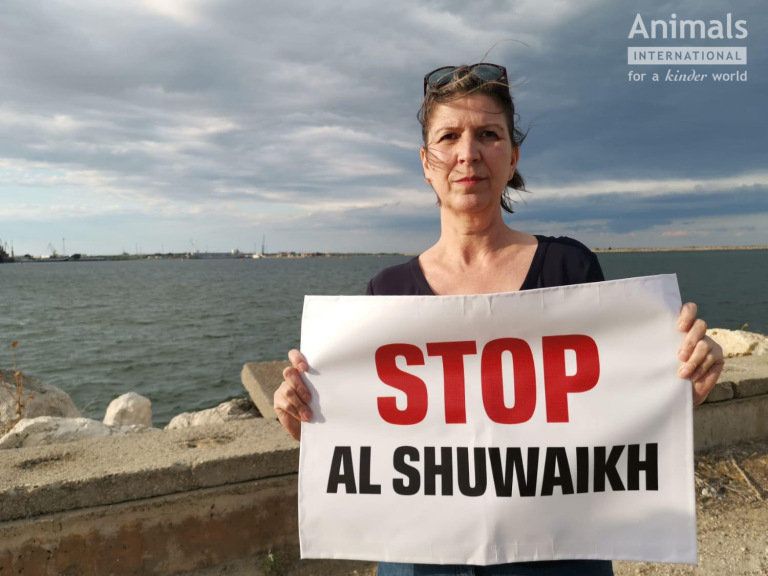
Spain: How much is enough? New evidence shows the suffering of animals exported from Spain to Middle East for slaughter.

How much is enough? New evidence shows the suffering of animals exported from Spain to Middle East for slaughter

The investigation carried out by Eurogroup for Animals’ members Animals International and Animal Welfare Foundation (AWF) in collaboration with Igualdad Animal and Compassion in World Farming (CIWF), reveals the suffering of Spanish animals exported to the Middle East. This is the umpteenth evidence showing the cruelty linked with this trade: Eurogroup for Animals urges the EU to bring an end to the needless suffering and to take a step toward meat/ carcasses only trade.

This summer more than 346,800 cattle and sheep have been exported from Spain to the Middle East and North Africa – just to be slaughtered. Libya, despite the ongoing conflict, remains one of the main importers of live animals from Spain, together with Lebanon, Algeria, Turkey, Jordan, Saudi Arabia and Morocco being the main destinations. 

As shown by countless footage and images collected in the past 10 years by NGOs, EU animals exported to non-EU countries travel for many hours, even days, in critical conditions, and face brutal slaughter practices at arrival which are not even in line with the standards set by World Organisation for Animal Health (OIE) to guarantee a minimum level of animal welfare at the time of slaughter.

The evidence collected in Spain by Animals International and AWF this summer, in collaboration with Igualdad Animal and CIWF, shows livestock consignments that should have never been approved because of the high temperatures exceeding the maximum range set by the Council Regulation 1/2005 (EU Transport Regulation) for the authorisation of such journeys.

Indeed, with more than 34 degrees at the port of Cartagena, the investigators recorded signs of heat stress in the animals that remained confined into the trucks for many hours before being loaded into the vessels. Scared and exhausted, the footage released today shows animals at the ports of Cartagena and Tarragona being moved with violent methods explicitly forbidden by the EU Transport Regulation (i.e  by lifting or dragging the animals by their heads, ears, legs or horns or manipulating them in a way that causes them unnecessary pain or suffering).

Some of these animals were also clearly unfit to travel as severely injured and for them the continuation of the journey should have never been allowed. In some cases, in a desperate attempt to escape, some animals fell into the sea without being noticed by the port operators and the authority appointed to ensure the welfare of the animals transported.

Eurogroup for Animals’ members documented for the first time ever the presence of Spanish animals in a Lebanese slaughterhouses, where untrained operators were filmed while putting their hands in the eyes of the animals to move them. Given the high volume of farmed animals exported to non-EU countries by Spain (Spain is the first and the second EU exporter of, respectively, cattle and sheep), it is likely that the same fate befell many other sentient beings departing from the Spanish ports. In 2019 the exports of live animals increased by 28% compared to 2018, that year 901,392 animals (cattle and sheep) were sent by sea. The first EU exporter for sheep is Romania.

Spain also imports calves from all over the EU to fatten them: these animals are very often unweaned and once fattened are slaughtered either in Spain or in Third Countries with practices that are not allowed by the Council Regulation 1099/2009 (EU Slaughter Regulation).

Read more at source

El Mundo

Denmark: Minks with Mutated Virus can Destroy the Effect of COVID-19 Vaccine.

Jo Anne McArthur

 WAV Comment – Denmark allows fur farming !

Minks with mutated virus can destroy the effect of COVID-19 vaccine

Mink farms can develop into “virus factories” that can inhibit vaccines, explains the chief physician.

The virus mutations that have developed in infected mink in the North Jutland Danish region may risk ruining the work of developing a COVID-19 vaccine.

The Statens Serum Institut confirms this after it criticism emerged against the authorities currently cracking down and killing both sick and healthy mink animals.

The minks in North Jutland are infected with a special variation of COVID-19, and the same mutation has been found in infected people in the area, says chief physician Anders Fomsgaard, responsible for virus research and development at the Statens Serum Institut.

“The concern is that viruses mutated in these mink spread in the community and infect people with a virus strain that is insensitive to the vaccines that are being developed,” he says.

Read more at source

DR

Australia: Coronavirus Outbreak on ‘Al Messilah’ Livestock Carrier at Fremantle Port Sees 24 MORE Crew Members Test Positive Within 24 Hours.

WAV Comment (Mark): 

Despite the overwhelming wishes of the Australian people to stop live exports; the government seems to ignore them and continue to bow and make excuses for support of the trade.  If I lived in Freemantle and heard this news I don’t think I would be very impressed with this situation.

Sems that the Health Minster and the WA Premier have now got a bit of a problem here.

The authorities want to ‘remove the ship so that it can be cleaned’ !

If Australia did not have the live animal export trade then there would be no (live export ship) crew infections; no risk to the people of Freemantle (Health Minister Roger Cook said authorities were working to get as many people as possible off the ship and into hotel quarantine) – so sick crew now being taken ashore into a hotel reduces the risk, does it ?

We say Karma to the government – sadly, people may die as a result of all this; livestock ship crew being taken ashore ? – increasing the chances of infection to other land based folk no doubt.  If the government has to keep on dreaming up excuses for the vile trade to continue; them let them dream up excuses for this new situation.

If the citizens of Australia don’t like it – then get them out !

You know how ‘Mr Coal’ failed you in the recent fires !

Further to our very recent post re Covid on a livestock ship docked in Freemantle:

It now seems to be getting much larger within a day – 24 crew now seem to have tested positive.

Source:

https://www.abc.net.au/news/2020-10-19/another-24-cases-of-coronavirus-on-al-messilah-at-fremantle-port/12782686

Coronavirus outbreak on Al Messilah livestock carrier at Fremantle Port sees 24 more crew members test positive

Another 24 crew members on board a livestock carrier docked at Fremantle Port in Western Australia have tested positive for coronavirus, as a move to phase 5 of eased COVID-19 restrictions has again been delayed in the state.

Key points:

  • The 24 infected crew members remain on the Al Messilah in Fremantle
  • Authorities want to remove people from the ship so it can be cleaned
  • WA’s phase 5 restrictions have been delayed but there is relief for venues

One crew member from the Al Messilah ship had already been diagnosed and brought onshore to quarantine in a hotel.

The other 51 crew from a number of countries remain on the ship, which was scheduled to be loading stock but has now been delayed.

Health Minister Roger Cook said authorities were working to get as many people as possible off the ship and into hotel quarantine to allow for deep cleaning of the vessel.

WA Premier Mark McGowan said it was possible there could be “further positive results in coming days”.

“It is becoming clear that ships arriving with COVID-19 on board is one of the weakest links and the biggest risk to our way of life in Western Australia,” he said.

Mr McGowan demanded the Commonwealth “step up” and work with other jurisdictions on the issue, saying WA received around 30 vessels to its ports every day.

“We need a coordinated, international approach to this and we need our Federal Government to take international action,” he said.

Move to phase 5 restrictions delayed

WA’s tentative date to move to phase 5 of eased COVID-19 restrictions had been pencilled in to begin this weekend.

It would have seen the 2-square-metre-per-person rule abolished along with the 50 per cent capacity limit at major venues.

Mr McGowan said WA would extend phase 4 restrictions for now, but the 2-square-metre rule would be modified.

Regards Mark

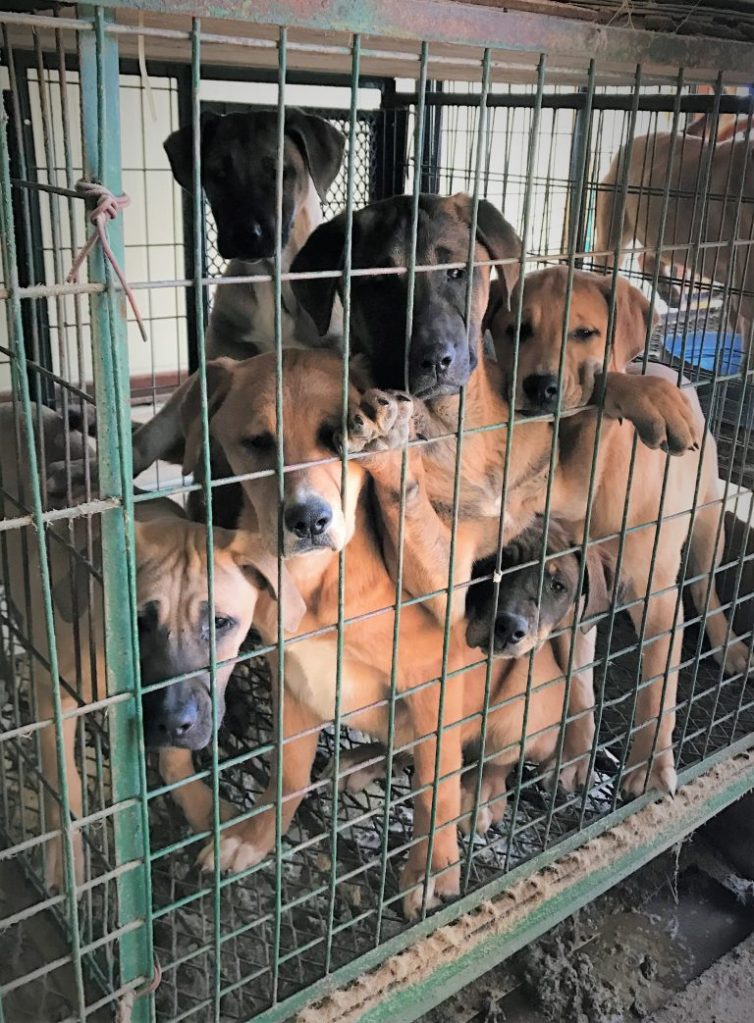
South Korea: A Call to Action to Ask You to Join Forces With Korean Activists to Close the Dog Meat Farms and Businesses.

WARNING – click on the link below to see the reality of this industry.  This is

why your action is needed NOW !

https://koreandogs.org/

A few minutes of your time, may help save a life!

“The greatness of a nation and its moral progress can be judged by the way its animals are treated.”

– Mahatma Gandhi

The e-People petition is the South Korean government’s official petition site and your petition will receive a response from the Korean government.

Anyone from all countries can file a petition using the e-People petition.  It’s quite simple to file e-People petitions, but you can find help on (1) how to file e-People petition and (2) how to check the status of your e-People petitions on our website.

Please help save millions of Korean animals from horrific cruelty by taking this action today.  Click below Take Action buttons to file e-People petitions for each cities in South Korea.

Click HERE to see the list of cities we are campaigning.

Then you will see a large table – on the right side in RED is the call for action.

Where it says ‘Click’ on the right side you can do just that – you will then be taken to a further page giving you actions you can take info on the specific region / dog farm you have selected.  There are ghastly videos; local government contact e mails to write to, as well as a sample letter for you to copy and send (to the contact address list given).

There are many action links – about 290 to be precise; so please add this to your favourites and return to it to take more action when you have time.

Information:

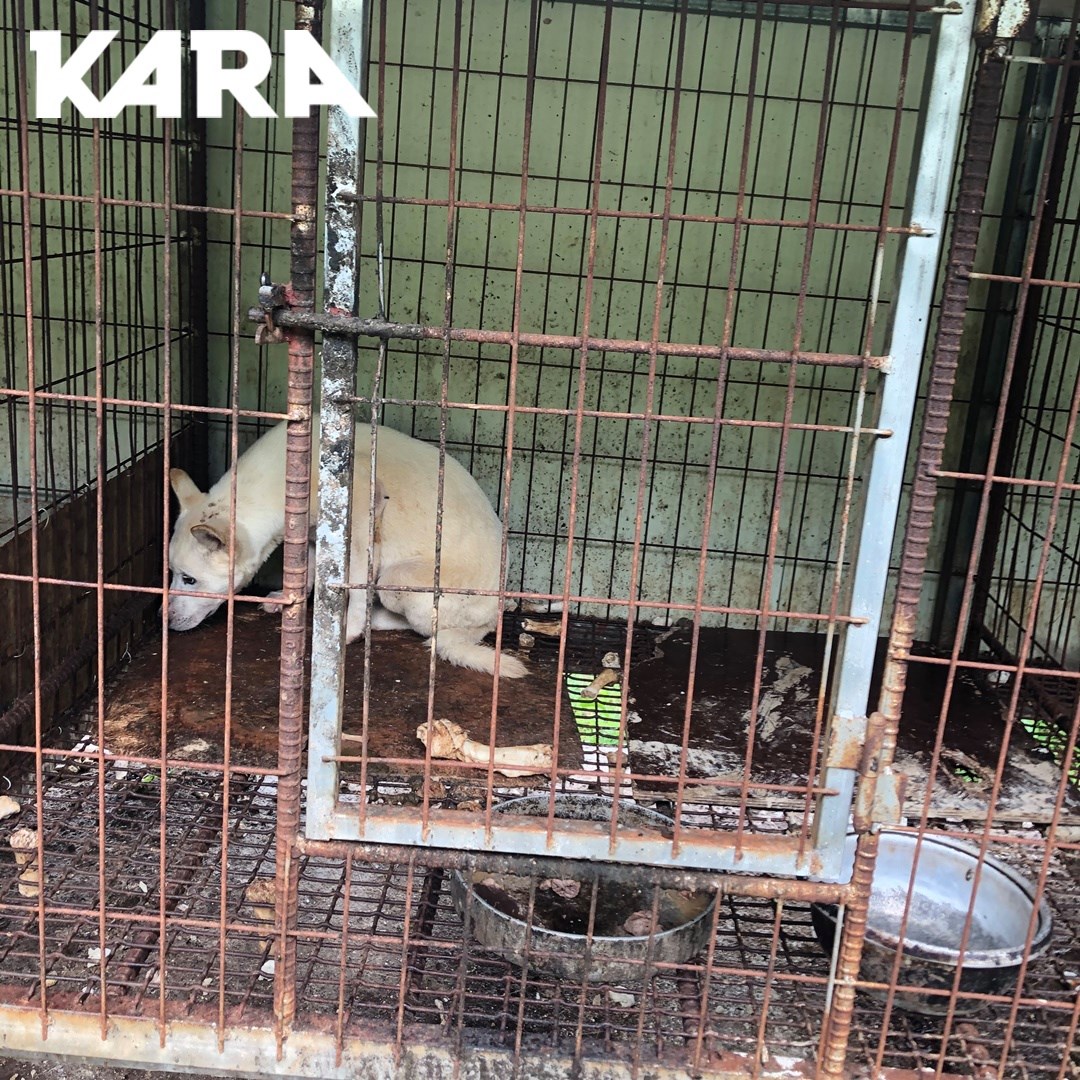
Despite the fact that dog and cat meat consumption is an everyday occurrence and is being carried out all over South Korea, it is NOT LEGAL in that country.

Their Government does nothing to stop this illegal practice and they seem happy to ignore it; many Korean citizens are just as apathetic and must also be held accountable.

This is the 21st Century, and it is high time that all South Koreans, leaders and general public alike, stand up and take responsibility to enforce their own country’s laws. South Korea and South Koreans cannot continue to ignore these brutal and unethical trades, so let us campaign to urge each of South Korea’s cities to enforce their laws and to put an immediate end to these illegal dog and cat meat trades.

Below are the most populous cities in South Korea. Please sign our petitions and send postal letters to these cities calling for an end to these illegal trades. Postal addresses for the Mayors are shown in the change.org petition. You can use our petition as sample letter (just copy and paste) or use your own words.

Please note: We will be adding more petitions so please check back with us often. Thank you!

Please help us to help the wonderful South Korean activists with their massive campaign to shut down the dog meat in South Korea.

Regards Mark