House of Lords (UK) Votes to Ban Low Standard Imports – protecting British farming from ‘vile’ American animal welfare standards.
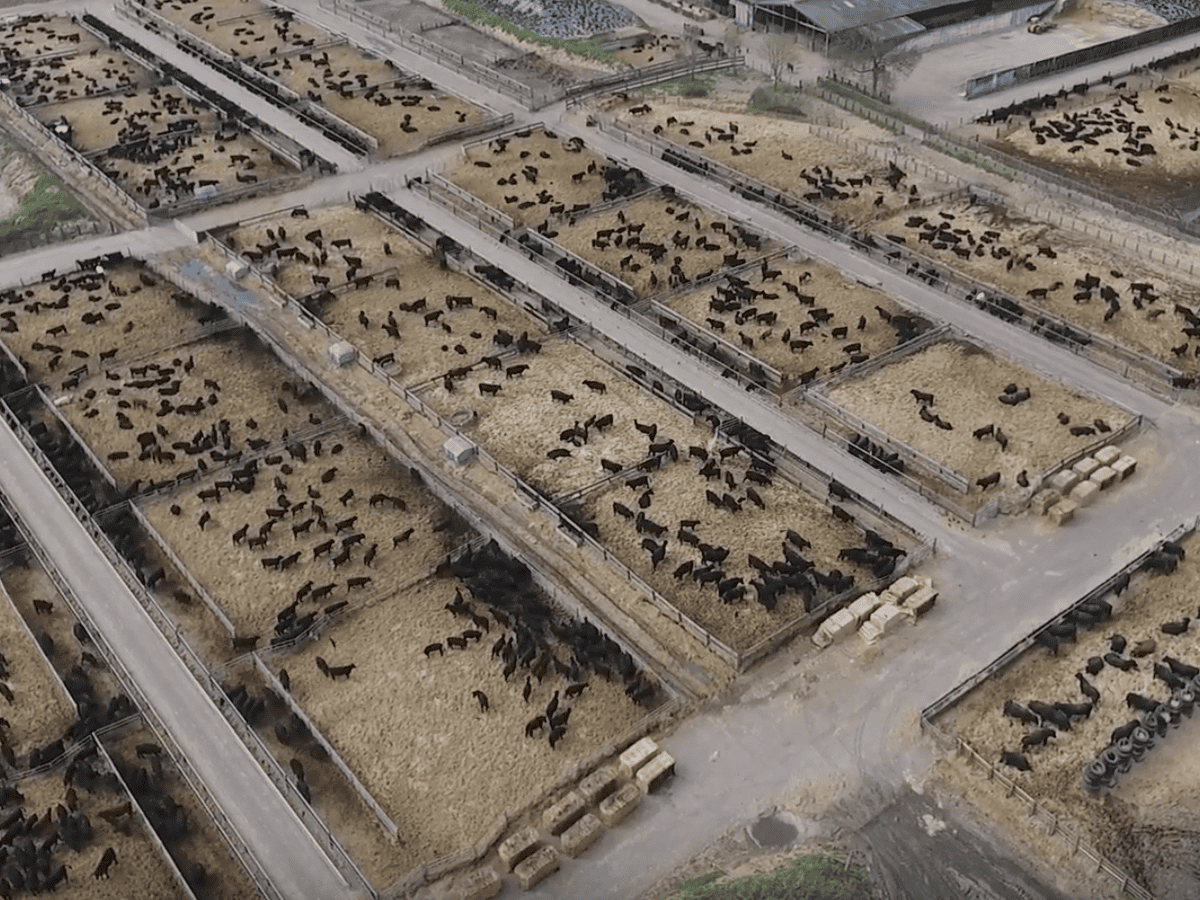
The House of Lords voted on 22 September with a significant majority (307/212) in favour of an amendment to the Agriculture Bill that, in the event of a UK/US trade deal, would ban imports of food that would be illegal to produce in the UK such as pork dosed with the muscle-builder
Ractopamine, beef injected with growth hormones and chicken washed in chlorine.
The result is a significant response by the Lords that reflects both their personal values and those of the public in supporting real food and farming in the UK.
Who said what? Baroness Jones of Moulsecoomb, a Green Party peer, said the amendment was essential to protect British farming against “vile” American animal welfare standards.
But opposing Tory peer, Baroness Noakes said, “The government’s policy is clear, they are committed to higher food and welfare standards […] We do not need to write into law what the government is committed to.” A suggestion as to how to hold the government accountable to these commitments in the race for a trade deal outside of the EU, was not given by the Baroness.
So What Next ?
The Agriculture Bill now returns to the House of Commons where, after previous readings, almost all Conservative MPs voted against amendments to protect our farmers by restricting low standard imports, “primarily down to the political sensitivity around trade deals and their links to Brexit”. This vote by the Lords can be overturned by the Conservatives due to their vast majority, so we must keep up the pressure by lobbying Conservative MPs.
Which is why we still need signatures to support our campaign;Say No To Trump’s Toxic Trade Deal. We are focusing on high street fast food outlets that have not yet committed to not using substandard American pork. Greggs is one of them. Please sign and share the petition asking Greggs to commit to not using cruelly-raised factory farmed US pork.
It’s All Linked
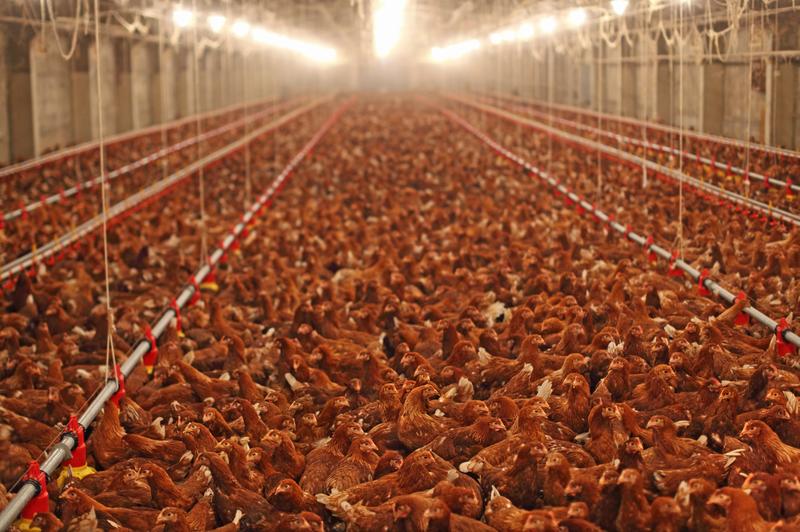
David Attenborough’s recent film Extinction; The Facts explains that new pandemic diseases are emerging because industrialised crop monocultures, animal factories and expanding cities, have encroached onto the last areas of wilderness where bacteria and viruses that are harmless to wild animals, are deadly to immuno-compromised factory farmed animals – not least the city and factory bound human species!
This 12-story pig factory in China with over 1,000 pigs on each floor, complete with an elevator for transporting pigs between the floors, is being touted as ‘biosecure’. Really? Or is this just the typical ‘big is beautiful and more efficient’ myth? Dr Michael Gregor explains how factory farming makes pandemics more likely.
Farmers are victims, forced to compete in a global market; get big or get out of farming by industrialising, is the status-quo mantra. As a result farming has become cruel, monotonous, polluting and badly paid, with massive external costs paid for in taxes, our health and mass extinction. The average age of traditional farmers in the UK is 62, and young people who want to farm cannot afford to buy or rent land or invest in machinery and livestock. A network of small scale mixed farming systems, abattoirs, processors and retail outlets would boost rural employment, keep money in the local community, be more resilient to shocks and feed more people with less transport costs and fraud. So, trade agreements should be framed to take food and farming out of the global economy, and instead facilitate the re-localisation of real farming – as advocated and voted for by our nature-friendly Lords.
The meat industry can rely on its faithful servants in politics!!
The Federal Council has decided to carry out fewer controls in meat processing plants, and slaughterhouses will also have to control significantly less in the future. What sounds like a bad joke is unfortunately a reality.
Even so-called risk companies will have to inspect the consumer protection agencies less often than the previous regulation would like.
Companies from the sausage factory category, for example: So far, 12 mandatory inspections per year, in future only four.
For companies in which the authorities expect the highest health risk in the event of poor hygiene – the largest meat companies, for example – even 200 mandatory checks per year can now be omitted because instead of daily, are only mandatory weekly checks in the regulation ..Reason: Lack of staff!!
It’s like dismantling the speed cameras if too many cars are caught violating the speed limit – and in the end, the authorities are probably proud to say that there are now fewer speeders …
And I mean…After the corona outbreaks at the exploitative slaughterhouse company Tönnies, one would have expected that the responsible politicians would be ashamed and would pay more attention to the welfare of workers and keep an eye on the health of consumers, who have to be protected from poisoned and contaminated meat!
Instead, the slaughterhouses get even less control!! So the operators of the so-called “meat industry” officially and mercilessly exploit everything and everyone. With the blessing of the state!
I would say to the Federal Council: Go into the slaughterhouses and stay with the animals until they are chopped up.
Stay there and feel their fear of death, see how they defecate their bladders in fear, see how they try to escape, how they are beaten up, how the “staff” laughs.
Hear their screams for help, the screams in the gas chamber, the screams in the scalding bath, the fidgeting with a slit throat and hear their last breath and watch them being dismembered, how almost finished babies are cut from their bodies!
Then you will find that you are the ones causing this misery. And because you don’t even have the courage to commit suicide, the least you can do is to abolish these places.
Breaking news in from Compassion In World Farming (CIWF) – London.
Dear Mark,
Amazing news: the Scottish Government has halted live calf exports.
After our gruelling, six-month legal battle, the Scottish Government has now accepted that live calf exports that breach maximum permitted journey times – a regular occurrence since April 2019 – can no longer be tolerated.
It has therefore instructed that no further applications for unweaned calf exports that breach these rules should be approved – effectively halting the current trade.
We are pleased to announce that, after a gruelling legal battle, the Scottish Government has finally stopped live calf exports.
Having spent six months defending the inhumane export of unweaned calves to Europe, they have conceded that this trade was being conducted in breach of the legislation on the protection of animals during transport.
With backing from our dedicated supporters, we launched Judicial Review proceedings to challenge the lawfulness of this practice back in February. Both the Scottish and UK Governments resisted for several months – wasting taxpayers’ money – shamefully defending a trade which can see calves go for 23 hours without food and often water.
In a major U-turn, the Scottish Government has now instructed the Animal and Plant Health Agency (APHA), which is responsible for approving export journeys, to not approve any further applications for unweaned calf exports that breach the time limits in the regulations.
“The Scottish Government’s conduct during this dispute has often fallen far short of that expected from a responsible authority,” said Peter Stevenson, our Chief Policy Advisor. “They have neglected to disclose key information, run misleading arguments, and despite export journeys exceeding the maximum permitted travelling time since at least April 2019, that these journeys were exceeding the maximum permitted travelling time, they failed to act and did not issue an instruction to halt the trade until over a year later. Above all, they have vigorously defended this cruel and unnecessary trade.”
Over several decades, millions of British calves have been forced to endure long, inhumane journeys to Europe for slaughter and fattening. We have fought this all the way. The ending of calf exports from Britain represents a turning point in the battle to stop this horrific trade.
“We welcome this decision that means thousands of calves will be spared such gruelling journeys every year,” said Natasha Smith, our Senior Campaigns Manager. “However, it is outrageous that it took legal action and years of argument to bring the Scottish Government to this point.”
Whilst this is a major victory for the welfare of Scottish calves, the policy must now be secured by legislation. The Scottish Government has promised a public consultation on banning journeys over 9 hours for calves, and the UK Government has previously committed to a separate consultation on live exports. Similar consultations in the past have yet to yield results.
“More consultations and empty promises are not enough,” Natasha continued. “We need new legislation to protect animals from this cruel and unnecessary practice once and for all.”
Now, our fight continues far beyond the courtroom. We will not stop until there is a complete ban on live exports from the UK for slaughter and fattening.
You have helped achieve justice for calves. A huge thanks to every person who has donated, emailed politicians, or even joined Kent Action Against Live Exports to protest the sailings in person.
Read more about our Judicial Review proceedings here.
KUWAIT Livestock Transport and Trading (KLTT) – Australia’s largest buyer of live sheep – has sold its twin-tier livestock vessel the Al Shuwaikh for an undisclosed amount.
KLTT’s Western Australian subsidiary, Rural Export and Trading WA managing director Mike Gordon said a Jordanian company, Al Delta Company, purchased the vessel about two weeks ago.
The Al Shuwaikh was due to be phased out from the Australian trade because of new marine orders that prohibited twin-tier vessels from operating in Australia beyond January 1, 2020, without an exemption.
Until now the vessel did have an exemption but it was only used for sheep.
A clause in the paperwork was discovered only when it was pointed out to the company by agriculture department officials, that denied them the ability to load cattle on deck five, costing KLTT $1million per voyage from WA.
Mr Gordon said the 34-year-old Al Shuwaikh was “due to be retired”.
He said the company would continue to service Australia “for the foreseeable future” with its two remaining vessels, the Al Messilah and the newly-purchased Al Kuwait, the world’s largest livestock carrier.
Mr Gordon said the vessels would be spaced to run back-to-back trips from September 16 to May 30, 2021, until the northern hemisphere summer moratorium prohibited trade to the Middle East (June 1 to September 15).
The company would also divert the vessels to South Africa when needed.
Two other twin-tier vessels had been servicing the Australian market – the Maysora and the Bader III.
Livestock Shipping Services, which owns these vessels, had cut the upper deck from the Bader III but decided to utilise the vessel in other markets.
Farm Weekly understands that the company has applied for an exemption for the Maysora to continue to service Australia in the short-term, however it’s last known position was off the coast of north-west Africa.
Just a few of our (WAV) past posts related to the AS:
From our live export campaigner friends at SAFE in New Zealand:
Kia ora Mark
Tens of thousands of animals have died in live export disasters over the last decade.
Animals are exported alive from New Zealand for breeding due to a loophole in our law. These animals are transported in dangerous conditions on open sea voyages or by air. When they reach their destination, they are likely kept and slaughtered in ways that are illegal in New Zealand.
Live export is not worth the suffering.
SAFE has launched an ambitious international campaign to put pressure on Labour leader Jacinda Ardern to impose a complete ban on all live export.
This advertisement is running in the Guardian online and will be seen by hundreds of thousands of readers across the UK and Europe.
Jacinda Ardern is known around the world for being a good leader and in Aotearoa New Zealand for putting kindness at the forefront of her values. Sadly, that kindness does not extend to animals.
The appalling human and animal suffering that happened when the Gulf Livestock 1 sank cannot happen again.
Jacinda Ardern needs to know just how many people care about animal welfare, and that the world’s attention is on how New Zealand handles this disaster. Our international reputation depends on it.
SAFE has run an advertisement in the Guardian newspaper so that people around the world can ask Jacinda Ardern to extend her kindness to animals and ban live export once and for all. You can help by sharing this advertisement with your friends and family via email and social media.
Share the advertisement now:
This year, approximately 65,000 cows have left our shores. There are significant risks to the welfare of farmed animals transported by ship, especially over long distances. The Pacific Ocean is renowned for rough seas that can cause the cows to suffer seasickness and be thrown around and injured. The rough seas, unnatural diet, high stocking densities and heat stress all have a negative effect on these animals, with some suffering injuries and others dying on board.
Once the journey is over, they may well end up confined in concrete factory farms for the rest of their lives, never to set foot on grass again. Then, when no longer deemed profitable, these cows will be killed, most likely by methods so cruel they are illegal in New Zealand.
We need to keep up the opposition to this cruel trade, and we can’t do it without you. Please make a gift today towards SAFE’s international campaign so we can continue to shine a spotlight on New Zealand’s cruel live export trade.
Animals need us to all work together to end their suffering.
A seven-storey pig building at Yaji mountain. A 12-storey building is planned. Photograph: ReutersYangxiang’s high-rise pig buildings at Yaji mountain. Photograph: Reuters
A 12-storey pig farm: has China found the way to tackle animal disease?
21 September 2020
Biosecure farms complete with staff quarantine and chutes for dead pigs are seen as progress, but may carry their own risks.
The buildings do not even look like farms. They are huge grey concrete blocks, many storeys high, which stand side by side in the middle of what might look like a quarry, a “hole” of red earth dug in the heart of a mountain.
We are on the Yaji mountain, which in Chinese means “sacred”, a few kilometres south of the city of Guigang in southern China. What we are looking at is the tallest pig farm in the world; units up to nine storeys high housing thousands of pigs, with construction of a 12-storey pig unit under way.
Pigs at Yaji farm are confined to one floor to avoid transmission of disease. Photograph: Dominique Patton/Reuters
“On each floor we can breed 1,270 pigs,” says Yuanfei Gao, vice-president of Yangxiang, the company that built the farm. “But in the future with the design of the new buildings we plan to have 1,300 pigs per floor.”
Yangxiang is one of the Chinese giants of the pork industry, producing about 2 million pigs a year in a dozen farms throughout China. The Yaji mountain site is its largest and most advanced multistorey farming system, and will have the capacity to produce around 840,000 pigs a year when construction is finished.
WAV Comment: We always thought that Trump had lost his marbles way before he was elected as the ‘President’ of the United States; but as money and the making of is his sole intention and concern; here we see that New York; with one of the largest Covid casebooks in the US, is now opening up its wet market doors because of Yom Kippur.
One really has to ask where the priorities of the US lay – trying to beat the Covid virus or simply as the article blow states:
“New York Mayor Bill de Blasio; his Health Commissioner, Dr. Dave Chokshi; and his Deputy Commissioner of Disease Control, Dr. Demetre Daskalakis, allow this mass ritual slaughter to take place, in spite of the health code violations and risks to public health, because NYC’s ultra-Orthodox Jewish communities represent a powerful voting bloc that can make or break elections in NYC and NY State”.
Now we know; to hell with the deaths and families affected; as per the Trump mentality; votes and money are the thing than mean more than anything else.
If the American public understand and believe this; then vote him in once again and put money before everything else. We have exposed the links to Covid deaths and the meat industries in many posts; if you ignore the evidence and go with the money; then that is your choice. We suggest that US citizens really taken this issue on board and start asking some hard, deep down questions about the New York policy – what is most important ? – deaths or votes.
The choice, voters of the USA, is down to you.
Link – New York Times 22/9/20:
At least 5 new coronavirus deaths and 575 new cases were reported in New York on Sept. 21. Over the past week, there have been an average of 790 cases per day, an increase of 5 percent from the average two weeks earlier.
As of Tuesday morning, there have been at least 455,187 cases and 32,691 deaths in New York since the beginning of the pandemic, according to a New York Times database.
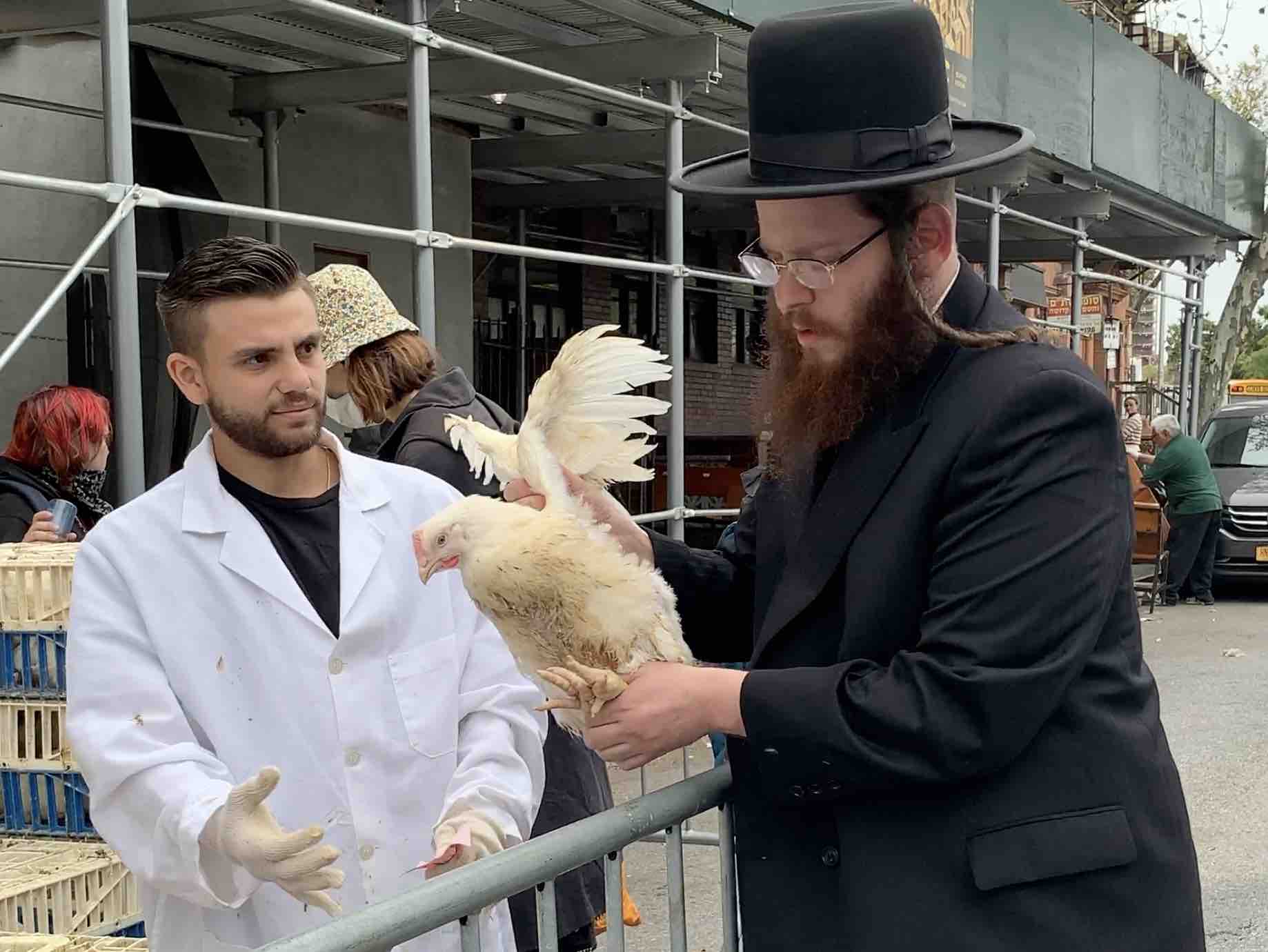
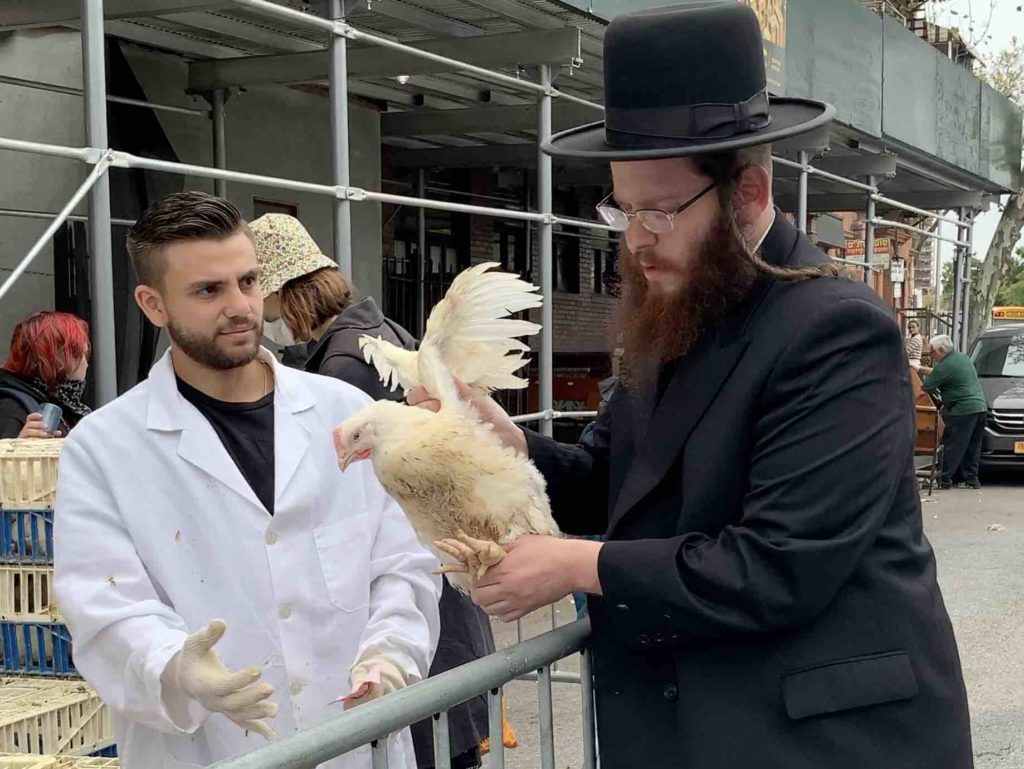
In the days leading up to Yom Kippur, tens of thousands of Hasidim in Brooklyn will purchase and physically handle live chickens in a wet market setting. Wearing little to no PPE, they will swing the chickens around their heads as part of an annual atonement ritual called Kaporos. The chickens will be killed in approximately 30 makeshift slaughterhouses erected without permits on public streets in residential neighborhoods in violation of eight New York City health codes.
The body parts, blood and feces of thousands of animals will contaminate the streets of South Williamsburg, Crown Heights and Borough Park for several days.
Kaporos is, in effect, the largest live animal wet market in the country and the only one in which the customers handle the animals before the animals are killed. Many of the animals have compromised immune systems and show signs of respiratory disease.
The chickens make each other sick, and they also infect some of the people who handle them with e. Coli and campylobacter. If the viruses that these animals carry commingle and mutate into a more dangerous strain that could be spread among humans, then these Kaporos wet markets could be the source of the another zoonotic disease outbreak. According to a toxicologist who studied fecal and blood samples taken during Kaporos, the ritual “constitutes a dangerous condition” and “poses a significant public health hazard.”
In addition to putting all of us at risk of another zoonotic disease pandemic, Kaporos, which attracts hordes of people in small areas, could be a COVID “super spreader” event because Hasidic communities have been observed not wearing masks or engaging in social distancing.
New York Mayor Bill de Blasio; his Health Commissioner, Dr. Dave Chokshi; and his Deputy Commissioner of Disease Control, Dr. Demetre Daskalakis, allow this mass ritual slaughter to take place, in spite of the health code violations and risks to public health, because NYC’s ultra-Orthodox Jewish communities represent a powerful voting bloc that can make or break elections in NYC and NY State.
In fact, taxpayers help to underwrite the cost because the NYPD provides barricades, floodlights and a large police presence at many of the Kaporos sites. Given the risks and the disruption and death we have already endured already with pandemic, how can the Mayor and his health deputies allow Kaporos to take place?
For the past several years, animal rights and public health advocates have pled with Mayor de Blasio and his revolving door of health commissioners (Dr. Mary Bassett, Dr. Oxiris Barbot and now Dr. Dave Chokshi) to shut down Kaporos, given the health code violations and the risks to the public health.
Both in court and in the media, city attorneys and spokespeople for the NYC Department of Health have defended Kaporos and argued that the City has discretion over which laws to enforce. Throughout the month of September, the Alliance to End Chickens as Kaporos plastered 300 posters around New York City to sound the alarm about Kaporos.
The second undercover research reveals how pigs are again tortured for Tönnies!
We recently published scandalous video material from a Tönnies supplier in North Rhine-Westphaliaand reported the conditions there.
The public prosecutor’s office then took up the investigation and Tönnies, the group that slaughters around 20 million pigs annually and thus makes over six billion euros in sales, was forced to react.
Now we have again proof of the terrible way pigs suffer and die for the Tönnies Group.
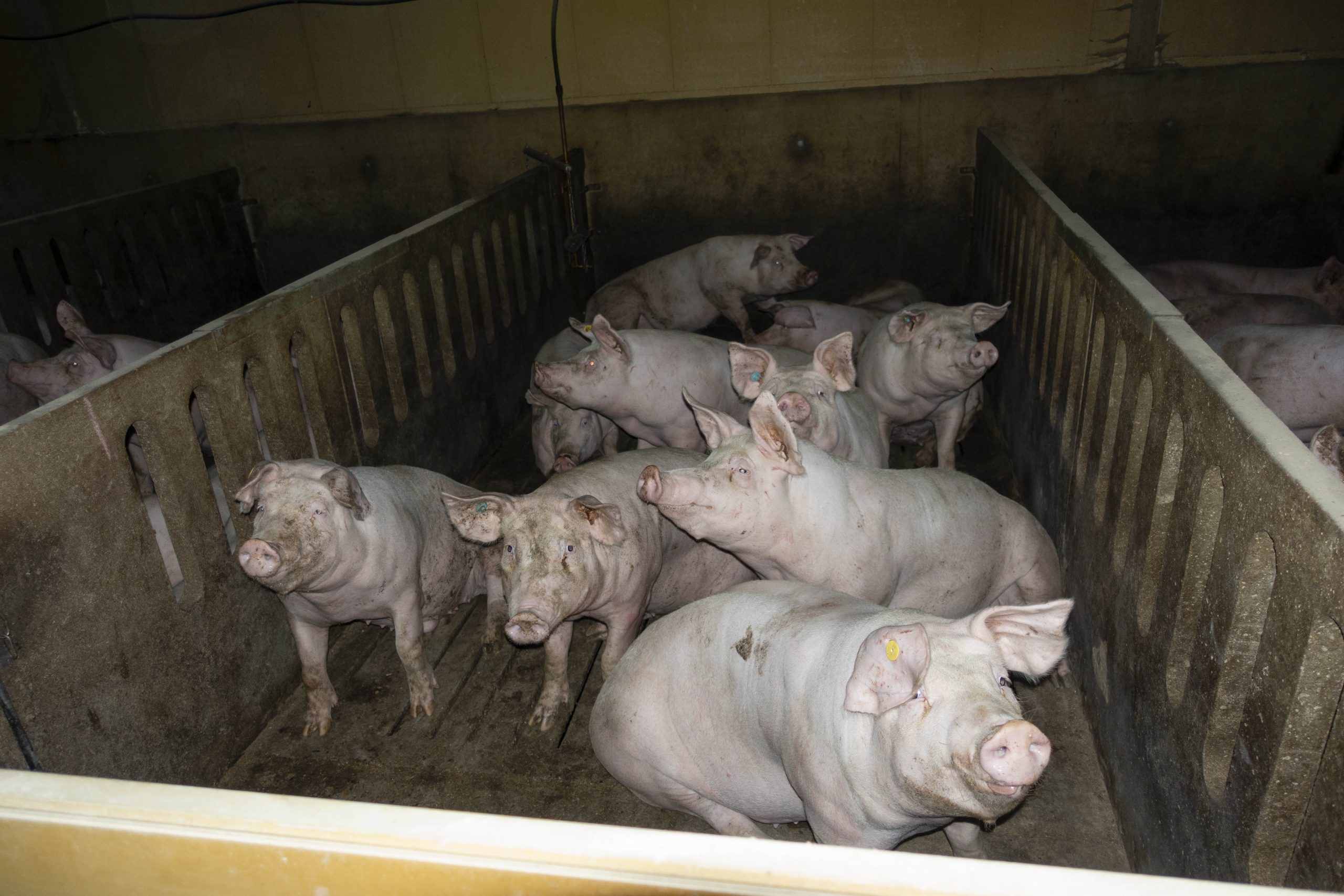
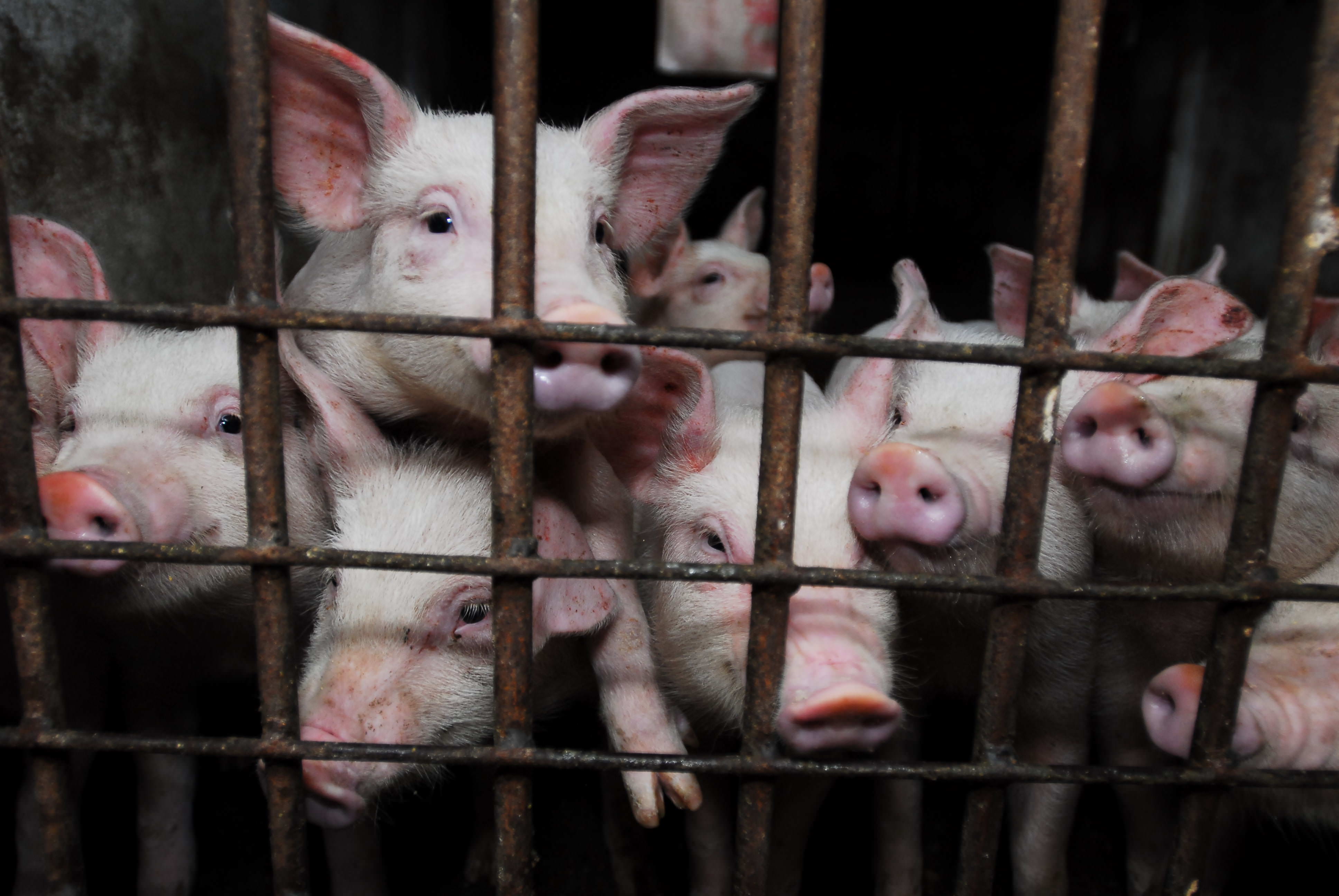
We now have terrifying images from the largest pig fattening in Lower Saxony. The video recordings show how densely packed animals have to stand in their own droppings.
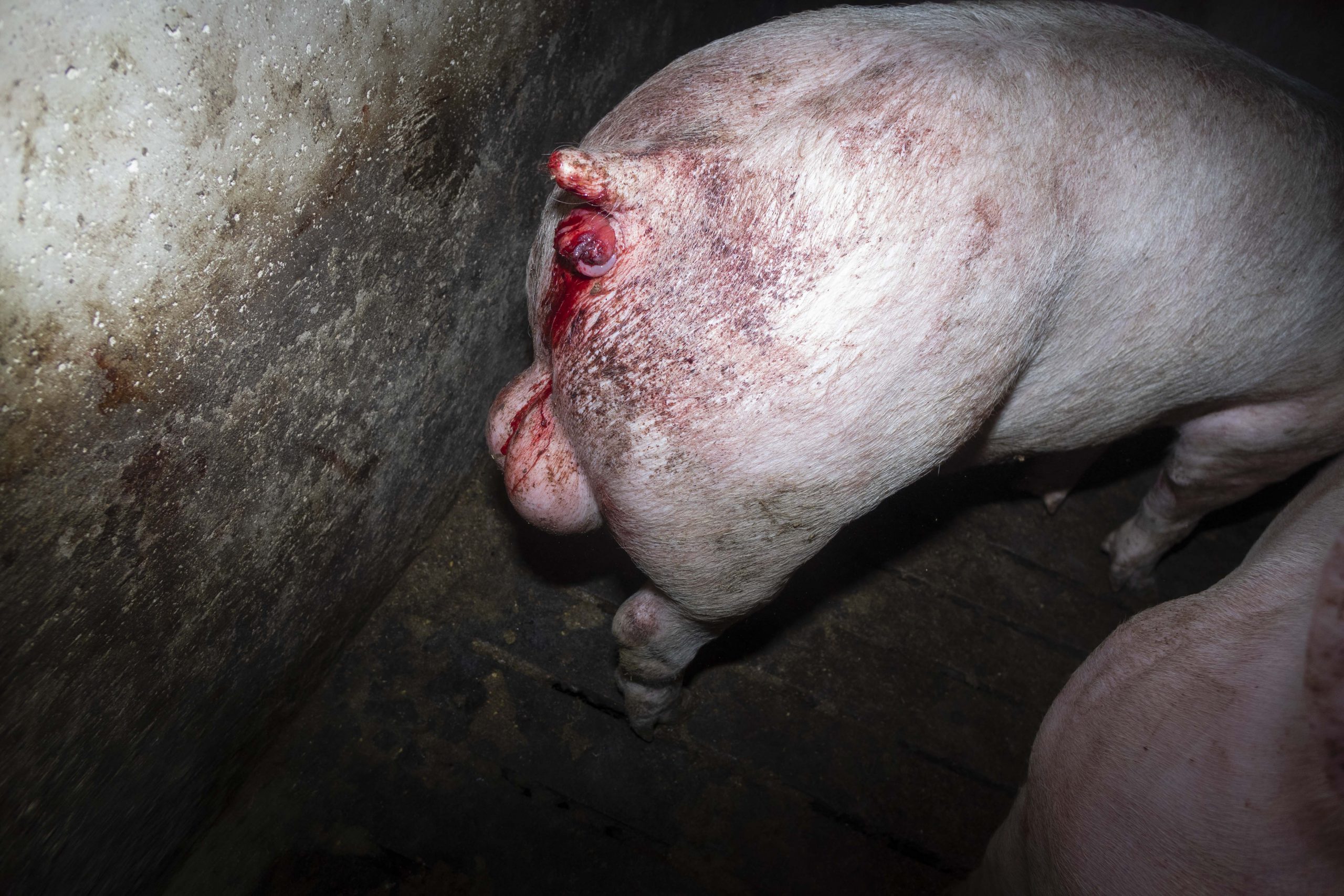
Many of the animals show some very serious injuries that did not occur overnight.
Untreated, bloody injuries, huge tumors, and abscesses can be seen. Most of the animals can only hobble.
Dead pigs can also be seen among the live ones. A statutory sickbay cannot be seen on the recordings.
Obviously, the farm operator is not fulfilling his duty of care and simply making the pigs suffer.
Particularly frightening: During the two documented nights, the drinking water was consciously turned off by the operator.
World’s top banks must stop funding factory farming to prevent future pandemics, say campaigners
Jane Goodall and nearly 100 other experts call on IMF and other financial giants to halt lending hundreds of billions of pounds to industrial agriculture businesses
Nearly 100 environmentalists, including the (UK) prime minister’s father, are calling on banks and the International Monetary Fund to stop investing in factory farming to cut the risk of future pandemics.
In a letter to 22 leading financial institutions worldwide, the signatories, who include Jane Goodall, warn that industrial livestock production increases the potential for further disease outbreaks, and contributes to dangerous antibiotic resistance.
Industrial farming also undermines food security, and contributes to climate change, biodiversity loss, including the loss of pollinators, deforestation and water pollution, the letter says.
It was sent to banking giants including JP Morgan Chase, Standard Chartered, HSBC, Lloyds, Santander and NatWest, as well as the World Bank, the European Investment Bank and the European Bank of Reconstruction and Development.
The 94 signatories also include television cook Hugh Fearnley-Whittingstall, Tim Lang, professor of food policy at City University London, actor Joanna Lumley and environmentalist Stanley Johnson.
Eco activists have long argued that global financiers should not bankroll livestock corporations that risk environmental damage.
In the past five years, meat and dairy companies worldwide received at least $478bn (£370bn) in backing from more than 2,500 investment firms, banks, and pension funds, according to a report this year by Feedback, a UK group lobbying for changes to the food system.
High street banks provide billions in loans to the firms behind US chlorinated chicken, it said.
And over the past decade, the World Bank’s private investment arm has channelled more than $1.8bn into major livestock and factory farming operations around the world, according to research by Mongabay and the Bureau of Investigative Journalism.
about:blank about:blank javascript:void(0) Urging them to end their support for or funding of industrial livestock systems, the new letter says: “As the world seeks to ‘build back better’ after Covid-19, it is widely recognised that we need to rethink our relationship with the natural world and to treat it, and the creatures within it, with more respect. This will involve reshaping the way in which we feed ourselves.”
The document highlights studies showing that the crowded, stressful conditions of industrial livestock production “contribute to the emergence, spread and amplification of pathogens, some of which are zoonotic”
Sean Gifford, of Compassion in World Farming, which coordinated the letter, said: “It’s vital that global financial institutions stop funding industrial livestock production and instead support regenerative forms of agriculture that are not only better for human health but also kinder to animals and the planet.
“We are at a turning point in history and we need major financial institutions and intergovernmental organisations to act now. The need has never been more pressing.”
A spokeswoman for UK Finance, which represents banks and the finance industry, said: “The banking and finance industry can play a central role in delivering a post-Covid economic recovery that is aligned not only to the government’s net-zero target but also to be approached in a fair, just and inclusive way.
“Banking and finance firms already play an important part in supporting local networks comprising of corporates, SMEs, local authorities, universities and other sources of expertise including agriculture. Lenders take their agricultural policies very seriously and regularly assess clients on their commitment to sustainable business practices.”
WAV Comment – Below you will find an article written just a few days ago by David Attenborough.
We have a saying that goes – ‘you can please some of the people some of the time, but you cant please all of the people all of the time’.
We don’t all agree 100% with the thousands of comments made by everyone about everything; there has to be and you have to accept a certain amount of flexibility with regard what some say and their own personal views. We did not make the programme which was shown by David Attenborough recently: https://worldanimalsvoice.com/2020/09/17/england-extinction-watch-the-full-video-here-a-must-watch/ and if we were the producers of it then we would not have definitely included some of the comments made by some scientists. But on the campaign front you have to look at the whole programme and the positives or negatives it portrayed – and in our opinion; there were more positives than negatives.
Sure; as Vegans we would have not shown a scientist who supported ‘moderation’ in the consumption of meat and dairy – but then we also know that there are some who will always eat meat and drink dairy regardless of what they are given as evidence to the contrary. The entire world will not stop eating meat and drinking dairy because we want it; and so in that context; by asking those continuing meat eaters to reduce and moderate their meat consumption could be viewed as an approach to further inform and educate. Education of the damage being done to the environment and the worlds animals are the most important factors; and if the programme educates (the uninformed ?) about the damage being done by meat production and dairy production around the world; then we support the education rather than an attack on just one scientist in a programme because he talks of ‘moderation’.
Sadly, animals will probably always be farmed to some degree for meat and dairy. That is a simple fact. Through education we hope; as per our approach with this site; we can show the facts of the meat / dairy industries and educate people to turn away from them. I personally write from England; and can honestly say that over the last year or two, there has been a massive if not astronomical change in British people who wish to support going meat free and dairy free. As a whole; people here in UK care about the environment, and especially animals and their welfare; so we have to continue to educate, inform and provide the evidence when necessary. We would love to in the business of putting ourselves out of business; because then all ‘our’ issues and problems would be solved. But it aint quite that easy.
People are massively / globally changing their attitudes to meat and dairy consumption because of what they are being shown and told – they are being educated about the damage to the environment farming animals for meat and for example, what happens to ‘by product’ male dairy calves which are of no use to the industry.
People now are saying ‘No’ to the animal abuses of the meat and dairy industries. It is up to us and thousands of other campaigners to continue to provide the facts and show the footage that we as campaigners don’t want to see. We abhor the footage of the fur farms and the fur industry; but hey; look at the humungous changes which are happening there – cruelty is gradually not being accepted – people power wins.
Our planet is facing an unprecedented challenge. As I warned last week, we are living in the shadow of a disaster – and it is one of our own making.
Just like the people who lived by the doomed nuclear reactor at Chernobyl, we are on the verge of destruction.
By regarding the Earth as our planet, run by humankind for humankind, we have already wrought untold damage.
We are polluting our air, draining our rivers, warming the oceans and making them more acidic. We have depleted the ozone layer and brought about potentially disastrous climate change.
Humankind, in other words, has set a course for a devastating future, not just for the natural world but for itself. And if we continue, we will, like the people who once lived in the shadow of Chernobyl, risk sleepwalking into global catastrophe.
What faces us today is nothing less than the collapse of the living world. Yet there is still time to change course, to find a better way of living.
We can, and must, begin to put things right. And at the heart of this global effort must lie respect for biodiversity – the very thing we are destroying.
It is no accident that the stability of our planet’s climate is wavering at the very moment the extraordinary richness of life on our fragile planet is in sharp decline. The two things are bound together.
Restoring biodiversity on Earth is the only way out of the crisis we have created. And that, in turn, means ‘rewilding’ the world, re-establishing the balance between the human world and the rest of nature, step by step, as I set out below.
I don’t pretend it will be easy, yet this blueprint for survival is not merely possible but essential if we are to have any hope of saving our civilisation.
Prioritise people and the planet over profit
What has brought us to this moment of desperation? I believe it is our hunger for perpetual economic growth.
This one goal has dominated social, economic and political institutions for the past 70 years. And the result is that we are enslaved to crude measurements of our gross domestic product (GDP).
Yet the price paid by the living world is not accounted for.
There are those who hope for a future in which humankind focuses upon a new, sustainable measure of success.
The Happy Planet Index, created by the New Economics Foundation, attempts to do just that, combining a nation’s ecological footprint with elements of human wellbeing, such as life expectancy, average levels of happiness and a measure of equality.
In 2019, New Zealand made the bold step of formally dropping GDP as its primary measure of economic success and created its own index based upon its most pressing national concerns.
In this single act, Prime Minister Jacinda Ardern shifted the priorities of her whole country away from pure growth and towards something that better reflects the aspirations many of us have.
Ditch oil and embrace renewable energy
In 2019, fossil fuels provided 85 per cent of our global energy, but the carbon they release into the atmosphere warms the Earth and increases the acidity of the oceans, with disastrous consequences.
Now we need to make the transition to renewable energy at lightning speed.
A carbon tax penalising all emitters would radically speed up the process. The Swedish government introduced such a tax in the 1990s and it worked.
As the new, clean, carbon-free world comes online, people everywhere will start to feel the benefits. Life will be less noisy. Our air and water will be cleaner, with fewer premature deaths from poor air quality.
At least three nations – Iceland, Albania and Paraguay – already generate all their electricity without fossil fuels. A further eight use coal, oil and gas for less than ten per cent of their electricity. Of these nations, five are African and three are in Latin America.
Profound change can happen in a short period of time. This is starting to happen with fossil fuels.
We may yet pull off a miracle and move to a clean energy world by the middle of this century.
Rewild the Oceans with huge no-fishing zones
The ocean covers two-thirds of the surface of the planet, which means there is a special role for it in our revolution to rewild the world.
By helping the marine world to recover, we can simultaneously capture carbon, raise biodiversity and supply more food.
It starts with the industry that is causing most damage to the ocean – fishing. Ninety per cent of fish populations are either over-fished or fished to capacity.
But this can be fixed with a global effort to create a network of no-fishing zones throughout coastal waters where fish can grow older and produce more offspring. They then repopulate neighbouring waters.
We need no-fishing zones to encompass at least a third of our ocean to enable fish stocks to recover.
International waters – the high seas – are owned by no one, so all states are free to fish as much as they wish. The worst-offending nations pay billions of dollars in subsidies to keep their fleets fishing, even when there are too few fish left for it to be profitable.
But if all international waters were designated a no-fishing zone, we would transform the open ocean from a place exhausted by our relentless pursuit to a flourishing wilderness that would seed our coastal waters with more fish and help us all in our efforts to capture carbon.
The high seas would become the world’s greatest wildlife reserve.
Commercial fish farming, which often pollutes the seas, must be made moresustainable.
More radically, we can reforest the ocean. Kelp is the fastest-growing seaweed, forming vast submerged forests that boast remarkable levels of biodiversity. But even this wonder plant needs healthy seas. The forests are prone to attacks from sea urchins and, where we have eliminated animals such as sea otters that eat the urchins, entire kelp forests have been devoured.
Learn to get more food from less land
The conversion of wild habitat to farmland has been the single greatest direct cause of biodiversity loss during our time on Earth.
In 1700, we farmed about one billion hectares. Today, our farms cover just under five billion hectares, more than half of all the habitable land on the planet. +
If we are to farm less land, we must eat much less meat, especially red meat, and especially beef, which, when including the grain fed to cows, consumes 60 per cent of our farmland
To gain those extra four billion hectares, we have torn down seasonal forests, rainforests, woodland and scrub, drained wetlands and fenced in grasslands, destroying biodiversity and releasing carbon stored in their plants and soils. Removing the wild has cost us dearly.
How can we cease the expansion of industrial farmland while feeding our growing populations?
In short, can we get more food from less land – as we must do?
There are some inspiring farmers in the Netherlands who have turned away from fertilisers, machinery, pesticides and herbicides and erected wind turbines.
They have dug geothermal wells to heat their greenhouses with renewable energy, collected rainwater from their own greenhouse roofs and planted their crops not in soil but in gutters filled with nutrient-rich water to minimise input and loss. They use home-grown bee colonies to pollinate crops. These innovative farms are now among the highest-yielding and lowest-impact food producers on Earth.
For smaller-scale and subsistence farmers, there is an inexpensive low-tech approach: regenerative farming. Herbicide and pesticide use are reduced, crops are rotated to rest soils, and organic matter rich in carbon is brought back into the topsoil, storing carbon.
But these improvements will only get us so far. If we are to farm less land, we must eat much less meat, especially red meat, and especially beef, which, when including the grain fed to cows, consumes 60 per cent of our farmland.
Instead, we must change to a diet that is largely plant-based, which will reduce the space we need for farming and reduce greenhouse gases.
Estimates suggest that by changing our habits, humankind could feed itself on just half of the land that we currently farm.
Save our forests and rewild the Land
Much of the developed world cut down its forests long ago, putting most of the current deforestation pressure on the poorer parts of the world, especially in the tropics.
There the rich tree cover is still being destroyed to provide the beef, palm oil and hardwood that wealthier nations consume.
And it is the deepest, darkest and wildest forests of all – the tropical rainforests – that are disappearing. If this continues, the loss of carbon to the air, and species to the history books, would be catastrophic for the whole world. We must halt all deforestation now.
By directing our trade and investment, we can support those nations to reap the benefits of these resources without losing them.
We must find ways to make wilderness valuable to those who own and live in it, without reducing its biodiversity or its ability to capture carbon.
Reduce family size and slow population growth
When I was born, there were fewer than two billion people on the planet. Today there are almost four times that number.
When I was born, there were fewer than two billion people on the planet. Today there are almost four times that number
The world’s population is continuing to grow, albeit at a slower pace than at any time since 1950.
At current UN projections, there will be between 9.4 and 12.7 billion people by 2100. Largely due to the demand from wealthy countries, our consumption is exceeding the Earth’s capacity to regenerate its resources.
We want everyone on Earth to have a fair share, and that means we need to both lower consumption and find ways to stabilise our population growth.
The fairest way to stabilise the global population is to help poorer nations to develop. When this happens, diet and healthcare improve, child mortality decreases and families have fewer children.
It is also true that wherever women have the vote, wherever girls stay in school for longer and wherever women are free to follow their aspirations, the birth rate falls.
Raising people out of poverty and empowering women is the fairest way to bring this period of rapid population growth to an end.
Live sustainably to revive the natural world
Before farming began, a few million humans across the globe were living as hunter-gatherers, working in balance with the natural world. With the advent of farming, our relationship with nature changed.
We came to regard the wild world as something to tame, to subdue and use. We moved from being a part of nature to being apart from nature.
All these years later, we need to reverse that transition.
But there are now billions of us. We can’t possibly return to our hunter-gatherer ways. Nor would we want to. But there is plenty that we can and must do.
We must halt and reverse the conversion of wild spaces to farmland, plantations and other developments. We must end our overuse of fertilisers. We must reduce our use of freshwater. We must immediately halt and preferably start to reverse climate change by reducing greenhouse gas emissions.
If we do all those things, biodiversity loss will begin to slow to a halt, and then start itself to reverse.
Our greatest opportunity is now
We humans have come as far as we have because we are the cleverest creatures to have ever lived on Earth.
But if we are to continue to exist, we will require more than intelligence. We will require wisdom.
Homo sapiens, the wise human being, must now learn from its mistakes and live up to its name. We who are alive today have the formidable task of making sure that our species does so. We must not give up hope.
We can yet make amends, change direction and once again become a species in harmony with nature. All we require is the will.
The next few decades represent a final chance to build a stable home for ourselves and restore the rich, healthy and wonderful world that we inherited from our distant ancestors. Our future on the planet is at stake.












/arc-anglerfish-syd-prod-nzme.s3.amazonaws.com/public/LC7FGIXEEVGPDO5H7H3NXNIAWQ.jpg)