

https://newfoodeconomy.org/new-york-city-foie-gras-ban-gavage/
New York City wants to ban foie gras, and duck farmers aren’t happy about it. A bill sponsored by Carlina Rivera, a city councilwoman who represents Manhattan neighborhoods, would prohibit the sale of the delicacy, and levy fines of up to $1,000 to businesses that violate the ban.
“What I am trying to do is put forward a bill that would end this practice and create a more humane New York City to live in,” said Rivera, during a City Council committee hearing in June, Crain’s New York reports. The animal welfare bill, which specifically targets “force-fed products,” is co-sponsored by the majority of the council.

There are only three farms that raise foie gras in the United States, and two of them are in Ferndale, New York, a rural community in the Catskills, 90 miles outside of New York City
As you likely know, foie gras (fatty liver in French) is made by force-feeding grain to ducks and geese, several times a day, for up to three weeks. Their livers then expand up to ten times their normal size, with large deposits of fat—which is why it’s so rich.
Animal rights activists, as well as many armchair observers, say that’s inhumane, and that the process of force-feeding the ducks with a funnel-like device—called gavage—traumatizes the animals. The process also diseases their livers, and can cause health complications. All that, they say, for a luxury product, available to a select few. Less than 1 percent of New York City restaurants serve foie gras, Rivera told the New York Post.
There are alternatives—like, for example, free-range geese in Spain that naturally gorge themselves on acorns, olives, figs and seeds, before flying south for the winter, that are favored by Dan Barber. Critics say that isn’t a commercially viable option for many reasons, including the variation in liver sizes. When ducks aren’t force-fed, their livers may expand by only two or three times, and may not be fatty or heavy enough for purists.
The proposed ban in New York City would follow a similar statewide prohibition in California, and one that existed briefly in Chicago. A statewide ban in New York has been introduced several times in recent years in the state legislature, the Wall Street Journal reports, while Philadelphia has also considered it. England, Germany, Israel, and several other countries have banned foie gras production.
The bill’s opponents say claims that foie gras production is inhumane are dated and flawed. In an op-ed in Crain’s, Ariane Daguin, the co-founder of D’Artagnan, a gourmet foods distributor which does a brisk foie business, pointed out that a detailed scientific study concluded that the product is “non-pathological and non-harmful,” and stress indicators were “hardly affected” during force-feeding.
During a contentious City Council hearing in June, Andy Wertheim, the president of D’Artagnan, said his company and its 280 employees would “not be able to recover” from the ban. He said the company sells about $15 million worth of foie gras in New York City, The Wall Street Journal reported, making his company the state’s largest distributor of the product.
There are only three farms that raise foie gras in the United States (most of our foie supply still comes from France and Canada). Two of these farms are in Ferndale, New York, a rural community in the Catskills, 90 miles outside of New York City. Between them, they employ 400 people.

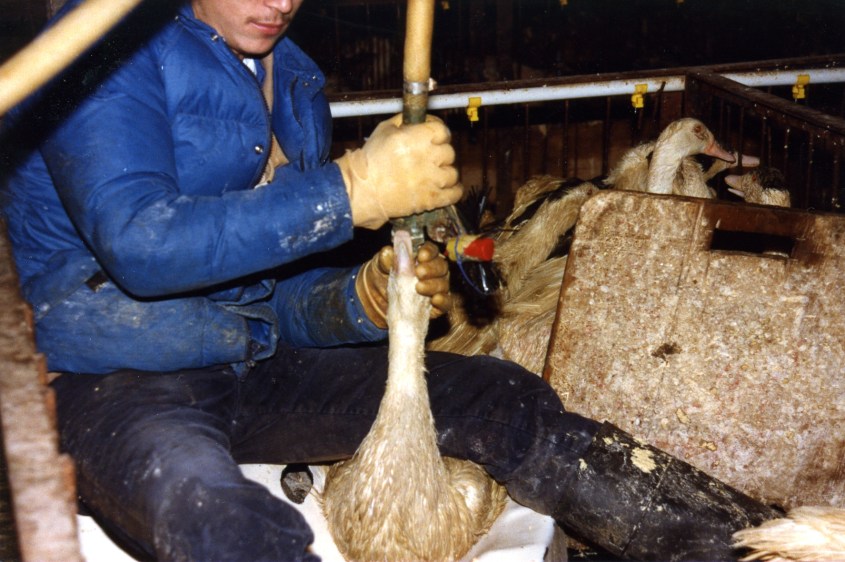
A feeder, seated on stools inside the pens, holds and steadies a duck between his knees, as if giving medicine to a pet. Then, he guides a rubber tube down the throat, releasing the feed until a part of the esophagus, known as the crop, swells up.
Izzy Yanay, the vice president of Hudson Valley Foie Gras, urged city council members to visit his farm before passing legislation that would cause him to lose one-third of his annual sales—around $12 million, according to figures reported by Crain’s. Representatives from the local county legislature were there to bolster their opposition to the ban, the effects of which, they contend, would put several hundred local residents out of work.
So far, none of the NYC council members have taken up his offer, but that didn’t stop Yanay from opening up his 200-acre property, where he processes more than a half-million Moulard ducks every year, to interested media and Sullivan County legislators earlier this month.
During the tour, Marcus Henley, a farm manager, explained that about 10,000 day-old ducklings arrive weekly from Canada, and are raised indoors for 12 weeks. After that, ducks are sent to pens, where they’re force-fed a grain mix three times a day, during a 20-day feeding cycle.
Gavage can be brief and jarring to the average human observer. Here’s how it works. A feeder, seated on a stool inside the pens, holds and steadies a duck between his knees, as if giving medicine to a pet. Then, he guides a rubber tube down the throat, releasing the feed until a part of the esophagus, known as the crop, swells up. During demonstrations on the tour, the process took about two seconds. Henley insisted that force-feeding a duck is different than feeding a human, because their esophagi are strong, and meant to temporarily hold large amounts of food. (The issue is certainly a source of robust debate.)
A spokesman for Rivera told Crain’s she has no plans to visit Hudson Valley Foie Gras because she has “concerns regarding the validity of the tours.” Though it’s not clear when the council will vote on her bill, when it does, it’s sure to pass, as it’s already endorsed by 28 of 51 members.
WAV Comment:
The majority of people now don’t accept animal cruelty. Foie Gras production is gross animal cruelty. Like many other issues; elephant rides, dolphin and Orca shows, animal using circuses – the world is now saying ‘no’ to animal abuse. Yes, people may lose their jobs at being abusers, but they can change to something else – it is not impossible to do. We suggest they set up a Vegan restaurant, or grow vegetables !
Further foie gras production photos from our archive (in Europe):




The Al Shuwaikh has finally managed to leave the Red Sea,
It is currently in the Gulf of Aden, East of Khor Angar (Djibouti) sailing at 16.5 knots..
We are not sure this morning if the vessel is trying to stop us from tracking it by declaring itself as a ‘Cargo vessel’ rather than a ‘Livestock carrier’ – but we can and will track it regardless.
“Its no good” – Depeche Mode.
Enjoy the music – some words are kind of appropriate – that’s why I publish.
As we said in the post fairly recently when the vessel was docked in Jeddah, Saudi Arabia, all of the sheep (70,000 if that many had survived the heat) may have been offloaded and the ship may be returning to Kuwait empty now.
But we are using this vessel and the consignment as a ‘test piece’ example basically to check our tracking capability; and to let the exporters know that we can, and will continually publish data on their locations in the world. In other words, we are watching them at all times. See the above in Red.
We use only legal ways of tracking which is available to everyone if they know how to do it – there is nothing illegal about the system we use.
Regards Mark
We will not give up.
These days we realized that the carriers fear us more than the authorities.
We do not see this as a success for us, but as further evidence that the system and the implementation of animal welfare rules are not working.
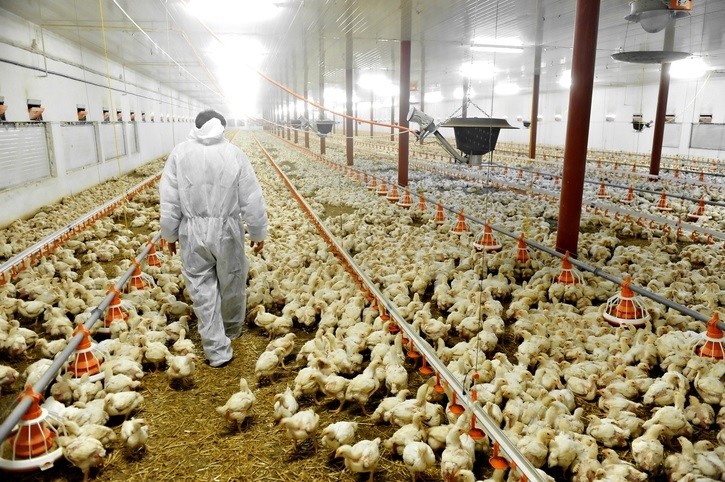
Pigs, hens, meat rabbits, ducks and quail are imprisoned in factory farm cages all over the EU. End the Cage Age will work on eliminating all of these cages. We need your help to bring about these changes.
They won’t happen overnight, but, with your backing, they will happen.
Every generation must make its mind up which injustice and cruelty to animals it is going to stop. The time has come for this generation to stand up and End the Cage Age.
A global problem
Across the world, billions of animals are farmed in cages.
In Europe alone, hundreds of millions of animals spend their entire life, from birth to death, in a cage.
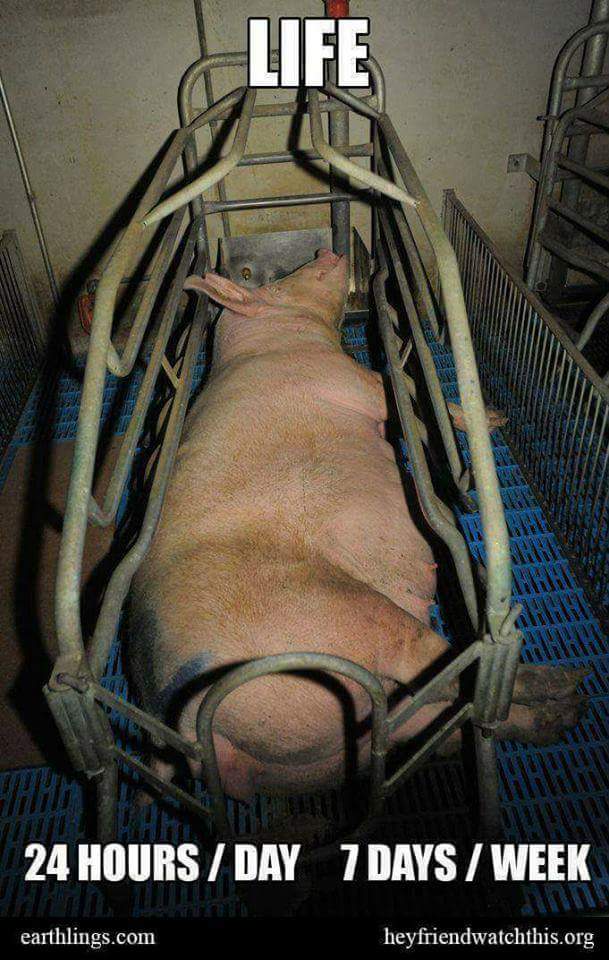
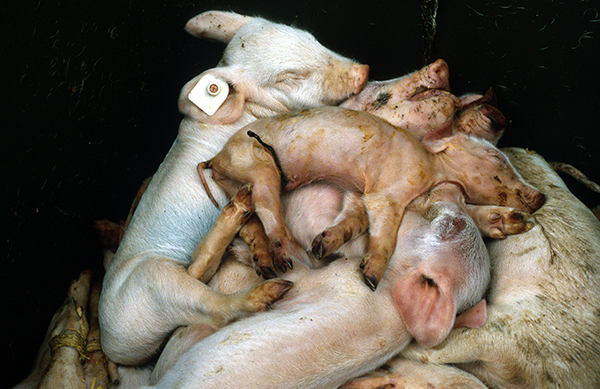
Cages keep animals isolated, or tightly packed in confined areas. In the worst cases they are barren, provide minimal space and prevent even moderate exercise. Being kept in these conditions, even with excellent stockmanship, can have severe health and welfare implications for the animals involved.
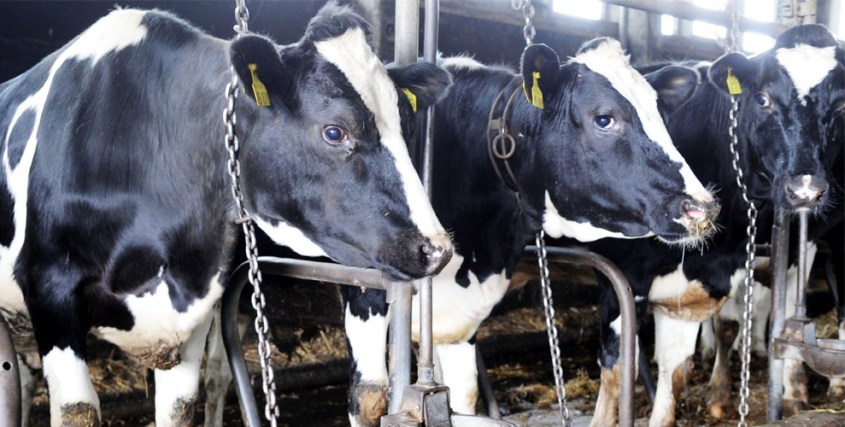
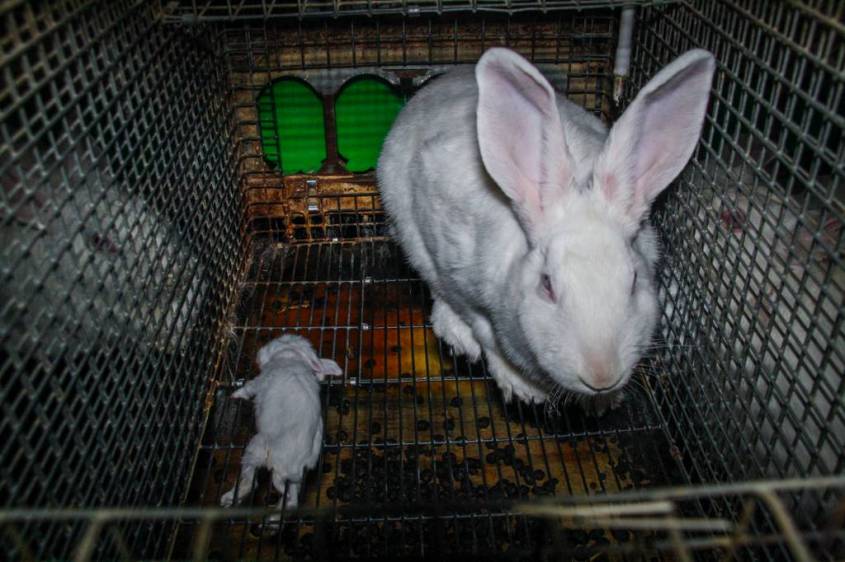
The range of animals that are farmed in a form of cage in the EU is wider than many might think. Not only hens (in ‘enriched cages’), but pigs (in sow stalls and farrowing crates), ducks and quail and even rabbits are all farmed in cages.
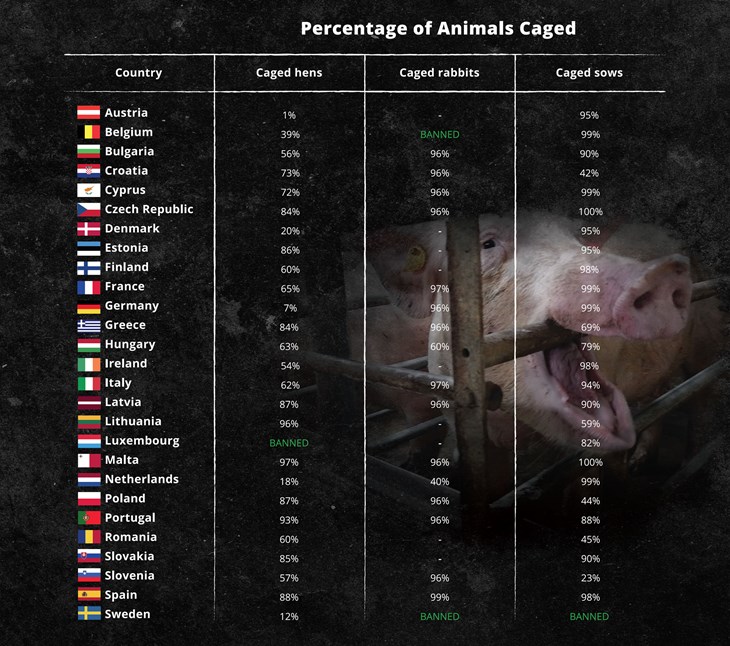
So where are all the cages?
Much of the EU pig industry is completely ignoring basic welfare laws — leading to the suffering of millions of pigs. Compassion in World Farming has pulled together evidence from across Europe — join us in standing up for pig welfare by signing the petition:
http://www.ciwf.org/EUpigvideo
And we mean…The biggest crime of humanity is factory farming.
Every year we kill over 50 billion animals. There are more breeding animals than wild animals. Animals today live in tormenting farms, we have degraded them from the living being to mass-produced.
Profit can only be achieved through mass.
There are countless videos of slaughterhouses showing how millions of animals live, what we, the human species, call “life.”
For a lifetime behind bars of a tight cage, born and raised in excrement, unable to move, without contact with conspecifics, without medical care when injured, in dirty cages, never breathe fresh air, never drink fresh water, never feel fresh grass under their legs, reach the farm “goods” through painful transports, the last stop of their “life”: the slaughterhouse.
This is the factory farming that we want to end.
We have to do it, we owe it to the animals.
Factory farming and farms are a crime of humanity against animals and offend against the ethics of modern civilized countries and societies.
My best regards to all, Venus

As some of you are aware, yesterday saw the appointment of Mr Boris Johnson as the new Prime Minister of the UK. Mr Johnson has the intention of getting the UK out of the EU by the end of October 2019.
Given all the failings of the EU which we continuously present in posts on this site; especially those regarding intensive farming and live animal transport; for which basically EU Commissioners do not have a clue about taking action on; we were more than please to see within just a few hours of his new position of PM, Mr Johnson has appointed Theresa Villiers as his new Minster at DEFRA; who are responsible for both farm animal welfare issues, as well as that of live animal transport.
It was a welcome to have an e mail this morning; informing that the issue of intensive animal keeping in cages – pigs, chickens etc – is now to be debated by the UK parliament in the House on 9/9/2019.

A petition supported by the British public; only for people who reside in the UK, has resulted in 105,572 signatures to date, which means that the House will debate this issue with a possible view to legislation changes.

The wording of the petition is:
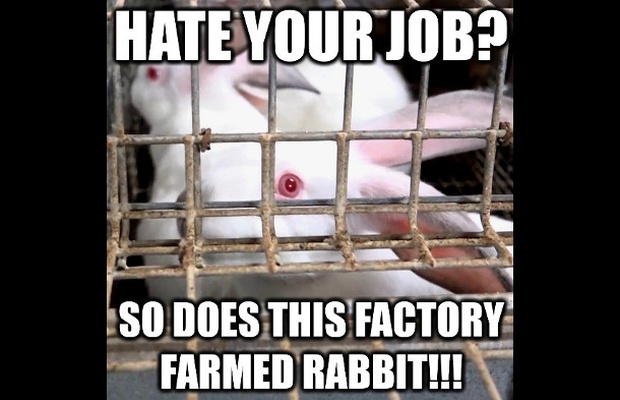
Across the UK, millions of farmed animals are kept in cages, unable to express their natural behaviours. This causes huge suffering.
We call on the UK government to end this inhumane practice by banning all cages for farmed animals. Cages are cruel.
This cannot be the future of British farming.
We, the undersigned, call on the Secretary of State for the Environment Food and Rural Affairs to bring forward legislation that amends the Welfare of Farmed Animals (England) Regulations 2007 to prohibit the use of:
So, the British public, who naturally have concerns about animals and their welfare, are now getting the issue of ‘caged’ animals discussed in Parliament, with a view to legislation change.
This is something that the EU is incapable of; despite so many MEP’s allegedly representing ‘us’ – the common EU citizen ! thus is it any wonder that the UK wants to take back control and get away from the do nothing society of the EU ? – the UK can, and probably will, get out of the EU very soon and make its own new legislation for farm animals which will greatly benefit them. At the moment, as a member state of the EU, the UK has to bow to its Brussels masters and do what they require, despite detrimental effects on animal welfare, which basically the UK citizens detest !
UK citizens regard animals a ‘sentient beings’, who do have rights for their welfare and who must be respected in this. Sadly, the EU talks big on the issue, but as we have shown at the moment with the Romania sheep exported to the Middle East, and a temporary halt on live animal transport in some parts of the EU because of the heat; the EU seems completely incapable of putting 1 and 1 together to make 2.
Why stop animal transport in some parts of the EU, yet allow Romanian sheep (70,000) to be exported live to the Middle east in temperatures some 10 degrees ABOVE the EU, which has a partial ban ? !!
Nothing EU makes any sense as we have recently shown; and because of this, the UK will be glad to walk away from the ‘Yukspeak’ politicians of the EU, who talk big and in reality, do nothing.
Further, we are delighted to see that Teresa Villiers MP is ow the Minister at DAFRA, and we send our congratulations to her on her position.

Out of around 650 MP’s who represent the people in the House of Commons; Theresa has always been known both for her vocal hatred, and her actions on the issue of live animal transport. She is 110% ANTI live animal exports.

When the UK leaves the EU in the coming months, again the UK can take back control from its EU masters and enforce a ban on the export of live animals from the UK. Under Theresa, we think and hope this will be a priority in her new position at DEFRA.
By getting out of the EU, the UK will be doing the right thing for many; including animals and their welfare. The EU is currently incapable of enforcing any of its own legislation regarding animal welfare – the ‘masters’ are the whipping boys of the meat mafia lobbyists, and EU ‘animal welfare’ fails big time as a result of what the industry wants, and gets, via gutless politicians at the EU.


UK welfare organisations; and it has some good ones; will continue the fight for animals from outside of the EU. But the UK will be establishing its own controls for animal welfare, not relying on the dead bats at the EU who basically, do nothing.
Regards Mark
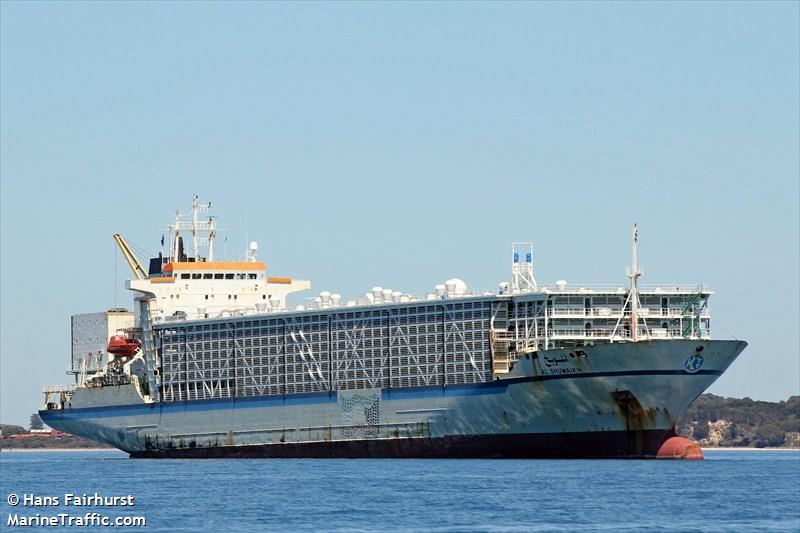


The Al Shuwaikh has finally managed to leave the Red Sea,
Regards Mark
We will not give up.
These days we realized that the carriers fear us more than the authorities.
We do not see this as a success for us, but as further evidence that the system and the implementation of animal welfare rules are not working.
Read the full story of the suffering pigs which the EU ignores at:
https://worldanimalsvoice.com/2019/07/24/animal-transports-hypocrisy-and-business/

The ‘Al Shuwaikh’ has still not manged to leave the Red Sea,
It is currently off Perim Island, near to Fagal which is a city in Djibouti.
Why is this vessel chug, chug, chugging along ? it is doing just 16 knots.
Current Temperature is 32 degrees.
Regards Mark

We will not give up.
These days we realized that the carriers fear us more than the authorities.
We do something – the EU does not.
We do not see this as a success for us, but as further evidence that the system and the implementation of animal welfare rules are not working.
Read the full story of the suffering pigs which the EU ignores at:
https://worldanimalsvoice.com/2019/07/24/animal-transports-hypocrisy-and-business/


Update 24/7/19 – the Romanian sheep on the ‘Al Shuwaikh’

WAV have today (1120hrs GMT) written to all South East England Members of the European Parliament (MEP’s) asking why 70,000 Romanian sheep are allowed by the EU to be exported live to the Middle East, in conditions which are around 10 degrees hotter than the conditions in Europe, but for which France (another EU member state) has today stopped the transport of live animals !
We really welcome this announcement by the French, who take animal welfare during transport in high temperatures seriously. Pity the same cannot be said about other existing EU member states (Romania).
The EU is master at passing the buck back to individual member states saying that they should ensure enforcement of the rules. Obviously this does not work with Romania; so we now give our South East England MEP’s 48 hours to tell us why it is bad for some and yet ‘good’ for others. MEP’s are supposedly elected by the people to represent the people rather than just sit on the gravy train.

We want action now against Romania and EU Commissioners for allowing the Romanian exports to go ahead. If the EU Parliament can do nothing, then what the point of an EU Parliament representing ‘the people’.
Ref:
The French Minister for Agriculture and Food, Didier Guillaume, has announced on the France 2 TV show ‘4 Vérités’ a suspension on live animal transport because of the high temperatures.
The French Minister for Agriculture and Food, Didier Guillaume, has announced on the France 2 TV show ‘4 Vérités’ a suspension on live animal transport because of the high temperatures.
The restriction will start today and will prohibit certain transports of living animals between 1pm and 6pm from the French départements that are under orange/red alert for the heat.
With another heatwave set to envelope Europe this week, France’s decision is the latest in a series of actions taken by some Member States to alleviate the situation.
“For animals crammed into trucks for transportation – often for several days or weeks – temperatures exceeding 30°C , let alone 40°C, cause heat stress which is hellish and can be deadly,” said Reineke Hameleers, director of Eurogroup for Animals. “With their suspension of some live transport, France is heading in the right direction. But we are still concerned that this order will have a limited impact on the welfare of animals.”
Unfortunately the scope of this order is quite limited. The restriction is not applicable to consignments destined to other EU and non-EU countries, and it does not affect sea transport. The role of the DDPP – the territorially competent administrative authority that oversees animal health and the protection of populations – is not sufficiently clarified, and there is a risk that approvals will continue to be granted despite the fact that trucks will go through the area categorized as orange/red. Also, the limited time of the suspension poses severe risks due to the fact that under such extreme weather conditions, temperatures can be higher than 30°C even before 1pm and after 6pm.
Eurogroup for Animals and its French members Fondation Brigitte Bardot, Welfarm, Compassion in World Farming France (CIWF), and La Fondation Droit Animal, Ethique et Sciences (LFDA), call on the French Government to suspend live animal transport during the summer period as the only way to effectively protect the welfare of animals and comply with the Council Regulation (EC) no. 1/2005.
Eurogroup for Animals is working to have an EU ban of live transport during summer.
WAV Comment –
why are they not calling for a ban on live transport full stop ? – or certainly a maximum of 8hours as European citizens have been petitioning for ?
As with most EU issues, it (EU) does not really have a clue about enforcement of laws. So from this we assume that it is ok to transport 70,000 live sheep into the Red Sea area from Romania in temperatures of 40 degrees; but that you cannot transport them in France (quite rightly) above 30 degrees.
So are Romanian sheep different to sheep that are not allowed to travel in France ? – it would seem so, as Romanian sheep are going all the way to the Middle East in temperatures way exceeding 30 degrees – more like 40 according to the monitoring we have been doing about the Romanian consignment.
We hear big EU talk about taking action now against the Romanians – so lets see it !
Or is the EU only doing what it is really good at ? – being all talk and no action ?
As Venus has just said in her post below:
The EU Commission is the police in the EU area, which means that, according to the will of Parliament, it should be allowed to impose fines on countries that do not comply with EU law.
Transports to non-EU countries in breach of EU requirements must also be systematically prohibited.
The Al Shuwaikh is now in the Southern sector of the Red Sea,
Between Al Hudaydah in Yemen to the East, and Eritrea to the West.
Maybe it will get to the Arabian Sea today, but breath not being held …………..
Regards Mark

