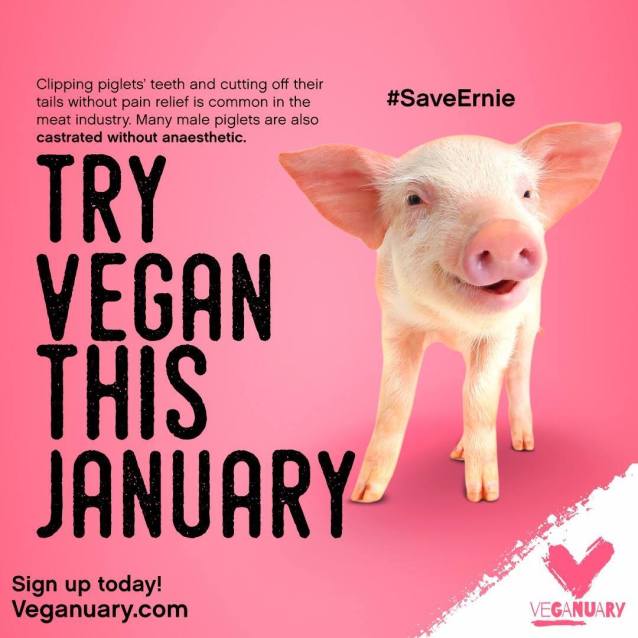
It’s January and that means one thing: Veganuary! It’s time to open your new BOSH! book, take a walk down the Free From aisle and get yourself to the next Vegan Nights event.
Don’t forget that Love Veg is here to help you, whether you’re a new vegan or a seasoned plant-based eater!
We’ll tell you all about the incredible products out there in your local supermarket and delicious food on the menu at high street restaurants, so you can navigate Veganuary like a pro. And it’s never, ever been easier. All of the major supermarkets now have their own extensive plant-based ranges that include meat and dairy product alternatives and incredible pizzas, pies and ready-meals.There really is something for everyone, no matter what your budget might be.
Next time you’re at the shops, why not pick up the ingredients for these delicious jackfruit burgers? You can buy tinned jackfruit from all of the leading supermarkets – Sainsbury’s and Tesco even sell it pre-marinated. You can find more recipes on our Love Veg website.
We don’t typically get to follow the lives of individual animals who are killed for their coats. Now, a short film is offering us a harrowing glimpse into the short and tragic lives of three fox siblings who were born, raised and killed on a fur farm.
The film, Fur: A Lifetime, which was just released by Animal Defenders International (ADI), was taken by hidden cameras placed on a fur farm in Poland – the fourth largest fox fur producer in the world. It spans the short lives and deaths of three arctic fox cubs, who ADI named Borys, Eryk and Aleska.
First the tiny cubs are nurtured by their mother, as best she can given the circumstances, before she is taken away from them. As they get older, their personalities come out and they attempt to play in their tiny wire cage. Soon their coats change color, and before they’re even seven months old, terrified Borys and Eryk are dragged out of their cage by a farmer, strung up by a leg and electrocuted to death.
Aleska watches as her brothers are torn away from her and killed. She is only spared because she will be used to produce more cubs, who will be torn from her to be killed for their fur as the cycle repeats.
“Over 100 million animals die for their fur every year. Our film shows the lives of these intelligent, feeling individuals and the cruelty they suffer when treated like a product. Just because they are not like us. Playfulfox cubs Borys and Eryk grow up in a small cage and die a terrifying and painful death for vanity and trinkets. This is the real cost of fur – when you buy fur, you buy cruelty, not beauty or luxury,” said ADI’s President, Jan Creamer.
The lives of these three cubs resemble nothing of their wild counterparts. They never knew the safety of a den, or the caring parents they would have had in the wild, who would have protected them and taught them the valuable skills they would need as they explored the world before setting out on their own.
Instead, they only experienced extreme confinement on the equivalent of a factory farm, and denied everything that would have enabled them to thrive. As a result, they and others like them pay a physical and psychological toll. On this single farm, ADI found foxes with bent feet and overgrown claws from living on wire floors, self-mutilation, aggression, injuries and illnesses that were left untreated, and filthy living conditions, while other investigations have found similar issues elsewhere.
According to ADI, over 15 million foxes are killed every year, usually to make trinkets, trims and accessories, but it can take up to 35 individuals to make a single coat. Sadly, foxes aren’t the only victims of this brutal industry. It’s estimated that over 110 million animals are killed on fur farms, every year, while more than 16 million are trapped in the wild, including mink, raccoon dogs, rabbits, chinchillas, coyotes, seals, otters, cats and dogs.
While the fur industry and its apologists continue to claim fur products are sustainable, eco-friendly and humane, those arguments couldn’t be further from the truth, and what few regulations and certification schemes there are do little to nothing to stop widespread suffering. While there have been major victories with nations banning fur farming, and imports, those that are still making fur are exporting products around the world.
While there are now plenty of faux options around, they still send the message that fur is trendy and open the door to other problems with mislabeling, which continues to be found to lead otherwise caring consumers to unwittingly support this industry by buying the real thing.
ADI added that the best ways to stop this cruel industry include pushing for legislation that bans fur farming, trapping and imports, urging designers and retailers to stop using and selling fur, and for us to stop buying it.
“Be comfortable in your own skin, and not that of a poor defenceless animal caged and killed to provide it. Say no to fur and yes to helping these fashion victims. Please help ADI stop this brutal trade,” said actress Joanna Lumley, who is supporting ADI’s campaign to end the fur trade, along with actor Brian Blessed.
For more on how to help, check out Animal Defenders International.
We have been personally saying on both SAV and WAV sites for many years that the ‘average / normal’ citizen of the EU is basically being ignored by the ‘maters’ (Junker, Tusk etc) when it comes to issues that they have strong feelings about, such as the live transport of animals and the 8 hour rule.
8 hours was a major campaign across the EU to limit the journey times for animals in transport to a maximum of 8 hours; thereby cutting down on the suffering which is forever being presented to the EU ‘masters’; which is then completely ignored by them. The Status Quo rules you could say.
Well now, Professor Cedomir Nestorovic of the ESSEC Business School; has said that the EU elections in May 2019 are the biggest ‘fear’ for the EU; as well as Brexit; as there will be a rise in populistic parties all over Europe. In other words; the normal EU citizen is getting ‘bummed off’ with the dictatorship of Brussels and will this time vote for parties that reflect their views a lot more comer the May elections for Members of the European Parliament (MEP).
“I am not really confident that we will have some kind of Europe building capacity in the future as we have in the past.” said the Professor.
He added: “I think the higher fear is the elections in May because for the major part of the European countries, the UK is over, the UK has left the European Union.
The European elections to elect new MEP’s throughout Europe to represent ‘the normal EU citizen’ will take place between May 23 and 26, less than two months after Britain’s exit from the Brussels bloc.
The situations in Italy and France for example represent such problems. French President Emmanuel Macron and Italy’s deputy prime minister Matteo Salvini are expected to become the symbols of the two sides at the upcoming vote. Neither of the two leading politicians will actually stand for a seat in the European Parliament elections; but the two political forces have made it clear they will fight for their respective political sides to determine the future of the continent.
The French President (Mr Macron) has been battling in France f9or weeks now to control the so-called “yellow vest” protests which have paralysed parts of France since erupting last month with demonstrators clashing with police, torching cars, erecting roadblocks and burning barricades. Signals that the ‘normal’ EU citizen is not happy with what is coming from EU governments as well as from Brussels (EU).
The Italian eurosceptics will likely team up with MEPs from (French) Marine Le Pen’s National Rally and (Hungary) Viktor Orban’s Fidesz party, who are also expected to gain votes.
The UK should not be presenting any MEP’s for election in the May votes; as the UK should have left the EU by this time – the process of ‘Brexit’; which again was introduced in 2016 by British citizens being given the option of remaining or leaving the EU. Again here; the majority of citizens in the UK voted for Britain to leave the EU; as they felt they were not being listened to; represented or actions taken to support their wishes at the EU in Brussels.
So; the elections in May 2019 will be very interesting throughout Europe. We at WAV do expect that the ‘common man / woman’ of Europe will have their say at the election booth and that post May; there will be major changes in the make up of the European Parliament.
Junker, Tusk and others have been presented with real evidence for change over the years. They have decided to ignore it; putting themselves on a higher pillar than the people of the EU. In May, we envisage that the ‘worm will turn’ and the pillars will come crumbling down.
Who knows; in the post 2019 elections; we may even witness animals being transported throughout the EU for a maximum of 8 hours ! – They were warned that they needed to change the rules; they ignored it; maybe in May they will pay the price !
Dairy farmers refuse £6,000 to allow filming of milk production in Denmark
Dairy farmers in Denmark have refused an offer of nearly £6,000 to let animal-rights campaigners film the production of milk, butter and cheese.
The country’s farmers, who supply dairy products for the firm behind British brands Anchor and Lurpak, have not accepted the cash incentive to let cameras in to record how cows and calves are treated every day.
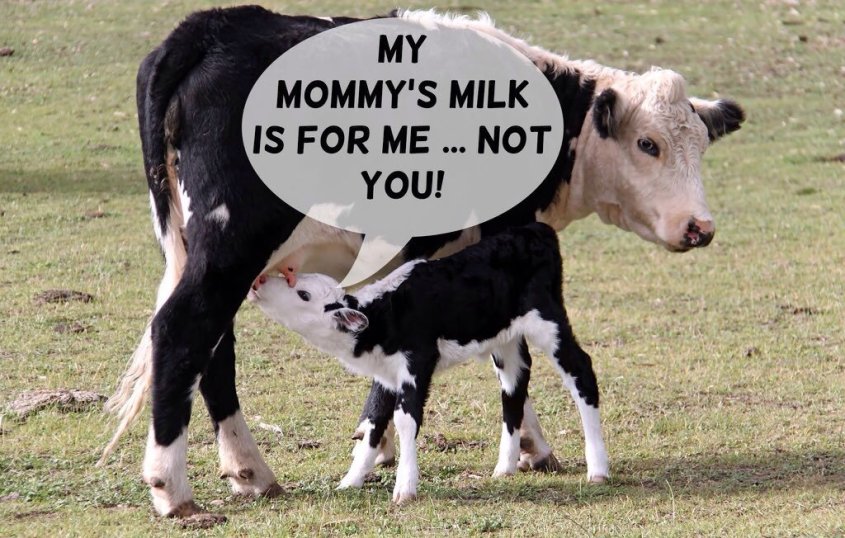
Animal-rights group Anima claims filming would reveal practices common in the UK and Denmark, such as how the young are taken away from their mothers within hours of being born, causing distress to both.
A video would also record how male calves are shot dead – with a bolt in the head – when they are around a day old because they are not used in dairy production, according to the activists, who say this is standard practice.
A new YouGov poll showed that less than half of the Danish public knew that cows must give birth to produce milk, and only about a third knew that calves are removed just a few hours after birth.
It’s believed about nine in 10 Danish farmers work for Arla Foods, one of the UK’s biggest dairy firms which owns the Lurpak and Anchor brands.
Anima, which is calling on Arla to be open about how milk is produced, initially asked the company to allow filming.
“We asked Arla to show us what the process of separation calf from mother was like and let us film, including when many of the calves are shot at birth. They refused, saying they couldn’t show us because they’re not the farmers,” said Kirsty Henderson, of Anima.
So the group took out full-page adverts in 11 national newspapers offering 50,000 Danish Kroner (£5,900) to any farmer who allows filming. A hotline was also set up for farmers.
Ms Henderson said about 10 so far had expressed interest but none had agreed. She said there was a report that Arla had asked farmers not to accept.
“The fact that they are so unwilling to show the public what is going on sends a big message in my view,” she said. “Consumers have the right to know how their milk and butter are produced, and it is clear that when they are given the full story, the public don’t think such cruelty is acceptable.”
WAV Comment – Farmers refusing money ! – maybe this lack of unwillingness really shows that they don’t want to show the public what really happens on dairy farms.
We at WAV / SAV have worked hard over the last year with ‘Respect for Animals’ and the ‘Fur Free Alliance’; as well as Serbian activists; to provide them with lots of information relating to fur farming in Serbia. Finally, today; 1/1/2019, we can say that all the effort has been worth it; and that as of today, 1/1/2019:
SERBIA, 1 JANUARY 2019 – Animal advocates around the globe rejoice as Serbia starts off the new year by effectively banning fur farms after a 10-year phase-out. The enforcement of the ban is the successful result of a decade-long decisive and persistent struggle by citizens, experts and animal rights activist during which fur industry lobby groups consistently put pressure to reverse the ban.
The adoption of the 2009 Animal Welfare Act, that outlawed fur farming in Serbia including a 10-year transitional period, was hailed by animal protection organisations worldwide. However, ever since the ban has been continuously threatened by fur trade interest groups. Desperately seeking to reverse the upcoming fur farming ban, fur farmers upped their lobbying of the Serbian government in 2018, resulting in a debate on the cancelation of the ban in a public session last June.
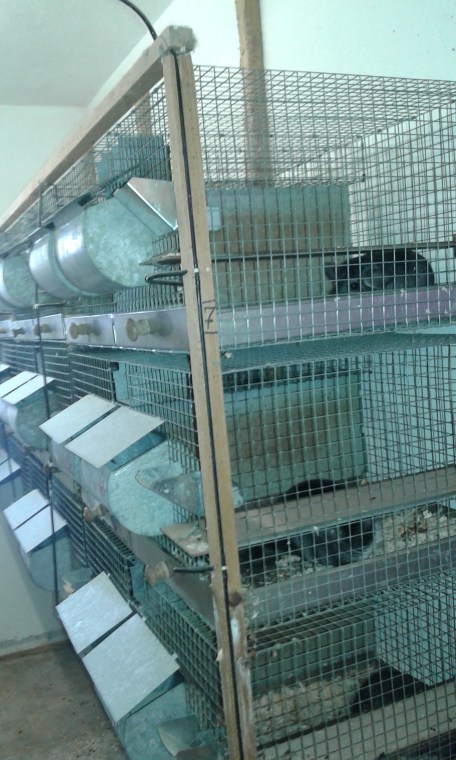
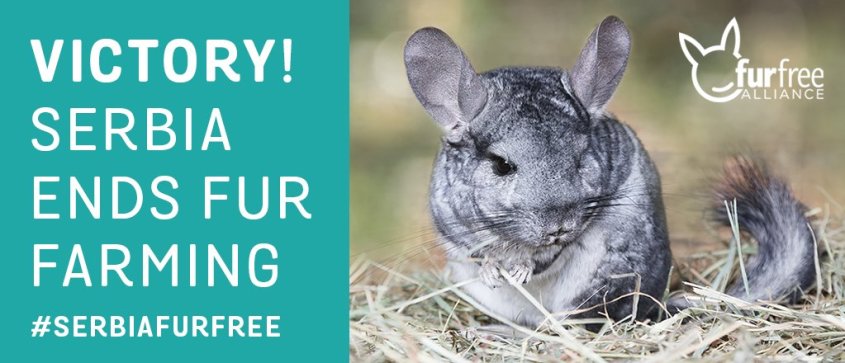
Above – Chinchilla – farmed in Serbia for their fur up until 1/1/2019.
Animal advocate groups worldwide have persistently urged the Serbian government to stay committed to the 2009 Act and make an end to the widely-condemned practice of fur farming once and for all. To counter the campaign of misinformation spread by fur trade lobbyist in Serbia, the Fur Free Alliance worked closely together with Serbian member organisation Freedom for Animals to expose the scientific facts on fur production and stress the need for a national ban.
To generate political and media interest and push back against proposed law changes, last June the Make Fur History exhibition was organised in Belgrade by Freedom for Animals, joining international experts, decision makers and journalists to address the negative impact of fur farming.
Ultimately, Serbia’s government righteously listened to the concerned public and animal rights groups and made an end to the unnecessary and cruel practice of fur production, sparing thousands of animals unimaginable suffering on Serbian fur farms.
Snezana Milovanovic, director of the Serbian animal protection organization Freedom for Animals, says:
“For 15 years now, Freedom for Animals has advocated for a fur-free Serbia by advancing and supporting legislation to abolish this brutal exploitation of animals. With the enforcement of the 2009 Animal Welfare Act, that makes it illegal to keep, reproduce, import, export and kill animals only for the production of fur, a great victory is finally achieved. Not only is this ban important for animals kept for fur production in Serbia, but also for the whole South East European region, and it signifies a major step forward for animal rights worldwide.”
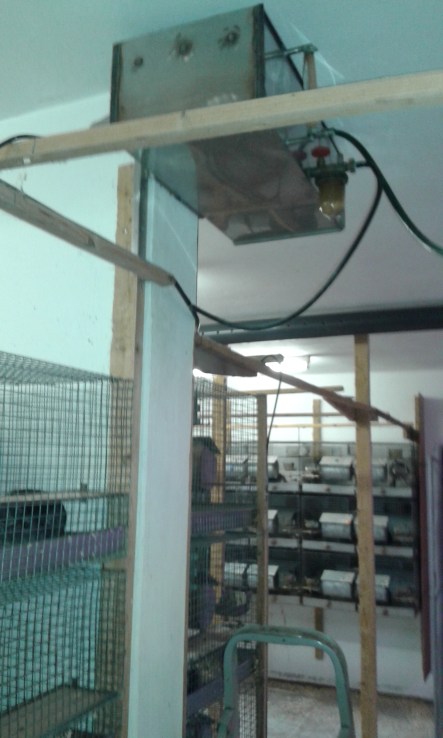
Chinchillas are the only animals kept for fur in Serbia.
Each year, approximately 12.000 chinchillas were killed on Serbian fur farms by the end of the phase-out period. The intense battery cage system used on fur farms deprives chinchillas from the opportunity to express their natural behavior – such as running and jumping – and causes severe welfare problems. International studies have shown stress-related behavioral disorders, such as pelt biting and infant mortality, are highly common on chinchilla fur farms.
Chinchillas are rodents and are native to the Andes Mountains of northern Chile. Although often kept as pets, chinchillas were nearly driven to extinction because of the demand for their fur. To breed chinchillas for fur, the rodents were taken from their natural habitat in such large numbers chinchillas are now an endangered species. Even though chinchillas are now protected by law in their natural habitat as endangered species, the populations continue to decline. However, thousands of chinchillas are still bred commercially for their fur in several regions of Europe (i.e. Poland, Denmark, Hungary) and in South-America (Brazil and Argentina).
The ban in Serbia is in line with developments all across Europe, where in the past decades 14 countries have voted for legislation to end fur farming. In the past year alone, Norway, once world’s largest fox pelt producer, Belgium and Luxembourg adopted legislation to end fur farming. At this moment, fur farming bans are on the parliamentary agenda in Poland, Ireland, Lithuania, Denmark and Estonia.
Some other pictures from our own archive used for the ‘ban’ campaign – WAV:
For all of us who see it as a mission to fight for the rights of animals and to give them a better world, there is always a balance sheet exclusively dealing with this mission.
What have we achieved in this direction is often a difficult decision for us personally, how much do we write that is good, how much do we write that is sad.
We all know that we are always faced with a perfectly equipped system of violence, lobbying and exploitation that makes our struggle ever more difficult.
Witnessing the suffering of any animal(s); through video, photos or other media routes is never an easy one for any of us. It takes its toll; but we have to be strong against an often stronger opposition of abusers, bureaucrats and politicians.
Through our blog sites, ‘Serbian Animals Voice’ https://serbiananimalsvoice.com/ and ‘World Animals Voice’ https://worldanimalsvoice.com/ , we aim to cover as many issues as we can in often, the harshest of blogs – with us, what you see is what you get; cruelty is cruelty and we will never disguise the daily system of abuse and suffering that many animals have to endure the world over.
On the other hand, we know that only if we all fight together against this ‘system’ of abuse, do we then have any chance of winning campaigns.
Looking back, we realize that all the best this year has already been achieved by many using this very same approach, because we participated in solidarity and cooperation in actions, that wanted to abolish the suffering and slavery of animals.
So we have to continue to move forward into next year: active, solidary, united!
Also in the New Year (of 2019) we will do a part in this fight with our two blogs. With information, education, criticism, and facts !
Stay true to us, we all remain faithful to the animals, and faithful to you, our dear campaigner friends !
What one alone does not achieve, many unite to create victories together. Be part of our team uniting in achieving victories !.
In this Sense and with this hope, we wish you all a healthy and happy new year of fighting for the voiceless in 2019.
Best wishes – Venus and Mark.
Here is a message from Erika at Animal Aid Unlimited that shows this exactly:
Udder flaming is a dairy farming practice where workers run blowtorches under the udders of cows to burn off their little hairs. This helps to facilitate the work of the sucking machines designed to imitate a calf and trick the cows bodies into giving milk.
This cruel practice is common on many dairy farms in the United States and can obviously be very painful. We must also take into account the mental aspect of placing fire near cows who are, like many animals, naturally terrified of fire.
Besides udder flaming, this shocking video from Animal Recovery Mission (ARM) reveals other cruel practices that happen in dairy farms such as separating mothers from their babies, force-feeding, beating with sharp devices and more.
This undercover investigation by ARM was held at McArthur Dairy in Okeechobee, Florida (owned by Dean Foods). Overall, ARM investigated 5 different dairy farms in Okeechobee, exposing a pattern of horrible treatment of cows and calves.
In order to help more animals escape a fate of misery, try to be vegan for 22 days! We highly recommend to join Challenge 22+ for both free guidance and support.





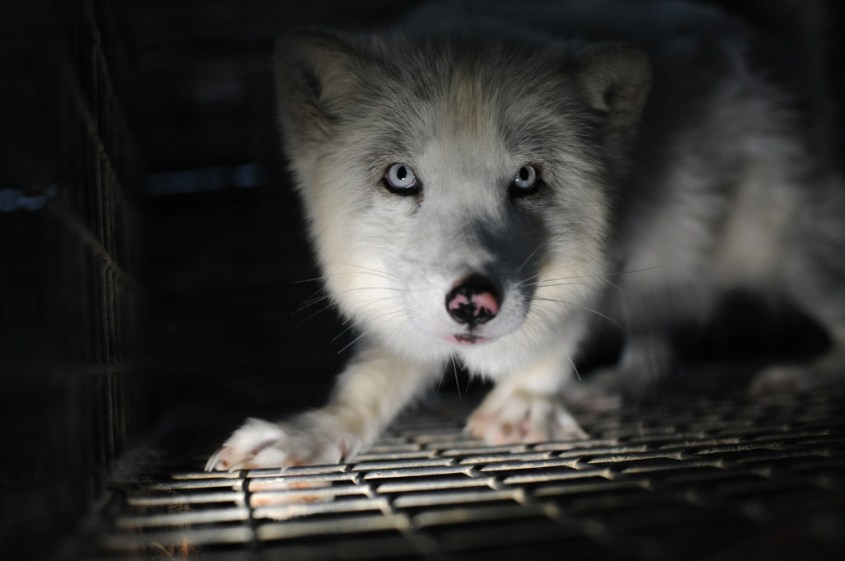







 Above – Inside a Serbian fur farm