Category: Farm Animals

England: So Called Evidence That The Bovine TB government strategy is working is called untrue by vets and animal specialists.

England


https://www.theguardian.com/environment/2018/oct/21/badger-cull-success-claim-attacked-experts
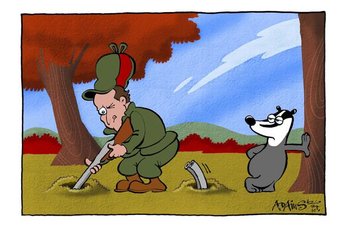
badg cartoon

George Eustice’s boast that government strategy is working called untrue by vets and animal specialists
bad cull 1

Government claims that the controversial badger cull is reducing tuberculosis rates in cattle have been undermined by a group of leading vets and animal welfare experts who have shared data that, they say, confirms it has made no difference.

Last month the farming minister George Eustice said: “Reductions in TB cases in Somerset and Gloucestershire are evidence that our strategy is delivering results.” But the group, which includes Iain McGill, the former government vet who helped expose the BSE cover-up, Adam Grogan, head of wildlife at the RSPCA, and Mark Jones, head of policy at the Born Free Foundation, disagrees.

In a letter, published in edited form in today’s Observer, and in full on the Network For Animals website, they are among 15 signatories who claim that “when ministerial statements are used as justification for the slaughter of badgers on an industrial scale … it is vital that they … reflect the best available veterinary and scientific advice”.

badger artwork

The agriculture ministry’s claims are based on the “incidence rate” – calculated by examining the number of new cases of TB in cattle herds. However, the signatories claim this approach, using “complex and sometimes obscure calculations”, is wrong. They suggest the focus should be on the percentage of cattle herds in badger culling zones which have the disease at a specific point in time.

Their letter states: “Examination of that data … demonstrates no reduction in the prevalence of bTB (bovine TB) infected herds in Gloucestershire or Somerset as a result of culling.”

It continues: “The prevalence in cattle is no lower than it was before culling, despite the killing and removal of 1,879 badgers in Gloucestershire and 1,777 in Somerset. A total of 3,656 badgers have been killed with no perceivable disease control benefits.”

There is now public disquiet at the violence and animal suffering associated with the badger cullLetter’s signatoriesIn Gloucestershire the prevalence of the disease fell to 6.9% in the three years running up to the cull before plateauing at 7.1% after four years of culling. In Somerset it fell successively for the three years up to the cull to 6.1%, before rising to 7.2% after four years of culling.
badgers north west hunt sabs

“There are approximately the same proportion of bTB affected herds now as there were before culling started,” the signatories claim. “Badger culling has not resulted in a decrease in bTB in cattle in cull zones … Any statement made to the contrary is untrue.”

The Zoological Society of London claims there is “no robust evidence that England’s policy of mass culling” is reducing TB in cattle. The signatories call on Eustice to withdraw his statement. “When proven harm is committed to animals on a very large scale, accompanied by documented animal abuse and … unaccompanied by any disease control benefits, the only option for any responsible government is to abandon the policy immediately,” they write.

The Department for Environment, Food and Rural Affairs said: “The minister was commenting on this drop in new cases which is the primary measure behind our analysis on the effect of the culls. This is the same measure used in the randomised badger culling trial.

“Calling our calculation of the rate of new bTB cases ‘opaque and impossible to confirm independently without raw data’ is simply incorrect.”


Australia: Another Company Closely Associated With Disgraced Live Exporters Has Its Export Licence APPROVED !

australia


Another company closely affiliated with disgraced live exporters Emanuel Exports and EMS Rural Exports has had an export licence approved.

The Department of Agriculture has today granted an export licence to the Kuwait Livestock and Trading (KLTT) company’s Australia subsidiary, Rural Export Trading WA (RETWA).

Here’s what you need to know:

    • KLTT has a horrific track record of animal cruelty and disaster in live exports, and has been implicated in multiple ESCAS breaches and animal cruelty investigations in Kuwait in recent years.
    • RETWA had its export licence cancelled in 2004 by then Nationals Agriculture Minister Warren Truss following 25 high mortality voyages within a two-year period between 2000-2002.
    • When this happened, Emanuel Exports filled the gap providing export services for KLTT.
    • Now that Emanuel Exports has had its licence cancelled, RETWA is stepping back in.
    • It’s another example of the live export shell game, and KLTT is playing the Department of Agriculture for fools.


  • RETWA and disgraced Emanuel Exports are closely affiliated trading partners – they’ve shared the same Directors and the same live export ships.


  • Graham Daws founded RETWA in 1973, the same year he became director of Emanuel Exports before stepping down earlier this year following the Awassi Express scandal.
  • KLTT leased the Awassi Express, and was the consignee/importer for all five horrific voyages exposed on 60 Minutes this year.


How can the Department think it could possibly meet its regulatory obligations in granting this licence?

How can the live sheep export industry and their supporters think this is a good move?

The answer is simple.

This is what business-as-usual for live sheep exporters looks like.

Protecting their mates and doing their best to doing their best to get around government regulations.

This is the best they’ve got.

This is as good as it gets.

If you agree it’s not good enough (and we know you do), write to your MP now.

Tell them this is further proof of the incompetence of the live export regulator.

Tell them it’s clearer than ever before, that the live sheep export industry has no capacity or willingness to change.

Tell them you want political leaders to step up, and start implementing the phase-out now.

An industry that has such reckless disregard for community expectations and Australian regulations has no chance of long-term survival.

Like you, we’re sick to death of this trade, and it’s only a matter of time before it will be brought to an end.

Thanks as always for your support.

Dr Jed Goodfellow
Senior Policy Officer
RSPCA Australia


Scotland: ‘Mad cow disease’ at Aberdeenshire farm after BSE confirmed.

scot


https://www.bbc.co.uk/news/uk-scotland-north-east-orkney-shetland-45901043

‘Mad cow disease’ at Aberdeenshire farm after BSE confirmed


A case of BSE – so-called mad cow disease – has been confirmed at a farm in Aberdeenshire.

Rural Economy Secretary Fergus Ewing said a movement ban was now in place on the unnamed farm.

Investigations are under way to identify the origin of the disease – the first of its kind in Scotland in 10 years – which was found after an animal died.

The “isolated” case was identified before entering the human food chain.

There are understood to have been 16 cases in the UK since 2011, with the last in 2015.

‘Lose status’

Chief Veterinary Officer Sheila Voas said: “I would urge any farmer who has concerns to seek veterinary advice.”

She added: “While it is too early to tell where the disease came from in this case, its detection is proof that our surveillance system is doing its job.

“We are working closely with the Animal and Plant Health Agency to answer this question.”

Andrew McCornick, president of NFU Scotland, said: “It is disappointing to learn of this BSE case within the Aberdeenshire area.

“Whilst we lose our negligible risk status, it is not unexpected to see a new case and demonstrates the efficacy of the surveillance measures in place. This simply brings us back in line with the rest of Great Britain, reverting back to where we were 18 months ago.

“When Scotland applied for BSE negligible risk status it was with the full knowledge that there was every possibility of a sporadic case of BSE emerging as has been the case in France and Ireland.”

‘Strict controls’

Ian McWatt, director of operations in Food Standards Scotland, said: “There are strict controls in place to protect consumers from the risk of BSE, including controls on animal feed, and removal of the parts of cattle most likely to carry BSE infectivity.”

BSE stands for bovine spongiform encephalopathy.

In 2015, farming officials confirmed a case of BSE in Carmarthenshire, Wales.

The cow was discovered to have BSE following routine tests carried out when an animal dies on a farm.


Also:

https://news.sky.com/story/mad-cow-disease-case-confirmed-on-farm-in-scotland-11528621

https://edition.cnn.com/2018/10/18/uk/scotland-mad-cow-disease-intl/index.html


Scottish calves exported from Ramsgate, England – Tuesday 16th October.

The transporter was a CALF transporter, a guy called McCreery, Southern Irish, who has been working out of Scotland for some time taking Scottish calves on P&O via Cairnryan to Larne, then Southern Ireland to Rosslere, then to Cherbourg (France) and on to Spain.


More About BSE:

https://en.wikipedia.org/wiki/Bovine_spongiform_encephalopathy


Donkey Skins Are The New Ivory In China. Immense Global Animal Suffering Results.

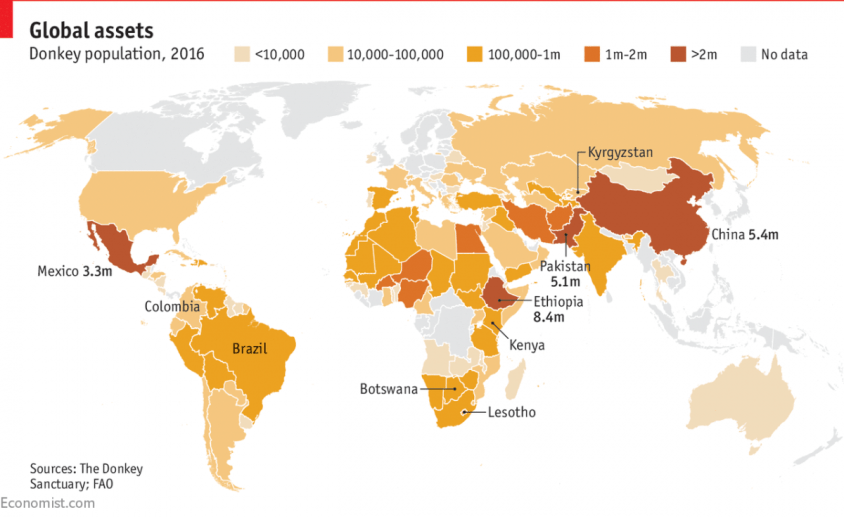
DONKEYS are the backbone of many farming villages in developing countries. But if current trends continue, the world’s rural poor may soon need to find a new beast of burden.

The animals’ ranks have thinned dramatically in many African countries: Kenya’s donkey population, for example, has fallen by half since 2009, to 900,000. The primary cause is neither disease nor declining demand for live donkeys, but instead a burgeoning market for their pelts.


donkey skins global.png

Since ancient times the Chinese have consumed , a gelatine made by boiling and refining donkey skin to produce a tonic taken as an elixir.

As the country grew richer in the 1990s and 2000s, demand for the product grew and fewer donkeys were needed for agriculture and transport. As a result, there were only 5m donkeys in China in 2016, down from 11m in 1990. Because donkeys are relatively poor breeders, China no longer has enough of them to satisfy its thirst for . One solution is to fake the product using the skin of other animals, such as pigs. But some manufacturers have now instituted DNA testing to ensure their is genuine. The other option is to import from abroad.

China’s biggest sources are African. In Kenya, the price of a donkey soared by 325% during a six-month period last year. From 2011 to 2016, the number of donkeys fell by 60% in Botswana and a fifth in Lesotho. But countries all over the world are getting in on the act. In Kyrgyzstan, which borders China, and in India, the populations fell by a fifth during 2015 and 2016 alone.

Farther afield, Colombia lost almost a tenth of its donkeys and Brazil around 5% over the same period. Some South American donkeys are transported more than 1,000km for slaughter, demonstrating the reach of the Chinese demand.


England: You Could Say We Are Fed Up Presenting Evidence That Is Ignored – But We Will Never Stop Exposing The Truth.

farm16


Philip (CEO CIWF) and Mark (WAV) have known each other, and campaigned for better farm animal welfare, for about 30 years.

As we are now covering a lot on this site about intensive pig farming and swine flu / fever; maybe it is a good time to show you one of Phil’s investigative reports when he was at one of the worlds biggest pig farms in Mexico.

I hope that it will broaden your experiences and knowledge about the industry; and show that local human residents are also being greatly affected health wise by these facilities.  

Here is the info from Phil’s blog:

Ground Zero

I visited a community that was at the forefront of the swine flu pandemic. It is almost impossible to describe the absolute stench that is emitted from one of the world’s biggest pig farms in South East Mexico.

On our journey, I saw at least 15 large-scale farms littered throughout the area. Despite the stench, smell pollution is the least of the problems presented here. We travelled to a town called La Gloria to investigate why some locals fell ill. They were displaying symptoms of what they believed to be swine flu. I spoke to locals who claimed their drinking water had been contaminated.

To see more on how intensive pig farming effected the locals, watch my latest film.


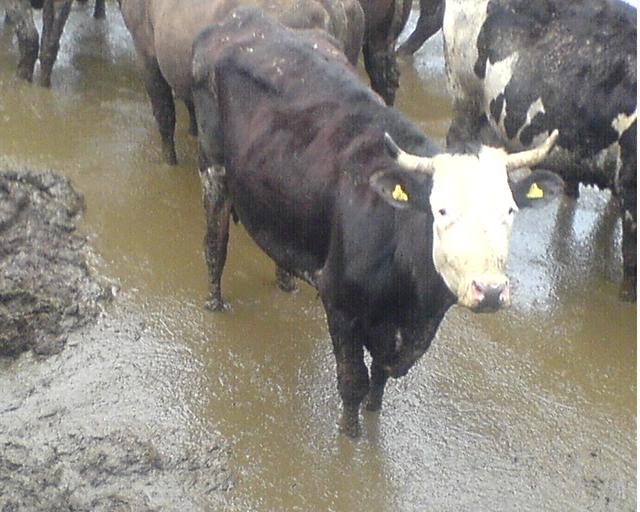
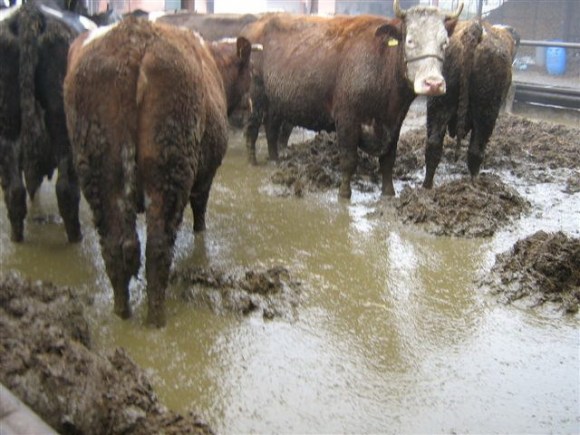
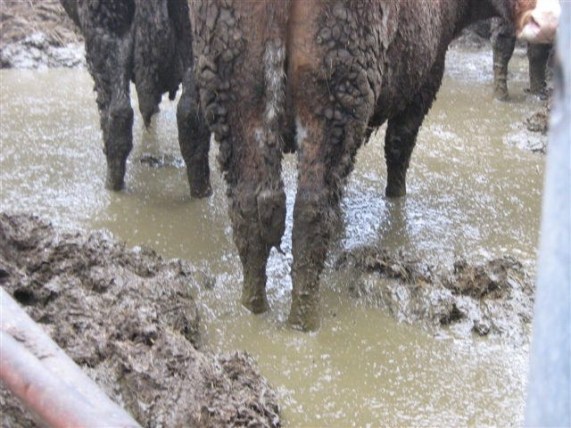
I also worked with the team at CIWF (England) when I was doing a lot re Serbian animal welfare.  Although not pigs, the conditions on some Serbian farms we became involved with were alarming to say the least.  Animals kept in muck and filth way above their hooves; conditions which are certainly not compliant with EU standards for keeping animals.

Here are a few links and some photographs relating to some of the posts I did on farm animal conditions in Serbia.  I think the photographs say it all really.

When we confronted the Serbian government Ministry about all this; they said that everything at the farm was ‘ok’ and that we should not keep hassling them ! – we don’t think it looks ok; do you ?

Swine Flu – Dirty Farms – Human Health Conditions – Ignorant EU – Is there a link ? – I think so.

https://serbiananimalsvoice.com/2010/11/26/serbia-farm-animal-conditions-update-261110-formal-statement-on-conditions-now-provided-by-ciwf-uk/

https://serbiananimalsvoice.com/2010/11/23/serbia-november-2010-conditions-ok-at-a-farm-according-to-serbian-veterinary-ministry-and-complaining-campaigners-dont-pressure-us/

farm8

farm7

farm3

farm17

Serbia is an EU ‘Candidate Country’; and things such as what we have exposed should be taken into full review by the EU before Serbia is allowed to join as a member state.

EU flag with hole


Personally, I don’t really think the EU is interested in what we expose; just as they are not really interested in the evidence taken by Lesley (Eyes on Animals – Netherlands – https://www.eyesonanimals.com/  ) at the Turkish border re live animals being shipped from the EU.

Watch one of Lesley’s videos here:


We live in hope that the EU will wake up; but accept that they like to remain the sleeping club that they are.

All of our welfare groups across Europe are working together as a combined force to try and make farm animal welfare better for the animals – we will never give up until there are changes; no matter how long it takes.

Regards Mark

Above – Mark Touring In the Netherlands with CIWF about farm animal welfare.

Below – Live Export Demo – Brussels, Belgium

demo eu

Golda Aug 2011.JPG

At home – England – In memory of my darling ‘Golda’

– she listened to my gripes every day !.


Note:

‘Serbian Animals Voice’ (SAV) was a site set up and dedicated to getting results for strays in Serbia.  The site is still active; with all our campaign work broken down into monthly sectors.  There is a massive selection of photographs from our archives.  We have now moved on to form this site, WAV; to cover global animal rights issues.  All posts from this site are now being posted onto SAV also.

Visit the SAV site at   https://serbiananimalsvoice.com/ 

The Bad …..

Tem19


The Good.

Serbia has some great activists !

felix dec 8

EU: Barnier calls for a EU-UK Veterinary Area to LOWER checks on live animals !!


EU flag with hole


15th October 2018

Barnier calls for a EU-UK Veterinary Area to lower checks on live animals

Barnier-614x346

Brexit is coming and, inevitably, so is the deadline for the UK and the EU-27 to conclude the withdrawal agreement. On 17 October, the EU heads of State and Governments will meet in a European Council solely aimed at dealing with Brexit. Only after this meeting will it be decided whether conditions are met to plan an extra summit in November, to finalise the talks. Over the past months, the likeliness of a disorderly Brexit, in the absence of a deal, has strongly increased. In most post-Brexit scenarios, measures will have to be adopted to avoid a huge number of animals suffering due to increased bottlenecks at the borders. Eurogroup for Animals thus welcomes that EU Chief negotiator Michel Barnier has taken on board its proposal to work towards an EU-UK Common Veterinary Area.

The impact of Brexit, especially a disorderly one, will be felt at the borders. Thousands of live animals cross the UK-EU27 borders every day, and not only on the island of Ireland. In common with any type of products, live animals have to be checked at the border, which can lead to huge delays and to animals having to wait, often in poor conditions, for days. To better understand what is at stake, one can look at the border between Bulgaria and Turkey, where animals have to undergo all necessary checks and wait an average of six hours, most often without sufficient care and in horrendous conditions. The number of animals that could be crossing a UK-EU border is far higher and, at the moment, the existing infrastructure is not adequate to ensure the welfare of animals is respected during crossings.

Since its creation, the “Brexit and Animals” taskforce [1] has been vocal about the risks such “no deal” Brexit would entail for animals (see also this article). It is in this context that Eurogroup for Animals had informally raised the idea that the EU and the UK should consider a common veterinary area, on the model of what exists between Switzerland and the EU. The EU-Switzerland “single veterinary agreement” implies the equivalence, and thus a complete alignment, between the EU and Swiss rules and creates a joint mechanism to discuss arising issues. Veterinary checks at the border can thus be reduced and even eliminated.

It is thus a clear progress to hear Michel Barnier, the EU Chief negotiator for Brexit, mentioning the possibility of a future EU-UK veterinary area in a public speech he gave on 10 October 2018, explicitly referring to the aim of lowering veterinary checks between both partners.

Next week will be crucial for Brussels and London. Whatever the result of the most recent discussions, especially around the Irish border, it will be important to continue raising animal-related concern throughout the entire process, to ensure animal welfare standards are not – even de facto – lowered as a result.

NOTES:

[1] The Brexit & Animals Taskforce comprises 11 of the UK’s leading animal welfare organisations, working together to ensure that animal welfare is protected and, where possible, advanced as the UK withdraws from the European Union.


https://www.eurogroupforanimals.org/barnier-calls-for-a-eu-uk-veterinary-area-to-lower-checks-on-live-animals 

EU crisis 1

Germany: the network with “downer” cows.


deutsche flagge


The dirty business with sick and seriously injured animals from the dairy industry.

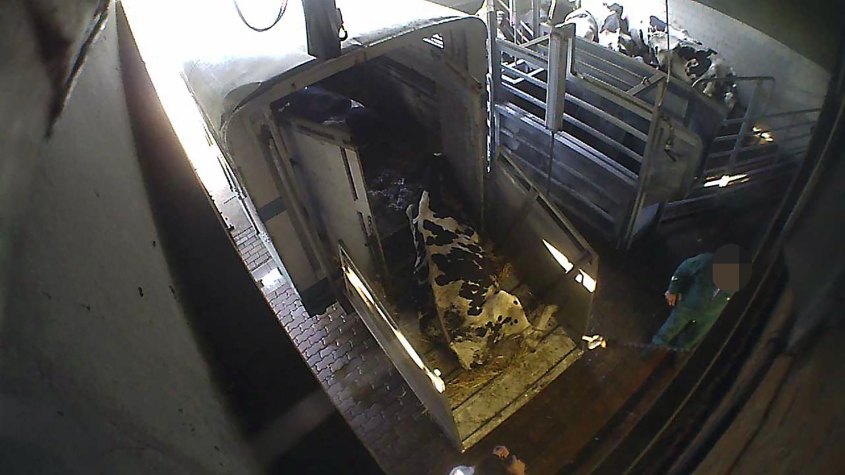
tieranlieferung von kranken Kühen im Hinterhofbetrieb-Delivery of sick animals in the closed slaughterhouse Photo: Soko Animal Protection e.V.

The case of a closed slaughterhouse in Stendal (a city near Berlin) a few days ago sheds light on a previously unknown niche in the food industry.
As research by the TV magazine FAKT shows, small slaughterhouses specialize in processing injured animals that are no longer accepted by large slaughterhouses.

According to a former employee of such a company, these slaughterhouses take injured animals from farmers for little money and process them.
“A healthy cow is worth 1,000 euros,” he explained.The butcher takes an injured or sick animal for 50 to 150 euros and earn a lot of money”.

Everyone benefited from this system: the farmer who gets the sick animal out of the barn, the haulier who brings it to the slaughterhouse, and the butcher himself.

Continue reading “Germany: the network with “downer” cows.”

China: In Direct Conflict With All International Regulations; China Is Now Burying Pigs ALIVE As A Result of African SF. See Video here As Proof.

China

WAV Comment

We feel that nothing will really be learned from this.  China and the world will sort this out by killing tens / hundreds of thousands of pigs; without asking themselves if their farming practices and transport regulations (or lack of) have anything to do with it.

From this negative attitude we can only assume that very little will be learned.  Huge and intensive factory farms will continue; and when there is an outbreak of disease or virus; the ‘simple’ solution to slaughter tens of thousands of animals is adopted.  Once this is done; things will resort to ‘normal’ cruelty and the mass production of pork; without giving a thought for the welfare of sentient beings, can begin again.

It is a very, very sad situation, when living animals become literally ‘products’ to be trashed whenever the mighty human wishes.  Shame on them all – pity that they claim to be so intelligent; where as the reality says they have brains  full of pig dung.


http://www.oie.int/wahis_2/public/wahid.php/Reviewreport/Review?page_refer=MapFullEventReport&reportid=28249&newlang=en 


China reports new African swine fever outbreak in Liaoning province

https://uk.reuters.com/article/uk-china-swinefever/china-reports-new-african-swine-fever-outbreak-in-liaoning-province-idUKKCN1MP03I

BEIJING (Reuters) – China’s agriculture ministry said on Monday that 14 pigs have died in a fresh outbreak of African swine fever in the province of Liaoning.

The outbreak in the city of Anshan is the fifth reported in the northeastern province.

China has so far reported some 30 outbreaks of the pig disease, which does not affect humans.

China’s Dabeinong reports suspected African swine fever case on related farm: Report
Read more at https://www.channelnewsasia.com/news/asia/china-s-dabeinong-reports-suspected-african-swine-fever-case-on-10831806


https://www.channelnewsasia.com/news/asia/china-s-dabeinong-reports-suspected-african-swine-fever-case-on-10831806

One of China’s top animal feed producers said on Tuesday an affiliated firm has culled nearly 20,000 pigs due to a suspected case of African swine fever, according to a report by the China Securities Journal.


ASF China: Commercial farm hit; virus reaches Tianjin

African Swine Fever (ASF) appears to have gotten out of control in China. The authorities have reported the first large commercial farm to have been hit, the Tianjin municipality is the 9th province to confirm an outbreak – and it looks like there is more going than is being confirmed through official channels.

The commercial farm that was hit had 19,938 pigs on-site, according to the Chinese authorities.

https://www.pigprogress.net/Health/Articles/2018/10/ASF-China-Commercial-farm-hit-virus-reaches-Tianjin-346354E/


With regard African Swine Fever, China is now burying pigs alive to combat the issue.


12 September 2018

We have received disturbing footage showing pigs being buried alive in China. Apparently, this is a response to a recent outbreak of African Swine Fever.

Please note that this is distressing footage:

watch the video

The footage


shows pigs being dropped from a lorry into a deep pit and then, while still alive, being covered by earth.

A matter of urgency

We have written to the Chinese Ambassador, urging the authorities in Beijing to halt this cruel killing method as a matter of urgency.

The burying alive of animals is clearly horrific. It is in breach of the international OIE (World Organisation for Animal Health) standards on the Killing of Animals for Disease Control Purposes.

OIE standard

There is a long history in several countries of the use of inhumane methods to kill animals when authorities want to halt the spread of a disease. In 2013, tens of thousands of newly hatched poultry were killed by being immersed in boiling water, in China’s Guangdong province during the outbreak of bird flu. Also in 2013, footage showed pigs apparently being burned alive in Russia to control the spread of African Swine Fever.

When animals are to be killed to halt the spread of disease, it is vital that they are killed in accordance with the OIE standards. Nearly all the world’s countries are members of the OIE. We urge them to respect and comply with the OIE standards.

We stand ready to advise any country faced with needing to kill animals in the event of a disease outbreak as to the most humane methods available.


https://www.ciwf.org.uk/our-campaigns/pigs/


40 Pigs Thrown Into the Sea in Animal Transport Horror.

WAV Comment

Bulgaria IS a member state of the European Union.  As such, it is required to adhere to Regulation 1/2005 for the welfare of animals when any livestock is being transported.

This expose shows again that the EU has no control over the transport of live animals; and what’s more, it does not care. Flashy new videos and driver guides etc; which amount to nothing – no changes.  The EU Commission passes the buck of any responsibility back to the member state involved.    The EU just wipe their hands of the situation and turn the other way.   I have experienced this for over 25 years investigating live animal transport within Europe.  Nothing changes despite what the EU thinks. – Mark

Eyewitness: 40 Pigs Thrown Into the Sea in Animal Transport Horror


Dramatic video footage of live-animal transport reveals that pigs suffered and died in the summer heat during a four-day ferry journey.

PETA Germany received the footage, which was shot by an eyewitness on the vessel between 24 and 28 July 2018, showing lorries loaded with pigs being transported by ferry from Bulgaria to Georgia.

So far, it’s not known where the pigs were farmed.

According to the eyewitness, the animals were given no water or food while on board and, because the lorries were in the blazing sun, were subjected to extreme temperatures. Weak pigs were left to suffer, receiving no veterinary care. The eyewitness saw 40 ill or dead pigs being taken from the lorries and thrown into the sea.

PETA Germany is currently unable to report the companies responsible for these animals’ suffering to authorities because it hasn’t received enough information to do so. But the group has written to the Bulgarian and Georgian authorities to inform them of the incident and to call for an investigation.


What You Can Do

Every week, more than a billion live animals worldwide are transported over long distances, often through blazing heat or freezing cold and without food, water, or veterinary care – as if they were nothing more than freight. Their gruelling journeys typically end at an abattoir, where they face a terrifying death. Others end up in pet shop displays or laboratory cages.

The best way to help animals is never to buy them or their body parts for any reason, but we can also help reduce their suffering by taking action now to call for an end to cruel live-animal transport.

PETA Germany is campaigning against long-distance transport to non-EU countries (page in German). And closer to home, PETA UK is asking Ireland to end the live export of cows.


Last year, an estimated 30,000 cows were forced to make long, harrowing journeys from Ireland to Turkey, sometimes in temperatures of up to 41.5 degrees. Exhaustion, dehydration, and death are common during these trips. Ireland plans to export 50,000 cows this year. Contact the country’s Minister for Agriculture, Food and the Marine to let him know that live export is incompatible with animal welfare and must come to an end.


https://www.peta.org.uk/blog/eyewitness-40-pigs-thrown-into-the-sea-in-animal-transport-horror/


Germany : (Reuters) -Germany gives free rein to boar hunters to contain swine fever risk. And What About German Livestock Transporters Biosecurity ? – Do They Have Any ?

deutsche flagge

https://www.reuters.com/article/us-germany-swineflu/germany-gives-free-rein-to-boar-hunters-to-contain-swine-fever-risk-idUSKCN1G51CI

 Jäger mit ermordeten Wildschweine(4)

Germany gives free rein to boar hunters to contain swine fever risk

BERLIN (Reuters) – Germany issued a decree on Wednesday to allow hunters to shoot wild boar year-round to stop the animals, which can carry African swine fever, from passing the deadly infection on to farm pigs.

While no case has yet been detected in Germany’s wild boar population, the spread of the disease in eastern Europe is causing immense concern in Germany, whose pork industry has seen huge growth in exports to countries including China.

A government spokesman said the cabinet’s decision was taken to bring about a “significant reduction” in the wild boar population and contain the risk of farm pigs being infected.

The cabinet also agreed on protection measures which would kick in if a case of swine fever was reported in Germany, such as the creation of security zones around affected areas and mandatory disinfection of animal transportation vehicles.


WAV Comment –

See paras 258 to 274 of this following link for further detail:

http://animaltransportguides.eu/wp-content/uploads/2017/03/Animal-Transport-Guides-Cattle-2017-1.pdf


Disinfection of transport vehicles should always be undertaken after every journey according to EU Reg 1/2005 – otherwise disease could be spread from (possibly diseased) animals that have left the truck, to new animals being loaded onto it.  Its called ‘Biosecurity’ – although in reality, there is little security of disease control.    This is not something ‘new’ from a government; it should be a routine standard for livestock hauliers !

Are we saying that normally German hauliers do not disinfect according to 1/2005 normally ? – seems that way – so according to 1/2005, they should be prosecuted as they are not enforcing EU regulations ! – Does the German government care ? – of course not.

So, blame the wild boar and hunt them all instead.  Much easier to kill rather than disinfecting livestock transporters which haul (infected ?) livestock all over the EU.  Livestock biosecurity and disease control has always been a big issue of mine and I have raised the issue many times with the EU – response – the EU does not give a toss; as with anything associated with live animal transport – this is why EU live animal transport is in such a mess.

– Mark.


The virus, which causes African swine fever, is harmless to humans and other animals. But for wild boar and farm pigs, the disease is deadly in almost all cases within 10 days. There is no vaccine against African swine fever.

 FF9

Germany, a major European Union pig producer, has watched with growing concern as the highly contagious disease has spread westward across Europe. A reported case could trigger mass culls.

Animal protection group PETA criticized the cabinet’s decision, saying the government was subordinating animal welfare to economic interests.

 “The de facto cancelling of the off-season will cause great animal suffering, because the young are dependent on their mother during the rearing phase,” PETA said in a statement. “Countless piglets will starve to death.”

Infected wild boars have been found in the Czech Republic and Poland, while backyard pigs with the disease were found in Romania in January.

German farmers have called for 70 percent of the country’s relatively large wild boar population to be culled.


WAV – why don’t they (German farmers) call for tightening of biosecurity rules in transporters hauling live animals (ie pigs) all over the country and to other parts of Europe.  A kind of link with Bovine TB in the UK – probably not badgers spreading, but the fact that TB infected livestock is transported all over the UK in trucks that may not be disinfected after each consignment.  Again; blame and kill Badgers – it is much easier than enforcing rules for hauliers ! – Mark.

German Agriculture Minister Christian Schmidt has rejected a plea from the farming association to refrain from imposing an export ban if African swine fever was identified in wild boars, saying Germany was not in a position to bypass EU rules.