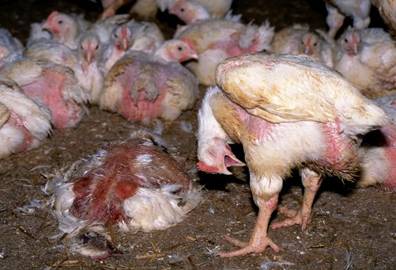
It Is 2018; not 1618 – so its time to give animals the respect they deserve.
Break the cages, close the labs, shut down the slaughterhouses; stop the transport; trash all the bear bile facilities and free all the bears. Put money second just for once; respect ALL sentient beings.
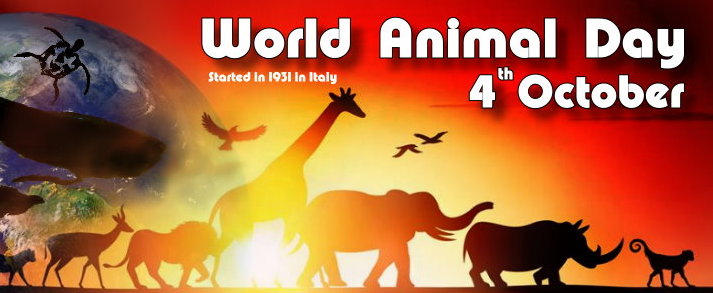
MISSION OF WORLD ANIMAL DAY
To raise the status of animals in order to improve welfare standards around the globe. Building the celebration of World Animal Day unites the animal welfare movement, mobilising it into a global force to make the world a better place for all animals. It’s celebrated in different ways in every country, irrespective of nationality, religion, faith or political ideology. Through increased awareness and education we can create a world where animals are always recognised as sentient beings and full regard is always paid to their welfare.
On 25.09, the launch of the EU Citizens’ Initiative for the End of Cages in Agriculture took place in the EU Parliament in Brussels
More than 130 organizations met in Brussels last Tuesday to launch the EU’s End the Cage Age campaign. The campaign was launched by the international organization Compassion in World Farming (CiWF).
In addition to several MEPs from different countries and beyond the political spectrum, two Vice-Presidents of the EU Parliament also pledged their support.The aim of the initiative is to end caging of animals in agriculture in the long term and throughout Europe.
300 million caged animals
Within the EU, more than 300 million animals are kept in cages at any one time. Particularly affected is the laying of chickens in egg production. Even the “designed cages”, that are currently still allowed in Austria, can by no means even enable the least species-humanely life. By 2020, these cages will be banned in Austria, but large quantities of caged eggs are still imported from other EU countries.
“That’s why animal welfare cooperation is so important within the EU. Individual countries should and must promote animal welfare within their borders – but international cooperation to protect animals should not be forgotten, “said VGT (Association against animal factories) campaign manager Tobias Giesinger, who also attended the launch event.
Cage stand in the criticism
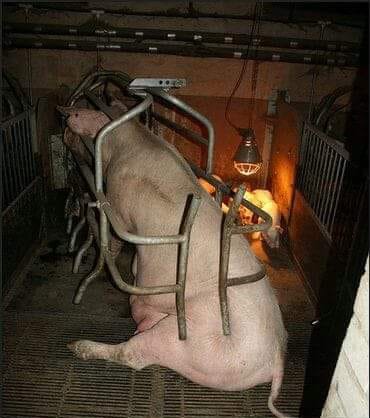
In addition to egg production, the crates in waiting stalls and farrowing pens in the pig industry are also criticized. Although there have been small reforms in Austria in recent years, animal welfare can not end there. “Animal husbandry, which mothers must lock away from their children, should urgently be completely reformed. Systematically locking animals into body-sized cages should not be a solution, “says activist Lena Remich, who was part of the VGT delegation in Brussels.
EU-wide support to the population
The EU Citizens’ Initiative must now collect at least one million signatures in seven EU countries within one year. The goal of the organizers, however, is higher: at least two million signatures should be. The support of the population seems to be great. Surveys show that 94% of Europeans consider the protection of animals in agriculture important and that 84% want improvements and reforms to protect these animals.
MEP Stefan Eck stated: “I have a dream of a world without these barriers, without cages. Today is a symbol of hope.”
Comment: We all have the dream and hope for a world without caged slaves. In May 2019 are the EU elections. Now is the right time to put pressure on these useless officials.
Secret filming reveals hidden cruelty of licensed badger culls
‘Brutal slaughter’ will cost £1,000 per animal, claim campaigners, as government defends battle to beat bovine TB
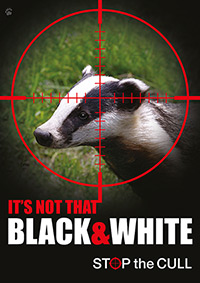
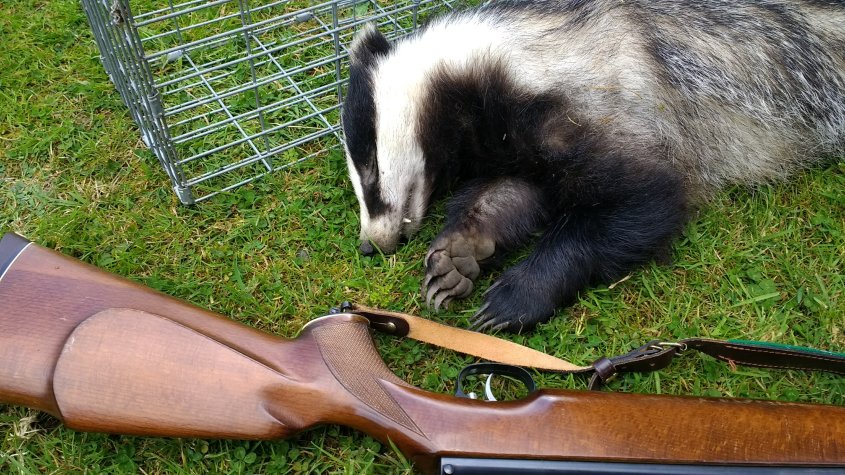
Trapped in a cage and shot at close range, the badger takes almost a minute to die. Covert footage published online by the Observer, the first to be shared publicly, shows the main method of dispatching Britain’s largest indigenous carnivore as part of a controversial cull now being expanded by the environment secretary, Michael Gove, which farmers insist is vital to curb the spread of TB in cattle.
Taken in Cumbria by the Hunt Investigation Team, it has been released by animal rights groups for maximum political effect ahead of the Conservative party conference, as Gove considers a key report on the government’s TB eradication strategy. Animal rights activists said the footage raised questions about how the cull works.
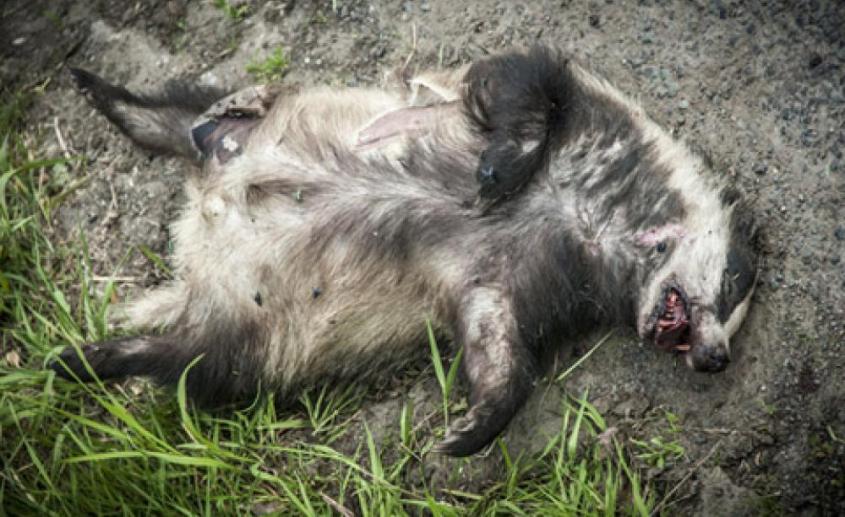
“The brutal slaughter of tens of thousands of badgers in the biggest destruction of a protected species in living memory is a national disgrace,” said Dominic Dyer, CEO of the Badger Trust. “This war on wildlife has been carried out in secrecy by poorly paid contractors with no independent monitoring or concern for animal welfare or public safety. The film footage that has emerged from Cumbria is the first time we have seen evidence of cull contractors at work. It clearly shows a badger taking over 50 seconds to die after being shot in a cage, and contractors removing it from the site without bagging and sealing the carcass in line with government TB biosecurity guidelines.”
Sign up to the Green Light email to get the planet’s most important stories
Read more
The trust estimates that the government may have licensed the killing of more than 75,000 badgers by the end of the year, at a cost of tens of millions of pounds. It claims that once all the Whitehall administration, equipment, storage, training, monitoring, policing and legal costs are taken into account, the cost of cage trapping and shooting a badger is more than £1,000 per animal. In comparison, the cost of cage trapping, vaccinating and releasing a badger is less than £200 per animal, the trust says.
The Zoological Society of London has also come out against the cull. It says that while badgers can and do transmit TB to cattle, most herds acquire the disease from other cattle. It also argues that culling increases TB transmission within badger populations and spreads the disease to new areas, and backs the trust’s argument that badger vaccination is a much more promising tool for TB eradication.
But the government claims reductions in new outbreaks of bovine TB have been recorded in Gloucestershire and Somerset following the completion of licensed four-year badger culls. It published data earlier this month – disputed by some animal rights groups – which it says shows that in the Gloucestershire cull area, TB incidence has fallen from 10.4% before culling started to 5.6% in year four of the cull, while in Somerset it has reduced from 24% to 12%.
A spokesman for the National Farmers’ Union said a cull was crucial: “More than 33,000 cattle were slaughtered last year in England because of this devastating disease and more than 3,800 farms that had previously been clear of the disease were affected by it. The NFU has always supported a comprehensive and proportionate eradication strategy, which balances disease-control measures with business sustainability.
“We must have every option available to us to tackle TB – including cattle testing, cattle movement restrictions, biosecurity advice, vaccination and control of the disease in wildlife.”
The government’s chief vet has said that taking action to prevent TB infection of cattle by badger populations is an essential part of the government’s 25-year strategy to eradicate the disease in England, and that badger control is currently the best option available. Of the 30,000-plus badgers killed to date, about 900 have been tested for TB and less than 15% have been found to have the disease.
Gove recently approved 11 new badger cull licences in England in 2018, bringing the total in operation to 32. A review of the government’s 25-year bovine TB strategy carried out by Sir Charles Godfray, a population biologist and fellow of the Royal Society, was delivered to Gove last week and will be published shortly.
A spokesman for the Hunt Investigation Team defended its decision to use covert video surveillance. “Our team have been active protecting badgers in multiple cull zones. In areas we could not actively defend, we placed hidden cameras in order to evidence malpractice and cruelty associated with the cull. Badgers are paying the price for a disease in cattle that is caused by human mismanagement.”
Adopt dogs rescued from dog meat industry
by SaveKoreanDogs.org
Dogs rescued from dog meat industry in South Korea by Nami Kim and her team are waiting for their loving and caring forever homes. Thank you for opening your heart and your home to these angels!
Click HERE to see the dogs available for adoption.
Click HERE to follow SaveKoreanDogs.org on Facebook for the latest updates.
A few days ago, we were alerted to the plight of a lonely little moon bear.
Today, we’re going to get her out of this terrible place, thanks to you.
Captured as a just a baby, Sky grew up all alone in this cage. Farmed for her gall bladder bile for the past 13 years.
Stabbed with long needles.
Nowhere soft to lay her head.
Not a friend in the world…
This is no life.
It is unlikely that Sky has ever seen a vet in her life. We don’t yet know what damage years of confinement, malnutrition, and cruel bile farming has caused.
Will you help save and care for little Sky, Mark? Please, donate now >>
All her life, she has been mere hours away from our beautiful Tam Dao Bear Sanctuary in Vietnam. To know she has been so close all this time. Suffering out of sight. It’s truly heartbreaking.
Stolen from the wild and crammed into a cage as a tiny cub, this is the only life gentle Sky can remember.
But today, 13 long and lonely years will come to an end for Sky… all thanks to the power of your love and support. Thank you!
With the warmest bear hugs for your generosity and compassion,
Jill Robinson,
Founder and CEO, Animals Asia
PS You can be with Sky every step of the way by following LIVE updates of the rescue on our Facebook page, including updates on her condition, her first sweet slurp of strawberry sauce, and the special moment she arrives at her forever home. A place filled with all the love and kindness she’s been waiting for all her life. Thank you!
Police consider drones to monitor badger cull protesters
Devon and Cornwall police warn activists as cull zone is massively expanded
Police have warned badger cull protesters that they may use drones to try to keep order in the far south-west of England following heightened tensions between activists and officers.
In an email to protesters seen by the Guardian, a Devon and Cornwall officer said the force would consider using drones “where intelligence dictates”.
The force said it was considering drones because of a spike in crimes in some areas within cull zones but protesters insisted the move would not stop them from trying to prevent badgers being killed.
The cull in England has been hugely expanded into 10 new areas, with up to 42,000 animals now due to be shot in an attempt to curb tuberculosis in cattle, up from 32,500 last year.
The cull zones now cover vast swathes of many counties, including 68% of Devon and 54% of Cornwall.
The increase is adding to pressure on police forces in these areas. In the email to the protester, the officer wrote: “I have been asked to let you know – and that you forward as you believe necessary – that a decision has been made that where intelligence dictates police will consider the deployment of drones.”
WAV Comment – Oh if only there was a ‘retirement’ home far away for all the useless politicians who live in EU Brussels, Belgium. Can we suggest Junker and Tusk lead the way. A kind of Fletcher memorial home:
In southern Belgium there is a care home that accommodates 150 aging animals, living out their final days in peace.
The home is run by Valerie Luycx, below, and is called Les Petits Vieux (The Little Old Ones).
The animal shelter, located in rural Chievres in the province of Hainaut in the south of Belgium, is home to Pastis the pot-bellied pig, below, along with a number of elderly cats, dogs, ponies and goats, photographed here by Yves Herman from Reuters.
All the animals either have health problems or have been given up because their owners were too old to care for them.
Residents include Azuria, a 15-year-old European cat (below left), and Ramses, a nine-year-old Carlin dog.
Valerie founded the shelter in 2000 with her husband Serge. She said: “We wanted to recreate family life for the animals.”
On the left here is Choupy, a 14-year-old Yorkshire Terrier.
Well this morning – 20/9/18; we are now being informed that the EU leaders; led by un elected Donald Tusk and Jean Claude Alcoholic are still refusing to do any deal with the UK regarding the UK leaving the EU; which will be next March. The EU still obviously wants to punish the UK, as it always has done; for voting to leave the ‘club’; a deliberate attempt as it always has been to discourage other EU member states for daring to even think about voting leave and get out of this monolith.
In a (UK) national referendum held over 2 years ago; the British people voted to leave the EU. Why ? – there are many major issues; but let us focus on just one that we have had concerns about for many years – live animal transport.
When you look at the Europa web site regarding live animal transport; everything seems so perfect. The EU claims to be oh so perfect. Legislation is in place throughout the EU in the form of Regulkation 1/2005; so why is it being questioned about non compliance ?
As we have shown and said many times over the years on our ‘Serbian Animal Voice’ site; the whole issue of live animal transport across the EU can only be described as a pathetic joke which enforces untold suffering on thousands of animals. The bigwigs of Europe want to make money from live exports; but in turn they do nothing to enforce the regulations. And our MEPs; yes our so called Members of the European Parliament; who almost every day sit in the great monolith of Brussels and together decide that really, nothing can be done on the issue of live animal transport. So what have we elected them into the Europarliament for ? – representing the people and their wishes ? – no not really. Playing the EU game and ensuring that issues such as live transport; which means so much to many throughout Europe is continually ignored and not acted on ? – well yes.
– this is the actual reality of EU live animal transport; and shows how the rules; EU rules, in the guise of Regulation 1/2005, are NOT being enforced.
The above are just some of our work regarding live animal transportation; there is more.
So; it kind of sticks in many British peoples throats when we see un elected Tusk and Jean Claude Alcoholic standing in Brussels every day and dismissing all efforts by the UK government to get a decent divorce with the EU. As we show above; if the EU leaders did actually enforce existing EU legislation; such as that on animal transport; then we as EU citizens (for the time being anyway) may have a tad more respect for them. But they cannot enforce their own regulations; or really care about them; and then they go on a witchhunt to try and say how terrible the UK is !
The UK, as the second largest financial contributor to the EU (is this why they don’t want us to go and will do everything they can to stop us ?) and does abide by EU legislation on nearly everything. The UK is a good nation when it comes to playing by the often pathetic EU rules and paying our way. Can the same be said for some other EU member states and those waiting as ‘Candidate countries’ such as Serbia ? – we have exposed all their non compliances with the rule of law (Copenhagen Criteria) over the years and we have provided endless amounts of data to the EU Enlargement Commission to say that the rule of law is not being adhered to in Serbia. What have we had in return ? – no responses from the EU (as expected) – a system which regards itself above us and the law; the almighty one could say; almighty balls up, we would say.
So over the last 2 years since the vote to leave, the EU hits out at the UK; doing everything; literally everything; to make threats to the UK to frighten it that leaving would be such a terrible thing. Is the reality in fact the EU is scared that the UK is going to make a real positive move when it breaks free from the shackles of the EU; something which may show other existing (EU) member states that in reality; they will be better off away from the ‘super state’ mentality and vision that we see from Tusk and Junker.
Above – “I can do nothing” Mr Van Goethem proudly displays the EU flag, which yes, does nothing.
As the UK Prime Minister has said; when it comes to a divorce from the EU; the UK may be better off with no deal rather than a bad one from the EU. Our advice now to PM May; get out and walk away from the continuing bully boy tactics that we as a nation have endured from the EU for the last 2 years or more. Strange how our MEPs have often remained so silent about all this; certainly those in South East England. Maybe they are hoping that the day comes when the UK decides to get back in the monolithic club so that they can continue to be representatives of British EU citizens whilst not really getting that involved with specific issues that concern them – ie live animal transport.
When the UK walks out of the EU next March, the abuse of EU animals throughout Europe will not stop; no one says it will; UK welfare campaigners fully accept that. But by walking away, the UK should at least be able to take back control of its own national issues; free from the crap that is the EU. Organisations such as EoA, CIWF and many others will continue to present hard, real evidence that live animal transport in the EU simply does not work. Via the MEP / Parliament system that the monolith employs; there will continue to be no real votes for any hard hitting drastic change to make things better for the animals. It will be post Brexit, very much the Status Quo with regard issues within the EU. As long as everyone at the EU is being paid their salary for doing what ?, why should we expect change ?
Europe is heading for a superstate type system; where the normal man and women have no real voice; just like now; and the voices of change come only from Amazon, BMW, and others who have massive influence in many ways over the masters of the universe. Does Europe make sure they pay their taxes like Mr and Mrs EU citizen ? – of course not; alcoholic Junker has seen to that in the past:
Does he give tax saving incentives to the likes of animal welfare organisations ? – of course not; he wants to see them die along with the livestock that he allows to be abused throughout the EU each and every day. Gains for Junker; gains for the EU; a system that does not listen to the people; threats to those who wish to leave this farce – how very typical. And this is the man in charge of the EU ! – no wonder the entire system is progressing in just a few money making directions.
The coming months will see the results of the UK Brexit / EU standoff. But just one thing to remember; the UK has faced some hard challenges in the past – two World Wars, the Blitz, IRA bombings and killings for many decades; so a pair of chuckle brothers such as Junker and Tusk are seen by the British people for what they are – pissed up self importants who are probably corrupt to the hilt.
Do we want to suck up to them and the ideology that Europe is happy and all smiles in the system ? – no, we do not want. The sooner we walk away from the chuckle brothers the better – then we will really see how brilliant they are !
A new, independent report revealing that 97 dogs were euthanised following an outbreak of bovine tuberculosis (bTB) at a hunting kennel confirms that hunts are a major biosecurity risk, argues an animal protection charity.
The report, by researchers at the University of Edinburgh, also contains information which suggests both the hunt and Defra kept quiet about key aspects of the outbreak – such as claiming only 25 dogs were affected, rather than the actual total of 97.
Given that disease, not just bTB, is one of the biggest threats to the lives of farm animals and the livelihoods of farmers in the UK, this raises grave concerns about the way biosecurity across the UK is being managed.
Chris Pitt, Deputy Director of Campaigns at the League Against Cruel Sports, said:
“We’ve been saying for a long time that hunting is a major biosecurity threat to our countryside and this report confirms it. The 97 dogs which were destroyed because of bTB are just the tip of a diseased iceberg. This story isn’t about one kennel infected with bTB, it’s about the way hunts routinely avoid even basic biosecurity and animal welfare measures, meaning their poor dogs are often living disease carriers.
“There’s a simple truth here. When livestock dies, potentially of disease, it is given to hunts to feed raw to their hounds. These hounds are often in poor health due to kennelling conditions and lack of care, and pick up the disease. They then spread the disease back into the countryside – and the cycle continues. The government knows this is a huge risk but is either turning a blind eye or not giving people the full picture, both of which are unacceptable.”
Key concerns are:
·The number of dogs put down was 97, not 25, as originally admitted by the hunt, which suggests a deliberate attempt to play down the outbreak. The number of recorded bTB outbreaks in the Kimblewick Hunt’s territory almost doubled to 90 in the four months after the disease was discovered in the kennels.
·Government statements about the outbreak gave the impression that there was no real threat of disease spread by hunting hounds – while at the same time they amended regulations to restrict the feeding of offal to hunting hounds. If there was no threat – why change the regulations?
·The condition of the Kimblewick kennels – a typical hunt – is described as ‘suboptimal’, with dogs being kept in dirty, unhygienic conditions which are a breeding ground for disease.
·Some biosecurity measures were introduced at the kennels once the infection had been confirmed. However this backs up evidence that basic biosecurity measures at hunting kennels are generally low or non-existent.
Chris Pitt added:
“If farmers are concerned about disease on their farms, be it bTB or anything else, then they need to take a close look at any hunts in their area. There is stacks of evidence showing that disease can spread between livestock and hunting hounds, but the government seem intent on playing this down with misleading or disingenuous statements which deflect from the truth.
“They brought in new regulations last year while pretending there was no problem when clearly there was. And those regulations won’t make any significant difference – it’s a clear case of shutting the kennel door after the hounds have bolted.
“If this country wants to take disease control seriously and protect livestock, then proper biosecurity is vital – and that means stopping hunts from galloping all over farm land.”
·For more information about the diseases spread between hunting hounds and livestock, see a summary here or the full study, Hunting with hounds and the spread of disease, by Professor Stephen Harris, BSc PhD DSc and Dr Jo Dorning, BSc PhD.
·For more information or interview requests please contact the League Against Cruel Sports Press Office on 01483 524250 (24hrs) or email pressoffice@league.org.uk
·The League Against Cruel Sports is Britain’s leading charity that works to stop animals being persecuted, abused and killed for sport. The League was instrumental in helping bring about the landmark Hunting Act. We carry out investigations to expose law-breaking and cruelty to animals and campaign for stronger animal protection laws and penalties. We work to change attitudes and behaviour through education and manage sanctuaries to protect wildlife. Find out more about our work at league.org.uk. Registered charity in England and Wales (no.1095234) and Scotland (no.SC045533).