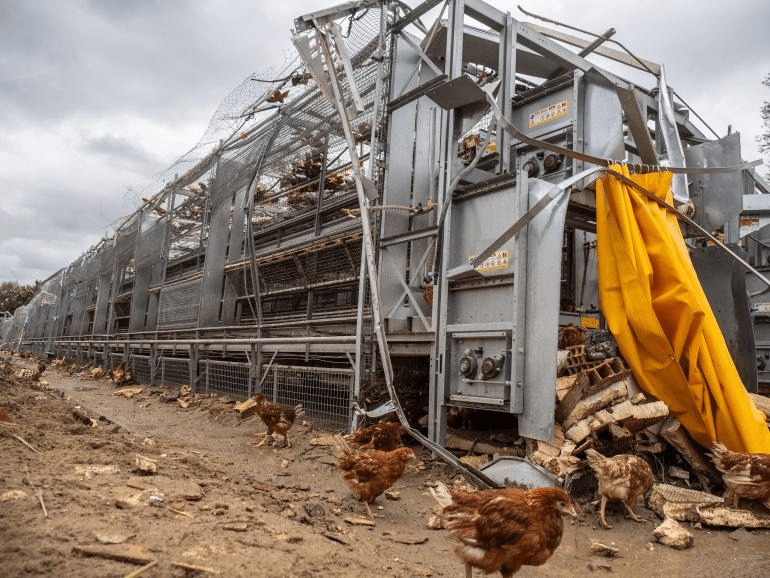
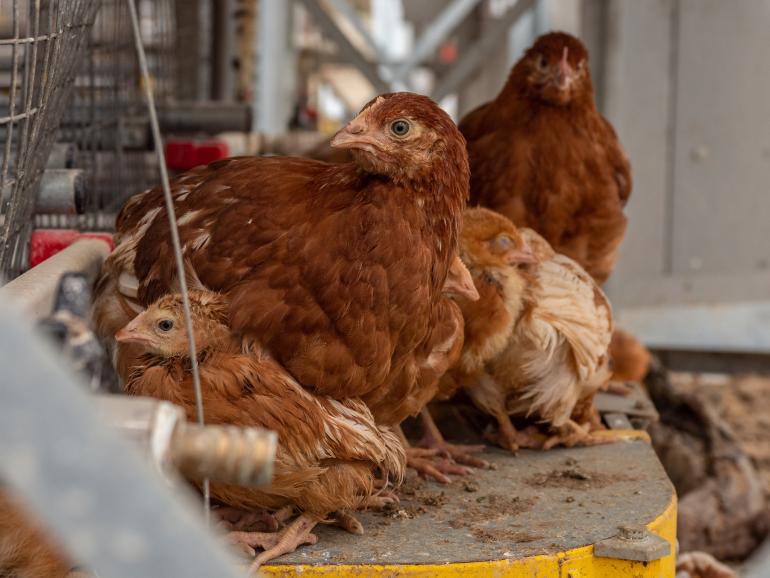
Live animal exports might be banned in Brazil – setting the scene for the kind of change we want to see in Europe
9 May 2023
A trial court in Brazil recently ruled to ban live exports, following a number of NGOs filing lawsuits against the practice based on the harm it causes to farm animals. While the decision is not yet final, this is the kind of bold move we need to see European policymakers make against live animal transport in the EU – a system within which millions of poor sentient beings suffer physically, mentally and emotionally each year.
Animals are not things. They are sentient living beings, that is, individuals who feel hunger, thirst, pain, cold, anguish, fear.
On April 25, a potentially historic ruling was made by a trial court in Brazil to end live animal exports. This decision was made following the tireless efforts of several NGOs who, since 2017, have been campaigning to end all live animal exports from Brazil after NADA, the largest live cargo transport ship in the country, came under scrutiny for its extremely poor animal welfare conditions.
Brazil’s call for a ban should inspire the EU to look at its own Transport Regulation more closely
While this ruling will not be final until it is reviewed by a higher court (Brazil’s Third Regional Federal Court) – a process which could take years – it’s an extremely promising first step towards changing the country’s live animal export industry in a truly effective way, mirroring a recent move by New Zealand to ban live exports by sea.
Both bans also send a strong message to the rest of the world, that we hope European policymakers take note of: that the live animal export sector is filled with serious affronts to animal welfare, and needs to be addressed at a dramatic scale. Farm animals often suffer hugely on long journeys, whether travelling via land or sea, including by being:
Starved and dehydrated – as they often travel for several hours without being given food or water
Exhausted – due to the strain these journeys put on them, and the impossibility to relax. A WELFARM investigation found animals being transported from Poland to the Franco-German border were kept in their trucks for 20 hours with no breaks
Subjected to overheating – especially when they are being transported in the summer, when temperatures soar
Crammed together – which can cause injuries and further stress to these animals as they are transported, a process which is already entirely unnatural to them.
Not only do these sentient beings suffer immensely on these journeys, but the rules that are already in place to protect them through the EU’s Transport Regulation are not even being adequately enforced. Over Easter this year, our member Essere Animali together with the Italian police stopped seven trucks transporting lambs arriving from Romania, Hungary and Slovakia. Six of these were violating the EU’s transport rules, including by overcrowding the trucks, overlooking injuries to the animals and more.
Much firmer rules and restrictions: how should Europe’s live animal transport sector be addressed?
In 2019, over 1.6 billion farmed animals were transported alive across the EU and to non-European countries. It’s clear the European Commission’s Transport Regulation needs a serious overhaul if it is to effectively improve the lives of farm animals across Europe, as our extensive white paper on the subject explores in more detail.
Beyond creating much stricter rules for animals transported between EU countries, however, it’s important that policymakers also consider taking similar steps to Brazil and New Zealand by enacting a full ban on live animal exports to countries outside of Europe’s borders. When animals are transported to third countries, it’s much easier for the EU’s transport rules to go unfollowed. Banning live exports to non-European countries entirely would be the only way to ensure the EU’s high animal welfare standards are not being undermined elsewhere in the world.
Ideally, international instruments for animal welfare will also be developed in future to ensure that animals are protected globally, by strong and enforced regulations that have their welfare at their heart. But Europe can already inspire great change in this area – and improve the lives of billions of European farm animals – by making powerful revisions to animal legislation that prioritise their essential needs and comfort. More insights into animal welfare during transport can be obtained in our 2022 position paper.
We have our fingers crossed that change is ahead
The live animal transport sector has always been notoriously difficult to monitor, as well as one in which the welfare of animals has been easily cast aside. We’re impressed with Brazil’s recent ruling, and hope it inspires policymakers both in Europe and the rest of the world to give the sector the kind of attention it deserves. If it does, the future will look a lot brighter for billions of farm animals.
Wow ! – we are so happy to read that AAU has reached an incredible 2.5 BILLION views on YouTube; so very much deserved by all the crew there who make endless sacrifices for the welfare of animals. We congratulate them on such a fantastic milestone.
For starters, watch a blast from the past, showing a mother dog guiding AAU rescuers to recover her puppies from a collapsed building:
Dear Mark,
We’re proud to share that we have reached nearly 2.5 billion views on our YouTube channel, making our videos the most watched animal rescues in the world.
We document our rescue stories to inspire people around the world to get involved in helping animals. Whether the viewer becomes a donor, or even just shares the video with a friend, it helps animals in the long run.
We’re thrilled that billions of people over the years have wanted to watch and be a part of helping so many animals. Thank you, because we sure couldn’t do this without you.
Healing Andy’s burn took months, and wow, we’ve bonded big-time.
This loveable boy was so traumatized by a massive burn wound that we found him in a state of complete despair. Sadly, bulls can be victims of abuse, and often have boiling hot water or even oil thrown on them to scare them away.
His eyes were wide as he innocently tried to bear his terrible pain. We brought him back to our hospital and began what would be a months-long journey of healing for this brave young bull.
Burn wounds can be very difficult to heal because of the damage to the layers of skin. During the course of his stay with us, while he indulged our routine wound dressings and bandage changes, his trust grew, his appetite soared, and he seemed to agree that love and affection feel beautiful!
Find out how this circling, brain-injured puppyearned the confident name “Breezy!”
Something was very very wrong. Even from a distance we could see that this puppy’s neck was twisted in a terrible way, thrusting his head almost backwards. He had suffered a head trauma, probably hit by a car in a hit-and-run.
Thankfully, a passerby noticed that he was alive and called us for help. We gave him supportive care and treatment for several days while he remained semi-comatose, but on the third day, we were delighted that he wanted to eat on his own. With a little help to stabilize his neck, this little gem seemed to tell us “I’m ready to live!” It took 2 months of baby-steps for Breezy to re-learn some basic motor skills, but wow, he has ’em nailed down now! Meet loving, loveable Breezy today.
On April 22nd we caught the first group of dogs that we brought back to our recently renovated Sterilization Center.After so much planning and organizing, to finally have the first dogs at the center (all such sweethearts) and give them their first bowls of food and water, and prepare them for their surgeries, felt like the real ribbon-cutting. We have already had several animal lovers bring their community dogs for spay and neuter which is heart-warming to see.
Thank you for your incredibly generous support that makes saving so many lives each month possible.
New images from GAIA: millions of piglets castrated in Flanders without anaesthesia
4 May 2023
GAIA
Press Release
A new investigation from GAIA reveals how painful piglet castration really is. Every year millions of piglets are castrated in Flanders (Belgium) without anaesthesia, and GAIA is launching a petition to stop this practice.
In Belgium, 5 to 6 million male pigs are bred every year and 80% of them are castrated (annually 4 to 4.8 million piglets). The piglet is castrated surgically at three to seven days of age to prevent it from developing the sexual hormones that can affect the meat’s odour in 3-5% of the carcasses, called ‘boar taint’. Alternatives to painful surgical castration exist, namely in the form of a vaccine or raising entire boars.
A new survey by Ipsos shows that 3 out of 4 Belgians (86%) are in favour of a legal ban on the surgical castration of piglets. In The road to end piglet castration report published today, GAIA is calling for a ban on this gruesome practice.
97 to 100% of Belgian piglets (3.9 to 4.8 million) are castrated without anaesthesia and only 85% receive meloxicam, an anti-inflammatory agent, as prescribed by BePork, the Belgian quality label for pork. Although analgesics and anaesthetics, used individually or in combination, can reduce pain or induce unconsciousness during castration, the way in which these substances are used in the field is insufficient to prevent severe suffering.
The only way to ensure a painless procedure would be to apply the same protocol used for cats and dogs (namely a combination of sedation and gas anaesthesia with pre-and post-operative pain relief). Only a trained veterinarian has the necessary competences to properly follow that type of procedure thus requiring time and costs that the farmers are virtually unable or unwilling to carry.
Both the vaccine against boar taint (15% of Belgian male pigs are vaccinated) and the rearing of intact boars with detection of boar taint at the slaughterhouse (8% of Belgian male pigs are kept as intact boars) are two good solutions and therefore alternatives to castration that pig farmers can use to manage the risk of boar taint, without surgically castrating the piglet.
No Animal Left Behind: why do farmed fish need specific laws to protect their welfare?
2 May 2023
Fish are farmed in their billions in Europe, yet sadly, they currently receive little to no welfare protection, and many of their needs are still unknown. Countless fish are farmed in the EU every year in awful conditions where they experience overcrowding, high mortality rates, inhumane slaughter methods, and stress and injuries from routine handling and transport. The European Commission has the power to address these issues when revising the animal welfare legislation this year, by including species-specific laws for fish in farming, transport and slaughter.
Fish are sentient animals with individual personalities, who experience diverse emotions and live complex lives. Importantly, each species of fish is unique and varies greatly from another, which also means that their needs are not ‘one size fits all’. Fish in aquaculture are not domesticated animals – most are carnivorous predators and many of them are solitary animals by nature.
Just like other animals, their environment impacts their wellbeing, whether its available space, water quality, water temperature, etc., there are a lot of factors to take into account for each fish species.
Packed in overcrowded conditions where diseases can spread quickly
Being routinely handled, which is extremely stressful for farmed fish and can cause scale loss, skin, fin and eye injuries, muscle bruising, reduced appetite and impaired development
Struggling psychologically, as the farm environment is devoid of stimulation, particularly when compared to the dynamic, ever-changing sea and river environments in which fish evolved to live.
If they manage to survive the farming environment, the journey to slaughter is yet another tribulation, where fish typically undergo:
Starving for days or even weeks, which can increase aggression, competition and stress amongst farmed fish
Crushing as they are lifted out of the water in a large group net
Inadequate transport methods where water quality, water movement, noises and vibrations are severe stressors
A slow death from asphyxiation as the fish are put on ice or into an ice slurry bath which can last for minutes or hours.
Learn more about these issues on pages 7-9 of our new exposé report.
It’s time for the European Commission to protect farmed fish
The European Commission has the power to dramatically improve the lives of farmed fish when they revise the animal welfare legislation later this year. They must factor in strong, precise, and targeted rules for fish welfare that take into account their sentient status and the best welfare practices that we know of.
They should be handled with care, offered enriching lives and slaughtered in a way that doesn’t inflict intense suffering. There is no substitute for these basic needs.
All over Europe, laying hens are living stifled and limited lives behind bars. Recent investigations by Essere Animali, Equalia and Humánny Pokrok highlight what life in a cage really looks like for these poor sentient beings, emphasising why a truly cage-free future isn’t just desirable, but critical for their welfare.
No space to move. No access to natural light. Their bodies mutilated. These are just some of the circumstances laying hens in cages tragically experience in their short lives, in which they’re forced to lay huge quantities of eggs while suppressing their own natural behaviours and needs.
It’s an unbearable existence – and it’s one that the European Commission has the power to change, by effectively phasing out cages across Europe while also making specific rules for laying hens in their upcoming revision of the animal welfare legislation. Both are key opportunities for policymakers to put the wellbeing of these innocent birds first, and change millions of lives.
The time is now. Captured and shared by our members across the continent, these undercover investigations prove the issues laying hens in cages face span several Member States. Their problems are an EU concern, which only EU laws can address sufficiently. Read on.
Equalia: laying hens in cages in Spain
In 2021, Equalia published a shocking expose video on the experiences of caged laying hens on a Spanish factory farm. Not only did their footage show laying hens in great physical, emotional and mental distress, it also proved that these kinds of housing conditions can become incredibly unhygienic – posing a great risk to public health.
You can see:
Dead laying hens decomposing next to the living
Plucked and injured birds struggling to cope, and immersed in near-total darkness
Mites growing in eggs intended for human consumption, and pests like rats running among the birds
The European Food Safety Authority (EFSA) has already concluded cages are unsafe, as there’s a clear connection between the amount of birds in cages and prevalence of diseases such as salmonella.
While Equalia acknowledges progress has been made towards transitioning to cage-free systems in Spain, it’s clear more needs to be done to ensure they’re truly banned from Europe’s farming systems. No shortcuts are to be taken if we want to be confident that the health and happiness of these birds – and that of Europe’s citizens – has been addressed as seriously as it deserves.
Essere Animali: laying hens in cages in Italy
In Italy, what Essere Animali recently uncovered about an egg-producing hens farm is nothing short of sickening. Their hard-hitting footage and investigative work shows a range of immoral and even illegal actions taking place, such as:
Hens being illegally slaughtered without being stunned first
Animals being violently treated, including by being thrown to the ground, grabbed by the legs and crushed into cages by workers’ feet
Eggs falsely and illegally being marketed as ‘free range’
Since the launch of Essere Animali’s investigation, the farm has fortunately been sentenced on several charges – but it’s worrying that these abuses and illegalities were able to slip through the cracks in the first place, especially as this investigation was preceded by another in 2019 detailing similar problems. Sign Essere Animali’s petition here for better animal welfare laws.
Humánny Pokrok: laying hens in cages in Slovakia
This year, our member Humánny Pokrok published the first investigation exploring the lives of caged laying hens in Slovakia. Filmed across three locations, what they found was far from pretty.
Their footage shows laying hens:
Suffering from severe feather loss and untreated injuries
Shoved together in tiny, suffocating and lightless spaces
Dying in obscene ways – one laying hen was even recorded being thrown into a garbage can and buried alive
The footage spread quickly throughout Slovakia. In the first 48 hours after it was published, it had reached one in five people, and inspired further political discussion about a ban on cages. Slovakian residents can sign Humánny Pokrok’s ongoing petition for such a ban here.
Laying hens deserve comfortable and satisfying lives! Do you agree?
Citizens across Europe have already called for the cage age to end – now it’s time for the European Commission to deliver, as well as to create specific rules for laying hens to ensure they live happier, freer, and healthier lives. It’s completely in the power of policymakers to bring about this positive change.
It’s time for the suffering of laying hens to end, and begin a new era that puts their welfare first.
Draft Impact Assessment – a good start for an ambitious legislation
20 April 2023
Press Release
The draft Impact Assessment report on the revision of the EU’s animal welfare legislation, leaked today, reaffirms the European Commission’s aim of making the EU the global leader in animal protection.
In the Farm to Fork Strategy, the European Commission (EC) committed to revise all animal welfare legislation, to align it with the latest scientific evidence, broaden its scope and make it easier to enforce. The proposed measures are based on scientific recommendations provided by EFSA, the European Food Safety Agency, anchoring them in a strong evidence-base.
The proposals are expected by late September, however, the details of the Impact Assessment (IA) working document, as revealed by Agra Facts, are promising for the billions of animals involved.
The EC recognises that “Societal demands are not met – As identified in the Fitness Check, the trend is clear: many EU citizens pay increasing attention to animal welfare. A clear reflection of this is the ECI ‘End the Cage Age’ …. Ethical concerns are also raised against e.g. the systematic killing of male one-day old chicks and against long-distance animal transports and fur farming…..In addition, most EU citizens expect a more sustainable food production, i.e. less intensive farming and breeding systems.”
The impact assessment looks at 18 measures to improve the welfare of kept animals. Eurogroup for Animals particularly welcomes measures to:
Phase out of cages for all species
Increase space allowance for all species
Ban the systematic culling of male chicks
Introduce welfare requirements for the stunning of farmed fish
Ban cruel slaughter practices like water baths and CO2 for poultry and pigs
Ban mutilations, like beak trimming, tail docking, dehorning or surgical castration of pigs
Limited journey times for the transport of animals destined to slaughter
Apply the EU’s standards to imported animal products in a way that is compatible with WTO rules
We are also pleased to see that on fur farming the EC is acknowledging the serious welfare issues that a cage system causes to wild animals and is taking into consideration the 1.7 million voices calling for a Fur Free Europe.
The final Impact Assessment still has a long road to go before the actual proposals will be adopted, and we call on the Regulatory Scrutiny Board and Interservice Consultation to improve the proposals mainly with regards to shortening transition times to phase out cages and tightening the rules on live animal transport.
This is a very good start and reflects the decades of citizens campaigning and scientific evidence produced in the EU. In light of the results of the Impact Assessment, the EC must seize this once-in-a-generation opportunity and come forward with strong legislation that effectively improves the welfare of animals in Europe and globally. Ambitious legislation will benefit animals, citizens and farmers alike.
Please sign petition HERE to Ban Fur Farms in Canada
Related, please sign petition demanding department store Dillard’s be fur-free HERE
You can also send Dillard’s a message via their Contact Us page or via their floating Feedback button on the right-hand side of their site
Please visit HERE to reserve your free ticket for the private screening of Real Fur: “A documentary uncovering the true cost of fur in the fashion industry.”
Background
Fur farms are not only cruel to animals but also pollute the planet and cause zoonotic diseases.Contrary to the belief that real fur is “natural” and better for the environment, fur production actually destroys the environment in various ways.
Over 75 percent of zoonotic diseases (according to the WHO)are caused because of close proximity to animals kept on farms.
In November 2021, the Animal Save Movement joined a global movement to ban fur farms. We took part in the #MakeFurFarmsHistory campaign which included protests in over 10 countries and a letter-writing campaign to ban fur farms in Canada.
Thanks to these actions and the support of the community, a bill was introduced into Canada’s parliament that calls for a federal ban on fur farms.
Curious to learn more about fur in the fashion industry? Want to find out how you can take action to help animals on fur farms? Join us and our friends at Arise Productions for the private screening of Real Fur – a documentary uncovering the true cost of fur in the fashion industry.
See the award-winning documentary film, meet director Taimoor Choudhry, and hear from prominent animal rights leaders: Camille Labchuk, Lesley Fox, Ashley Byrne, and Jenny McQueen, who are part of a discussion panel.
When: April 25 at 4:30PM PDT/ 7:30PM EDT Where: Online on Eventive How: Reserve your free ticket HERE
And FYI: for those people who are so superficial and need to demonstrate to the world their healthy portfolios, do what other people do and buy a sports team or have a school named after you, there is ZERO legitimacy to fur. ZERO.
And for others with lesser incomes who buy “fur-lined” products, remember that animals suffer just as much for a “little” fur, they aren’t just a “little” dead. And for those who opt for faux fur, it’s important to note that many times, real fur is actually disguised as fake fur when real fur costs less (do remember that the life of the animal is priceless), please see The Guardian’sHow To Tell If Faux Fur Is Actually Real Furthermore, some items are not required to include labels that designate fur as real or faux. Just leave it out altogether.
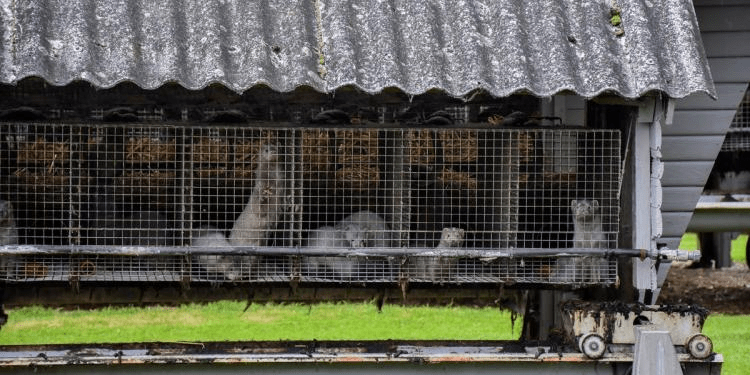
I became vegan after watching a documentary on fur, it was after seeing a dog tortured for his fur that I became aware that ALL animal exploitation is related, the cows who are forcibly impregnated overandoverandoverandover until their abused bodies no longer produce milk at a profitable level and who are then violently killed, suffer as mink do, who are forced to endure squalor, neglect, and disease, and then who are agonizingly gassed for their fur.
… In other words, don’t feign shock about fur if you’re still eating animals, the foundation of animal exploitation fuels and includes ALL animal exploitation, if you eat “bacon”, you’re deliberately supporting animals being anally electrocuted so their fur isn’t damaged during the “killing phase” of “fur farming”. And the US fur industry (used to if no longer) reprehensibly promotes that, since they kill animals onsite, they’re more “humane” than “food farming” slaughterhouses where animals are forced to endure further trauma via transport. Imagine using the death industry as a benchmark of ethics for your death industry.
Why do people conveniently neglect the THIRD option, which is to NOT SUPPORT ANY?
Because it’s really sad that I have to say this: stealing another’s fur is depraved, nothing but selfish, privileged, greedy, and barbarically cruel.
There is a special corner of hell reserved for those humans. Enjoy the bonfire. SL
Take PETA’s Cruelty-Free Shopping Guide along with you next time you head to the store! The handy guide will help you find humane products at a glance. Order a FREE copy HERE
Searching for Cruelty-Free Cosmetics, Personal-Care Products, Vegan Products, or more? Click HERE to search.
Free PDF of Vegan & Cruelty-Free Products/Companies HERE
Want to do more than go vegan? Help others to do so! Click below for nominal, or no, fees to vegan literature that you can use to convince others that veganism is the only compassionate route to being an animal friend:
No Animal Left Behind: why do laying hens need specific laws to protect their welfare?
17 April 2023
Did you know millions of laying hens in Europe never get to see daylight? Trapped in so-called ‘enriched’ cages, these innocent birds spend their days confined, depressed, injured and sick. They’re often deliberately mutilated, too, as their beaks are trimmed – a cruel practice that causes them chronic pain. The European Commission has the power to change their lives completely when revising the animal welfare legislation, by including specific laws for laying hens that protect them from harm and honour their unique natures.
Laying hens are extremely intelligent animals. Not only can they dream and remember people, places and things, they also understand geometry and can solve puzzles!
Able to feel everything from joy and curiosity to pain, laying hens are sentient beings with striking personalities, who deserve to feel safe in the world – just as every other animal does.
Sadly, laying hens are far from being taken care of in Europe’s farming systems. Trapped in uncomfortable cages with wire floors – without access to daylight and enduring injuries, frustration and boredom – their one constant is suffering.
What do laying hens experience on EU factory farms?
Among other things, laying hens are forced to endure:
A stifling lack of room: In the ‘enriched cages’ millions of laying hens are trapped within, they have only 600cm² of usable space – when evidence shows they need around 2,500cm² to behave naturally. Due to these extreme limitations on their movement, these poor birds can get no respite from each other, flap their wings or turn comfortably.
Beak trimming: In their confinement, laying hens often get stressed and aggressive with one another. To stop them from pecking their peers and causing them injury, their beaks are often trimmed, putting them in a state of constant pain. Of course, this ‘injurious pecking’ would not even be an issue if these innocent beings were not housed in such horrible conditions to begin with. It’s brutally unfair that they are mutilated as a result of their poor housing conditions.
The inability to be themselves: In nature, hens will spend about 50% of their time foraging and scratching at the ground, and are also highly motivated to dustbathe. Enriched cages completely fail to satisfy these needs, as birds are fed from a feeder, and any litter that is provided is quickly depleted (so the benefits are short-lived).
Uncomfortable and harmful habitats: Caged hens have reduced bone strength, more fractures and bone deformities due to their suffocating lives behind bars. The wire floors on which they exist not only cause them pain, but are often filthy too, as they are not sanitised sufficiently.
Europe’s laying hens could – and should – have much better lives
Many of the problems laying hens encounter exist due to shortfalls in the European Union’s animal welfare legislation – which policymakers are now due to revise. They must not miss this opportunity to include strong, precise, and targeted rules for the welfare of laying hens based on our Hens’ Asks, which include:
The complete and unambiguous banning of cages for laying hens and other species – which is also what European citizen’s want, as shown clearly by the huge response to the ‘End the Cage Age’ ECI
A smaller number of hens being housed in the same spaces – to decrease aggression, stress, and injurious pecking among birds, as well as make them more comfortable in general
Access to the outdoors and natural light – as well as an uninterrupted period of darkness for at least eight hours a day (to facilitate comfortable sleeping patterns).
Along with addressing these needs, the Commission must honour their commitment to properly eliminate cages in Europe as soon as possible. The recommendations in our new report, ‘Phasing out cages in the EU: the road to a smooth transition’ explains how to achieve this crucial change in a sustainable, pragmatic way.
It’s time we turn the page for Europe’s laying hens – beginning a new chapter that puts their welfare first. Are you with us?
We’re trying to change history for farm animals this year through phase two of the No Animal Left Behind campaign. Add your voice to our movement!
New review on live animal transport echoes our call for change in the industry
18 April 2023
Opinion
We were pleased with the conclusions drawn in the “Transport of live animals in the EU: challenges and opportunities’’ review produced by the European Court of Auditors. Published on April 17, it re-emphasises the need for a serious revision of the Live Animals Transport Regulation – a bold move for animal welfare that we have been campaigning for for years.
It highlights that reducing the number and length of journeys, improving the conditions for live animals during transport, and finding alternatives to transporting them could mitigate the negative impacts of this practice – of which there are many.
What is more, the report recognises that the Regulation is not implemented in the same way by all Member States, resulting in some industry players being able to exploit the different systems enabled by national sanctions.
In addition, the report acknowledges that the quality of animal welfare during transport is not considered in the cost of transport/price of meat – and neither is the environment. The review points out that there is a contradiction between the Green Deal’s call for a transition to a more sustainable food system and the increased amount of live animals that are transported, and further cites studies that show that transporting meat and carcasses is more sustainable than transporting live animals.
Horrible for animal welfare and economically and environmentally worse than the alternatives on offer, it’s clear that live animal transport does not belong in the future of farming in the EU.
Another critical aspect the report addresses is the need for more reliable data on live animal transport. The tracking systems that are currently available do not provide an accurate read on the number and condition of animals transported into, and especially outside of, the EU. In 2018, the Commission estimated that TRACES recordedonly 31.6% of cattle and 3.5% of sheep exported by livestock vesselsfrom Croatia, Slovenia, Spain, France, Ireland, Portugal, and Romania combined. With no insight into what’s happening on these long journeys across Europe, who knows what these poor sentient beings are going through?
So far, decisions in the live animal transport industry have mostly been made based on consumer preferences and economic factors. Based on the review’s findings, and with the European Commission soon to revise its animal welfare and transport rules, the European Court of Auditors urges that they instead focus on:
Promoting the transport of meat rather than live animals, as well as the use of local and mobile slaughterhouses – to reduce the suffering of animals and their time spent travelling
Increasing transparency and harmonisation in meat labelling – for example, through an EU animal welfare labelling system, so consumers can make more considered buying choices and are aware of where their animal products have come from
Harnessing the latest technologies to track all animal journeys – so the EU really knows what’s happening while animals are on the move, and can take clearer steps to protect them.
The report adds to the pile of evidence and conclusions shared in the last couple of years from the ANIT Committee, EFSA, the fitness check of the European Commission and several investigations by animal NGOs that demonstrate live animal transport is causing tremendous suffering to animals. It should give the final push to the Commission to propose a revised Transport Regulation that doesn’t allow for animals to be transported beyond eight hours (or four hours for poultry and rabbits), prohibits the transport of vulnerable animals (like unweaned calves) and bans live exports. We believe no more evidence should be needed for the Commission to make these decisions once and for all.
I started to group together a few articles which Stacey had sent; some of them are below; but I think it best is you go directly to ‘Our Compass’ to get all the latest links and news from Stacey;
Stacey Apr 12 How come the people who need to attempt to challenge veganism with “plant suffering” never admit to or watch actual, factual, documented animal suffering? We know that animals, human and non-human, are sentient and have the capacity to experience emotion, pain, and suffering, but antivegans will double-down on idiocy by suggesting that vegans cannot legitimately be opposed to animal suffering because radishes are oppressed. If you’re honestly traumatized by the thought that terrified celery cannot run from danger because evolution has a cruel sense of humor, just remember that nonvegans eat both animal suffering AND “plant suffering” in copious amounts, more than vegans ever could, based on the massive quantities of plants that the animals, who humans consume, consume. My plant-based food requires ZERO disingenuous, fake, fraudulent, deceptive “humanely processed” labels. This is just, yet again, another example of “human intellectual superiority” from the “intellectually superior species” that also believes in “humane slaughter” and “ethical vivisection”, as well as being unable to understand the difference between cow’s milk and oat milk. (The death industry is taking advantage of humans’ willful ignorance by establishing that humans are really just ignorant, ie., not intelligent.) And I gotta add, I saw many comments praising the interviewer for admitting he’s a hypocrite. Excuse me, what??? Admitting you’re flawed but not changing the flaw, is no different from the people who know animals suffer but don’t care that animals suffer. To the animal victims, both “points of view” cause animal suffering. Vegans have to stop accepting crumbs. I know we are often bombarded with horrible, hateful, cruel rhetoric, so much so that “not being wished dead” seems equivalent to “decent nonvegans”, but the animals would not agree. One more point: to the nonvegans who praise vegans for not being “preachy/righteous/loud/etc”: vegan attitudes aren’t the problem, the problem is your conscience; when you don’t want to hear the fact of animal suffering you effortlessly cause and excuse, rather than admit the “wrongness” of nonveganism, you project that onto the “messenger”. It’s like being awakened by a loud, brash noise that you respond to with anger or denial: it’s not that the alarm is agonizingly loud or painfully irritating, it’s that you don’t want to hear the alarm, and despite being the cause of the alarm. So yes, typical non/antiveganism: anything to desperately deflect from the animal suffering people effortlessly cause but, once again, could easily NOT. SL I’m going to link a couple previous articles that establish the suffering animals are required to endure, in each “phase” of “animal agriculture” as documented via exposes and predominately industry data from the USDA. I suspect that the people who need to read/watch/be educated, won’t, it might disturb their fantasy of “humaneness”, and then what would you do? Do remember that dairy farmers reproductively exploit cows and then deny the maternal bond they facilitated, and then boast that cows love to be milked (versus habit, fear of punishment, desire for relief) but then experience ZERO emotion when being violently killed. Tell me more… One of These Things Is Not Like the OtherIf your god demands unrelenting suffering and death, maybe you should invent another god NOT offended by nonviolence and least harm… Download Your FREE Vegan PDF HERE Order a FREE vegan kit HERE Dairy-Free Info HERE Take the Dairy-Free Challenge HERE Click HERE for more Dairy-Free Fish alternatives can be found HERE Learn about eggs HERE Find bacon alternatives HERE and HERE Take PETA’s Cruelty-Free Shopping Guide along with you next time you head to the store! The handy guide will help you find humane products at a glance. Order a FREE copy HERE Searching for Cruelty-Free Cosmetics, Personal-Care Products, Vegan Products, or more? Click HERE to search. Free PDF of Vegan & Cruelty-Free Products/Companies HERE Click HERE to find out How to Wear Vegan Want to do more than go vegan? Help others to do so! Click below for nominal, or no, fees to vegan literature that you can use to convince others that veganism is the only compassionate route to being an animal friend: PETA HERE Vegan Outreach HERE Get your FREE Activist Kit from PETA, including stickers, leaflets, and guide HERE
So today we’re going to talk about the differences between a SANCTUARY and a SLAUGHTERHOUSE because I’ve come across people (in denial) who want ONE to apply to the OTHER and seem reallyreally confused and say something that only applies to a SANCTUARY but not to a SLAUGHTERHOUSE contradicting their “beliefs” (ie., spreading misinformation or propagandized disinformation because NOT abusing animals is “extreme”).
A notably important distinction is that only ONE benefits animals and only ONE consistently practices a least-harm principal.
If, after the facts, you’re still confused, you let me know and I can see about getting you some helpful flash cards or maybe I can make a colorful flow chart.
“Animals are cared for!”
Question: In which environment will you find dying and dead animals who were/are mass bred and who exist in a state of exploitation for HUMANS’ benefit, versus their OWN benefit, whose “journey” ends in premature and violent death for HUMANS’ benefit and who are often condemned due to illness, disease, and squalor inherent in numbers confined and killed?
Answer: Slaughterhouse
Source
USDA: Millions of animals are “condemned” each year in just the USA because of the diseases and squalor they’re forced to exist with and in. The below link demonstrates ONLY 2 months for just chickens, page 6 includes reasons for condemnation, including leukosis, septicaemia, tumors, contamination, and overscalding (which includes being boiled alive), none of which suggest “care” but rather human apathy and cruelty for cheap flesh requiring incalculable animal suffering:
Question: In which environment will you find animals who are ALIVE, nonexploitatively, for THEIR benefit, who are not abused and not eaten, who receive necessary treatment with the goal of EXTENDING their lives versus destroying them.
Answer: Sanctuary
“Animals get a humane death, quick and painless!”
Question: In which environment will you find animals in fear, where they can see, smell, and hear other animals dying, where stunning is often required to protect employees who are killing animals, employees who aren’t required to have any formal education or experience in killing, but where stunning often fails and animals experience excruciating and terrifying death? And in which environment, the footage of which will not be watched by fragile people who cause the footage, but of which the industry never has, nor will ever, release due to its inherent violent nature, but still calls it “humane”?
Question: In which environment will you see some animals who may be suffering from old age or disease, many rescued from “humane” farms and slaughterhouses, who are in an as-comfortable position and area as possible, with people who genuinely care about them, and who are euthanized by a licensed individual using injectable medications specifically for the purpose of least-pain, efficacy, and quickness?
Answer: Sanctuary
“I don’t pay for cruelty!”
Question: In which environment will you see cats and dogs who are being unwillingly, violently killed, using torturous methods, for people who buy their flesh and body parts?
Answer: Slaughterhouse
Question: In which environment will you see other animals, not cats and dogs, who are being unwillingly, violently killed, using torturous methods, for people who buy their flesh and body parts?
Answer: Slaughterhouse
Let me explain the different format I’ve used in case it was vague: People get unhinged when cats and dogs or other “worthy” animals are violently killed, but they don’t exercise that condemnation when other “unworthy” animals are killed, animals who also all have the capacity for fear, pain, and suffering. Furthermore, when you claim to NOT pay for cruelty, it’s as if you’re saying you’re paying for KINDNESS and CARE, but you really ARE NOT. It’s a SLAUGHTERHOUSE where nothing good happens, do you understand that? It’s not a nice, happy, warm-and-fuzzy place. It’s terror, blood, screams, violence, and pain.
Conversely, when people volunteer for or donate to a SANCTUARY, they’re NOT paying for the animals to violently die, be dismembered, eviscerated, and eaten.
Please tell me if you don’t understand, I know the concept of least-harm can be difficult to grasp by some.
Question: In which environment will you see many animals who are not violently killed for human profit and where money, including donations, is used for animals’ benefit, to feed, shelter, and provide medical care for THEM (and NOT as part of an exploitative scheme where animals are “artificially” bred and rapidly grown using the cheapest ingredients?)
Answer: Sanctuary
“Get animals from small farms where they are treated well!”
Question: In which environment will you find dead animals, violently killed and at a fraction of their lifespans, following brief existences of reproductive exploitation, separation of infant and mother, mutilation, squalor, confinement, and lack of choice, who come from all-sized operations?
Answer: Slaughterhouse
Sources
USDA: It is legally required that animals used for “commercial purposes” in the US are killed in an inspection- regulated slaughterhouse. (Regardless of being from one of the four “small farms” in the US. SL)
Question: In which environment will you find alive animals not required to perform bodily duties for human benefit, who don’t violently die at a fraction of their lifespans, where the goal is their comfort, happiness, longevity, and peace after being rescued from predominantly exploitatively abusive (“farms”, slaughterhouses, zoos, labs, etc.) conditions?
Answer: Sanctuary
“It’s illegal to abuse animals!”
Question: In which environment will you find dead animals, violently killed and at a fraction of their lifespans, following brief existences of reproductive exploitation, separation of infant and mother, mutilation, squalor, confinement, and lack of choice, where all animals are expressly exempt from the (meager) Animal Welfare Act and where ZERO LAWS “protect” them from violent death, including animals from “farms” where historically, people protest anti-bestiality laws because “cheese tho”?
Question: In which environment will you find alive animals not required to perform any bodily “duties” for HUMANS’ benefit, who don’t violently die at a fraction of their lifespans, who have ZERO REQUIREMENTS for “protection”?
Answer: Sanctuary
“So you’re pro-life?”
Question: In which environment will you find dead animals, violently killed as infants, including calves both in utero and as young as three weeks; chicks if they’re male; fetal pigs sold for “science”; males and females reproductively exploited for AI, and mothers following brief existences of THEIR reproductive exploitation, forcibly separated from their infants?
Upwards of 4 million calves, many as young as 3 weeks, are routinely killed because males are considered worthless to the death industry.
USDA: “Male dairy calves are used in the veal industry. Dairy cows must give birth to continue producing milk, but male dairy calves are of little or no value to the dairy farmer.”
USDA, pages 43 and 67, deaths in calves not due to slaughter; second link begin page 20 for sheep and lambs (2015 is most recent date for compiled data):
Question: In which environment will you find alive animals, including infants rescued from the “political pro-lifers”, “political pro-lifers” who think it’s ok to abuse animals including babies because some humans have abortions?
Answer: Sanctuary
“Animals have good lives and one bad day!”
Question: In which environment will you take your kids to see the finality of your dystopian drama “Good Lives and One Bad Day!”
………………………………………………………………
Yeah, I thought so.
Trillions of animals are butchered yearly on Earth, none of whom come from “good lives” that is concluded with unmitigated fear and violence whose realistic nightmare include existences primarily on wretched places of disease, filth, and darkness. Animals are bred to be dead, nobody cares how they “live”; animals are considered disposable objects, I’ve demonstrated the delusion of “care is necessary for them to be profitable” via the fact of condemned and trashed animals.
Animals suffer for human deception.
So, folks, allow ME to tell YOU before the end of this song …
Question: Which is the ONLY option for being humane and causing least harm?
Answer: VEGANISM.
Visit, or donate to, rescued animals on sanctuaries:
The USDA recently released 1000s of pages of slaughter “violations” that proves that animals are relentlessly subjected to torture. Notably, the USDA had to be sued to release these records. Why? Since nobody hesitates to share “humane” information, the USDA acknowledges the utter failure of “humane” slaughter. Even the “quick” – and rare and unproveable – death doesn’t nullify the inherent unethical quality of killing including required animal suffering.
Globally pigs are routinely stunned using CO2, a process that is unarguably torturous; the UK acknowledged more than 2 decades ago the suffering involved but still uses CO2. It’s important to recognize that undercover and whistleblower footage is meaningful because the industry will never release its own footage based on the terror and violence required of animal victims.
Notable: “Former pig industry vet Dr Alice Brough said the footage shows ‘the epitome of squalor and unfortunately represents the norm for a large proportion of Britain’s pig farms.’ “