Prime minister’s senior farm adviser an ex-campaigner for GetUp who called for end to ‘cruel’ live animal exports
Prime Minister Anthony Albanese’s chief adviser on agriculture policy previously condemned mainstream animal farming as “inherently cruel” and campaigned to end live exports.
Skye Laris, a senior policy adviser to the prime minister, is a former GetUp campaigner who worked with Animals Australia and the RSPCA calling for a ban to live exports.
According to Ms Laris’s LinkedIn, she has been a senior environment, agriculture, industry, and employment policy adviser in parliament since June 2019, working in the prime minister’s office as a senior adviser since May.
“Animal cruelty is a day-to-day part of farming practices,” she wrote for website Mamma Mia in 2016.
“The uncomfortable truth is that whether it’s live exports or long-haul domestic transportation on trucks without food and water, or the killing of calves in the dairy industry, or factory farming pigs, or chooks living in space the size of an A4 piece of paper … it’s improved over the years, but mainstream animal farming is inherently cruel.
“From paddock to plate, there is almost always a part of an animal’s journey that wouldn’t stack up if we as consumers were prepared to know what had really happened.”
Ms Laris previously worked in the office of then-agriculture minister Tony Burke, whom she later married.
Ms Laris used the Mamma Mia piece to criticise conventional farming practices across the livestock, egg, dairy and pork industries, after vision released by Animals Australia showed what appeared to be Australian cattle being mistreated at a Vietnamese meatworks.
“I don’t think addressing animal welfare it’s as simple as banning live exports [sic],” Ms Laris wrote.
“If we’re upset by live exports we really ought to be looking at what happens here at home too.”
The prime minister’s office would not comment on Ms Laris’s appointment, or whether she still holds these opinions.
It was criticised by farm groups when, during the election campaign, its plan to end the $92 million a year live sheep trade was first announced publicly by an animal rights group.
Agriculture Minister Murray Watt said any decision relating to live animal exports was the responsibility of ministers, not advisers.
“I’ve only just heard about these reports myself,” Senator Watt told the ABC when asked about Ms Laris’s opinion piece.
“But the important thing here is that the people who make these decisions ultimately around live exports or anything else are the elected ministers like myself. I generally don’t get into issues about what different staff do, staff generally are pretty off limits in politics, and it’s more about ministers.
“I’ve certainly never expressed any views like that one way or another on the issue and I’ll be certainly taking what I think will be a responsible approach on matters involving live exports.
“I’ve had some very productive conversations with all players, whether it be members of the industry [or] activist groups, the approach that we’re taking to all issues as a government is that everyone gets a say, but then we make the decisions as the elected government.”
In 2020, a senior Department of Foreign Affairs and Trade bureaucrat, Julie Delforce, who is also the mother of a well-known animal rights activist, resigned following an investigation into her links to the animal activist website Aussie Farms.
Ms Laris did not respond to the ABC’s written request for comment.
Under Boris Johnson’s leadership, the government made some important strides in animal welfare that enjoyed enormous popular support. It committed to introducing the Action Plan for Animal Welfare (APAW) which included ground-breaking measures to protect wild and farmed animals; it also promised to protect animal welfare standards in farming post-Brexit and its environmental plan put a focus on redirecting subsidies to pay for public goods including animal welfare.
The Truss government is likely to be less sympathetic to animal welfare issues. As environment secretary, the Prime Minister planned to repeal official guidance on animal welfare standards that would deregulate the farming industry. As Secretary of State for International Trade she prioritised trade deals over animal welfare that will allow imports of meat, produced using farming practices that are illegal in the UK, to be sold to the British consumer.
However, we were pleased that the Prime Minister has committed to pass the long-awaited Kept Animals Bill. The Bill will put an end to the cruel export of live animals for fattening and slaughter and the keeping of primates as pets, among other measures. The new Prime Minister must honour the government’s animal welfare commitments and introduce the Action Plan for Animal Welfare in full. The plan includes several key protections for animals. These are:
A ban on the domestic sale and advertising of unacceptable wildlife practices abroad, such as elephant rides, where elephants are often subjected to repeated beatings with hooks or sticks to learn to submit.
A ban on the importation of hunting trophies into the UK.
A ban on the import and sale of fur and foie gras that would prevent millions of animals being exposed to barbaric ‘production methods.’
What next?
Meaningful change for animals must start with honouring the commitments already made by Boris Johnson’s government. 72% of the British publicwant the Government to pass more laws designed to improve animal welfare and protect animals from cruelty, so our current crises should not be used as an excuse to halt this agenda.
The charity warns that the natural environment is under threat
“NOWHERE will be safe” if the Government goes ahead with plans for investment zones across the UK, a leading charity has warned.
RSPB England, which represents the views of the UK-wide bird charity, issued a scathing response to the proposals – warning that they could “tear up the most fundamental protections our remaining wildlife has”.
As part of his mini-budget, Chancellor Kwasi Kwarteng announced plans for the creation of dozens of low-tax, low-regulation investment zones.
Some Conservative MPs have already submitted letters of no confidence in Liz Truss over fears the new prime minister will ‘crash the economy’, a former cabinet member has said.
The anonymous ex-minister reportedly told Sky News Ms Truss was ‘f*****’ following her disastrous handling of last week’s mini-budget, and suggested a number of Tory MPs were already plotting to bring her down.
WAV Comment – I am sticking a bit with the issue of the new UK Prime Minister, Liz Truss, as although it is a matter of weeks since she was elected (by Conservative Party members only rather than the national majority) into the position of PM, we (the animal rights movement) are already at war with her for her attitude to changing policy in both animal rights and with environmental issues; much of which was originally promised as positive / progressive law changes in the last Conservative manifesto !
If she wants war, she is going to get it. Simple.
I think in the last few days alone we have seen the RSPB (for example) come out and declare that they are not happy.
With more time, I will try and check some other animal rights groups and publish here what they are saying.
The following ‘voices’ article by Jane sums up the situation and feeling of many in the AR movement.
Lets face it, Boris Johnson (despite other faults) was attempting to move forward with animal welfare improvements – putting them formally into national legislation (law). The Conservatives currently have a fairly large majority of MP’s in Parliament, (that is why they are in government) over other parties. It should be relatively easy for them to push through legislative actions relating to animal welfare and a host of other important issues – planning, disabled people legislation etc.
But it all kind of came tumbling down during the Covid crisis, and the failures of Johnson to act in stopping the Downing St ‘Partygate’ issues where Conservatives seemed to think they were different to ‘the ordinary people’ and could still get together for drinks whilst the law abiding citizens had to stay at home and could not even say goodbye to relatives dying of Covid in hospital.
Well, probably they are different to most normal people, and the removal of Boris by his own MP’s; and the subsequent election of Truss to the position of MP simply shows how ineffective Boris and the others in his cabinet had / were. Boris did not address the issue from the very start; now he is out as a result and we are all blighted with a Truss led government.
By now taking on the animal rights movement, let alone pushing aside all the other issue in her in tray, she has already annoyed so many of the voting public.
WAV is not affiliated to any political party; we don’t ever want to be; we just attempt to tell what we know and hear, and then let you, our loyal supporters, take it further.
Personally though, I think with the current situation, the Tories have as much chance of winning the next General Election as a chocolate fireman becoming the firefighter of the year – rather remote I would say.
As Jane;s article below portrays, the Conservatives are in a perfect position to improve welfare and most importantly, do big moves to help improve the environment. But they are not; Truss is ensuring that; with support from Foie Gras Rees Mogg and the rest of the anti environmental cabinet.
They want a war ? – they are gonna get it. It almost makes you feel like standing at the next general election as an animal rights / environmental rights campaigner. I think we are going to witness this feeling rising up all over the country. Brits are big time animal welfare supporters, they are big environmental campaigners; and they detest what this government is now doing to put them down. Lets see what the next few months brings.
Regards Mark
Photo – Mark
Phot – Mark – Be good or Mrs plod will have you !
Voices: Tin-eared Truss is about to embark on the greatest betrayal of animal rights imaginable
By Jane Dalton
The new prime minister, Liz Truss, has a funny relationship with animals. She says she’s a cat lover, but she has previously called for the return of foxhunting.
As a former environment secretary, she should be aware of animal sentience – the capacity non-humans have to feel emotion, pain and suffering. But as a Tory leadership candidate, Truss held up a vision of a neoliberal administration that she was convinced would appeal to the party faithful.
Now, as part of that single-minded deregulation mission, she looks set to embark on the greatest betrayal of people and animals anyone could ever have imagined. At a stroke, the new prime minister is reportedly set to arrogantly ditch reforms that would have eradicated the suffering of thousands of animals in the UK and abroad.
Party insiders believe she will axe the Kept Animals Bill, which bans primates as pets, tackles puppy smuggling and gives livestock greater protection from dangerous dogs. It also bans live exports.
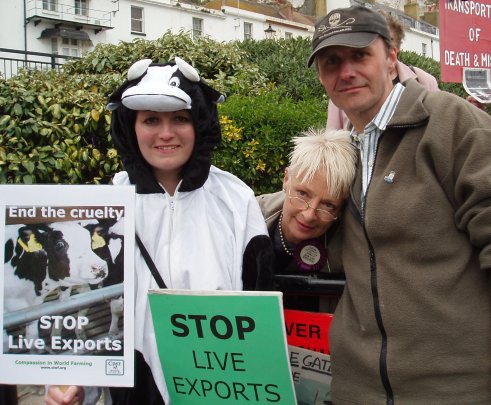
Years ago, I joined protesters at Dover docks who were horrified by how sheep were crammed into lorries in the most appalling conditions, for hours on end, without water, only to be shipped abroad for slaughter. In 2019, at least 6,000 animals were exported this way – a monstrous toll of misery.
As outrage snowballed, even Boris Johnson spoke out against live exports. The ban was pretty much the only benefit of Brexit. Now it looks set to be sacrificed on the great altar of Truss free-market capitalism.
But it’s not just animals that will suffer. Some people have spent literally decades working to achieve the reforms in the bill, and to have that thrown back in their faces is more than frustrating – it’s offensive.
To make matters worse, the Kept Animals Bill was probably only days or weeks away from becoming law. The day it was due to be debated in parliament became that of the Queen’s funeral, and the chances of Truss reviving the bill seem remote.
Given that a live export ban was promised in both the Tory manifesto and the party’s grand animal welfare action plan, scrapping it is an enormous, symbolic breach of trust – and a disaster for progress.
Truss showed her colours in 2016 when she tried to dump statutory farm animal welfare codes. Her idea fizzled out, but now she has rewarded Mark Spencer, one of the MPs who this year blocked measures to halt elephant torture abroad, with a job in Defra. You couldn’t get much more farcical.
Then there are the foreign deals she negotiated as trade secretary that fund cruelty that would be illegal here. Instead of helping the UK to become more self-sufficient in food, she signed up to financing systems that use 48-hour transport, barren battery cages and sow stalls among other things.
Boris Johnson, together with Zac Goldsmith and before that Michael Gove, achieved more than any previous government for non-human creatures: introducing compulsory CCTV in slaughterhouses, increasing sentences for cruelty to five years and banning the ivory trade.
A lot remained to be done – especially after Jacob Rees-Mogg sabotaged bans on fur and foie gras – but credit at least where it’s due. It’s clear that sacking Lord Goldsmith, who was perhaps just too effective for the new PM’s liking, is a taste of what’s to come.
After all, even George Eustice, a former environment secretary not especially beloved of animal rights supporters, admitted he had difficulty in getting Truss “to recognise the importance of animal welfare in particular” in trade talks.
Hard-right Tories are ideologically opposed to banning things, but they fail to understand that often things are banned for good reasons. After all, we no longer send children up chimneys or let people carry guns in the UK.
In the current climate, however, the future for all sorts of animals looks bleak in Truss’s Britain. Campaigners for their welfare are counting the days until the general election in the hope of ousting this tin-eared leader. Three quarters of respondents in one survey wanted more laws to improve animal welfare and prevent cruelty, not fewer.
As Claire Bass, executive director of Humane Society International UK, puts it: “Animals are so important to the electorate, and will matter at the ballot box; [it is] mystifying if Downing Street fails to see that.”
It’s hard to believe Truss actually wants animals to suffer, but unless she pulls some surprises out of her hat, she’s doing an extremely good impression of it.
Regards Mark
Reproduced from ‘Voices’, The Independent newspaper, England.
On 22 September, Latvia’s Saeima passed the final amendments to the country’s Animal Protection Law. Farming animals for the main or sole purpose of fur production will now be prohibited, with the ban is expected to come into effect on 1 January 2028.
Over the last 10 years, the animal rights association Dzīvnieku brīvība has campaigned for the ban on fur farming, backed by 42,000 citizens and 50 NGOs, who have all signed an open letter to the Saeima.
The amendments regarding farming of animals for their fur were submitted to the Saeima on September 9, 2021 by 11 MPs from different political parties. Now the Saeima has adopted the amendments to the Animal Protection Law with an overwhelming majority of votes (70 for, 3 against).
Over the course of the year, the Economic, Agricultural, Environmental and Regional Policy Committee evaluated various proposals and supported the wording of the law, which prohibits the breeding of fur animals and stipulates that fur farmers will not receive financial compensation, subject to a 5-year transition period.
Taking into account previous international cases, the members of the commission recognised this transition period as sufficient and adequate compensation for entrepreneurs, and that, in accordance with the principles of the rule of law, it would give fur farmers sufficient time to gradually end their activities and recover their investments. Accordingly, the ban will enter into force on January 1, 2028.
This is a historic moment for animal rights in Latvia – a huge victory for both animals and the people. By prohibiting the imprisoning and killing of animals for their fur, we, the people of Latvia, affirm our values and respect for animals as living beings. We show that, in our country, compassion and reason are more important than greed and ostentation. After all, our attitude towards the vulnerable – animals – is a mirror of our own humanity.
Katrīna Krīgere, Head of Dzīvnieku brīvība
Currently, at least 300,000 mink, as well as several hundred foxes and chinchillas, are killed for fur in Latvia every year. The number of fur farms operating in Latvia and the number of animals bred in them has been decreasing in recent years. For example, the total number of animals in Latvian fur farms in 2017 was 617,000, in 2020 – 580,000, and in 2022 – 274,000 animals.
Latvia has now become the latest EU member state to ban fur farming, joining Austria, Belgium, Croatia, Czech Republic, Estonia, Luxembourg, the Netherlands, Serbia, Slovakia, Slovenia, and most recently Malta and Ireland.
The European Citizens’ Initiative Fur Free Europe is calling for a ban of fur farming across the European Union, as well as a ban on the sale of farmed fur products. Do you support this ban?
No animal welfare supervision in sight for millions of farmed fish in Denmark
22 September 2022
Dyrenes Beskyttelse
The Danish Minister for Food, Agriculture and Fisheries, Rasmus Prehn, has failed to include both supervision and clearly defined animal welfare standards in his proposal for a new aquaculture strategy.
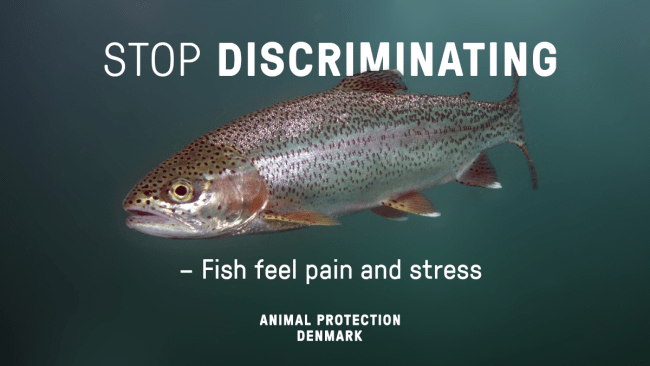
When veterinarians from the Danish Veterinary and Food Administration visit poultry farmers, cattle farmers, or pig farmers for inspections, they go to make sure that all animal welfare rules are being followed. No such supervisory measures currently exist for farmed fish in Danish aquaculture, and that is a major legal oversight according to Animal Protection Denmark.
New research shows that fish are highly developed, sentient beings, capable of feeling pain and suffering. Therefore, it should be a matter of course to implement animal welfare supervision for fish. Furthermore, there should be species-specific rules in place for breeding to protect fish from suffering
Nicolaj Lindeborgh, Biologist, Fish and Fish Welfare Consultant at Animal Protection Denmark
In a response to the Danish Parliament’s Environment and Food Committee, Minister Rasmus Prehn has confirmed that fish are to be seen as sentient beings. Yet animal welfare supervision is reserved exclusively for organically farmed fish, accounting for just 2 percent of around 50 million farmed fish in Denmark.
The Ministry of Food, Agriculture, and Fisheries has developed a proposal for a new Danish aquaculture strategy that has been distributed for public hearing. One of the central aims of the strategy is that “the Danish aquaculture sector continues sustainable growth in production.” But there is no mention as to how the authorities will ensure the welfare of many millions of animals involved. Animal Protection Denmark asserts that the strategy should include and highlight fish welfare.
Animal Protection Denmark does not accept a lack of knowledge as a legitimate excuse for a lack of action.
The Ministry excuses itself by saying that there is not enough research into which species-specific needs various fish species have. But you need only to look to our neighbouring countries, Norway for example, where relevant welfare parameters have already been developed
Nicolaj Lindeborgh
In its proposal, the Ministry writes that a much bigger part of the Danish production of fish is to take place in recirculating aquaculture facilities on land. Recirculating facilities typically have a much higher density of fish than both traditional pond farming and sea farming. According to Animal Protection Denmark, this would only increase the need for animal welfare supervision.
The aquaculture strategy points to production that is more intensive and further removed from natural conditions. This is a concerning development that we have seen cause problems for animal welfare in other species. And when this development is set to take place without any planned measures of supervision, the government is gambling with animal welfare
Nicolaj Lindeborgh
The Danish Government’s aquaculture strategy is scheduled to enter into force later this year and set to apply for the next five years.
Milan Fashion Week: demonstrative action at the headquarters of the Italian National Chamber of Fashion
21 September 2022
ALI
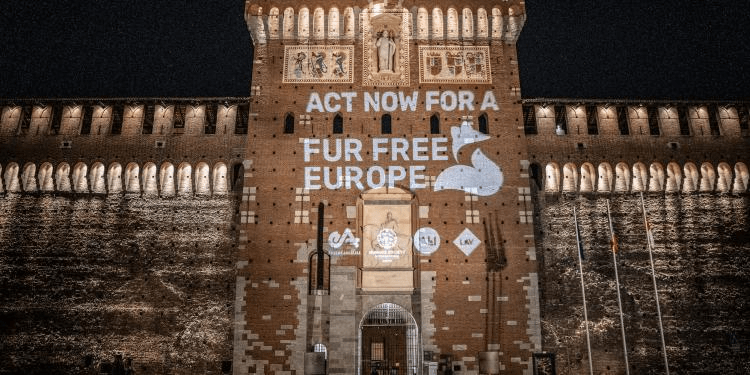
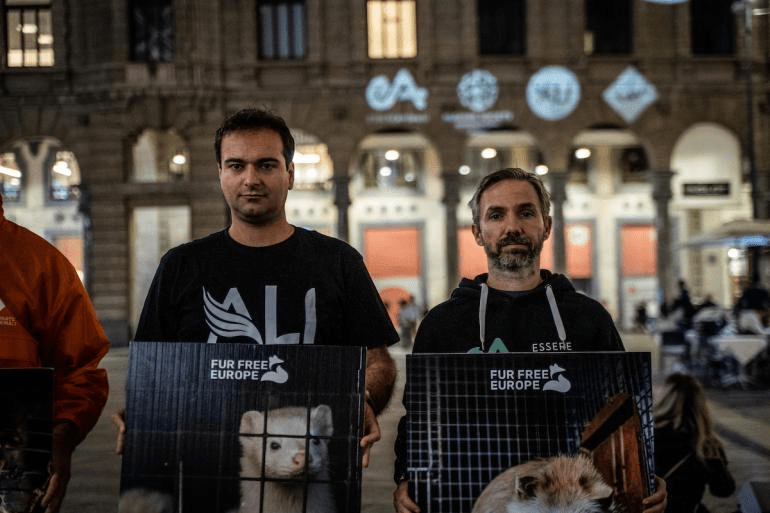
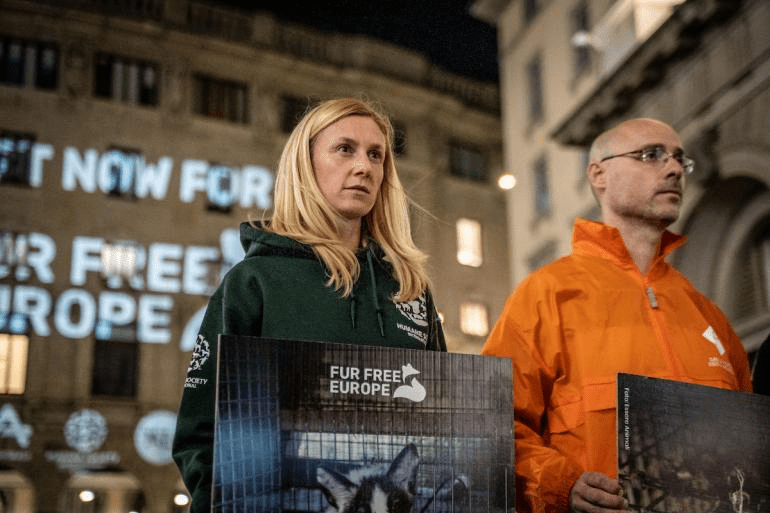
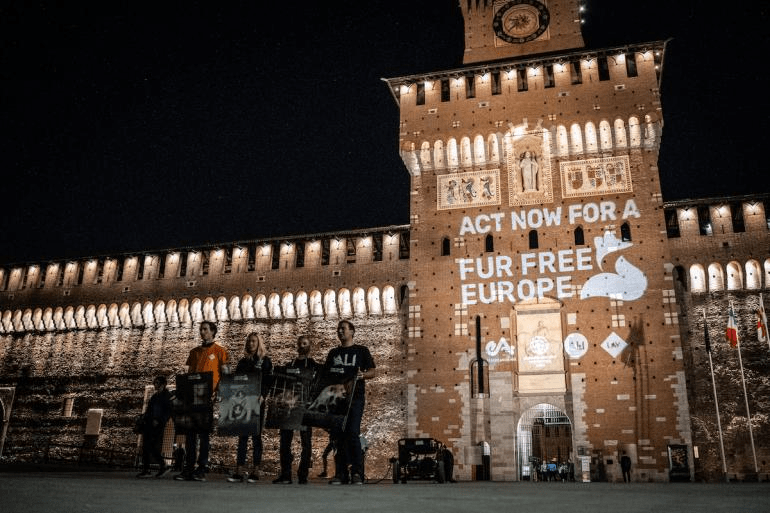
Yesterday evening, 20th September, the opening date of the Milan Fashion Week, the associations LAV, Humane Society International/Europe, ALI – Animal Law Italia and Essere Animali have projected on the building at number 31 in Piazza Duomo where it is based the National Chamber of Italian Fashion (organizer of the Fashion Weeks) an important and urgent message: “Act now for a Fur Free Europe”.
An explicit call for mobilisation addressed to all European citizens to induce the EU Commission to launch a legislative initiative aimed at extending the ban fur farming in all Member States and, also, introducing a ban on trade (and import) of fur products.
After the recent great success achieved with the European Citizens’ Initiatives “End the Cage Age” (for the stop to cages on farms, reaching 1.4 million validated signatures) and “Save Cruelty Free Cosmetics” (for the stop to experimentation animal, collecting 1.4 million signatures), animal rights associations from all over Europe, represented in Italy by Essere Animali, Humane Society International/Europe, ALI – Animal Law Italia and LAV, have already started the ECI “Fur Free Europe”, once again enjoying a wide consensus: in the first 4 months about 350,000 signatures have already been reached.
The goal is to exceed the quota of 1 million signatures required to commit the EU Commission to follow up on the European Citizens’ Initiative.
The European Citizens’ Initiative is the tool envisaged by EU law to generate a more democratic decision-making process, for this reason the requests that benefit from a broad consensus (the procedure foresees at least 1 million valid signatures collected in 12 months and in at least 7 States members) must be considered by the European Commission.
In Europe, 13 Member States have already formally banned the farming of animals for the purpose of obtaining fur (Austria, Belgium – from 2023, Croatia, Estonia – from 2026, France, Ireland, Luxembourg, Malta, Holland , Czech Rep., Slovakia, Slovenia); among these also Italy with the ban in force from 1 January of this year and thanks to which no less than 60,000 mink will be saved every year (which, according to the last useful production cycle, every year were specially bred to then be killed). Other Member States have imposed restrictions: in Germany there are no longer farms; in Spain it is not possible to start new ones. In the European area, also the United Kingdom, Norway (from 2025) Serbia, North Macedonia, Bosnia (from 2028), and also in Switzerland have banned particularly restrictive local provisions, which in fact prevent the ‘opening of farms.
For consistency, Fur Free Europe also calls for a ban on the trade and import of fur products; a ban that, in compliance with the rules of international trade, is already in force in California (from 2019) and in Israel (from 2021).
Although there are many national bans, in the European Union still 18 million animals (minks, foxes, raccoon dogs, chinchillas) are specially bred every year and then killed in order to obtain fur.
There are now many major global fashion brands that have made the fur-free choice an added value of their sustainability policies. Among the Italians: Elisabetta Franchi, Giorgio Armani, Gucci, Versace, Prada, Valentino, D&G, Zegna, and YNAP Group. A trend that is also reflected in the numbers: in Italy the turnover of the fur trade fell from 1.8 billion euros in 2006 to 814 million euros in 2018 (source: Italian Fur Association).
“Legislative action is needed at European level to harmonize fur farming bans in all Member States and to introduce a ban on the trade and import of fur products throughout the European Union” – conclude the associations promoting the ECI Fur Free Europe in Italy.
Australian Pork Limited says most piggeries do not use sow stalls.(ABC Rural: Jane McNaughton)
Illegal investigation by animal rights activists uncovers pigs in sow stalls across Victoria
A lobby group has accused several Victorian farms of caging mother pigs for an “unacceptably” long period of time, releasing footage of the practice, which was meant to be phased out by the pork industry five years ago.
Key points:
Animal activists have accused several Victorian piggeries of using sow stalls for extended periods
The pork industry says a majority of sow stalls in Australia were voluntarily phased out by 2017
Farm trespass is illegal in Victoria, with penalties of $10,904 for an individual and up to $54,522 for an organisation
Animal rights activists with the Farm Transparency Project trespassed onto six farms across the state this year and installed cameras to obtain the footage.
Executive Director Chris Delforce said most consumers of pork would expect better welfare standards for Australian pigs.
“People are being led to believe by this industry that sow stalls are a thing of the past when they are still widely used,” he said.
“It’s clear to us that self-regulation by the industry has failed and it’s time for the government to step in and legislate a ban on these cruel cages.”
Five-day recommendation
Sow stalls are cages measuring a minimum of 0.6 metres wide and 2.2 metres long which inhibit pig movement, and were introduced to control aggression during pregnancy and make pigs easier to manage.
Sow stalls in Victoria are legally required to be a minimum of 0.6 metres wide and 2.2 metres long.(ABC Rural: Warwick Long)
Australian Pork Limited CEO Margo Andrae said the gestation cages were used to protect pigs and people working with the animals.
“There is a short time frame sows are in the stalls, for certified Gestation Stall Free [status] … up to five days to make sure the sow is looked after while she is mating,” she said.
“Over 88 per cent of industry have voluntarily phased out the use of sow stalls for a period longer than five days.
“Trying to understand that footage [taken by the Farm Transparency Project] and look at those time frames is very hard when you don’t know the context and we can’t be sure of what those times are.”
Ms Andrae said the pigs’ welfare was jeopardised by the farm trespass, and the footage was obtained illegally.
“The activists breached biosecurity regulations and have put those farms at risk with diseases like African Swine Fever and foot-and-mouth disease on our doorstep,” she said.
“The activists have broken the law and need to be held accountable. (Oh dear, how wonderful – WAV)
“Animal welfare is a priority — we do the utmost to protect our sows and our piglets to make sure that we are world-leading in how we operate as an industry.”
But Mr Delforce said his organisation found piggeries exceeding this five-day recommendation and caging pigs for up to 27 days.
“They have enough room to take maybe one or two steps [in the cages] and they’re unable to turn around, a number of them have pressure sores because they are pressed up against metal bars or the hard concrete floor,” he said.
“These are designed to cram as many pigs in as tight a space as possible to make it as efficient as possible but it has nothing to do with the welfare of the pigs.”
“Unfortunately it’s the only way that consumers are ever going to see inside these places,” he said.
“I think rather than implementing laws that target whistleblowers who expose this cruelty, there should be laws targeting the cruelty.”
Recognising sentience
Victoria is currently in the process of upgrading animal care and protection laws, including potentially recognising that “animals have the capacity to feel, perceive their environment, and to have positive and negative experiences like pleasure and pain”.
However, the new legislation would also distinguish between companion animals and commercial livestock in the application of laws, stating animals can be owned and used for lawful purposes, including farming.
There are no intensive piggeries in the Australian Capital Territory and sow stalls have been banned in Tasmania and countries of economic similarity, such as the United Kingdom, New Zealand and some US states.
Tonight I have sent a letter to my MP on the issue of Liz Truss (Prime Minister), animal welfare, the environment and international Free Trade Agreements (FTA).
Being simple, I am a little confused.
First, lets look back at the letter I had from the Department for International Trade (Dated 22/6/22) when I first wrote with concerns about animal welfare issues in the Australia – Uk Free Trade Agreement (FTA). Here are a couple of links which link which allows you read both my original letter of concern, and also the reply from the Department of International Trade (DIT), which forms the basis of my new letter of concern relating to the ‘Truss’ led government.
There appear to be many conflicts between what the DIT and the press (links given in letter) are saying about FTA’s. I hope I have expressed my concerns well enough in the new letter to try and explain this.
So now the letter of concern has been sent and I await a response which I hope will be soon.
As always and as shown in the above links, I will be publishing a response on this confusing subject (?) when it comes my way.
For me, animal welfare and the environment are 2 issues which should be sitting right at the top of the UK government inbox. With Liz Truss working for Shell in the past, along with her record working at UK Defra Ministry (see letter); the environment and animal welfare are both subjects which seem to have vanished from her radar.
The electorate will decide if the environment and animal welfare are important in the lead up to the next UK General Election. Be assured, we will be doing our bit to keep the issues ‘up the tree’ right up until the next voting day.
Regards Mark
With thanks to our friends at ‘The Guardian (London)’ for the write ups in the following links.
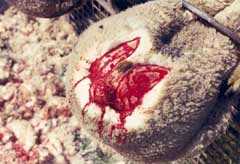
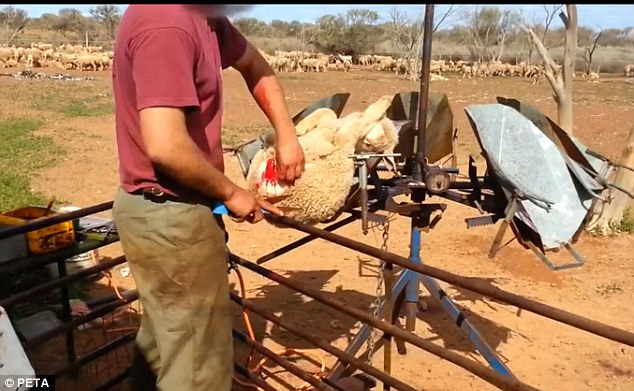
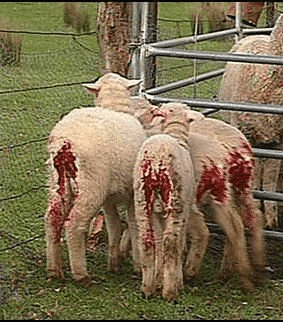
Mulesed Sheep n Australia. (Flesh removed without painkillers)
Here is a copy of my (MP) letter dated 21/9/22.
Dear Mr Holloway;
You recently (22 June 2022) sent me a letter from Penny Mordaunt MP; who at the time was Minister of State for Trade Policy – at the Department for International Trade.
It related to concerns which I had for animal welfare in Australia – relating to the UK – Australia Free Trade Agreement (FTA).
Ms Mordaunt, who I personally very much wished had become the PM, made several statements in her response.
Sheet 2 – “the government has made it clear in its manifesto that in all our trade negotiations, we will not compromise on our high environmental protection, animal welfare and food standards”.
She continues:
“As the PM (then Boris) has said, we are proud that we are global leaders on animal welfare
But, now Liz Truss has unfortunately become the PM, I am reading a lot of statements which contradict the above.
George Eustice (was Minster at Defra, now thrown out by Truss) says rival Rishi Sunak has made clear there will be no compromise on welfare standards
George Eustice was speaking at the Conservative Environment Network Tory leadership hustings on behalf of Rishi Sunak, and said he faced “challenges” in trying to get Truss to enshrine animal welfare in trade deals.
Liz Truss has refused to recognise the importance of animal welfare in post-Brexit trade deals, the environment secretary has said.
So, Ms. Mordaunt says “the government has made it clear in its manifesto that in all our trade negotiations, we will not compromiseon our high environmental protection, animal welfare and food standards”; whilst new PM Liz Truss allegedly fails to recognise the importance of animal welfare in post-Brexit trade deals.
So Mr. Holloway; who is right and who is wrong ? – Mordaunt or Truss ?
The Green Party MP Caroline Lucas accused the pair of “bunking off”, adding: “Liz Truss and Rishi Sunak can’t even be bothered to take to a virtual Zoom stage for an hour on a Wednesday morning to discuss the greatest crisis we face.”
Eustice said: “To be fair to Boris Johnson despite him having many people around him saying ‘dial back the animal welfare, get the barnacles off the boat’, he did press on. This is something which I personally agreed with; unfortunately now, with Truss at the helm, times are a changing !
Quote – “the Government is committed to ensuring that any deal we sign includes protections for the agriculture industry”. It also states that “we have secured ground breaking provisions on animal welfare”.
So why is Liz Truss refusing to recognise the importance of animal welfare in post Brexit trade deals ?. The department for international trade say one thing to me in a letter response a few months ago; and now Liz Truss appears to want to kick these sae words into the long grass with her approach. Confused ? – well yes, sort of !
I am an animal welfare campaigner; and I am confused as to what exactly the current Conservative government policy is regarding animal welfare and future international trade deals; maybe you can clarify the situation for me, or maybe you are just as confused as the majority of people are ?
For me, my future vote will be cast on issues such as animal welfare and the environment rather than getting few hundred quid off an energy bill, which Truss seems to think will have the masses clambering at her feet – how wrong. It is time she woke up and considered animal welfare and especially the environment.
Personally, I consider the appointment of Truss as the PM to be one of the worst moves the Conservative Party have taken for many years. In just a few days, we have seen
Many green campaigners remember Truss as the secretary of state for environment, food and rural affairs from 2014 to 2016. Privately, they say she made little impact, other than to agree to cuts to the department’s budget that further reduced enforcement of environmental regulation, including of sewage polluting the UK’s waterways.
Truss appears to be handing out top jobs to all of her cronies and supporters, whist ignoring the campaigners and organisations who have provided evidence of their standings in so many important issues over many years including evidences when it comes to animal welfare abuses both abroad and in the UK.
The co-chairman of the Conservatives, who raised tens of millions of pounds for the party’s general election campaign, one Ben Elliot, resigned hours after Liz Truss won as PM.
Ben Elliot announced he was stepping down from the role leaving Miss Truss with the headache of trying to find a powerful replacement. Mr Elliot spearheaded the drive to amass a £56millon war chest in the run-up to the 2019 election, of which £23million was raised in the four weeks before polling day.
You could say that being in the sewage is something close to Liz Truss’ heart in many ways since she was (Defra) secretary of state from 2014 to 2016. Under her current premiership, she will drag the Conservative Party into the stench, and probably lose the next General Election with the ignorance and anti environment stance she takes. It is time for the Truss to wake up to the most important issues.
Regards Mark
Rees Mogg – a new appointment in the ‘Truss’ camp I believe:
In 2014, Rees-Mogg was referred to the Parliamentary Standards regime after he repeatedly spoke in the House of Commons chamber in support of the oil and gas, tobacco and mining industries without first declaring that he was the founder and director of Somerset Capital Management, which then held millions of pounds worth of investments in those sectors.
Getting low-quality meat off the streets: Haarlem bans meat advertising in public spaces
20 September 2022
In a historic first, the city of Haarlem in the Netherlands has banned advertising low-quality meat in public spaces, including on buses and billboards. While the finer details of this ban are still being discussed – namely, whether or not it will also apply to more sustainably-sourced meat, such as organic – it’s set to come into effect in 2024.
For the Dutch city, this is a fantastic step towards creating a better food environment, in which high-welfare options and sustainable alternatives to low-quality meat products are encouraged… mirroring the kind of action we’d like to see taken across the EU as a whole. It’s no secret that intensive livestock systems with low animal welfare standards produce greenhouse gas emissions on a staggering scale. In order to align the European food system with the planetary boundaries we should curb animal production and consumption by 70% by 2030 to slow the effects of climate change.
Introducing compulsory animal welfare labelling – or ‘method-of-production labelling’ – in which information about how animals have been reared throughout their lifetime is made clear
By banning the advertising of low welfare animal meat, Haarlem will support its citizens in making better choices concerning the animal products they buy: championing better farming practices while supporting a more sustainable food system.
Haarlem is first… will the EU follow?
Beyond the horrible conditions animals face and the industry’s effects on the climate, intensive livestock systems are also connected to a host of other environmental and public health crises, related to pesticides, disease, food security and resilience, antibiotics, and more.
Its impacts can no longer be ignored. Haarlem has set the mark, and now it’s time for others to meet it. Because if one town can take the spotlight off cheap meat, why not the rest of the EU, too?
Tory peer Zac Goldsmith has been sacked as an environment minister as part of a major overhaul of Government personnel under Liz Truss.
It is understood that Lord Goldsmith, a close ally of Ms Truss’s predecessor Boris Johnson, no longer holds the animal welfare brief.
However, he retains his job at the Foreign Office, where his responsibilities include the Pacific and international environment.
The dismissal comes despite Downing Street saying the reshuffle had been stopped, as politics largely ground to a halt during the period of mourning following the Queen’s death.
The sacking of the long-time environmentalist could add to concerns the new administration could turn away from green issues.
Lord Goldsmith himself warned against such a shift during the contest to replace Mr Johnson.
Speaking in Parliament in July, he said: “My hope … is to try very, very hard to shine a light on these issues and encourage the candidates that eventually make it to the top to just recognise that if they walk away from these issues, they not only will be punished by the electorate, they absolutely must be punished by the electorate.
“It is your duty and our duty, and everyone else’s duty, to punish any leader of any credible party that does not take these issues seriously because they simply do not merit the privilege of government.”
The Guardian reported that Lord Goldsmith said he was “very sad” to be going in a farewell letter to staff at the the Department for Environment, Food and Rural Affairs (Defra).
He wrote: “We have so much more to do to turn the tide here.
“The UK is, after all, one of the world’s most nature-depleted countries. But if Defra continues to get the backing you need and deserve across government, you can and you will turn the tide.”
The appointment of Ranil Jayawardena as Ms Truss’s Environment Secretary has raised concerns among environmental groups including Animal Rebellion.
Dr Alice Brough, 31, a livestock veterinarian from Gloucestershire, recently said: “Liz Truss and Ranil Jayawardena’s attitude of prioritising free trade, no matter the cost, has shown shocking neglect for British farmers, and therefore the rest of us struggling with the cost-of-living crisis.”
Mr Johnson made Lord Goldsmith a life peer shortly after voters dumped him as the MP for Richmond Park in a defeat to the Lib Dems in 2019.
It paved the way for Mr Johnson to hand Lord Goldsmith a job in Government, first in the Foreign Office before making him an environment minister.
Lord Goldsmith’s office has been contacted for comment.

















 World Animals Voice
