Category: Farm Animals

USA- animal suffering on Home Chef’s chicken supply chain

Report: Animal Equality

On traditional farms, chickens live a life of pure misery.

They are bred to grow at an alarmingly unnatural rate, which causes leg deformities, organ failure, and heart attacks in these baby birds.
Each flock, which consists of tens of thousands of birds, are kept in dirty, windowless sheds. They are forced to live in their own waste with ammonia levels so concentrated that many suffer from painful chemical burns.

Chickens in a German fattening farm.

Then these birds are brought to slaughter, they are violently shackled upside down.
Their throats are then slit, often while they’re still conscious.

It doesn’t have to be this way.

Over 200 brands in the United States have adopted the “Better Chicken Commitment”, a comprehensive set of welfare reforms that address the worst abuses suffered by chickens on today’s farms.
Even Home Chef’s competitors, including Blue Apron, HelloFresh, and Sun Basket, have stepped up and put an end to the most horrific practices.

Pat Vihtelic has the power and responsibility to address the animal cruelty allowed in Home Chef’s chicken supply chain. Please join us in calling on him to eliminate the worst abuses for animals by publicly committing to higher chicken welfare.

Breed

Modern chickens are bred to grow so large, so quickly that their legs and organs cannot keep up. Heart attacks, organ failure, and crippling leg deformities are a common result. Many birds die from not being able to reach their food or water.

Housing

As standard industry practice, chickens are forced to live in a completely barren environment.
Because there is no set standard for cleaning the substrate on which they live, ammonia from the urine and feces covers the floor and causes burns on the chickens’ bellies and feet.

They are subjected to near-constant, low-intensity artificial lighting with short periods of continuous darkness and virtually no stimulating resources or ability to perform natural behaviors such as nesting, perching, and foraging.

Space

Most chickens spend their entire lives packed in sheds with tens of thousands of other birds. Such poor stocking density leads to numerous welfare issues, especially when coupled with low cleanliness standards.

Continue reading “USA- animal suffering on Home Chef’s chicken supply chain”

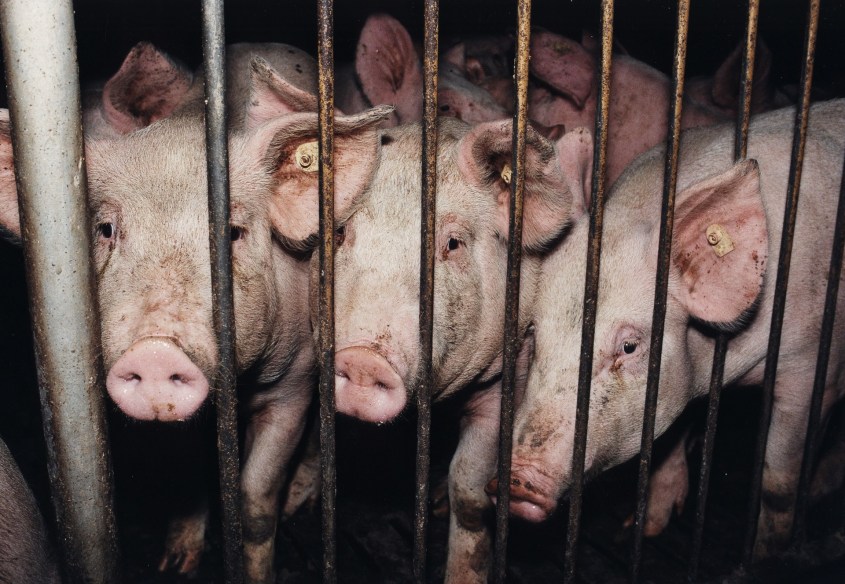
Spain: put an end to “tail – tapping”on pigs!

The Animal Equality Foundation has sent a letter to the National Association of Porcine Veterinarians requesting their involvement to put an end to the practice of “tail-tapping” on Spanish farms.

The EU ban on routinely tail docking is now included in Directive 120/2008 / EC (Pig Directive). However, it first came into force almost 27 years ago.
Despite this, the vast majority of piglets are still routinely mutilated.

A presentation by the European Commission last year reported on the audits they carried out in nine Member States in 2017-19.
The Commission said that 99.5-100% of pigs still have their tails docked. This constitutes a violation of the specific provisions of the Directive.

In the letter, Animal Equality also states that the European Commission has recently confirmed that the enforcement measures adopted by the Member States in relation to the requirements of the Pig Directive for the prevention of tail biting are unsatisfactory.
In particular, even the action plans submitted to date by most Member States do not address one or more known risk factors for tail biting.


In such a bleak context, their role as pig veterinarians becomes even more vital in educating, mentoring and providing solutions to avoid routine tail docking.

Animal Equality demands the involvement of the National Association of Swine Veterinarians to put an end to this cruel practice.

This practice causes suffering to the animals and infections derived from its execution, often carried out by untrained workers.

It is done because due to the crowded conditions that the pigs endure, bite each other.

Animal Equality denounces that it is carried out routinely and that the focus should be on the extreme hygienic-sanitary and overcrowded conditions that animals endure, which cause them to attack each other.

Continue reading “Spain: put an end to “tail – tapping”on pigs!”

For a change, just nice news!

🎉 Great news! The international online shop for luxury fashion Mytheresa is discontinuing real fur sales! 🦊

From spring / summer 2022, Mytheresa plans to completely stop selling fur. The company has been removing exotic hides from its range since the spring / summer 2021 season. 🐊

We applaud Mytheresa for this important and responsible decision and appeal to all remaining companies to turn their backs on the cruel material.

https://www.facebook.com/vierpfoten.deutschland

Yes!! A very good decision, Mytheresa! we like it very much and we congratulate you!
There aren’t many designers left who still have fur in their range.
Our struggle is bearing fruit.

best regards, Venus

China: Bear bile as a miracle cure against corona!

In recent years there have been increasing indications that China would like to improve its image in the global public with regard to environmental and animal welfare.

It sent out a promising signal: China’s decision to ban the consumption and trade of wild animals could have changed the fate of the countless animals plagued by the illegal wildlife trade for the better.


But right from the start, the ban excluded certain areas such as the medical use of animal products.
Ironically, the law, purportedly designed to protect wildlife, has seen the tremendous rise of a wildlife exploitation industry that happened in China’s past
Why?

This is now revealed in the course of the corona crisis: China’s National Health Commission recently published the recommendation for the treatment of the coronavirus with the help of a recipe from traditional medicine (TCM), which contains bear bile, among other things.
This is tapped from collar bears and sun bears as part of an extremely painful procedure – mostly under cruel conditions and up to twice a day.

New laws also enable China’s bear bile farms to continue.

The Chinese Animal Welfare Act, enacted in 1989, provides for wild animals as a resource that can be used for human benefit. In 2016, it was changed to further legitimize the commercial use of wildlife, and it was explicitly stated that animals can be used for traditional Chinese medicine.

China is considered to be the center of the bear bile industry.

According to reports, around 10,000 bears live there in captivity – many of them originally come from the wild. The use of traditional healing methods and the use of animal products in medicine has been promoted by the government in China for years, also currently in the treatment of corona patients.

The Chinese government recommends using a bear bile product along with a range of traditional herbal medicines to treat severe symptoms caused by COVID-19

This is all the more shocking given that wildlife management is believed to be the source of the COVID-19 pandemic.

A current study by Chinese scientists shows that formulations with bear bile are actually already being used.

The publication describes a clinical study in Guangzhou in which 72 patients, all of whom suffered from serious to severe consequences of the coronavirus, received a so-called “Tan Re Qing” injection.

The product, which in addition to bear bile powder also consists of other animal and vegetable ingredients, is also sold in China via online pharmacies, among others.

Bile juice is drawn off from them twice a day in an unbearable procedure.
This intense, excruciating process makes the bears moan and tremble constantly. If they still have the strength to do so.

For this purpose the farmers on the Chinese bear farms impaled catheters through the abdominal wall into the gallbladder.

A tube is passed through this tube directly into the organ without anesthesia.

There are different types of biliary drainage – with latex catheters, metal corsets, metal catheters, the free-drip method…
The metal catheter is usually between 13 and 19 centimeters long, heavily contaminated and causes unimaginable, permanent pain and damage that will sooner or later perish the bears.

It is considered “humane” to do without the catheter and let the juice drip from an opening in the abdomen, which is surgically connected directly to the bile.
So that the animal does not tear its pipe or hose out of the inflamed wound in pain, it is fixed in a steel corset and permanently condemned to complete immobility.

We speak out strongly against torturing bears for medical purposes.
We urge the Chinese government to remove this drug from their recommended list and include only traditional herbal medicines.
In neighboring countries such as Vietnam, drawing bear bile has been banned since 2005, and in Indonesia there are only a few known illegal bile farms.

The use of remedies with bear bile, which contain the active ingredient ursodeoxycholic acid, is – regardless of any medical benefit – completely superfluous, and yet associated with extreme suffering for the animals

There are numerous herbal alternatives, but also synthetically produced ursodeoxycholic acid.
The use of the animal product cannot be justified in view of the animal suffering it entails.

China and Vietnam have banned the consumption of wild animals. This ban must be extended to include the use of wildlife in traditional medicine, preventing animals such as bears, tigers and pangolins from being abused.

https://www.worldanimalprotection.org/news/cruel-bear-bile-industry-thriving-despite-pandemic-risks

https://www.scmp.com/comment/insight-opinion/article/1906612/seeing-animals-resource-cruel-substitute-real-wildlife

https://welttierschutz.org/tierleid-trotz-alternativen/

And I mean…The cruel bear bile business is not new.
What is new is the hocus-pocus with the healing of the corona symptoms through the.

In the flood of reports (mostly fake information) on the corona virus, this message was largely lost.

If we got that right now a product from the wildlife trade – Gall fluid from bears – recommended as a drug against a disease that is believed to have broken out in a wildlife market – COVID-19!!

Not only is this a crime for the animals, it is dangerous charlatanry against human health.
It is just as dangerous to believe that bear bile cures corona as it is to believe that vaccinations against Covid 19 are safe because they have been tested on animals!

According to the current state of knowledge, there is no evidence for the effectiveness of bear bile against Covid-19.

The recommendation of the Chinese Health Commission sends the wrong message.
Because this will only benefit the illegal wildlife trade, human health will go away empty-handed.

My best regards to all, Venus

UN criticised over statement on overuse of antibiotics in farming.

Court Rules Rampant Misuse of Antibiotics on Factory Farms Can Continue -  EcoWatch
Picture – Ecowatch

Antibiotics health crisis - Compassion highlights the part played by  factory farms | Compassion in World Farming
Picture – CIWF London

UN criticised over statement on overuse of antibiotics in farming

Statement calling for significant cut in antimicrobial drug usage is ‘real missed opportunity’, say critics

Animal health experts and UN leaders have called for a significant reduction in antimicrobial drug usage in food animals, which is already causing a “silent pandemic”.

But critics say the statement is “a real missed opportunity”, pointing to its failure to set reduction targets or even call for a ban on the use of antibiotics for animal growth promotion.

Drugs which are critical for humans are being used in enormous quantities in animal production. As a result there is a far higher probability of drug-resistant bacteria and viruses emerging. This could lead to some of the world’s most important drugs becoming ineffective against common infectious diseases such as pneumonia, tuberculosis and gonorrhoea, with death rates rising.

The joint statement issued this week by the World Organisation for Animal Health (OIE) and the UN’s global leaders group on antimicrobial resistance called for “significant and urgent reduction in the amounts of antimicrobial drugs, including antibiotics, used in food systems” and said this was “critical to combating rising levels of drug resistance”.

The overuse of antimicrobials has led to what G7 leaders called a “silent pandemic” in June. Drug-resistant diseases already cause at least 700,000 human deaths globally every year, according to the statement. “The world is rapidly heading towards a tipping point where the antimicrobials relied on to treat infections in humans, animals and plants will no longer be effective.”

Stop the Overuse Of Antibiotics On Farm Animals! | Help Wildlife, Protect  the Environment, Support Nature Conservation, Save the Planet
Eat Up My Beauties, I Need You Big.

Antimicrobial drugs, which include antibiotics, antifungals and antiparasitics, are used in food production all over the world, the statement said, and are “administered to animals not only for veterinary purposes (to treat and prevent disease), but also to promote growth in healthy animals”.

But despite the statement’s strong wording, experts said it had few teeth.

“Basically what [this call] lacks is a clear target for reduction,” said Thomas Van Boeckel, an antimicrobial resistance, disease, and livestock production systems scientist at the Swiss Federal Institute of Technology.

Although commendable, the statement does not say “quantitatively what they mean by significant”, Van Boeckel said. That meant, “they make no commitment, basically”, he added.

He said the targets must be country specific. “It would be unfair, for example, to impose stringent targets on developing countries who need livestock for their livelihoods.”

Antibiotics are essential to human health. So why are we wasting them to  make farm animals a tiny bit bigger? | UN Dispatch

But, he said, high-income countries and China could aim for less than 50mg of active antibiotic ingredient per kilogram of meat raised. Many EU countries are using more than that, he said, referencing a 2017 paper he co-authored.

Van Boeckel’s paper found that implementing a global cap of 50mg of antimicrobials, per kilogram of animal product, per year could reduce total consumption by 64%.

The paper said the 50mg cap corresponded to the average global use of antimicrobials in 2017. It further recommended user fees and caps on veterinary use to control antimicrobials.

“This statement is far too cautious and a real missed opportunity,” said Cóilín Nunan, a scientific adviser at the Alliance to Save our Antibiotics. “There is no target [and] not even a call for an immediate end to the use of antibiotics for [livestock] growth promotion.”

Most disappointing, he said, is how little the statement says about intensive farming. “Intensive farming, the root cause of so much animal disease and antibiotic use, is once again let off the hook. Where is the global leadership that is needed if we are ever to move to more sustainable farming practices and drastically cut farm antibiotic use?”

Henk Hobbelink, an agronomist and co-founder of the small-farmer focused NGO Grain, agreed and said the use of antimicrobial growth promoters in factory farming needed “to be banned, immediately and everywhere”.

Another solution that has been suggested is to develop animal-only antibiotics. Timothy Walsh, who is working with a team to develop animal only replacements at the Ineos Oxford Institute (IOI) for antimicrobial research, said it was “bonkers to use the same drugs in animal feeds as you would to treat neonatal sepsis”.

The IOI’s vision, he said, is to “move to a place where in supermarkets across the UK and beyond food will be labelled NHA [meaning] no human antibiotics” but it “will take, time, effort, money, goodwill and global policy”.

Sign up for the Animals farmed monthly update to get a roundup of the best farming and food stories across the world and keep up with our investigations. You can send us your stories and thoughts at animalsfarmed@theguardian.com


UN criticised over statement on overuse of antibiotics in farming | Environment | The Guardian

The Guardian – London.

Regards Mark

Factory Farms May Be Ground-Zero For Drug Resistant Staph Bacteria |  Science | Smithsonian Magazine
Photo – Smithsonian Magazine

EU: Eurogroup for Animals condemns the authorisation of insect-protein in pig and poultry feed.

Eurogroup for Animals condemns the authorisation of insect-protein in pig and poultry feed

20 August 2021

News

On 17 August 2021, the European Commission adopted the decision to amend the feed ban regulation, allowing insect-derived protein in pig and poultry feed. While the European Commission announced it as a step “in our journey towards more sustainable feed chain”, Eurogroup for Animals believes this decision could lead to false solutions and distract from the urgent need to transform into sustainable food systems.

The Farm to Fork strategy recognises the urgent need for a shift in European diets towards more plant-based food, but it also emphasises the role of improved animal welfare in a sustainable food system. Eurogroup for Animals cautions that allowing insect protein for feed will go contrary to the intentions in the Farm to Fork strategy by preserving the status quo of factory farming instead of achieving a dietary shift towards more plant-based diets in combination with higher welfare and sustainable  farming systems. Other than maintaining the status quo of intensive livestock farming, concerns are raised in the scientific literature with regards to environmental consequences, risks to the One Health approach and the lack of knowledge about insect welfare.

We are deeply concerned that insect protein is announced as a sustainable solution to animal feed. Replacing soy with insects, that will be industrially produced on a massive scale, to feed factory farmed pigs and poultry is not the way forward to create sustainable food systems. We need to urgently move towards a dietary shift, with more plant-based diets and systems with fewer animals that allow for higher animal welfare. Unfortunately, the decision to authorise the use of insect-derived protein for pig and poultry feed serves to prop up intensive animal production in the EU rather than supporting the transition to a truly sustainable food system

Reineke Hameleers, CEO of Eurogroup for Animals

Read Eurogroup for Animals’ full feedback

Regards Mark

USA: Factory Farm Cruelty Exposed With The Help Of Drones.

With thanks to Stacey at ‘Our Compass’ for the article and associated video. (below).

Stacey | Our Compass (our-compass.org)

Regards Mark

There are more laws and regulations surrounding my trash and trash disposal than there are for sentient species who have the same capacity to suffer, feel pain, and experience emotion as humans. To treat animals like this, hidden in dystopian waste lands of suffering, toxicity, and greed, means humans have lost the war with good, the human species is apathetically evil towards the most vulnerable and helpless beings. It is estimated that globally greater than 4700 animals are killed each SECOND. How long does it take you to rationalize killing them? Consuming them? Forgetting them? Who are you consuming and how did she suffer and violently die for your 5-minute meal? SL

Download Your FREE Vegan PDF HERE

Order a FREE vegan kit HERE

Dairy-Free Info HERE

Take the Dairy-Free Challenge HERE

Click HERE for more Dairy-Free

Fish alternatives can be found HERE

Learn about eggs HERE

Find bacon alternatives HERE and HERE

Take PETA’s Cruelty-Free Shopping Guide along with you next time you head to the store! The handy guide will help you find humane products at a glance. Order a FREE copy HERE

Searching for Cruelty-Free Cosmetics, Personal-Care Products, Vegan Products, or more?
Click HERE to search.

Free PDF of Vegan & Cruelty-Free Products/Companies HERE

Click HERE to find out How to Wear Vegan!

Want to do more than go vegan? Help others to do so! Click below for nominal, or no, fees to vegan literature that you can use to convince others that veganism is the only compassionate route to being an animal friend:

PETA HERE

Vegan Outreach HERE

Get your FREE Activist Kit from PETA, including stickers, leaflets, and guide HERE

Have questions? Click HERE

Murder and torture in pig fattening: the problem lies in the system.

Unfortunately, it is no exception that piglets that are actually viable are killed and disposed of like rubbish.
As always, the problem lies in the system.

https://youtu.be/afGBdJeAqTg
In order to further increase the profitability of pig breeders, sows have been bred in recent years to “produce” more and more offspring.

Thrown away like garbage

For this purpose, the animals were even bred additional pairs of ribs. However, a mother pig usually does not have enough teats to care for all of her babies.

In addition, with the unnaturally high number of piglets, weaker animals are born with almost every birth.

These would require more intensive care and often do not gain weight as quickly as their siblings. Even if it is forbidden by law to take an animal from economic Killing an animal for economic reasons is part of everyday life in pig breeding.

https://www.facebook.com/PETADeutschland/

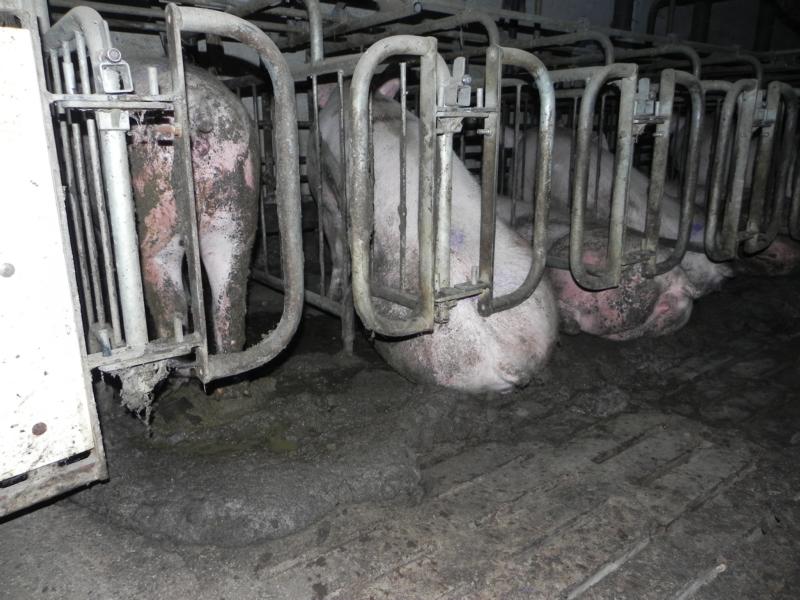
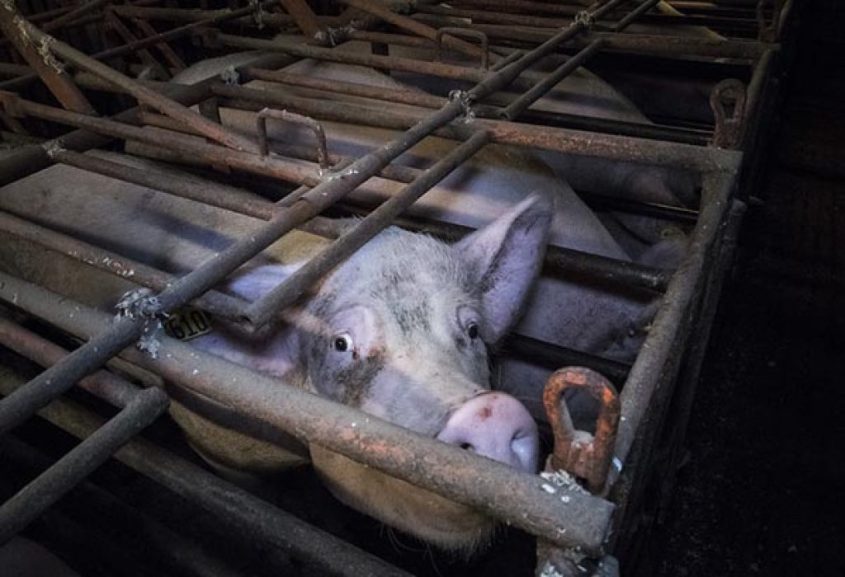
And I mean…Rows of sows, individually locked in small, narrow crates. Never having rest, never being able to stretch their legs without getting into the neighboring cage – a miserable life…
This torment is forbidden even under the law, and yet it is practiced.
Many of the animals have flesh wounds, foam at the mouth or chew restlessly.

The fact that the individual living creature counts for nothing in pig breeding and fattening is also shown by the accepted loss calculation with regard to the death of piglets: Because many of the animals are born weak and sick due to the targeted breeding for the largest possible litters, they are born from employees are stunned with a blow to the head before they are killed or thrown alive in the trash, where they die in agony.

It is common practice to knock the weak against the wall, simply without anesthesia, to hit the three-day babies against the edge…something like that is allowed!!

And the rest of these highly sensitive and highly intelligent animals that survive this cruel procedure are locked up in halls with a pathetic stench on slatted floors.
The animals live on their feces, over tons of this fecal matter.
THAT alone is torture, we don’t even need to talk about a few square meters more space plus or minus.

Anyone who earns their money in slave trade, exploitation and murder has neither conscience nor compassion.
Nothing should surprise us, because every crime, every sadism, every professional perversion is allowed.

Thanks to the fascist system that supports them.
Thanks to the carnivores who keep this system alive

My best regards to all, Venus

How The Meat Industry Is Mimicking Tobacco Giant Tactics To Dodge Climate Change Blame.

The meat industry across the globe is mimicking tobacco company tactics in order to dodge climate change blame, according to a major investigation.
Despite vast growth in the plant-based sector, DeSmog claims figures are indicating the world is far from reaching ‘peak meat’ Credit: Adobe.

How The Meat Industry Is Mimicking Tobacco Giant Tactics To Dodge Climate Change Blame

It’s come as global meat giants’ PR and lobbying techniques were diligently researched by an award-winning environmental organization

The meat industry across the globe is mimicking tobacco company tactics in order to dodge climate change blame, according to a major investigation.

Award-winning environmental organization DeSmog is behind the research.

Meat industry

It involved a five-month investigation into the industry’s public relations and lobbying techniques. This included reviewing hundreds of documents amongst some of the largest companies, such as JBS and Tyson Foods.

According to the findings, the animal agriculture sector is portraying itself ‘a climate leader through the following tactics:

  • Minimizing the environmental impact of farming animals
  • ‘Casting doubt’ on the efficiency of plant-based meat alternatives
  • Promoting meat health ‘benefits’
  • Moreover, big animal agriculture players are even painting meat as the answer to climate change, the study claims.
  • JBS told DeSmog: “As a leading global food company, we recognize the importance of reducing our environmental impact to combat climate change.”

·         ‘Peak meat’

  • Despite vast growth in the plant-based sector, DeSmog claims figures are indicating the world is far from reaching ‘peak meat’. This means they predict the global meat production to rise over the next decade.
  • Kristine Clement, of Greenpeace Denmark, told the organization that meat companies are ‘ramping up’ marketing efforts to make products appear climate-friendly.
  • This is, Clement claims because they fear politicians will halt the ‘endless’ production.


Tobacco tactics

  • In building on the report, an environmental studies Professor told The Independent these tactics are similar to the tobacco industry.
  • Dr. Jennifer Jacquet said: “Tobacco didn’t challenge the existence of lung cancer, but they kept denying and deflecting the causal link [with smoking]. 
  • “And that’s what we’re seeing with beef and dairy.”

Climate change

Despite the meat industry’s tries, the evidence attesting the opposite is overwhelming.

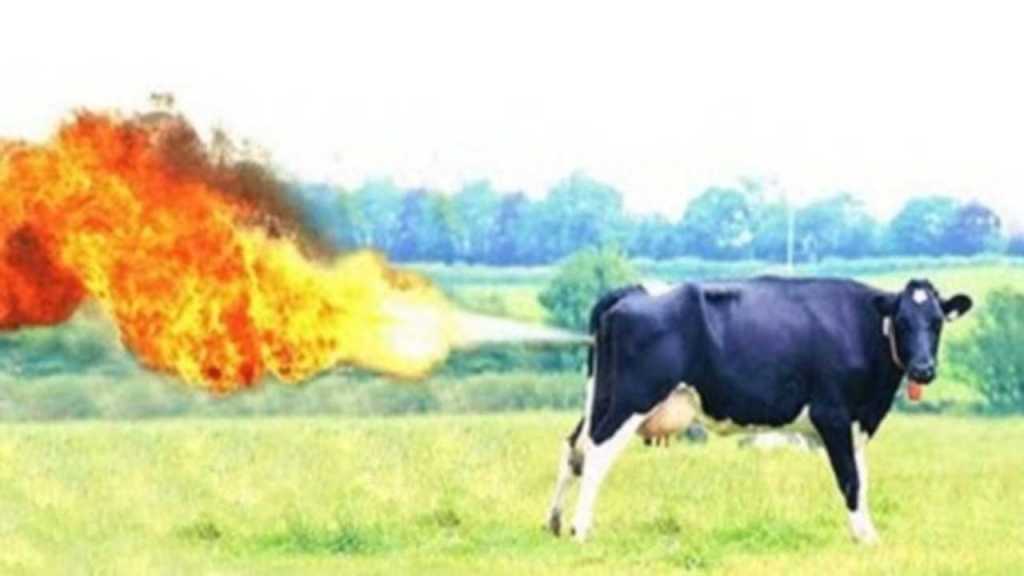
Reports indicate animal agriculture is in fact responsible for a staggering 87 percent of greenhouse gas emissions.

However, companies are tightening their grips onto their financial clutch on the global food system.

For example, an industry group in South America recently revealed plants to defend animal agriculture ahead of a UN summit. This includes Brazil, the world’s biggest beef exporter.

You can view DeSmog’s full investigation here

Meat Industry Mimicks Tobacco Tactics To Dodge Climate Change Blame (plantbasednews.org)


Regards Mark

Minks Violently Slaughtered for False Lashes – Take Action.

Minks Violently Slaughtered for False Lashes – Take Action

Did you know that if you buy mink lashes, you’re buying fur? Minks are violently slaughtered and skinned for fur coats and other items – including false eyelashes like those sold by Lilly Lashes and Tatti Lashes.

False-eyelash companies Tatti Lashes and Lilly Lashes know that no one wants to buy vile animal fur, so they’re making misleading claims about their mink lashes: Tatti Lashes says that “no animals are harmed in the process of production” of its mink lashes, and Lilly Lashes markets some mink-fur lashes as “vegan”.

These companies know that mink fur comes from animals who live and die in agony – but instead of making a real difference for them by ending their sale of mink lashes, they hide behind misleading marketing.

Minks are intelligent, sensitive animals who enjoy spending their time swimming and climbing. Yet on fur farms, they’re kept inside filthy wire cages so small that they can take only a few steps in any direction, which can cause them to chew on their legs or tails out of frustration. They often suffer from open wounds and infections and receive no veterinary care. Fur farmers use the cheapest killing methods available, including neck-breaking, poisoning, genital electrocution, and suffocation.

Mink farms are designed to maximise profits, and farmers often have little regard for the well-being of the animals, as PETA’s exposés have repeatedly shown. Animals on fur farms are plagued by fear, stress, disease, parasites, and other physical and psychological hardships on a daily basis. These conditions also create breeding grounds for pathogens like the novel coronavirus. COVID-19 has already swept through fur farms, infecting minks and workers in North America and Europe, and the French and Dutch governments subsequently voted to close these facilities.

What You Can Do

Whether it’s a pair of false eyelashes or a coat, if you buy products made with mink fur, you’re supporting the cruel fur industry. Lilly Lashes and Tatti Lashes continue to sell mink-fur lashes, despite knowing how animals used for their fur are treated. Please help animals suffering right now by urging the companies to drop fur lashes immediately.

  1. Leave a polite comment on Tatti Lashes’ Facebook and Instagram accounts telling it to stop profiting from minks’ misery.
  2. Then fill out the form below to urge Lilly Lashes to ditch mink eyelashes:

And go to the following to take further action:

Minks Violently Slaughtered for False Lashes – Take Action | People for the Ethical Treatment of Animals (peta.org.uk)

https://secure.peta.org.uk/page/63517/action/1?utm_source=PETA%20UK::E-Mail&utm_medium=Alert&utm_campaign=0821::skn::PETA%20UK::E-Mail::Mink%20lashes::::aa%20em&ea.url.id=5461070

Regards Mark