Category: Farm Animals

Brazil: 2021 – 2 Confirmed Cases of BSE.

WAV Comment – I am old enough to remember the terrible situation of BSE in the 1980’s; which was largely due to cows being fed the ground up remains of other cows – or giving meat to animals that should feed on grass. Watch the video for detail; which shines a bright light on the modern day farming practices.

Regards Mark

The video explains it better:

Brazil has confirmed two cases of BSE, or mad cow disease, and has suspended beef exports to China. Ireland, a smaller beef supplier to China, reported a case of mad cow disease in May last year, but has not yet been able to resume exports.

However, the Brazilian ban is not expected to last for long, with Brazil accounting for 40% of China’s beef imports.

Further references:

Suspected case of BSE being investigated in Brazil – Agriland.ie

A number of meat processors in Brazil have been found to have bought cattle from ranches that exploit ‘slave labour’, according to international media reports.

Brazilian meat processors bought cattle from farms that used ‘slave labour’ – reports – Agriland.ie

human supremacy

Who said that justice and morality apply to all living beings?
Nazis, inquisitors, slave drivers and generally all butchers in world history have never before been able to act with justice and morality.
If we didn’t do what happens in the video with the worst criminals, then logically we can’t do it with animals.
And yet! we do it!

https://fb.watch/88f6-eam87/

Why can’t we
-Transport people for days without food and water?
-Get human mothers pregnant again and again in order to steal their milk?
-Take away their children from the human mothers so that the human babies do not drink the milk?
-Killing the human babies and processing them into meat and sausage?
Why not? Where is the Problem?

Oh yes! humans have rights and animals don’t, because … … because we human animals have just defined this fascist supremacy!

My best regards to all, Venus

Australia: Boe’s Story – Boar Semen Collection. A Very Concerning Video.

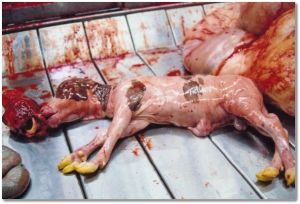
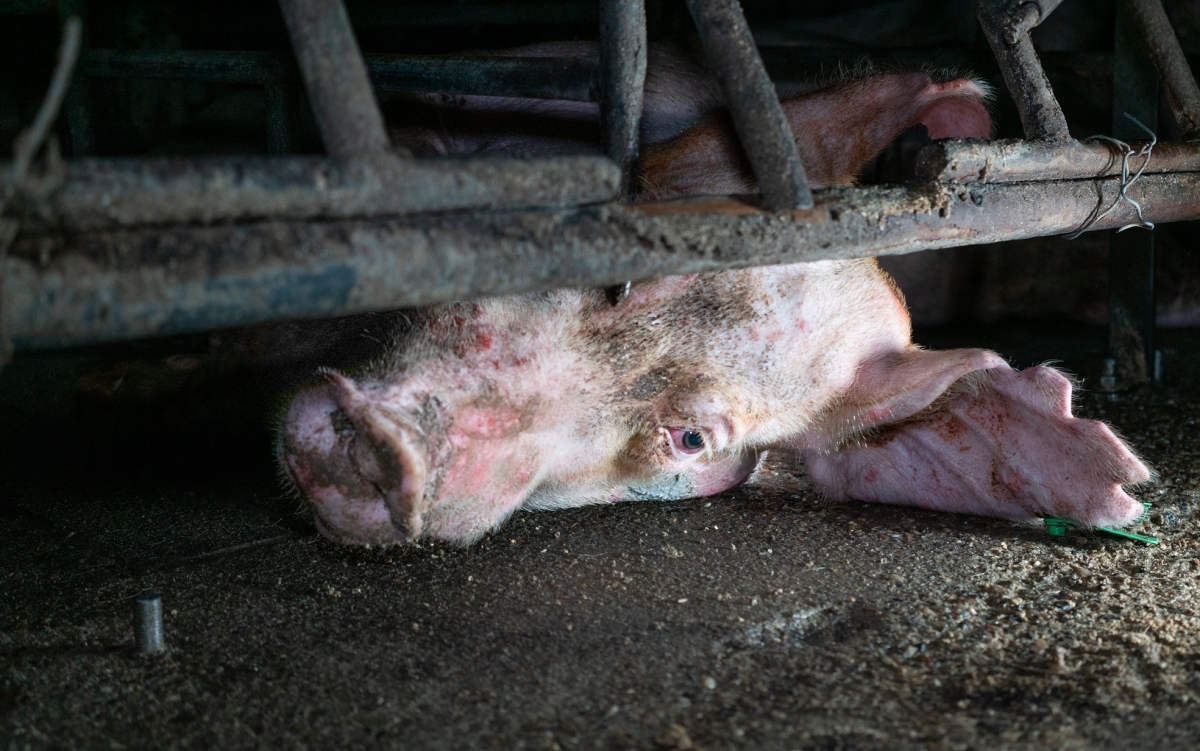
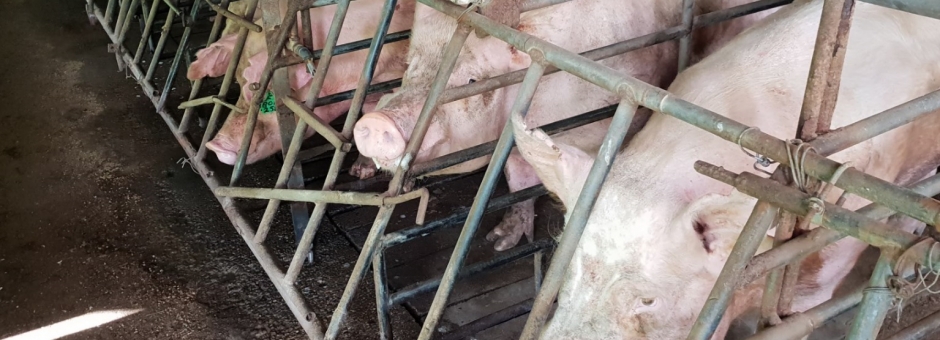
Boe - the boar left to die in Wacol Pig AB centre
Boars in small stalls at Wacol pig semen collection facility

Photos with thanks to Animal Liberation Queensland.

Thanks to Stacey at ‘Our Compass’  https://our-compass.org/2021/09/20/j-f-c/  for supplying this very disturbing report and video.  What do you say ?

And the UK is doing a trade deal with these !

Liz Truss (MP – UK) obviously does not give a damn about animal welfare when you see this – its all about MONEY !!!

Regards Mark

https://vimeo.com/321911235

J.F.C. by Stacey

Boe’s Story – Boar Semen Collection:

Animal Liberation Queensland VimeoEven as a vegan for many years, I had not heard of this horror until recently. That this is an accepted method of “animal husbandry” is wretched, that it is concealed as “animal husbandry” is vile.

It has been relentlessly and successfully proven that if a human can devise a form of torturous confinement, causing abject pain and maximum suffering, apathetically and indifferently, and then provide the most harrowing and terrifying death, it has been achieved on animals.

If you participate in animal exploitation in any form (consumption, products, entertainment, clothing, etc.), you contribute to this hell that humans inflict on sentient creatures – like humans, cats, and dogs – effortlessly, willingly, and without condemnation.

“Welfare” laws are 100% meaningless to the victims who suffer for them, there is no part of “welfare” that includes suffering and violence, which occurs in ALL animal exploitation; even the most “cared-for” animal is used and then killed. Using terms like “welfare” and “humane” and “husbandry” to define exploitation requiring bodily control, intrusion, violation, and violent death (yes, killing any unwilling being is inherently violent absent suffering, defense) means those human-manufactured, self-soothing terms are for HUMANS and not the victims of them. If you care, you don’t exploit. SL

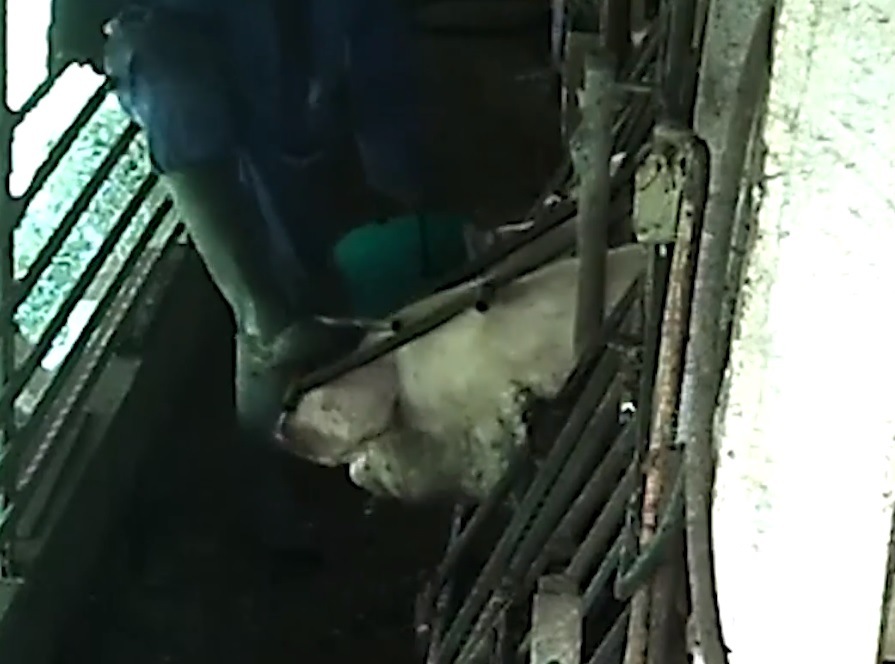
Worker kicking against boar's head at Wacol piggery

Source Animal Liberation Queensland

  • Footage released in January shows filthy conditions, violent abuse by workers, untreated wounds, and one boar left to slowly die over several days.
  • Authorities have failed to prosecute and boars continue to suffer in this facility every day.
  • This is the reality for animals that live within this broken system, but thanks to you, more and more people are becoming aware and turning away from animal agriculture.

You’ve heard of sow stalls, but did you know about boar stalls?

In an unseen facet of pig farming, boars are kept in small stalls all their lives, only being released for a brief time for semen collection a couple of times a week.

Semen collection farms are a relatively unknown facet of the industry. At this facility, at least 20 boars are kept in tiny stalls – most are equivalent to sow stalls – with no room to turn around, and barely enough room to even lie down. They have no enrichment, they are left with untreated injuries, fed only the minimum food required to keep them alive and “useful”, and are routinely abused. The only time the boars leave their tiny, filthy stall is for semen collection. 

When we received the footage our immediate concern was around the strong possibility of another boar suffering a similar fate to Boe from untreated illness and dying a slow painful death. We immediately informed the authorities with a complaint to RSPCA Qld and passed on the video footage. RSPCA Qld acted quickly and arranged a team of inspectors and vets from both RSPCA Qld and Biosecurity Qld to conduct a surprise inspection. 

We understand at least one boar was euthanised that day. After that, the rest of the investigation was handed over to Biosecurity Qld. In Queensland, a Memorandum of Understanding exists in which all farmed animal issues are referred to Biosecurity Qld, which is part of the Queensland Department of Agriculture.

On receiving no further updates from Biosecurity Qld, and realising authorities were not taking this seriously, we released the footage through two videos. 

First, on 6 March, Animal Liberation Queensland & Animal Liberation (NSW) released Boe’s story. The public reacted and shared Boe’s story resulting in more than 630,000 views on Facebook. 

On 11 March we released the second video documenting further abuse and filthy conditions. Faeces and infestations were found throughout the facility. Video footage shows the worker kicking the boars, stomping and smashing metal bars against a boar’s head.

After numerous follow-ups with the Department, we learned that several “direction orders” were given to the owner to rectify issues they had found in their inspection. Biosecurity Queensland has confirmed that they have been back multiple times since the initial inspection and they are satisfied that all direction orders are being adhered to. In other words, it seems they will not be taking further action and have given this place the tick of approval. 
In practice, very little has changed for the boars that may spend the rest of their lives in these barren rusty metal cells. From the information we have, the direction orders related to the untreated wounds, and the maintenance or uncleanliness of the facility. There is nothing that will give any sense of relief to these boars and nothing that will stop others from meeting a similar fate to Boe.

Despite numerous requests for further information authorities would “not comment on the outcome of any investigations”. We can, unfortunately, conclude that no charges have been laid – despite numerous animal cruelty abuses outlined above that were documented by investigators, as well as issues during the inspection by authorities. If these boars were dogs, the owner and workers would now be facing court. 

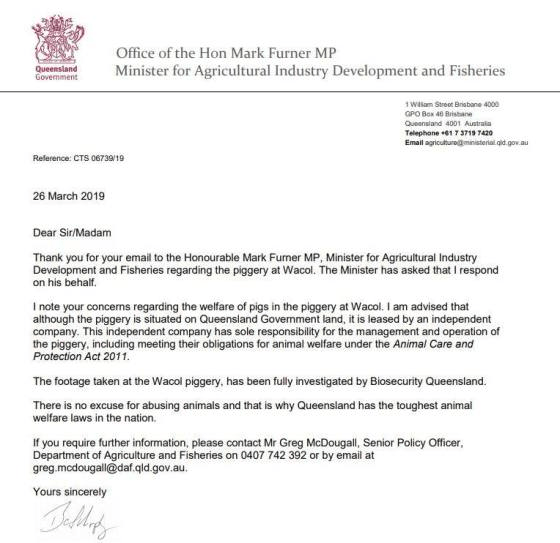
More than 3000 people sent emails of concern to the Minister for Agriculture. A couple of weeks later his office sent out a generic reply showing very little concern:.

Above: Minister’s office response to public concerns regarding lack of action taken by the Department. 

Above: Injuries were left untreated. 

We have also raised several conflicts of interests. Firstly, the land on which the Wacol pigs are incarcerated is leased from the Department of Agriculture – the very Department that is responsible for upholding animal welfare laws – is also taking money from this facility. The Minister failed to see any conflict here.

Secondly, this issue reminds us of the conflict of interest that exists for all animal agriculture. The Department of Agriculture in each state is responsible for growth and economic sustainability of the industry, but at the same time has the responsibility to enforce the Animal Care and Protection Act – and to police the very businesses it seeks to promote and grow. Both the Premier and Minister continue to ignore this very clear conflict of interest. 

We are grateful to the investigators who took great risks to bring this cruelty to light. This is a thankless task, being confronted first hand with this cruelty. We greatly appreciate the thousands of you who complained to the Minister, made phone calls, and shared the video footage. 

Sadly, this is the reality of millions of animals used and abused around the country every day. It is no wonder we see cruelty like this when the system is set up to fail these animals. As long as we have a society that supports, embraces and even celebrates animal agriculture, scenes like this will continue to be commonplace. 

Know that this hasn’t all been for nothing. Hundreds of thousands of people have had their eyes opened to the reality of animal agriculture. For countless people, this was the final straw, and they have committed to going vegan. For others, this may be the start of their journey. 

We can all help through our daily choices. By choosing vegan alternatives and never buying meat, dairy, eggs and other animal products, we take away the demand. Speak to your friends and family. Keep sharing footage and stories on social media. Keep writing and calling the Ministers, and speak to your local MP. Volunteer with or donate to animal advocacy groups. 

Pressure on industry and government is growing every day, and every day the public is becoming more and more informed. Sadly, these industries of cruelty will not close down overnight, but with your help their days are numbered. We will keep fighting, and we will achieve animal liberation. 

Download Your FREE Vegan PDF HERE

Order a FREE vegan kit HERE

Dairy-Free Info HERE

Take the Dairy-Free Challenge HERE

Click HERE for more Dairy-Free

Fish alternatives can be found HERE

Learn about eggs HERE

Find bacon alternatives HERE and HERE

Take PETA’s Cruelty-Free Shopping Guide along with you next time you head to the store! The handy guide will help you find humane products at a glance. Order a FREE copy HERE

Searching for Cruelty-Free Cosmetics, Personal-Care Products, Vegan Products, or more?
Click HERE to search.

Free PDF of Vegan & Cruelty-Free Products/Companies HERE

Click HERE to find out How to Wear Vegan!

Want to do more than go vegan? Help others to do so! Click below for nominal, or no, fees to vegan literature that you can use to convince others that veganism is the only compassionate route to being an animal friend:

PETA HERE

Vegan Outreach HERE

Get your FREE Activist Kit from PETA, including stickers, leaflets, and guide HERE

Have questions? Click HERE

50 NGOs call on the European Commission to end the promotion of meat and dairy.

50 NGOs call on the European Commission to end the promotion of meat and dairy

19 September 2021

Eurogroup for Animals have signed a letter to the European Commission together with 50 NGOs calling for an end to the promotion of meat and dairy.

The EU promotion policy for agricultural products has previously funded campaigns that have aimed at increasing meat and dairy consumption with slogans such as “Milky is great” and “Pork lovers Europe”. Some campaigns have specifically targeted young people with the aim to reverse a declining trend in meat consumption among European youth.

The European Commission is currently reviewing the promotion policy, with “a view to enhancing its contribution to sustainable production and consumption, and in line with the shift to a more plant-based diet, with less red and processed meat and more fruit and vegetables”, as emphasised in both the Farm to Fork Strategy and Europe’s Beating Cancer Plan. 

The letter points out that in the last four years the European Commission spent 32% of its €776.7 million budget for agrifood promotion on advertising campaigns for meat and dairy.  The European Commission also spent 28% of the promotion budget on the promotion of mixed baskets of products, almost all of which included meat and dairy. This use of public money goes contrary to the established science about the negative impact on the environment and on public health of current diets that are heavy in animal protein. 

The letter calls on the Commission to support the public interest to stop the promotion of meat and dairy and instead shift the promotion policy to promote healthy, sustainable plant-based food.

“Plant-based foods deserve wider promotion to benefit public health, the environment, and farmers. However, a shift towards a more plant-based diet can only be achieved if, in addition, the plant-based sector receives sufficient support to grow and to produce alternatives that can adequately mimic the texture, taste, and price of conventional meat and dairy products.” 

Read the full letter.

Regards Mark

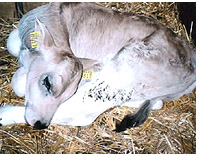
the man who saves calves

Nothing is stronger than a victim who survived torture and murder.
A surviving victim is the thorn in the flesh of the violent perpetrator.

https://fb.watch/87gKppSg2k/

Hundreds of thousands of leaflets will never be able to develop as much force against the meat mafia as the actions of compassionate people who actively save these beautiful and characterful animals and only finally give them the opportunity to show who they are.

My best regards to all, Venus

EU subsidies and aquaculture – the weakened link.

Photo – Artur Rydzewsk

EU subsidies and aquaculture – the weakened link

13 September 2021

Opinion

Over 1 billion fish are being raised on fish farms in the EU at any one time. These are undomesticated species quite new to being captive in production systems, which are often highly intensive and are themselves new technologies undergoing development. 

While European aquaculture doesn’t have the transparency mechanisms to measure or report welfare conditions and outcomes, mortality rates of 15% to 20% are reported in cage farming in the mediterranean and in third countries that report mortality figures, and the Commission found very limited uptake of the effective stunning technologies commercially available for several fish species.

EU aquaculture and animal welfare policies are pursuing fish welfare objectives, while a new regime governing EU financial support to fisheries and aquaculture has weakened the links between EU investment and EU policy objectives. 

National aquaculture strategies and the implementation of EU financial support mechanisms need a smooth and coordinated implementation by Member States for subsidies to operate in support of policy initiatives and realise improvements in fish welfare. 

When compared to terrestrial farm animals, scientists, producers, policy makers and animal advocates alike were late to understanding fishes’ needs and applying animal welfare approaches to fish in aquaculture. Some milestones were:

  • 2005 the Council of Europe adopted guidelines for fish welfare during farming
  • 2008 EFSA scientific opinion on fish sentience
  • 2009 EFSA scientific opinion on welfare during husbandry and slaughter
  • 2009 The OIE adopted standards for fish welfare during transport and at slaughter
  • 2020 EU Platform on Animal Welfare adopts fish welfare guidelines

With the many EU and external research projects in the intervening years, we now have a wealth of knowledge for practical implementation. Initiatives from sector organisationsthird party certifiers, and policymakers seek to apply knowledge to provide a better life and death for farmed fish, improve product quality and resource efficiency, and better meet consumers’ expectations.

In May 2021 the European Commission published its new aquaculture strategy until 2030 which includes fish welfare priorities including developing best practice codes and guidelines, setting validated indicators, providing training, and supporting a transition to lower-trophic species. 

The Farm to Fork Strategy previously committed the EU’s aquaculture policy to being a part of its animal welfare initiatives, and in August 2021 the inception impact assessment of the revision of all EU farm animal welfare legislation included specific options for fish welfare.

The European Maritime, Fisheries and Aquaculture Fund (EMFAF) 2021 – 2027 regulation seeks to simplify Member States’ administration and programming. One approach to simplification is to only reference high level Union priorities such as sustainable economies and communities, and to maintain weaker links between national and EU aquaculture policies. Opening up the fund for investments to meet legal obligations has also weakened the incentive to invest it now in policy areas marked as important next priorities. This is where the link between the spending of EU funds and the delivery of EU policy is weakened. 

Maintained from the previous regulation is the requirement that financial support is consistent with Member States’ own multiannual national strategic plans, and those plans must themselves use the EU’s aquaculture strategy as their basis. However there is no real requirement that national priorities contribute to specific EU objectives, or even that Member States update their national plans now. Then the EU’s aquaculture strategy is referenced as a more complete set of policy priorities, but there is less impetus for Member States to direct financial support for the delivery of EU policy priorities.

Aquaculture is not an area of exclusive EU competence and Member States operate national policies and licensing regimes specific to their varied geographical and market contexts. Member States should take the fish welfare objectives from the EU’s aquaculture strategy as priorities in their national strategies in support of the moves to advance animal welfare in aquaculture.

The Commission funds aquaculture research and facilitates Member States’ coordination of aquaculture policies, and it needs to do more to provide substance and cohesion for its aquaculture priorities. It needs to look beyond the small portion of the EMFAF that it controls directly and to activate mechanisms in other policy areas including animal welfare. 

Animal welfare policy could consolidate knowledge into implementable indicators and guidelines through a dedicated Animal Welfare Reference CentreThe Commission could mandate EFSA to provide the necessary knowledge, since its last opinion on fish welfare was more than ten years ago. 

The alternative path is that intensive aquaculture systems continue to evolve without accounting for the needs of the animals. Aquaculture takes the production and reputational losses that are seen with intensive terrestrial agriculture systems, and the fish continue to suffer unnecessarily.

The EU has identified the right fish welfare policy priorities, and they are aligned with voluntary measures being taken widely in the market. The new EU financial support regime (EMFAF) has weakened the explicit links between EU financial support and specific EU aquaculture policy objectives, but Member States can take up the common EU priorities and the Commission should use other mechanisms to provide the necessary resources and cohesion.

 Op-ed by Douglas Waley, Fish Welfare Programme Leader at Eurogroup for Animals

Regards Mark

EU: Farm to Fork Strategy own initiative report: vote in committees moving closer to systemic change and higher animal welfare.

Farm to Fork Strategy own initiative report: vote in committees moving closer to systemic change and higher animal welfare

10 September 2021

News

On Friday 10th September the AGRI and ENVI committees adopted with a large majority (94 in favour, 20 against and 10 abstensions) the draft report on a Farm to Fork Strategy for a fair, healthy and environmentally friendly food system.

Thanks to the 48 compromise amendments passed, the Farm to Fork own initiative report is now closer to leading a systemic change and higher EU animal welfare production.

Nevertheless, parts of some compromise amendments would have needed to be altered, such as the one stating that the support of affordable food should not lead to cheap animal products that prompt intensive farming.

The committees also supported theconsumption of algae for a dietary shift, which is welcomed, but at the same time the one of insects. Eurogroup for Animals believes that insect farming should not be promoted as an alternative protein source for animal feed or direct consumption due to serious animal welfare and sustainability concerns. Moreover, insects are not a sustainable solution for the EU’s food system transformation. On the contrary, insect farming is a false solution, given its potential to prompt more intensive farming instead of promoting the much needed systemic change.

Besides the compromise amendments, the AGRI and ENVI committees also adopted favourable amendments concerning trade, animal experiments and PMSG production, specifically: 

On trade, a very clear amendment calling for EU animal welfare standards to be imposed on imported products. With the ongoing review of animal welfare standards and the growing calls by countries like France to see more production standards applied to imports (a concept they call “mirror measures”), there has never been such an opportunity to extend the scope of EU measures, and by doing so, to use the leverage that access to the EU market represent to incentivise foreign producers to improve animal welfare standards. 

On animal experiments, an amendment reminding that structural animal experiments that are not indispensable should have no place in the food chain, as the Animal Experimentation Directive (2010/63/EU) prescribes the replacement and reduction of the use of animals in procedures. 

The amendment also calls on the Commission and Member States to stop the import and domestic production of Pregnant Mare Serum Gonadotropin (PMSG), which is extracted from the blood of pregnant horses that are systematically impregnated and exposed to blood collections, involving health- and welfare issues

The amendment calling on the EC to suspend import of horse meat from “countries where applicable EU requirements relating to traceability and animal welfare are not complied with” was also adopted.

The adoption of amendment 2294 is an important and timely statement from MEPs, proving that the objectives of the Farm to Fork Strategy remain clear and encompass all species. The call underlines the Parliament’s commitment to extend EU animal welfare standards to third countries, similarly to other amendments adopted in this report. Furthermore, it serves as a poignant reminder that the implementation of the Animal Experimentation Directive is far from perfect, a call that reverberates repeatedly from MEPs offices.

Reineke Hameleers, CEO, Eurogroup for Animals

Unfortunately other key amendments for the protection of animals were rejected such as the call for a ban on fur production, and the amendment calling on Member States to ban mink farming.

Besides the serious ethical issues disconsidered in those decisions, they also don’t take into account the recently adopted Report on the EU Biodiversity Strategy, where the EP acknowledged that fur farming can significantly compromise animal welfare and increase the susceptibility to infectious diseases including zoonoses.

The plenary vote on this report is scheduled for the beginning of October.  Eurogroup for Animals and its members urged MEPs to vote for an initiative report that leads to real systemic change and steps up the game for animal protection in Europe. 

Regards Mark

“Downer”cows- like dreck disposed

Fortunately, today and thanks to undercover investigations by animal rights activists, it is already widely known how the dairy industry operates its animal cruelty system worldwide

Cows, goats or even sheep are exploited, tortured and ultimately killed.

Calves are stolen from their mothers so that they can produce milk, udders are simply scorched, animals are tortured while being tethered – all this is unfortunately nothing new and is well known to many.

“Downer cows”, however, represent a previously unknown peculiarity of human ignorance and greed for profit.
In the dairy industry, “downer cows” are female cattle that are too weak to stand up on their own.

Often a calf was born shortly before, the mother is already severely weakened by the birth, but then there is also an acute calcium deficiency due to the unnaturally high milk production that has been bred.

Another reason can be an injury caused by the often terrible housing conditions in the industry.
And now comes the actual, criminal cruelty to animals: These massively weakened animals are often simply brought outside by the farmers in front of the barn.

These cows are called “downers”.
And why not leave them in the stable?
There is only one answer to this: For the farmer, this cow has been written off and its corpse can be removed from the outside more easily and cost-effectively after it has perished miserably.
It couldn’t be more cruel.

So the animals are somehow dragged with their last strength outside to their intended “death bed”.
The farmers often do not care what pain and stress this means for the poor creatures.
In their eyes they are “only farm animals”

Continue reading ““Downer”cows- like dreck disposed”

Germany: 250 mummified pigs – like in a horror movie!

It must have been a horrific sight – the stench was bestial. Residents from the tranquil Nikolaus village in the district of Cloppenburg (Lower Saxony) find 250 dead pigs in an abandoned stable.

Their mummification had already started, probably from drying out. There is no trace of the pet owner!

When police officers opened the stable on the outskirts of Nikolaus village, they came across skeletonized and, in some cases, mummified dead pigs. Experts from the veterinary office had to count the skulls of the animals – and came to around 250.

It is unclear why the farmer left 250 pigs die miserably and helpless, when he left the farm (!!!)

Nobody of the around 1100 inhabitants in the small Nikolaus village suspects what terrible fate must have played out behind the red stable walls.

“We have started an investigation against the pig owner for violating the Animal Welfare Act,” replied a spokeswoman for the Cloppenburg police station. The farmer had moved to another area in 2018.
It is unclear how long the animals had been lying alone in their boxes.

The veterinary office is also investigating the case

The police and the veterinary office in Cloppenburg, which is also investigating the case, do not want to give more precise information about the causes of death of the animals.
“The Cloppenburg district immediately ordered the former livestock keeper to remove the remains of the pigs from the stable and to have them disposed of harmlessly,” reports a spokesman for the veterinary office.
And further: “Then the stable must be cleaned and disinfected. This is monitored by the authorities.”

Pig farming was deregistered from the Cloppenburg district on December 31, 2012 and cattle farming on October 23, 2018, confirms veterinary office spokesman Frank Beumker. Controls after de-registration of the animal husbandry are not provided.

“The company was previously not noticed because of violations of animal welfare regulations,” (!!!) said the spokesman for the veterinary office.

https://www.ndr.de/nachrichten/niedersachsen/oldenburg_ostfriesland/250-mumifizierte-Schweine-auf-verlassenem-Hof-entdeckt,schweine730.html

And I mean…The police found 250 dead pigs on a farm in Lower Saxony. The operator left the farm several years ago and apparently let the animals die.
How could this happen? in a country with the “best animal welfare” in Europe?

Quite simply: because farms that keep animals are checked on average in Germany (at best) every 17 years. Veterinary offices in their current form are part of the problem. They lie and cover up cruelty to animals.

So if the veterinary office has come to the conclusion that… “The company had not previously been noticed for violating animal welfare regulations”, it is an outrageous lie.
Has the farmer deregistered his business and nobody from the veterinary office has asked for proof of the whereabouts of the animals?
It seems like nothing was checked here …

That means that the responsible veterinary office has not done its job.
This is a violation of the Animal Welfare Act due to omission!
But that’s not the only shame in this story.

Didn’t anyone notice how the pigs were roaring to death for weeks after the criminal farmer ran away and let the pigs slowly  perish?
has that only dawned on people after years?
and just because it stank?

We are a society of cowardly accomplices

My best regards to all, Venus